Psalm 51:1-12 – Sin, Sinners, and God

Have mercy on me, O God,
    according to your steadfast love;
according to your abundant mercy
    blot out my transgressions.
Wash me thoroughly from my iniquity,
    and cleanse me from my sin.

For I know my transgressions,
    and my sin is ever before me.
Against you, you alone, have I sinned,
    and done what is evil in your sight,
so that you are justified in your sentence
    and blameless when you pass judgment.
Indeed, I was born guilty,
    a sinner when my mother conceived me.

You desire truth in the inward being
    therefore teach me wisdom in my secret heart.
Purge me with hyssop, and I shall be clean;
    wash me, and I shall be whiter than snow.
Let me hear joy and gladness;
    let the bones that you have crushed rejoice.
Hide your face from my sins,
    and blot out all my iniquities.

Create in me a clean heart, O God,
    and put a new and right spirit within me.
Do not cast me away from your presence,
    and do not take your holy spirit from me.
Restore to me the joy of your salvation,
    and sustain in me a willing spirit.
(New Revised Standard Version)
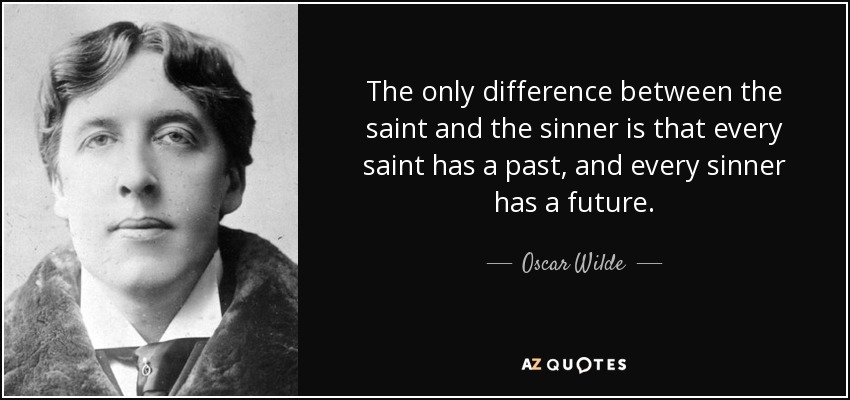
Sin. The word is rarely used anymore in places outside of churches. And when it is used within the church, sometimes it is grossly misrepresented, as if humanity’s identity is sin.

Although everyone has sinned and fallen short of God’s glory, our inherent personhood is not sinful. Every human is made in the image and likeness of God. Sin is like a permanent putrid abscess which never seems to go away.

Sin is everywhere – in our hearts, in our world, in our institutions, and in our families. It is on television, the internet, social media, and moves in and out of smartphones. Sin, apparently, is even in our desserts (oh, the decadence of chocolate!). If it takes one to know one, we are all experts on being sinners.

From a biblical vantage, sin is serious business. It is both the things we do (1 John 3:4), as well as the things we leave undone (James 4:17). Sin is both the breaking of God’s commands, and the lack of conforming to the teachings of Jesus.

Christians throughout the ages have generally understood that the Ten Commandments (Exodus 20:1-17) and Christ’s law of love (Luke 10:27) constitute a brief summary of God’s holy and moral instruction for humanity.  This is all based in the character of God as both holy and loving. 

Sin, then, might be defined as anything present within a person which does not express, or is contrary to, the basic character of God.

All sin, whether in actions or inactions, has at its root an attitude and activity of self-centeredness. It is a selfish bent of thinking, feeling, and acting. And, oh my, the consequences!

Sinful attitudes bring about an obsession with lust (1 John 8:34; Galatians 5:16); a broken relationship with God (Romans 3:23; Galatians 5:17); bondage to Satan (1 Timothy 3:6-7; 2 Timothy 2:26); death (Romans 6:23; 8:6); hardening of the heart (Hebrews 3:13); and deception (1 Corinthians 3:18; James 1:22, 26) just to a name a few.

Sin lurks in the shadows of the heart, drips from the tongue of the wicked, and lingers in the actions of the selfish and proud. Sin is not something to trifle with, dabble in, or even manage. No, sin, at its core, is a rebellion against God, a stiff-arm to the Lord that claims we know better than God about how to run our lives. 

Sin will eventually break us.  It may initially look good and meet a quick emotional need, but in the end it is like a poisonous snake bite that will kill unless treated.

People are guilty of transgressing basic morality, as well as failing to be ethically virtuous people on any on-going consistent basis. 

Well, that sounds like a total Debbie-Downer. Actually, it’s total depravity. Being depraved people does not mean we are never capable of doing good; it just means that sin has profoundly touched everything in our lives, without exception.

God is faithful and reliable. If we confess our sins, he forgives them and cleanses us from everything we’ve done wrong.

1 John 1:9, GW

When we come to the realization that we are in dire straits, then it is high time we blurt out a prayer of confession along with David. The book of Psalms is the Christian’s prayer book, and there is no better prayer to pray when we come to the end of ourselves than the psalmist’s plea for mercy, based in the steadfast love of God.

The ironic paradox of all this is that experiencing true joy and comfort comes through knowing how great our sin is. 

We can live above sin by being set free from it by the grace of God in Jesus Christ. If a person is to be redeemed from sin, then a provision must be made. Sin has been dealt with once for all through the person and work of Jesus. Christ is our representative, taking our place with the punishment we deserved (Galatians 4:4-5; Ephesians 2:5-6; Colossians 2:9-15; Hebrews 2:17-18; 1 John 2:1).

Jesus Christ is our ultimate substitute (Romans 5:8) which resulted in: our redemption (Galatians 5:13); satisfying all justice (Romans 3:25); and reconciliation to God (Romans 5:10). 

Therefore, the person who believes in Jesus is forgiven of sin because Christ’s sacrifice is sufficient to deal with all the effects of sin.  The Christian is complete in Christ (Colossians 2:10).

A genuine prayer of confession asks for mercy based upon God’s character and ability to heal, rather than trusting in the attempted quality of our petition. In other words, neither the eloquence nor the sheer word structure itself is the proper basis for confession; utterances of a broken and contrite heart, submitted to God, trusting solely in his grace to transform, are the only kind of words appropriate for approaching God with our sin. 

Such prayers are not to be few and far between; they are to be a regular regimen, engaged on a daily basis. Just as we take pills each day for all that ails us, so we need to take in the mercy of God through prayers of confession that link us to the true healing power which brings spiritual health and life.

Create a clean heart for me, God; put a new, faithful spirit deep inside me! Please don’t throw me out of your presence; please don’t take your holy spirit away from me. Return the joy of your salvation to me and sustain me with a willing spirit. Amen.

Psalm 37:12-22 – Get Some Perspective

Merciless people make plots
against good people
    and snarl like animals,
but the Lord laughs and knows
    their time is coming soon.
The wicked kill with swords
and shoot arrows
to murder
    the poor and the needy
    and all who do right.
But they will be killed
    by their own swords,
    and their arrows
    will be broken.

It is better to live right
and be poor
    than to be sinful and rich.
The wicked will lose all
    of their power,
but the Lord gives strength
    to everyone who is good.

Those who obey the Lord
    are daily in his care,
    and what he has given them
    will be theirs forever.
They won’t be in trouble
    when times are bad,
    and they will have plenty
    when food is scarce.

Wicked people are enemies
    of the Lord
    and will vanish like smoke
    from a field on fire.

An evil person borrows
    and never pays back;
    a good person is generous
    and never stops giving.
Everyone the Lord blesses
    will receive the land;
    everyone the Lord curses
    will be destroyed.
(Contemporary English Version)

The angle from which we view things is really important.

Perspective is everything. 

Whenever some ornery cuss swears at us, or a group of people think the worst of us, or an organization takes advantage of us, we might feel like crumbling underneath the weight of stress.

Throw into the mix the state of world affairs: pandemic, natural disasters, war, poverty, human trafficking, and a legion of unjust victimization and oppression around the globe.

And add our own personal issues, whatever they are, of dealing with mental and physical health, and/or difficult relationships with family, co-workers, or neighbors.

Put it all together and it would be rather easy to believe evil is winning. Can we even begin to make a dent in the wickedness of injustice, abuse, and maltreatment?

When we infuse God to the menacing challenges of our world, it changes everything.

Don’t you know? Haven’t you heard?
    The Lord is the everlasting God,
    the creator of the ends of the earth.
    He doesn’t grow tired or weary.
His understanding is beyond human reach.

Isaiah 40:28, CEB

The vantage of the psalmist is that all this immense malevolent plotting which exists cannot even begin to stand up to the even larger sovereign and benevolent God. 

It’s almost as if the Lord looks down from heaven at wicked people and says, “Well, now, isn’t that something, those tiny little yippee dogs thinking they can take on the big dog!” Truth is, the Lord laughs at the wicked, for God sees that their day is coming – and it won’t be pretty for them. 

Or we might picture some puny bugs on the ground making nefarious plans, completely oblivious to the hugeness of God that towers over them. They are about to be squished but are too busy going about their pathetic business to look up and see what is coming. The bugs are totally powerless in the face of such an awesome presence.

So cut away the thick calluses from your heart and stop being so willfully hardheaded. God, your God, is the God of all gods, he’s the Master of all masters, a God immense and powerful and awesome. He doesn’t play favorites, takes no bribes, makes sure orphans and widows are treated fairly, takes loving care of foreigners by seeing that they get food and clothing. (Deuteronomy 10:17-18, MSG)

We humans who try our best to be good, do right, and live a spiritual life can become much too discouraged, far too easily. 

The remedy to the malady of such disillusionment is to be filled with a robust theology which wisely discerns God as far above all our problems and situations. 

“I am the Lord, the God of all people. Nothing is too difficult for me.”

Jeremiah 32:27, GNT

No matter how ominous the machinations of malicious corruption array against us, the spiritual believer is assured that God is in control, and, in the end, the wicked will get their comeuppance. 

And if we will have the spiritual eyes to see, that fearsome lion who scares the baloney out of us with his loud roar, is really an old toothless cat with no bite. Malicious and malevolent people typically make all kinds of noise and talk a big line, but all they really have is their belligerent bullying and ballyhoo.

No earthly power, no clever person, no loudmouth tormentor, and no human organization can ever go toe to toe with the gargantuan God we serve. 

Put all your circumstances beside this God and see if it changes your perspective.

Mighty God, you bless those who are dedicated to you, and you put down those who rage against you.  Fortify my spirit and let me see just the train of your robe, and I will glimpse the large grandeur of your glory.  Let me know Jesus Christ risen and ascended far above all principalities and powers of this earth.  Amen.

Psalm 14 – On the Significance of God

Statue of George Washington, outside the National Gallery, Washington D.C.

Godless fools say in their hearts,
“There is no God.”
They are corrupt.
They do disgusting things.
There is no one who does good things.
The Lord looks down from heaven on Adam’s descendants
to see if there is anyone who acts wisely,
if there is anyone who seeks help from God.
Everyone has turned away.
Together they have become rotten to the core.
No one, not even one person, does good things.
Are all those troublemakers,
those who devour my people as if they were devouring food,
so ignorant that they do not call on the Lord?
There they are—panic-stricken
because God is with the person who is righteous.
They put the advice of oppressed people to shame
because the Lord is their refuge.

If only salvation for Israel would come from Zion!
When the Lord restores the fortunes of his people,
Jacob will rejoice.
Israel will be glad
. (God’s Word Translation)

George Washington, first President of the United States, in his farewell address to the nation in 1796, constructed his encouragements to the American people on the basis of virtue. 

Only a virtuous people, Washington believed, could cause the American experiment to succeed among the family of nations. Virtue, for Washington, could only occur through the twin pillars of religion and morality. He stated:

“Observe good faith and justice towards all nations; cultivate peace and harmony with all. Religion and morality enjoin this conduct; and can it be, that good policy does not equally enjoin it – It will be worthy of a free, enlightened, and at no distant period, a great nation, to give to mankind the magnanimous and too novel example of a people always guided by an exalted justice and benevolence. Who can doubt that, in the course of time and things, the fruits of such a plan would richly repay any temporary advantages which might be lost by a steady adherence to it? Can it be that Providence has not connected the permanent felicity of a nation with its virtue? The experiment, at least, is recommended by every sentiment which ennobles human nature. Alas! is it rendered impossible by its vices?”

George Washington, Farewell Address, 1796

Washington was no fool. He understood that the guiding hand of Providence [God] was necessary to the flourishing of a free and happy people. 

Indeed, the ancient psalmist would agree. When humanity is untethered from their own deep spirituality, they become worthless, heartless, cruel and can rarely do right by others. 

Whatever Washington’s true personal sensibilities were about theology, he most certainly was convinced that belief in God along with the Scripture’s moral guidance were needed for a fledgling nation. The people’s ability to recognize and engraft religion into their lives would be a must for America.

Unmooring ourselves from the moral compass within us and forsaking the Creator leads to vice – whereas enjoining God and paying attention to the divine leads to virtue. 

It is not wise to ignore the God of all creation. From the psalmist’s perspective, through daily attentiveness and devotion to the Lord, moral and ethical ways can take root and produce justice, reconciliation, and peace.

Sovereign God, you rule the nations through your wise and benevolent reign. Help me to participate with you in your grand kingdom enterprise so that I can make decisions consistent with true morality, for the sake of Jesus, in the power of your Holy Spirit. Amen.

Psalm 68:24-35 – A Mighty God Who Rides the Skies

O God, your march of triumph is seen by all,
    the procession of God, my king, into his sanctuary.
The singers are in front, the musicians are behind,
    in between are the young women beating the tambourines.
“Praise God in the meeting of his people;
    praise the Lord, all you descendants of Jacob!”
First comes Benjamin, the smallest tribe,
    then the leaders of Judah with their group,
    followed by the leaders of Zebulun and Naphtali.

Show your power, O God,
    the power you have used on our behalf
    from your Temple in Jerusalem,
    where kings bring gifts to you.
Rebuke Egypt, that wild animal in the reeds;
    rebuke the nations, that herd of bulls with their calves,
    until they all bow down and offer you their silver.
Scatter those people who love to make war!
Ambassadors will come from Egypt;
    the Ethiopians will raise their hands in prayer to God.

Sing to God, kingdoms of the world,
    sing praise to the Lord,
    to him who rides in the sky,
    the ancient sky.
Listen to him shout with a mighty roar.
Proclaim God’s power;
    his majesty is over Israel,
    his might is in the skies.
How awesome is God as he comes from his sanctuary—
    the God of Israel!
He gives strength and power to his people.

Praise God! (Good News Translation)

The biblical psalms are uniform in praising God for God’s inherent character and for how that character acts in the world.

Since God is an infinitely immense Being, our human language cannot begin to adequately contain or describe such divinity. Yet, words are what we have for trying to communicate the attributes of such an incredible and awesome God.

This is why the use of metaphors is significant. Whenever we can picture something we are familiar with, then imaginatively place God alongside it, it helps give us at least a rudimentary idea and feeling of who this God is, what this God is all about.

To gain a glimpse of God’s majesty and sovereignty over the universe, we are invited to see with our spiritual eyes, God riding the sky; to hear with our spiritual ears the thunderous shout which roars and reverberates throughout the cosmos.

We are also invited to respond to what we see and hear by using our power of words and speech to proclaim God’s power. And that power is well beyond our ability to describe. With all of the powerful forces in this world, they are but a mere puff of breath to the God who reigns supreme over all powers, both in heaven and on earth. God’s power is a thunderous beauty. God’s splendor and strength rise larger than thunderheads.

Having grown up in Midwest America, I’ve seen my share of large thunderheads (massive cumulus clouds which form just before a storm), thunderstorms replete with bright lightning and noise so awesome it shakes the farmhouse, and tornados with such force that they rip the roof off a barn as if it were a Lego building.

And God is bigger than that – stronger, louder, and brighter.

The appropriate response to such a God is to make music for the one who strides the ancient skies in a heavenly chariot yet stoops to listen and care about puny humans.

The reasonable response to such a God is to listen to the divine voice thundering in the world and submit to the sound which seems like it might split the heavens open.

To gain a mere glimpse of God’s strength and power will inevitably result in a response of giving up our all to the Lord of the universe, everything we have, and all that we are.

To know, even a tiny smidgeon, of such a God will bring our own loud shouts of proclaiming God’s goodness, grace, and generosity to anyone who will listen to us.

To glimpse what the psalmist sees will consume us with awe, as we intuitively connect with the glory which is constantly streaming from heaven.

God shares divine strength with people. God doesn’t have to do that. The Lord has no obligation to do so. Yet, it happens, despite our fickle praise and inconsistent devotion.

So, let’s give our highest praise to the God of the psalms. Let’s imbibe of God’s thunderous presence among us.

Then, we will likely be happier than a gopher in soft dirt; or a butcher’s dog; or a unicorn eating cake on a rainbow.

Eternal Trinity – blessed Father, Son, and Spirit – the awesome God whom I serve: The more I enter you, the more I discover, and the more I discover, the more I seek you. A massive thunderhead is but a small cloud next to you, the Godhead, the incredible Three-in-One.

Through you, almighty Lord, I shall come to know myself and my world. And that knowledge is a mighty love for humanity which spans longer and higher than the universe itself. May the love, unity, harmony, community, goodness, and power which is always present within yourself, mighty God, be present with me, your servant.

For just a molecule of You is enough to power me for eternity. Amen.

*Above photo by Moritz Bu00f6ing on Pexels.com