Recall the Faithfulness of God (Psalm 105:1-11, 37-45)

The Delivery of Israel out of Egypt, by Francis Danby, 1825

O give thanks to the Lord; call on his name;
    make known his deeds among the peoples.
Sing to him, sing praises to him;
    tell of all his wonderful works.
Glory in his holy name;
    let the hearts of those who seek the Lord rejoice.
Seek the Lord and his strength;
    seek his presence continually.
Remember the wonderful works he has done,
    his miracles and the judgments he has uttered,
O offspring of his servant Abraham,
    children of Jacob, his chosen ones.

He is the Lord our God;
    his judgments are in all the earth.
He is mindful of his covenant forever,
    of the word that he commanded for a thousand generations,
the covenant that he made with Abraham,
    his sworn promise to Isaac,
which he confirmed to Jacob as a statute,
    to Israel as an everlasting covenant,
saying, “To you I will give the land of Canaan
    as your portion for an inheritance….

Then he brought Israel out with silver and gold,
    and there was no one among their tribes who stumbled.
Egypt was glad when they departed,
    for dread of them had fallen upon it.
He spread a cloud for a covering
    and fire to give light by night.
They asked, and he brought quails
    and gave them food from heaven in abundance.
He opened the rock, and water gushed out;
    it flowed through the desert like a river.
For he remembered his holy promise
    and Abraham, his servant.

So he brought his people out with joy,
    his chosen ones with singing.
He gave them the lands of the nations,
    and they took possession of the wealth of the peoples,
that they might keep his statutes
    and observe his laws.
Praise the Lord! (New Revised Standard Version)

Some stories are worth repeating over and over again. For example, on the birthday of each of my children (and now grandchildren) I recount and remember their birth story; on Christmas, I read the first chapter of Luke’s Gospel to the family in order to recall and remember the birth of Jesus.

Psalm 105 is a remembering and retelling of the ancient Israelites’ exodus event, their deliverance from Egyptian slavery. That event permeates much of the Old Testament, and rightly so. God’s faithfulness, grace, and steadfast love dominates the psalm, namely because the Lord’s majesty, power, and sovereignty was overwhelmingly evident through the deliverance from Egypt.

And so, it is appropriate for the psalmist to express gratitude and praise to God in remembering that deliverance. It only makes sense, in such a retelling, that we are encouraged to continually seek the Lord. Seeking the Lord is a common biblical admonition, and is linked to memories of what God has done in the past.

Glory in his holy name;
    let the hearts of those who seek the Lord rejoice.
Seek the Lord and his strength;
    seek his presence continually.
Remember the wonderful works he has done,
    his miracles and the judgments he uttered. (1 Chronicles 16:10-12, NRSV)

God graciously works in history by choosing a people and making a covenant with them. The Lord is faithful to that arrangement by giving them everything they need to maintain obedience on their end of the covenant. For God doesn’t merely call persons who are already equipped and ready for high level spiritual service. Rather, the Lord equips those who are called.

Abraham was called by God, not because he had some sort of superior spirituality or inclination toward the divine, but only because God chose him, period. And once he was called, Abraham doggedly and faithfully sought the Lord.

God brought the Israelites out of Egypt because of the covenant made to Abraham. The Lord promised him and his descendants a people and a land. It may have seemed that becoming enslaved in Egypt would negate the promise. But not so. The exodus happened.

Being freed from slavery, the people could seek the Lord and pursue knowing God without any hindrance or obstacle. From that point on, the people were expected to utilize their memory of God’s saving actions to seek God with all their heart, soul, and mind.

The entire aim of recounting God’s covenant and the exodus event is to remind the people to observe God’s commands. Since a powerfully good God has acted in history, then we are to keep the faith by embracing the powerfully good words of God and following them with the utmost commitment.

Remembering that we belong to God, enables us to keep on seeking the Lord throughout all of life, for the rest of our lives. The consistent retelling of deliverance stories can strengthen our faith and equip us for what is ahead.

When times are tough, it is good and helpful to recall the divine deliverance that has already happened. Our memory can then serve us well, by renewing our minds and energizing us to persevere in the spiritual life.

O Lord our God, we pray that your Spirit would guide and inspire our life and worship, our contemplation and our action. Open our mouths to sing and speak your praise, our ears to hear your Word, our eyes to see to you at work among us, and our hearts to receive your divine love. Help us to remember your goodness, seek your face continually, and serve you always. Amen.

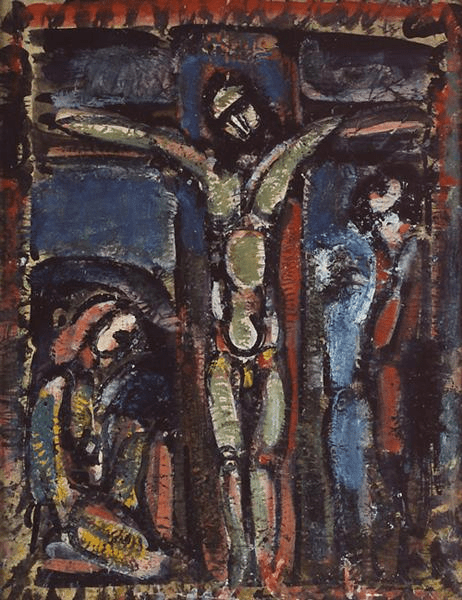
Where Is God in My Suffering? (Psalm 22:23-31)

“Praise him, you servants of the Lord!
    Honor him, you descendants of Jacob!
    Worship him, you people of Israel!
He does not neglect the poor or ignore their suffering;
    he does not turn away from them,
    but answers when they call for help.”

In the full assembly I will praise you for what you have done;
    in the presence of those who worship you
    I will offer the sacrifices I promised.
The poor will eat as much as they want;
    those who come to the Lord will praise him.
May they prosper forever!

All nations will remember the Lord.
    From every part of the world they will turn to him;
    all races will worship him.
The Lord is king,
    and he rules the nations.

All proud people will bow down to him;
    all mortals will bow down before him.
Future generations will serve him;
    they will speak of the Lord to the coming generation.
People not yet born will be told:
    “The Lord saved his people.” (Good News Translation)

I find that a great deal of truth and reality in this world is something of a mystery and a paradox. Christianity, especially, is a religion of paradox, in my opinion. For example, God is Three – Father, Son, and Spirit – but God is One. Jesus Christ is fully human and fully divine, at the same time, all the time. And when it comes to the spiritual life, suffering exists, and God is sovereign and in control of all things.

This then, is what prompts many people to question if there is really a God – since so much suffering exists throughout the world. Yet, it’s necessary to maintain the tension that hard circumstances, adversity, and difficulty in the form of awful suffering, and the preeminence of the Lord God almighty, both exist without taking anything away from either of them.

The severity of suffering, nor the supreme majesty of God, need to be watered down in any way in order to try and make sense of our existential situations.

“Suffering” is a word we would like to avoid. Even saying or reading the word might make some folks cringe. Suffering? No thanks. I think I’ll pass on that. Yet, something inside of us instinctively knows we cannot get around it. Everyone suffers in some way. It is endemic to the human condition that at times we will suffer physically, financially, mentally, emotionally, and spiritually. 

That’s why I believe there is so much talk within some Christian circles about miracles. It’s more than understandable:

  • a chronic pain sufferer wants relief, so she prays for a miracle of health
  • a small business owner is bleeding financially, and looks to God for an immediate miracle of wealthy clients
  • a beloved senior saint knows she is afflicted with Alzheimer’s, so she prays for the miracle of deliverance, even to be taken home to be with the Lord
  • a young adult finds himself in the throes of depression and has tried everything to cope and get out of it, so he petitions God for a miracle out of the deep black hole
  • a believer in Jesus keeps experiencing a besetting sin and cannot get over it, so she looks to God for the miracle of not struggling any more with it

These scenarios and a thousand other maladies afflict people everywhere. There are a multitude of stories out there. Folks who have experienced a miracle tell of their wonderful deliverance. But what about the rest? Those without the miracle? Do they have a lack of faith? Has God forgotten them?

Oh, my, no! God sees, and God knows. God is acquainted with suffering. Jesus knows it first-hand. Remember that it was Jesus who said, “My God, my God, why have you forsaken me?” (Psalm 22:1; Mark 15:34; Matthew 27:46)

Even Jesus cried out in his suffering. But there was no deliverance coming for him.  There was, however, deliverance coming for us.

Sometimes the greatest miracle and deliverance of all is to be freed from the need for a miracle. The reason God doesn’t just offer immediate relief from everyone’s suffering and bring a divine miracle is that the Lord is doing something else: Walking with us through our suffering. God oftentimes has plans and purposes for us that are well beyond our understanding. 

We simply are not privy to everything in God’s mind.

We may not get the miracle we desire. Yet, what we will get without fail, is God’s provision and steadfast love all the way through the suffering.

Where is God in your suffering? Right beside you. Jesus is suffering with you. You are not crying alone; Christ weeps with you.

Let, then, those who suffer, eat and be full. Let them be satisfied with the portion God has given them. And, what’s more, let them offer praise to the God who is squarely beside them in every affliction and each trouble.

God Almighty, you are the One who knows suffering and affliction better than anyone. I admit I don’t often understand what in the world you are doing or not doing in my life and in the lives of those I love. Yet, I admit that I have found in you the comfort, encouragement, and strength to live another day in my trouble. For this, I praise you, in the Name of Jesus Christ, in the power of the Holy Spirit. Amen.

Selective Memory (Psalm 25:1-10)

To you, O Lord, I lift up my soul.
O my God, in you I trust;
    do not let me be put to shame;
    do not let my enemies exult over me.
Do not let those who wait for you be put to shame;
    let them be ashamed who are wantonly treacherous.

Make me to know your ways, O Lord;
    teach me your paths.
Lead me in your truth and teach me,
    for you are the God of my salvation;
    for you I wait all day long.

Be mindful of your mercy, O Lord, and of your steadfast love,
    for they have been from of old.
Do not remember the sins of my youth or my transgressions;
    according to your steadfast love remember me,
    for the sake of your goodness, O Lord!

Good and upright is the Lord;
    therefore he instructs sinners in the way.
He leads the humble in what is right
    and teaches the humble his way.
All the paths of the Lord are steadfast love and faithfulness,
    for those who keep his covenant and his decrees. (New Revised Standard Version)

I admit there are things from my past I am neither proud of nor happy about. Yet, I give praise and thanksgiving to the Lord God Almighty because of divine selective memory. 

“I will forgive their iniquity and remember their sin no more.”

God (Jeremiah 31:34, NRSV)

God remembers according to the divine nature and God’s character of merciful grace and steadfast love. I’m glad the Lord doesn’t act based upon the stupid sins of my younger yesteryear. God freely chooses to forgive and has made the means available for us to experience daily cleansing and victory through the Lord Jesus Christ.

Memory is a major theme in the Old Testament. The importance of remembering pops up again and again throughout Holy Scripture. The way in which our minds and hearts remember past events is of great spiritual significance. 

Remember that you were a slave in the land of Egypt, and the Lord your God brought you out from there with a mighty hand and an outstretched arm; therefore the Lord your God commanded you to keep the Sabbath day. (Deuteronomy 5:15, NRSV)

“And remember, I am with you always, to the end of the age.”

Jesus (Matthew 28:20b, NRSV)

Remember Jesus Christ, raised from the dead, a descendant of David—that is my gospel, for which I suffer hardship, even to the point of being chained like a criminal. But the word of God is not chained. (2 Timothy 2:8-9, NRSV)

We are not to keep dwelling upon and remembering the former indiscretions of ourselves or others. To continue ruminating on a foolish decision or a poor choice only erodes our ability for resilience and perseverance.

The fact of the matter is that God does not hold those past regrets over our heads, and so, neither are we to do it. Forgiveness isn’t only for others; it’s meant to be directed to ourselves, as well. The ability to forgive enables us to leave the past in the past, without belching it up every day and chewing on it, like a cow with her cud.

Sometimes we are prone to remember the things we ought to forget, and forget those things we really should remember. Before us and in our minds continually is to remember the great works of God, especially in redemption. 

Forgetting what lies behind and straining forward to what lies ahead, I press on toward the goal, toward the prize of the heavenly call of God in Christ Jesus. (Philippians 3:13b-14, NRSV)

What we have done or failed to do, and what has happened to us in the past, is not the real problem; the most prescient issue right now is how you and I interpret those past events.

Today we can choose to remember the way God remembers. The health of all our relationships is dependent on this ability. Everyone on planet earth encounters difficult people, challenging relationships, obnoxious neighbors, and hurtful family members. Paying attention to our memory and how we choose to remember can be a significant part of interacting with others. 

I do not cease to give thanks for you as I remember you in my prayers, that the God of our Lord Jesus Christ, the Father of glory, may give you a spirit of wisdom and revelation as you come to know him. (Ephesians 1:16-17, NRSV)

If we like it that God has shown grace to us, then the least we can do is let that same grace flow from us to others – and to ourselves – we who neither deserve it, nor expect it. 

Let’s give thanks to the Lord, for God is good in forgiving sin and showing infinite mercy. And let’s express our gratitude through selfless words and acts of grace which reflect the nature of God.

Gracious God, you do not hold grudges; you always act according to your own loving character. Even though you could have condemned me, you saved me. Despite the fact that I have fallen short of your glory, you delivered me. I today remember your mighty redemptive deeds accomplished in your Son, my Lord, Jesus Christ, who with you and the Holy Spirit are one God, now and forever. To you, blessed Holy Trinity, I give my abiding praise and thanksgiving. Amen.

The Mediator and Leader (Psalm 110:1-4)

The Lord said to my lord,
    “Sit here at my right side
    until I put your enemies under your feet.”
From Zion the Lord will extend your royal power.
    “Rule over your enemies,” he says.
On the day you fight your enemies,
    your people will volunteer.
Like the dew of early morning
    your young men will come to you on the sacred hills.

The Lord made a solemn promise and will not take it back:
    “You will be a priest forever
    in the priestly order of Melchizedek.” (Good News Translation)

This is the most quoted psalm in the New Testament (twenty-four times) with the reason being that the apostles discerned Jesus as the messianic ruler of Psalm 110. The author of Hebrews purposed to highlight the superiority of Jesus Christ over everyone and everything. So, he went to this psalm, and used it early in his letter for the beginning of his argument:

In the past God spoke to our ancestors through the prophets at many times and in various ways, but in these last days he has spoken to us by his Son, whom he appointed heir of all things, and through whom also he made the universe. The Son is the radiance of God’s glory and the exact representation of his being, sustaining all things by his powerful word. After he had provided purification for sins, he sat down at the right hand of the Majesty in heaven. So, he became as much superior to the angels as the name he has inherited is superior to theirs….

But about the Son he says,

“Your throne, O God, will last for ever and ever;
    a scepter of justice will be the scepter of your kingdom.
You have loved righteousness and hated wickedness;
    therefore God, your God, has set you above your companions
    by anointing you with the oil of joy.”

He also says,

“In the beginning, Lord, you laid the foundations of the earth,
    and the heavens are the work of your hands.
They will perish, but you remain;
    they will all wear out like a garment.
You will roll them up like a robe;
    like a garment they will be changed.
But you remain the same,
    and your years will never end.”

To which of the angels did God ever say,

“Sit at my right hand
    until I make your enemies
    a footstool for your feet”? (Hebrews 1:1-13, NIV)

In Christianity, Jesus is the ultimate Mediator between God and humanity. Neither angel nor any other human can fill such a role. The author of Hebrews wanted to make it clear that Jesus is the rightful Ruler of all creation.

Christ’s authority is far and above all others. So, Christians are never defenseless in this world. Believers have a caring mediator, and a powerful sovereign, knowing that Jesus has the authority to back up his words of love and assurance toward us.

Jesus has the unique combination of being both a king and a priest; he intercedes for us and provides us with compassionate leadership. Again, in the middle of his argument, the author of Hebrews used Psalm 110 to emphasize this:

Every high priest is selected from among the people and is appointed to represent the people in matters related to God, to offer gifts and sacrifices for sins. He can deal gently with those who are ignorant and are going astray, since he himself is subject to weakness. Therefore, he has to offer sacrifices for his own sins, as well as for the sins of the people. And no one takes this honor on himself, but he receives it when called by God, just as Aaron was.

In the same way, Christ did not take on himself the glory of becoming a high priest. But God said to him,

“You are my Son;
    today I have become your Father.”

And he says in another place,

“You are a priest forever,
    in the order of Melchizedek.”

During the days of Jesus’ life on earth, he offered up prayers and petitions with fervent cries and tears to the one who could save him from death, and he was heard because of his reverent submission. Son though he was, he learned obedience from what he suffered and once made perfect, he became the source of eternal salvation for all who obey him and was designated by God to be high priest in the order of Melchizedek. (Hebrews 5:1-10, NIV)

Christ demonstrated and proved that he is qualified to be the rightful priest and king because of his obedient suffering. Therefore, Jesus is perfectly suited and able to help us. He is neither a detached nor an aloof priestly king.

The Lord Jesus knows exactly what it’s like to be a human in this broken and fallen world. Such divine empathy translates into solid emotional and spiritual support because, as the Christian tradition holds, Jesus has taken care of the sin issue once for all through the Cross.

The Messiah’s enemies – whose eventual and final defeat is certain – are not Gentile kingdoms or human institutions. Christ’s ultimate foes are the hostile and evil principalities and powers of this dark world, including death itself. The universal reign of Jesus, the exalted Son of David, brings deliverance from guilt, shame, and injustice as the unique God-Man.

In this unabashed Christian view of Psalm 110, Jesus is our perfected high priest who is able for all time to save those who approach God, since he always lives to make intercession for us (Hebrews 7:25). The appropriate response to such a great king and priest is submissive loyalty and eternal praise.

O Lord our God: Reign in power over us, through your Son, Jesus Christ – for he is exalted over all governments and authorities, all ideologies and creeds, and all human hearts and souls. King Jesus: Be enthroned in our lives, in all people everywhere, as our mediator and atoning sacrifice. Spirit of God: Reign in power over us through Jesus Christ and give us the victory over all the enemies of our souls, within and without, for the glory of your Name. Amen.