


Later when King Xerxes’ fury had subsided, he remembered Vashti and what she had done and what he had decreed about her. Then the king’s personal attendants proposed, “Let a search be made for beautiful young virgins for the king. Let the king appoint commissioners in every province of his realm to bring all these beautiful young women into the harem at the citadel of Susa. Let them be placed under the care of Hegai, the king’s eunuch, who is in charge of the women; and let beauty treatments be given to them. Then let the young woman who pleases the king be queen instead of Vashti.” This advice appealed to the king, and he followed it.
Now there was in the citadel of Susa a Jew of the tribe of Benjamin, named Mordecai son of Jair, the son of Shimei, the son of Kish, who had been carried into exile from Jerusalem by Nebuchadnezzar king of Babylon, among those taken captive with Jehoiachin king of Judah. Mordecai had a cousin named Hadassah, whom he had brought up because she had neither father nor mother. This young woman, who was also known as Esther, had a lovely figure and was beautiful. Mordecai had taken her as his own daughter when her father and mother died.
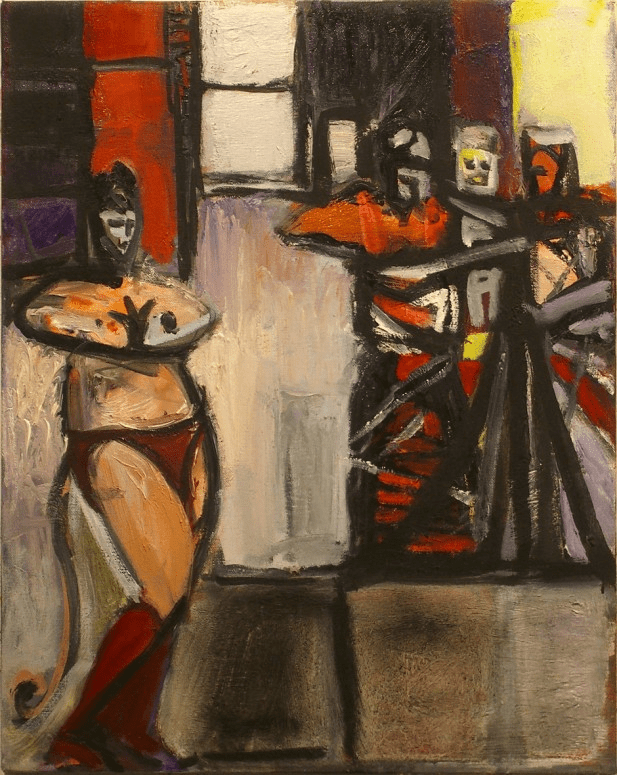
When the king’s order and edict had been proclaimed, many young women were brought to the citadel of Susa and put under the care of Hegai. Esther also was taken to the king’s palace and entrusted to Hegai, who had charge of the harem. She pleased him and won his favor. Immediately he provided her with her beauty treatments and special food. He assigned to her seven female attendants selected from the king’s palace and moved her and her attendants into the best place in the harem.
Esther had not revealed her nationality and family background, because Mordecai had forbidden her to do so. Every day he walked back and forth near the courtyard of the harem to find out how Esther was and what was happening to her.
Before a young woman’s turn came to go in to King Xerxes, she had to complete twelve months of beauty treatments prescribed for the women, six months with oil of myrrh and six with perfumes and cosmetics. And this is how she would go to the king: Anything she wanted was given her to take with her from the harem to the king’s palace. In the evening she would go there and in the morning return to another part of the harem to the care of Shaashgaz, the king’s eunuch who was in charge of the concubines. She would not return to the king unless he was pleased with her and summoned her by name.
When the turn came for Esther (the young woman Mordecai had adopted, the daughter of his uncle Abihail) to go to the king, she asked for nothing other than what Hegai, the king’s eunuch who was in charge of the harem, suggested. And Esther won the favor of everyone who saw her. She was taken to King Xerxes in the royal residence in the tenth month, the month of Tebeth, in the seventh year of his reign.
Now the king was attracted to Esther more than to any of the other women, and she won his favor and approval more than any of the other virgins. So he set a royal crown on her head and made her queen instead of Vashti. And the king gave a great banquet, Esther’s banquet, for all his nobles and officials. He proclaimed a holiday throughout the provinces and distributed gifts with royal liberality.
When the virgins were assembled a second time, Mordecai was sitting at the king’s gate. But Esther had kept secret her family background and nationality just as Mordecai had told her to do, for she continued to follow Mordecai’s instructions as she had done when he was bringing her up.
During the time Mordecai was sitting at the king’s gate, Bigthana and Teresh, two of the king’s officers who guarded the doorway, became angry and conspired to assassinate King Xerxes. But Mordecai found out about the plot and told Queen Esther, who in turn reported it to the king, giving credit to Mordecai. And when the report was investigated and found to be true, the two officials were impaled on poles. All this was recorded in the book of the annals in the presence of the king. (New International Version)

In 538 B.C.E. King Cyrus issued a decree which allowed exiled Jews to return to Jerusalem. The biblical characters Nehemiah and Ezra were part of the different waves of exiles who went back to their homeland. Yet, there were others who chose to stay in Babylon, in the Persian Empire. They had built lives for themselves, as was encouraged by the prophet Jeremiah:
This is what the Lord Almighty, the God of Israel, says to all those I carried into exile from Jerusalem to Babylon: “Build houses and settle down; plant gardens and eat what they produce. Marry and have sons and daughters; find wives for your sons and give your daughters in marriage, so that they too may have sons and daughters. Increase in number there; do not decrease. Also, seek the peace and prosperity of the city to which I have carried you into exile. Pray to the Lord for it, because if it prospers, you too will prosper.” (Jeremiah 29:4-7, NIV)
Being in exile was a huge change. The Jewish exiles were apart from their temple and the Promised Land. They had to make decisions about what this meant for their culture and their religion.
What’s more, they daily faced the reality of being surrounded by beliefs and customs which were not theirs, unlike living in Judah. There was the ever-present temptation of adopting aspects of Persian society which didn’t quite jive with being a Jew.
Many of the Jewish exiles were intent on preserving their Jewish identity as they understood it. But there were others who looked to the future instead of the past in order to live in the present as a Jew in a new time and place.
Mordecai and Esther are examples of an exilic generation who wanted to maintain their identity as Jews, yet assimilated into the Persian culture.
When King Xerxes was looking for a new queen to replace the deposed Vashti, Esther and Mordecai were okay with her being put in the beauty pageant. This was not something a committed and devout Jew would do, considering Jewish law about intermarriage with pagans.
This may be why Mordecai directed Esther not to reveal her Jewishness, to protect her from both Jew and Gentile – as well as to protect the Jewish people themselves. Even among other foreigners and exiles, Jews were (and are today) often misunderstood by dominant cultures.
Jews such as Daniel and his friends were part of the exilic community before Esther. And they took great pains to remain distinct from the wider culture. Yet, Mordecai and Esther did not.
Mordecai was a government official. This was not unusual, since part of the reason for taking captives into Babylon was to glean gifted persons for service. But Esther rising through the beauty contest rankings to become the queen of King Xerxes was next level stuff. One doesn’t get more assimilated than marriage to a king.
Yet, despite the cultural and legal problems from a Jewish standpoint, Esther was put in a place and in a position where she could (and did) rescue her people from genocide and potential annihilation altogether.
Despite any differences Jews themselves had about cultural assimilation, Esther was providentially used to save life.
Under a continually watchful divine eye, the Lord can (and does) use anything and anyone to bring about justice. Circumstances and people change, but God does not. God is always the pioneer and champion of the good.
Maintaining one’s distinctive religious practice in a diverse and changing environment is always a difficult challenge. This is why we must consistently reflect upon and examine our thoughts, intents, emotions, and actions, so that we can remain faithful.
Esther and Mordecai are examples of people who keenly felt the struggle of keeping their identity while trying to survive and thrive in a new setting. And I think they got it right to the best of their ability.
Likewise, we all seek to make decisions, and do the best we can, with the knowledge, wisdom, and discernment we have at the time.
And Providence is there, always in the background, sometimes in the foreground, moving events and people in redemptive ways that are life-giving. That is the faith which all of us need every day.
O God, by whom the meek are guided in judgment, and light rises up in darkness for the godly: Grant us, in all our doubts and decisions, the grace to ask what you would have us to do, so that the Spirit of wisdom may save us from all false choices; and that in your light we may see light, and in your straight path may not stumble. Amen.






 Rev. Tim Ehrhardt