True Greatness (Mark 9:30-37)

They went on from there and passed through Galilee. He did not want anyone to know it, for he was teaching his disciples, saying to them, “The Son of Man is to be betrayed into human hands, and they will kill him, and three days after being killed, he will rise again.” But they did not understand what he was saying and were afraid to ask him.

Then they came to Capernaum, and when he was in the house he asked them, “What were you arguing about on the way?” But they were silent, for on the way they had argued with one another who was the greatest. 

He sat down, called the twelve, and said to them, “Whoever wants to be first must be last of all and servant of all.” Then he took a little child and put it among them, and taking it in his arms he said to them, “Whoever welcomes one such child in my name welcomes me, and whoever welcomes me welcomes not me but the one who sent me.” (New Revised Standard Version)

In the Gospel of Mark, especially, there is an inexorable movement toward the Cross. It’s as if Jesus gets right down to it, and has a clarity of purpose and thought toward the future which shaped his words and actions in the present.

Today’s Gospel lesson has Jesus being forthright about what’s really important. Christ predicted his resurrection; chastised his disciples for their petty arguing; and lifted up a child as the model for what Christian discipleship truly looks like.

Even though Jesus was talking to his disciples about things that matter, things which they needed to wrap their heads and hearts around, they were afraid to ask him about it. Just so you know, that’s not healthy.

Sometimes Christ’s disciples were tight-lipped about things they ought to be asking about and openly discussing; and flapping their tongues about things they should have kept to themselves.

The motley crew of disciples were afraid to ask Jesus about his own words on his own death; and yet, they had no problem freely voicing and asking about who’s the greatest disciple amongst them. *Sigh*

The text doesn’t tell us why the disciples were afraid to ask and talk. But if they were anything like us today, it’s likely they were concerned about looking stupid or not in the know.

The disciples didn’t understand Christ’s words, but wanted to look like they understood just fine. After all, they may have reasoned, why risk getting ribbed or made fun of? Why risk the disappointment of Jesus concerning my cluelessness?

Typically, our internal fears about how we look to others is often greater than our desire to understand and know the truth.

We choose the shame of ignorance and hide-out deep within the soul’s secret lounge, where it’s dark, musty, and smells of inexpensive wine and cheap cigars. The longer we dwell in that poorly lit basement lounge, the harder it is to walk out and up the stairs to the light of grace, freedom, and understanding.

Jesus isn’t like whatever relative who hurt you with their calloused words and flippant attitude about your feelings, hopes, or desires.

Christ isn’t the teacher who ridiculed you in front of the whole class. That’s because Jesus Christ has the class to be gracious when we come out and admit what’s really going on within us.

I suspect Jesus was hard on his disciples because they should have known better than to be afraid in his presence. It demonstrated a profound lack of faith and trust.

Inevitably, whenever we opt to remain in the shame lounge of our soul, we then begin considering how to take the offensive in order to demonstrate our greatness and worthiness. And usually, there’s no better way than to do that than have a competition, and size up one another.

If Jesus could just affirm this competitive game and judge me as the best, we reason within the emptiness of our inner shame lounge, then I’ll forever be able to hide under that ratty old blanket of shame, and feel safe in this smelly place.

Prayer is really nothing more than addressing God and talking to the Lord. Oftentimes, the lack of consistent daily prayer is a telltale sign of being afraid to ask for help, clarification, or anything of substance, at all.

When we don’t pray, foolishness and bad decisions are close behind. Spiritual growth is then absent. Spiritual maturity is non-existent. And worldly tactics fill the spiritual vacuum.

Rather than being open about their questions concerning Christ’s words, the disciples’ fear led them to wonder how they stood with Jesus. In order to feel secure through one’s own efforts, we easily harbor resentment toward each other, and compete with one another to gain Christ’s approval.

Worry and anxiety, when coddled for too long, brings out an inordinate focus on one’s reputation with others; and a concern to look better in front of other people than one actually feels on the inside.

But Jesus is not one to play favorites, or to play childish games of posturing for attention. That’s because the way to greatness is not through impressing Jesus, or by being the Rabbi’s pet, but through focusing outward on something other than oneself.

It turns out that true greatness lies in humbly welcoming all – especially the ones who are the least, lost, and lonely, on the fringes of society.

We are to welcome the children, who are on the bottom rung, who need the help and assistance of others, as Christ did. We are to value them as fellow humans who are worthy of our time, attention, and effort.

Jesus did it for us. He showed us that the true measure of greatness is through humility and willingly loving others to incredibly great degrees. His disciples can and must do no less.

O God, our teacher and guide, you draw us to yourself and welcome us as beloved children. Help us to lay aside our envy and selfish ambition, so that we may walk in your ways of wisdom and understanding as servants of your peace. Amen.


How To Live When Things Are Bad (Isaiah 33:10-16)

Mural depicting the wars of Israel and Judah with the surrounding nations, Wilshire Boulevard Temple, Los Angles

But the Lord says: “Now I will stand up.
    Now I will show my power and might.
You Assyrians produce nothing but dry grass and stubble.
    Your own breath will turn to fire and consume you.
Your people will be burned up completely,
    like thornbushes cut down and tossed in a fire.
Listen to what I have done, you nations far away!
    And you that are near, acknowledge my might!”

The sinners in Jerusalem shake with fear.
    Terror seizes the godless.
“Who can live with this devouring fire?” they cry.
    “Who can survive this all-consuming fire?”
Those who are honest and fair,
    who refuse to profit by fraud,
    who stay far away from bribes,
who refuse to listen to those who plot murder,
    who shut their eyes to all enticement to do wrong—
these are the ones who will dwell on high.
    The rocks of the mountains will be their fortress.
Food will be supplied to them,
    and they will have water in abundance. (New Living Translation)

The Assyrians were a nasty bunch. So were the people of Jerusalem, at the time of Isaiah’s prophecy. Maybe the folks in Judah played the comparison game and thought they were better than their foe. After all, the Assyrians were experts in war and torture.

Jerusalem was understandably terrified of the Assyrian army. And they trusted God, that is, to a degree. There’s a difference between looking to the Lord because you’re between a rock and a hard place, and placing faith in God because that is the default response of your life.

Easy for me to say. I’ve never stood on a city wall watching a powerful army surrounding me like a bunch of bullies on the playground.

Jerusalem was intimidated to the point of letting the Assyrian ruffians take their gold and silver. Well, actually, it wasn’t their gold; it was God’s. And when the army left, the city was still intact. But for how long?

It was humiliating. Being the victim of a bully always is. And because they’re bullies, it’s never enough. Like feeding the neighbor’s cat, the Assyrians end up going nowhere. They want more. In fact, they never really intended on leaving anyway. It was all a double-cross.

Judah, out of their fear and anxiety, made a bargain with the devil. A bully is a bully because they can be. Give in to them, and it only enables them to keep bullying. The Assyrians were ready for battle. It’s what they always did: fight and conquer.

It was at this point that Jerusalem finally got the clue that they’d been living with God in the background, not the foreground. They did their own thing, much like the hated and dreaded Assyrians.

So, the only recourse the people of Judah had was the mercy of their God. Yet, even though they ought to have petitioned the Lord from the get-go, at least they noticed the Lord is still there.

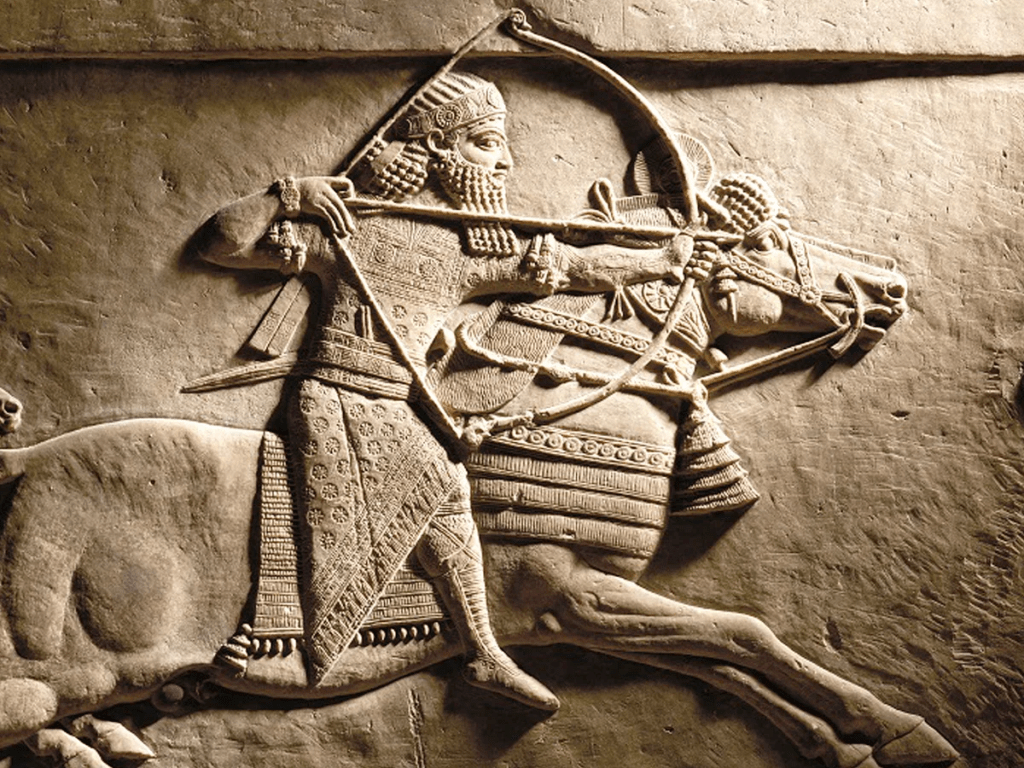
Assyrian king, British Museum

Unfortunately, most of our repentant overtures are way overdue. And yet, because of divine grace, the crazy mess we make of our lives is the very same place where a merciful God meets us.

Any sort of help is surely undeserved. It always is. The Lord, however, avoids making us grovel in our own vomit. God accepts us where we are, and not where we ought to be.

In truth, we all need to make a change, and not just the bullies. The sheer reality of God demands that we pay attention to what is right, just, and good. And the prophet Isaiah informed the people exactly how we must live in a world full of bullies and busted dreams.

We are to have an awareness of ethics and morality, a concern for humanity, and an orientation to help everyone thrive and flourish in this life.

The answer to life’s question of how to exist in this world and do more than just survive comes down to human morality:

  • Live right
  • Speak the truth
  • Despise exploitation
  • Refuse bribes
  • Reject violence
  • Avoid evil pleasures

The safe and stable way to live is to participate in the rhythms of mercy and justice that are woven into the fabric of the universe. The path to a contented and satisfying life is through goodness, not hatred.

Security and satisfaction don’t come through control of all circumstances; it comes by discerning that God has ultimate control, and that this God is good, not evil; just, not unjust; and righteous, not capricious.

According to the prophet, God will determine when the suitable time for assistance will come for us. And the Lord will deal with the ungodly according to the divine timetable, and not when we believe judgments should be rendered.

None of this is in our purview. Sometimes, talking about this sort of theology is a way of taking the focus off of our own need for an ethical and moral life. Sometimes, it is a helpful way of coming to grips with what is happening. Discernment is needed with oneself in these matters.

Trusting God means to exercise patience and perseverance, to focus on faith, to discipline ourselves in prayer, and to express confidence in hope.

We are not necessarily ruined whenever our circumstances are dire. The worse things become, the greater the display of divine power that can come.

By orienting ourselves around God and God’s strength and will, we grow in courage and develop in faith. We learn to trust in the worst of situations. We discover that the Lord knows the score of things, that God understands what’s going on.

And God laughs at the ungodly who believe they can bully the godly around. The most brilliant of military commanders is like a little toddler before the sovereign Lord of the universe. The fiery words they blow will blow back on them and consume their arrogance.

So, let us not harden our own hearts, but exercise a change of heart to let God be God, and to want for nothing but the courts of the Lord.

Let us not be like the bullies of Assyria who lived without a thought to the divine reality in front of them. Let us not become tormented, as if a fire were devouring us with inward anguish of soul, but instead:

  • Walk in right relations with others and with the Lord
  • Maintain truth and integrity in everything
  • Be free from corruption and offending others and God
  • Act with love toward your neighbor and your God
  • Refuse to accept a bribe
  • Restrain evil impulses
  • Open wide the spigot of goodness and justice

God is our refuge and strength, an ever-present help in trouble. Safety and abundance of good things is provided by the Lord. God protects. And God supplies. Rely upon God’s promises, and not the empty bellowing of others.

Be safe. Be strong. Be spiritual. We are all in this life together.

O God, my refuge and strength: In this place of unrelenting light and noise, enfold me in your holy darkness and silence, so that I may rest secure under the shadow of your wings. Amen.

Be Merciful to Me (Psalm 57)

“For thy mercy is great unto the heavens, and thy truth unto the clouds.” (Psalm 57:10, KJV) by Bible Art

Be merciful to me, O God; be merciful to me,
    for in you my soul takes refuge;
in the shadow of your wings I will take refuge,
    until the destroying storms pass by.
I cry to God Most High,
    to God who fulfills his purpose for me.
He will send from heaven and save me;
    he will put to shame those who trample on me.
God will send forth his steadfast love and his faithfulness.

I lie down among lions
    that greedily devour human prey;
their teeth are spears and arrows,
    their tongues sharp swords.

Be exalted, O God, above the heavens.
    Let your glory be over all the earth.

They set a net for my steps;
    my soul was bowed down.
They dug a pit in my path,
    but they have fallen into it themselves.
My heart is steadfast, O God;
    my heart is steadfast.
I will sing and make melody.
    Awake, my soul!
Awake, O harp and lyre!
    I will awake the dawn.
I will give thanks to you, O Lord, among the peoples;
    I will sing praises to you among the nations.
For your steadfast love is as high as the heavens;
    your faithfulness extends to the clouds.

Be exalted, O God, above the heavens.
    Let your glory be over all the earth. (New Revised Standard Version)

The Human Condition

Maybe it’s just me, yet it seems, over the past several years, that our world has become increasingly depressed, jaded, and unkind. Things like appreciation and encouragement of others are found less and less as time goes on. It’s as if we are all in some sort of collective funk, in which everyone has an underlying sullenness and frustration about them.

Humanity has suffered a great deal of change and loss, without a healthy means of grieving and lamenting for what has happened to them. In other words, we simply don’t know what to do with our hurt, so we end up projecting our hurt onto others. *Sigh*

There is something that we all share together about the human experience: Sooner or later, someone or a group of people will let us down. They will hurt us in some way. And that hurt will change us – either for good or for ill.

What’s worse, many have experienced, or will experience, some sort of abuse and victimization from another person or group – leaving them scarred by trauma. And, what’s more, there are those who have had their very lives at risk, because someone intentionally sought to kill them. 

King David’s Condition

That is the company David found himself in when King Saul, and the later when his son Absalom, sought to do away with his life.

To David’s credit, he never retaliated and did not try and turn the tables by putting a hit out on either Saul or Absalom. Instead, David cried out to God. And we get to listen in on the prayer. Today’s psalm is David’s prayerful reliance upon the God in whom he put all his trust and praise. 

The entire basis of prayer is to let God be God. So, how do we exactly do that?

Our Condition

Whenever the storms of life assail us, calloused persons trample on us with impunity, devious individuals set traps for us, and greedy organizations prey upon us, we must refuse to respond in kind.

Instead, let us deliberately praise the Lord, rely on divine protection, and pray to God, so that we might steadfastly hold on to our confidence. Because if God is for us, nothing nor no one, can be against us.

That advice may seem like a sort of pie-in-the-sky rot of ginning up positive thoughts when there is nothing positive to be seen in the experience. Yet, please keep in mind that we must never, and I repeat, never invalidate another’s experience, nor our own, when those experiences are hellish.

There is always hope. There are two unshakable truths which are constant, and are never diminished by any adverse circumstance:

  1. God is present with us
  2. God loves us

If we know nothing else, and everything seems to be descending into the abyss of tragedy, the twin towers of divine presence and divine mercy stand guard as the strongest sentinels over our dilapidated situation, and struggling faith.

Letting God be God means not to try and control things we have no control over. Rather, it means to affirm that the Lord is willing and capable of handling our worst stuff.

It could be that we are stuck in the belly of a whale because, without our knowing it, there are sharks surrounding us, who cannot get to us because of divine attention and protection.

Our perspective of life-circumstances is, at best, severely limited. It is much better to place faith in the God who sees it all, with an expansive eye which misses nothing.

One of the best things, to me, about the psalms is that they are a wonderful collection of prayers we can adopt for our own. Not only can we use them for ourselves, but we are also obliged to do so. 

If anyone has been in an adverse situation, so deep that it feels like having ambled into a pride of lions, it’s quite likely that the experience leaves one with no adequate words to say. There we are – paralyzed with fear, and unable to move. 

So, let the psalm say for you what you cannot even begin to utter yourself. The Word of God is not meant to sit on a coffee table,  or to rest on a shelf; it is meant to be opened and used for prayer. Allow it to do its intended purpose.

Who knows? Perhaps your faith in the mercy of God, and your praises lifted to God, will give rise to a newfound confidence and peace, so that you can rest secure, even when all around you is going to hell.

Be merciful to me, O God, for in you my soul takes refuge. Even though I feel the slash of people with tongues as swords, my heart is steadfast, and I will exalt your name above the heavens. Let your glory be over all the earth! Amen.

Keep On Praying For What’s Important (Romans 15:22-33)

Together We Pray, by Jerome White

This is why I have often been hindered from coming to you.

But now that there is no more place for me to work in these regions, and since I have been longing for many years to visit you, I plan to do so when I go to Spain. I hope to see you while passing through and to have you assist me on my journey there, after I have enjoyed your company for a while. 

Now, however, I am on my way to Jerusalem in the service of the Lord’s people there. For Macedonia and Achaia were pleased to make a contribution for the poor among the Lord’s people in Jerusalem. They were pleased to do it, and indeed they owe it to them. For if the Gentiles have shared in the Jews’ spiritual blessings, they owe it to the Jews to share with them their material blessings. 

So after I have completed this task and have made sure that they have received this contribution, I will go to Spain and visit you on the way. I know that when I come to you, I will come in the full measure of the blessing of Christ.

I urge you, brothers and sisters, by our Lord Jesus Christ and by the love of the Spirit, to join me in my struggle by praying to God for me. Pray that I may be kept safe from the unbelievers in Judea and that the contribution I take to Jerusalem may be favorably received by the Lord’s people there, so that I may come to you with joy, by God’s will, and in your company be refreshed. The God of peace be with you all. Amen. (New International Version)

Paul’s Intentions

It always had been the Apostle Paul’s intention to preach Christ in places where the name of Jesus was not known. He wanted all people everywhere to hear the good news of grace, forgiveness, and new life in Jesus Christ as the fulfillment of all God’s good promises.

Paul wrote a rather complicated historical and theological letter to the Roman Church. He specifically addressed their situation of both Jew and Gentile Christians worshiping together in one church. They were often divided and critical of one another.

Throughout his letter, the Apostle provided a solid apologetic for staying together on clear biblical and theological grounds. Paul also wanted them to work side-by-side in practical matters of ministry, which would help them learn to appreciate each other.

So, Paul intended on visiting them – hopefully sooner than later – to encourage them in the faith, and as a stop on the way to Spain. He longed to get to the farthest geographic point of the continent and make Christ known.

To that end, Paul made a concluding personal statement and emotional appeal to the entire Roman Church – Jew and Gentile alike – for their abiding prayerful support of his ministry and intentions.

Paul’s Prayer

For Paul, and from a New Testament perspective, prayer is the most necessary activity a believer can do. Prayer connects the divine and the human in meaningful dialogue, as well as connecting people to each other in a common purpose of seeking the Lord and knowing Christ.

The Apostle practiced what he preached. Paul continually prayed for the Roman Church and wrestled in prayer for all the believers. (Romans 1:9-12)

He specifically asked the believers to pray that he be rescued from unbelievers; and that his ministry in Jerusalem might be good and acceptable to the believers in that place. Paul took great pains to gather a collection throughout many of the churches he established, so that he could bless the needy persons in Judea.

Paul’s Longing

The Apostle Paul constantly sought and worked toward solidarity between the Christian Jews and converted Christian Gentiles. They were ancient enemies, and at the time of Paul’s writing the Roman Empire and their occupation created even more animosity between the two groups of people.

Paul longed for the world to see an alternative to such enmity. The Church is to be the one place on earth where there are no walls, no separations, no divisions. The Body of Christ is to be a place of unity, mutual encouragement, and sincere love for one another, without prejudice or favoritism.

Unity and the ability to work together in a shared purpose of gospel proclamation was a high value to the Apostle Paul. That’s because it was important to Jesus.

Christ’s Prayer of Unity

Stained glass of Jesus praying

My hope is that Christians will never lose sight of their Lord’s high priestly prayer, as recorded by the Apostle John:

“Holy Father, protect them by the power of your name, the name you gave me, so that they may be one as we are one…My prayer is not for them alone. I pray also for those who will believe in me through their message, that all of them may be one, Father, just as you are in me and I am in you. May they also be in us so that the world may believe that you have sent me. I have given them the glory that you gave me, that they may be one as we are one—I in them and you in me—so that they may be brought to complete unity. Then the world will know that you sent me and have loved them even as you have loved me.” (John 17:11, 20-23, NIV)

If this is the heartbeat of Jesus, then I submit that Christians everywhere ought to also pray this prayer, and work toward that which is important to Christ himself.

I am also keeping in mind that there is nothing automatic about prayer. Paul did not get all of his prayers answered the way he wanted. In fact, so far, neither has Jesus. Two-thousand years later, we are living in a fragmented and polarized world more than ever, even in Christianity between all sorts of different Christian traditions.

On the one hand, we can and ought to bemoan the situation of disunity and even outright animosity between people who confess the name of Christ. This needs to impel us forward by embracing the values of both Jesus and Paul.

On the other hand, there is reason to hope, knowing that the good news can and is making a difference throughout the world. We can be encouraged to keep on praying and to continue persevering in prayer.

The Apostle Paul envisioned a new society in which old enemies would become friends and co-workers around building a community of persons who are redeemed by Jesus and seek to live into his words and ways.

May it be so, to the glory of God. Amen.