Revelation 7:9-17 – Persevering to the End

After this I looked, and there was a great crowd that no one could number. They were from every nation, tribe, people, and language. They were standing before the throne and before the Lamb. They wore white robes and held palm branches in their hands. They cried out with a loud voice:

“Victory belongs to our God
        who sits on the throne,
            and to the Lamb.”

All the angels stood in a circle around the throne, and around the elders and the four living creatures. They fell facedown before the throne and worshipped God, saying,

“Amen! Blessing and glory
        and wisdom and thanksgiving
        and honor and power and might
            be to our God forever and always. Amen.”

Then one of the elders said to me, “Who are these people wearing white robes, and where did they come from?”

I said to him, “Sir, you know.”

Then he said to me, “These people have come out of great hardship. They have washed their robes and made them white in the Lamb’s blood. This is the reason they are before God’s throne. They worship him day and night in his temple, and the one seated on the throne will shelter them. They won’t hunger or thirst anymore. No sun or scorching heat will beat down on them because the Lamb who is in the midst of the throne will shepherd them. He will lead them to the springs of life-giving water, and God will wipe away every tear from their eyes.” (Common English Bible)

There is a day coming when followers of Jesus will see him face to face. Believers will serve the Lord continually. God’s very presence will be their permanent shelter. It will be a glorious time of unending peace, harmony, and rest.

There shall be no more worrying about how to make ends meet, where we are going to get our needs met, and anxiety about the future. Injustice will be a thing of the past. Unending love and light will replace it.

First, however, before this permanent Sabbath, there will be trouble, hardship, trial, and even martyrdom. There is presently pain and suffering. Like a woman in labor, this must take place before there is the glory of new life. 

“A hero is an ordinary individual who finds the strength to persevere and endure in spite of overwhelming obstacles.”

Christopher Reeve

Sometimes the difficult circumstances of life seem to have no end. Yet, they will eventually pass, and we must continually keep this in mind. Christians have the hope of God’s pastoral presence forever guarding and keeping our lives if we endure to the end.

Perseverance, endurance, and pushing through hard situations are necessary to realize the finish line. We cannot just sit here on earth in some sort of holding pattern waiting for the end to occur. Just as an athlete must go into strict training in order to run the race well, finish strong, and cross the line, so we as Christians are to be in training – utilizing an array of spiritual practices that will fortify our souls to keep going and finish the race. 

The book of Revelation was a vision of the Apostle John given to believers in hardship who needed to persevere. Giving them a glimpse of the glorious ending was one way of helping them in the present to live for Jesus Christ, despite the pain.

Since the Christian life is not a sprint but a marathon, here are some ways we can build a enduring and persevering spirit until Christ returns:

Don’t be afraid to fail.

That’s because, for the believer, we know the ending. We may feel like colossal failures, at times, yet, because the Lord is with us, we have nothing to fear. Being secure in our identity as God’s people enables us to step out and engage the world.

When I am afraid,
    I put my trust in you.
I trust God, so I am not afraid of what people can do to me!
    I praise God for his promise to me. (Psalm 56:3-4, ERV)

Take small steps of faith.

We can incrementally improve ourselves daily through our growth in grace. We don’t need to always do big things for God. We can do small acts of kindness with big love.

Continue to grow in the grace and knowledge of our Lord and Savior Jesus Christ. To him be the glory, now and forever! Amen. (2 Peter 3:18, GNT)

Love the Lord your God with all your heart, all your soul, all your mind, and all your strength.’The second most important command is this: ‘Love your neighbor the same as you love yourself.’ These two commands are the most important. (Mark 12:30-31, ERV)

Identify the resistance.

Name the obstacles, impediments, and challenges to perseverance. Our awareness of what hinders us gives us the power to choose how to handle it.

We should remove from our lives anything that would slow us down and the sin that so often makes us fall. We must never stop looking to Jesus. He is the leader of our faith, and he is the one who makes our faith complete. (Hebrews 12:1-2, ERV)

Practice good self-care.

The body, mind, emotions, and spirit are our vehicles to doing the will of God. So, it is imperative we steward these precious gifts of humanity with care. The only way we will make it over the long haul of our lives is through paying attention to this.

God has made us what we are. In Christ Jesus, God made us new people so that we would spend our lives doing the good things he had already planned for us to do. (Ephesians 2:10, ERV)

Surely you know that you are God’s temple and that God’s Spirit lives in you! (1 Corinthians 3:16, GNT)

Know why you are persevering.

Losing connection with why we do what we do leads to dropping out and giving up. Yet, when we can maintain what is most important to us, it helps us push through all the sticky points of our lives.

So, if you eat, or if you drink, or if you do anything, do it for the glory of God. (1 Corinthians 10:31, ERV)

Whatever you do, whether in speech or action, do it all in the name of the Lord Jesus and give thanks to God the Father through him. (Colossians 3:17, CEB)

Patient God, you tediously work until your plans and purposes are accomplished.  As you are slowly bringing your kingdom to the world, strengthen me so that I do not give up.  Help me to persevere, living and loving like Jesus, to his glory.  Amen.

Hebrews 4:12-16 – Jesus Is Our Great High Priest

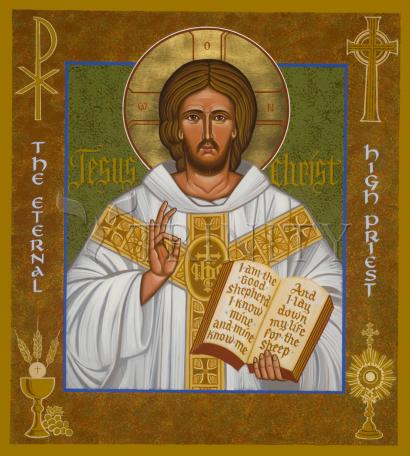
Jesus, the Eternal High Priest, by Joan Cole

For the word of God is alive and active. Sharper than any double-edged sword, it penetrates even to dividing soul and spirit, joints and marrow; it judges the thoughts and attitudes of the heart. Nothing in all creation is hidden from God’s sight. Everything is uncovered and laid bare before the eyes of him to whom we must give account.

Therefore, since we have a great high priest who has ascended into heaven, Jesus the Son of God, let us hold firmly to the faith we profess. For we do not have a high priest who is unable to empathize with our weaknesses, but we have one who has been tempted in every way, just as we are—yet he did not sin. Let us then approach God’s throne of grace with confidence, so that we may receive mercy and find grace to help us in our time of need. (New International Version)

Church Persecution and Christian Suffering

The book of Hebrews was originally a sermon preached to a group of believers who had come to Christ out of Judaism. From the book of Acts, we know there were thousands of Jewish Christians who were dispersed from Jerusalem when Stephen was martyred.  A great persecution broke out, and many believers fled west to places like Galatia, Ephesus, Greece and Rome. 

The Jewish believers were immigrants in a foreign land, looking to practice their faith without harm. Yet, their experience was anything but ideal. These followers of Christ found fellow ethnic Jews in the places where they went, yet those Jews had no use for these people that they believed were in some sort of aberrant cult.

What is more, the surrounding Gentile culture did not understand Christianity, at all, and many of those who held to pagan religions bought into rumors, such as, that Christians were cannibals who ate at what’s called the Lord’s Table.

So, here we have a situation where these displaced Christians had no respect from both Jews and Gentiles. As a result, they had a difficult time carrying out business because no one trusted them. They were essentially alone in the world. 

Losing Their Grip

Initially, they embraced their identity as Christians and held up quite well under the stress. However, over time, their resolve began to slowly erode. The followers of Jesus began to question their adverse situation. 

They began listening to their fellow Jews throw doubts on their faith. The hard life was not improving, maybe even becoming worse.  Eventually, the church came to a point where they began re-considering their whole way of life as Christians, and their faith commitment started slipping. The Christians actually considered leaving the Church and Christianity and going back to their old life in Judaism.

The Message of Hebrews

It was at this point that a vigorous believer in Jesus came to town, saw the situation of the church, and preached a spirited message to them. The preacher called them to hold tight to their commitment – to see Jesus afresh and anew as superior over all the Old Testament, as the fulfillment of all the promises of God. 

So, then, throughout the book of Hebrews we have this wonderful explanation and exposition of how to make sense of Jesus and the Old Testament, and of what Jesus really means to the church. Throughout his sermon, the preacher occasionally paused his teaching and gave the people a stiff warning about falling away from Christ. He called the church to be bold and confident in Christ, to stand up to the suffering, and to confront their temptations so that they would persevere in their commitment to Jesus Christ for the rest of their lives.

God’s Word and Work

We pick up the teaching and the exhortation in chapter four. Hebrews 4:12-16 is composed of two distinct sections that are paired together for a reason.  Verses 12-13 give us a graphic visual of the penetrating work of God’s Word, of the reality that God can get deep inside us. The next section, verses 14-16, lays out God’s response to our being under divine scrutiny – that there is grace and mercy available because of Jesus, our great high priest who is superior to every priest of the Old Testament to the point of being the last and permanent priest forever! 

These verses are bound together because we all need to struggle with the tension between God’s Word to us, and our words to God; between God’s judgment that opens our souls on a spiritual operating table, and God’s grace which jumpstarts our broken hearts. Our most fundamental need is for God’s mercy in Jesus Christ.

The Christian Life

It is important that our outer lives and our inner lives match each other. Whenever the two are out of sync, we come under the judgment of God’s Word. These early Hebrew Christians had slowly drifted from the truth so that their inner and outer lives did not line up well.

Some of them still performed the outward duties of being a Christian yet were inwardly despising their hard situation. A growing vacuum developed on their insides as they slowly started letting go of Jesus as their object of devotion. Their hearts began to harden because of their hard lives. 

On the other hand, there were other Hebrew Christians who began drifting in a different way. Inwardly, they tried to maintain their devotion and commitment to Christ. Yet these believers began compromising their outward life to match the culture around them. In both cases of hardening inwardly, and of compromising outwardly, they each shared the situation of drifting away from their original commitment to Christ.

Even today, it is a real temptation to try and avoid suffering, to grow weary of our present circumstances and look for a way to get out from under the pain and find a quick fix.  Whenever we find ourselves in such a situation, the remedy is to be reminded that we must continue to hold firmly to the faith we profess because of who Jesus is.

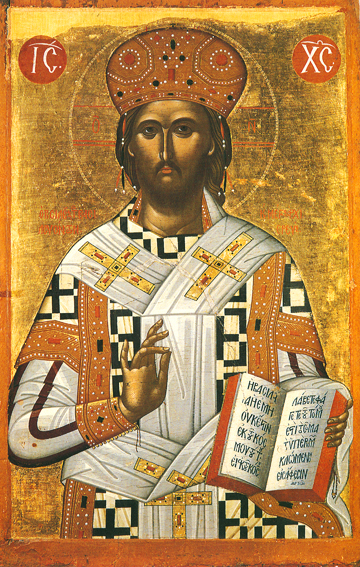
15th Century Orthodox icon of Christ the Great High Priest

Jesus As Permanent High Priest

Jesus is our great high priest. In the Old Testament, among the twelve tribes of the ancient Israelites, the tribe of Levi made up the class of priests. One of those Levites, always a descendent of the original Levite priest, Aaron, had the task of once a year entering a place called the Holy of Holies, which was at the center of the Temple, to offer a bloody sacrifice on behalf of the people, to atone for their sins from the previous year.

Jesus is our great and ultimate high priest. He did not enter the temporary sacrificial system to deal with sins for only a year. Jesus not only took on the role of high priest, but became the sacrifice, as well. As a result, we now have a thorough and permanent forgiveness of sins through Christ. So, the Hebrew Christian who considered going back to an old outdated system needed to be brought back to his senses and embrace again the once-for-all sacrifice of Jesus. 

As they considered Jesus, the believers needed to remember that Christ was not so far removed from them that the church could not relate to Jesus. Rather, Jesus is able to sympathize with each and every trouble, trial, and temptation we face because he faced the very same kind of sufferings. 

The only difference between Christ and his followers is that Jesus did not succumb to the trouble, but persevered and secured for us deliverance from sin, death, and hell. Jesus is the One who deserves every bit of our commitment, allegiance, and devotion. Christ is the One whom we are to worship inside and out.

Approaching God with Boldness

Let us then approach Jesus with confidence, with boldness, knowing that with him there is mercy and grace. Jesus not only suffered for us in the past; he also suffers with us now, in the present. We, as believers, are in union with Jesus. Christ is our great high priest, the One intimately involved in every nook and cranny of our lives. He knows what you and I are going through and is ready to give grace to help right now. 

Approaching Jesus has nothing to do with being good enough to do so. Coming to Jesus is about grace. Whenever we drift from Jesus and are confronted with God’s Word cutting us to the heart, the end result is not wrath or judgment; the result is mercy and grace.

Like the early Hebrew Christians, we all face situations out of our control that wear us down and cause us to become weary. In our tired state, we can be tempted to let our commitment to Christ slide in some small way. Over time, the small compromises of faith can snowball into a big slide away from God. 

Yet, Jesus is not sitting in heaven frustrated or confounded. God is not looking for a reason to punish people. It is just the opposite. Jesus, the Son of God, our great high priest, is looking for a reason to give grace and help us in our time of need. Christ is waiting for us to approach the throne of grace with confidence. Right now, Jesus is alive. He is scanning the world and the church, looking to extend mercy to those who need it. 

Asking for Help

We must avoid a spiritual hardening of heart which estranges us from approaching Jesus. Every one of us needs help. We are not God. We have weaknesses. We have confusion. We have limitations of all kinds. We need help.  And every one of us has something else: guilt and shame. At the bottom of our hearts, we feel undeserving, and so, avoid coming to Jesus. Yet, we need with family, loneliness, work, health, finances.

So, what to do? I can try to deny it all and be a superman who doesn’t need any help. I can try to drown it all with alcohol. I can be obsessive and compulsive about controlling events and/or people. I can simply succumb to discouragement. Here is what God declares: Jesus Christ became a High Priest to shatter despair with hope, to rescue that drowning person and that anxious individual.

God planned for a High Priest, a Savior, a Redeemer, and a gracious Helper. You and I are not trapped. We have Jesus. 

The book of Hebrews is all about a call to commitment – an invitation to come to Jesus.  And it is the most important invitation you will ever receive. Let us approach the throne of grace with confidence….

This is the confidence we have in approaching God: That if we ask anything according to his will, he hears us.  And if we know that he hears us – whatever we ask – we know that we have what we asked of him. Spirit of God, lead us into your will. Help us in all things. Fill our hearts and lives to overflowing with divine mercy and grace so that what comes out of our mouths and the actions we do are compassionate, kind, and good, through our great High Priest, Jesus Christ. Amen.

Hebrews 11:17-22 – Faith Forward

Sacrifice of Abraham by He Qi

By faith Abraham, when God tested him, offered Isaac as a sacrifice. He who had embraced the promises was about to sacrifice his one and only son, even though God had said to him, “It is through Isaac that your offspring will be reckoned.” Abraham reasoned that God could even raise the dead, and so in a manner of speaking he did receive Isaac back from death.

By faith Isaac blessed Jacob and Esau in regard to their future.

By faith Jacob, when he was dying, blessed each of Joseph’s sons, and worshiped as he leaned on the top of his staff.

By faith Joseph, when his end was near, spoke about the exodus of the Israelites from Egypt and gave instructions concerning the burial of his bones. (New International Version)

Life requires faith.

To keep going, to endure and persevere, demands sustained faith over the course of a lifetime.

Faith is confidence in what we hope for and assurance about what we do not see. (Hebrews 11:1)

The biblical character, Abraham, let faith shape his actions. He obeyed God’s call on his life and left his home country to go somewhere he knew nothing about. And he did it with no GPS and no AAA tour books.

Even thought Abraham had a good life in his home city of Ur, he left, believing there was something better ahead.

After reaching the land which God led them to, Abraham, age 100 and his wife, Sarah, age 90, became parents. It happened because of faith. The two of them believed God’s promise of a child, even though it was biologically impossible.

Abraham kept his faith over the long haul of his life. He did it by looking ahead to the eternal city. Because Abraham had looked ahead on this earth and stepped out in faith, he was able to clearly discern that all his faith eggs were not in the earthly basket.

Against all odds, Abraham was convinced God was good for his promises and knew what he was doing.

Trust in the Lord with all your heart,
And lean not on your own understanding;
In all your ways acknowledge Him,
And He shall direct your paths.

Proverbs 3:5-6, NKJV

Isaac was the miracle child, the promised son born to Abraham and Sarah in their old age. One day, God came along and gave Abraham a very strange command: Take your son, the child of the promise, and go to the mountain and sacrifice him there. (Genesis 22:1-19)

“Huh? What the @#$&*!!” we might say. But it only seems perplexing and weird to us. Abraham listened and obeyed. He simply went about the business of saddling up the donkey, chopping some wood for the sacrifice, and took his only son with him on the journey to the mountain – with no questions or talk back to God.

While you and I might try and figure out if we really heard God or not, Abraham had a history of faith with God. He knew God’s voice as well as he knew his own. Abraham was well down the road of relationship with the God he served.

Today’s New Testament lesson gives us an insight into Abraham’s thought process, a line of thinking consistent with a person who has a regular habit of talking with God. Abraham was willing to follow through with sacrificing his beloved son because he was sure that God could raise people to life. Abraham believed death would not have the last word.

Abraham did not try and figure out God’s mind. He didn’t get into a debate with God about the contradiction of ethics he was being asked to do. He just obeyed. Abraham reasoned that it didn’t matter if Isaac were killed because God could raise him from death. This, of course, is not what happened. It was all a test of faith. Abraham knew beyond a shadow of a doubt that God is the Lord who provides.

You and I rarely know why we are facing the unwanted circumstances we are enduring. We don’t always know what in the world God is thinking. Yet, like Abraham, if we have a spiritual history of walking with God and hearing the Lord’s voice, we don’t hesitate to respond. We are convinced God will provide.

Obedience for the follower of Christ is not a burden but a privilege, even when we are being tested beyond our seeming emotional ability to do it.

Grant, O God, that we may never lose our way through self-will, and so end up in the far countries of the soul. May we never abandon the struggle, but endure to the end, and so be saved. May we never drop out of the race but press forward to the goal of our high calling. May we never choose the cheap and temporary path but let go of all but you. May we never take the easy way and never forget that sweat is the price of all things, and that without the cross, there cannot be the crown.

So, keep us and strengthen us by your grace so that no disobedience, weakness, or failure may stop us from entering into the blessedness which awaits those who are faithful in all the changes and chances of life, through Jesus Christ our Lord. Amen

Hebrews 12:3-13 – Interpret Your Circumstances Wisely

“The Kingdom Comes” by Bangladeshi artist Nikhil Halder, 1978

Consider him who endured such opposition from sinners, so that you will not grow weary and lose heart.

In your struggle against sin, you have not yet resisted to the point of shedding your blood. And have you completely forgotten this word of encouragement that addresses you as a father addresses his son? It says,

“My son, do not make light of the Lord’s discipline,
    and do not lose heart when he rebukes you,
because the Lord disciplines the one he loves,
    and he chastens everyone he accepts as his son.”

Endure hardship as discipline; God is treating you as his children. For what children are not disciplined by their father? If you are not disciplined—and everyone undergoes discipline—then you are not legitimate, not true sons and daughters at all. Moreover, we have all had human fathers who disciplined us, and we respected them for it. How much more should we submit to the Father of spirits and live! They disciplined us for a little while as they thought best; but God disciplines us for our good, in order that we may share in his holiness. No discipline seems pleasant at the time, but painful. Later on, however, it produces a harvest of righteousness and peace for those who have been trained by it.

Therefore, strengthen your feeble arms and weak knees. “Make level paths for your feet,” so that the lame may not be disabled, but rather healed. (New International Version)

Missed expectations often result in discouragement, even depression.

If we expect God to continually bless us with unending positive circumstances, we will, sooner or later, be confused and/or frustrated when life goes sideways.

The ancient Jewish Christians, for whom today’s New Testament lesson was addressed, faced opposition. Not only did they encounter the hardship of being Jews living in a Gentile world, but they also had to experience the difficulty of being Christians in a Jewish community.

Its one thing to put up with adversity for a few days or weeks. It is quite another thing altogether to deal with hard circumstances day after day, week after week, month after month, even year after year.

Where is God in all this negativity? When are the earthly blessings going to come? What the heck is going on here? Why are my prayers bouncing off the church ceiling?

Over time, the believers began to lose their joy. They started getting discouraged. The Jewish Christians, after beginning well in their faith, gradually slid into misinterpreting their circumstances as God being mean to them. Things got so bad, they even entertained the notion of returning to Judaism and leaving Christianity behind.

Their faith was shrinking.

However, their plight was very much seen by God. In fact, God was the One orchestrating the situations, as difficult as they were.

It is not our lack of resources, the disrespect, or the difficult people around us who are the problem. The issue is our interpretation of those events and persons.

The author of Hebrews invited the struggling believers to take a different interpretation of their hardship: They were experiencing divine discipline.

We are all responsible for our own children. As parents, we discipline them (ideally) for their own good. We know it will hurt temporarily. Yet, in the long run, the discipline will work out.

In fact, we understand this with all kinds of things. Everyday, people submit themselves to getting cut open, poked, prodded, and tested by doctors, surgeons, and healthcare workers because we know there needs to be temporary pain for permanent healing to occur.

It is the rare child who grows up without any discipline and becomes a productive citizen of society. It is the exceptional person who knows nothing of medical interventions for health and healing. And so, it is extremely unlikely that a Christian will experience holiness, righteousness, and live wisely in the world apart from some gut-wrenching, heart-breaking, and mind-bending circumstances for which they neither saw coming, nor ever asked for.

So, when the divine baseball bat whacks us upside the head, how will we interpret it?

Discipline is education by correction. God is the Father, treating us as family, as children who need to learn the ways of grace. God is the Divine Coach, exhorting us to work, run the laps, put in the reps, and reach beyond what we think we can do – knowing all along what our true capabilities are.

Godliness comes through discipline, training, and plain old fashioned hard work. Unless there is the suffering which comes through trials to our faith, Christianity is only a theory.

Before I suffered, I took the wrong way,
    but now I do what you say.
You are good and you do good.
    Teach me your statutes!
The arrogant cover me with their lies,
    but I guard your precepts with all my heart.
Their hearts are unfeeling, like blubber,
    but I rejoice in your Instruction.
My suffering was good for me,
    because through it I learned your statutes. (Psalm 119:67-71, CEB)

The appropriate response to difficult and adverse circumstances is to view them as God’s gracious guidance and correction. Rightly interpreting our life events gives us renewed resolve for the Christian marathon.

Endurance and perseverance are needed. Keeping good running form, consistent spiritual exercise, and maintaining liturgical rhythms, all help us face the adversity with energy, focus, and strength.

Christianity isn’t a matter of doing more. It is a way of life – a continuous evaluation of beliefs and thinking, addressing the shadows of the heart, and listening to the compassion deep in our gut.

Don’t give up. Keep going.

Be safe. Be strong. Be smart. Be spiritual. We are all in this together.

Thanks be to you, Lord Jesus Christ, for all the benefits which you have given us; for all the pain and insults you have borne for us. O most merciful redeemer, friend and brother, may we know you more clearly, love you more dearly, and follow you more nearly day by day. Amen.