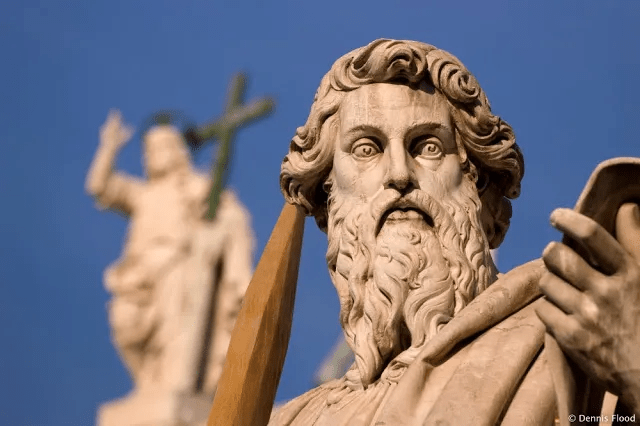
The “Fool’s” Speech (2 Corinthians 11:16-33)

I repeat: Let no one take me for a fool. But if you do, then tolerate me just as you would a fool, so that I may do a little boasting. In this self-confident boasting I am not talking as the Lord would, but as a fool. Since many are boasting in the way the world does, I too will boast. You gladly put up with fools since you are so wise! In fact, you even put up with anyone who enslaves you or exploits you or takes advantage of you or puts on airs or slaps you in the face. To my shame I admit that we were too weak for that!

Whatever anyone else dares to boast about—I am speaking as a fool—I also dare to boast about. Are they Hebrews? So am I. Are they Israelites? So am I. Are they Abraham’s descendants? So am I. Are they servants of Christ? (I am out of my mind to talk like this.) I am more. I have worked much harder, been in prison more frequently, been flogged more severely, and been exposed to death again and again. 

Five times I received from the Jews the forty lashes minus one. Three times I was beaten with rods, once I was pelted with stones, three times I was shipwrecked, I spent a night and a day in the open sea, I have been constantly on the move. I have been in danger from rivers, in danger from bandits, in danger from my fellow Jews, in danger from Gentiles; in danger in the city, in danger in the country, in danger at sea; and in danger from false believers. I have labored and toiled and have often gone without sleep; I have known hunger and thirst and have often gone without food; I have been cold and naked. Besides everything else, I face daily the pressure of my concern for all the churches. Who is weak, and I do not feel weak? Who is led into sin, and I do not inwardly burn?

If I must boast, I will boast of the things that show my weakness. The God and Father of the Lord Jesus, who is to be praised forever, knows that I am not lying. In Damascus the governor under King Aretas had the city of the Damascenes guarded in order to arrest me. But I was lowered in a basket from a window in the wall and slipped through his hands. (New International Version)
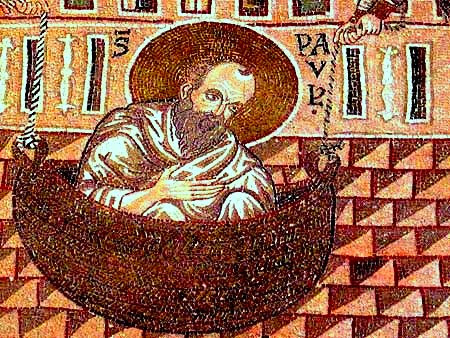
Paul escaped the city of Damascus by being lowered in a basket at night (Acts 9: 23-25)

At this point in the Apostle Paul’s second letter to the Corinthian Church, he levels a direct and devastating attack on his proud, arrogant, and boastful opponents in the church. He points out the foolishness of their boasting, by means of playing the fool himself.

The gist of Paul’s argument was to boast of his humiliating experiences. In truth, Paul had plenty of glorious accomplishments he could have droned on about. Instead, he sought to expose the wide gulf that separated his understanding of apostolic ministry, and theirs.

With some rather hefty sarcasm behind his words, Paul offered some foolish boasting according to the human standards of his opponents. The Corinthians believed themselves to have superior strength and wisdom. Surely, they’re able to put up with these pathetic apostolic weaklings!

In reality, it is Paul’s weakness – and not humanly contrived understandings of strength – which establish his credibility and superiority as a minister of Christ’s gospel. The evidence is his hardships and trials – not his many triumphs. Paul intended for this irony to be felt by the Corinthians.

The Apostle’s litany of woes and adversities wasn’t meant to one-up the Corinthians. Rather, it was intended to be a parody of the Corinthians’ claims to superior wisdom and spiritual power.

While the church boasted of all the things that showed their strength, Paul boasted of his weaknesses – because it’s truly in weakness that the transcendent power of God is made known and manifested in this world.

Paul’s experience in Damascus not only illustrated the extreme danger he was in, but it served as an example of his weakness in contrast to the mighty strength of the Roman Empire.

In the Roman army, the soldier with the greatest strength and valor was the one who scaled the enemy wall first. The courageous ascent of the Roman soldier is viewed alongside the inglorious descent of Paul along the wall in escaping.

Christianity grew, flourished, and thrived not because of superior earthly strength, but because of humiliating weakness which allowed the power of heaven to work through it.

In light of Paul’s view of leadership and ministry, I find that many contemporary leadership theories are woefully lacking in an understanding of how people tick.

For example, some philosophies treat humans as if they were machines, and treat workers as cogs or parts in a larger mechanistic worldview, as if they could be replaceable.

Yet, leadership that relies on the factory system will inevitably demean a person’s basic humanity and see nothing of their inherent uniqueness and deserving of respect.

Instead, a more biblical, compassionate, and practical leadership style discerns that relationships are key; and that individual persons bring something special to their work, even if they are doing the same job as others.

In this understanding of leadership, every single person does their work or ministry in a way that isn’t fully reproducible by others. Our individual human uniqueness ensures that our place in the world is needed, and that what we bring to every endeavor we do is a special one-of-a-kind offering that no one else can do.

What’s more, in this view of leadership, there’s no room for boasting, at all. And no place for arrogant pride, because boasting is based upon comparison.

If every person is a unique creation of God, and everyone brings something individually special to their efforts, then comparison is a foolish waste of time, and boasting is nothing more than a fool’s game.

You can always tell the fool by how they keep talking and cannot keep their mouth shut about all of their accomplishments and everything they know. If they believe they’re right, and try and prove it with their comparative superiority to others, then you can bet that what you have in front of you is a card-carrying honest-to-goodness genuine Fool, with a capital “F.”

We can do better. And we can be better leaders and offer better leadership philosophies which are based in humility, the value of each person, sound relationships, and effective peacemaking.

Anything less than that will likely get a sarcastic comment from the Apostle Paul in heaven.

Give us, O God,
leaders whose hearts are large enough
to match the breadth of our own souls;
and give us souls strong enough
to follow leaders of vision and wisdom. Amen.

Addressing the Divisions Amongst Us (1 Corinthians 4:8-13)

Are you already satisfied? Are you now rich? Have you become kings while we are still nobodies? I wish you were kings. Then we could have a share in your kingdom.

It seems to me that God has put us apostles in the worst possible place. We are like prisoners on their way to death. Angels and the people of this world just laugh at us. Because of Christ we are thought of as fools, but Christ has made you wise. We are weak and hated, but you are powerful and respected. 

Even today we go hungry and thirsty and don’t have anything to wear except rags. We are mistreated and don’t have a place to live. We work hard with our own hands, and when people abuse us, we wish them well. When we suffer, we are patient. When someone curses us, we answer with kind words. Until now we are thought of as nothing more than the trash and garbage of this world. (Contemporary English Version)

On this particular July 4 in the USA, there is perhaps no more pertinent biblical passage than today’s in addressing the current American political and emotional climate. Yet, before this is specifically addressed, let’s understand what was going on with the Apostle Paul and the Corinthian Church…

The Corinthian Divisions

Special interest groups had formed within the church. Each was following a specific person – some Paul, some Apollos, and some other leaders and teachers. The groups began to harden into political church factions. And Paul wanted nothing to do with this way of being Christian, because it is antithetical to the gospel itself.

Christ died to bring unity, not division. Paul established egalitarian churches that showed no favoritism. The Corinthians were called to a way of being that breaks down barriers between rich and poor, Jew and Greek. This business of groups and factions only fostered the division which Christ died to do away with.

By the time the Apostle wrote his letter to the Corinthian Christians, they had devolved a way of being with each other that was judgmental. They were pointing out unhealthy and demeaning comparisons, and boasting about how their group was more spiritual and wise than the others.

The Apostle Tackles the Divisions

So Paul, never one to shy away from initiative and justice, went on the offensive. Admittedly, in today’s New Testament lesson, Paul is quite sarcastic. He was actually mocking the Corinthians for their sinful arrogance and pride; and he used their own ways of being together against them to demonstrate how utterly foolish and ridiculous they were being.

The Apostle Paul countered with some comparisons of his own, using the example of the apostles themselves. Through his sarcastic comparison, he essentially argued that God used the very real oppression and suffering of the apostles toward good and positive ends.

Paul contrasted the apostles and the Corinthians to show the injustice that was happening in their factional wars with each other. By drawing attention away from the Corinthians and putting it on the apostles, Paul upheld a Christian ministry of weakness, not strength.

The apostles endured much suffering and opposition in their ministry. Paul viewed himself as a sort of dishrag that was used to clean the dirty dishes of the world. And he was okay with that, because it had a redemptive purpose. But he was not at all okay with the dirty business of factions and divisions within the church.

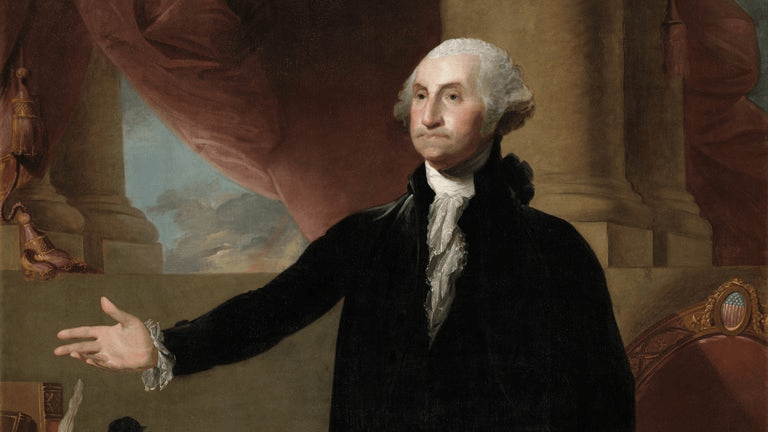
George Washington Addresses the Divisions

In our own day, it’s as if we have not learned the lessons of the past. And that is most likely because we have such little historical knowledge and awareness. I know of few people who realize George Washington was very much against a party system of government – and argued against it for similar reasons to the Apostle Paul.

Washington considered parties to be the bane of republican government. Parties were factions that threatened to divide the electorate into competing groups who might use violence to advance their interests.

He argued that political parties might also disrupt the separation of powers, especially in the case of unified government where loyalty to a party could interfere with the system of checks and balances.

What’s more, Washington said that parties threatened to stand in the way of effective representation, with elected officials tempted to represent only fellow party members and to leave opposition groups without a voice in government.

George Washington was mostly unique among the founders in never reconciling himself with political parties and never acknowledging the positive things that parties can bring to republican government.

Although it’s likely that Washington understood that parties were inevitable, he argued for keeping them under restraint and limiting their interference in the political process as much as possible.

Obviously, the party system won out, and rather quickly. In a healthy state of being, political parties can mobilize voters and encourage voter participation. They help build support for officeholders and serve as conduits of communication to the people. Political parties allow minorities to form coalitions to create majority rule.

Stick with the Evidence

Yet, what we seem to continually experience nowadays is the unhealthy aspect of the party system. People are hardened and reified into established positions and refuse to listen to the other. In such a position, evidence-based practices take a back seat.

For example, although there is not a shred of evidence that the former U.S. President experienced a hung jury and a corrupt judge in being convicted on 34 felony counts, a sizable chunk of Americans believe the corruption to be true – seemingly only because the former President said so, and without any objective, reasonable, and serviceable evidence to offer in backing up that claim.

And that prideful hardened spirit is the very thing that was happening in the ancient Corinthian Church. They wanted what they wanted, and they didn’t care what the other group thought. Each group believed (without evidence) they were wise and right. Yet, all of them were, in reality, foolish and unjust.

If we want a better public political climate; the freedom to be who we are; and confidence for the future; then, we had better begin with examining ourselves and listening well to the other first, before we assume that our own group is in the right and should be in control.

The privileges of freedom can only be enjoyed by embracing the responsibilities of freedom. And those responsibilities include a unified concern for the common good of all citizens, and not just the ones I like and who agree with me.

O God, the Father of our Lord Jesus Christ, our Savior, and the Prince of Peace; Give us grace to lay aside our unhappy divisions. Take away all hatred and prejudice, and whatsoever else may hinder us from godly union and concord. Help us to build bridges, not walls, and live into the unity you provided for us in Christ, through the Spirit. Amen.

Ministry to the Poor and Needy (2 Corinthians 9:1-5)

If I wrote any more on this relief offering for the poor Christians, I’d be repeating myself. I know you’re on board and ready to go. I’ve been bragging about you all through Macedonia province, telling them, “Achaia province has been ready to go on this since last year.” Your enthusiasm by now has spread to most of them.

Now I’m sending the brothers to make sure you’re ready, as I said you would be, so my bragging won’t turn out to be just so much hot air. If some Macedonians and I happened to drop in on you and found you weren’t prepared, we’d all be pretty red-faced—you and us—for acting so sure of ourselves.

So to make sure there will be no slipup, I’ve recruited these brothers as an advance team to get you and your promised offering all ready before I get there. I want you to have all the time you need to make this offering in your own way. I don’t want anything forced or hurried at the last minute. (The Message)

Organizing relief efforts, and giving to relief organizations, is nothing new. Poverty and need has existed as long as humans have been on this earth. The constant rub is this: Some people aren’t in poverty, and some are.

So how do we get resources from the people who have them to the people who are really in need? Just as important, and perhaps more basic, how will folks care enough about the poor to give money and basic relief?

The Apostle Paul informed the Corinthian Church that he boasted about them to the Macedonians – about their eagerness to participate in ministry toward their fellow believers in need. The Macedonian believers had been ready to participate for quite some time.

In stating this, Paul intended to stir up the Corinthians about the offering for believers in Jerusalem. He had organized a delegation of Macedonians, along with persons from Paul’s own ministry team, to go to Corinth together. The last thing Paul wanted was to have the Corinthians unprepared to give.

Paul was a person who intended to do good, and then followed through with it. He held people accountable for their actions and inactions. He organized the benevolent offering for Jerusalem’s believers, and then made sure that all of the churches good intentions became reality.

Although Paul’s concern in organization and accountability may strike some as coercion for funding, it seems to me that a more plausible reason is that Paul simply wanted to try and ensure that everyone’s giving was done from a place of love, not coaxing or guilting.

The Apostle wanted believers and churches working together for good purposes. He wanted everyone to have a positive experience of helping and being united in spirit and purpose. The churches were young, and Paul was doing everything he could to encourage their growth in grace.

A good way of fostering unity and mission would be to have the churches participate in helping needy believers in Jerusalem. It was a very worthy and needed cause – and also served the cause of Christ.

What’s more, ministry to the poor has always been a hallmark of pure religion. A concern, dedication, plan, and accountable action on behalf of the poor helps everyone, and demonstrates authentic ministry.

My dear friends, pay attention. God has given a lot of faith to the poor people in this world. God has also promised them a share in his kingdom that he will give to everyone who loves him. (James 2:5, CEV)

We are to care about the needy because God cares about persons trapped in poverty. The poor are people; and all people are important. Jesus came to this earth to have a ministry to them; and he lifted a text from Scripture (Isaiah 61:1) to give his reason for doing so:

“The Spirit of the Lord is upon me because he has chosen me to bring good news to the poor.”(Luke 4:18, GNT) 

God has a lot to say about the poor and needy because they are dear to the divine heart. The Old Testament law was quite clear about how to treat the poor: 

Poor persons will never disappear from the earth. That’s why I’m giving you this command: you must open your hand generously to your fellow Israelites, to the needy among you, and to the poor who live with you in your land.(Deuteronomy 15:11, CEB)  

Let’s keep in mind that only the poor in spirit will enter the kingdom of heaven. Our trust is to be in God, and not in our money or our stuff. 

The genuine believer has a real humility that demonstrates grace to people who cannot offer them something in return. It’s easy to be merciful to those who will turn around later and scratch our backs. But it is altogether a different thing to give without any strings attached. 

God cares about the condition of our souls, and not the balance on our bank statements. Since God does not judge people on face value, nor on the state of their finances, then neither should we.

The Apostle Paul, in his ministry, sought to teach others in the way of Jesus by:

  • Turning people from only associating with those they are comfortable with, to lovingly reaching out to people very different from themselves
  • Changing people’s thinking from what they can obtain and consume, to becoming people of love and generosity with their words and their physical resources
  • Putting to death: a proud spirit that looks to get ahead; all personal petty agendas; accumulation of more power; and exertion of control – but instead, provide humble repentance and forgiveness

Ministry to the poor is a non-negotiable for the Christian church. Beyond only dispensing benevolent funds, the poor need relationships, connections, resources, and a chance to give back in ways they can contribute.

Lord God, you came to honor the least, the forgotten, the overlooked, and the misjudged. You came to make the last, the left behind, the misunderstood, and the undervalued, first. You came to give a warm welcome to the lost, the orphaned, the abandoned and the destitute.

Help us to be your ears to listen to their cries; and your voice speaking out love and acceptance. Help us to be your feet walking beside those in need; and your hands to clothe, feed and shelter them. You came for the least, the lost and last of this world. Lord, hear our prayer. Amen.

For the Love of God, Not Money (2 Corinthians 8:1-7)

And now, brothers and sisters, we want you to know about the grace that God has given the Macedonian churches. In the midst of a very severe trial, their overflowing joy and their extreme poverty welled up in rich generosity. 

For I testify that they gave as much as they were able, and even beyond their ability. Entirely on their own, they urgently pleaded with us for the privilege of sharing in this service to the Lord’s people. 

And they exceeded our expectations: They gave themselves first of all to the Lord, and then by the will of God also to us. So we urged Titus, just as he had earlier made a beginning, to bring also to completion this act of grace on your part. 

But since you excel in everything—in faith, in speech, in knowledge, in complete earnestness and in the love we have kindled in you—see that you also excel in this grace of giving. (New International Version)

I’ll be honest: As a preacher and pastor, I don’t much like talking about money. Yet, money is always an issue, especially in churches.

Although there are contemporary pastors and churches who deal with millions of dollars, the vast majority of believers and faith communities struggle from Sunday to Sunday. Money is a topic that has to be addressed and talked about.

So, even though there are plenty of abuses out there when it comes to money, it’s good to gain a more biblical, reasonable, and compassionate view of financial resources.

Holy Scripture does not condemn economic wealth; but it does warn us against the love of money, and centering our lives around it. Perhaps Jesus said it best:

“No one can serve two masters. Either you will hate the one and love the other, or you will be loyal to the one and have contempt for the other. You cannot serve God and wealth.”

Jesus (Matthew 6:24, CEB)

Jesus clarified the issue of money as a matter of our values and commitments. To possess money in and of itself is neither good nor bad; it’s whether money is the master you serve, or God is, with money being a tool to serve the Lord.

In writing to Timothy about how to instruct the Ephesian Church concerning money, the Apostle Paul framed the issue this way:

But people who are trying to get rich fall into temptation. They are trapped by many stupid and harmful passions that plunge people into ruin and destruction. The love of money is the root of all kinds of evil. Some have wandered away from the faith and have impaled themselves with a lot of pain because they made money their goal. (1 Timothy 6:9-10, CEB)

Financial resources are tools to be used, not only in providing for oneself and one’s family, but also to do good and to think of the common good of all people.

And that is exactly what the Apostle Paul was intent on doing. He was gathering a collection for the believers in Jerusalem. So, he took some space (2 Corinthians 8-9) in writing to the Corinthian Church for addressing this issue, as well as money and wealth in general.

Paul unabashedly called upon the Corinthian Christians to give, and considered it their obligation to do so.

The Apostle broached the subject by challenging the Corinthians to follow the example of the Macedonian churches. Paul fully embraced his training in rhetoric in using the technique of comparison to evoke competition between Corinth and Macedonia.

He did so by alluding to the generosity of the Macedonians. Even though the Macedonian believers were themselves experiencing a severe ordeal of affliction and even poverty, they voluntarily gave quite generously.

What’s more, the Macedonians gave well beyond their means. Paul didn’t ask them to do that; and nobody expected it of them. If anything, the churches in Macedonia could have probably received a collection of money and resources themselves. Yet, instead, they stretched themselves financially and gave.

The motivation to give from such meager resources, and in such a difficult situation, was an overflow of the believers’ hearts. In other words, they really wanted to give, so they did. The Macedonian Christians discerned that their true calling was to give of themselves to the Lord, and therefore, to also give of themselves to the Apostle Paul.

So then, Paul encouraged the Corinthian Christians to demonstrate their own commitment and loyalty to both God and to the Apostle. Titus would show up in Corinth to receive the collection, and Paul expected them to be generous – mainly because he knew they could do so, and therefore, ought to do so.

Paul established the church in Corinth. He spent a good deal of time there amongst the people and the city. He knew them well. And Paul was often frustrated with them, even sometimes using sarcasm to get his point across.

I wonder if he was a bit sarcastic, appealing to the Corinthians’ sense of pride in their city and their wealth. After all, the Corinthians excelled in everything else – such gifted people! (or so they always thought). Surely, they would also take full advantage of this opportunity to excel in giving, and be as generous as they possibly could!

Throughout my years of pastoral ministry, I have found in every place I’ve been, ironically, that those with little give much; and those with much give little.

Indeed, the wealthy are able to give much more than the poor. But I have never seen a rich person give everything they have for a cause, whereas many times, I have seen a person in poverty give everything they have for another. That’s also the observation Jesus made when folks were giving their offerings at the Temple:

Jesus sat across from the collection box for the temple treasury and observed how the crowd gave their money. Many rich people were throwing in lots of money. One poor widow came forward and put in two small copper coins worth a penny.

Jesus called his disciples to him and said, “I assure you that this poor widow has put in more than everyone who’s been putting money in the treasury. All of them are giving out of their spare change. But she from her hopeless poverty has given everything she had, even what she needed to live on.” (Mark 12:41-44, CEB)

Indeed, money is very much needed in this life. And money isn’t everything. Economic wealth, financial resources, and money are temporary. God and relationships are permanent. Life is eternal, at least for those who haven’t centered their lives around money as their god.

Money is to be used for good in this world. It is a tool. So, let’s use it with wisdom and a generous heart, putting it in it’s proper place in our lives.

Lord of our lives, teach us how to use our money and our possessions. Deliver us from stinginess and wasteful extravagance; inspire our giving with the spirit of true generosity. Help us always to remember your generous love for us, that we may be wise and faithful stewards of the good gifts you have given us. Amen.