2 Samuel 5:17-25 – Inquire of God

When the Philistines heard that David had been anointed king over Israel, they went up in full force to search for him, but David heard about it and went down to the stronghold. Now the Philistines had come and spread out in the Valley of Rephaim; so, David inquired of the Lord, “Shall I go and attack the Philistines? Will you deliver them into my hands?”

The Lord answered him, “Go, for I will surely deliver the Philistines into your hands.”

So, David went to Baal Perazim, and there he defeated them. He said, “As waters break out, the Lord has broken out against my enemies before me.” So that place was called Baal Perazim.The Philistines abandoned their idols there, and David and his men carried them off.

Once more the Philistines came up and spread out in the Valley of Rephaim; so, David inquired of the Lord, and he answered, “Do not go straight up, but circle around behind them and attack them in front of the poplar trees. As soon as you hear the sound of marching in the tops of the poplar trees, move quickly, because that will mean the Lord has gone out in front of you to strike the Philistine army.” So, David did as the Lord commanded him, and he struck down the Philistines all the way from Gibeon to Gezer. (New International Version)

Ordinary Time of Prayer

Let’s take a step back for a moment and see the big picture of the Christian Year. We have thus far experienced Advent and Christmas with the birth of Christ. We moved through Epiphany with its focus on the light of Christ for the world. We experienced Lent, celebrated Easter and spent weeks in Eastertide, basking in the glory of the resurrection. Christ’s ascension, then the Spirit’s coming at Pentecost have come.

Now we are in Ordinary Time – the longest season of the Christian Year. It isn’t sexy. It goes on and on until Advent finally arrives again, months later. We are in the doldrums of summer and the daily reality of living with the tedium of doing what we need to do, over and over again.

Prayer can sometimes feel that way. Although it is the normal ordinary vocation of every believer, prayer is not always easy nor is it done consistently.

David’s Time of Prayer

David continued a practice of prayer in his reign, just as he had done repeatedly in the years leading up to becoming the king. The compiler of stories about David wanted to ensure the connection between prayer, obedience, and success. King David inquired of God, did exactly what God told him to do, and then watched God act on behalf of the people.

It sounds simple when I put it that way, doesn’t it? Pray. Obey. Succeed. Yet we know it really isn’t so easy. The monotony and demands of our lives have a way of crowding out such a simple plan. Although it might only require a few minutes of our time to stop and inquire of God before acting, we still may not do it, believing our anxious action to be more necessary than a brief pause.

King David faced and defeated the opposition because he deliberately took the time and effort to ask God for direction in what to do. David neither trusted in his own past experience nor his accumulated expertise. Rather, he kept up his ongoing practice of living by faith and trusting the Lord to guide him.

Sometimes we ask for divine guidance and get what seems to be weird answers. David was given precise instructions in dealing with the Philistines. From the vantage of a human General, the orders didn’t make a lot of sense. However, David did not hesitate to do exactly what he was told – and there was a decisive victory.

Our Time of Prayer

When it comes to our prayers, we ought to expect the unexpected. God’s answers frequently look more like problems than answers. They are often not what we expect. We may fail to see how they correspond to our prayers.

If we inquire of God to love others, the Lord just might respond by having us pay attention to someone in our lives who is obnoxious to us, whom we rather would not be around, at all. (Mark 12:31; Luke 10:29)

If we inquire of God to be near us, the Lord may break our hearts to especially be close to us. (Psalm 73:28; Psalm 34:18)

If we inquire of God to receive grace and mercy, the Lord will likely dismantle our pride and humble our hearts. (James 4:6)

If we inquire of God for justice to be done on this earth, the Lord might put the spotlight on our own lives and expose our spiritual bankruptcy, cause us to mourn, and make us meek, as the Son is meek. (Matthew 5:3-5)

If we inquire of God for wisdom and discernment, the Lord could send a muddle of confusion for us to work through, teaching us to distinguish between good and evil. (Hebrews 5:14)

If we inquire of God to save us from our predicament and take away our fear and anxiety, we may get only silence for a long while – prompting us to persevere in prayer. (Luke 17:5; 2 Corinthians 5:7)

If we inquire of God for money, the Lord might give us opportunities to give money away and deplete our resources – helping to build treasure in heaven, not just on earth. (Matthew 6:19-21; Luke 16:13)

If we inquire of God for happiness, the Lord just may take away a bunch of our stuff so that we will know the surpassing joy of knowing Christ. (John 16:24; Philippians 3:8)

Many of God’s best and greatest gifts come in the form of befuddling answers. If we learn to go with it and obey, a new world of possibility is opened to us that we never would have anticipated.

Being in Ordinary Time doesn’t necessarily mean getting ordinary answers to our prayers.

 Now all glory to God, who is able, through his mighty power at work within us, to accomplish infinitely more than we might ask or think. Glory to him in the church and in Christ Jesus through all generations forever and ever! Amen.

*Above painting of King David by Dutch artist Gerard van Honthorst (1592-1656)

1 Chronicles 10:1-14 – Faithfulness Matters

The Philistines fought against Israel in a battle at Mount Gilboa. Israel’s soldiers ran from the Philistines, and many of them were killed. The Philistines closed in on Saul and his sons and killed three of them: Jonathan, Abinadab, and Malchishua. The fighting was fierce around Saul, and he was gravely wounded by enemy arrows.

Saul told the soldier who carried his weapons, “Kill me with your sword! I don’t want those godless Philistines to torture and make fun of me.”

But the soldier was afraid to kill him. Then Saul stuck himself in the stomach with his own sword and fell on the blade. When the soldier realized that Saul was dead, he killed himself in the same way.

Saul, three of his sons, and all his male relatives were dead. The Israelites who lived in Jezreel Valley learned that their army had run away, and that Saul and his sons were dead. They ran away too, and the Philistines moved into the towns the Israelites left behind.

The next day the Philistines came back to the battlefield to carry away the weapons of the dead Israelite soldiers. When they found the bodies of Saul and his sons on Mount Gilboa, they took Saul’s weapons, pulled off his armor, and cut off his head. Then they sent messengers everywhere in Philistia to spread the news among their people and to thank the idols of their gods. They put Saul’s armor in the temple of their gods and hung his head in the temple of their god Dagon.

When the people who lived in Jabesh in Gilead heard what the Philistines had done to Saul, some brave men went to get his body and the bodies of his three sons. The men brought the bodies back to Jabesh, where they buried them under an oak tree. Then for seven days, they went without eating to show their sorrow.

Saul died because he was unfaithful and disobeyed the Lord. He even asked advice from a woman who talked to spirits of the dead, instead of asking the Lord. So, the Lord had Saul killed and gave his kingdom to David, the son of Jesse. (Contemporary English Version)

The books of Samuel and Chronicles contain similar content and material concerning the kings of Israel and Judah. Yet, whereas 1 & 2 Samuel gives a more straightforward narrative, 1 & 2 Chronicles often provides the narrative with explanatory comments. 

We have such a story in today’s Old Testament lesson. The last chapter of 1 Samuel gives an account of King Saul’s death, along with his sons. However, in 1 Chronicles 10, we get the narration of their deaths along with a clear concise note on why King Saul perished in battle:

Saul died because he was unfaithful to the Lord and hadn’t followed the Lord’s word. He even consulted a medium for guidance. He didn’t consult the Lord, so the Lord killed him and gave the kingdom to David, Jesse’s son. (1 Chronicles 10:14, CEB)

The original compiler of Chronicles did so for the Jewish exiles who were returning to Palestine. He did not want to simply recount the important stories of the kings of Israel; he wanted the exiles to know exactly why they went into exile to begin with, and how in the future they could keep it from happening again. So, Saul served as Exhibit A of the kind of person that erodes the true worship of God and lives against the grain of faithfulness to the Lord.

The true measure of a godly person is not in titles, positions, or membership. The real test of a faithful person is obedience to, and observance of, the revealed will of God contained in Holy Scripture. Thus, to read it, know it, and live it is one of the highest callings as God’s people.

Faith in the Bible is a complete trust in who God is and what God has done. The Lord shows faithfulness through steadfast love, gifting people with faith to obey, and remaining true to divine promises for humanity.

In the New Testament, the height of faith is to place one’s life completely in God’s hands, believing in the person and work of Jesus Christ. Faith involves both information and action.

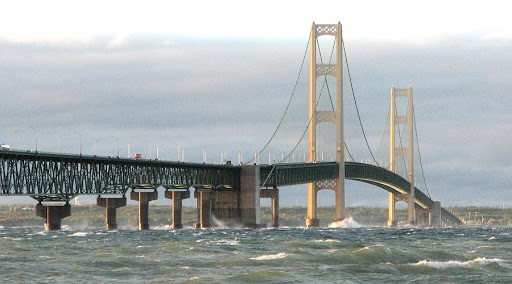
For example, the Mackinac Bridge, connecting the upper and lower regions of Michigan, is an imposing structure. It’s the longest suspension bridge in the Western hemisphere at 26,372 feet. At its mid-point, the bridge’s roadway towers 200 feet above the Mackinac Straight.

The wind on the bridge can be punishing. In 1989, a woman died when her small car flew over the 3-foot-high railing and plunged into the water due to an excessively high gust of wind. I have crossed the bridge many times. Sometimes the bridge is open to road traffic, and sometimes not, due to the wind conditions. The bridge authorities even have a protocol about how to cross the bridge when it is windy but not excessively so (driving beside a truck).

This is all important and necessary information for crossing the Mackinac Bridge. Yet, knowledge alone is not enough. At some point, one needs to actually drive across the bridge. Information must lead to action. I couldn’t just cross the Straight between the two regions of Michigan at any point along the land with a blind faith that believes I’ll make it to the other side. I needed some knowledge. Then, I needed the courage to act on that knowledge.

The person who is scared crossing the bridge, and the person who thinks nothing of it, both make it to the other side. It isn’t the amount of faith that is important; it’s in what (or who) that faith is placed. Faith in the Bible is having some important and useful information about God, then putting that knowledge into action with a trust and commitment that you’ll make it to the other side.

Saul tried to cross over on his own terms. It didn’t go so well for him. His car was picked up and thrown into the Straight.

We need to be careful what and whom we consult when we are stressed. Not collaborating with God isn’t going to end well. Being faithful matters.

Who are you faithful to? Where is your trust placed? Because the answer to those questions determines which actions we will take.

Eternal God, you remain the same throughout the ages of time. Help me to be faithful to your standard of righteousness and live faithfully into the ways of Jesus, my Lord. Amen.

Deuteronomy 11:18-21 – Leave a Spiritual Heritage

You shall put these words of mine in your heart and soul, and you shall bind them as a sign on your hand and fix them as an emblem on your forehead. Teach them to your children, talking about them when you are at home and when you are away, when you lie down and when you rise. Write them on the doorposts of your house and on your gates, so that your days and the days of your children may be multiplied in the land that the Lord swore to your ancestors to give them, as long as the heavens are above the earth. (New Revised Standard Version)

Remember God’s Law

The book of Deuteronomy is a farewell address by Moses to the Israelites. Moses was about to die. The Israelites were about to enter the Promised Land. So, Moses restated God’s law and called the people to remember all that God had done. He exhorted the people to communicate the law and their heritage to the next generations. If God’s Word and God’s ways are continually observed, then the people would prosper in the land.

The overarching command and call to the people is to love God with everything they have and everything they are. God’s people are to have a total commitment of mind, body, emotions, and spirit to the law of God. Each ability and gift, and all that makes a person a person, is to have its clear direction and orientation toward loving God through obeying God’s commands.

Talk About God’s Word

The love of God is meant to become a habit in the normal daily rhythms of life. And we are told how to do that:  impress God’s commands in the family; talk about them at home; talk about them when you are out and about; talk about them in the morning and the evening; even write them out and have them before you continually.  The entire day is an opportunity to love God by talking about God’s Word.

The privilege of discussing God’s Word doesn’t need to be forced or awkward. Yet, it is something which needs some intention and purpose to it. Most people like talking about things which are important to them. If someone is really into classic cars, he does not have to try and force a conversation about it because it just comes out of him. Because they go to car shows, maybe own a classic car that they are continually tinkering with, and read up on car magazines, a discussion about the subject is quite natural to them.

So, then, the best way to live into God’s law is to spend time with God through regular Bible reading, focused and earnest prayer, conversing with others, and taking advantage of opportunities to learn and know about God.  For the Christian, talking about Jesus is meant to be organic, springing from a heart which loves God and observes God’s law.

Discuss God with Family

When it comes to family, we don’t need to be an expert on God or the Bible. We just need a willingness and a curiosity to ask questions. Typically, when raising my girls, most of our conversations at the table centered around one question I would ask. We discussed it, talked about it, and mulled it over. Sometimes it was a deep theological question. At other times, it was a practical question. My wife and I often had others share a meal with us, so I usually asked our guests to tell their God story or participate with us in the question. If they were not Christian, I would ask them what they thought about Jesus, and why.

God loves it when we have conversation in the home around biblical teaching. God also loves it when we have discussions in public. Some Orthodox Jewish persons still to this day wear a “phylactery” on their foreheads – a small box with little Scripture passages inside of it – testifying to their value of the written Word.

I’m not sure that’s what Moses had in mind when he talked about binding God’s commands on the forehead and tying them as symbols on the hands. Much of the Hebrew language is metaphorical, speaking about concrete things as a way of communicating something intangible. So, I wonder if the big idea here is simply to be open about faith and love for God and the law.

Keep Tangible Reminders of Scripture

Although I don’t believe we have to take these verses quite so literally, there is, however, something to be said for keeping Holy Scripture in front of us, continually, to remember divine commands and promises. It’s good to write some Bible verses and place them on your bathroom mirror, the dash of your car, in your pants pocket, or anywhere you will see them on a regular basis. It’s a practical way of remembering to observe all that God has commanded.

Physical reminders of significant spiritual events can help us keep God’s Word in our lives. When the Israelites experienced God in some significant way, they built an altar. For example, when they approached the Jordan River to enter the land, God caused the water to stop flowing so that they could cross over. Here is what happen next: 

Joshua erected a monument, using the twelve stones that they had taken from the Jordan. And then he told the People of Israel, “In the days to come, when your children ask their fathers, ‘What are these stones doing here?’ tell your children this: ‘Israel crossed over this Jordan on dry ground.’

“Yes, God, your God, dried up the Jordan’s waters for you until you had crossed, just as God, your God, did at the Red Sea, which had dried up before us until we had crossed. This was so that everybody on earth would recognize how strong God’s rescuing hand is and so that you would hold God in solemn reverence always.” (Joshua 4:20-24, MSG)

Passing the spiritual baton and leaving a heritage for future generations is a sacred trust. The best way for that to happen is within the home, talking about God and Scripture as a daily routine, as well as freely conversing about spirituality in public.

Pass Faith to the Next Generation Church

Hopefully, God and Jesus get talked about in the church! There are several ways churches can impress God’s Word to younger generations: 

  1. Train them to lead.  Adults do not have to do everything in the church. Every generation can be empowered to engage in ministries on a regular basis. Everyone needs a mentor to do anything well – which means taking others with us along the journey of ministry so they can both shadow and participate.
  2. Empathize with young people and young families. That means avoiding criticism. It’s easy for older generations to be critical about millennials – their lack of involvement, or how they live their lives. They don’t need our criticism; they need our help. To have empathy means we recognize they’re just trying to do the best they can in a crazy world. A world, I might add, which is quite different than the one many of us grew up in. This is an extremely competitive world, requiring more energy and drive than previous generations. Being a student today is not like being a student when I was a kid.  Being a young parent is not the same today as it once was. Today’s family structure is completely changed; what we think of as a traditional family only makes up 7% of the American population. The stance to take on this is not to criticize, but to encourage and help.
  3. Take Jesus’ message seriously.  Discussion, conversation, questions, and mutual sharing are the ways Jesus developed his followers, and it is a way we can reach younger generations. Dialogue goes a lot further than just telling others what they should believe and do.
  4. Adopt a young person, or a young family. If you consider yourself part of an older generation, seriously consider taking a younger person or even family under your wing who is not related to you. Invite them to a meal, read these verses, and discuss them together. Commit to praying for them daily for a set period.
  5. Look for ways to support children, teens, and young families. Prioritizing younger generations means they don’t have to do everything our way. Rather, it means we will listen to what they need in loving God and building into their own kids’ lives.
  6. Be great neighbors. Discuss, teach, empower, and develop young people without criticism into good neighbors who engage their local community by addressing issues with great love and lots of compassion.

There are certainly more ways to engage. The idea here is that we think about how to embody the teaching we have in Deuteronomy by passing on God’s love and God’s Word. Where will you start? Is there a way that resonates with you?  If you are a younger generation, who are some people you believe could be helpful to you? Let’s work together to realize God’s Word springing to life!

Deuteronomy 11:1-17 – Knowing Our Boundaries

Love the Lord your God and follow his instruction, his regulations, his case laws, and his commandments always. And know right now what your children haven’t known or yet witnessed:

  • The Lord your God’s discipline, his power, his mighty hand and outstretched arm.
  • The signs and the acts that he performed in the heart of Egyptian territory, against Egypt’s King Pharaoh and all his land.
  • What God did to the Egyptian army, to its horses and chariots—how he made the water of the Reed Sea flow over their heads when they chased after you, but the Lord destroyed them, and that’s how things stand right now.
  • What the Lord did for you in the desert, until you arrived at this place.
  • And what he did to Dathan and Abiram, the descendants of Eliab the Reubenite, when the ground opened its mouth and swallowed them, their families, their tents, and every living thing they possessed in the presence of all Israel.

Your own eyes witnessed each of these powerful acts the Lord performed. So, keep every part of the commandment that I am giving you today so that you stay strong to enter and take possession of the land that you are crossing over to possess, and so that you might prolong your life on the fertile land that the Lord swore to your ancestors to give to them and their descendants—a land full of milk and honey.

The land you are about to enter and possess is not like the land of Egypt, where you came from, where you sowed your seed and irrigated it by hand like a vegetable garden. No, the land you are entering to possess is a land of hills and valleys, where your drinking water will be rain from heaven. It’s a land that the Lord cares for: The Lord’s eyes are on it constantly from the first of the year until the very end of the year.

Now, if you completely obey God’s commandments that I am giving you right now, by loving the Lord your God and by serving him with all your heart and all your being, then he will provide rain for your land at the right time—early rain and late rain—so you can stock up your grain, wine, and oil. He will also make your fields lush for your livestock, and you will eat and be satisfied. But watch yourselves! Otherwise, your heart might be led astray so you stray away, serving other gods and worshipping them. Then the Lord’s anger would burn against you. He will close the sky up tight. There won’t be any rain, and the ground won’t yield any of its crops. You will quickly disappear off the wonderful land the Lord is giving to you. (Common English Bible)

“Boundaries define us. They define what is me and what is not me. A boundary shows me where I end and someone else begins, leading me to a sense of ownership. Knowing what I am to own and take responsibility for gives me freedom. Taking responsibility for my life opens up many different options. Boundaries help us keep the good in and the bad out.”

Henry Cloud

God has boundaries. The Lord doesn’t just flit about doing whatever seems alright for the moment. No, God is firmly secure as the divine Being. God has a deliberate will and way. The Creator God is not okay with created humanity having no boundaries. Since we are people created in God’s image, we are to reflect that image in all things, including having the established boundary of taking charge of our own spiritual lives and obeying the Lord in all things.

God has opened the way of redemption for wayward people. It came first in the incredible event of the exodus from Egypt, then in the culmination of our freedom through the cross and resurrection of Jesus Christ. 

Therefore, God expects us to live into this opportunity without blaming divine action or inaction for our problems, as if fault lies outside of us. Just because God stands up to people and does not cave into their demands and their whining does not make the Lord mean or unjust – it simply means God doesn’t need the props or accolades of people. God is secure enough to not be dependent on humans.

Divine expectations are quite clear on where the boundary lines fall: Love. Yes, indeed, it comes down to love. Love the Lord your God and always hold tightly to the law with its statutes, rules, and commandments. There is no fudge factor to that statement, scratching our heads wondering what we ought to be doing. If we obey God, we will discover life as it ought to be lived – free from all the machinations of the world’s brokenness and insecurity – and yet securely confined within godly boundaries. 

God can exhort people to be strong and take the land. That’s because the Lord made it possible for them to do so by acting in history. Therefore, God expects us to respond in obedience to the boundary lines established so that we will flourish and grow as people in a new land.

There is a big divine pasture for us to enjoy and thrive within. Yes, there is a fence around it, marking the boundary of where we can go. It is there for our benefit and protection, and not to simply keep us in line. Longing for the green grass on the other side of the fence is to be unaware of the vast beauty and foliage all around us.

For we already have everything we need – if we possess the awareness and the gratitude to see it.

Great God Almighty, I choose today to obey you in all things out of the grace given to me because of Jesus Christ.  I want to please you in all I say and do, so that you will be seen as the glorious and exalted king of the universe.  Help me to live up to my standing in Christ in the power of the Spirit as I step into your world with the keys of the kingdom.  Amen.