Welcome, friends! The call of Jesus to his disciples two millennia ago remains the call for us, as well. Click the videos below and let us orient our lives around the gracious call of God…
I Will Follow by Chris Tomlin
May the Spirit of truth lead you into all truth, give you grace to confess that Jesus Christ is Lord, and strengthen you to proclaim the word and works of God; and may the blessing of God almighty, the Father, the Son, and the Holy Spirit, be among you and remain with you always. Amen.
Come Follow Me by Argentine painter Jorge Cocco Santángelo
After John was put in prison, Jesus went into Galilee, proclaiming the good news of God. “The time has come,” he said. “The kingdom of God has come near. Repent and believe the good news!”
As Jesus walked beside the Sea of Galilee, he saw Simon and his brother Andrew casting a net into the lake, for they were fishermen. “Come, follow me,” Jesus said, “and I will send you out to fish for people.” At once they left their nets and followed him.
When he had gone a little farther, he saw James son of Zebedee and his brother John in a boat, preparing their nets. Without delay he called them, and they left their father Zebedee in the boat with the hired men and followed him. (Mark 1:14-20, NIV)
This Gospel lesson is straightforward with two main points:
The call of Jesus on our lives.
The message Jesus gave us to proclaim.
The call of Jesus is to pursue him, and he will develop us. “Come, follow me,” Jesus said to Peter and Andrew, “and I’ll show you how to fish for people.” The simple truth here is that this is neither a suggestion nor really an invitation but a command. Jesus did the same with James and John, and all the original disciples. They listened to Jesus, dropped everything they were doing, and immediately followed him.
I am wondering what would make you drop everything to pursue an entirely new life. I am curious what could cause you to follow Jesus without any conditions attached. I am impressed that Peter and Andrew immediately obeyed Jesus. They did not question Jesus as to whether this was a short-term project or a long-term assignment. They did not seek a contract with Jesus or ask how he would impact their stock portfolio.
The first disciples simply dropped everything and left with Jesus. I suspect they followed Jesus for the same reason I originally decided to follow him – because Jesus is such a compelling person, so gracious, interesting, and loving that it was really no decision at all. Everything else pales in comparison with Jesus.
Read all four Gospels and the book of Acts in the New Testament and you will find that believers in Jesus follow Jesus; and those who do not follow Jesus are not believers. It really is that simple. Followers follow, and those who do not follow are not Christ’s disciples.
Jesus calls us, commands us, to follow him and he will make us fishers of humanity. You might be concerned and retort, “I have no idea how to fish for people.” The good news is that Jesus said he would make us fishers of people. Jesus is not looking for people with skills he can use. Instead, Jesus calls people and develops them into fishers. Christ forms people with the ability to follow his call.
Jesus will train us, which means we only need to answer the call to follow. When I was five years old my Dad took the training wheels off my bike and told me to ride it. I told him I couldn’t. He told me to get on the bike and he would run beside me. I got on the bike and started to ride with him holding it. When I began to panic approaching a tree I started talking to my Dad. He didn’t answer… because he wasn’t beside me. He dropped out from shagging me a long way back. The same thing happened with learning to swim. I insisted that I needed to be supported or I would drown for sure. Dad didn’t keep his hands underneath me. Yet, I’m still here – I didn’t drown.
We are not called to follow Jesus based on our skills, but on the lack of them so that Jesus will do in us a work of total allegiance and loyalty to the kingdom of God. Jesus will make sure to develop the competence we need to do what he has called us to do. We only need to hear and answer the call of Jesus to follow and to make us fishers of people.
The Fishermen by Cuban sculptor Rafael Consuegra, Petrozavodsk, Russia
The following is a parable about the church and being fishers of people: “Now it came to pass that a group existed who called themselves fishermen. Week after week those who called themselves fishermen met in meetings and talked about their call to fish, the abundance of fish, and how they might go about fishing. They discussed the importance of fishing and that fishing is the task of every fisherman. They listened to special speakers talk about fishing and they promoted fishing and looked at all the latest equipment for fishing. They built large buildings called ‘Fishing Headquarters’ so that they could tell as many people as possible about fishing. They organized boards of people to send out fishermen to other places. They offered teaching and classes on how to fish and the best and latest fishing methods. With much training a good many persons got their fishing licenses and became upstanding members of Fishing Headquarters. There was just one thing that they did not do: they didn’t fish. When one person dared to suggest that those who do not catch fish are not really fishermen, the group became angry and kicked that crazy person out their group.”
The call is not for a few but for everyone to embody and proclaim that the kingdom of God is near. Therefore, we are to repent and believe this good news. Even though this is a simple straightforward message, it deserves some attention because we do not typically use this kind of language. Instead, we tend to say something like “Accept Jesus into your heart and someday you will go to heaven.” That sort of language you will not find Jesus saying. So, let’s stick with what he did say.
For Jesus, the word “kingdom” means God’s intentions and will for this world to come true. When Jesus said the kingdom is near, every pious Jew understood. They anticipated a coming Ruler (king) with themselves as the ruled (subjects) and a realm (land). They thought beyond a mere spiritual kingdom and did not use kingdom as a synonym for heaven. Instead, Christ’s disciples considered Jesus as King, ruling his followers over the sacred space of the entire world.
Thus, Jesus was saying he is creating a new society, thoroughly biblical to the core – which meant Caesar was not Lord and that people’s loyalty was not ultimately to the Roman Empire. It is the kingdom of heaven, God’s dream society, which will eventually spread across the entire earth so that the whole world is God’s sacred space, devoted to love, shaped by justice, living in peace, and abounding with wisdom. Jesus encouraged us to pray consistent with this idea by encouraging us to pray, “May your kingdom come, and your will be done on earth as it is in heaven.”
If we find ourselves not really working toward Christ’s idea of kingdom, then we need to repent and believe the good news that God is working toward restoring all things to their original beauty and luster. “Repent” means a change of mind which leads to a change of behavior. “Believe” means to put all our eggs in God’s kingdom basket.
None of this is a suggestion. It is a forthright call to follow Jesus in his kingdom building enterprise on this earth. And so, it would be a travesty to just think about the message for a while and follow Jesus if we feel like it or get around to it whenever.
We are being called to live for Jesus continually each day by fishing for people – and to make this our life’s work. Wherever you are, Jesus wants to make you a fisher in your family, workplace, neighborhood, and all the places within your normal sphere of living:
Go where the fish are. Fishing would be easy if we could put a basket by the water and have the fish jump into them! But that is not how it works. Rather, we need to intentionally choose activities that put us in contact with people in our communities.
Cast the nets. Peter and Andrew did more than take their boat out to the middle of the lake. To catch fish, they threw their nets into the water. Here is what I believe this means for us: We do what is fair and just to our neighbors. We extend compassion to them and are steadfast in our love, even when others are unlovely. And we do not take ourselves too seriously—we take God seriously, instead.
Obey Jesus and walk with him. After Christ’s resurrection, Jesus came to some of the disciples, who had fished unsuccessfully all night. He told them to throw their nets on the other side of the boat – which seemed like nonsense, but they did it anyway. It brought a great catch (John 21:1-14). During the three years of Christ’s earthly ministry, the disciples did everything with him – they walked, talked, and ate with Jesus. And when he ascended to heaven, they acted on the Great Commission given to them by Jesus to make other disciples (Matthew 28:16-20).
May God cleanse our lips and our lives so that we might proclaim the good news of Christ’s kingdom with glad and sincere hearts to the glory of Father, Son, and Spirit. Amen.
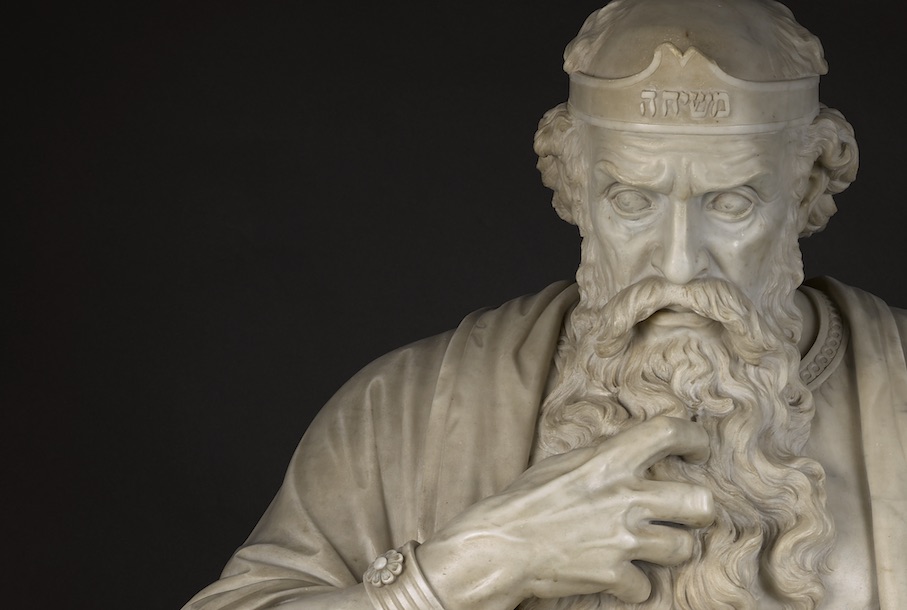
King Saul by William Wetmore Story (1819-1895) at the North Carolina Museum of Art
Then the word of the Lord came to Samuel: “I regret that I have made Saul king, because he has turned away from me and has not carried out my instructions.” Samuel was angry, and he cried out to the Lord all that night.
Early in the morning Samuel got up and went to meet Saul, but he was told, “Saul has gone to Carmel. There he has set up a monument in his own honor and has turned and gone on down to Gilgal.”
When Samuel reached him, Saul said, “The Lord bless you! I have carried out the Lord’s instructions.”
But Samuel said, “What then is this bleating of sheep in my ears? What is this lowing of cattle that I hear?”
Saul answered, “The soldiers brought them from the Amalekites; they spared the best of the sheep and cattle to sacrifice to the Lord your God, but we totally destroyed the rest. “Enough!” Samuel said to Saul. “Let me tell you what the Lord said to me last night.”
“Tell me,” Saul replied.
Samuel said, “Although you were once small in your own eyes, did you not become the head of the tribes of Israel? The Lord anointed you king over Israel. And he sent you on a mission, saying, ‘Go and completely destroy those wicked people, the Amalekites; wage war against them until you have wiped them out.’ Why did you not obey the Lord? Why did you pounce on the plunder and do evil in the eyes of the Lord?”
“But I did obey the Lord,” Saul said. “I went on the mission the Lord assigned me. I destroyed the Amalekites and brought back Agag their king. The soldiers took sheep and cattle from the plunder, the best of what was devoted to God, to sacrifice them to the Lord your God at Gilgal.”
But Samuel replied:
“Does the Lord delight in burnt offerings and sacrifices as much as in obeying the Lord? To obey is better than sacrifice, and to heed is better than the fat of rams. For rebellion is like the sin of divination, and arrogance like the evil of idolatry. Because you have rejected the word of the Lord, he has rejected you as king.”
Then Saul said to Samuel, “I have sinned. I violated the Lord’s command and your instructions. I was afraid of the men and so I gave in to them. Now I beg you, forgive my sin and come back with me, so that I may worship the Lord.”
But Samuel said to him, “I will not go back with you. You have rejected the word of the Lord, and the Lord has rejected you as king over Israel!”
As Samuel turned to leave, Saul caught hold of the hem of his robe, and it tore. Samuel said to him, “The Lord has torn the kingdom of Israel from you today and has given it to one of your neighbors—to one better than you. He who is the Glory of Israel does not lie or change his mind; for he is not a human being, that he should change his mind.”
Saul replied, “I have sinned. But please honor me before the elders of my people and before Israel; come back with me, so that I may worship the Lord your God.” So, Samuel went back with Saul, and Saul worshiped the Lord. (NIV)
“You cannot compensate by sacrifice what you lose through disobedience.”
edwin louis cole
God had given Saul explicit instructions on how to handle a group of people called the Amalekites (the first nation to attack the Jewish people after the Exodus from Egypt, and viewed as the archetypal enemy of the Jews). Saul obeyed only some of the instructions, but not all of them. King Saul rationalized his behavior as worship. But God would have none of it. The Lord rejected Saul as king. God wants no monkey business when it comes to obedience.
Whenever I come across biblical characters like Saul, I find myself trying to distance from them. Yet, oftentimes, when I take the time to sit a bit with the Scriptures, I realize I can have some of the same propensities as their behavior. In today’s Old Testament lesson, I am like Saul whenever:
I say I will do something and then get busy and not do it. I sometimes rationalize my lack of follow through by explaining what good things I was doing with my time instead.
I justify a purchase of something I do not really need but want with the excuse that I put a lot of money in the offering plate for God.
I slander another person, even though it is forbidden by God, with the knucklehead notion that I am protecting and helping others from that person’s evil ways.
I keep quiet in the face of a bad situation when I should be speaking up. I dismiss the lack of engagement and involvement with needing to save my energy for people who want it….
I could have kept going with this little exercise, but I got too convicted to keep thinking about it anymore. So, before we get too uppity about saying we are not like Saul and would never be like him, perhaps we ought to sit with the story for a while, being mindful and aware of any unacknowledged disobedience.
Rationalization is the way of sinners. Repentance is the path of saints. Which road will you choose today?
Holy God, you expect obedience to clear instructions. I am sorry for all those times I found creative ways to circumvent your teaching. Help me not to avoid your good commands, but to own them with vigor and vitality through Jesus Christ my Lord in the power of your Holy Spirit. Amen.
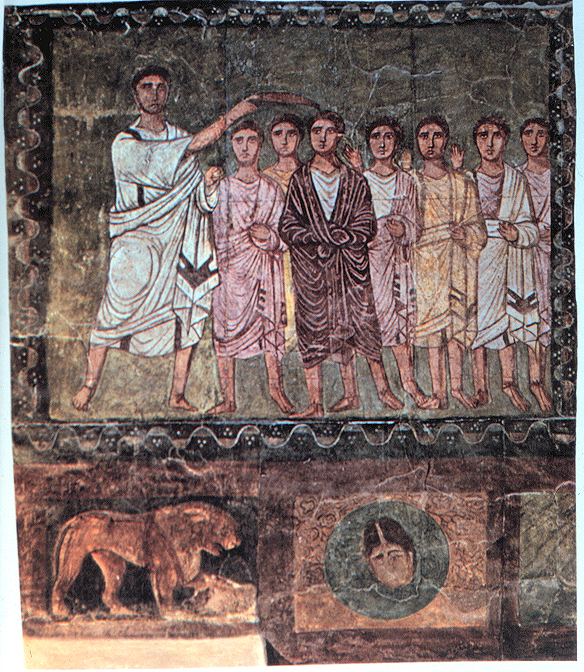
Samuel Anoints David as King, Syrian Orthodox Church, 3rd Century C.E.
The Lord said to Samuel, “How long will you mourn for Saul, since I have rejected him as king over Israel? Fill your horn with oil and be on your way; I am sending you to Jesse of Bethlehem. I have chosen one of his sons to be king.”
But Samuel said, “How can I go? If Saul hears about it, he will kill me.”
The Lord said, “Take a heifer with you and say, ‘I have come to sacrifice to the Lord.’ 3 Invite Jesse to the sacrifice, and I will show you what to do. You are to anoint for me the one I indicate.”
Samuel did what the Lord said. When he arrived at Bethlehem, the elders of the town trembled when they met him. They asked, “Do you come in peace?”
Samuel replied, “Yes, in peace; I have come to sacrifice to the Lord. Consecrate yourselves and come to the sacrifice with me.” Then he consecrated Jesse and his sons and invited them to the sacrifice.
When they arrived, Samuel saw Eliab and thought, “Surely the Lord’s anointed stands here before the Lord.”
But the Lord said to Samuel, “Do not consider his appearance or his height, for I have rejected him. The Lord does not look at the things people look at. People look at the outward appearance, but the Lord looks at the heart.”
Then Jesse called Abinadab and had him pass in front of Samuel. But Samuel said, “The Lord has not chosen this one either.” Jesse then had Shammah pass by, but Samuel said, “Nor has the Lord chosen this one.” Jesse had seven of his sons pass before Samuel, but Samuel said to him, “The Lord has not chosen these.” So, he asked Jesse, “Are these all the sons you have?”
“There is still the youngest,” Jesse answered. “He is tending the sheep.”
Samuel said, “Send for him; we will not sit down until he arrives.”
So, he sent for him and had him brought in. He was glowing with health and had a fine appearance and handsome features.
Then the Lord said, “Rise and anoint him; this is the one.”
So, Samuel took the horn of oil and anointed him in the presence of his brothers, and from that day on the Spirit of the Lord came powerfully upon David. Samuel then went to Ramah. (NIV)
Solitude by Polish artist Piotr Dura
Appearances can be deceiving. One of the best ways to see beyond mere physical sight is to engage in the spiritual practice of solitude. Solitude is not loneliness but a deliberate retreat from normal routines to be alone with the Lord. The faith of both Samuel and David were strengthened through solitude. It prepared them for public service and made them godly. Because they had established patterns of being alone with God, they had an inward solitude even when in a crowd. That is why Samuel could have an interaction with the Lord, even when among lots of people.
Solitude is important because it is the true path to listening well. A person whose faith has been shaped through solitude has an ability to carry on a dialogue with God while, at the same time, having a conversation with others.
Christ’s relationship with the Father was formed through solitude. Jesus was able to have simultaneous conversations with God and people since he practiced solitude on a regular basis. Jesus began his ministry with solitude (Matthew 4:1-11); made major decisions through solitude (Luke 6:12); and taught his disciples to practice solitude (Matthew 17:1-9; 26:36-46).
Solitude is necessary because engaging the world is important. Effective interaction with others requires times of retreat for solitude with God. Solitude as a spiritual discipline:
Gives us freedom from the need for constant noise and activity.
Allows God to shape our faith rather than conform to the world.
Liberates us from other people’s expectations for us.
Helps quiet internal noise and racing thoughts so we can better listen to God.
Provides the opportunity for reflection upon and preparation for future events.
Creates encouraging speech for the benefit of others.
Fuels a desire to keep practicing solitude because of its benefit.
Solitude taught Samuel obedience.
Samuel learned obedience through years of solitude with old Eli the priest. “Speak Lord, for I am listening” became a way of life for Samuel, as he was trained in how to listen well.
Samuel’s greatness as the Judge of Israel did not lie in his original ideas or the initiatives he took, but in simple obedience to the commands of God. Years of obscurity and solitude as a child created the ability to hear and carry-out what the Lord told him to do.
Even Samuel, as godly as he was, could not rely on personal observations about choosing the next king of Israel. Because he had long years of practicing solitude with the Lord, Samuel was able to clearly hear divine speech and anointed the right person as king. Samuel did not trust his own judgment but relied on God’s direction.
Solitude characterizes God.
Christians serve a triune God of Father, Son, and Spirit. God has complete and perfect solitude along with focused engagement with humanity. Through spending time with God, people can simultaneously interact with divinity and humanity. It is a bit like my wife who began her broadcasting career in radio by simulcasting the AM station in one ear of her headphones, and the FM station in the other ear. She could que a record for the FM station while, at the same time, forecasting the weather for the AM station. Her ability was born of practice and commitment to her craft. In the same way, we have been given a vocation to engage the church and world, and the ability to have a solitude of heart while interacting with others.
God, unlike us, sees us completely, inside-and-out – which is why we are dependent upon solitude of heart so that we can make proper judgments. God urged Samuel to not look at the outward appearance because this is how wrong judgments happen.
Solitude formed David into a king.
David was on nobody’s short list to become king. He was so far out there as a candidate for the position that his own family did not even think it necessary to have him present for the sacrificial feast. It is just like God to have a way of choosing the people we think would be the least likely to do anything.
Being in the pasture day after day and night after night by himself was just the right curriculum that trained the next king. Shepherding was not a lonely affair for David. It was a rich experience of solitude which developed a solid relationship with God. Out in the field, away from all the wrong judgments of the world, David learned to discern God’s voice – a skill he carried with him the rest of his life.
Solitude might seem unrealistic for extroverts, and only something for introverts. Yet, solitude is essential to creating a robust faith in God. The following are some steps toward the practice of solitude and allowing it to bring you into a closer walk with the Lord.
Practice “little solitudes” in the day. The early morning cup of coffee or shower, the drive-time to work, the lunch break, the quiet at night when all is dark and everyone in bed are opportunities for solitude with God to reorient and redirect our lives.
Find or create a quiet place designed specifically for solitude. It might be a room, a closet, or a chair. It might be outdoors. It can be anywhere that helps you be free from distraction and invites you to connect deeply with Jesus.
Begin the day by spending at least 10 minutes alone with God in silence. Over time, work your way to even more minutes, even hours. I am a believer in an hour a day keeping the devil away. Eventually, take an entire day away, every few months. Consider taking a weekend or even a week away once a year.
Read Holy Scripture slowly and meditatively. Listen to what the Spirit may be saying in your reading.Keep a journal handy and write down your observations. Allow prayers to arise from what you hear from the Lord.
This might seem optional only for those with discretionary time – but it is no more optional than planting in the Spring to get a harvest in the Fall. Such fruit results in the slaying of giants….









 Rev. Tim Ehrhardt