1 Chronicles 10:1-14 – Faithfulness Matters

The Philistines fought against Israel in a battle at Mount Gilboa. Israel’s soldiers ran from the Philistines, and many of them were killed. The Philistines closed in on Saul and his sons and killed three of them: Jonathan, Abinadab, and Malchishua. The fighting was fierce around Saul, and he was gravely wounded by enemy arrows.

Saul told the soldier who carried his weapons, “Kill me with your sword! I don’t want those godless Philistines to torture and make fun of me.”

But the soldier was afraid to kill him. Then Saul stuck himself in the stomach with his own sword and fell on the blade. When the soldier realized that Saul was dead, he killed himself in the same way.

Saul, three of his sons, and all his male relatives were dead. The Israelites who lived in Jezreel Valley learned that their army had run away, and that Saul and his sons were dead. They ran away too, and the Philistines moved into the towns the Israelites left behind.

The next day the Philistines came back to the battlefield to carry away the weapons of the dead Israelite soldiers. When they found the bodies of Saul and his sons on Mount Gilboa, they took Saul’s weapons, pulled off his armor, and cut off his head. Then they sent messengers everywhere in Philistia to spread the news among their people and to thank the idols of their gods. They put Saul’s armor in the temple of their gods and hung his head in the temple of their god Dagon.

When the people who lived in Jabesh in Gilead heard what the Philistines had done to Saul, some brave men went to get his body and the bodies of his three sons. The men brought the bodies back to Jabesh, where they buried them under an oak tree. Then for seven days, they went without eating to show their sorrow.

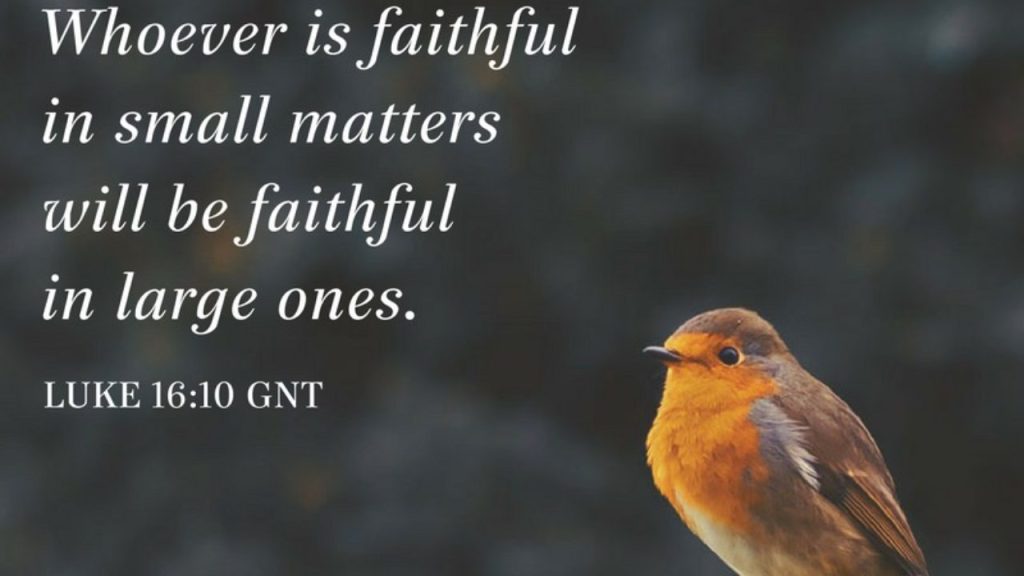
Saul died because he was unfaithful and disobeyed the Lord. He even asked advice from a woman who talked to spirits of the dead, instead of asking the Lord. So, the Lord had Saul killed and gave his kingdom to David, the son of Jesse. (Contemporary English Version)
The books of Samuel and Chronicles contain similar content and material concerning the kings of Israel and Judah. Yet, whereas 1 & 2 Samuel gives a more straightforward narrative, 1 & 2 Chronicles often provides the narrative with explanatory comments. 

We have such a story in today’s Old Testament lesson. The last chapter of 1 Samuel gives an account of King Saul’s death, along with his sons. However, in 1 Chronicles 10, we get the narration of their deaths along with a clear concise note on why King Saul perished in battle:

Saul died because he was unfaithful to the Lord and hadn’t followed the Lord’s word. He even consulted a medium for guidance. He didn’t consult the Lord, so the Lord killed him and gave the kingdom to David, Jesse’s son. (1 Chronicles 10:14, CEB)

The original compiler of Chronicles did so for the Jewish exiles who were returning to Palestine. He did not want to simply recount the important stories of the kings of Israel; he wanted the exiles to know exactly why they went into exile to begin with, and how in the future they could keep it from happening again. So, Saul served as Exhibit A of the kind of person that erodes the true worship of God and lives against the grain of faithfulness to the Lord.

The true measure of a godly person is not in titles, positions, or membership. The real test of a faithful person is obedience to, and observance of, the revealed will of God contained in Holy Scripture. Thus, to read it, know it, and live it is one of the highest callings as God’s people.

Faith in the Bible is a complete trust in who God is and what God has done. The Lord shows faithfulness through steadfast love, gifting people with faith to obey, and remaining true to divine promises for humanity.

In the New Testament, the height of faith is to place one’s life completely in God’s hands, believing in the person and work of Jesus Christ. Faith involves both information and action.
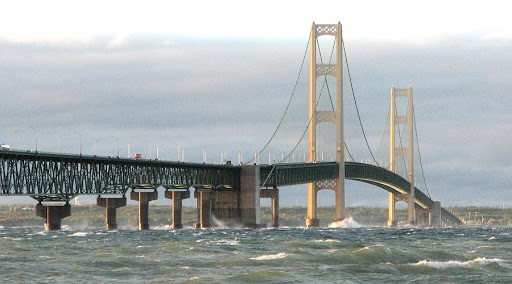
For example, the Mackinac Bridge, connecting the upper and lower regions of Michigan, is an imposing structure. It’s the longest suspension bridge in the Western hemisphere at 26,372 feet. At its mid-point, the bridge’s roadway towers 200 feet above the Mackinac Straight.

The wind on the bridge can be punishing. In 1989, a woman died when her small car flew over the 3-foot-high railing and plunged into the water due to an excessively high gust of wind. I have crossed the bridge many times. Sometimes the bridge is open to road traffic, and sometimes not, due to the wind conditions. The bridge authorities even have a protocol about how to cross the bridge when it is windy but not excessively so (driving beside a truck).

This is all important and necessary information for crossing the Mackinac Bridge. Yet, knowledge alone is not enough. At some point, one needs to actually drive across the bridge. Information must lead to action. I couldn’t just cross the Straight between the two regions of Michigan at any point along the land with a blind faith that believes I’ll make it to the other side. I needed some knowledge. Then, I needed the courage to act on that knowledge.

The person who is scared crossing the bridge, and the person who thinks nothing of it, both make it to the other side. It isn’t the amount of faith that is important; it’s in what (or who) that faith is placed. Faith in the Bible is having some important and useful information about God, then putting that knowledge into action with a trust and commitment that you’ll make it to the other side.

Saul tried to cross over on his own terms. It didn’t go so well for him. His car was picked up and thrown into the Straight.

We need to be careful what and whom we consult when we are stressed. Not collaborating with God isn’t going to end well. Being faithful matters.

Who are you faithful to? Where is your trust placed? Because the answer to those questions determines which actions we will take.

Eternal God, you remain the same throughout the ages of time. Help me to be faithful to your standard of righteousness and live faithfully into the ways of Jesus, my Lord. Amen.

Deuteronomy 11:1-17 – Knowing Our Boundaries

Love the Lord your God and follow his instruction, his regulations, his case laws, and his commandments always. And know right now what your children haven’t known or yet witnessed:

  • The Lord your God’s discipline, his power, his mighty hand and outstretched arm.
  • The signs and the acts that he performed in the heart of Egyptian territory, against Egypt’s King Pharaoh and all his land.
  • What God did to the Egyptian army, to its horses and chariots—how he made the water of the Reed Sea flow over their heads when they chased after you, but the Lord destroyed them, and that’s how things stand right now.
  • What the Lord did for you in the desert, until you arrived at this place.
  • And what he did to Dathan and Abiram, the descendants of Eliab the Reubenite, when the ground opened its mouth and swallowed them, their families, their tents, and every living thing they possessed in the presence of all Israel.

Your own eyes witnessed each of these powerful acts the Lord performed. So, keep every part of the commandment that I am giving you today so that you stay strong to enter and take possession of the land that you are crossing over to possess, and so that you might prolong your life on the fertile land that the Lord swore to your ancestors to give to them and their descendants—a land full of milk and honey.

The land you are about to enter and possess is not like the land of Egypt, where you came from, where you sowed your seed and irrigated it by hand like a vegetable garden. No, the land you are entering to possess is a land of hills and valleys, where your drinking water will be rain from heaven. It’s a land that the Lord cares for: The Lord’s eyes are on it constantly from the first of the year until the very end of the year.

Now, if you completely obey God’s commandments that I am giving you right now, by loving the Lord your God and by serving him with all your heart and all your being, then he will provide rain for your land at the right time—early rain and late rain—so you can stock up your grain, wine, and oil. He will also make your fields lush for your livestock, and you will eat and be satisfied. But watch yourselves! Otherwise, your heart might be led astray so you stray away, serving other gods and worshipping them. Then the Lord’s anger would burn against you. He will close the sky up tight. There won’t be any rain, and the ground won’t yield any of its crops. You will quickly disappear off the wonderful land the Lord is giving to you. (Common English Bible)

“Boundaries define us. They define what is me and what is not me. A boundary shows me where I end and someone else begins, leading me to a sense of ownership. Knowing what I am to own and take responsibility for gives me freedom. Taking responsibility for my life opens up many different options. Boundaries help us keep the good in and the bad out.”

Henry Cloud

God has boundaries. The Lord doesn’t just flit about doing whatever seems alright for the moment. No, God is firmly secure as the divine Being. God has a deliberate will and way. The Creator God is not okay with created humanity having no boundaries. Since we are people created in God’s image, we are to reflect that image in all things, including having the established boundary of taking charge of our own spiritual lives and obeying the Lord in all things.

God has opened the way of redemption for wayward people. It came first in the incredible event of the exodus from Egypt, then in the culmination of our freedom through the cross and resurrection of Jesus Christ. 

Therefore, God expects us to live into this opportunity without blaming divine action or inaction for our problems, as if fault lies outside of us. Just because God stands up to people and does not cave into their demands and their whining does not make the Lord mean or unjust – it simply means God doesn’t need the props or accolades of people. God is secure enough to not be dependent on humans.

Divine expectations are quite clear on where the boundary lines fall: Love. Yes, indeed, it comes down to love. Love the Lord your God and always hold tightly to the law with its statutes, rules, and commandments. There is no fudge factor to that statement, scratching our heads wondering what we ought to be doing. If we obey God, we will discover life as it ought to be lived – free from all the machinations of the world’s brokenness and insecurity – and yet securely confined within godly boundaries. 

God can exhort people to be strong and take the land. That’s because the Lord made it possible for them to do so by acting in history. Therefore, God expects us to respond in obedience to the boundary lines established so that we will flourish and grow as people in a new land.

There is a big divine pasture for us to enjoy and thrive within. Yes, there is a fence around it, marking the boundary of where we can go. It is there for our benefit and protection, and not to simply keep us in line. Longing for the green grass on the other side of the fence is to be unaware of the vast beauty and foliage all around us.

For we already have everything we need – if we possess the awareness and the gratitude to see it.

Great God Almighty, I choose today to obey you in all things out of the grace given to me because of Jesus Christ.  I want to please you in all I say and do, so that you will be seen as the glorious and exalted king of the universe.  Help me to live up to my standing in Christ in the power of the Spirit as I step into your world with the keys of the kingdom.  Amen.

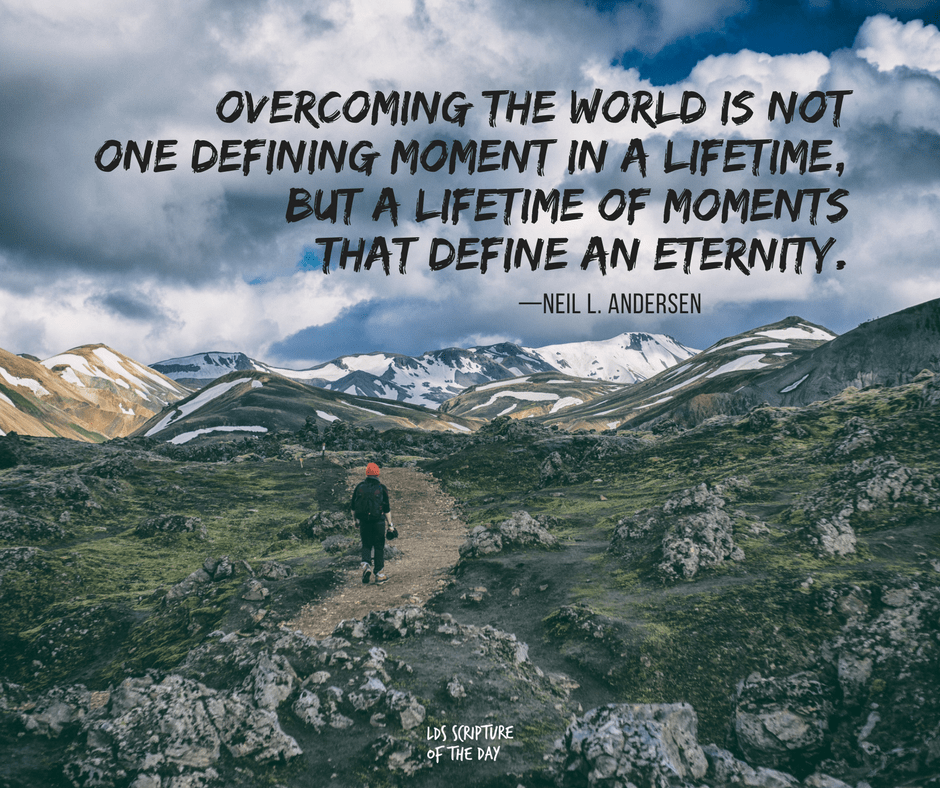
Overcoming the World

Everyone who believes that Jesus is the Christ is born of God, and everyone who loves the father loves his child as well. This is how we know that we love the children of God: by loving God and obeying his commands. In fact, this is love for God: to keep his commands. And his commands are not burdensome, for everyone born of God overcomes the world. This is the victory that has overcome the world, even our faith. Who is it that overcomes the world? Only the one who believes that Jesus is the Son of God. This is the one who came by water and blood—Jesus Christ. He did not come by water only, but by water and blood. And it is the Spirit who testifies because the Spirit is the truth. (1 John 5:1-6, NIV)

Faith, love, and obedience are tightly woven together to such an extent that to pull one of them out is to unravel the whole bunch. These three characteristics of the true Christian are vital and necessary to living the Christian life. They all must be present for the church to overcome the world.

The main verbs throughout the verses are the word “is.” And the verb tense is key. The verb clearly describes a past action of God which we as people need to receive. In other words, the grammar dictates that God has given us new birth.  We do not give ourselves spiritual birth any more than we can tell our mothers that it was us who gave birth to ourselves.

God saves us from sin and grants us forgiveness. This action is from God. We are recipients of God’s good grace toward us. There are three participles connected to this main verb:

  1. Believe
  2. Love
  3. Obey

A participle is a word which is connected to the verb’s action. So then, our actions are a result of God’s action toward us. To put it simply, a person born from God will believe, love, and obey. Just as a newborn baby first breathes, then learns to eat, sleeps, grows-up, learns to walk, and over time develops into an adult just like their mother and father, so the Christian who is born again from God exhibits faith, learns to love, and grows up developing the skills of obeying Jesus and following him, learning to walk in his ways, becoming just like him.

In the same way a child must learn and grow to have the necessary skills for facing the world in all its bigness, trials, and temptations, so the Christian must develop the abilities necessary to overcome the world. Those skills are faith, love, and obedience. Without them, we will be unable to deal with the world. But with them, we experience victory over the world.

The word, “overcome,” is a cognate word (related to) of “victory.”  That is, to overcome is to have firsthand exposure to the victory the Lord Jesus has achieved on the cross. Through being spiritually born again by God, we are set on a course requiring faith, love, and obedience to overcome the world. As we learn to apply these three spiritual characteristics to our lives, we experience practical victory over the world.

The term “world” are the patterns, systems, and operations of the world in direct contrast to how God operates. For example:

  • The world engages in revenge and payback when wronged, whereas the Christian learns to believe God as the Judge, loves the person who has offended them through prayer for their enemy, and obeys God through good works that seeks the welfare of the other. 
  • The world uses other people as either objects of their pleasure or to get ahead in life, whereas the Christian believes God will take care of their needs, will seek to love the other person instead of use them, and would rather obey God than be selfish. 
  • The world thinks nothing of lying, cheating, and stealing, if they can get away with it, whereas the Christian believes Jesus is the way, the truth, and the life, loves being a person of integrity, and obeys God even when it hurts.

This in no way means we avoid or belittle the world. In facing and overcoming the world, we need principled civility. Using faith, love, and obedience, we respect another’s viewpoint through growing in faith, expanding our hearts in love, and learning obedience through interaction with others for whom we disagree.

Where do we feel “the pull” in life from? Do we feel it from the world, or from God’s Word? We must learn how to deal with the worldly elements of our society in which we feel a pull and a tug to go along with it and want to give in to it. This requires a community of Christians engaging the world through faith, love, and obedience to overcome that pull.

Our call as Christians is not to just survive the world. If anyone could have had that kind of mentality, it was Helen Keller. Deaf, mute, and blind, she could have settled into just getting by and waiting for heaven. Yet, she accepted her situation, coped with it, and even transcended her limitations.  She did more than survive – she thrived. Helen Keller once said:

“The marvelous richness of human experience would lose something of rewarding joy if there were not limitations to overcome. The mountaintop would not be half so wonderful if there were no dark valleys to traverse.”

Helen Keller

We need faith in God, not ourselves. The Scripture says:

Trust in the Lord with all your heart,
    and do not rely on your own insight.
In all your ways acknowledge him,
    and he will make straight your paths. (Proverbs 3:5-6, NRSV)

We need to love God and others, and not the world. The Scripture says:

Don’t love the world’s ways. Don’t love the world’s goods. Love of the world squeezes out love for the Father. Practically everything that goes on in the world—wanting your own way, wanting everything for yourself, wanting to appear important—has nothing to do with the Father. It just isolates you from him. The world and all its wanting, wanting, wanting is on the way out—but whoever does what God wants is set for eternity. (1 John 2:15-17, MSG)

We need to obey the call of God, not the call of the world. Hear what Scripture says: 

The commandment that God has given us is: “Love God and love each other!” (1 John 4:21, CEV)

When faith, love, and obedience are working together as they were intended to, we will overcome the world and all its crud. We will keep ourselves from being polluted and stained by it.

Overcoming the world is a high calling from God. Faith means putting aside fear and taking the kind of risk God wants you to take. Love means putting aside hate and serving others, even when it hurts. Obedience means putting aside selfishness and choosing to do what is best for another person’s welfare. Being characterized by these three Christian virtues will have the effect of overcoming the world. It is not a burdensome or heavy way to live. It’s the way of Jesus.

Blessed Father, Son, and Holy Spirit, the God whom we serve: Sometimes our hearts and minds are flooded with fears. Sometimes we are paralyzed and overwhelmed and feel unable to go on. Yet today we hold onto the victory you have accomplished through the blood of Jesus Christ. You have told us not to fear, for you have overcome the world. So, we cling to you, believing your Word and your promises. In moments of crippling fear, we choose to hold your hand and believe; to love as we have been loved; and, to obey even in the most fearful places because we know that you have risen again.

Loving Lord Jesus, we surrender to you all that we are and hope to be. Holy Spirit, we invite you and all your ministry within us. Holy God of all, we offer you our heart, mind, body, soul, spirit, hopes, plans and dreams. We surrender to you our past, present and future problems, habits, character defects, attitudes, livelihood, resources, finances, medical coverage, occupation and all relationships. We give you our health, physical appearance, disabilities, family, marriage, children, grandchildren, and friendships.

We ask for your Lordship over every aspect of our lives. We surrender to you all our hurt, pain, worry, doubt, fear and anxiety, and ask you to wash us clean. We release everything into your compassionate care. Speak to us clearly, Lord. Open our ears to hear your voice. Open our hearts to commune with you more deeply. Open the doors that need to be opened and close the doors that need to be closed. Set our feet upon the straight and narrow road that leads to everlasting life. Amen.

Psalm 119:9-16 – How Can a Young Person Live a Pure Life?

How can a young person live a pure life?
    By obeying your word.
I try with all my heart to serve you.
    Help me obey your commands.
I study your teachings very carefully
    so that I will not sin against you.
Lord, you are worthy of praise!
    Teach me your laws.
I will repeat the laws we have heard from you.
I enjoy following your rules
    as much as others enjoy great riches.
I will study your instructions.
    I will give thought to your way of life.
I enjoy your laws.
    I will not forget your word. (ERV)

Pornography is a multi-billion-dollar a year industry and is steadily growing. The younger generation is particularly susceptible in this internet age of easy access and multiple porn websites.

  • 35% of all internet downloads worldwide are related to pornography.
  • Teen-aged boys are the largest consumers of pornographic internet sites. 

The following percentages of children report having seen pornography in some way:

  • 50% of 11-13-year-olds
  • 65% of 14-15-year-olds
  • 78% of 16-17-year-olds
  • 75% of parents believe their children have not seen pornography online.
  • 53% of the children said that they had seen pornography online.

Into this terrible muck of impurity an impropriety enters the biblical psalmist with his ancient, yet truly relevant question for us today: How can a young person live a pure life? 

The answer the psalmist gives is this: By guarding the heart through obedience to God’s Holy Word. The psalmist himself stored up the commands and teachings of Scripture in his heart so that he might not sin against God.

A solid tried-and-true activity parents can do for themselves (the statistics for adult use of porn are staggering) and for their kids in this area of purity is for the entire family to do some old school Bible memorization. Yes, I mean getting down to rote memory work. 

This is to be neither a legalistic practice nor some fetish that will keep evil away. Instead, memorizing verses and large sections of the Bible provides a solid foundation from which to construct of base of operations for the work of meditation. When temptation occurs, there will be something to stand upon in the heat of the moment.

Today’s lesson from Psalm 119 is a great place to begin. Expand to memorize the entire psalm, all 176 verses of it. When faced with the decision of viewing pornography or not, it would be wise to dedicate the time to memorizing Scripture so that there will be a delight in God’s statutes rather than a depressed guilt over another fall into impure thoughts and/or actions.

Now, I can feel the pushback from some folks. You might not have memorized anything your entire life, or so you think. One of the reasons many people can freely quote lines from movies is that they have watched their favorites repeatedly. Ah, so we are on to something, right!?

I have been reading the Holy Bible for over forty years, every day. I have large chunks of Scripture memorized – mostly because of all that reading. So far in my life I’ve read the entire Old Testament around 100 times and the New Testament about 300 times – not because I ever had the goal of doing all that reading but because I need God’s Word.

What’s more, I take the further step of spending some time in reflection and ongoing meditation on Scripture, especially at night before retiring. This might seem over the top to some. However, the reading and reflection of Scripture is about a 30-minute venture for me on most days. The goal is engrafting the message of the Bible into the heart and life. Memorization is simply the means of helping that to happen.

There are some memorization tips I use and have picked up along the way to aid in pressing Scripture firmly into my soul:

  • Sleep on it. Studies show that our brains process and store information while we sleep. Try to review some Scripture just before you go to sleep—even if it’s only for a few minutes—and see if it helps embed the information in your memory.
  • Repeat it. There is no substitute for consistent and repetitive reading or listening to Scripture being read to you. This one practice alone has been key to my own ability to memorize. 
  • Write it out. Writing helps deeply encode biblical truth we’re trying to learn because there is a direct connection between our hand and our brain. To increase recall, speak the Scripture out loud and visualize the concepts as well.
  • Sing it. Singing is what got my middle daughter through school. Songs or jingles use your brain’s right hemisphere, helping us to remember. There are already plenty of songs out there for all kinds of biblical passages. And, of course, you can always try making your own music.
  • Sense it. Use as many of the five senses as possible. Our senses enable us to use more parts of our brains and retain information better. For example, when I read Scripture, I use a physical Bible to hold and often use a pointer when reading (touch); have a cross in front of me (sight); read out loud, sometimes with worship music in the background (hearing); light a candle (smell); and, I always have a cup of coffee to sip while reading! (taste)

The biblical psalms are meant to be prayed. So, using them for that purpose has the effect of shaping our prayers and desires in a good direction, as well as helping us to live into the commands of God to “repeat the laws I have heard from you.” In a world of spiritual impurity, emotional assault, and mental adultery, we need the purifying work of God’s Word to wash our souls clean.

May it be so, to the glory of God.

Merciful God, thank you for providing your Word to me so that I might read it, use it, memorize it, meditate upon it, and engraft it into my soul.  Fortify my spirit against the demons of impurity by the power of your Holy Spirit, to the glory of Jesus Christ.  Amen.