“Though I have been speaking figuratively, a time is coming when I will no longer use this kind of language but will tell you plainly about my Father. In that day you will ask in my name. I am not saying that I will ask the Father on your behalf. No, the Father himself loves you because you have loved me and have believed that I came from God. I came from the Father and entered the world; now I am leaving the world and going back to the Father.”
Then Jesus’ disciples said, “Now you are speaking clearly and without figures of speech. Now we can see that you know all things and that you do not even need to have anyone ask you questions. This makes us believe that you came from God.”
“Do you now believe?” Jesus replied. “A time is coming and in fact has come when you will be scattered, each to your own home. You will leave me all alone. Yet I am not alone, for my Father is with me.
“I have told you these things, so that in me you may have peace. In this world you will have trouble. But take heart! I have overcome the world.” (New International Version)
Imagine you are with Jesus in the Upper Room celebrating Passover. And your Lord tells you he is leaving – going back to the Father. After three years of hard and incredible ministry, there is palpable grief in the room. It’s as if you got sucker-punched. You want this time with Jesus to never end….
Jesus Christ, Son of God, Son of Man, Savior of the world, does not forget you. The Lord is concerned and careful to provide wonderful words of assurance: Father God loves you. I give you my peace. I have overcome the world.
Whenever we encounter trouble; in those times when grief seems to be swallowing us whole; and when all is dark and we cannot see our hand in front of our face – it is in these moments the Lord comes alongside us and communicates a loving divine presence which grants us the peace of settled rest, even if and especially when our troubling situations do not change.
If you have had a life largely free of struggle, the privilege of knowing where your next meal is coming from, and the assurance of having your most basic needs met, then understand many people throughout the world know nothing of this experience.
However, this doesn’t necessarily mean those needy persons are unhappy, discontent, or bitter. Love and peace are neither bound nor limited by adverse circumstances. In fact, we know love and peace in a much deeper way whenever we have been hated and in conflict. That’s because love thrives and flourishes in an environment of hate; and peace takes root more surely where there is disharmony and misunderstanding.
If everything always goes our way, how then would we know the Lord’s great grace to us? How would we ever know God as Provider unless we were in want? How would we know Christ as the Healer unless we were broken? How could we ever know resurrection unless there was a crucifixion?
Jesus specializes in the improbable and the impossible, in landing on the Island of Misfit Toys and airlifting the discarded to be a gift to the world. You see, this is precisely how we overcome the world: We love and serve, just as our Lord did. Since he overcame, we walk in his footsteps.
The acquisition and presence of peace is anything but passive. Peace has been achieved through a bloody cross and settles within the spirit through an active pursuit of harmony, wholeness, integrity, and love.
Now that we have been put right with God through faith, we have peace with God through our Lord Jesus Christ. He has brought us by faith into this experience of God’s grace, in which we now live. And so, we boast of the hope we have of sharing God’s glory! We also boast of our troubles, because we know that trouble produces endurance, endurance brings God’s approval, and his approval creates hope. (Romans 5:1-4, GNT)
For the kingdom of God is not food and drink but righteousness and peace and joy in the Holy Spirit. The one who thus serves Christ is acceptable to God and has human approval. Let us then pursue what makes for peace and for mutual upbuilding. (Romans 14:17-19, NRSV)
God’s peace and love is free, but it is not cheap. It is obtained smack in the middle of worldly troubles.
May the peace of God be with you, my friends.
Almighty and everlasting God, you are the fountain of all peace, spiritual and temporal. We humbly pray, in your great goodness grant us that peace which the world cannot give, that we may ever live in your fear, obedient to your commandments, to the end that you may deliver us from all our enemies, through your dear Son, Jesus Christ, our Lord. Amen.
If we deliberately keep on sinning after we have received the knowledge of the truth, no sacrifice for sins is left, but only a fearful expectation of judgment and of raging fire that will consume the enemies of God.Anyone who rejected the law of Moses died without mercy on the testimony of two or three witnesses. How much more severely do you think someone deserves to be punished who has trampled the Son of God underfoot, who has treated as an unholy thing the blood of the covenant that sanctified them, and who has insulted the Spirit of grace? For we know him who said, “It is mine to avenge; I will repay,” and again, “The Lord will judge his people.”It is a dreadful thing to fall into the hands of the living God. (New International Version)
Love isn’t all rainbows and unicorns. Sometimes it’s downright tough, unabashedly truthful, and concerned for appropriate justice.
Love is compassionate, kind, and full of good deeds. Love is also subversive. Love takes a breach in relations seriously. Love announces that the hurt which has happened is not to be accepted as normal. Love is a refusal to settle for what is.
So, whenever God’s people drift away and slide into unhealthy or damaging ways of living, God’s love is not okay with it.
There’s a reason why we feel emotional pain. That’s because God feels pain. We don’t have to go very far into that thick book, the Bible, to find the hurt:
The Lord saw that the human beings on the earth were very wicked and that everything they thought about was evil. He was sorry he had made human beings on the earth, and his heart was filled with pain. (Genesis 6:5-6, NCV)
There is perhaps no more awful pain than being brokenhearted. A thousand kidney stones are not as painful as becoming heartsick over a relationship gone awry. Love can be an affliction – a deep ache which longs for wholeness, integrity, connection, and unity.
Perhaps we have neglected how much God hurts and longs for prodigal people to return in love to a divine relationship of grace. Just because God is always content, happy, and celebrating within perfect Trinitarian Love does not mean that God isn’t also profoundly sad, full of grief, and gazing from heaven, watching and waiting for sinful humanity to come to their senses.
God’s wrath exists because of God’s love.
God doesn’t paper over humanity’s guilt and shame and pretend it isn’t there. Instead, God has gone to the ultimate length to realize a restored relationship with fallen people. God got down in the trenches with us, in the person of Jesus, and dwelt among us – willing to suffer and die for us. Grace is most certainly free; however, it is anything but cheap.
Therefore, to know this great Love, then spurn it, is much more than agonizingly painful – it isn’t right. The preacher in the New Testament book of Hebrews captures the pathos of God against all that separates people from such perfect Love.
To renege on a commitment to Jesus is tantamount to crucifying him all over again.
This is an emotional and spiritual pain which transcends any human disappointment or failed friendship. Because God’s heart is so large, so God’s agony over defiant persons who turn from Love is immense beyond what we can even imagine.
Yes, it is a dreadful thing to fall into the hands of the Living God. Those who hate ought to beware. The ones trampling God’s moral law and ethical will into the ground, like some animal dung, ought not to think they are outside the reach of Divine Love, complete with Divine Wrath purging the resentment and rancor from Earth.
The warning of the preacher is of rejecting the spirit of Love and replacing it with the ancient evil spirt of hubris, animosity, and fear. Perfect Love drives out fear, restores comity, and embraces humility.
We are responsible for our own transgressions against others; our own failures to love as we ought; and our own neglect of God. Therefore, we must forsake willful and deliberate treatment of God and others by denigrating the work of the Spirit and attributing evil intentions to them.
If we focus on loving God and neighbor, then there is no room for apostasy, for lashing out and being an evangelist of wickedness. By clarifying and focusing on what matters most; being non-retaliatory; and reminding oneself of divine Love, we can cultivate a spirit of grace and forsake the hateful spirit.
Whenever we are wounded by another, or even by God, holding onto the hurt only causes gangrene of the soul. Yet, through forsaking all forms of violent and destructive language and behavior, and embracing the wounds of Christ, we can experience healing – even if our present adverse circumstance does not change.
So, be kind to yourself and others. Allow God’s kindness to penetrate the deep portions of your heart. Live a life of grace. Why be punished for acting like a foolish person? If you must suffer, suffer for doing good, not evil.
O Lord God, I confess and acknowledge your infinite mercy and goodness to me, and my ingratitude for such grace shown. You have saved me and made me your own child, and an heir of heaven. And I end up ignoring your gracious blessings, giving into temptation, and treating faith like a paper plate to be trashed when I’m done with it. I am truly sorry for my offenses toward you and admit my failure to observe your goodness. Accept my imperfect repentance, forgive my wickedness, purify my uncleanness, strengthen my weakness, heal my unstable spirit, and let your divine Love rule in my heart, through the love of Jesus Christ. Amen.
Day after day every priest stands and performs his religious duties; again, and again he offers the same sacrifices, which can never take away sins. But when this priest had offered for all time one sacrifice for sins, he sat down at the right hand of God, and since that time he waits for his enemies to be made his footstool. For by one sacrifice, he has made perfect forever those who are being made holy.
The Holy Spirit also testifies to us about this. First he says:
“This is the covenant I will make with them after that time, says the Lord. I will put my laws in their hearts, and I will write them on their minds.”
Then he adds:
“Their sins and lawless acts I will remember no more.”
And where these have been forgiven, sacrifice for sin is no longer necessary.
Therefore, brothers and sisters, since we have confidence to enter the Most Holy Place by the blood of Jesus, by a new and living way opened for us through the curtain, that is, his body, and since we have a great priest over the house of God, let us draw near to God with a sincere heart and with the full assurance that faith brings, having our hearts sprinkled to cleanse us from a guilty conscience and having our bodies washed with pure water. Let us hold unswervingly to the hope we profess, for he who promised is faithful. And let us consider how we may spur one another on toward love and good deeds, not giving up meeting together, as some are in the habit of doing, but encouraging one another—and all the more as you see the Day approaching. (New International Version)
The book of Hebrews was originally a sermon preached to a group of struggling Jewish Christians who were discouraged. They were a congregation in decline. The preacher’s approach throughout is to demonstrate that Jesus is better and superior to anything or anyone ever.
With this high view of the person and work of Christ, the preacher comes to the punch line of his sermon. He insists that what the believers need is perseverance to keep going – no matter what adversity they face. For without the ability to endure hardship, the sagging congregation would continue to decline and eventually give up.
Yet, giving up is not an option when it comes to the Christian life. The Christians may not have been going through a Job-like experience, but they needed to get some spiritual spine to them so that they could stand up for Jesus.
Sometimes, because most of life is lived in the mundane, we can slowly drift from our spiritual moorings and just go through the motions of Christianity without really living for Jesus. Boring and repetitive work; the monotony of caregiving; the tedium of busywork; and the continual grind of it all can be an effective tool in the devil’s workshop.
When we begin sleepwalking through life, we are in danger of wandering from faith. We then need some stout spiritual stamina. “I didn’t sign up for this!” can be the cry of both the person who is downtrodden with hard circumstances, as well as the person who is simply living a dull life.
We all have our quitting point – that point where we say, “enough is enough” and we give up and cry uncle. Those times usually come when the pain or inconvenience of what is happening overcomes the resolve to persevere. The devil keeps detailed notes on everyone’s quitting points, and he tries to get us to that point of being ineffective and giving up on the Christian life.
It easily begins with some minor irritation or complaint against from another. Then moves further along by the loss of someone close. Frustration mounts if financial hardship happens. After a while, if things do not markedly improve, living day in and day out with missed expectations and disappointing situations may lead to bailing out, blowing up, or binging on a sinful desire.
At the quitting point, we throw up our hands, wrongheadedly believing others don’t care and that God is indifferent to our situation.
The preacher of Hebrews knows that the one real measure of a person is the learned ability to push through the quitting points of life. We need endurance and perseverance. But how will we get it? How can we endure, living for Jesus for the rest of our lives?
There are three indispensable elements of the Christian life, necessary to persevering. Perseverance is a privilege, and not some drudging duty to slog through. Following Jesus for a lifetime comes as we embrace our spiritual privileges.
Faith is the privilege of continually approaching the Lord with confidence
We possess the incredible privilege of approaching the throne of grace with confidence because Jesus has opened the way to God. No longer do we need the elaborate Old Testament sacrificial system in order to approach God. So, let us draw near to God with a sincere heart in full assurance of faith.
We need faith to keep going in the Christian life. Faith is more than doctrinal confession; it is something we experientially live by every day. By faith, we come to God through Jesus – not only soaking in more information but also drawing near to Christ.
Jesus, when on this earth, drew near to the Father. We are to follow Christ in his example. Jesus practiced solitude, silence, and extended times of prayer. Our Lord oriented his teaching and healing ministry around his relationship with the Father by engaging in basic spiritual disciplines that put him in a position to hear and listen so that he could then do the will of God.
“We can all see God in exceptional things, but it requires the culture of spiritual discipline to see God in every detail.”
Oswald Chambers
A successful student orients her life around certain study disciplines in order to learn and reach graduation day. A winning athlete orients his life around certain daily practices in order to develop the skills needed to face the upcoming competition. Likewise, if we want to follow Christ and draw near to God, we need to reorient our time and commitment in order to take advantage of the privilege of growing and maturing in Jesus.
The perspective of Hebrews is that we must orient our lives around basic disciplines of faith and put our hands out in order to receive the gift of faith God wants to give us. Faith is a muscle that must be exercised, or it will atrophy and become useless. And with puny weak faith muscles, it is easy to give up because we have no “umpff” for the Christian life.
Hope is the privilege of living for Jesus with a confident expectation that God keeps divine promises
Perseverance requires hope. Hopelessness happens without the continuing practice of faith expressed in drawing near to God. Hope in Scripture is not wishful thinking; it is a confident expectation that God is good for his promises.
Hope enables us to bank on the words and ways of Jesus. In those times when we feel hopeless; when there is negativity in the air that brings us to the quitting point; when we sense a season of blessing is not going to come; it is in those very times the preacher of Hebrews says to hold unswervingly to your profession.
We will not always squint our spiritual eyes, looking for the least little hope. Just as young mothers must remember that constant lack of sleep and caring for a needy infant is not always going to be the status quo; just as kids must remember that they will not be in school for the rest of their lives; in the same way, we must remember that God will accomplish everything he sets out to do; that there is an end and a goal to Christianity; and we will be richly rewarded if we keep going and do not give up.
Love is the privilege of encouraging fellow believers
We are to pay thoughtful attention to one another. Believers are to take an interest in each other’s welfare, and put some significant thought into how to spur, incite, cajole, and provoke others into keeping up with Jesus.
A major opportunity for encouragement is corporate gatherings. Attendance is not an end in itself. Worship services, small group Bible studies, and other ministries of the Church are important because they are moments for us to encourage other people.
Let’s play good response/bad response to this. Bad response: “I feel guilty about what you just said, so I will try harder to love and encourage others.” That’s a prescription for frustration and failure. It ends in reaching the quitting point because we are focusing too much on the strength of our own will, or lack thereof.
Good response: “Wow! God wants to use me to love other people! I’ll seek to know Jesus better so that I can learn to live and love, just like him. I can’t wait to encourage someone and build them up in the faith.”
Church is not optional equipment for the Christian life. We need each other. We need the Church.
“Love cannot exist in isolation: away from others, love bloats into pride. Grace cannot be received privately: cut off from others, it is perverted into greed. Hope cannot develop in solitude: separated from the community, it goes to seed in the form of fantasies. No gift, no virtue can develop and remain healthy apart from the community of faith. ‘Outside the church there is no salvation’ is not ecclesiastical arrogance but spiritual common sense, confirmed in everyday experience.”
Eugene Peterson
“No one can have God as his Father who does not have the Church as his Mother.”
Cyprian (210-258 C.E.) Bishop of Carthage
“May Christians be guided by the Church’s maternal care until they grow up to maturity and attain the perfection of faith…. To those whom God is a Father, the Church must also be a Mother.”
John Calvin
The Church:
Creates a unique presence with God. (Matthew 18:20)
Provides the nurture, guidance, and encouragement necessary for spiritual development. (Romans 12:4-5)
Helps form our identity as Christians. (Ephesians 2:19-20)
Enables endurance through suffering and brings comfort and encouragement in difficult times. (James 5:14-15)
Nourishes with the Word in preaching and sacrament. (Acts 2:46-47)
Lifts up godly examples to imitate. (1 Corinthians 4:16)
Intervenes when sheep go astray. (Colossians 3:16)
Brings maternal care and help. (1 Thessalonians 2:7)
Conclusion
Let’s be encouragers – loving others with the grace of Jesus. The following are six types of encouragers displayed in the book of Hebrews for us to emulate:
The Promoter. Cheering others on to endurance. We are surrounded by a great cloud of witnesses cheering us on and promoting us to push through the quitting points. They did it, and so can we (12:1).
The Professor. Affirming others’ work as valuable and important. God will not forget your work and the love you have shown God’s people and how you continue to help them (6:9-10).
The Preacher. Rebuking and admonishing in love (Proverbs 27:5). We must pay more careful attention to what we have heard, so that we do not drift away. How shall we escape punishment if we ignore such a great salvation? (2:1-3).
The Prayer Warrior. Approaching the throne of grace with confidence, so that we may receive mercy and find grace to help us in our time of need (4:16).
The Partner. Coming alongside one another daily so that no one may be hardened by sin’s deceitfulness” (3:13).
The Pastor. Shepherding others through the confusing situations of life. Jesus suffered outside the city gate to make the people holy through his own blood. Together, let’s go to him outside the camp, bearing the disgrace he bore, as we look forward to the heavenly city to come (13:12-14).
It’s our privilege to persevere through the spiritual gifts of faith, hope, and love. Use them for building up one another so that together we can endure for a lifetime.
When he was gone, Jesus said, “Now the Son of Man is glorified, and God is glorified in him. If God is glorified in him, God will glorify the Son in himself, and will glorify him at once.
“My children, I will be with you only a little longer. You will look for me, and just as I told the Jews, so I tell you now: Where I am going, you cannot come.
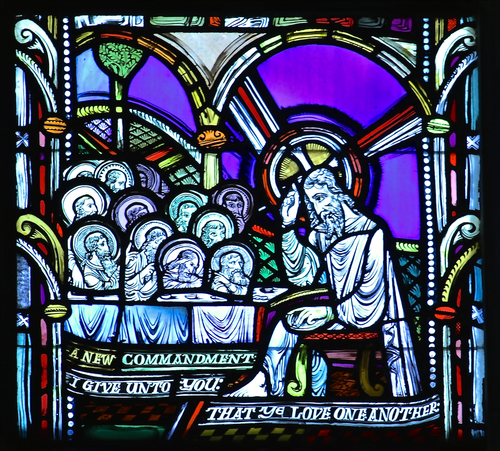
“A new command I give you: Love one another. As I have loved you, so you must love one another. By this everyone will know that you are my disciples if you love one another.” (New International Version)
The Church was formed to represent Christ on earth. The Church is a new community of believers in Jesus, called and empowered by the Holy Spirit for mission.
Christianity was never intended to be just a personal faith; it was designed by God to be the community of the redeemed. Christian community is vital to every individual’s faith.
“No one can have God for his Father who does not have the Church for his Mother.”
John Calvin (1509-1564)
Loyalty and commitment to God translates to having a dedicated and devoted spirit to one another in the church.
One of the last commands Jesus gave to his disciples before he went to the cross was to “love one another.” The Old Testament instructed the Israelites to love each other (Leviticus 19:18). Yet, Jesus gives new meaning to the command through four distinctions of loving one another.
A New Model of Love: Jesus
Our Lord’s life and teaching gave new meaning to the command to love each other. Notice what Jesus did in the Upper Room just before giving the command to love one another:
It was almost time for the Jewish Passover festival. Jesus knew that the time had come for him to leave this world and go back to the Father. Jesus had always loved the people in the world who were his. Now was the time he showed them his love the most.
Jesus and his followers were at the evening meal. The devil had already persuaded Judas Iscariot to hand Jesus over to his enemies. (Judas was the son of Simon.) The Father had given Jesus power over everything. Jesus knew this. He also knew that he had come from God. And he knew that he was going back to God. So while they were eating, Jesus stood up and took off his robe. He got a towel and wrapped it around his waist. Then he poured water into a bowl and began to wash the followers’ feet. He dried their feet with the towel that was wrapped around his waist. (John 13:1-5, ERV)
Jesus modeled a service-oriented love of compassionately meeting the need of another, regardless of who that person is. It is instructive to us that Jesus washed the feet of Judas Iscariot, along with all the other disciples.
Christ died for us while we were still sinners. This demonstrates God’s love for us.
Romans 5:8, GW
We are to love everyone in the community of saints, and not just our friends or the ones we like. Loving one another also means we will be realistic in understanding that community is messy and downright hard work.
A New Motive: Christ First Loved Me
Jesus has loved us with a love that took care of our brokenness once for all. Because of that love, we are now motivated to love each other. John would later say in his first epistle:
God showed his love for us by sending his only Son into the world, so that we might have life through him. This is what love is: it is not that we have loved God, but that he loved us and sent his Son to be the means by which our sins are forgiven. Dear friends, if this is how God loved us, then we should love one another. (1 John 4:9-11, GNT)
Love is an attitude and a frame of mind. The motivation for the Christian is different than anyone else’s motive: We are so thankful for Christ’s love to us, that we cannot help but extend that same love to one another in the church.
This kind of love transcends human willpower. This is love as a grateful response for the grace shown us in Christ.
A New Motivator: The Holy Spirit
The Spirit energizes and enables us to love each other. Jesus also said in the Upper Room:
If you love me, you will do as I command. Then I will ask the Father to send you the Holy Spirit who will help you and always be with you. (John 14:15-16, CEV)
There are times when we may lack the ability or spiritual energy needed for the work of loving each other. It is in those times that we need to check our spiritual electrical box to make sure we haven’t tripped a breaker by trying to live the Christian life on our own strength.
We need the Spirit. The Spirit gives us the zeal we need to love one another.
We typically don’t do anything in life unless we have the motivation for it. The Spirit is like the Christian’s personal trainer – encouraging, exhorting, getting in our face, comforting, and spurring us – toward the new way of love.
A New Mission: World Evangelization
All people will know we are Christ’s disciples if we love one another. The way we treat each other in the church is foundational and fundamental to the mission of loving our neighbors who don’t know Jesus.
“Mission is putting love where love is not.”
St. John of the Cross (1542-1591)
When the church has a healthy and even supernatural dynamic of loving one another, they joyfully proclaim the good news to every person that Jesus is the answer to the terrible brokenness of this world.
Community is necessary to mission. Lesslie Newbigin (1909-1998) was a British missionary to India for forty years. After retiring and returning to Britain, he found his homeland was very different than when he left. He was astounded to find Britain had become very less Christian and was now predominantly un-Christian. It was clearly a post-Christian society. What to do about it? Here is Newbigin’s response:
“I have come to feel that the primary reality of which we have to take account in seeking for a Christian impact on public life is the Christian congregation. How is it possible that the gospel should be credible, that people should come to believe that the power which has the last word in human affairs is represented by a man hanging on a cross?
I am suggesting that the only answer, the only hermeneutic of the gospel [the only way society can discern who Jesus is] is a congregation of men and women who believe it and live by it. I am, of course, not denying the importance of the many activities by which we seek to challenge public life with the gospel – evangelistic campaigns, distribution of Bibles and Christian literature, conferences, and even books such as this one. But I am saying that these are all secondary, and that they have power to accomplish their purpose only as they are rooted in and lead back to a believing community.”
Conclusion
The implications of community for our faith are significant. If we keep other Christians at a distance and give them the stiff arm, we are really giving God the stiff arm. Jesus identifies so closely in love to his people, that to love them is to love him.
The late African-American preacher E.V. Hill told the following story about an experience with a white Christian leader in the 1950s:
“As a freshman at Prairie View College (part of the Texas A&M system) I was actively involved and was one of two students selected to go to our denomination’s annual meeting in Memphis. The trip through the South was by car—three whites and two blacks traveling together. I had no idea how we’d eat or how we’d sleep. So great was my anxiety and hatred over how the trip might turn out that I almost backed out entirely …. In all my experience I had never seen a white man stand up for a black man and never felt I would.
But then Dr. Howard, the director of our trip and a white man spoke up. ‘We’ll be traveling together,’ he said. ‘If there isn’t a place where all of us can eat—none of us will eat. If there’s not a place all of us can sleep—none of us will sleep.’ That was all he said, but it was enough! For the first time in my life, I had met a white man who was Christian enough to take a stand with a Christian black man.”
May the Spirit give us the courage together to love one another.
Gracious Lord, I pray for those who will believe in you through the good news of forgiveness in Christ. I pray that all of them may be one just as you are one. May they be brought to complete unity to let the world know that you sent the Son, Jesus, and have loved them even as you have loved us. Righteous God, may you help us make you known in the world so that the love you have for us may be in them through the cross of Christ. Amen.