Showing God’s Kindness (2 Samuel 9:1-13)

King David reaching out and receiving Mephibosheth, 13th century Bible illustration

David asked, “Is there anyone from Saul’s family still alive that I could show faithful love for Jonathan’s sake?” There was a servant from Saul’s household named Ziba, and he was summoned before David.

“Are you Ziba?” the king asked him.

“At your service!” he answered.

The king asked, “Is there anyone left from Saul’s family that I could show God’s kindness to?”

“Yes,” Ziba said to the king, “one of Jonathan’s sons, whose feet are crippled.”

“Where is he?” the king asked.

“He is at the house of Ammiel’s son Machir at Lo-debar,” Ziba told the king.

So King David had him brought from the house of Ammiel’s son Machir at Lo-debar. Mephibosheth, Jonathan’s son and Saul’s grandson, came to David, and he fell to the ground, bowing low out of respect.

“Mephibosheth?” David said.

“Yes,” he replied. “I am at your service!”

“Don’t be afraid,” David told him, “because I will certainly show you faithful love for the sake of your father Jonathan. I will restore to you all the fields of your grandfather Saul, and you will eat at my table always.”

Mephibosheth bowed low out of respect and said, “Who am I, your servant, that you should care about a dead dog like me?”

Then David summoned Saul’s servant Ziba and said to him, “I have given your master’s grandson everything belonging to Saul and his family. You will work the land for him—you, your sons, and your servants—and you will bring food into your master’s house for them to eat. But Mephibosheth, your master’s grandson, will always be at my table.” (Now Ziba had fifteen sons and twenty servants.)

Then Ziba said to the king, “Your servant will do whatever my master the king commands.”

So Mephibosheth ate at David’s table, like one of the king’s own sons. Mephibosheth had a young son named Mica. All who lived in Ziba’s household became Mephibosheth’s servants. Mephibosheth lived in Jerusalem, because he always ate at the king’s table. He was crippled in both feet. (Common English Bible)

This is actually one of my favorite stories in all of Holy Scripture. It clearly demonstrates why David is a king and a person who reflects God’s own heart. I believe that King David is at his best here, ruling and living exactly as the Lord wanted him to.

In much of the ancient world, whenever a king came to power and replaced the previous king of whom he was not related, it was a common practice to either exile or outright kill the sons and grandsons who would have become heirs to the throne. It was a literal cutthroat way of securing the new throne, by wiping out any potential rivals.

It’s quite possible that no one would have faulted David or batted an eye if he had made sure there was nobody around related to King Saul – who died in a battle with the Philistines. Not only did David avoid that practice, but he did just the opposite of it.

Finally on the throne of both Israel and Judah, one of the first acts of King David was to wield his power and authority by finding out if there were any relatives of Saul that he could show faithful love toward.

I can just imagine the servant of Saul, Ziba, being brought into David’s presence, thinking for sure that this is the end. Instead, David wanted to know if there’s anyone in Saul’s family to which he could show kindness.

The word King David used to communicate his benevolent intentions was “chesed” (חסד – pronounced “KES-ed”). This is rich Hebrew word which refers to God’s steadfast covenant loyalty and love toward Israel.

Because of its richness, chesed is translated various ways in the English translations, including: “mercy,” “kindness,” “loving-kindness,” “steadfast love,” “compassion,” and even “goodness.”

The big idea in today’s story is that David had the power to destroy, but instead used his authority in order to extend loving loyalty and mercy to Mephibosheth, son of Jonathan, and grandson of Saul – David’s old enemy and nemesis.

What’s more, David could have found out about Mephibosheth, learned that the man was crippled, in no position to ever do anything for or against him, and simply left him alone. And again, nobody likely would have thought anything about ignoring the man.

But not David. He was determined to embody chesed in the life of Mephibosheth. So, he brought him to Jerusalem and provided for him by having him sit at the king’s table for the rest of his life.

David didn’t have to do that. Yet, God’s steadfast love compelled him. You know grace has a hold of someone’s life, whenever they go out of their way to extend human kindness to another person who has absolutely no means of paying them back or reciprocating at all.

Jesus, the Son of David, clearly understood the idea of chesed and lifted it, taught it, and embodied it for his own followers:

“If you love those who love you, why should you be commended? Even sinners love those who love them. If you do good to those who do good to you, why should you be commended? Even sinners do that. If you lend to those from whom you expect repayment, why should you be commended? Even sinners lend to sinners expecting to be paid back in full. 

“Instead, love your enemies, do good, and lend expecting nothing in return. If you do, you will have a great reward. You will be acting the way children of the Most High act, for he is kind to ungrateful and wicked people. Be compassionate just as your Father is compassionate. (Luke 6:32-36, CEB)

I wonder who it is that God wants you to show grace, mercy, and love toward?

Lord Jesus, as you commanded us to love one another, just as you love us, help us to demonstrate that love toward others. We acknowledge that it is impossible on our own, so we ask for the enabling of your Holy Spirit to produce that love in us.

We believe that you love and care for those who are suffering from illness, violence and persecution. We pray for protection, comfort and healing for those in need or who are forgotten.

Enliven us with your Holy Spirit, so that we may be instruments of your peace and love in a troubled world. Use us and all believers as your ambassadors to our families, colleagues and neighbors.

Holy God, you demonstrated your love for us through the Resurrection of your Son and our Savior Jesus Christ. We commit to making decisions as who trust in your ever-present love and grace. Guide us in becoming a people who welcomes all, and values mutuality and partnerships.

Provide us courage and insight as we seek to be a community who provides respite, and a place to sooth souls. Grant us all the things necessary for our common life, and bring us to be of one heart and mind within your Church; through Jesus Christ our Lord. Amen.


Ministry to the Poor and Needy (2 Corinthians 9:1-5)

If I wrote any more on this relief offering for the poor Christians, I’d be repeating myself. I know you’re on board and ready to go. I’ve been bragging about you all through Macedonia province, telling them, “Achaia province has been ready to go on this since last year.” Your enthusiasm by now has spread to most of them.

Now I’m sending the brothers to make sure you’re ready, as I said you would be, so my bragging won’t turn out to be just so much hot air. If some Macedonians and I happened to drop in on you and found you weren’t prepared, we’d all be pretty red-faced—you and us—for acting so sure of ourselves.

So to make sure there will be no slipup, I’ve recruited these brothers as an advance team to get you and your promised offering all ready before I get there. I want you to have all the time you need to make this offering in your own way. I don’t want anything forced or hurried at the last minute. (The Message)

Organizing relief efforts, and giving to relief organizations, is nothing new. Poverty and need has existed as long as humans have been on this earth. The constant rub is this: Some people aren’t in poverty, and some are.

So how do we get resources from the people who have them to the people who are really in need? Just as important, and perhaps more basic, how will folks care enough about the poor to give money and basic relief?

The Apostle Paul informed the Corinthian Church that he boasted about them to the Macedonians – about their eagerness to participate in ministry toward their fellow believers in need. The Macedonian believers had been ready to participate for quite some time.

In stating this, Paul intended to stir up the Corinthians about the offering for believers in Jerusalem. He had organized a delegation of Macedonians, along with persons from Paul’s own ministry team, to go to Corinth together. The last thing Paul wanted was to have the Corinthians unprepared to give.

Paul was a person who intended to do good, and then followed through with it. He held people accountable for their actions and inactions. He organized the benevolent offering for Jerusalem’s believers, and then made sure that all of the churches good intentions became reality.

Although Paul’s concern in organization and accountability may strike some as coercion for funding, it seems to me that a more plausible reason is that Paul simply wanted to try and ensure that everyone’s giving was done from a place of love, not coaxing or guilting.

The Apostle wanted believers and churches working together for good purposes. He wanted everyone to have a positive experience of helping and being united in spirit and purpose. The churches were young, and Paul was doing everything he could to encourage their growth in grace.

A good way of fostering unity and mission would be to have the churches participate in helping needy believers in Jerusalem. It was a very worthy and needed cause – and also served the cause of Christ.

What’s more, ministry to the poor has always been a hallmark of pure religion. A concern, dedication, plan, and accountable action on behalf of the poor helps everyone, and demonstrates authentic ministry.

My dear friends, pay attention. God has given a lot of faith to the poor people in this world. God has also promised them a share in his kingdom that he will give to everyone who loves him. (James 2:5, CEV)

We are to care about the needy because God cares about persons trapped in poverty. The poor are people; and all people are important. Jesus came to this earth to have a ministry to them; and he lifted a text from Scripture (Isaiah 61:1) to give his reason for doing so:

“The Spirit of the Lord is upon me because he has chosen me to bring good news to the poor.”(Luke 4:18, GNT) 

God has a lot to say about the poor and needy because they are dear to the divine heart. The Old Testament law was quite clear about how to treat the poor: 

Poor persons will never disappear from the earth. That’s why I’m giving you this command: you must open your hand generously to your fellow Israelites, to the needy among you, and to the poor who live with you in your land.(Deuteronomy 15:11, CEB)  

Let’s keep in mind that only the poor in spirit will enter the kingdom of heaven. Our trust is to be in God, and not in our money or our stuff. 

The genuine believer has a real humility that demonstrates grace to people who cannot offer them something in return. It’s easy to be merciful to those who will turn around later and scratch our backs. But it is altogether a different thing to give without any strings attached. 

God cares about the condition of our souls, and not the balance on our bank statements. Since God does not judge people on face value, nor on the state of their finances, then neither should we.

The Apostle Paul, in his ministry, sought to teach others in the way of Jesus by:

  • Turning people from only associating with those they are comfortable with, to lovingly reaching out to people very different from themselves
  • Changing people’s thinking from what they can obtain and consume, to becoming people of love and generosity with their words and their physical resources
  • Putting to death: a proud spirit that looks to get ahead; all personal petty agendas; accumulation of more power; and exertion of control – but instead, provide humble repentance and forgiveness

Ministry to the poor is a non-negotiable for the Christian church. Beyond only dispensing benevolent funds, the poor need relationships, connections, resources, and a chance to give back in ways they can contribute.

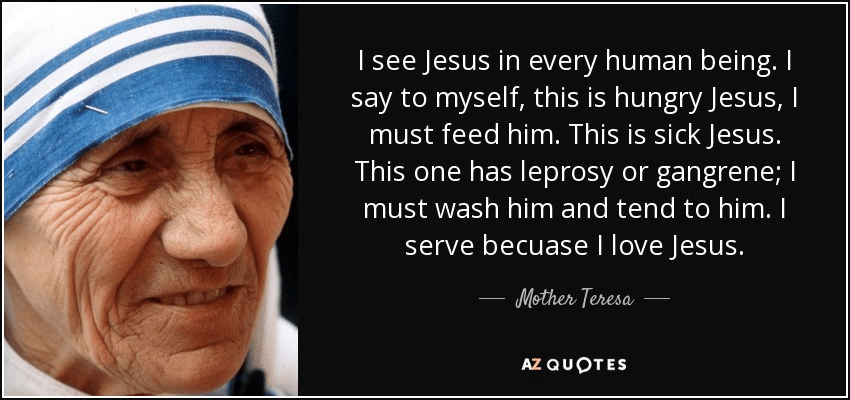
Lord God, you came to honor the least, the forgotten, the overlooked, and the misjudged. You came to make the last, the left behind, the misunderstood, and the undervalued, first. You came to give a warm welcome to the lost, the orphaned, the abandoned and the destitute.

Help us to be your ears to listen to their cries; and your voice speaking out love and acceptance. Help us to be your feet walking beside those in need; and your hands to clothe, feed and shelter them. You came for the least, the lost and last of this world. Lord, hear our prayer. Amen.

The Compelling Love of Christ (2 Corinthians 5:6-17)

So we are always confident, even though we know that while we are at home in the body we are away from the Lord— for we walk by faith, not by sight. Yes, we do have confidence, and we would rather be away from the body and at home with the Lord. So whether we are at home or away, we make it our aim to be pleasing to him. For all of us must appear before the judgment seat of Christ, so that each may receive due recompense for actions done in the body, whether good or evil.

Therefore, knowing the fear of the Lord, we try to persuade people, but we ourselves are well known to God, and I hope that we are also well known to your consciences. We are not commending ourselves to you again but giving you an opportunity to boast about us, so that you may be able to answer those who boast in outward appearance and not in the heart. For if we are beside ourselves, it is for God; if we are in our right mind, it is for you. For the love of Christ urges us on because we are convinced that one has died for all; therefore all have died. And he died for all, so that those who live might live no longer for themselves but for the one who for their sake died and was raised.

From now on, therefore, we regard no one from a human point of view; even though we once knew Christ from a human point of view, we no longer know him in that way. So if anyone is in Christ, there is a new creation: everything old has passed away; look, new things have come into being!(New Revised Standard Version)

Christians believe that Jesus Christ is the supreme authority over all things; and that we are ruled by Christ. Yet, the sort of rule Christians submit to is without any belligerence from us. In fact, it is quite the opposite.

We are ruled by Christ’s love for us. Believers are convinced that since Christ died for all, then all of us have died. Jesus died so we would no longer live for ourselves, but for the one who died and was raised to life for us. Since love is our guide and rule in life, we are careful not to judge people by what they seem to be. Anyone who belongs to Christ is a new person. The guilt and shame of our past is forgotten; everything is made new.

Love is the distinguishing mark of the believer in Jesus Christ. A person filled and ruled by Christ’s love sees all of life in a new and different way: 

  • Positive confidence and optimism replaces negative skepticism and pessimism
  • Grace overwhelms and overrules the old judgmental spirit
  • Being attentive and mindful of others erases holding onto old hurts and animosities

The person who does not change, refuses transformation of heart, and forsakes renovation of the mind, is not being ruled by Christ’s love. 

Conversely, the person who allows the love of God in Christ through the cross to thaw their cold heart to a new white hot passionate life in the Spirit, is experiencing the resurrected existence to which we have been called.

Here is a little exercise to try today: Monitor your words and actions. And at the end of the day, ask yourself a series of questions:

  1. Were my words and actions done in love?
  2. What percentage of those words and actions were loving and unloving?
  3. Was I compelled by Christ’s love, or by some other love? 
  4. How can I bring the value of love to be more operative in my behavior and speech? 
  5. Who will I share my plan with?

The reality is this: Everything comes down to God, to the Father, Son, and Spirit. 

The distinctive manner we live is to be an expression of the triune God who exists in perfect unity, harmony, love, and mission. Whether in our families, neighborhoods, workplaces, or churches, God wants to exercise and express divine love in us and through us. God’s love compels us.

Holy Scripture says that the triune God is love (1 John 4:16). God’s nature and purpose is love itself. The reason we love God with heart, soul, mind, and strength is that God is love. 

As people created in the image and likeness of God, there is within us a deep desire to know and love God. Yet, it’s possible to lose touch with this primal instinct to love God. We may become so familiar with hearing about God that we go about our days not really know God, and the love of God in Christ.

Without knowing the God who is Love (with a capital L) people might go through the motions of living, even worshiping, without any love behind it. Like spiritual zombies, we may walk about the earth, but are really dead to what is going on in God’s wonderfully big world.

For the Christian, our first love is Jesus. We may live moral lives, operate with sound ethical principles at our jobs, and diligently serve family and church, yet miss the heart and soul of loving God. 

Jesus himself said to the church at Ephesus, who had performed good deeds, that they had forsaken their first love (Revelation 2:4). The Apostle Paul put it this way to the church at Corinth: “If I give all I possess to the poor and surrender my body to the flames, but have not love, I gain nothing.” (1 Corinthians 13:3)

A new robust life of love is possible because the Father first loved us, sent his Son as an atoning sacrifice for our sins, and gave us the Spirit in order to display God’s love toward one another. (1 John 4:10-13) 

Jesus reminded us that all of Scripture hangs on the dual command to love God and neighbor (Matthew 22:37-40). This has been understood throughout church history as The Great Commandment. 

Christ also told us that the supreme task of the Church is to make disciples of all nations (Matthew 28:19). This has been rightly discerned through Christian history as The Great Commission. 

In order to live into The Great Commandment and The Great Commission, we are to wholeheartedly embody the community of love which exists within the triune God. This is a single-minded loyalty to do what is right, just, and good for our neighbor; we might describe this as The Great Commitment.

Finally, here is yet another few questions for both committed believers and church leaders to ask themselves:

  1. In what ways might we, in this contemporary world, faithfully and obediently live into the calling we have been given by our Lord? 
  2. How do we effectively engage this primal quest of loving God, loving one another, and loving our neighbor?

Loving God, you demonstrated your love for us through the cross of Jesus. May my life be so filled with grace that what comes out of my mouth and what is done in my behavior is consistently characterized by the sort of divine love which is always true of you. Amen.

Abide In Love (John 15:9-17)

As the Father has loved me, so I have loved you; abide in my love. If you keep my commandments, you will abide in my love, just as I have kept my Father’s commandments and abide in his love. I have said these things to you so that my joy may be in you and that your joy may be complete.

“This is my commandment, that you love one another as I have loved you. No one has greater love than this, to lay down one’s life for one’s friends. You are my friends if you do what I command. I do not call you servants any longer, because the servant does not know what the master is doing, but I have called you friends, because I have made known to you everything that I have heard from my Father. You did not choose me, but I chose you. And I appointed you to go and bear fruit, fruit that will last, so that the Father will give you whatever you ask him in my name. I am giving you these commands so that you may love one another. (New Revised Standard Version)

We Need Love

The world, in truth, spins on the axis of love. Without love, there is no beauty. Apart from love, we would all be living in a dystopian world of mere survival. But with love, there is life, hope, purpose, and meaning; there is fulfillment, satisfaction, and security. With love, our most basic needs as people are met.

So, love is a word that must be intentionally pursued and valued; because we cannot live without it.

The very word “love” gets used in various and different ways in our world. Jesus used the word in a sacrificial sense – that love willingly gives up one’s life for the benefit of another.

Love is large. It involves the whole person – body, mind, emotions, and spirit. Love in today’s Gospel lesson is used by Jesus as an action. And it’s even more than that. Christ defined love in the Upper Room to his disciples as a willingness to die – not necessarily for a spouse or a child – but for a friend, a fellow follower of Jesus.

It seems that for most Christians, giving up one’s life for another is not at the forefront of our idea of loving another. Yet, to love our neighbor as ourselves does involve the willingness to die so that another may live. To know precisely what this is like, we need look no further than the love which exists within God.

God is Love

Love is seen above all in the love of God the Father shown forth in God the Son. Because God so loves the people of this world, the Father sent the Son, Jesus, to give his life for us. And Jesus, embodying the very love of God, willingly gave himself on our behalf. It hearkens us to Christ’s earlier words about this:

“For God so loved the world that he gave his only Son, so that everyone who believes in him may not perish but may have eternal life.”

Jesus (John 3:16, NRSV)

Just as the Father loved the Son, and the Son loved us, so we are to love others with the same sort of sacrificial love which was graciously shown to us. The Apostle John made this plain in his first epistle:

God’s love was revealed among us in this way: God sent his only Son into the world so that we might live through him. In this is love, not that we loved God but that he loved us and sent his Son to be the atoning sacrifice for our sins. Beloved, since God loved us so much, we also ought to love one another. (1 John 4:9-11, NRSV)

Therefore, it is our privilege and responsibility to abide in this divine love and let it fill us to the full, so that God’s love moves powerfully in us and through us, for the life of the world.

Remain in Love

Love is the end result of an abiding relationship and close connection between Christ and his followers. We are to remain in the love of Christ, just as Christ remains in the love of God. Jesus asks nothing of us that he has not already modeled for us in his sacrificial service to the world. Living in union with Christ, loving Jesus, and keeping God’s commands are all a single package, bound up together in a mutual relationship.

We don’t need to wonder what God wants for us and from us: Love. The commands of Jesus are not general; they are focused and specific. Christ commands that we love one another. Our continuing work on this earth is to keep on loving people as Christ has loved us and gave himself for us.

No Greater Love

There is no greater love than that shown in the giving of one’s life for one’s friends. The power of God’s love is focused in Christ. It is confirmed in Christ’s resurrection from death. And it flows from Christ giving his life on the cross for us.

Yes, Christians are servants who are committed to serving others with sacrificial love. Yet, the disciples and all those who follow Christ are much more than servants; they are considered primarily as friends of Jesus.

Through the cross and resurrection of Christ, believers have discovered the divine power of love. There is no greater love than this. And it is this sort of love that binds Christians together as united in their mission to love as Jesus loved them.

We have been called, chosen, and appointed by Jesus to embody love’s mission and purpose. What’s more, we are equipped for the active work of love.

Whatever You Ask in Love

The very name of Jesus is love itself. So, whatever you ask, “in my name,” said Jesus, “the Father will give you.”

Because Christians are united to Christ, they are to remain in and abide with Christ. This relational connection opens up the power of prayer. And the content of those prayers – if we are truly in Christ – will always come from a place of love, be directed to love, and go to great lengths to accomplish love.

Prayer is an activity which is grounded in the abiding relationship of Father, Son, Spirit, and the Christian community. Love directs our prayers. And prayers are directed toward the action of love.

A confidence in the power of prayer is an abiding trust in the power of Love. With love animating our prayers and infusing our service, we are bold to ask God for what is right, just, and good in this world. Indeed, we pray that we will give love to each other with the love we have received from God.

Love and Joy

Being called and appointed by God to love is a privilege and a joy. There isn’t any begrudging service when love is involved. Perhaps one of the greatest prayers we can pray is to pray that our hearts be filled with love. If you don’t feel love for others, then pray for it. And be assured that you will receive it.

Love and joy go together like mashed potatoes and gravy, peanut butter and jelly, grits and honey. We know we are loving others if our joy is complete in doing so.

Jesus came to this earth so that we might experience an overflowing life of abundant love and joy. Christ longs for his joy to be in us, and for us to abide in his love. Our joy comes from knowing that we have been loved by God – chosen, called, and sent out into the world with love and for the purpose of love.

And it is this divine love that has the power to renew and transform everything – even the most troubling and stubborn of people and problems that you are presently facing. Indeed, if love is not the answer, then you are not asking the right question.

Creator God, by the mercies of your son, our Lord, Jesus, compel us to turn our hearts to his way of Love, so that we might follow Christ together as your faithful people. Dear Jesus, guide us in your way. Amen.