Monday of Holy Week (Psalm 36:5-11)

The Via Dolorosa (Latin: the way of sorrows) is a narrow path through the streets of the Old Jerusalem, the final route traveled by Jesus of Nazareth on the way to his crucifixion.

Your steadfast love, O Lord, extends to the heavens,
    your faithfulness to the clouds.
Your righteousness is like the mighty mountains;
    your judgments are like the great deep;
    you save humans and animals alike, O Lord.

How precious is your steadfast love, O God!
    All people may take refuge in the shadow of your wings.
They feast on the abundance of your house,
    and you give them drink from the river of your delights.
For with you is the fountain of life;
    in your light we see light.

O continue your steadfast love to those who know you
    and your salvation to the upright of heart!
Do not let the foot of the arrogant tread on me
    or the hand of the wicked drive me away. (New Revised Standard Version)

The desert journey is almost over. The sojourn with Jesus in his life and ministry will soon culminate in the ultimate experience of sorrow and joy. The Christian season of Lent is nearly at the end. We are in it’s final days, known as Holy Week.

We have a Holy Week because of love. There is yet another journey we must take, along the Via Dolorosa to the hill of Golgotha, because of God’s steadfast love.

Love suffers. Every parent knows this. Because of a parent’s committed and faithful love toward a child, they feel not only the joys but also the sorrows and pain of their children. I can say that this feeling does not go away, even with adult children. And it’s compounded with grandchildren. Just as our love is big enough to hold multiple children and grandchildren, so our capacity for experiencing deep emotion for their welfare is equally large.

Holy Week reminds us that God’s committed parental love suffers. It is because of God’s immense and steadfast love that there is a road to the cross and a tortured death for Jesus. The cost of our salvation involves a very bloody affair. Deliverance comes at the price of horrible violence. Jesus Christ lived and died for us, because of love.

He suffered much because he loved much.

God’s people, walking in the way of love, quickly discover that it is simultaneously walking in the way of suffering. From Old Testament times through the New Testament era and into the present day, the faithful have always experienced suffering as a central part of their piety and devotion in showing steadfast love. 

The medieval mystics of the Church understood quite well the connection between suffering and love. They could not imagine a Christian life without hardship, difficulty, and persecution. Thomas à Kempis, a sort of pastor to pastors, wrote in the fifteenth century:

“Sometimes it is to our advantage to endure misfortunes and adversities, for they make us enter into our inner selves and acknowledge that we are in a place of exile and that we ought not to rely on anything in this world.  And sometimes it is good for us to suffer contradictions and know that there are those who think ill and badly of us, even though we do our best and act with every good intention….  When men ridicule and belittle us, we should turn to God, who sees our innermost thoughts, and seek His judgment….  It is when a man of good will is distressed, or tempted, or afflicted with evil that he best understands the overwhelming need he has for God, without whom he can do nothing….  It is in such times of trial that he realizes that perfect security and full peace are not to be found in this world.”

Thomas à Kempis, The Imitation of Christ

And yet, it is because of love that suffering is transformed and endured as something wholly other than sheer pain or hurt. Thomas à Kempis went on to say:

“Love is a mighty power, a great and complete good; Love alone lightens every burden and makes the rough places smooth. It bears every hardship as though it were nothing and renders all bitterness sweet and acceptable. The love of Jesus is noble and inspires us to great deeds; it moves us always to desire perfection. Love aspires to high things and is held back by nothing base. Love longs to be free, a stranger to every worldly desire, lest its inner vision become dimmed, and lest worldly self-interest hinder it, or ill-fortune cast it down…. Love knows no limits, but ardently transcends all bounds. Love feels no burden, takes no account of toil, attempts things beyond its strength; love sees nothing as impossible, for it feels able to achieve all things. Love therefore does great things; it is strange and effective; while he who lacks love faints and fails.”

Thomas à Kempis, The Imitation of Christ

Holy Week’s message is certainly one of suffering love. Jesus went to the greatest lengths possible to give Divine steadfast love to humanity. So, let us not shy away from the cross, but journey with Jesus to Golgotha, embracing the love of God for us. In so doing, we will find the inner resources needed to love the world, even in all its unloveliness.

Grant, we pray, almighty God, that, though in our weakness we fail, we may be revived through the Passion of your Only Begotten Son. Who lives and reigns with you in the unity of the Holy Spirit, God, for ever and ever. Amen.


Listen and See (Isaiah 42:14-21)

For a long time, I, the Lord,
    have held my temper;
now I will cry out and groan
    like a woman giving birth.
I will destroy the mountains
    and what grows on them;
I will dry up rivers and ponds.

I will lead the blind on roads
    they have never known;
I will guide them on paths
    they have never traveled.
Their road is dark and rough,
    but I will give light
to keep them from stumbling.
    This is my solemn promise.

Everyone who worships idols
as though they were gods
    will be terribly ashamed.

You people are deaf and blind,
but the Lord commands you
    to listen and to see.
No one is as blind or deaf
as his messenger,
    his chosen servant,
who sees and hears so much,
    but pays no attention.

The Lord always does right,
and so he wanted his Law
    to be greatly praised. (Contemporary English Version)

The Christian season of Lent serves to remind us that we must cultivate awareness by opening our eyes and unstopping our ears. Spiritual blindness and deafness are the result of failing to pay attention, ignoring the moral vision of God, and not listening to God’s voice.

It’s not unusual for people to complain about God being silent and ignoring them. But do we ever consider how the Lord feels about us living our lives as functional atheists? There may be expressions of belief, yet God doesn’t factor into the daily life of many. And the Lord is not okay with this.

At least we have assurances throughout Holy Scripture that the Lord is attentive to us, even when silent or seemingly not there. However, when it comes to us, our silence and lack of being present to the Lord is outright spiritual blindness and deafness on our part.

Today’s Old Testament lesson almost seems as if Yahweh is like the person trying to get your attention in a crowded place – jumping up and down, waving his arms, yelling our name – doing whatever it takes for us to see and hear, listen and look up. Yet, alas, we don’t.

Maybe we need to remember what God’s divine eyes and ears have already seen and heard. The Lord heard the awful groanings of the Israelites in Egypt under their harsh slavery. And God took notice of them and saw what was happening. (Exodus 2:24-25)

Perhaps we must recall all the times the Lord heard the cries of the people and sent a deliverer (Judges 2:16-19); and looked from heaven, saw those in bondage, and freed them. (Psalm 102:18-20)

If we put our fingers in our ears, and cover our eyes for too long, our hearts will become hard, and we shall be unable to turn from unhealthy ways of living. We’ll become so obtuse and clueless that we cannot repent and be healed.

Then I heard the voice of the Lord saying, “Whom shall I send? And who will go for us?” And I said, “Here am I. Send me!” He said, “Go and tell this people:

“‘Be ever hearing, but never understanding;
    be ever seeing, but never perceiving.’
Make the heart of this people calloused;
    make their ears dull
    and close their eyes.
Otherwise they might see with their eyes,
    hear with their ears,
    understand with their hearts,
and turn and be healed.” (Isaiah 6:8-10, NIV)

This might seem rather hard. And yet, none of us can truly know comfort and consolation apart from facing the hard truth in front of us and the hard heart inside us. Everyone wants happiness without pain. However, we cannot have a rainbow without a storm, and a resurrection without a cross.

We can have a different experience of God. It’s not too late. The message of Lent is that we can prepare ourselves for the Lord’s deliverance – and it is likely to come in the form of great sorrow and great joy of which we could not have anticipated.

The wisdom I proclaim is God’s secret wisdom, which is hidden from human beings, but which he had already chosen for our glory even before the world was made. None of the rulers of this world knew this wisdom. If they had known it, they would not have crucified the Lord of glory. However, as the scripture says,

“What no one ever saw or heard,
    what no one ever thought could happen,
    is the very thing God prepared for those who love him.” (1 Corinthians 2:7-9, GNT)

We humans struggle with the hard things of life. Yet, what we don’t always see or hear is how those adversities are shaping and forming us as a people.

For how would we ever know the Lord as our:

  • Deliverer unless we were in bondage?
  • Comforter unless we were in trouble?
  • Helper unless we were weak?
  • Healer unless we were broken?
  • Provider unless we were poor?
  • Protector unless we were in danger?
  • Warrior unless we were under attack?
  • Rock unless we were being tossed about?

Every day is a fresh opportunity to experience the presence, power, provision, and protection of a God who sees and hears us. Believers are to honor and respect the Lord by listening to God’s voice and obeying God’s words.

So, let us use this season to offer prayers of repentance and faith:

O God, whose glory it is always to have mercy: Be gracious to all who have gone astray from your ways,
and bring them again with penitent hearts and steadfast faith to embrace and hold fast the unchangeable truth of your Word, Jesus Christ your Son; who with you and the Holy Spirit lives and reigns, one God, forever and ever. Amen.

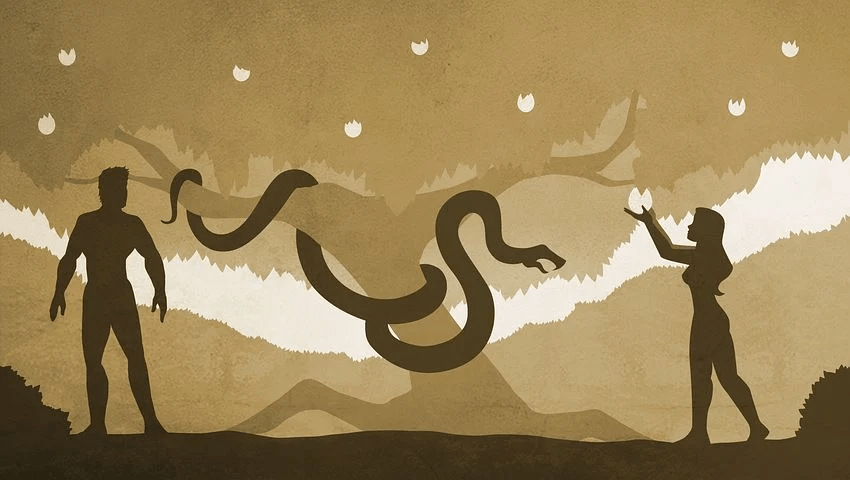
The Fall of Humanity (Genesis 2:15-17, 3:1-7)

The Lord God took the man and put him in the Garden of Eden to work it and take care of it. And the Lord God commanded the man, “You are free to eat from any tree in the garden; but you must not eat from the tree of the knowledge of good and evil, for when you eat from it you will certainly die….”

Now the serpent was more crafty than any of the wild animals the Lord God had made. He said to the woman, “Did God really say, ‘You must not eat from any tree in the garden’?”

The woman said to the serpent, “We may eat fruit from the trees in the garden, but God did say, ‘You must not eat fruit from the tree that is in the middle of the garden, and you must not touch it, or you will die.’”

“You will not certainly die,” the serpent said to the woman. “For God knows that when you eat from it your eyes will be opened, and you will be like God, knowing good and evil.”

When the woman saw that the fruit of the tree was good for food and pleasing to the eye, and also desirable for gaining wisdom, she took some and ate it. She also gave some to her husband, who was with her, and he ate it. Then the eyes of both of them were opened, and they realized they were naked; so they sewed fig leaves together and made coverings for themselves. (New International Version)

Lent is a 40-day season of preparation and repentance for Christians anticipating Good Friday’s cross of Christ and the victory over sin in Easter’s celebration of Christ’s resurrection. To understand why there is a need for repentance, let’s turn to where disobedience, shame, and guilt first entered the world.

Ever since humanity’s fall into sin, our human nature tends to look at the one thing we can’t do, instead of seeing all the range of possibilities that we can do.  The serpent (the devil) was successful in getting Adam and Eve to focus on that one tree they needed to avoid. In our fallen condition, just tell us what we can’t do and we’ll probably be sure to do it – rather than enjoy all the vast prospects we presently have and can actually do with God. 

What’s more, the devil subtly planted a terrible and untruthful idea in the heads of Adam and Eve – that God was somehow holding out on them and was not providing everything they really needed and wanted in life.

Sin may look attractive, and even initially taste good. Yet, disobedience has an awful aftertaste and damages our insides. Indeed, sin always over-promises and under-delivers.

Perhaps the greatest and deepest effect of sin is the shame of disobedience which causes us to hide from God, one another, and even ourselves. All this hiding causes spiritual blindness. We end up sleepwalking through hell, unaware of our awful spiritual plight. 

Because of this reality, we need deliverance; we need a Savior to intervene and save us from our ignorance and guilt. As mere dust, we need God’s Spirit to breathe new life into us so that we may again enjoy the Lord in Paradise.

Our fallen spiritual condition does not want to acknowledge our need for the sheer grace of God. Sewing some fig leaves together is symbolic of Adam and Eve’s new independence from God; from now on, they’re going to operate on their own.  The introduction of sin into the world causes people to look for ways to cope and deal with life apart from God.

We want to return to Paradise. We don’t want to hurt and struggle and be overburdened anymore. So, we devise all kinds of ideas and ways of doing that. And the Paradise we seek always seems to be “out there” somewhere, just out of our reach. 

In our fallen condition, we are plagued with the “if only” syndrome:

If only I had _____ (fill-in the blank) then I would be happy and be in Paradise.

If only I could meet the right person, then that special someone could meet my needs and complete me.

If only the people in my life were better, then everything would be okay and I could enjoy Paradise.

If only I had more money, a bigger house, another car, more power and influence.

If only other people would stop being jerks, care more, serve more, love more. If only my family would listen to me.

If only I could have my way, then there would surely be a restoration to Paradise.

The point to all the “if only” is that it twists us all up into believing that I’m either unlovable or that everyone else is the problem. If they would just change, then the world would be a better place. Or if only I was better, then I wouldn’t have so many problems.

The truth, however, is that we already have what we are so desperately looking for. And since we are unaware that God is with us, and wants to provide for us, we sew fig leaves together and look love in all the wrong places.

No man or woman is going to complete you because no person can fix what is broken in your heart. If you had your ideal relationship, perfect family, and dream job, you would still be empty. Why? Because you and I need a Savior to deliver us from our sin.

We all need deliverance from our disordered loves and misguided attempts to find Paradise in this life apart from God. The temptation after The Fall is to try and manufacture happiness outside of God through perfect relationships and ideal circumstances. 

What to do? Repent. Turn from the shame and guilt of disobedience and deal with the brokenness in our own lives. And that is what the season of Lent is all about.

Without God there are hidden feelings of mistrust, alienation, conditional love, selfishness, greed, and injustice. But with God there is forgiveness, grace, and unconditional love – the very kind of love that we need.

In this season of Lent, we must repent of our hiding and wishing for everything and everyone else to be different without any cost to myself. 

What do you need to repent of in this season? 

Who are the people that you look to do for you what only God can do? 

Have you forsaken your first love of Jesus Christ? 

How is the state of your relationship with God? Has it been stale, dull, and lacking passion, desire, and energy?  Has distance replaced intimacy between you and God? 

Do you avoid the spiritual disciplines of bible reading and prayer because you believe something else will satisfy the real needs of your heart? 

Are you keeping up appearances and hiding, while on the inside you have doubt, depression, and despair that things will never change? 

The prayers of this season are to be prayers of repentance:

Merciful God, we confess that we have hungered after things which do not satisfy.  We have doubted your ability to provide for us. Forgive our lack of faith. Restore in us such trust and love that we may again walk with you in Paradise. 

Loving God, we admit that we’ve given ground to Satan by believing his deception that we can find ultimate happiness in things other than you. So, in the name of the Lord Jesus Christ, we resist all of the devil’s strategies to hold us in spiritual blindness and darkness. 

Blessed Holy Spirit, we invite you to bring the fullness of your power to convict us and lead us into faith in Jesus. We humbly ask that you bring all the power of Christ’s crucifixion and resurrection directly against all forces of darkness seeking to destroy us. Set us free from all that blinds us and keeps us in bondage. 

Grant us, O God, the grace to be faithful and persistent in our walk with you.  Amen.

Be Merciful (Jonah 4:1-11)

Jonah was really upset and angry. So he prayed:

Our Lord, I knew from the very beginning that you wouldn’t destroy Nineveh. That’s why I left my own country and headed for Spain. You are a kind and merciful God, and you are very patient. You always show love, and you don’t like to punish anyone.

Now let me die! I’d be better off dead.

The Lord replied, “What right do you have to be angry?”

Jonah then left through the east gate of the city and made a shelter to protect himself from the sun. He sat under the shelter, waiting to see what would happen to Nineveh.

The Lord made a vine grow up to shade Jonah’s head and protect him from the sun. Jonah was very happy to have the vine, but early the next morning the Lord sent a worm to chew on the vine, and the vine dried up. During the day the Lord sent a scorching wind, and the sun beat down on Jonah’s head, making him feel faint. Jonah was ready to die, and he shouted, “I wish I were dead!”

But the Lord asked, “Jonah, do you have the right to be angry about the vine?”

“Yes, I do,” he answered, “and I’m angry enough to die.”

But the Lord said:

You are concerned about a vine that you did not plant or take care of, a vine that grew up in one night and died the next. In that city of Nineveh there are more than 120,000 people who cannot tell right from wrong, and many cattle are also there. Don’t you think I should be concerned about that big city? (Contemporary English Version)

Fear and anger go hand in hand. The fear of what sort of evil might happen often leads a person toward angry vitriol, even violence.

I once dealt with a woman who was so upset with her husband that she was literally shaking with anger. There was a time when her husband had been abusive, but thankfully, he gave his life to God, changed, and became a loving person. 

The thing that was so upsetting for the wife is that God saved her husband without punishing him for all the abuse he had dished out. She wanted some divine payback! The woman was actually furious about God showing grace and compassion.

This is not a novel or new experience. In the ancient world, the Assyrians were notorious for their brutality toward conquered peoples. They thought up forms of torture as a creative past-time. It was a violent culture, full of inhumane practices, and soldiers who were the scourge of the Middle East.

The violent ways of the Assyrians caught the notice of God. Divine judgment was hanging over the capital of the Assyrian Empire, Nineveh. So, God told the prophet Jonah to go and give the powerful empire a message of impending doom. (Jonah 1:2)

Jonah did not immediately obey God. However, he eventually went to Nineveh (after the infamous being in the belly of a great fish for three days and nights). The result was a great repentance of sin from the Assyrian people. 

The entire city turned from their evil ways. God saw this mass repentance and relented from sending disaster. Instead of destroying the city, with all its inhabitants and animals, the Lord was merciful and spared them. After all, God delights in seeing humility and the courage to admit evil and turn from it.

But Jonah had a serious problem with God’s grace toward the Assyrians. He was so upset and angry about the whole affair, that he wanted to die. Jonah was actually annoyed and greatly displeased by God’s goodness. Jonah wanted justice; he was looking for judgment. The last thing he wanted was divine mercy toward the very people who were experts at killing Jews. 

Yet, we must come to grips with the reality that God’s grace is so massive that it even extends to some of the most evil people in history. And Jonah wanted no part of that sort of theology.

God asked Jonah twice, “Do you have a right to be angry?” Jonah wanted destruction and pay-back for all the sin of the Assyrians. But God searches our hearts and exposes our expectations. Often, when those expectations do not happen, we are disappointed and become angry, even livid over the lack of retribution from God.

God wanted Jonah to share the same heart of mercy. And God still desires God’s people to have a heart that has grace and compassion, even in the face of terrible evil. Sometimes, God calls us to do what we least want to do in order to reveal what is really in our own hearts.  

Hating people to the point of wanting nothing but destruction upon them does nothing to bring about the righteous life that God desires. In Christian understandings, the blood of Jesus Christ has the power to bring healing and hope, even to the worst of sinners.

Whenever our fears turn to anger and we believe that God should bomb evil people off the face of the earth… or if we think our neighbors might be harboring ill-intent just because they are of a different race, ethnicity, or religion… or if we harbor bitterness because of real evil present in this world and want at least a little payback; then, we are no better than Jonah.

We end up looking just as ridiculous as Jonah, sitting at the edge of the city, pouting like a little kid.

Let’s grow up and rise above the current rancor that exists in so many places. Be concerned for the billions of people on this earth who need a merciful divine intervention and the grace of repentance that leads to new life. 

Pray for your enemies. Do good works for those who oppose you. Gain a bigger for the nations of the world. Remember what is really important in life. 

Any fool can rant and rave with anger against another; but the wise and gracious follower of God patiently and carefully prays and acts in ways that brings mercy and grace to others.

Merciful God, your presence of love in this world is truly amazing. Despite the real existence of evil on this earth, your grace cuts through it all and has the last word. Work in my life in such a way that fear is done away with and sinful anger vanishes, to be replaced with the love of Jesus Christ. Amen.