Acts 5:33-42 – Worthy to Suffer Disgrace

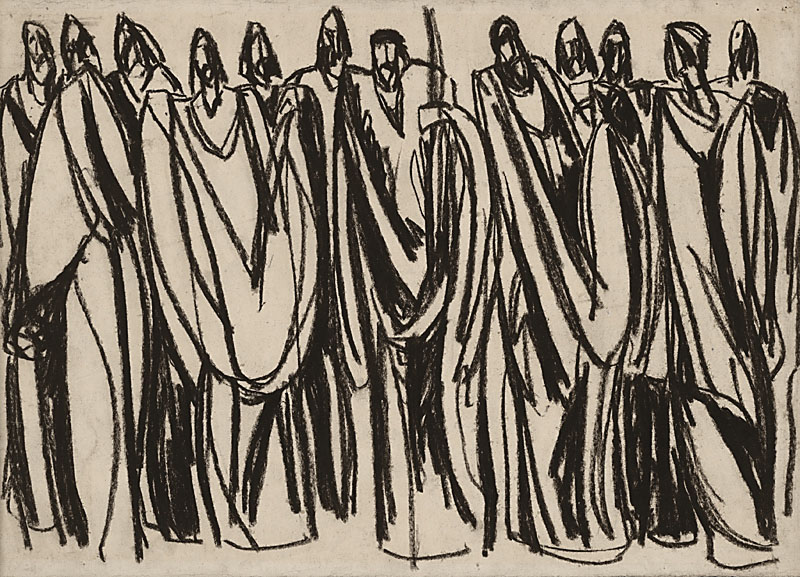
The Apostles by Russian artist Peter Gorban (1923-1995)

When the council members heard this [God raised Jesus from the dead—whom you killed by hanging him on a tree] they became furious and wanted to kill the apostles. One council member, a Pharisee and teacher of the Law named Gamaliel, well-respected by all the people, stood up and ordered that the men be taken outside for a few moments. He said, “Fellow Israelites, consider carefully what you intend to do to these people. Some time ago, Theudas appeared, claiming to be somebody, and some four hundred men joined him. After he was killed, all his followers scattered, and nothing came of that. Afterward, at the time of the census, Judas the Galilean appeared and got some people to follow him in a revolt. He was killed too, and all his followers scattered far and wide. Here is my recommendation in this case: Distance yourselves from these men. Let them go! If their plan or activity is of human origin, it will end in ruin. If it originates with God, you will not be able to stop them. Instead, you would actually find yourselves fighting God!” The council was convinced by his reasoning. After calling the apostles back, they had them beaten. They ordered them not to speak in the name of Jesus, then let them go. The apostles left the council rejoicing because they had been regarded as worthy to suffer disgrace for the sake of the name. Every day they continued to teach and proclaim the good news that Jesus is the Christ, both in the temple and in houses. (CEB)

People talk about things which are important to them. Even quiet and introverted individuals will speak at length, barely taking a breath, if you get them on a topic for which they are passionate about. 

Today’s New Testament lesson has the Apostles speaking incessantly about someone they love to talk about.  In fact, the original disciples of Jesus chattered so much about who they loved, Jesus, that the Jewish ruling council (the Sanhedrin) wanted to shut them up by killing them. But a wise member of the council saw the foolishness of this approach and persuaded the Sanhedrin against it. Instead, the council gave the Apostles a thorough whipping, warned them to stop talking all the time about Jesus, and let them go.

There is a time to listen, and there is a time to speak.  The Apostles could not keep silent.  They considered their beating an act of solidarity with their Lord Jesus and went right on talking. Every day they spent time in the temple and in one home after another. They never stopped teaching and telling the good news that Jesus is the Messiah.

The joy of knowing Jesus – crucified, risen, ascended, and coming again – is such a rich experience that one cannot help but be a chatterbox with joy about him. Even in the face of persecution, the ecstasy of knowing Christ transcends physical pain and suffering.

Today, there are places throughout the world where the scenario of continual discourse about Jesus is taking place with joy, despite the presence of persecution.  There are also places, mainly in America, where talking about Jesus does not even take place in the church building where believers gather to worship, let alone out in the public square.

One of the great tragedies of the contemporary Western church is that one can talk freely and openly about the weather, the latest sports, political happenings, and get away with never speaking or dialoging about Jesus.

The Apostle Peter, having learned the hard way, exhorted believers in his epistle that suffering is inevitable. So, the real issue is whether one suffers because of Christ or because of their own wrongheaded decisions. If others reject us, let it be for holiness, love, and hospitality – and not for babbling a bunch of unbiblical nonsense. Peter said:

Since Christ suffered in his body, arm yourselves also with the same attitude… Dear friends, do not be surprised at the fiery ordeal that has come on you to test you, as though something strange were happening to you. But rejoice because you participate in the sufferings of Christ, so that you may be overjoyed when his glory is revealed. If you are insulted because of the name of Christ, you are blessed, for the Spirit of glory and of God rests on you. If you suffer, it should not be as a murderer or thief or any other kind of criminal, or even as a meddler. However, if you suffer as a Christian, do not be ashamed, but praise God that you bear that name. (1 Peter 5:1, 12-16, NIV)

Today, allow two different emotions to arise and sway your prayers and speech.  First, allow the joy of the Lord Jesus to fill you and give you freedom to speak his Name and the grace he gives.  Second, allow a sorrowful lament to come forth from your heart, and speak it out loud before God concerning the great silence of the church in the West.

Loving Lord Jesus, you save completely those who come to you by faith.  Thank you for the work of forgiveness and healing that takes place in your Name everyday in the world.  Yet, I also lament the many confessing believers in your Name who never speak of the good news in their everyday conversations, even within the church.  Lord, have mercy. Christ, have mercy. Lord, have mercy and grant us peace.  Amen.

Luke 2:8-12 – All I Want for Christmas Is Joy

Welcome, friends! Christians around the world celebrate good news of great joy because God became flesh and blood and moved into the neighborhood. Click the video below, and let us enjoy a time around God’s Word.

The video below is, of course, a classic…

The Christmas speech of Linus, quoted from Luke 2

The Christian’s unspeakable joy comes from the incarnation of Christ…

My Soul Magnifies the Lord by Chris Tomlin from the album Glory in the Highest

May Christ, the Sun of Righteousness, shine upon you, scatter the darkness from before your path, and make you ready to meet him when he comes in glory. Amen.

All I Want for Christmas Is Joy

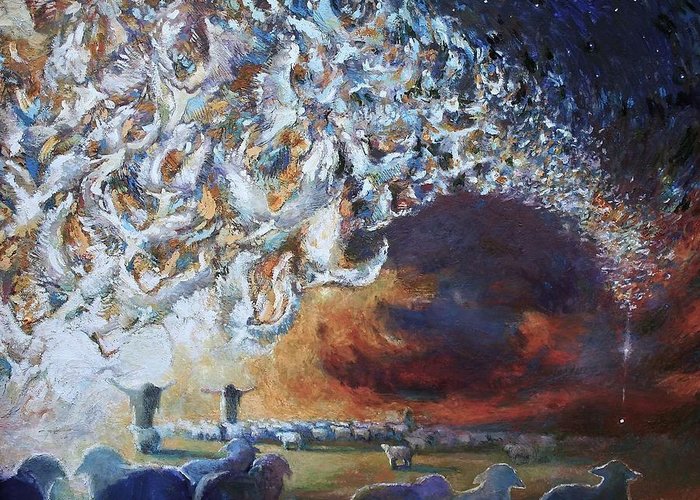
Seeing Shepherds by American painter Daniel Bonnell

There were shepherds living out in the fields nearby, keeping watch over their flocks at night. An angel of the Lord appeared to them, and the glory of the Lord shone around them, and they were terrified. But the angel said to them, “Do not be afraid. I bring you good news that will cause great joy for all the people. Today in the town of David a Savior has been born to you; he is the Messiah, the Lord. This will be a sign to you: You will find a baby wrapped in cloths and lying in a manger.” (Luke 2:8-12, NIV)

When I think of sheer unbounded joy, I think of dogs. My own dog, Max Power, waits every day for me to get home from work. And when I walk through the door, he acts as if he has not seen me in months, wagging his tail so hard that it looks like it will fly off his butt. This is one reason people like dogs so much – their joy brings us joy. It is not a joy that was ever learned in obedience school – it is just built into the relationship. 

Genuine joy does not come from getting all the presents we want for Christmas or having everything go our way.

Joy is not a product we can buy at the store. Authentic, real joy is the fruit of meaningful relationships. My dog cares nothing about how much money I have or even if he has the best dog food to eat and a trendy collar to wear; his joy comes from being with me.

The good news of a Savior coming to this earth means God is coming to be with us.  This is good news of great joy! We are loved because God is good, not because we are good.  And because God is good, and we are a mess of humanity, there is joy that the Lord is coming to save us!

The reason Christ’s birth was good news of great joy to the shepherds is that they were shepherds.  Shepherds in the ancient world were generally looked on with contempt. In fact, Egyptians refused to eat with Jews because they were mostly shepherds (Genesis 46:31-34). 

Shepherds spent most of their time living with their sheep outdoors, to protect the flock.  Shepherds were neither well-dressed nor culturally refined. They mostly smelled like sheep poop. Shepherds also had the notoriety of being drinkers. Because they slept with the sheep, many shepherds passed the time and dealt with the chilly air by taking a nip of alcohol.  We do not really know whether most shepherds were drunkards, or not; but we do know they had a bad reputation.

Becoming a shepherd was not a profession a young person aspired to. Nobody took out a student loan to major in shepherding at the University of Jerusalem. King David started out as a shepherd. He was the youngest in the family and got stuck with the job nobody else wanted.

Out of all the persons and people-groups the heavenly angels could have come to announce the birth of Christ, it was shepherds.

This is truly a gospel of grace. The angelic announcement to a bunch of stinky shepherds is profoundly significant.  It is important because grace is being shown to the lowliest of society. A lowly Savior, born to a lowly family, and placed in a lowly feeding trough, came to reach the lowly, common, ordinary person.

The Shepherds by Malaysian artist Hanna Varghese (1938-2009)

To have this kind of attention from God Almighty is like the master of a dog walking into the house. We, as the common, ordinary mutts of society, are beside ourselves with joy, feeling privileged to be in the same room as Jesus.

It is only the lowly and humble in heart who will see God and enjoy the Lord’s presence. That is because God opposes the proud but gives grace to the humble. It is why the angels came to the shepherds and not to the religious leaders. It is good news of great joy for all the people. 

The gospel is not limited to those who are the most educated, the wealthiest, or from the most prominent of families – it is for everyone.

Yet, even with this good news of grace, many people still live their lives in fear and worry instead of joy. The message seems to only linger on the surface, not getting firmly pressed into minds and hearts. 

Even though a Savior is born, we still experience the harshness of a world under the dominion of darkness.  We worry about constant disease, financial difficulties, and the daily stresses of life.  We fret about dealing with ornery people, hard circumstances, family members who go astray, and the little plastic things on our shoelaces coming off leaving the shoestrings frayed! 

Sometimes, we strain our eyes to try and see some joy.

Jesus is the son of David, born in the town of David – both were anointed as kings but had to go through a lot of hardship before realizing their kingships.  We live in the time between the two advents of Christ in which God’s kingdom is already here but not yet here. It is a topsy-turvy time characterized by a weird mix of sinner and saint, despair and joy, adversity, and comfort.

Real joy is not found in having every circumstance go our way and having everyone like us, all the time. Joy comes from the gospel of grace, from God coming down and being with us.  Being in the presence of the Master makes all the difference. If joy comes from being with God in Christ, then cultivating and practicing the presence of Jesus in our daily lives is important and necessary.

Had the angels come into Bethlehem, a town swelling in numbers of people because of the Roman census, I am not sure anybody would have heard them. The shepherds were away from the noise, out in the quiet solitude of the fields by themselves. So, they were able to hear the message of God when it came.

Noise comes in various forms, both around us and within us. Sometimes we even create noise on the outside so that the boisterous racing thoughts on the inside will get drowned. To be quiet is to be able to listen. To listen is to receive another’s voice.

Receiving the voice of the angels, their message, and their praise to God, is the pathway to joy and the way out of unhappy inner noise.

We need deliverance from our brokenness and unhealthy ways of coping. There is far too much unhappiness in this world. One in every two-hundred teenage American girls cut themselves on a regular basis. More than half of people in the United States with serious depression do not receive or will not get adequate help.  Anxiety disorders affect nearly sixty million adults in the United States. 

The coming of Jesus Christ into this world makes a difference. God has come to be with us to meet the deepest needs of our lives. The deliverance can be realized as we eagerly anticipate the Master, spend time with him, and allow the Lord’s loving presence and compassionate voice to transform our hearts and change us from the inside-out. 

Christianity is not a magic happy pill to swallow; it is a relationship with God which is cultivated and grows over time.

Joy is relational. That means no amount of positive thinking, buying new stuff, or good situations will create joy or sustain it. Christianity offers joy in Jesus – not a cheap sentimental happiness of having every prayer answered or each situation go our way – but the settled joy of God with us through the valleys as well as on the mountain tops.

Neither worry nor fret. Do not be afraid. I bring you good news of great joy that will be for all the people. In the town of David, a Savior is born. He is Christ the Lord.  What can I give him, poor as I am?  If I were a shepherd, I would bring a lamb. If I were a wealthy man, I would give him frankincense or gold. Yet, what can I give him?… 

I can give him my heart.

Psalm 126 – Sorrow and Joy

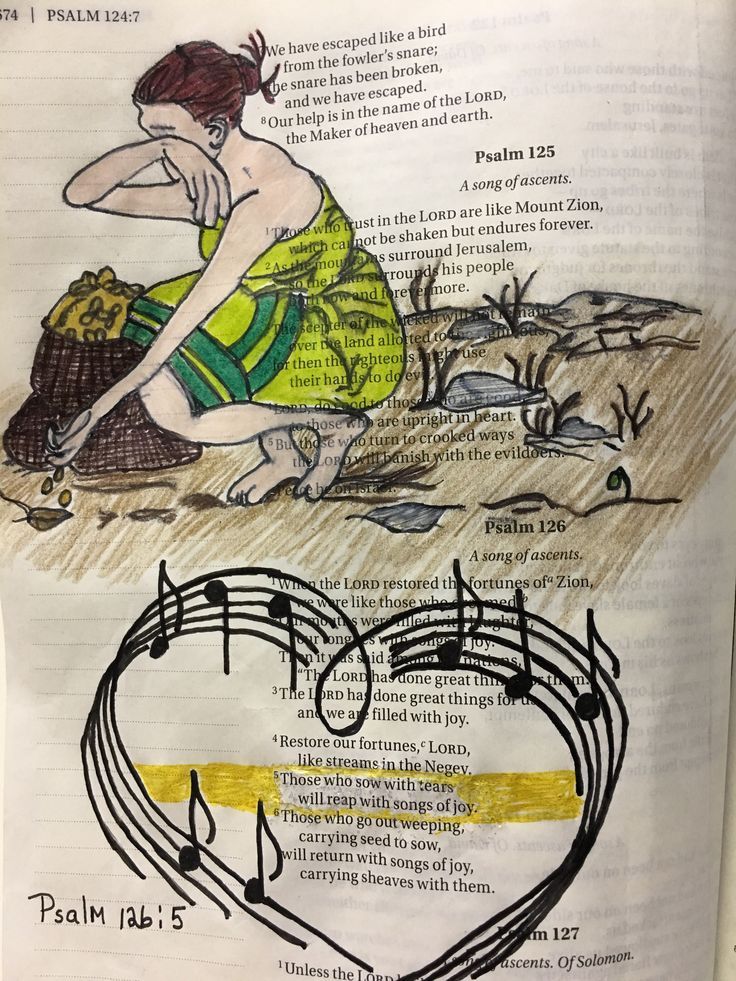
When the Lord restored the fortunes of Zion,
    we were like those who dreamed.
Our mouths were filled with laughter,
    our tongues with songs of joy.
Then it was said among the nations,
    “The Lord has done great things for them.”
The Lord has done great things for us,
    and we are filled with joy.

Restore our fortunes, Lord,
    like streams in the Negev.
Those who sow with tears
    will reap with songs of joy.
Those who go out weeping,
    carrying seed to sow,
will return with songs of joy,
    carrying sheaves with them. (NIV)

Likely none of us awake in the morning, sit up on the edge of the bed and say to ourselves, “Well, let’s see, I think I’ll cry and be sorrowful today.” We might do that with joy, not with sadness. It can be easier to gravitate toward the fulfillment of dreams, laughter, and happiness than tears and weeping.

If we want to experience authentic joy, the path is through crying because it is our tears which find a better way.

Whether it comes from a certain denominational tradition, ethnic background, or family of origin dynamics, there are many Christians who love to emphasize Jesus as Victor and camp in resurrection power – while eschewing Christ as the man of sorrows, acquainted with grief and sadness.

It is from this place of continually viewing only one dimension of Christ’s redemptive work that pastoral care often falls far short of true help. Trying to engineer cheerfulness and create solutions to a person’s genuine grief is, at best, not helpful, and at worst, damaging to their soul. Such attempts will only lead to cheap joy.

Coming to the place of sincerely singing spontaneous songs of joy with a sense of abundant satisfaction comes through suffering and sorrow.

There must be a crucifixion before there is a resurrection. In the agrarian culture of ancient Israel, the metaphor of sowing a reaping connected well to the importance of planting tears and allowing them to flower later into an abundant harvest of joy.

Perhaps in American culture, a more apt metaphor would be financial investing and cashing out. The investment we put into attending to our grief with expressions of lament through tears, will eventually get a return, and we shall be able to cash out with a rich bounty of joy.

All good things in life are realized through a lot of blood, sweat, and tears. “Blessed are those who mourn,” said Jesus, “for they shall be comforted” (Matthew 5:4, NIV). Just as it takes both field crops and economic investments time to grow and mature, so the believer’s life is a process of spiritual development which is watered through tears and experiences the up-and-down sorrows of a market economy.

There is coming a day when our joy will be realized in full measure. The season of Advent reminds us that we must wait, and that we must suffer many things before we enter the kingdom of God and enjoy unending fellowship with our beloved Savior and King.

Great God almighty, with expectant hearts we await the coming of Christ. As once he came in humility, so now may he come in glory so that he may make all things perfect in your everlasting kingdom. For Christ is Lord forever and ever. Amen.