John 12:36-43 – The Shadow Self

“Believe in the light while you have the light, so that you may become children of light.” When he had finished speaking, Jesus left and hid himself from them.

Even after Jesus had performed so many signs in their presence, they still would not believe in him. This was to fulfill the word of Isaiah the prophet:

“Lord, who has believed our message
    and to whom has the arm of the Lord been revealed?”

For this reason, they could not believe, because, as Isaiah says elsewhere:

“He has blinded their eyes
    and hardened their hearts,
so they can neither see with their eyes,
    nor understand with their hearts,
    nor turn—and I would heal them.”

Isaiah said this because he saw Jesus’ glory and spoke about him.

Yet at the same time many even among the leaders believed in him. But because of the Pharisees they would not openly acknowledge their faith for fear they would be put out of the synagogue; for they loved human praise more than praise from God. (NIV)

The season of Lent is a time of preparation for Easter, and of repentance from sin. It is a time to consider our ways and the state of our hearts. In doing so, we find that the grace of God in Christ can heal all wounds. 

Today’s Gospel lesson gives perhaps the most succinct and convicting statement about the shadow places of our lives. Many of the religious authorities believed in Jesus, but they did not speak of it because they were afraid of being put out of the synagogue by the Pharisees. When push came to shove, they cared more for human approval than for God’s glory.

The word “glory” has its roots in the Old Testament and has the meaning of being heavy or having weight. In other words, we might picture God descending to earth among humankind with divine gravity and heft. If we were back in the ‘70s we could say, “heavy, man, heavy!” Glory is really a reference to God’s presence among us. So, if we plug this thought into the religious authority’s attitude, we see that they preferred the presence and accolades of their peers to God. To put the matter even more succinctly, the leaders wanted the limelight and would push their weight around to get it.

Carl Jung (1875-1961) described this hidden shadow self as an unconscious aspect of the human personality. In other words, the shadow results from the conscious self being unaware or unconscious concerning areas of its own personality. Without the light of conscious awareness, the shadow self runs amok within the psyche of a person and far too often calls the shots in speaking and behavior.

“Everyone carries a shadow,” Jung wrote, “and the less it is embodied in the individual’s conscious life, the blacker and denser it is.” (Psychology and Religion, 1938). According to Jung, the shadow side of a person is prone to psychological projection, in which a perceived personal inferiority is recognized as a perceived moral deficiency in someone else. If those projections remain hidden, they eventually come out sideways by harming others because there is a dark illusion, even delusion, that others are stealing what is rightfully mine. Hence, the sinless Jesus is tortured and killed by those who think they are doing a good thing.

It is easy to be hard on the religious rulers in the New Testament, but this is Lent, and, so, we must shine the light of Scripture upon ourselves. This is the time to deliberately gain awareness of our own shadow selves. Perhaps the burning question for all believers at this time of year is: Do I seek the presence of God more than the presence of anything or anyone else?  

Over the decades, I have preached in many churches. Many of them have empty pews or seats in the first several rows during worship. I admit that has always bugged me. I don’t like it. There are times when I am more concerned about the presence of people than the presence of God in a worship service. Maybe you live in fear at work and are more concerned about the presence of people around you than the presence of God, so you keep quiet when you ought to speak up or turn a blind eye to the shadows of an organization.

Lent is not just about identifying sin; it is also about receiving grace. So, let us find that the cleansing work of the Spirit through the work of Jesus is active through our confession of sin. And let us pursue the glory and praise of God in all we do and say as grace permeates deep in our souls. Let the shadows dispel, and the light shine, for the benefit of self and others.

Glorious God lighten our darkness—be our true light. Keep us from the powers of darknessthe perils and dangers of the night. Shine as a kindly light in our spiritual darkness—in our mental turmoil and anxious confusion. We pray this for the love of your Son, our Savior, Jesus Christ who with you and the Holy Spirit lives and reigns as one God, now and forever. Amen.

Psalm 22:23-31 – Full of Suffering

Psalm 22 by Mike Moyers, 2016

All of you who revere the Lord—praise him!
    All of you who are Jacob’s descendants—honor him!
    All of you who are all Israel’s offspring—
        stand in awe of him!
Because he didn’t despise or detest
    the suffering of the one who suffered—
    he didn’t hide his face from me.
    No, he listened when I cried out to him for help.

I offer praise in the great congregation
    because of you;
    I will fulfill my promises
    in the presence of those who honor God.
Let all those who are suffering eat and be full!
    Let all who seek the Lord praise him!
        I pray your hearts live forever!
Every part of the earth
    will remember and come back to the Lord;
    every family among all the nations will worship you.
Because the right to rule belongs to the Lord,
    he rules all nations.
Indeed, all the earth’s powerful
    will worship him;
    all who are descending to the dust
    will kneel before him;
    my being also lives for him.
Future descendants will serve him;
    generations to come will be told about my Lord.
They will proclaim God’s righteousness
        to those not yet born,
        telling them what God has done. (CEB)

“Faith must be tested, because it can only become your intimate possession through conflict.”

oswald chambers

“Suffering” is a word we would like to avoid. Simply saying or reading the word might make us cringe. Suffering? No thanks. I think I’ll pass on that. Yet, something inside of us instinctively knows we cannot get around it. Everyone suffers in some way. It is endemic to the human condition that at times we will suffer physically, financially, mentally, emotionally, and spiritually. 

That’s why I believe there is so much talk within some Christian circles about miracles. It’s more than understandable. A chronic pain sufferer wants relief; she prays for a miracle of health. A small business owner is bleeding financially; he looks to God for an immediate miracle of wealthy clients. A beloved senior saint knows she is afflicted with Alzheimer’s; she prays for the miracle of deliverance, even to be taken home to be with the Lord. A young adult finds himself in the throes of depression and has tried everything to cope and get out of it; he petitions God for a miracle out of the deep black hole. The believer in Jesus keeps experiencing a besetting sin and cannot get over it; she looks to God for the miracle of not struggling any more with it.

These scenarios and a thousand other maladies afflict people everywhere. There are a multitude of stories out there. Folks who have experienced a miracle tell of their wonderful deliverance. But what about the rest? Those without the miracle? Do they have a lack of faith? Has God forgotten them?

Oh, my, no! God sees, and God knows. God is acquainted with suffering. Jesus knows it first-hand. Remember, it was Jesus who said, “My God, my God, why have you forsaken me?”  Even Jesus cried out in his suffering.  But there was no deliverance coming for him.  There was, instead, deliverance coming for us.

Sometimes the greatest miracle and deliverance of all is to be freed from the need for a miracle. The reason God doesn’t just offer immediate relief from everyone’s suffering and bring a miracle is that he is doing something else: Walking with us through our suffering. God oftentimes has plans and purposes for us well beyond our understanding.  We simply are not privy to everything in God’s mind.

We may not get the miracle we desire. However, what we will get without fail is God’s provision and steadfast love all the way through the suffering. Where is God in your suffering? Jesus is suffering with you. You are not crying alone; Christ weeps with you.

Let, then, those who suffer, eat and be full. Let them be satisfied with the portion God has given them. What’s more, let them offer praise to the God who is squarely beside them in every affliction and each trouble.

God Almighty, you are the One who knows suffering and affliction better than anyone. I admit I don’t often understand what in the world you are doing or not doing in my life and in the lives of those I love. Yet, I admit that I have found in you the comfort, encouragement, and strength to live another day in my trouble. For this, I praise you, in the Name of Jesus Christ, in the power of the Holy Spirit. Amen.

Matthew 4:1-11 – Facing Temptation

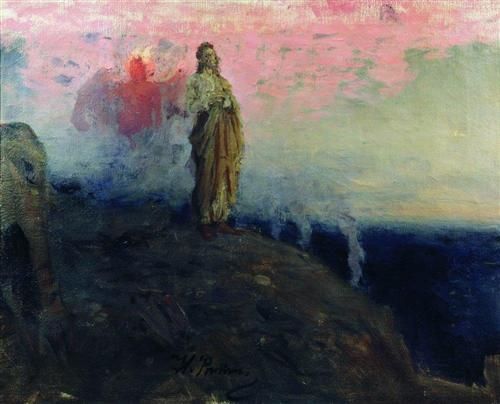
Jesus Tempted by Russian painter Ilya Repin (1844-1930)

Jesus was led by the Spirit into the wilderness to be tempted by the devil. After fasting forty days and forty nights, he was hungry. The tempter came to him and said, “If you are the Son of God, tell these stones to become bread.”

Jesus answered, “It is written: ‘Man shall not live on bread alone, but on every word that comes from the mouth of God.’”

Then the devil took him to the holy city and had him stand on the highest point of the temple. “If you are the Son of God,” he said, “throw yourself down. For it is written:

“‘He will command his angels concerning you,
    and they will lift you up in their hands,
    so that you will not strike your foot against a stone.’”

Jesus answered him, “It is also written: ‘Do not put the Lord your God to the test.’”

Again, the devil took him to a remarkably high mountain and showed him all the kingdoms of the world and their splendor. “All this I will give you,” he said, “if you will bow down and worship me.”

Jesus said to him, “Away from me, Satan! For it is written: ‘Worship the Lord your God and serve him only.’”

Then the devil left him, and angels came and attended him. (NIV)

In our most vulnerable moments, the devil attempts to swoop in and offer his demonic delights for us to consider. We call it “temptation.” Indeed, it can be quite alluring to entertain ways of getting what we need and want through avenues other than God.

In the desert, the place of preparation for ministry, Jesus fasted and prayed forty days. If ever there was a time when Jesus would be vulnerable to alternative religion, the devil mused, wringing his demonic hands together with wicked delight, it would be out in the desert by himself. So, Satan tempted Jesus with three whoppers he thought would get to Jesus, for sure. Having tempted Jesus with food and a way to fame, and having failed both times, Satan gave his final temptation.

To us this temptation to bow down and worship Satan seems like a no-brainer. Well, of course, no one would do such a thing as this, especially Jesus. And he did not. But it was still tempting. It really was. Jesus knew very well what was ahead of him. He had just spent forty days in an intense orientation for an upcoming three years of hard ministry with an end of tortuous death to look forward to. 

Satan presented to Jesus an alternative way, a different path to achieve his purpose for being on this earth. Jesus could have it all without the three years, without the hard slugging to communicate the kingdom of God has come. Most of all, Jesus could circumvent the cross and establish his rule over all the earth – all pain free! The temptation, yes, was very tempting. Become King Jesus now with no suffering.

This has always been one of our great temptations, as well: Take the easy path. Get what you want, what you deserve, now, with no hardship. 

The values of God’s kingdom include trust, patience, and perseverance. Temptation insists we need none of those hard things to be successful. Satan is the original slickster, marketing his quick and easy wares for people to buy into the notion that life can lived without pain and hardship, and with wild success, right now. The scary thing about it is that Satan can deliver… but it will cost us our very lives. Slavery to sin is the price we pay for hitching our hopes to the quick and easy.

The Christian season of Lent is a time for the slow, patient, deliberate development of the soul in attachment with the Lord Jesus. Engaging in spiritual disciplines is hard. It is difficult to fast and pray. Growing in Christ is slow and takes a great deal of learned perseverance. Far too many of us are tempted to circumvent the hard work of discipleship and simply have a spiritual professional distill everything we need into one hour on Sunday morning. Or we fabricate our own religious practice and beliefs, picking and choosing what fits our lifestyle, as if convenience and comfort are the summum bonum of life, instead of worship.

Christ was able to face down temptation because the desert strengthened him. Yes, he was vulnerable. But he was not weak. If we want to handle temptation, it will take Lent to help us. It will take the desert to spiritually form us and prepare us for godly ministry that puts the devil in his place.

Lord Jesus, you are the king of all creation. Just as you chose the hard path of God’s kingdom, so help me to persevere with faith and patience. May my life reflect your words and ways, in the power of the Holy Spirit.  Amen.

1 Peter 3:8-18 – How to Live in a Messed-Up World

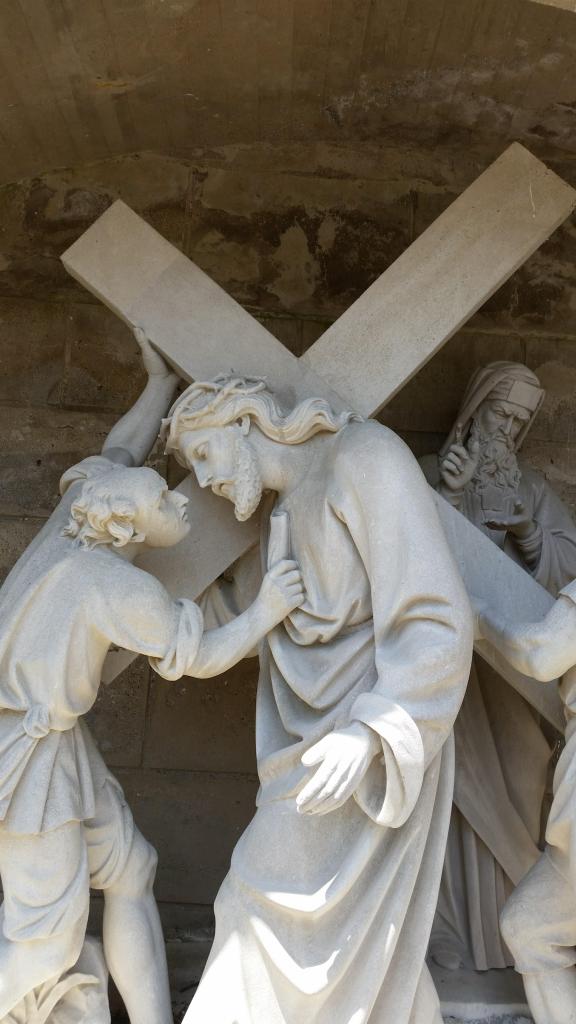
Stations of the Cross at Holy Hill, Hubertus, Wisconsin

Finally, all of you be of one mind, sympathetic, lovers of your fellow believers, compassionate, and modest in your opinion of yourselves. Do not pay back evil for evil or insult for insult. Instead, give blessing in return. You were called to do this so that you might inherit a blessing.

For those who want to love life
    and see good days
should keep their tongue from evil speaking
    and their lips from speaking lies.
They should shun evil and do good;
    seek peace and chase after it.
The Lord’s eyes are on the righteous
    and his ears are open to their prayers.
But the Lord cannot tolerate those who do evil.

Who will harm you if you are zealous for good? But happy are you, even if you suffer because of righteousness! Do not be terrified or upset by them. Instead, regard Christ the Lord as holy in your hearts. Whenever anyone asks you to speak of your hope, be ready to defend it. Yet do this with respectful humility, maintaining a good conscience. Act in this way so that those who malign your good lifestyle in Christ may be ashamed when they slander you. It is better to suffer for doing good (if this could possibly be God’s will) than for doing evil.

Christ himself suffered on account of sins, once for all, the righteous one on behalf of the unrighteous. He did this to bring you into the presence of God. Christ was put to death as a human but made alive by the Spirit. (CEB)

If there were a sign-up sheet for suffering, I am confident no one put their name to it. We like to avoid suffering. After all, it hurts! I would make a terrible masochist. I am not a high tolerance for pain kind of guy. I have no problem taking a Tylenol at the first sign of discomfort. Yet, I know there will be times when I am going to have to experience pain – physical, emotional, and spiritual – and there is no way around it. To live in this broken world is to experience suffering. To suffer as a Christian, however, is different because we are following the way of our Lord Jesus Christ.

The stark reality of the New Testament is that there must be suffering before glory. Just as Christ suffered, we ought to expect we will suffer as his followers. As Christians walk with Jesus during the season of Lent, they journey through the desert full of temptation and hard circumstances. At the end of the journey will be the glory of Easter, a celebration of the resurrection. Christian theology confidently practices hope based on the redemptive events of Christ’s cross and resurrection, suffering and glory.

Stations of the Cross at Holy Hill, Hubertus, Wisconsin

We are not above our Master. We, too, will suffer. The real question is whether we will suffer because of our own foolishness and selfishness, or because of our devotion to Christ in being kind, humble, and gracious.  When insults come our way, we avoid responding with insults of our own. Verbal cruelty is not the way of Christ. Anger, slander, gossip, lies, manipulative words, and belligerent bullying have absolutely no place in the kingdom of God for any reason. God takes a zero-tolerance policy toward hate speech.

Christians are to us their tongues exclusively for blessing, not cursing; for love, not hate; for truth, not lies; for building-up, not tearing-down; for proclaiming good news, not shame-laced bad news. If we suffer for being Christians in solidarity with our Lord, we shall receive blessing from God. But if we suffer for giving-in to retaliation and our base desires for revenge, then we will suffer the consequences of our own stupidity.

God has called us to bless the world, not condemn it. Christians are to be on the frontlines of the mobilizing others for mercy, leading the charge of spreading respect, civility, kindness, and the gospel. Jesus said that it is no problem to show love and respect to people we like. However, it is a whole other ballgame to do the same for those who treat us with disrespect and hate. Yet, God watches over all who obey him, and he listens to their prayers. God will handle the hate-filled person; judgment is for neither you nor me to dish out. Our task is to have a deep concern for humanity, both the ones we like and the ones we do not.

I encourage you to take some time today or in the next few days to read the epistle of 1 Peter slowly and carefully in one sitting. It is a short book. Pay attention to how the adversity of living in this fallen world gives Christians the opportunity, hope, and encouragement to live well. 

May it be so, to the glory of God.

Loving Lord Jesus, you suffered and died on my behalf.  It is a small thing for me to follow you and walk in the way of suffering. I know and have the confident expectation that blessing awaits. Keep me true to following you through all the adversity I must face in this fallen broken world. Even so, come Lord Jesus. Amen.