Developing the Skill of Wisdom (Colossians 1:9-14)

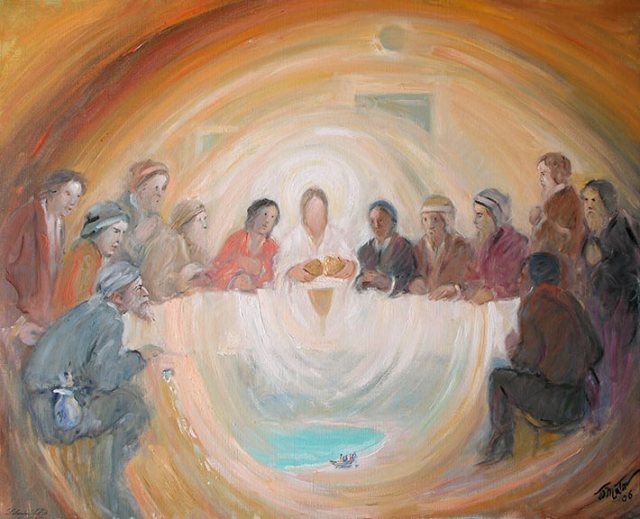
Colossians 1:9-10, by Bible Art

For this reason, since the day we heard about you, we have not stopped praying for you. We continually ask God to fill you with the knowledge of his will through all the wisdom and understanding that the Spirit gives, so that you may live a life worthy of the Lord and please him in every way: bearing fruit in every good work, growing in the knowledge of God, being strengthened with all power according to his glorious might so that you may have great endurance and patience, and giving joyful thanks to the Father, who has qualified you to share in the inheritance of his holy people in the kingdom of light. 

For he has rescued us from the dominion of darkness and brought us into the kingdom of the Son he loves, in whom we have redemption, the forgiveness of sins. (New International Version)

When I was younger, I played a lot of ping-pong. And I got good at it. In fact, during a several months stretch, back-in-the-day, I had a record of 156-2. Not bad.

That kind of record was only possible because of the two reasons that make any skill an accomplishment:

  1. Knowledge. I learned the game of ping-pong and eventually knew it inside and out.
  2. Experience. I practiced for hundreds, if not thousands, of hours in developing my technique.

The sort of knowledge that Paul was talking about was more than information and intellectual understanding; he used a specific word (in the Greek language – ἐπιγινώσκω, pronounced “EPee-gi-NOS-ko) which refers to knowledge gained by experience.

In English, we need to put two words together in order to communicate Paul’s concept: experiential knowledge – an understanding which is gained by continual repetition and practice until there is proficiency.

There are just some things that can only be learned and integrated into life through constant use and development over time. And this is precisely how a person becomes mature in life:

Growth + Time = Maturity.

And with maturity comes the wisdom to live life as it meant to be lived. This means that wisdom doesn’t come overnight or quickly; to be wise requires a great deal of learning, effort, experience, and time.

The wisdom and understanding Paul refers to is not some sort of secret information which has to be accessed through careful initiation into a group of people who have the inside knowledge. No, this is wisdom which can be gained by anyone who embraces a life of faith and spiritual discipline.

The highest form of knowledge for the Apostle Paul is knowing God in Christ.

This sort of knowledge is an understanding of salvation, and experiencing deliverance from guilt, shame, and the false self. Such knowledge is evidenced by the fruit of the Spirit in living a life of love, joy, peace, patience, kindness, goodness, faithfulness, gentleness, and self-control. (Galatians 5:22-23)

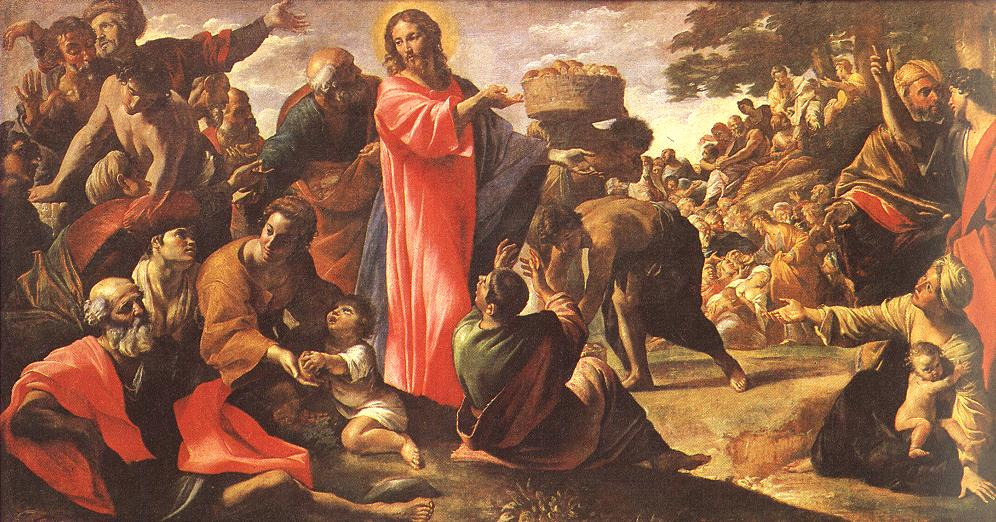
Colossians 1:11, by Bible Art

From the outside of Christianity looking in, it may appear that this is all a grand achievement of the human will. But it isn’t. On the inside, the Christian life is thoroughly a work of God’s glorious power, bringing new life, and effecting spiritual growth and maturity into a wise and good way of life.

We did not deliver ourselves. God did. The Lord transferred our membership from the realm of darkness to the empire of light. Christians are simply people who have been redeemed by God in Christ. Our liberation is because of God’s gracious forgiveness of sins.

Forgiveness, however, is not the end game. Forgiveness frees us to pursue the spiritual life without guilt and shame hindering us and weighing us down all the time. Forgiveness opens us to the possibilities of positive and life-giving relational connections with God and other people.

In our relationship with God, prayer becomes the conduit of divine/human conversation. That connection, in the past, had blockage because of our unhealthy lifestyles. But it is now unobstructed because of God’s gracious intervention by Jesus, in the Spirit.

So, when it comes to our interactions in prayer, there’s no need to invent a new game; we just need to learn the one we’ve got, and put in the hours of work necessary to become accomplished at it. 

Today’s New Testament lesson is a prayer from the Apostle Paul to the Colossian Church. His prayer for them was singular: To have wise minds and spirits, that is, to have knowledge of God – an understanding of who God is and how God operates.

To learn divine ways is to acquire the skill of wisdom.

Paul prayed for a reason: so that we might live our lives in a way which pleases God and enables us to sustain a lifetime of spiritual growth. 

As people created in God’s image and likeness, we are hard-wired with a spirit which needs strengthening and exercise. That happens as we put in the constant repetitions of connecting with the divine and putting in the time on our knees – praying daily for ourselves and others to mature in faith so that we might all together act wisely and justly in this world, for the life of the world.

A good place to start is to use Paul’s prayer as our own. Never has there been such a need than now for us to know how to apply wisdom in the places and in the circumstances we’ve never been in before. 

For wisdom to happen, we must grow in our knowledge by putting in the hours of prayer.

The skill of wisdom doesn’t magically happen. Wisdom is the culmination of acquired understanding; a lot of practice exercising love in the places where love is not; and engaging in a lifetime project of becoming knowledgeable through constant learning, struggling, and growing.

Direct me, O Lord, in all my doings with your most gracious will and wisdom. Further in me your continual help – that in all my work and in all I do and say, I may glorify your holy name; and, by your mercy, obtain the life that is truly life; through Jesus Christ, my Lord.  Amen.

Renewal (Mark 6:30-34, 53-56)

Great Crowds Followed Jesus as He Preached the Good News, by Elizabeth Wang (1942-2016)

The apostles gathered around Jesus and told him all that they had done and taught. He said to them, “Come away to a deserted place all by yourselves and rest a while.” For many were coming and going, and they had no leisure even to eat. And they went away in the boat to a deserted place by themselves. 

Now many saw them going and recognized them, and they hurried there on foot from all the towns and arrived ahead of them. As he went ashore, he saw a great crowd, and he had compassion for them, because they were like sheep without a shepherd, and he began to teach them many things….

When they had crossed over, they came to land at Gennesaret and moored the boat. When they got out of the boat, people at once recognized him and rushed about that whole region and began to bring the sick on mats to wherever they heard he was. 

And wherever he went, into villages or cities or farms, they laid the sick in the marketplaces and begged him that they might touch even the fringe of his cloak, and all who touched it were healed. (New Revised Standard Version)

Recuperation

Christ’s disciples had just returned from their first ministry trip without Jesus. He had sent them in pairs to take authority over unclean spirits, with specific instructions on how to handle themselves. (Mark 6:6-13)

Now they had come together after a successful experience. Jesus immediately recognized that the disciples needed rest in a private retreat so that they could recover and debrief on their mission.

Jesus knew a thing or two about what we now call “self-care.” Christ understood the necessity for awareness of one’s physical, mental, emotional, and spiritual state – and to take appropriate steps in caring for oneself in order to maintain a vigorous life and ministry. He often punctuated his life with solitary times away with his heavenly Father. (e.g. Mark 1:35)

So, the disciples followed Jesus to a deserted place where they could be alone. Besides, it had become ever more risky to be out in the open. The religious authorities were looking for ways to snuff out this popular upstart of a movement with Jesus as rabbi.

Redirection

Things don’t always go as planned, even for the Son of God. Interruptions are part of working with people. Yet, Jesus never saw those disruptions as a bad thing. It seems that perhaps he even understood them as part of the plan from his heavenly Father. However Christ thought of them, he was unfazed by them.

With an expanding ministry came a larger and more expansive crowd following Jesus. Like a group of ancient paparazzi, there were people dedicated to tracking down Jesus and watching for him; they were absolutely intent on seeing him.

Whereas a lot of people might be annoyed with this behavior (especially us introverts!) Jesus truly saw them, viewing the crowds as “sheep without a shepherd.” In other words, Christ understood the people’s vulnerability, and he had compassion on them.

Refocus

Christ felt genuine care and concern for the people from the pit of his gut. Jesus knew their very real spiritual predicament, an age-old one that God was familiar with:

I, the Lord God, say you shepherds of Israel are doomed! You take care of yourselves while ignoring my sheep. You drink their milk and use their wool to make your clothes. Then you butcher the best ones for food. But you don’t take care of the flock! You have never protected the weak ones or healed the sick ones or bandaged those that get hurt. You let them wander off and never look for those that get lost. You are cruel and mean to my sheep. They strayed in every direction, and because there was no shepherd to watch them, they were attacked and eaten by wild animals. (Ezekiel 34:2-5, CEV)

Jesus, in the spirit Moses, took up the concern for people:

Moses spoke to the Lord: “Let the Lord, the God of all living things, appoint someone over the community who will go out before them and return before them, someone who will lead them out and bring them back, so that the Lord’s community won’t be like sheep without their shepherd.” (Numbers 27:15-17, CEB)

Because the Lord Jesus is the Good Shepherd and takes up the responsibility of caring for the flock, there were sheep (the crowds of people) continually either present around him or pursuing him (hence, the need for continual times of rest and recuperation).

All of this resulted in the impossibility of Jesus strolling into a town, village, or city under the radar.

Restoration

Not only did everyone want to see Jesus, but the people also desired to touch him, or at least the tassels of his garment – anything toget close and experience healing.

What’s so amazing about this account is that every single person who Jesus saw or touched experienced healing – without exception. It wasn’t that a few people, or even some of them, walked away changed. All of them did.

Indeed, Jesus is the divine shepherd, who will gather his sheep from the places where they have been scattered.

Christ went into towns and villages to the public places where the people were. That meant Jesus spent a good deal of time in the marketplaces. Since these were gathering areas where people bought and sold and interacted with each other, there you would also find the weakest, sickest, and most vulnerable people.

The needy were looking for help. And Jesus did for them, well beyond what any of them expected.

The Lord Jesus was also doing more than we might expect, as well. By conducting ministry in the economic center of a town, he was introducing a different (and subversive) economy from the kingdom of God.

Those with goods, resources, and money do not occupy the commercial spaces in God’s kingdom realm. Instead, the ones with the least, inhabit the spaces and places of honor. Indeed, many who are first will be last, and the last will be first. (Mark 10:31)

Christ’s earthly ministry restored people’s bodies, minds, emotions, and spirits – thus bringing a thriving economy into God’s kingdom. All of his work resulted in renewal of people’s lives, and a renewed way of living in this world.

“Healer of Our Every Ill” by Marty Haugen, 1987

Refrain:
Healer of our every ill,
light of each tomorrow,
give us peace beyond our fear,
and hope beyond our sorrow.

You who know our fears and sadness,
grace us with your peace and gladness;
Spirit of all comfort, fill our hearts. [Refrain]

In the pain and joy beholding
how your grace is still unfolding,
give us all your vision, God of love. [Refrain]

Give us strength to love each other,
every sister, every brother;
Spirit of all kindness, be our guide. [Refrain]

You who know each thought and feeling,
teach us all your way of healing;
Spirit of compassion, fill each heart. [Refrain]

Amen.

There Is Hope (Psalm 89:20-37)

Ethiopian Orthodox depiction of Jesus

“I have found my servant David;
    with my holy oil I have anointed him;
my hand shall always remain with him;
    my arm also shall strengthen him.
The enemy shall not outwit him;
    the wicked shall not humble him.
I will crush his foes before him
    and strike down those who hate him.
My faithfulness and steadfast love shall be with him,
    and in my name his horn shall be exalted.
I will set his hand on the sea
    and his right hand on the rivers.
He shall cry to me, ‘You are my Father,
    my God, and the Rock of my salvation!’
I will make him the firstborn,
    the highest of the kings of the earth.
Forever I will keep my steadfast love for him,
    and my covenant with him will stand firm.
I will establish his line forever
    and his throne as long as the heavens endure.
If his children forsake my law
    and do not walk according to my ordinances,
if they violate my statutes
    and do not keep my commandments,
then I will punish their transgression with the rod
    and their iniquity with scourges,
but I will not remove from him my steadfast love
    or be false to my faithfulness.
I will not violate my covenant
    or alter the word that went forth from my lips.
Once and for all I have sworn by my holiness;
    I will not lie to David.
His line shall continue forever,
    and his throne endure before me like the sun.
It shall be established forever like the moon,
    an enduring witness in the skies.” (New Revised Standard Version)

Back when today’s psalm was originally crafted, there was a lot of stress for the Jews in Jerusalem. The city was in ruins, the land without their king, and the people were experiencing divine judgment from their God.

Into this situation, the psalmist brought some light from darkness; and hope for the survivors, that blessings lay in the future. The psalm is a song of prayer, speaking of the Lord’s faithfulness and steadfast love because of the promises made to the people’s ancient ancestor, King David.

The covenant between God and the people, made so many centuries ago, will never be broken. Why? Because fidelity to that covenant doesn’t depend on the people, but on the faithfulness of God and God’s timeless moral law.

The Lord God, the Almighty, did not forsake nor forget the people. The Lord’s mercies are new every morning; and God’s faithful love is forever.

Renewal and restoration are very real possibilities, despite the dire circumstances, and the people’s spiritual infidelity. Once again in history, one worthy of the throne of David will sit to judge the people with equity and grace.

The Son of David will be the custodian of God’s covenant promises. Evil shall be defeated. Authority to forgive sins, and to grant eternal life, will be established on earth. Indeed, the Lord’s enduring words and ways will be accomplished on this earth, as they are always done in God’s heaven.

The divine covenant will find its ultimate fulfillment in One whose throne is established for all eternity. The anointed one, the God-Man, will carry the burden of government on his shoulders; his rule and authority shall extend over the whole earth. (Isaiah 9:7)

Acting with the power of God, this Ruler is the visible image of the invisible God – the Mighty God, Eternal Father, Prince of Peace. For the Christian, these qualifications and descriptions are all met in the person of Jesus the Christ.

In a thoroughly and unabashed Christo-centric reading of the psalm, Jesus is the ultimate Messiah and High Priest who offered himself as the faultless, acceptable, eternal, and final sacrifice on behalf of the whole world. (Isaiah 53)

Therefore, since we are justified by faith, we have peace with God through our Lord Jesus Christ, through whom we have obtained access to this grace in which we stand, and we boast in our hope of sharing the glory of God. (Romans 5:1-2, NRSV)

Through Jesus, the New Testament perspective is that the old Mosaic Covenant became obsolete, and the New Covenant – promised by the prophets Jeremiah and Ezekiel – took its place. (Jeremiah 31:31-34; Ezekiel 36:25-27; Hebrews 8:13)

Although this High Priest died, he also was raised to life, and ascended to heaven – where he continues to intercede for God’s people.

He holds his priesthood permanently because he continues forever. Consequently, he is able for all time to save those who approach God through him, since he always lives to make intercession for them. (Hebrews 7:24-25, NRSV)

Before David was anointed king, Saul and his enemies hunted him and tried to kill him. Yet, through all of those twists and turns of harrowing circumstances, David trusted in the Lord and patiently waited for God to ensconce him as king. In time, that is precisely what happened. And David became the greatest king Israel ever had.

In much the same way, that fox King Herod tried to kill Jesus. Then later, Herod’s son, along with the religious establishment, sought to kill Jesus, as well. Behind the murderous intent, and every intent of doing away with the innocent, are the dark evil forces of this world.

The Accuser, Satan, the devil, tried to tempt the Christ and subvert the will of God, thus making the New Covenant something that would never happen. But Jesus was obedient to the Father – obedient even to death. (Philippians 2:8)

Christ Jesus offered himself willingly. His death may have been orchestrated by the existence of evil on this earth, yet it was God who allowed it all to occur, so that evil’s murderous tool, death, would become impotent.

The power of sin, death, and hell has been broken; but it will take awhile before the kingdom of God is established in all its grace and glory, and David’s fallen Tabernacle restored.

No matter how difficult, chaotic, and frustrating our current earthly situation may be, God will still establish the king; the good work begun and effected shall ultimately be thoroughly fulfilled. Jesus is coming again.

Until then, the good news is proclaimed that the kingdom of God is near. There is grace and forgiveness in the name of Jesus. Peace is no longer a pipe dream. Hope is real.

O Lord, when evil darkens our world, give us light. When despair numbs our souls, give us hope. When we stumble and fall, lift us up. When doubts assail us, give us faith. When nothing seems sure, give us trust. When ideals fade, give us vision. When we lose our way, be our guide, so that we may find serenity in Your presence, and purpose in doing Your will. Amen.

Confronting the Evil in Front of Us (Mark 6:14-29)

St. John the Baptist rebuking Herod, by Giovanni Fattori (1825-1908)

King Herod heard of it, for Jesus’s name had become known. Some were saying, “John the baptizer has been raised from the dead, and for this reason these powers are at work in him.” But others said, “It is Elijah.” And others said, “It is a prophet, like one of the prophets of old.” But when Herod heard of it, he said, “John, whom I beheaded, has been raised.”

For Herod himself had sent men who arrested John, bound him, and put him in prison on account of Herodias, his brother Philip’s wife, because Herod had married her. For John had been telling Herod, “It is not lawful for you to have your brother’s wife.” 

And Herodias had a grudge against him and wanted to kill him. But she could not, for Herod feared John, knowing that he was a righteous and holy man, and he protected him. When he heard him, he was greatly perplexed, and yet he liked to listen to him. 

But an opportunity came when Herod on his birthday gave a banquet for his courtiers and officers and for the leaders of Galilee. When his daughter Herodias came in and danced, she pleased Herod and his guests, and the king said to the girl, “Ask me for whatever you wish, and I will give it.” And he swore to her, “Whatever you ask me, I will give you, even half of my kingdom.” 

She went out and said to her mother, “What should I ask for?” She replied, “The head of John the baptizer.” Immediately she rushed back to the king and requested, “I want you to give me at once the head of John the Baptist on a platter.” The king was deeply grieved, yet out of regard for his oaths and for the guests, he did not want to refuse her. 

Immediately the king sent a soldier of the guard with orders to bring John’s head. He went and beheaded him in the prison, brought his head on a platter, and gave it to the girl. Then the girl gave it to her mother. When his disciples heard about it, they came and took his body and laid it in a tomb. (New Revised Standard Version)

Feast of Herod with the Beheading of St John the Baptist, in the Museo del Prado, Madrid, Spain

The earthly life and mission of Jesus was connected to the social and political affairs of Judea and the Roman Empire. In truth, Christ’s impact is never only ethereal; rather, it smacks against every system and organization in this world.

John the Baptist’s death was closely connected to Christ’s mission and ministry; and it was also a result of the social and political forces John was subjected to. This would explain why Herod thought of Jesus as a resurrected John, after killing him. Both the messages of John and Jesus were met with resistance by the powers that be.

Marriages in the ancient world, especially among governmental officials, were primarily political affairs, and not love arrangements. The more authority and power a person had, the greater the political implications and impact there was. And marriage was one way of consolidating more power.

Herod’s marriage to Herodias may have been politically expedient, but was ethically repugnant, and John let him know about it. Herod was both a Jew and a Roman official, with his actual allegiance being to himself.

Herodias considered John as politically repugnant and found it unethically expedient to silence him once and for all when she had the opportunity. John the Baptist discovered first-hand that hell hath no fury like a woman’s scorn. Herodias hated him and waited for an opportune time to be rid of him once and for all.

But not only did Herodias orchestrate John’s demise, she did it in a way that sought to humiliate him. To die in battle at the hand of an enemy soldier was an honorable death; but to be executed because of a woman’s handiwork was a mark of shame.

Anyone who lives for God and speaks truth to power will nearly always suffer deep consequences. Hence, this is why a great many prophets ended up dead, often by tortuous methods – including Jesus and nearly all his original disciples.

Unfortunately, there are individuals in this world who are incapable of doing good.

Whenever such persons talk a good line, or do a good deed, it’s always in the service of a larger evil agenda. They often end up in positions of authority, simply because they have no scruples and will lie to you with a straight face.

And they will do anything to not only hold on to their power, but to acquire more so that they can be in control of everything around them. Of course, the people around such a person are miserable. They typically feel powerless to change the situation.

So, if there’s going to be transformation, there will need to be a prophet – someone like John the Baptist – who has the courage to speak truth to power and remind the world that God is the sovereign of the universe.

The Gospel writer Mark presents Herodias as a person with influence and power who only cares about her own interests. She had no scruples in using her daughter for malevolent purposes.

Whereas the young daughter of the synagogue ruler Jairus was (earlier in Mark’s account) raised to life by Jesus, in today’s story the young daughter of Herodias became the vehicle of a grisly murder. And, of all things, it’s this girl who brought the severed head of John the Baptist on a platter to her mother.

We are meant to see the impact and consequence when those in power have self-centered objectives and dark hearts. This is in direct contrast to both Jesus Christ and John the Baptist, both of whom gave their lives for that which is right, just, and good.

God’s mercy and redemption will eventually overwhelm all of creation. The cross and resurrection of Christ have won the victory over evil. Yet, until Christ returns, the dark forces of this old world know their time is short; and they are doing everything they can to throw a monkey wrench into the benevolent machine of grace, before the demonic forces themselves are thrown into the pit forever.

Christian mission and ministry was never designed to be easy nor pain-free. But it is meant to bring hope, love, redemption, peace, and satisfaction to all who believe.

Christ has connected himself to us. Let’s keep that gracious connection going by doing what is right and living a good and just life, and confronting the evil in front of us – to the glory of God. Amen.