From the Heart (Mark 7:9-23)

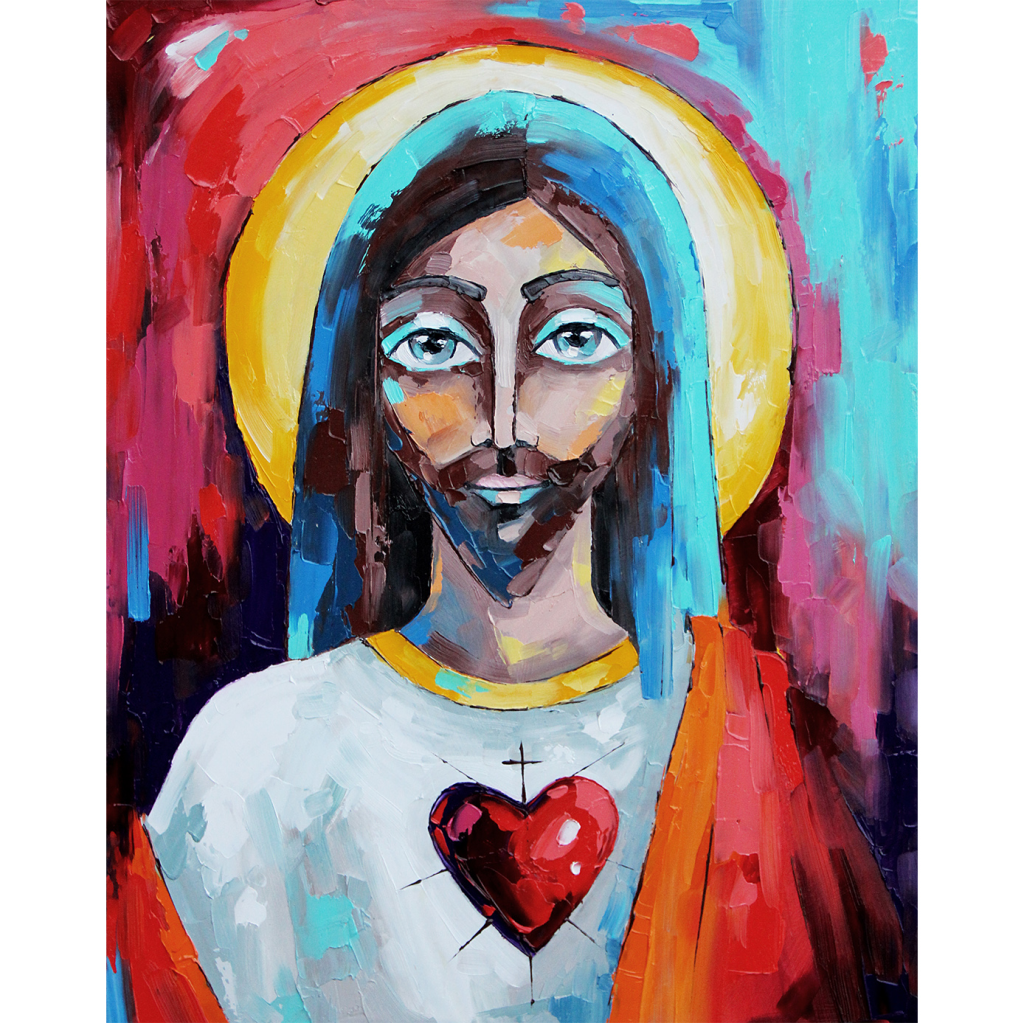
Art by Anna Startseva

Then he said, “You skillfully sidestep God’s law in order to hold on to your own tradition. For instance, Moses gave you this law from God: ‘Honor your father and mother,’ and ‘Anyone who speaks disrespectfully of father or mother must be put to death.’ But you say it is all right for people to say to their parents, ‘Sorry, I can’t help you. For I have vowed to give to God what I would have given to you.’ In this way, you let them disregard their needy parents. And so you cancel the word of God in order to hand down your own tradition. And this is only one example among many others.”

Then Jesus called to the crowd to come and hear. “All of you listen,” he said, “and try to understand. It’s not what goes into your body that defiles you; you are defiled by what comes from your heart.”

Then Jesus went into a house to get away from the crowd, and his disciples asked him what he meant by the parable he had just used. “Don’t you understand either?” he asked. “Can’t you see that the food you put into your body cannot defile you? Food doesn’t go into your heart, but only passes through the stomach and then goes into the sewer.” (By saying this, he declared that every kind of food is acceptable in God’s eyes.)

And then he added, “It is what comes from inside that defiles you. For from within, out of a person’s heart, come evil thoughts, sexual immorality, theft, murder, adultery, greed, wickedness, deceit, lustful desires, envy, slander, pride, and foolishness. All these vile things come from within; they are what defile you.” (New Living Translation)

There is nothing inherently wrong with tradition. Ideally, traditions are helpful ways of remembering and maintaining the values that are important to us.

Yet, what can happen over time is that the tradition itself can become equal to the value we hold to; and eventually, the tradition can become more important than the value it is supposed to remind us of.

In the worst case scenario, the tradition is kept, and the value is forgotten and lost. Whenever that happens, traditions easily become weaponized to protect our interests while harming others. And that is a phenomenon Jesus wanted nothing to do with.

So, Christ affirmed and upheld the essential purpose of the Torah (scriptural law) as the foundation of morality to live justly and righteously in the world. Keeping Torah, therefore, is a matter of inner motives, and intents of the heart, rather than external compliance to ritualized traditions.

Unfortunately, the outward form had supplanted the inward disposition of the heart. Purity then became a matter of observable rituals, and defilement a matter of failing to do the ritual properly. And the original values behind the rituals were lost – which caused souls to become lost, and other people victimized by religious traditions.

Whether one is ritually clean or unclean is not ultimately determined by material objects; it is, instead, determined by the state of the heart.
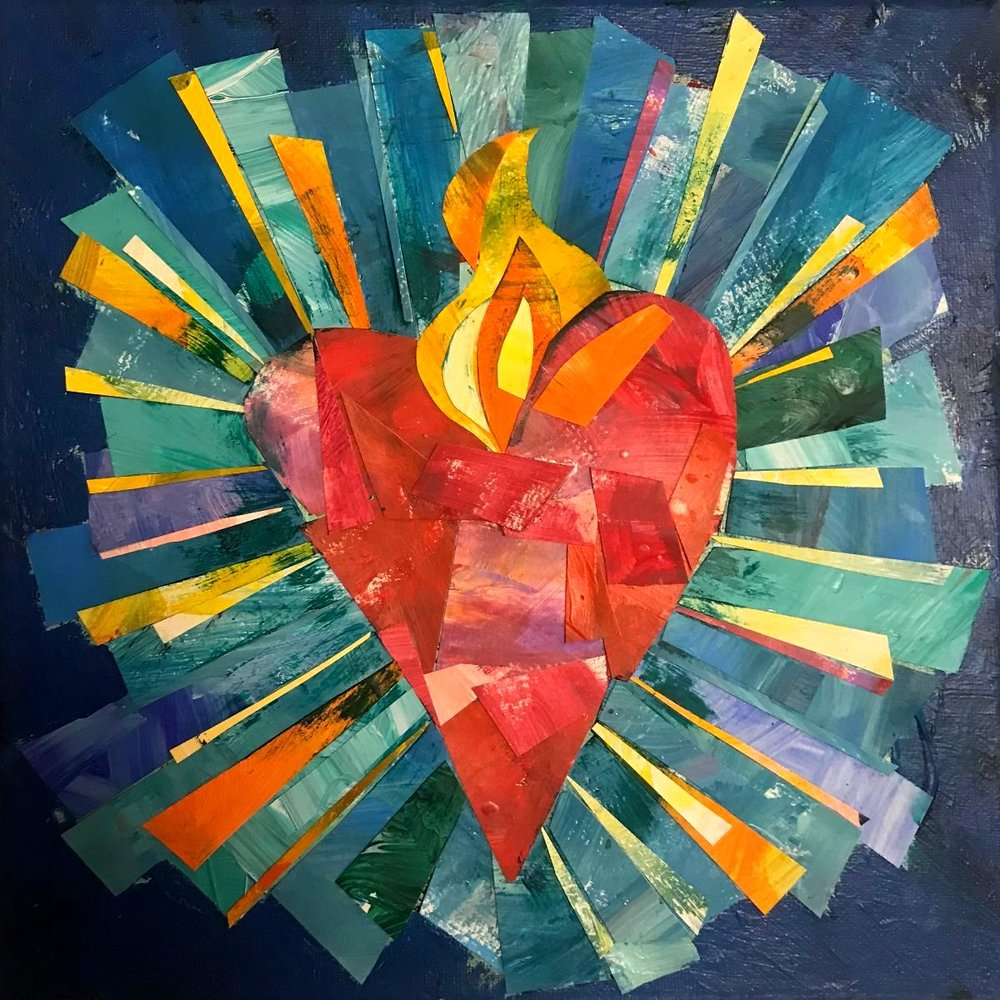
Art by Andy Perez

In other words, no outward ritual can ever really make a person clean or unclean, pure or impure, spotless or polluted. Inner transformation is what scrubs a person clean and makes them pure.

Ritual traditions, and even scriptural law itself, is unable to effect a transformative change.

Torah can require purity, cleanness, and moral uprightness; but it cannot affect a metamorphosis. We need something other than traditions, rituals, and laws to bring true and sustainable transformation of life.

I say that it is time to hear and observe Jesus. Millions of people throughout history, and up to the present time, have found in Christ (and not in Christian rituals, traditions, church codes, nor in a political Christendom) the answer and the key to what life is really all about.

Again, there is not a problem with our human traditions per se, but with traditions replacing Torah and the word of God.

Jesus gave an example of just such a contradiction between religious tradition and divine law: According to tradition, if a person makes a vow concerning their property and/or possessions as a gift to God at the temple, then those assets cannot be used to support that person’s parents in their old age.

Christ pointed out that this clearly contradicts the command to honor your father and mother. Ironically, the very tradition that was supposed to purify became the means to contamination – because the tradition forbids the person from obeying the command of God.

In a word picture that everyone could understand, Jesus explained that impurity and defilement have to do with what passes through the heart, not the bowels.

People obey or disobey the Ten Commandments due to the state of their heart, and not whether they keep every detail of traditional washing of the hands and body.

People lack virtue not because they fail to do human traditions; but because of what is in their hearts.

This is why Jesus, in his Sermon on the Mount, gets to the heart of why people break commands. For example:

  • The outward act of murder is a result of the inward anger of nurturing bitterness in the heart. (Matthew 5:21-22)
  • The physical act of adultery is the culmination of dozens of mental adulteries which originated in the heart. (Matthew 5:27-28)

Everything that harms and hurts is sourced in the heart, and not in failing to keep a tradition.

Furthermore, the Gospel writer Mark, added the very interesting parenthetical comment that in speaking this way, Jesus meant to declare that all foods are clean; there is nothing eaten that can make us impure.

That may not seem remarkable to most people, but to Jews this statement is cataclysmic and revolutionary. Levitical law details the separating of clean and unclean food, for the purpose of distinguishing the Israelites from all the other surrounding nations. (Leviticus 11:43-44; 20:24-26)

Holding to food laws, and traditional hand washings when it comes to eating, are a way of preserving religious identity and national identity. Jesus had no intention of doing away with Jewish identity, but he very much intended to do away with maintaining practices that keep strict separation from other people.

In other words, Christ was opening the way for ministry to Gentiles. He wanted to bring connection where there was deep division. He wanted the world to know God.

This gets at the “heart” of true religion. Distinctiveness as God’s people does not necessarily nor ultimately come by observing particular traditions; it comes primarily through purity of heart.

And the means of bringing purity of any kind, comes through love. Love always makes a way and finds connections. Love is the sine qua non mark of God.

Traditions infused with love, point people to God, and let them know that they belong.

But traditions for tradition’s sake, repel people, and communicate to them that they don’t belong, and should go away and not pollute the pure ones.

This approach of Jesus toward the religious leaders raises for me several probing questions:

  1. What is the true state of your heart?
  2. Are you aware of your own heart’s dark shadows?
  3. In what sort of direction is your heart inclined to speak and act?
  4. Does encouragement or criticism typically arise from your heart?
  5. Is love the compass of your heart, or does bitterness give you direction?
  6. Will you acknowledge your need of a savior? Will you ask for help?

Blessed God and Father of our Lord Jesus Christ: Make us quick to listen, and slow to speak, so that the Word implanted in our hearts may take root to nourish all of our living. And may the the Word within us overflow into speech and action which blesses the world. Amen.

The Example To Follow (1 Peter 2:19-25)

The Crucifixion, by John Kohan

For it is commendable if someone bears up under the pain of unjust suffering because they are conscious of God. But how is it to your credit if you receive a beating for doing wrong and endure it? But if you suffer for doing good and you endure it, this is commendable before God. To this you were called, because Christ suffered for you, leaving you an example, that you should follow in his steps.

“He committed no sin,
    and no deceit was found in his mouth.”

When they hurled their insults at him, he did not retaliate; when he suffered, he made no threats. Instead, he entrusted himself to him who judges justly. “He himself bore our sins” in his body on the cross, so that we might die to sins and live for righteousness; “by his wounds you have been healed.” For “you were like sheep going astray,” but now you have returned to the Shepherd and Overseer of your souls. (New International Version)

The reality of this life, for every one of us, is that we will suffer in some way. It’s not a matter of if we will suffer, but when and why. What’s more, my suffering is really not about me; it’s about him.

Therefore, let’s ensure that when the suffering comes, we know why – that it isn’t because of our own stupidity and poor choices, but because we are in solidarity with the One who suffered on our behalf and are living for him.

And in the midst of such suffering, let’s make sure that we face it and deal with it according to the example of Christ. Let’s imitate him.

Let’s also be honest from the start: We don’t like pain and suffering, and we often spend an inordinate amount of time and energy trying to avoid pain. 

Yet, in reality, our own suffering weans us away from the temporal things we tend to find consolation in, and drives us to the permanent source of comfort, strength, help, and encouragement. Our consolation is ultimately found solely in him.

When the athlete goes into the weight-room, they purposely go there to suffer. There is grunting and straining and difficulty. There is a tearing-down of muscle fibers. There is pain. 

That’s because strength-training needs commitment which suffers, and the pain that comes with growth. One cannot simply go into a weight-room, sit and watch other people lift weights, and believe they will then get in shape by only observing. 

God will put us in unwanted circumstances we did not ask for, and would not choose for ourselves, in order to position us to know him, to know Jesus. 

Crucifixion, by John Kohan

There are things in our lives that need to experience the suffering of death, in order for new life and growth to occur. For example, fire is an important part of Yellowstone National Park, because it brings environmental growth. According to ecology experts:

“Fire promotes habitat diversity by removing the forest overstory, allowing different plant communities to become established, and preventing trees from becoming established in grassland. Fire increases the rate that nutrients become available to plants by rapidly releasing them from wood and forest litter and by hastening the weathering of soil minerals.”

Concerning Christianity: Suffering is a necessary part of the Christian life because it creates the conditions for new life and growth and releases fresh sources of God’s grace into the church and world. 

We are to put to death anger, rage, malice, slander, lying, and useless language. They are to be replaced with compassion, kindness, humility, gentleness and patience, forgiveness, and love. (Colossians 3:7-14) 

More pointedly: Quit fighting against your suffering. Stop kicking and screaming long enough to look your suffering square in the face and learn from it.

Your suffering is trying to tell you something. But if you keep taking the stance of a pugilist trying to punch the pain away, suffering will just keep moving forward at you and never topple. 

You and I cannot beat suffering. We can only learn from it. In order to learn from it, we must embrace it.

So, here’s the counter-intuitive, counter-cultural practice that you might not like, and might think I’m off my rocker for suggesting: Submit to suffering. Yes, because in doing so you are submitting to him.

Don’t hear what I’m not saying. I am, in no way, trying to sanitize troubles, adverse circumstances, or even terrible trauma. Evil is evil, bad is bad, and no amount of saying otherwise will change the leopard’s spots. 

However, only through submitting to the process of what suffering teaches us will we ever have power over it.

Fighting against suffering is about as useful as taking on a bear. Bears, like suffering, can be dangerous. We don’t blame bears if they act like bears. Likewise, we ought not to be surprised when suffering hurts.

I suggest we treat suffering like facing a bear in the wilderness of trouble: 

  1. Calmly talk in low tones to your suffering. Speak to it. Remember who you are. You belong to God. Treat suffering as if it is curious about you. Stay calm. Doing the big freak-out only encourages suffering to do damage.
  2. Walk with others through suffering. Both yours and theirs. Christian community is one of the best practices of the Christian life. Suffering becomes connection within a community of persons who discern its purpose. 
  3. Keep your eye on suffering.  Don’t ignore it, or pretend it isn’t there. Don’t run. Face suffering. Keep it in front of you. It will pass, but you must be patient and calm. Once it is gone, then you can reflect on what happened and debrief with others about the experience.

For anything to change, we must stop something, and start something else. When it comes to suffering:

  • Stop fighting. Start accepting. 
  • Stop going it alone. Start living in vital and vulnerable community. 
  • Stop being a martyr. Start letting the martyrdom of Christ be your center of life. 
  • Stop talking. Start listening. 
  • Stop treating your suffering as an adversary. Start relating to suffering as a companion to learn from.

Lord Jesus Christ, by your patience in suffering you hallowed earthly pain, and gave us the example of obedience to your Father’s will. Be near me in my time of weakness and pain. Sustain me by your grace, so that my strength and courage may not fail. Heal me according to you will. And help me always to believe that what happens to me here in this life is of little account, if you hold me in eternal life, my Lord and my God. Amen.

Deliver Us From Evil (Psalm 144:9-15)

I will sing a new song to you, God.
    I will sing praises to you on a ten-stringed harp,
        to you—the one who gives saving help to rulers,
        and who rescues his servant David from the evil sword.
Rescue me and deliver me from the power of strangers,
        whose mouths speak lies,
        and whose strong hand is a strong hand of deception,
    so that our sons can grow up fully, in their youth, like plants;
    so that our daughters can be like pillars carved to decorate a palace;
    so that our barns can be full, providing all kinds of food;
    so that our flocks can be in the thousands—
        even tens of thousands—in our fields;
    so that our cattle can be loaded with calves;
    so that there won’t be any breach in the walls,
    no exile, no outcries in our streets!

The people who have it like this are truly happy!
    The people whose God is the Lord are truly happy! (Common English Bible)

And lead us not into temptation, but deliver us from evil.”

Jesus (Matthew 6:13, KJV)

Evil lurks everywhere. It resides in the human heart, hidden in the dark shadows, coming out sideways through shameful lies and guilty actions.

The presence of evil is also found throughout the world in every institution, organization, and group, ensconced as systemic injustice – hoarding resources for the powerful at the expense of the powerless; showing prejudice and favoritism to some, while ignoring others.

Since there is wickedness found in all places and with all people, evil needs to be dealt with and expunged from both hearts as well as institutions and organizations. Part of the solution is to do away with all obstacles which stand in the way of human flourishing.

Save us from the Evil One. (Matthew 6:13, ERV)

To be sure, the heart of humanity must be dealt with and be the focus of change. Yet, if we only focus one-dimensionally on evil, it will persist, and even grow into monstrous proportions, unless we equally direct our right and just efforts on structural and systemic evil.

People and their institutions need deliverance from the power of evil in the world. And for that to happen, the hindrances and handicaps to human thriving must be eliminated.

Our entire concept of salvation needs a fuller scope. Not only do individuals need personal deliverance from sin, death, and hell, so do entire societies. Complete systemic rescue from oppressive obstacles is a must. Far too many people in this fallen world are weighed down from institutional sin.

Christ obeyed God our Father and gave himself as a sacrifice for our sins to rescue us from this evil world.

Galatians 1:4, CEV

In looking at the need for deliverance from evil in a different context, the genius of the American experiment was that the founding fathers (and mothers!) of the United States created a political and societal system which sought to eliminate class distinctions and allowed people of lower means to achieve land ownership and business acumen simply through hard work and thrift.

Unfortunately, the experiment only extended mostly to landowning white men. Native American and African American people still had huge systemic obstacles to overcome. And the new republic had different expectations for women.

It took a Civil War and decades of grueling work to address political and social change (not to mention religious). We are still today laboring to truly give liberty and justice for all, and to achieve the ideal of an egalitarian nation.

We, as both individuals and citizens, need divine intervention through deliverance. Like Gilligan and the crew of the Minnow stranded on a deserted island, we seek to be rescued – knowing we need help beyond ourselves for salvation.

Rescue us from the evil one. (Matthew 6:13, NRSV)

The psalmist looked ahead in hope, convinced that a good God will deliver and provide good people with everything they need to thrive and flourish in this life, and in the life to come.

If God doesn’t fight our overwhelming battles for us, we are lost. This present darkness, this both ancient and contemporary evil, is an extremely powerful foe. However, the Lord is greater and will have the last word.

Christianity asserts that Jesus is the pioneer of our salvation, and the once for all answer to the problem of evil, for both the world and the human heart. Christ, in other words, is the fulfillment of the psalmist’s prayers for deliverance, health, and hope.

Protect us from evil. (Matthew 6:13, CEV)

In his earthly ministry, Jesus did not give explanations for our pain and sorrow. Instead, Jesus comes where our pain is most acute, and takes it upon himself – bringing healing and hope.

The Lord tackles evil, not by having a Zoom conference on the subject of wickedness, but by allowing evil to do its worst to him. Christ exhausts evil by draining it of its power, emerging resurrected with new life for all.

The good news: Jesus is Lord and has defeated the powers of evil.

Now, renewal and reform can occur. Hearts can change. Systems can be revamped. God’s new world has begun.

God rescued us from the control of darkness and transferred us into the kingdom of the Son he loves. He set us free through the Son and forgave our sins. (Colossians 1:13-14, CEB)

I, personally, am a Christian because I believe God is the one who satisfies the passion for justice, the longing for spirituality, the hunger for relationship, and the yearning for beauty. I see God in Jesus of Nazareth, the world’s true Lord.

Hope, like the psalmist expressed, is what you get when you realize a different worldview is possible. Hope springs to life when those who feel the brunt of evil in the world become acutely aware that the rich, the powerful, and the unscrupulous are not the ones really in charge.

“Our task as image-bearing, God-loving, Christ-shaped, Spirit-filled Christians, following Christ and shaping our world, is to announce redemption to a world that has discovered its fallenness, to announce healing to a world that has discovered its brokenness, to proclaim love and trust to a world that knows only exploitation, fear and suspicion…” N.T. Wright

May you be delivered from evil, and saved from the Evil One. May you know the Savior, and take solace in his peace. And may you be buoyant in faith, confident in hope, and overflowing with love. Amen.

The Evil Within (Mark 7:1-8, 14-15, 21-23)

Now when the Pharisees and some of the scribes who had come from Jerusalem gathered around him, they noticed that some of his disciples were eating with defiled hands, that is, without washing them. (For the Pharisees, and all the Jews, do not eat unless they wash their hands, thus observing the tradition of the elders, and they do not eat anything from the market unless they wash, and there are also many other traditions that they observe: the washing of cups and pots and bronze kettles and beds.)So the Pharisees and the scribes asked him, “Why do your disciples not walk according to the tradition of the elders but eat with defiled hands?” He said to them, “Isaiah prophesied rightly about you hypocrites, as it is written,

‘This people honors me with their lips,
    but their hearts are far from me;
in vain do they worship me,
    teaching human precepts as doctrines.’

“You abandon the commandment of God and hold to human tradition…”

Then he called the crowd again and said to them, “Listen to me, all of you, and understand: there is nothing outside a person that by going in can defile, but the things that come out are what defile…”

For it is from within, from the human heart, that evil intentions come: sexual immorality, theft, murder, adultery, avarice, wickedness, deceit, debauchery, envy, slander, pride, folly. All these evil things come from within, and they defile a person.” (New Revised Standard Version)

There are many people who believe that evil resides out there, but not in here.

“Out there” is usually in places where people don’t live like me, think like me, and act like me. Rarely does anyone, when asked where evil is, points to their own heart.

The religious establishment of Christ’s day saw evil as something which existed “out there” where the sinners are; but not “in here” where I am.

Jesus had something to say on that subject. The exchange between the religious leaders and Christ began with a query toward Jesus about Jewish traditions and interpretations of the Mosaic law.

The leaders observed that Christ’s disciples were not holding to traditional purity practices. They were not washing their hands in a certain way prior to eating. This was less of a criticism on the followers of Jesus, and much more an indictment on Jesus as their rabbi.

It was believed that there are customs which properly trained disciples ought to know and follow. And Christ’s followers were not, it was assumed, trained well.

The religious establishment understood the words and ways of Jesus as an affront to the teaching of the elders, and of proper scriptural and legal interpretation.

Jesus, however, made a distinction between traditions of the elders and God’s commands. The former are human precepts, whereas the latter are to be obeyed. In no way did Christ demean Mosaic law, or any commandments of God.

Instead, Jesus rejected how particular interpretations – along with practices which arose from those interpretations – end up obscuring the spirit and intent of the law. In other words, purity does not come from hand washing, because neither purity nor impurity originates from the hands.

Christ reached back into the prophecy of Isaiah to show that there is a contrast between what the mouth utters and what is within the heart. The incongruence between the words spoken and the heart’s true state puts the issue of where impurity and evil really come from: The heart, not the mouth.

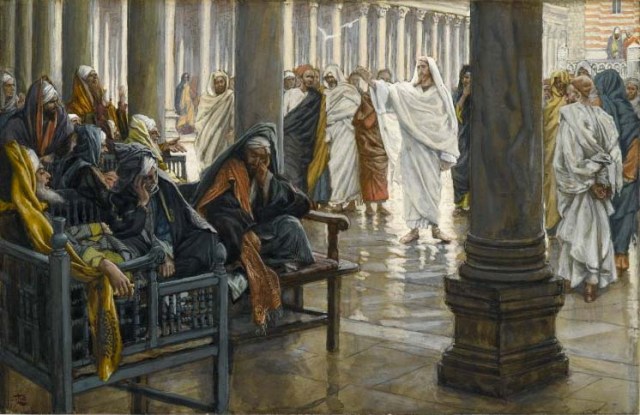
Jesus and the Pharisees, by French painter James Tissot (1836-1902)

Evil intentions originate within. Evil actions are animated by the heart. Evil attitudes are born in the heart. The human heart is the place which needs attention because, for ancient people, this is where a person’s rational will is located. It is where moral pollution dwells, deep within.

Let’s keep in mind that, in the verbal kerfuffle between Christ and the religious leaders, there is no evidence that Jesus disregarded Jewish dietary laws. He instead took the religious establishment to task on elevating outward human traditions, while simultaneously ignoring the inward human heart.

Food and hand-washing are not the chief concern, when it comes to purity and impurity. At issue is the source of defilement, that is, where the pollution is sourced. Jesus insisted that it’s more about who you are, and what is in your heart, than it is about the food you eat or avoid.

In truth, the problem of defilement is important. And keeping the Mosaic law is significant. Yet, Jesus was looking at these issues from a different angle. He affirmed the law’s purpose in restraining evil and avoiding impurity, along with the religious leaders. However, Christ disagreed with them on how the law is practically observed and obeyed.

Jesus did not come up with something new or strange in talking about evil emanating from the heart. Judaism is a religion of the heart, just as much as Christianity or any other religion.

The heart is devious above all else;
    it is perverse—
    who can understand it?
I the Lord test the mind
    and search the heart,
to give to all according to their ways,
    according to the fruit of their doings. (Jeremiah 17:9-10, NRSV)

So, what’s up with the conflict between Jesus and the religious leaders? Over time, many located evil outside, out there, with evildoers and law-breakers, with those disobedient to the law. Christ came along and reaffirmed where the problem originates, scripturally.

One isn’t defiled by improper handling of ritual; one is defiled because being unaware of, or not acknowledging, the dark shadows which reside within every human heart.

Therefore, the discussion of evil and impurity is useless, if we only talk about influences from outside. Deal, instead, with the influences from within.

The heart is not all bad; there’s a lot of good there. But there are spaces within the heart which are camouflaged in darkness. Those places need attention, before we launch into evil which exists elsewhere.

Everyone must come to the point of understanding that they are capable of both great good and great evil. A Pharisee is not all good. And a lawbreaker is not all bad. Until we can see the commonality between ourselves and those we separate ourselves from, we will continually miss the heart of true religion.

Whether a Jew, Christian, Muslim, or any other religious tradition, we must deal with our own collective house, and our own personal heart. Hate speech toward another group has no warrant from Jesus. Injustice has no place in Christianity or anywhere else.

Furthermore, not a one of us can rationalize any unjust words and/or inactions. If that happens, a terrible blindness has occurred in which someone or some group of people refuse to see their own culpability in evil, and project it outward onto another person or group.

If we keep the light of the gospel in our own hearts, then it is much less likely that we will demean or attack others, either verbally, physically, or both.

Using a self-constructed and janky flashlight to shine on another’s heart does nothing but keep the attention off of our own heart. That sort of dubious searching of splinters helps no one, especially ourselves, who already have nasty logs in our own eyes.

Evil is deeper than mere selfishness, bigger than a personal error in judgment, and greater than some individual bad decisions. That’s because there is also a collective heart in every organization, institution, corporation, and faith community. Injustice and unrighteousness resides in those hearts, as well. This makes all of us – personally and communally – both victims of evil, as well as perpetrators of wickedness.

This is why grace and mercy are the real answers to the evil in this world’s systems, and in the human heart. Jesus is trying to pave the way toward a solution of the problem of evil.

Let’s give him an honest look and hearing.

Most merciful God, we confess that we have sinned against you in thought, word, and deed, by what we have done, and by what we have left undone. We have not loved you with our whole heart; we have not loved our neighbors as ourselves. We are truly sorry and we humbly repent. For the sake of your Son Jesus Christ, have mercy on us and forgive us; that we may delight in your will, and walk in your ways, to the glory of your Name. Amen.