Revelation 7:9-17 – Persevering to the End

After this I looked, and there was a great crowd that no one could number. They were from every nation, tribe, people, and language. They were standing before the throne and before the Lamb. They wore white robes and held palm branches in their hands. They cried out with a loud voice:

“Victory belongs to our God
        who sits on the throne,
            and to the Lamb.”

All the angels stood in a circle around the throne, and around the elders and the four living creatures. They fell facedown before the throne and worshipped God, saying,

“Amen! Blessing and glory
        and wisdom and thanksgiving
        and honor and power and might
            be to our God forever and always. Amen.”

Then one of the elders said to me, “Who are these people wearing white robes, and where did they come from?”

I said to him, “Sir, you know.”

Then he said to me, “These people have come out of great hardship. They have washed their robes and made them white in the Lamb’s blood. This is the reason they are before God’s throne. They worship him day and night in his temple, and the one seated on the throne will shelter them. They won’t hunger or thirst anymore. No sun or scorching heat will beat down on them because the Lamb who is in the midst of the throne will shepherd them. He will lead them to the springs of life-giving water, and God will wipe away every tear from their eyes.” (Common English Bible)

There is a day coming when followers of Jesus will see him face to face. Believers will serve the Lord continually. God’s very presence will be their permanent shelter. It will be a glorious time of unending peace, harmony, and rest.

There shall be no more worrying about how to make ends meet, where we are going to get our needs met, and anxiety about the future. Injustice will be a thing of the past. Unending love and light will replace it.

First, however, before this permanent Sabbath, there will be trouble, hardship, trial, and even martyrdom. There is presently pain and suffering. Like a woman in labor, this must take place before there is the glory of new life. 

“A hero is an ordinary individual who finds the strength to persevere and endure in spite of overwhelming obstacles.”

Christopher Reeve

Sometimes the difficult circumstances of life seem to have no end. Yet, they will eventually pass, and we must continually keep this in mind. Christians have the hope of God’s pastoral presence forever guarding and keeping our lives if we endure to the end.

Perseverance, endurance, and pushing through hard situations are necessary to realize the finish line. We cannot just sit here on earth in some sort of holding pattern waiting for the end to occur. Just as an athlete must go into strict training in order to run the race well, finish strong, and cross the line, so we as Christians are to be in training – utilizing an array of spiritual practices that will fortify our souls to keep going and finish the race. 

The book of Revelation was a vision of the Apostle John given to believers in hardship who needed to persevere. Giving them a glimpse of the glorious ending was one way of helping them in the present to live for Jesus Christ, despite the pain.

Since the Christian life is not a sprint but a marathon, here are some ways we can build a enduring and persevering spirit until Christ returns:

Don’t be afraid to fail.

That’s because, for the believer, we know the ending. We may feel like colossal failures, at times, yet, because the Lord is with us, we have nothing to fear. Being secure in our identity as God’s people enables us to step out and engage the world.

When I am afraid,
    I put my trust in you.
I trust God, so I am not afraid of what people can do to me!
    I praise God for his promise to me. (Psalm 56:3-4, ERV)

Take small steps of faith.

We can incrementally improve ourselves daily through our growth in grace. We don’t need to always do big things for God. We can do small acts of kindness with big love.

Continue to grow in the grace and knowledge of our Lord and Savior Jesus Christ. To him be the glory, now and forever! Amen. (2 Peter 3:18, GNT)

Love the Lord your God with all your heart, all your soul, all your mind, and all your strength.’The second most important command is this: ‘Love your neighbor the same as you love yourself.’ These two commands are the most important. (Mark 12:30-31, ERV)

Identify the resistance.

Name the obstacles, impediments, and challenges to perseverance. Our awareness of what hinders us gives us the power to choose how to handle it.

We should remove from our lives anything that would slow us down and the sin that so often makes us fall. We must never stop looking to Jesus. He is the leader of our faith, and he is the one who makes our faith complete. (Hebrews 12:1-2, ERV)

Practice good self-care.

The body, mind, emotions, and spirit are our vehicles to doing the will of God. So, it is imperative we steward these precious gifts of humanity with care. The only way we will make it over the long haul of our lives is through paying attention to this.

God has made us what we are. In Christ Jesus, God made us new people so that we would spend our lives doing the good things he had already planned for us to do. (Ephesians 2:10, ERV)

Surely you know that you are God’s temple and that God’s Spirit lives in you! (1 Corinthians 3:16, GNT)

Know why you are persevering.

Losing connection with why we do what we do leads to dropping out and giving up. Yet, when we can maintain what is most important to us, it helps us push through all the sticky points of our lives.

So, if you eat, or if you drink, or if you do anything, do it for the glory of God. (1 Corinthians 10:31, ERV)

Whatever you do, whether in speech or action, do it all in the name of the Lord Jesus and give thanks to God the Father through him. (Colossians 3:17, CEB)

Patient God, you tediously work until your plans and purposes are accomplished.  As you are slowly bringing your kingdom to the world, strengthen me so that I do not give up.  Help me to persevere, living and loving like Jesus, to his glory.  Amen.

Hebrews 4:12-16 – Jesus Is Our Great High Priest

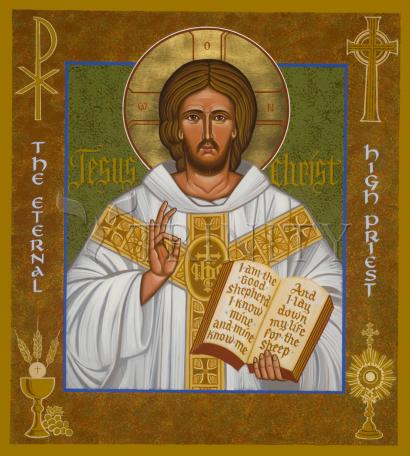
Jesus, the Eternal High Priest, by Joan Cole

For the word of God is alive and active. Sharper than any double-edged sword, it penetrates even to dividing soul and spirit, joints and marrow; it judges the thoughts and attitudes of the heart. Nothing in all creation is hidden from God’s sight. Everything is uncovered and laid bare before the eyes of him to whom we must give account.

Therefore, since we have a great high priest who has ascended into heaven, Jesus the Son of God, let us hold firmly to the faith we profess. For we do not have a high priest who is unable to empathize with our weaknesses, but we have one who has been tempted in every way, just as we are—yet he did not sin. Let us then approach God’s throne of grace with confidence, so that we may receive mercy and find grace to help us in our time of need. (New International Version)

Church Persecution and Christian Suffering

The book of Hebrews was originally a sermon preached to a group of believers who had come to Christ out of Judaism. From the book of Acts, we know there were thousands of Jewish Christians who were dispersed from Jerusalem when Stephen was martyred.  A great persecution broke out, and many believers fled west to places like Galatia, Ephesus, Greece and Rome. 

The Jewish believers were immigrants in a foreign land, looking to practice their faith without harm. Yet, their experience was anything but ideal. These followers of Christ found fellow ethnic Jews in the places where they went, yet those Jews had no use for these people that they believed were in some sort of aberrant cult.

What is more, the surrounding Gentile culture did not understand Christianity, at all, and many of those who held to pagan religions bought into rumors, such as, that Christians were cannibals who ate at what’s called the Lord’s Table.

So, here we have a situation where these displaced Christians had no respect from both Jews and Gentiles. As a result, they had a difficult time carrying out business because no one trusted them. They were essentially alone in the world. 

Losing Their Grip

Initially, they embraced their identity as Christians and held up quite well under the stress. However, over time, their resolve began to slowly erode. The followers of Jesus began to question their adverse situation. 

They began listening to their fellow Jews throw doubts on their faith. The hard life was not improving, maybe even becoming worse.  Eventually, the church came to a point where they began re-considering their whole way of life as Christians, and their faith commitment started slipping. The Christians actually considered leaving the Church and Christianity and going back to their old life in Judaism.

The Message of Hebrews

It was at this point that a vigorous believer in Jesus came to town, saw the situation of the church, and preached a spirited message to them. The preacher called them to hold tight to their commitment – to see Jesus afresh and anew as superior over all the Old Testament, as the fulfillment of all the promises of God. 

So, then, throughout the book of Hebrews we have this wonderful explanation and exposition of how to make sense of Jesus and the Old Testament, and of what Jesus really means to the church. Throughout his sermon, the preacher occasionally paused his teaching and gave the people a stiff warning about falling away from Christ. He called the church to be bold and confident in Christ, to stand up to the suffering, and to confront their temptations so that they would persevere in their commitment to Jesus Christ for the rest of their lives.

God’s Word and Work

We pick up the teaching and the exhortation in chapter four. Hebrews 4:12-16 is composed of two distinct sections that are paired together for a reason.  Verses 12-13 give us a graphic visual of the penetrating work of God’s Word, of the reality that God can get deep inside us. The next section, verses 14-16, lays out God’s response to our being under divine scrutiny – that there is grace and mercy available because of Jesus, our great high priest who is superior to every priest of the Old Testament to the point of being the last and permanent priest forever! 

These verses are bound together because we all need to struggle with the tension between God’s Word to us, and our words to God; between God’s judgment that opens our souls on a spiritual operating table, and God’s grace which jumpstarts our broken hearts. Our most fundamental need is for God’s mercy in Jesus Christ.

The Christian Life

It is important that our outer lives and our inner lives match each other. Whenever the two are out of sync, we come under the judgment of God’s Word. These early Hebrew Christians had slowly drifted from the truth so that their inner and outer lives did not line up well.

Some of them still performed the outward duties of being a Christian yet were inwardly despising their hard situation. A growing vacuum developed on their insides as they slowly started letting go of Jesus as their object of devotion. Their hearts began to harden because of their hard lives. 

On the other hand, there were other Hebrew Christians who began drifting in a different way. Inwardly, they tried to maintain their devotion and commitment to Christ. Yet these believers began compromising their outward life to match the culture around them. In both cases of hardening inwardly, and of compromising outwardly, they each shared the situation of drifting away from their original commitment to Christ.

Even today, it is a real temptation to try and avoid suffering, to grow weary of our present circumstances and look for a way to get out from under the pain and find a quick fix.  Whenever we find ourselves in such a situation, the remedy is to be reminded that we must continue to hold firmly to the faith we profess because of who Jesus is.

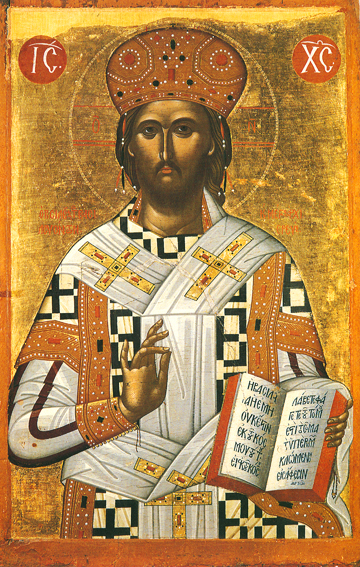
15th Century Orthodox icon of Christ the Great High Priest

Jesus As Permanent High Priest

Jesus is our great high priest. In the Old Testament, among the twelve tribes of the ancient Israelites, the tribe of Levi made up the class of priests. One of those Levites, always a descendent of the original Levite priest, Aaron, had the task of once a year entering a place called the Holy of Holies, which was at the center of the Temple, to offer a bloody sacrifice on behalf of the people, to atone for their sins from the previous year.

Jesus is our great and ultimate high priest. He did not enter the temporary sacrificial system to deal with sins for only a year. Jesus not only took on the role of high priest, but became the sacrifice, as well. As a result, we now have a thorough and permanent forgiveness of sins through Christ. So, the Hebrew Christian who considered going back to an old outdated system needed to be brought back to his senses and embrace again the once-for-all sacrifice of Jesus. 

As they considered Jesus, the believers needed to remember that Christ was not so far removed from them that the church could not relate to Jesus. Rather, Jesus is able to sympathize with each and every trouble, trial, and temptation we face because he faced the very same kind of sufferings. 

The only difference between Christ and his followers is that Jesus did not succumb to the trouble, but persevered and secured for us deliverance from sin, death, and hell. Jesus is the One who deserves every bit of our commitment, allegiance, and devotion. Christ is the One whom we are to worship inside and out.

Approaching God with Boldness

Let us then approach Jesus with confidence, with boldness, knowing that with him there is mercy and grace. Jesus not only suffered for us in the past; he also suffers with us now, in the present. We, as believers, are in union with Jesus. Christ is our great high priest, the One intimately involved in every nook and cranny of our lives. He knows what you and I are going through and is ready to give grace to help right now. 

Approaching Jesus has nothing to do with being good enough to do so. Coming to Jesus is about grace. Whenever we drift from Jesus and are confronted with God’s Word cutting us to the heart, the end result is not wrath or judgment; the result is mercy and grace.

Like the early Hebrew Christians, we all face situations out of our control that wear us down and cause us to become weary. In our tired state, we can be tempted to let our commitment to Christ slide in some small way. Over time, the small compromises of faith can snowball into a big slide away from God. 

Yet, Jesus is not sitting in heaven frustrated or confounded. God is not looking for a reason to punish people. It is just the opposite. Jesus, the Son of God, our great high priest, is looking for a reason to give grace and help us in our time of need. Christ is waiting for us to approach the throne of grace with confidence. Right now, Jesus is alive. He is scanning the world and the church, looking to extend mercy to those who need it. 

Asking for Help

We must avoid a spiritual hardening of heart which estranges us from approaching Jesus. Every one of us needs help. We are not God. We have weaknesses. We have confusion. We have limitations of all kinds. We need help.  And every one of us has something else: guilt and shame. At the bottom of our hearts, we feel undeserving, and so, avoid coming to Jesus. Yet, we need with family, loneliness, work, health, finances.

So, what to do? I can try to deny it all and be a superman who doesn’t need any help. I can try to drown it all with alcohol. I can be obsessive and compulsive about controlling events and/or people. I can simply succumb to discouragement. Here is what God declares: Jesus Christ became a High Priest to shatter despair with hope, to rescue that drowning person and that anxious individual.

God planned for a High Priest, a Savior, a Redeemer, and a gracious Helper. You and I are not trapped. We have Jesus. 

The book of Hebrews is all about a call to commitment – an invitation to come to Jesus.  And it is the most important invitation you will ever receive. Let us approach the throne of grace with confidence….

This is the confidence we have in approaching God: That if we ask anything according to his will, he hears us.  And if we know that he hears us – whatever we ask – we know that we have what we asked of him. Spirit of God, lead us into your will. Help us in all things. Fill our hearts and lives to overflowing with divine mercy and grace so that what comes out of our mouths and the actions we do are compassionate, kind, and good, through our great High Priest, Jesus Christ. Amen.

Hebrews 4:1-11 – Enter God’s Rest

Therefore, since the promise of entering his rest still stands, let us be careful that none of you be found to have fallen short of it. For we also have had the good news proclaimed to us, just as they did; but the message they heard was of no value to them, because they did not share the faith of those who obeyed. Now we who have believed enter that rest, just as God has said,

“So I declared on oath in my anger,
   ‘They shall never enter my rest.’”

And yet his works have been finished since the creation of the world. For somewhere he has spoken about the seventh day in these words: “On the seventh day God rested from all his works.” And again, in the passage above he says, “They shall never enter my rest.”

Therefore, since it still remains for some to enter that rest, and since those who formerly had the good news proclaimed to them did not go in because of their disobedience, God again set a certain day, calling it “Today.” This he did when a long time later he spoke through David, as in the passage already quoted:

“Today, if you hear his voice,
    do not harden your hearts.”

For if Joshua had given them rest, God would not have spoken later about another day. There remains, then, a Sabbath-rest for the people of God; for anyone who enters God’s rest also rests from their works, just as God did from his. Let us, therefore, make every effort to enter that rest, so that no one will perish by following their example of disobedience. (New International Version)

“I’ll rest when I die” was a phrase one of my congregants used to say whenever he was encouraged to stop moving for a while and rest. He is now gone, having died at a relatively young age. It is common in American culture to define rest as almost optional. Many people feel guilt when they sit still, living with the belief that unless they are constantly busy and doing something that they are lazy or selfish.

The kind of rest the author of Hebrews was talking about was not just a future time of finally sitting in some kind of celestial recliner after a life of constant work. Rest is available now; and it’s encouraged.

Today we have the opportunity to enter into God’s rest for us. The ones who had the good news preached to them before didn’t enter rest because of disobedience. It is not just contemporary people who have a problem with Sabbath; rest itself has had a rather unrestful history.

It seems to me we need to ask ourselves why we have this tendency to interpret “rest” as only occurring after a lot of hard work has happened. 

If Sabbath rest has relevance to us now, perhaps our cultural model of work-is-greater-than-rest is really to be reversed as rest-is-greater-than-work. Consider this: God created humans on the sixth day. God rested on the seventh day. So did Adam and Eve. That means the first people rested before they even had a chance to begin working the garden God created.

Maybe instead of inventing new ways to overfill our schedules and erase any margin from our day to day existence, we ought to create ways of ruthlessly eliminating hurry from our lives. 

It could be that our world’s many ills and woes come more from our inability to rest than anything else. God not only calls us to an active Christian life; God calls us to rest, too.

In our daily work-a-day world we poke, prod, push, cajole, and finagle to move forward and get our way on all kinds of things. To separate ourselves from our typical routine is akin to an addict’s withdrawal. Some folks are tired, cranky, and negative all the time. Methinks it is because we find all kinds of reasons to not rest, and even when we do we’re still trying to impose our will on God.

What Christians need most is simply Jesus – to know Christ, be with him, and experience the depths of our wondrous and gracious union with the Lord. And that cannot happen, at least not fully, unless we practice rest.  To rest means to relinquish all our plans and agendas to God for a time and just come into the divine presence and enjoy one another.

Our compulsions for performance and perfection are the real culprits to rest. We want to do everything right.  We long to pray right, talk right, be right and live right instead of coming to Jesus like a little child who needs him. 

Perhaps we are so profoundly discontent with so many things because we are not really content in Christ. Maybe the best or right prayer to pray is that we all be content together no matter the circumstances. Only then might we find our burdens are light.

Jesus modeled the life of rest for us. If there was anyone who did not need to pull away and rest, it was Jesus, and yet, he continually did so. So, if Jesus created a sacred space to commune and enjoy the Father, then how much more do we need a Sabbath rest and a place to do it? 

Jesus rested to connect with his heavenly Father. There was no multi-tasking or juggling other responsibilities. There was simply the radical pursuit of intimate rest.

If we do not rest and intentionally practice times of Sabbath, then we are expressing our confidence that money, hard work, and individual talent are really all we need, rather than God.

Rest is only secondarily about refueling our depleted resources; it is primarily about connecting intimately with Jesus and a good gracious Father. Just as we need a special room and a certain bed for sleep, so we need a particular place and a certain time set aside to pray and enjoy God.

Real spiritual and biblical rest only “works” when we realize we don’t have it all together – that we are helpless and need Jesus. Apart from Jesus, the blind man cannot see, Lazarus remains dead, and I am lost in my sin. I cannot “do” life without Christ in me and with me.

As long as we try and manufacture results instead of relying on the Lord for refreshment and renewal, rest will be elusive. Enjoy Jesus today, my friend, and leave the results to God.

God of the Sabbath rest, just as you rested on the seventh day, help me to alter my life in such a way as to engraft new avenues of rest into my busy schedule. In doing so, may I connect with you more deeply and find greater health and fulfillment in myself and my relationships. To the glory of Jesus Christ, I pray. Amen.

Hebrews 1:1-4, 2:5-12 – World Communion Sunday

In the past God spoke to our ancestors through the prophets at many times and in various ways, but in these last days he has spoken to us by his Son, whom he appointed heir of all things, and through whom also he made the universe. The Son is the radiance of God’s glory and the exact representation of his being, sustaining all things by his powerful word. After he had provided purification for sins, he sat down at the right hand of the Majesty in heaven. So, he became as much superior to the angels as the name he has inherited is superior to theirs….

It is not to angels that he has subjected the world to come, about which we are speaking. But there is a place where someone has testified:

“What is mankind that you are mindful of them,
    a son of man that you care for him?
You made them a little lower than the angels;
    you crowned them with glory and honor
    and put everything under their feet.” [Psalm 8:4-6]

In putting everything under them, God left nothing that is not subject to them. Yet at present we do not see everything subject to them. But we do see Jesus, who was made lower than the angels for a little while, now crowned with glory and honor because he suffered death, so that by the grace of God he might taste death for everyone.

 In bringing many sons and daughters to glory, it was fitting that God, for whom and through whom everything exists, should make the pioneer of their salvation perfect through what he suffered. Both the one who makes people holy and those who are made holy are of the same family. So, Jesus is not ashamed to call them brothers and sisters.He says,

“I will declare your name to my brothers and sisters;
    in the assembly I will sing your praises.” [Psalm 22:22] (New International Version)

Today is World Communion Sunday. We come to the Lord’s Table with awareness of Christian sisters and brothers throughout the world, in all nations, and in all the various traditions of Christianity. We may not all agree about a lot of things in the church and the Christian life. Yet, every Christian tradition – past and present – has and does observe communion around the Lord’s Table. It is a practice which binds us and reminds us of our unity with another.

And that unity is focused and centered in Jesus Christ our Savior and Lord. Jesus is the person who holds us together. Jesus is the one in whom all the good promises of God are fulfilled. Today we remember Jesus, commune with Jesus, and express our hope in Jesus.

We remember that Jesus was made perfect through suffering – and that we, too, experience spiritual formation through suffering.

We commune with Jesus and one another because the cross of Christ achieved deliverance from spiritual estrangement and relational loneliness and gathered us into the one people of God.

We hope with confident expectation, as we celebrate Jesus at the Table along with all the saints everywhere, that Christ will return and take us to be with him forever in glory. There will be no more suffering, no more pain, no more poverty, no more oppression, no more injustice. There will be complete faith, realized hope, and absolute love for all time and forever. Amen!

Our past, present, and future all belong to Jesus. And we are not alone, for all Christians in everyplace from every race, ethnicity, class, and gender – whether they are Pentecostals in Puerto Rico, Anglicans in Africa, Catholics in Poland, Coptic Egyptians, or Orthodox Russians – the beautiful diversity of Christ’s Body comes together in harmonious unity at the Lord’s Table. It is this sacrament which raises our awareness of both solidarity with Christ and with all believers everywhere.

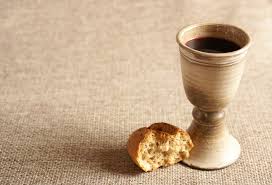
The purpose of the Lord’s Table is to participate in the blessings of Christ by visually re-creating the story of Jesus. There are three different terms for the Table in the New Testament, and each term is meant to convey a different aspect of the Table’s significance. 

The Lord’s Supper is a focus on remembrance, a memorial of Christ’s death that is deeply reflective and contemplative. 

What you must solemnly realize is that every time you eat this bread and every time you drink this cup, you reenact in your words and actions the death of the Master. You will be drawn back to this meal again and again until the Master returns. You must never let familiarity breed contempt.

Anyone who eats the bread or drinks the cup of the Master irreverently is like part of the crowd that jeered and spit on him at his death. Is that the kind of “remembrance” you want to be part of? Examine your motives, test your heart, come to this meal in holy awe. (1 Corinthians 11:26-28, MSG) 

The Eucharist literally means “thanksgiving.” The Lord’s Table as Eucharist means we celebrate Christ’s victory over sin, death, and hell on our behalf. 

While they were eating, Jesus took a piece of bread, gave a prayer of thanks (Eucharist), broke it, and gave it to his disciples. “Take it,” he said, “this is my body.” Then he took a cup, gave thanks to God (Eucharist), and handed it to them; and they all drank from it. (Mark 14:22-23, GNT) 

Communion means to participate in Christ and with other Christians. This emphasizes that when we partake of the Lord’s Table, we ought to do so with unity and fellowship. We are more than individual Christians. We share in the Lord together as the community of the redeemed.

When we drink from the cup that we ask God to bless, isn’t that sharing in the blood of Christ? When we eat the bread that we break, isn’t that sharing in the body of Christ? By sharing in the same loaf of bread, we become one body, even though there are many of us. (1 Corinthians 10:16-17, CEV) 

As we allow the Table to be a remembrance, celebration, and participation with each other, we engage in a ritual that helps us to know Christ better. And we are better able to realize God’s grace to us.

Participating and sharing in communion is important because we can easily be fragmented and not fellowship with one another in a local church, as well as the world-wide church. The cross of Jesus Christ has ended division. The cross has brought us peace and reconciliation between God and others. 

The suffering of Jesus on the cross has restored a broken relationship between us and God, and also between one another. Therefore, there is to be no more ignoring one another, or brothers and sisters elsewhere, because we are one unified people around the good news of Jesus – enjoying solidarity with each other in both our joys and our sufferings.

One awareness needed as we share in communion together is to be mindful of others. Not everyone is the same. We must avoid coming to the Table expecting people to be the way we want them to be. Instead, we are to come because we have staked our souls on the fact that Christ is the Way, the Truth, and the Life, and the Church is the best place to be while we all struggle to figure out what that means. We come because we’d be hard pressed to say which is the bigger of the two scandals of God: that he loves me—or that he loves everyone else. 

The Lord’s Table is the great leveler, where we all have equal footing and accept one another according to a common confession of Christ. Communion emphasizes participation in the body and blood of Christ, as well as participation with all Christians everywhere. 

Therefore, we are not alone. Communion means God is with us, and that Christ has so closely identified with us that he took our place on the cross. As a result, every believer in Jesus is linked to all the others so that, when one suffers or rejoices, all suffer or rejoice, whether it is a Pastor down the street rejoicing over a newly saved soul, or a suffering Syrian Christian trying to survive in a refugee camp.

Let us live up to what, and whom, we profess. Since we are God’s forgiven people, we are to work at living the Christian life together. This unity is symbolized by partaking together of the same loaf of bread and drinking from a common cup.

One Sunday, a group of missionaries and believers in Papua New Guinea were gathered to observe communion together.  After one young man sat down, one of the missionaries recognized that he seemed to be quite upset. Then, after a while, the young man seemed to be fine. 

The missionary leaned over and whispered to him, “What was it that troubled you?”  The young man replied, “The man who just came in happens to be the man who killed and ate the body of my father.  And now he has come in to observe communion with us. At first I didn’t think I could do that. But it is all right now.  He is washed in the same precious blood as I am.”  And so together they participated in Christian communion.

We have peace because of Jesus. Christ’s suffering and death has brought reconciliation not only between us and God, but between each other. As we approach the Lord’s Table, let us be aware not only of our personal relationship with God, but our relationships with one another in the local church, and our unity with the world-wide church. 

May our lives be shaped and formed around the cross of Jesus Christ, as we remember, celebrate, and participate together.

Almighty and everlasting God, may this time we partake of the body and blood of Jesus unite us in the community of saints who know your love and proclaim your Son with fervor and grace to a broken and hurting world. May your healing hands be the salve for ending hurt and violence in this world, even as we prepare for the next. In the holy Name of Jesus. Amen.