All Saints Day

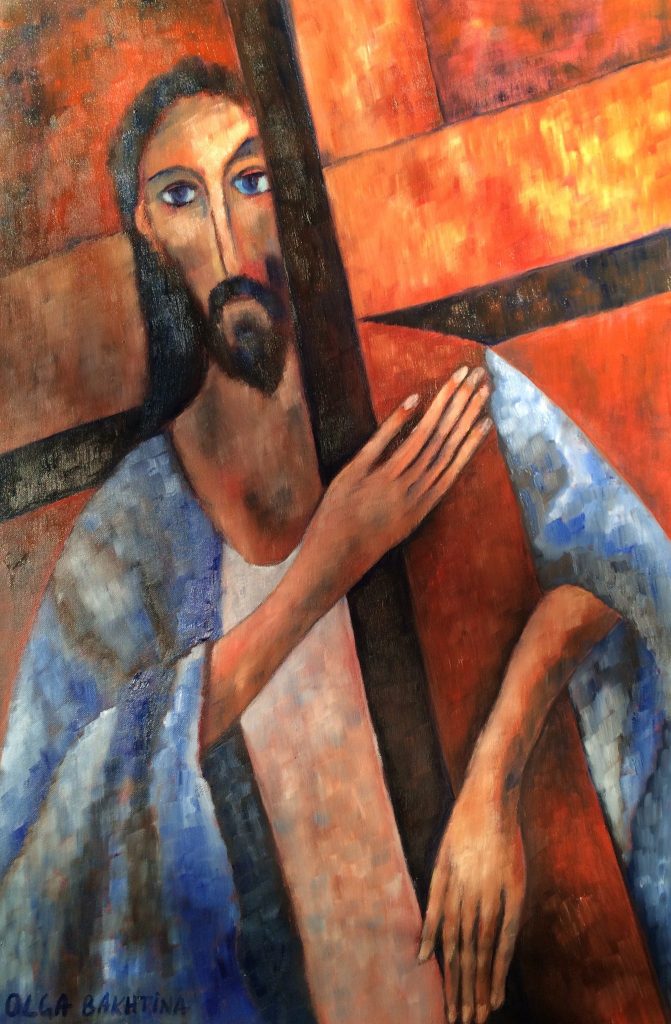
In all times and every place throughout history God has specialized in taking imperfect or broken people and transforming their lives. On the Christian Calendar, November 1 is the day each year to remember the saints who have gone before us. This day is meant to be a way of not forgetting the people, friends, and family, as well as long-dead historical saints, who have made a significant impact in our spiritual lives.

All Saints Day is much more than a focus on extraordinary persons; it highlights the work of ordinary Christians who faithfully lived their lives and persevered to the end. We give thanks for the gift of how they daily lived their faith. We also remember that all believers in Jesus are united and connected.

Remembering is a prominent theme in Holy Scripture. Over a hundred times we are told to remember God’s covenant with people and redemptive actions on their behalf; to remember the needy and those less fortunate; and, to remember the significant persons who influenced us in our journey of faith.

“Remember your leaders, who spoke the word of God to you.  Consider the outcome of their way of life and imitate their faith.” (Hebrews 13:7, NIV)

The saints of the past are an inspiration to us in the present. They serve us as a model of faithfulness in persevering in our Christian lives. Through biblical stories of very human persons being used of God, as well as reading biographies of godly people who were dedicated to God in service, we gain motivation and patience until Jesus returns.

“God creates out of nothing. Wonderful you say. Yes, to be sure, but he does what is still more wonderful: he makes saints out of sinners.”

Søren Kierkegaard

Who were the people in your life that went out of their way to communicate God’s love to you with both words and actions?  Who were those persons who labored behind the scenes in prayer so that you and others would know Jesus? 

If any of those persons are still around, and you know where they are, remember them. Drop them a note. Express to them a simple thank you for their influence in your life. You will not only encourage that person – it will help you remember and re-engage with something in your life you may have forgotten or have just taken for granted for too long.

Gordon McDonald, a Christian pastor and writer, at the passing of a lifelong mentor, recalled the loyalty and crucial counsel given in a time of crisis:

“He was there when, many years later, my life fell apart because of a failure for which I was totally responsible. In our worst moments of shame and humiliation, he came and lived in my home for a week and helped me do a searing examination of my wife. I will always remember his words: ‘You are momentarily in a great darkness. You have a choice to make. You can—as do so many—deny this terrible pain, or blame it on others, or run away from it. Or you can embrace this pain and let it do its purifying work as you hear the things God means to whisper into your heart during the process. If you choose the latter, I expect you will have an adventurous future modeling what true repentance and grace is all about.’”

We truly stand on the shoulders of those who have gone before us in faith and patience. We will continue to persevere and thrive in faith when we remember them and allow those here in the present to journey with us along this road of faith.

Today is an intentional day of remembrance. We remember answered prayer and salvation. We recollect the people who gave us the life-giving gospel message in both word and deed. We remember the death of Christ and recall that he said he is coming back.

It is sage to recall events of rescue and pull them forward into the present so that all God’s worshipers can taste and see that the Lord is good. This is exactly what the Apostle Peter did for a church which needed to recall and remember the mighty acts of God:

Like newborn babies, crave pure spiritual milk, so that by it you may grow up in your salvation, now that you have tasted that the Lord is good. As you come to him, the living Stone—rejected by humans but chosen by God and precious to him—you also, like living stones, are being built into a spiritual house to be a holy priesthood, offering spiritual sacrifices acceptable to God through Jesus Christ. (1 Peter 2:2-5, NIV)

Our memories are accessed through symbols and with taste and sight. God uses symbols as a means of revelation. For example, when the Lord wanted to demonstrate the ugliness of sin and the cost of forgiveness, he told the Israelites to kill an animal and sprinkle its blood on their clothing and on the altar. It sounds awful. Yet, the worshiper never walked away from the experience scratching his head and wondering what it was all about because he encountered and tasted the drama of sin and redemption. His senses saw it, felt it, smelled it, and tasted the meat from it. 

Symbols have the power to access other parts of our being in knowing God. We are more than thinking beings; we are also emotional and sensory creatures. We need ordinary events, like shared meals, that include symbols and rituals. Every year faithful Jews gather to remember and re-enact the Passover – the story of how they were enslaved in Egypt, oppressed by Pharaoh, and set free by God. To this day pious Jews still remember the Passover by eating and drinking together and telling stories.

We need both words and sacraments. Therefore, holidays like Thanksgiving and Christmas involve both verbal expressions of gratitude and love, and particular actions of kindness and gratitude in giving gifts and sharing food. Together, it all connects us to God, to one another, and to a history of God’s people. Jesus met his disciples in the Upper Room to celebrate Passover together. Jesus energized their time together by filling it with words and symbols of care and redemption. Jesus told the disciples about his upcoming death and provided symbols which reinforced the words. 

“Take and eat – this is my body…. Take this cup – drink from it, all of you.” (Luke 22:7-20)

Rather than analyzing the bread and discussing the wine’s vintage, the disciples simply ate and drank. They tasted real food and drink. They also tasted real spiritual food. It is one thing to speak of God’s presence, and it is another to experience that presence through an ordinary shared ritual of bread and cup.

God is good, all the time; and, all the time, God is good. Jesus is our Emmanuel, God with us. Christ is present with us through our ritual of fellowship and food. When the sixteenth-century Reformer John Calvin was asked how Jesus is present to us at the Lord’s Supper he explained:

“Now if anyone asks me how this takes place, I shall not be ashamed to confess that it is a secret too lofty for either the mind to comprehend or my words to declare….  I rather experience it than understand it.”

John Calvin

The taste of real bread reminds us of the physical incarnation of Christ, and Christ’s humiliation and death. Drinking from the tangible cup reminds us of the bodily sacrifice of Christ, the drops of blood which Jesus sweat in Gethsemane, and the beatings, floggings, nails, and crown of thorns that caused the bleeding. Tasting the bread and cup when celebrating communion reminds us that our sins are forgiven, we are united to Christ, and we are united together. 

There are historical events which happened and are forgotten. Then, there are past actions which linger with continual results into the present. The incarnation, life, death, resurrection, ascension, and glorification of the Lord Jesus are past redemptive events which continue to exert powerful force into the here and now.

Saints throughout church history moved the message of Christ along and demonstrated for us that the past is alive in the person of Jesus Christ. Along with them we proclaim that Christ has died, Christ has risen, Christ is coming again. And God has something planned for those who have gone before us, along with us, so that together we will experience the perfect righteousness of Christ forever. (Hebrews 11:39-40)

Believers are encouraged through word and sacrament to proclaim the good news of Jesus Christ until he comes again. So, let us respond to God’s wooing invitation to eat and drink, to taste and see that the Lord is good through faith, hope, and love. For God is our refuge and strength, our ever-present help.

Hebrews 9:11-14 – A Clear Conscience

Stations of the Cross at Holy Hill, Hubertus, Wisconsin

When the Messiah arrived, high priest of the superior things of this new covenant, he bypassed the old tent and its trappings in this created world and went straight into heaven’s “tent”—the true Holy Place—once and for all. He also bypassed the sacrifices consisting of goat and calf blood, instead using his own blood as the price to set us free once and for all. If that animal blood and the other rituals of purification were effective in cleaning up certain matters of our religion and behavior, think how much more the blood of Christ cleans up our whole lives, inside and out. Through the Spirit, Christ offered himself as an unblemished sacrifice, freeing us from all those dead-end efforts to make ourselves respectable, so that we can live all out for God. (The Message)

We all have times when we feel guilty. Guilt, in and of itself, is a good thing. Guilt is the response of our conscience telling us we have done something wrong or have not done the good we know we ought to have done. It’s what we do with the guilt that determines the trajectory of our Christian lives. There are several ways we can respond to guilt.

  1. Denial. We can deny and rationalize our guilt by not accepting the truth about what we have done. Using phrases such as, “It’s not my fault,” “It’s only wrong if I get caught,” “I didn’t hurt anybody,” “They deserved it,” and “It’s not that bad,” has the effect of searing our conscience like a hot iron so that we eventually do not feel guilty. The inevitable result of this is hardness of heart.
  2. Shame. Another inappropriate way of dealing with guilt is the opposite of denying guilt; it is to hyper-focus on the guilt by feeling ashamed. Guilt feels bad for actions done or not done. Shame, however, feels bad for who I am, as if I am incapable of being good. Shame believes I do bad things because I am bad and deserve the consequences. In other words, shame is really false guilt.
  3. Inaction. Shame and false guilt may result in despair. We become inactive because of feeling discouraged or defeated. We might reason to ourselves, “What’s the point? I screw up everything I do.” So, we do nothing.
  4. Hyperactive. Some folks become a flurry of activity, working like crazy to feel better in the hope that guilt and shame disappear. It is to impose a penance upon yourself to try and cope with the icky feeling of guilt.

            The good news is that we can experience freedom from guilt and a clear conscience because of Jesus Christ.

  • If we have been victimized in the past, we no longer have to feel ashamed as though we caused or deserved the violence done to us.
  • If we have said or done some truly egregious things that displease God and damage others, we no longer have to live with the regret and the guilt on our consciences. 
  • If we have failed others and God by not living up to who we ought to be, we no longer have to live day after day with our consciences bound with guilt and shame.

            There are three reasons from Hebrews which tell us why we can have freedom from guilt and live with a clear conscience. They all focus on the person and work of Jesus Christ.

Christ has obtained eternal redemption for us by his blood.

Under the old sacrificial system, year after year, the priest offered the same sacrifices which never took away sin. The animal sacrifice was an act of worship in which the worshiper acknowledged guilt before God. The continuous ritual was designed to point forward to a better sacrifice.

The worshiper was purposely led to think, “Wouldn’t it be great if we didn’t have to do this all the time?” The blood of bulls and goats were an annual reminder of sins – such sacrifices never cleansed the conscience of the worshiper. Jesus Christ, however, is the sacrifice to end all sacrifices. Jesus has secured, once and for all, our eternal redemption through his own blood.

The death of Christ, Holy Hill, Hubertus, Wisconsin

Dr. Samuel Weinstein is the chief pediatric cardiac surgeon for a children’s hospital in the New York City. He once traveled to El Salvador to provide life-saving operations for less-fortunate children. Dr. Weinstein and his team operated on an eight year old boy. Twelve hours into the surgery, the procedure took a deadly turn.  

Dr. Weinstein said, “The surgery had been going well, but he was bleeding a lot and there were not many medicines we would use to stop the bleeding. After a while, they said they couldn’t give him blood because they were running out and he had a rare type.” The boy’s blood type was B-negative, which is present in only two percent of the population.

The only other person in the room with a blood type of B-negative was Dr. Weinstein. Immediately knowing what he had to do, he stepped down from the operating table. As his colleagues continued their work, Dr. Weinstein set aside his scalpel, took off his gloves, and began washing his hands and forearm. Then, in the corner of an unfamiliar operating room, the prestigious doctor from one of the most advanced hospitals in the world sat down to give away his own blood. 

When he had given his pint, Dr. Weinstein drank some bottled water and ate a Pop-Tart. Then—twenty minutes after stepping away from the table—he rejoined his colleagues. After watching his own blood circulating into the boy’s small veins, Dr. Weinstein completed the operation that saved the boy’s heart—and his life.

It is the blood of Jesus Christ which saves us from sin, death, and hell. Our condition is so dire that we can do nothing other than let Jesus deliver us. By faith, we trust Jesus to secure a new life for us free from guilt and shame.

Christ cleanses our consciences.

For some, the greatest prison is not tangible or physical – it is the prison of conscience bound and wracked by guilt and shame. Yet, Jesus has taken care of the problem of a guilty conscience once for all through his blood. Forgiveness comes through Jesus. Christ cleanses us from the inside-out and frees us from being slaves to our guilt.

In 1811, the U.S. government began collecting and storing letters like the following note dated from February 6, 1974: “I am sending ten dollars for blankets I stole while in World War II. My mind could not rest. Sorry I’m late.” It was signed by an ex-GI. And there was this postscript: “I want to be ready to meet with God.”  The U.S. government not only collects and stores these letters, but the Treasury Department established a fund and labeled it the “Conscience Fund.” Since its inception, the fund has grown to almost seven million dollars.

A clear conscience is worth a lot. If we try and impose penance upon ourselves, how do we know when it’s enough? In Christ, we are not just outwardly clean, but inwardly clean because of his finished work on the cross. 

Accepting this reality, through God’s eternal Spirit, helps us experience forgiveness and cleansing. The Holy Spirit takes the redemptive events of Jesus and applies them to our consciences so that we are assured of forgiveness.

Christ sanctifies our service.

In the Old Testament sacrificial system, the high priest entered the temple/tabernacle to offer animal sacrifices. Once a year, on the Day of Atonement (Yom Kippur) the priest entered the Most Holy Place. He slaughtered a heifer, took some blood, and sprinkled it on the altar. 

The priest had bells on his ankles when performing this ritual, along with a rope tied to one ankle. In case the judgment of God broke out on the priest and he was killed, then the other priests could reel him out of the Most Holy Place without entering themselves and being killed, as well.

There were several rituals to perform to access God. And, even then, the sprinkling of blood only outwardly took care of cleansing the people. But when Jesus offered himself once for all, the curtain separating the Most Holy Place from the people was torn from top to bottom. The way has been opened for complete purification, inside and out, a cleansing of the guilty conscience so that we might now serve the living God with freedom and confidence.

Since Christ has obtained redemption for us by his blood, cleansed our consciences, and sanctified our service, here’s how we can live into his finished work:

  • Confess and forsake known sin.

Those who hide their sins won’t succeed [shame] but those who confess and give them up will receive mercy. (Proverbs 28:13, CEB)

If we confess our sins, God will forgive us. We can trust God to do this. He always does what is right. He will make us clean from all the wrong things we have done. (1 John 1:9, ERV)

  • Ask forgiveness and be reconciled to anyone you have wronged. 

Jesus said, “So if you are offering your gift at the altar and remember there that another believer has something against you, leave your gift at the altar. First go away and make peace with that person. Then come back and offer your gift. (Matthew 5:23-24, GW)

  • Make restitution to those you have wronged. 

If any of you commit a crime against someone, you have sinned against me [God]. You must confess your guilt and pay the victim in full for whatever damage has been done, plus a fine of twenty percent. (Numbers 5:6-7, CEV)

  • Don’t procrastinate in clearing your wounded conscience.

Paul said he did his best to keep his conscience clear before God and others (Acts 24:16). Some people put off dealing with their guilt, believing their conscience will clear itself in time – but it will not. Procrastination only allows the guilt feelings to fester. Unchecked guilt eventually turns to shame. Today is the day to deal with guilt.

God forgives, not because of the quality of our prayers, but on the basis of Christ’s blood. We can now take advantage of our wonderful situation of freedom to serve the church and the world because God is bigger than a guilty conscience.

Hebrews 9:1-12 – Remembering Christ Together

Photo by Krivec Ales on Pexels.com

Now the first covenant had regulations for worship and also an earthly sanctuary. A tabernacle was set up. In its first room were the lampstand and the table with its consecrated bread; this was called the Holy Place. Behind the second curtain was a room called the Most Holy Place, which had the golden altar of incense and the gold-covered ark of the covenant. This ark contained the gold jar of manna, Aaron’s staff that had budded, and the stone tablets of the covenant. Above the ark were the cherubim of the Glory, overshadowing the atonement cover. But we cannot discuss these things in detail now.

When everything had been arranged like this, the priests entered regularly into the outer room to carry on their ministry. But only the high priest entered the inner room, and that only once a year, and never without blood, which he offered for himself and for the sins the people had committed in ignorance. The Holy Spirit was showing by this that the way into the Most Holy Place had not yet been disclosed as long as the first tabernacle was still functioning. This is an illustration for the present time, indicating that the gifts and sacrifices being offered were not able to clear the conscience of the worshiper. They are only a matter of food and drink and various ceremonial washings—external regulations applying until the time of the new order.

But when Christ came as high priest of the good things that are now already here, he went through the greater and more perfect tabernacle that is not made with human hands, that is to say, is not a part of this creation. He did not enter by means of the blood of goats and calves; but he entered the Most Holy Place once for all by his own blood, thus obtaining eternal redemption. (New International Version)

A healthy approach to looking at the whole of the Bible is to see it as an unfolding drama of redemption in six acts: 

  1. Creation of the world.
  2. Fall of humanity.
  3. Israel and the law.
  4. The earthly ministry of Jesus.
  5. The Church. 
  6. Return of Christ.

We are presently in act five, the church age. The previous four acts were all important in leading up to this act, just as the scenes in a play all build upon one another.

So, then, Israel and the law had their place in this drama of redemption. But we are no longer in that act. This is one reason why we do not hold to all the ceremonial and sacrificial stipulations of the old covenant because it has been superseded by the new covenant.

The previous act of the law had its limitations. It was never designed to completely clear the conscience of the worshiper. Its purpose was to be a reminder of sins that points forward to a better time when the sin issue would be settled once and for all. That time has come. 

The person and work of Jesus has completely cleared the conscience of the worshiper because his sacrifice is the sacrifice to end all sacrifices. Christ’s finished work is both thoroughly pervasive and completely permanent.

Therefore, there is no longer any need to languish in guilt as though we were stuck in act three of God’s redemption drama. 

We do not need to be reminded of our sins anymore. Instead, we are to be reminded of Christ’s finished work on the cross, and that his blood has washed away our sins. We are to remember rightly and have Jesus before us continually. Our redemption is not temporal, but permanent. 

Taking some time each day to remind ourselves of this new reality and enjoy act five of the drama is both sage and necessary in order to live a successful Christian life. Here are some wonderful privileges to remember together of being united with Christ contained within the book of Hebrews:

  • Church connects to other like-minded people who help us live for God.

Encourage each other every day while you have the opportunity. If you do this, none of you will be deceived by sin and become stubborn. (Hebrews 3:13, GW)

  • Church creates a sacred space for us to relate to the divine.

So, whenever we are in need, we should come bravely before the throne of our merciful God. There we will be treated with undeserved kindness, and we will find help. (Hebrews 4:16, CEV)

  • Church enables us to reflect on gratitude.

Since we are receiving a kingdom that cannot be shaken, let us be thankful, and so worship God acceptably with reverence and awe. (Hebrews 12:28, NIV)

  • Church provides opportunities to serve and give to others.

Keep on loving one another as brothers and sisters. Do not forget to show hospitality to strangers, for by so doing some people have shown hospitality to angels without knowing it. Continue to remember those in prison as if you were together with them in prison, and those who are mistreated as if you yourselves were suffering. (Hebrews 13:1-3, NIV)

  • Church teaches us forgiveness.

“I will forgive their sins and will no longer remember their wrongs.” (Hebrews 8:12, GNT)

  • Church gives us purpose and meaning.

Because Jesus lives forever, his priesthood lasts forever. Therefore, he is able, once and forever, to savethose who come to God through him. He lives forever to intercede with God on their behalf. (Hebrews 7:24, NLT)

Saving God, you sent your Son, the Lord Jesus, to take care of the sin issue once for all through his blood. I give you unending thanks for your grace. May your Holy Spirit press this reality of forgiveness and clarity of conscience firmly into my mind and heart so that I will always live for you in all things. Amen.

Matthew 20:29-34 – The Irony of the Gospel

As Jesus and his disciples were leaving Jericho, a large crowd followed him. Two blind men were sitting by the roadside, and when they heard that Jesus was going by, they shouted, “Lord, Son of David, have mercy on us!”

The crowd rebuked them and told them to be quiet, but they shouted all the louder, “Lord, Son of David, have mercy on us!”

Jesus stopped and called them. “What do you want me to do for you?” he asked.

“Lord,” they answered, “we want our sight.”

Jesus had compassion on them and touched their eyes. Immediately they received their sight and followed him. (New International Version)

“Irony” is a term used to describe when an outcome of an event is contrary or different from what is expected.  Here are a few examples: The firehouse burnt down. The police officer got arrested. When I was a little kid, my family doctor’s name was (and I’m not kidding) Dr. Fail. And he smoked like a chimney in his doctor office.

There is an ironic lesson in today’s Gospel lesson: A crowd of people with 20/20 vision are spiritually blind. 

The great need of the crowd is the same need of the two physically blind men: They both needed their eyes opened to Jesus and to what God was doing around them.

Just so you know, Matthew tends not to use the term “crowd” in a favorable way. He views the crowd as a mass of people who are mostly lost, but the crowd themselves tend to think they are just fine. 

Jesus was on his way to Jerusalem, anticipating his passion and death. And we know that it is the crowd that will be the ones who eventually cry to have him crucified. 

Two blind men are marvelously and miraculously healed by Jesus. Ironically, the crowd remained unchanged and in the dark.

First Irony: A large crowd follows Jesus to Jerusalem, but only a few (2, in fact) are actually his followers. 

Throughout Christ’s earthly ministry, all kinds of people followed Jesus for all kinds of reasons. Some wanted to bask in the latest celebrity buzz that Jesus generated. Others wanted to see all the cool stuff he does, like healing people. Some were just plain curious. And a few were interested in being like Jesus by showing selfless compassion. 

Jesus wants genuine, authentic, real disciples who will follow his teaching, and not follow the crowd.

Many people desire to conform, to not stand out, and go with the flow. That’s great if the crowd is godly. Yet many, if not most, crowds of people are not godly. In the Old Testament, a few unruly complainers got the Israelites all stirred up and the result was the making of a golden calf with a complete turning away from the God of Israel. (Exodus 32:1-35)

Second Irony: Out of the massive crowd, it is two blind men that actually see Jesus for who he is, the Son of David.

Spiritual blindness afflicted the crowd. The blind men, however, discern it is Messiah Jesus coming near them. That’s why they go against the crowd by shouting out to him. They don’t care how they look. It doesn’t matter to them that they stick out like a sore thumb. 

Jesus often avoided big crowds. Most of his earthly life occurred away from the centers of power and influence.  Christ constantly swam upstream of the prevailing notions of righteousness. Jesus didn’t cow-tow to the crowd, but paid attention to the powerless and those without influence. 

The Lord Jesus didn’t “work the crowd” as the means of establishing God’s kingdom. He didn’t cozy-up to the rich and powerful. He wanted to avoid celebrity status. Jesus showed extraordinary love to two lowly overlooked people. He used his immense power for the powerless.

Third Irony 3: The ones following Jesus were the ones trying to keep the two needy blind men from Jesus.

One of the most ironic things about church is that sometimes Christ’s own followers are the greatest obstacle to others following Jesus. 

I can just picture a group of ladies shushing the two blind men: “Don’t bother Jesus, he is such a busy man. He has important work to do.” And I can imagine some men standing next to the two blind men and nudging them for shouting at Jesus saying, “Just stop, man, you’re embarrassing yourselves.” 

But the two men won’t stop. They shout all the louder. True and genuine faith is two blind men crying out in desperation for Jesus to help them. 

And Jesus asks a beautiful question: “What do you want me to do for you?” They answered, “We want our sight.” So, Jesus showed compassion and gave them their sight. It’s all rather simple and straightforward. Not only do the two men not listen to the crowd – Jesus doesn’t either. Christ mercifully heals despite what the crowd is saying.

I wonder: Why is it so hard for us to simply ask for what we want?… 

Maybe because we don’t want to buck the crowd, don’t want to look different, or don’t want to admit our need in front of others, we just stick to superficial conversations and insist everything is okey-dokey when it isn’t. 

A crowd of people may not be able to see others because they don’t even see themselves and their place in this world. Perhaps there is a plank in our own eye hindering us from seeing a speck in another’s eye. (Matthew 7:3-5)

It is the pure in heart who will see God (Matthew 5:8). As for the crowd, though seeing, they do not see (Matthew 13:13). If we are concerned about how we will be seen by others, it is likely we will not be seen by God. And we will miss Jesus when he walks by, right in front of us.

Jesus was attentive to the two blind men out of all the people in the crowd because he was listening for them.

Once Jesus listened, he took the time to heal the two men. Jesus could have simply healed them without even stopping. He could have started a healing factory where everyone with a need just got healed, as if they were on some divine conveyor belt to be fixed.

However, Jesus was doing more than giving sight; he was giving the blessing of time and personal response. The gospel is never impersonal, which is why we ought to resist being non-relational in ministry to others. It isn’t about simply meeting a need; it is about blessing other people. And that takes the time of relating to a person.

Jesus, furthermore, touched the men’s eyes. He didn’t have to do that. Christ could have healed without touching. In fact, it may have been gross. Many people had eye diseases with runny pussy eyes in the ancient world. 

Listening, taking time to be personal, and physically touching is how Jesus blessed people. So, we have the dual privilege and opportunity of receiving blessing from Jesus and giving that same blessing to others.

May the God of hope fill you with joy as you seek to bless others in the name of Jesus. Amen.