Who Would You Follow? (2 Samuel 3:1-12)

There was a long war between the house of Saul and the house of David; David grew stronger and stronger, while the house of Saul became weaker and weaker.

Sons were born to David at Hebron: his firstborn was Amnon, of Ahinoam of Jezreel; his second was Chileab, of Abigail the widow of Nabal of Carmel; the third was Absalom son of Maacah, daughter of King Talmai of Geshur; the fourth was Adonijah son of Haggith; the fifth was Shephatiah son of Abital; and the sixth was Ithream, of David’s wife Eglah. These were born to David in Hebron.

While there was war between the house of Saul and the house of David, Abner was making himself strong in the house of Saul. Now Saul had a concubine whose name was Rizpah daughter of Aiah. And Ishbaal said to Abner, “Why have you gone in to my father’s concubine?” 

The words of Ishbaal made Abner very angry; he said, “Am I a dog’s head for Judah? Today I keep showing loyalty to the house of your father Saul, to his brothers, and to his friends and have not given you into the hand of David, yet you charge me now with a crime concerning this woman. So may God do to Abner and so may he add to it! For just what the Lord has sworn to David, that will I accomplish for him: to transfer the kingdom from the house of Saul and set up the throne of David over Israel and over Judah, from Dan to Beer-sheba.” And Ishbaal could not answer Abner another word because he feared him.

Abner sent messengers to David where he was, saying, “To whom does the land belong? Make your covenant with me, and I will give you my support to bring all Israel over to you.” (New Revised Standard Version)

Our basic inner character as people is a combination of:

  1. What we do (actions and inactions)
  2. Why we do it (attitudes and motives)
  3. How we go about doing it (means and methods)

We can observe one’s personal character by the reactions and responses to their life events and situations. In addition, Holy Scripture is also concerned and attentive to all of our actions, interactions, inactions, and reactions in the world.

Stories in the Old Testament are largely designed to help us, as readers and listeners, to compare and contrast the mindsets, motivations, and morals of the principal actors in those narratives. We are meant to understand the difference between godly and ungodly people through how the story shakes out.

Three leaders are paraded before us in today’s Old Testament lesson. The story is arranged so that we will take a look at their manner of life. The lesson invites us to implicitly ask ourselves, “Which of the three characters would I follow?”

David

King David was the sort of leader who inquired of God continually, listened to God’s voice, and used his authority to extend kindness and justice, like God does. Because of David’s character, his reign became stronger and stronger.

David was also the sort of leader who had no intentions nor plans to annihilate all of Saul’s heirs as rivals to this throne. Neither did David set out to make their lives miserable – despite the fact that most people of the time would actually expect him to do that.

Ish-Bosheth

Whereas David was initially ruling only over Judah, Ish-Bosheth was a son of Saul and king of Israel. But he was a mere figurehead. Abner, the army’s general, was the one really calling the political shots in Israel.

Ish-Bosheth was too fearful to challenge Abner, and so, never exerted a significant influence in Israel. Instructive for us as readers, is the absence of this king’s prayers or efforts to do anything helpful or constructive for the Israelite people.

The name “Ish-Bosheth” essentially means “Master,” a dignified word which is meant to communicate respect. The incongruence between Ish-Bosheth’s ascribed name, and his actual attitudes and lack of action, betrays a double-minded person, divided in decision-making, not knowing quite what to do. And so, he pretty much did nothing, at least nothing that truly helped anyone in the kingdom.

Contrasting Ish-Bosheth with David, we can clearly see that David was no figurehead, but was the leader of his people. Unlike Ish-Bosheth, David was also no washrag, and no one’s puppet. Instead, David took charge of situations by inquiring of God, then acting.

Confidence comes from knowing the Lord and stepping out in faith, which is precisely what David’s pattern of kingship was like – and exactly what the reign of Ish-Bosheth was not like.

Abner

Israel’s general, Abner, was neither like David nor Ish-Bosheth. Although Abner had qualities of confidence and initiative, unlike David, he was a self-serving leader.

Abner used his position to gain for himself power and prestige. He was willing to quickly switch his loyalties when it was no longer helpful for him, personally. Although Abner did right by working toward uniting the kingdoms of Israel and Judah (a good thing) he did it for all the wrong reasons (a bad thing).

Compared to David, Abner had only self-interest, and not the common interest of all citizens in mind. He acted for what he could personally get out of it – which is just the opposite of David, who had an eye which scanned the horizon to do what was best for the common good of all the kingdom’s subjects.

Conclusion

When we read today’s story, the guided narrative wants us to arrive at the conclusion of saying, “I don’t want to become, or follow, somebody like Ish-Bosheth or Abner. I want to become and to follow someone like King David.”

David listened to God, prayed to God, and acted with justice and kindness because of God. There’s likely no better approach to the spiritual life than that.

Grant us, Lord God, a vision of our world as your love would make it: a world where the weak are protected, and none go hungry or poor; a world where the benefits of abundant life are shared, and everyone can enjoy them; a world where different races and cultures live in tolerance and mutual respect; a world where peace is built with justice, and justice is guided by love. And give us the inspiration and courage to build it. Amen.


2 Samuel 3:1-12 – Which One Would You Follow?

The war between the house of Saul and the house of David lasted a long time. David grew stronger and stronger, while the house of Saul grew weaker and weaker.

Sons were born to David in Hebron: His firstborn was Amnon the son of Ahinoam of Jezreel; his second, Kileab the son of Abigail the widow of Nabal of Carmel; the third, Absalom the son of Maakah daughter of Talmai king of Geshur; the fourth, Adonijah the son of Haggith; the fifth, Shephatiah the son of Abital; and the sixth, Ithream the son of David’s wife Eglah. These were born to David in Hebron.

During the war between the house of Saul and the house of David, Abner had been strengthening his own position in the house of Saul. Now Saul had had a concubine named Rizpah daughter of Aiah. And Ish-Bosheth said to Abner, “Why did you sleep with my father’s concubine?”

Abner was incredibly angry because of what Ish-Bosheth said. So, he answered, “Am I a dog’s head—on Judah’s side? This very day I am loyal to the house of your father Saul and to his family and friends. I haven’t handed you over to David. Yet now you accuse me of an offense involving this woman! May God deal with Abner, be it ever so severely, if I do not do for David what the Lord promised him on oathand transfer the kingdom from the house of Saul and establish David’s throne over Israel and Judah from Dan to Beersheba.” Ish-Bosheth did not dare to say another word to Abner, because he was afraid of him.

Then Abner sent messengers on his behalf to say to David, “Whose land, is it? Make an agreement with me, and I will help you bring all Israel over to you.” (New International Version)

“Leadership is the capacity and will to rally men and women to a common purpose and the character which inspires confidence.”

World War II British Field Marshall Bernard Montgomery (1887-1976)

Our inner character is a combination of what we do, why we do it, and how we go about it. Personal character is seen in the reactions and responses of life events and situations. And Holy Scripture is concerned and attentive to all our attitudes and actions in the world.

Stories in the Old Testament are largely designed to help us, as readers and listeners, to compare and contrast the mindsets, motivations, and morals of the principal actors in those narratives. We are meant to understand the difference between godly and ungodly people through how the story shakes out.

Three leaders are paraded before us in today’s Old Testament lesson. The story is arranged so that we will take a look at their manner of life. The lesson begs us to implicitly ask: Which of the three characters would you follow?

David

King David was a true leader, having G-d’s calling, inquiring to G-d continually, and using his ruling authority to extend kindness, like G-d does. Because of David’s character, his reign became stronger and stronger. David neither planned to annihilate all of Saul’s heirs as rivals to this throne, nor did he set out to make their lives miserable – despite the fact that most people of the time would actually expect him to do that.

Ish-Bosheth

Whereas David was initially ruling only Judah, Ish-Bosheth was a son of Saul and king of Israel. He was a mere figurehead. Abner, the army’s general, was really calling the political shots in Israel. Ish-Bosheth was too fearful to challenge Abner, and so, never exerted a significant influence. Instructive for us as readers is the absence of this king’s prayers or efforts to do anything helpful or constructive for his people.

Ish-Bosheth’s name essentially means “Master,” a dignified word which is meant to communicate respect. The incongruence between Ish-Bosheth’s ascribed name, and his actual attitudes and lack of action, betrays a double-minded person, divided in decision-making, not knowing quite what to do, so doing nothing of substance which helps anyone.

Contrasting Ish-Bosheth with David, we clearly see that David is no figurehead but the leader of his people. Unlike Ish-Bosheth, David is no washrag and is no one’s puppet but takes charge of situations by inquiring of G-d, then acting.

Confidence comes from knowing the Lord and stepping out in faith, which is precisely what David’s pattern of kingship was like.

“God grant that men of principle shall be our principal men.”

Thomas Jefferson, 3rd President of the United States of America (1743-1826)

Abner

Israel’s general, Abner, was neither like David nor Ish-Bosheth. Although Abner had the qualities of confidence and taking charge, unlike David, he was a self-serving leader.

Abner used his position to gain for himself power and prestige. He was willing to quickly switch his loyalties when it was no longer helpful for him, personally. Although Abner did right by working toward uniting the kingdoms of Israel and Judah (a good thing) he did it for all the wrong reasons (a bad thing).

Compared to David, Abner has only self-interest, not the common interest of all citizens. He acts for what he can personally get out of it – which is just the opposite of David, who has an eye which scans the horizon to do what is best for the common good of all the kingdom’s subjects.

Conclusion

When we read today’s story, the guided narrative wants us to arrive at the conclusion of saying, “I don’t want to become or follow somebody like Ish-Bosheth or Abner. I want to become and follow someone like King David.”

David listened to G-d, prayed to G-d, and acted with justice and kindness because of G-d. There’s likely no better approach to the spiritual life than that.

Grant us, Lord G-d, a vision of our world as your love would make it: a world where the weak are protected, and none go hungry or poor; a world where the benefits of abundant life are shared, and everyone can enjoy them; a world where different races and cultures live in tolerance and mutual respect; a world where peace is built with justice, and justice is guided by love. And give us the inspiration and courage to build it, through Jesus Christ our Lord. Amen.

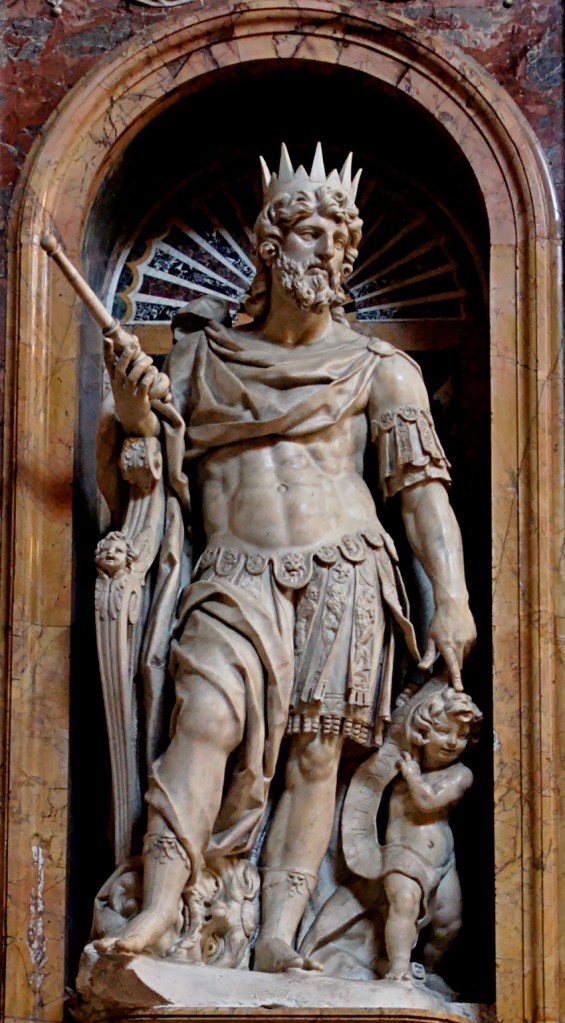
*Above statue of King David by French artist Nicolas Cordier, c.1610