
Matthew 5:8 – Blessed Are the Pure in Heart

“Blessed are the pure in heart,
    for they will see God.” (NIV)

“You’re blessed when you get your inside world—your mind and heart—put right. Then you can see God in the outside world.” (MSG)

“What bliss you experience when your heart is pure. For then your eyes will open to see more and more of God.(TPT)

“A pure heart means a single heart, a heart in which only one desire lives: love.”

Peter Kreeft

An Impure Scenario

Suppose a young man courts a young woman. They get to know one another, fall in love, and get married. On their wedding day, as they leave the church building and speed away, the young couple reminisce about love and life.

But when the groom begins to speak about a future together, the bride, with a smile on her face says, “Okay, you can pull over now.” The groom, completely smitten with his new bride, does exactly what she asks. The young woman gets out of the car and, blowing a kiss, says, “This was fun. Maybe I’ll see you around sometime.”

“I don’t think this is funny,” says the groom. “Hey, we had a great time, right!?” the perky bride says. “Yes, responds the groom, “and it will last forever.” “Oh, you are such a darling,” the bride says, and with a wry smile, “but I’ll be in touch.”

“Huh, what!?” the confused groom says. “Yeah, I’ll call. We’ll get together,” says the bride without flinching. The groom, now also feeling heartsick says, “I don’t understand. What’s going on?”

“Dear, I just need my space. It’s not like I don’t care! I have other things to do. Other men to see….”

Yes, a ridiculous and improbable scenario. Yet one which is repeated every day, multiple times a day. For the groom is the Lord God almighty; and the bride is the church….

Purity and God

Purity is a big deal to God. The phrase, “pure in heart,” is Christ’s way of upholding the biblical call to holiness. To be pure is to have no mixed motives, no hidden agendas, and no side job of moonlighting with the world while being an upstanding kingdom citizen during the day. It isn’t letting Jesus court us and marry us, only to have us walk away and do whatever the heck we want. It’s not only impure and unholy. It’s plain wrong and messed up.

Through blessing the pure in heart, Jesus was connecting us to the Old Testament ethic of being holy. The book of Leviticus, rarely the focus of any preacher or parishioner alike, is completely given to the topic of holiness. The detailed laws about daily life, including what to wear and not wear, what to eat and not eat, even who to marry and not marry, were given for a reason.

God wanted the ancient Israelites to have daily reminders that they are a holy people. So, there was to be no mixing of fabrics, no meat and cheese together, no impurities introduced into any part of life. Everything about the Jewish lifestyle was to be holy, set apart to God, reminding the people that God is their husband, committed to them with responsibilities on the part of both. It was called a “covenant.”

Leviticus 19 leaves no stone unturned on the activities of life:

The Lord said to Moses, “Speak to the entire assembly of Israel and say to them: ‘Be holy because I, the Lord your God, am holy’….

Do not steal. Do not lie. Do not deceive one another. Do not swear falsely by my name and so profane the name of your God. I am the Lord. Do not defraud or rob your neighbor….

Do not pervert justice; do not show partiality to the poor or favoritism to the great but judge your neighbor fairly….

Do not go about spreading slander among your people. Do not do anything that endangers your neighbor’s life. I am the Lord. Do not hate a fellow Israelite in your heart. Rebuke your neighbor frankly so you will not share in their guilt. Do not seek revenge or bear a grudge against anyone among your people but love your neighbor as yourself. I am the Lord.

Do not mate different kinds of animals. Do not plant your field with two kinds of seed. Do not wear clothing woven of two kinds of material.” (Leviticus 19:1-2, 11-13, 15-19, NIV)

Yes, indeed, purity is a big deal to God. The “Holy” Spirit is the Divine Person completely devoted to doing only the will of the Father and Son – never going rogue. The Spirit is the One who effects sanctification, becoming holy, within the life of the believer. Each year we celebrate “Holy” Week, a stretch of days designed to be different than the rest – devoted to journeying with Jesus and not mixing with the fickle crowd who would scream at the end of the week, “Crucify him! Crucify him!”

Purity and Us

To follow Jesus in true righteousness is to be pure in heart, that is, set apart wholly and completely for him. Purity of heart is a fruit from the trunk of righteousness, which grew up in the soil of God’s grace, with roots of humility and meekness – all watered by the tears of godly mourning.

The pure in heart are those who acknowledge their sin, deal with it, and live with a clear and clean conscience before God and the world. They have an awareness of their wrongs and shortcomings without succumbing to self-criticism because of an equal awareness of God’s grace. They keep short accounts with others concerning what they have done or what they should have done. They are holy. They are sanctified. They are pure in heart.

The pure in heart will see God. They know they cannot make themselves pure, so they keep looking to Jesus for their forgiveness because they hunger for righteousness.

One cannot whitewash a wishy-washy commitment with Jesus and be pure. This blessed Beatitude has to do with our motives and what takes place in our thinking and in our hearts.  What do you think about when your mind slips into neutral?  Is it coveting after things or people, or does thinking go toward what is true, noble, right, pure, lovely, and admirable?  Sometimes we struggle with purity of heart because we are focused not on Jesus, but on our own performance and perfection instead of letting God fill our hungry hearts.

Purity results from true righteousness.  A stalk of corn might look good, but if you shuck it and it’s filled with worms, it isn’t going to be worth much. Legalistic righteousness and empty promises of doing better are concerned to look good, not to mention they are obsessed with performance, perfection, and possessions. 

But the righteousness of God fills our hungry hearts and makes us pure and holy, set apart for divine use and divine purposes. How, then, shall we live? What will we do?

The earth is the Lord’s, and everything in it,
    the world, and all who live in it;
for he founded it on the seas
    and established it on the waters.

Who may ascend the mountain of the Lord?
    Who may stand in his holy place?
The one who has clean hands and a pure heart,
    who does not trust in an idol
    or swear by a false god.

They will receive blessing from the Lord
    and vindication from God their Savior.
Such is the generation of those who seek him,
    who seek your face, God of Jacob. (Psalm 24:1-6, NIV)

The person with integrity shall see God. Those made pure with the cleansing blood of Jesus Christ will someday stand before God at the Last Judgment and there find mercy and acceptance.

So, for now, until that time, we daily have the opportunity to focus on our one true love with loyalty and commitment, enjoying God’s presence continually. Because the Lord will never leave us, nor forsake us, even when we sometimes forsake him.

Almighty God, to you all hearts are open, all desires known, and from you no secrets are hidden. Cleanse the thoughts of our hearts by the inspiration of your Holy Spirit, that we may perfectly love you, and worthily magnify your holy name, through Christ our Lord. Amen.

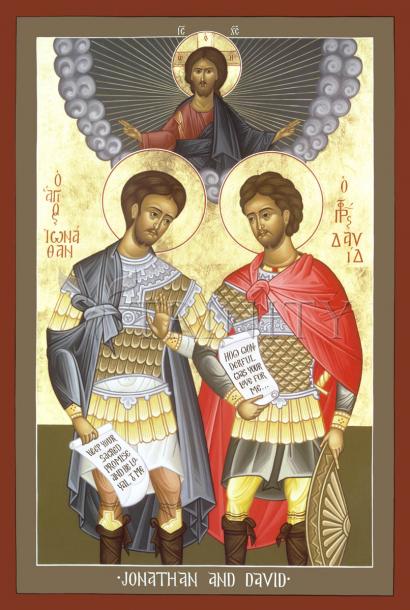
1 Samuel 20:1-27-42 – A Relationship Sustained in Truth

But the next day, the second day of the month, David’s place was empty again. Then Saul said to his son Jonathan, “Why hasn’t the son of Jesse come to the meal, either yesterday or today?”

Jonathan answered, “David earnestly asked me for permission to go to Bethlehem. He said, ‘Let me go, because our family is observing a sacrifice in the town and my brother has ordered me to be there. If I have found favor in your eyes, let me get away to see my brothers.’ That is why he has not come to the king’s table.”

Saul’s anger flared up at Jonathan and he said to him, “You son of a perverse and rebellious woman! Don’t I know that you have sided with the son of Jesse to your own shame and to the shame of the mother who bore you? As long as the son of Jesse lives on this earth, neither you nor your kingdom will be established. Now send someone to bring him to me, for he must die!”

“Why should he be put to death? What has he done?” Jonathan asked his father. But Saul hurled his spear at him to kill him. Then Jonathan knew that his father intended to kill David.

Jonathan got up from the table in fierce anger; on that second day of the feast he did not eat, because he was grieved at his father’s shameful treatment of David.

In the morning Jonathan went out to the field for his meeting with David. He had a small boy with him, and he said to the boy, “Run and find the arrows I shoot.” As the boy ran, he shot an arrow beyond him. When the boy came to the place where Jonathan’s arrow had fallen, Jonathan called out after him, “Isn’t the arrow beyond you?” Then he shouted, “Hurry! Go quickly! Don’t stop!” The boy picked up the arrow and returned to his master. (The boy knew nothing about all this; only Jonathan and David knew.) Then Jonathan gave his weapons to the boy and said, “Go, carry them back to town.”

After the boy had gone, David got up from the south side of the stone and bowed down before Jonathan three times, with his face to the ground. Then they kissed each other and wept together—but David wept the most.

Jonathan said to David, “Go in peace, for we have sworn friendship with each other in the name of the Lord, saying, ‘The Lord is witness between you and me, and between your descendants and my descendants forever.’” Then David left, and Jonathan went back to the town. (New International Version)

“An acquaintance merely enjoys your company, a fair-weather companion flatters when all is well, a true friend has your best interests at heart and the pluck to tell you what you need to hear.”

E.A. Bucchianeri, Brushstrokes of a Gadfly

Sometimes you think you know somebody, and you find out you really didn’t know them well at all. 

It even happens within families, not to mention churches. Jonathan, the warrior son of King Saul, had to come to grips with the fact that his father was going down a path to the dark side and becoming Darth Saul. 

Jonathan heard some hard truth from his best friend, David, about his father. David confronted Jonathan with the reality that Saul was trying to kill him. It was difficult to process such information. Yet, to Jonathan’s credit, he was open to the possibility of what David, a trusted and close friend, had to say.

David wisely did not show up for an appointed feast, knowing his life was at risk. Jonathan used the opportunity to find out if what David had said was true, or not. Furthermore, Jonathan and David together had developed a plan, in case King Saul had really turned to the dark side.

Relationships must be based upon truth. A true friend is willing to reprove and rebuke with care and grace. That friend will listen to the truth and is not concerned with trying to manipulate or take advantage of the relationship. 

Jonathan, as a person of integrity, was willing to find out the truth about his father. Once he determined the awful realization of his father’s true intentions, Jonathan was willing to adjust his life to fit the new information.

There is some high level relational work going on in this Old Testament lesson for today. It is tragic when people are willing to settle for superficial relationships. Building relational intimacy takes time and effort, the kind of work that both Jonathan and David were willing to put into their friendship. 

They found themselves in turbulent times, but the friends found their ultimate security in the Lord and continually reminded each other of God’s ability to sustain them. Jonathan and David truly had a model relationship for us all to emulate.

Sovereign God, you are supreme over all creation. May the glue of truth hold all of my relationships together. May they be centered fully and completely around the Lord Jesus, through the power of the Holy Spirit. Amen.

*Above icon of Jonathan and David painted by Br. Robert Lentz

Psalm 119:113-128 – How to Change Our Spiritual Taste Buds

I hate anyone
whose loyalty is divided,
    but I love your Law.
You are my place of safety
and my shield.
    Your word is my only hope.

All of you worthless people,
    get away from me!
    I am determined to obey
    the commands of my God.

Be true to your word, Lord.
    Keep me alive and strong;
    don’t let me be ashamed
    because of my hope.
Keep me safe and secure,
    so that I will always
    respect your laws.
You reject all deceitful liars
    because they refuse
    your teachings.
As far as you are concerned,
all evil people are garbage,
    and so I follow your rules.
I tremble all over
when I think of you

    and the way you judge.

I did what was fair and right!
    Don’t hand me over to those
    who want to mistreat me.
Take good care of me,
    your servant,
    and don’t let me be harmed
    by those conceited people.
My eyes are weary from waiting
    to see you keep your promise
    to come and save me.
Show your love for me,
your servant,
    and teach me your laws.
I serve you,
so let me understand
    your teachings.
    Do something, Lord!
    They have broken your Law.
Your laws mean more to me
    than the finest gold.
I follow all of your commands,
    but I hate anyone
    who leads me astray.
(Contemporary English Version)

Some people try to avoid doing wrong and always try to do right. Others either bulldoze or sleepwalk through life, doing what they will, with impunity. Yet others try to steer clear of egregious sin, while indulging in so-called minor sins. 

Sin is messy business. No matter the form or the attempt at dealing with or without sin, the bottom line is that we all sin because we like it. We might not like the consequences of sin, but it tastes good while doing it.

That’s why we need a complete re-orienting of our hearts to hate every way contrary to God’s good commands. The psalmist proclaims and affirms that all God’s precepts are right, hating every false path which deviates from the true and good. 

If we sin because we like it, the way to avoid sin is learning to hate it – to loathe it so badly that it’s like a nasty stench in our nostrils. Hating sin comes from the acquired taste of loving God’s commandments. When we come around to cherish and desire God’s Word, then sin gradually becomes so odious that we want nothing to do with it.

The reason the psalmist could proclaim such an extended love song to the commands of God, is that he tasted how good they were. And it caused him to forsake every dubious way to human enjoyment. 

The reason I constantly encourage myself and others to read Scripture every single day, with a solid plan of spiritual rhythms, is that it really does have the power to change our taste buds. Sustained, consistent, daily eating of the psalms will teach us to want God and God’s ways – while forsaking the dark path of insolence and oppression.

The psalmist committed himself to avoiding worthless situations, as well as steering clear of harmful people with the propensity to doing wrong. These are fickle, double-minded people, divided in their loyalties. On one side of their mouth, they talk a good line about faith; and then talk out the other side of their mouth, spewing a bunch of worthless gobbledygook which, at the least, adds no value to anything, and, at worst, wrecks good plans and harms others.

If there are people in authority over us who don’t give a wit about our most cherished values, we will likely find ourselves tasked with doing things which rub against our understanding of God’s Word. In this state of moral distress, we are pushed, pulled, and tested in our single-minded devotion by the double-minded person to do what we are uncomfortable with.

In the stress and crucible of trouble, we need the courage to speak up, despite the fear of repercussions. And that strength will only be possible if we have a resilient spirit with the capacity to sustain our personal integrity in the face of our distress. That is, we need God and God’s Holy Word.

Scripture and fellow believers provide support because we need to care for one another as a community of redeemed persons who seek to live into the words of ways of almighty God.

It can be tricky business, wisely trying to discern between what we must accept and what we need to pushback against. Yet, with God, God’s Word, and God’s people, we possess all the resources required in living the spiritual life and navigating the sinful world we inhabit.

God Almighty, I pray that you will deal with me according to your steadfast love and teach me your statutes.  I am your servant; give me understanding so that I might know and live by your commands and forsake the evil of the world, through Jesus Christ my Lord, in the power of your Holy Spirit. Amen.

1 Samuel 18:6-30 – Saul’s Deep Anxiety

When the men were returning home after David had killed the Philistine, the women came out from all the towns of Israel to meet King Saul with singing and dancing, with joyful songs and with timbrels and lyres. As they danced, they sang:

“Saul has slain his thousands,
    and David his tens of thousands.”

Saul was incredibly angry; this refrain displeased him greatly. “They have credited David with tens of thousands,” he thought, “but me with only thousands. What more can he get but the kingdom?” And from that time on Saul kept a close eye on David.

The next day an evil spirit from God came forcefully on Saul. He was prophesying in his house, while David was playing the lyre, as he usually did. Saul had a spear in his hand, and he hurled it, saying to himself, “I’ll pin David to the wall.” But David eluded him twice.

Saul was afraid of David because the Lord was with David but had departed from Saul. So, he sent David away from him and gave him command over a thousand men, and David led the troops in their campaigns. In everything he did he had great success, because the Lord was with him. When Saul saw how successful he was, he was afraid of him. But all Israel and Judah loved David because he led them in their campaigns.

Saul said to David, “Here is my older daughter Merab. I will give her to you in marriage; only serve me bravely and fight the battles of the Lord.” For Saul said to himself, “I will not raise a hand against him. Let the Philistines do that!”

But David said to Saul, “Who am I, and what is my family or my clan in Israel, that I should become the king’s son-in-law?” So, when the time came for Merab, Saul’s daughter, to be given to David, she was given in marriage to Adriel of Meholah.

Now Saul’s daughter Michal was in love with David, and when they told Saul about it, he was pleased. “I will give her to him,” he thought, “so that she may be a snare to him and so that the hand of the Philistines may be against him.” So, Saul said to David, “Now you have a second opportunity to become my son-in-law.”

Then Saul ordered his attendants: “Speak to David privately and say, ‘Look, the king likes you, and his attendants all love you; now become his son-in-law.’”

They repeated these words to David. But David said, “Do you think it is a small matter to become the king’s son-in-law? I’m only a poor man and little known.”

When Saul’s servants told him what David had said, Saul replied, “Say to David, ‘The king wants no other price for the bride than a hundred Philistine foreskins, to take revenge on his enemies.’” Saul’s plan was to have David fall by the hands of the Philistines.

When the attendants told David these things, he was pleased to become the king’s son-in-law. So, before the allotted time elapsed, David took his men with him and went out and killed two hundred Philistines and brought back their foreskins. They counted out the full number to the king so that David might become the king’s son-in-law. Then Saul gave him his daughter Michal in marriage.

When Saul realized that the Lord was with David and that his daughter Michal loved David, Saul became still more afraid of him, and he remained his enemy the rest of his days.

The Philistine commanders continued to go out to battle, and as often as they did, David met with more success than the rest of Saul’s officers, and his name became well known. (New International Version)

Anxiety can warp our thinking, cause pain in our gut, and darken our heart. Maybe that statement seems a bit harsh. After all, everyone becomes anxious, at some time or another. Anxiety is endemic to the human experience; it is something we all have in common. Whenever anxiety takes root in the life of a person, it bears the fruit of irrational fear and deep insecurity. 

King Saul was jealous of David’s success in battle. Behind Saul’s personal anxiety was the concern that David was stealing the limelight. It made Saul angry, David getting all the attention. Since Saul was the leader in charge, he continually put David in overwhelming situations where it seemed likely he would fail. But instead of failure, David was wildly successful in everything he did. 

Today’s Old Testament lesson makes it clear David’s achievements were because the Lord was with him. This made Saul even more anxious and afraid, possessing malevolent motives behind everything he did toward David. Even though it might not have looked evil on the outside, in reality, the interior life of Saul was a mess. And it made him plain stupid.

When Saul observed God was with David, it only reinforced his fear and led him down a dark path. In contrast to Saul, David had godly character, developed in the lonely place of the pasture. It led him on a lighted trail toward the will of God.

Genuine integrity is always forged in the secret place where no one is looking. If we are merely concerned for outward performance and/or perfectionism, all sorts of anxieties can develop and twist our sense of reality. Yet, if we pay attention to the inner person, and allow God to create a deep faith within, then we can stand strong, even when there are those who have ill will against us.

Search me, O God, and know my heart.  Test me and know my anxious thoughts.  See if there is any offensive way in me and lead me in the way everlasting.  Amen.

*Above painting by Chinese artist He Qi

**Above statue of King Saul at the University of North Carolina Art Museum