Make Good Choices (1 Kings 14:1-8)

At that time Abijah son of Jeroboam became ill, and Jeroboam said to his wife, “Go, disguise yourself, so you won’t be recognized as the wife of Jeroboam. Then go to Shiloh. Ahijah the prophet is there—the one who told me I would be king over this people. Take ten loaves of bread with you, some cakes and a jar of honey, and go to him. He will tell you what will happen to the boy.” So Jeroboam’s wife did what he said and went to Ahijah’s house in Shiloh.

Now Ahijah could not see; his sight was gone because of his age. But the Lord had told Ahijah, “Jeroboam’s wife is coming to ask you about her son, for he is ill, and you are to give her such and such an answer. When she arrives, she will pretend to be someone else.”

So when Ahijah heard the sound of her footsteps at the door, he said, “Come in, wife of Jeroboam. Why this pretense? I have been sent to you with bad news. Go, tell Jeroboam that this is what the Lord, the God of Israel, says: ‘I raised you up from among the people and appointed you ruler over my people Israel. I tore the kingdom away from the house of David and gave it to you, but you have not been like my servant David, who kept my commands and followed me with all his heart, doing only what was right in my eyes. You have done more evil than all who lived before you. You have made for yourself other gods, idols made of metal; you have aroused my anger and turned your back on me.

“‘Because of this, I am going to bring disaster on the house of Jeroboam. I will cut off from Jeroboam every last male in Israel—slave or free. I will burn up the house of Jeroboam as one burns dung, until it is all gone. Dogs will eat those belonging to Jeroboam who die in the city, and the birds will feed on those who die in the country. The Lord has spoken!’

“As for you, go back home. When you set foot in your city, the boy will die. All Israel will mourn for him and bury him. He is the only one belonging to Jeroboam who will be buried, because he is the only one in the house of Jeroboam in whom the Lord, the God of Israel, has found anything good.

“The Lord will raise up for himself a king over Israel who will cut off the family of Jeroboam. Even now this is beginning to happen. And the Lord will strike Israel, so that it will be like a reed swaying in the water. He will uproot Israel from this good land that he gave to their ancestors and scatter them beyond the Euphrates River, because they aroused the Lord’s anger by making Asherah poles. And he will give Israel up because of the sins Jeroboam has committed and has caused Israel to commit.”

Then Jeroboam’s wife got up and left and went to Tirzah. As soon as she stepped over the threshold of the house, the boy died. They buried him, and all Israel mourned for him, as the Lord had said through his servant the prophet Ahijah. (New International Version)
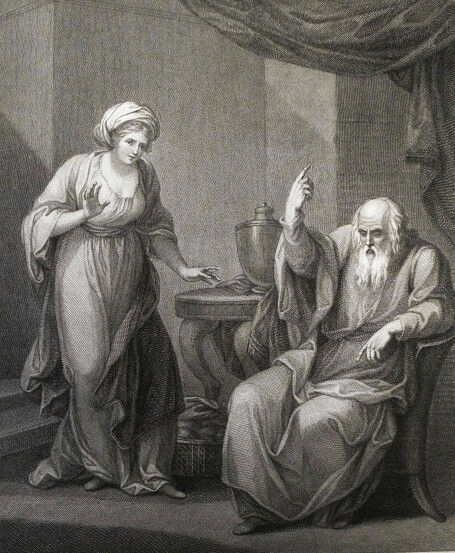
The prophet Ahijah and the wife of Jeroboam, 1853

It’s a sad reality that whenever we make choices to live against the grain of who are meant to be as humans, we not only harm ourselves, but other people also end up as collateral damage. Our own individual decisions may be independent, but the ramifications of those choices are always interdependent in scope and complexity.

The very same prophet who prophesied the rise of Jeroboam and his reign also prophesied his calamitous ending. Along with the establishment of a monarchy in Israel, there was also an ascension of divine prophets to the royal kings whenever things were going awry.

The prophet Ahijah had let King Jeroboam know, at the outset of his reign, that his longevity would depend upon his own faithfulness and attentiveness to God’s law (1 Kings 11:38). But Jeroboam failed to do this, and it doomed him and his family. The immediate death of Jeroboam’s young son was the confirmation of the divine judgment that would eventually come.

It behooves us all to consider the Apostle Paul’s words concerning fidelity toward God and our decisions as persons:

Make no mistake, God is not mocked. A person will harvest what they plant. Those who plant only for their own benefit will harvest devastation from their selfishness, but those who plant for the benefit of the Spirit will harvest eternal life from the Spirit. Let’s not get tired of doing good, because in time we’ll have a harvest if we don’t give up. So then, let’s work for the good of all whenever we have an opportunity, and especially for those in the household of faith. (Galatians 6:7-10, CEB)

Jeroboam turned his back on God, in favor of going with his own ingenuity and pragmatic actions to secure his rule and reign in Israel. No matter who we are – whether king or commoner, rich or poor – it is our personal and collective responsibility to ensure that sound, wise, and good decisions are being made with an eye toward the benefit of all persons.

This then, begs the question: What are our priorities and practices?

Prophetic utterances in Holy Scripture typically center in human arrogance and mistreatment of other people. And this is why following the commands of God are to be supremely important to the believer – because the instructions given to humanity from the Lord are meant for humility and justice toward others.

I believe that if we seek to live into the spirit of God’s law, we will continually labor to make good choices for the common good of everyone. Important social, economic, and political policies and practices won’t just spring up from nowhere to benefit humanity; they must be intentionally cultivated by people who make it a priority to pay attention to such matters and follow through with the right, the just, and the good.

Let’s persevere in doing good; and not succumb to the pragmatic, just to get something done that we want.

Almighty God our heavenly Father, you declare your glory and show forth your handiwork in the heavens and in the earth: Deliver us in our various occupations from the service of self alone, that we may do the work you give us to do in truth and beauty and for the common good; for the sake of him who came among us as one who serves, your Son Jesus Christ our Lord, who lives and reigns with you and the Holy Spirit, one God, for ever and ever. Amen.


From Good to Bad (1 Kings 11:26-40)

Also, Jeroboam son of Nebat rebelled against the king. He was one of Solomon’s officials, an Ephraimite from Zeredah, and his mother was a widow named Zeruah.

Here is the account of how he rebelled against the king: Solomon had built the terraces and had filled in the gap in the wall of the city of David his father. Now Jeroboam was a man of standing, and when Solomon saw how well the young man did his work, he put him in charge of the whole labor force of the tribes of Joseph.

About that time Jeroboam was going out of Jerusalem, and Ahijah the prophet of Shiloh met him on the way, wearing a new cloak. The two of them were alone out in the country, and Ahijah took hold of the new cloak he was wearing and tore it into twelve pieces. Then he said to Jeroboam, “Take ten pieces for yourself, for this is what the Lord, the God of Israel, says:

“‘See, I am going to tear the kingdom out of Solomon’s hand and give you ten tribes. But for the sake of my servant David and the city of Jerusalem, which I have chosen out of all the tribes of Israel, he will have one tribe. I will do this because they have forsaken me and worshiped Ashtoreth the goddess of the Sidonians, Chemosh the god of the Moabites, and Molek the god of the Ammonites, and have not walked in obedience to me, nor done what is right in my eyes, nor kept my decrees and laws as David, Solomon’s father, did.

“‘But I will not take the whole kingdom out of Solomon’s hand; I have made him ruler all the days of his life for the sake of David my servant, whom I chose and who obeyed my commands and decrees. I will take the kingdom from his son’s hands and give you ten tribes. I will give one tribe to his son so that David my servant may always have a lamp before me in Jerusalem, the city where I chose to put my Name. 

“However, as for you, I will take you, and you will rule over all that your heart desires; you will be king over Israel. If you do whatever I command you and walk in obedience to me and do what is right in my eyes by obeying my decrees and commands, as David my servant did, I will be with you. I will build you a dynasty as enduring as the one I built for David and will give Israel to you. I will humble David’s descendants because of this, but not forever.’”

Solomon tried to kill Jeroboam, but Jeroboam fled to Egypt, to Shishak the king, and stayed there until Solomon’s death. (New International Version)

The prophet Ahijah speaking to the future king, Jeroboam, by Gerard Hoet, 1728

The Good and the Bad

People were originally created by a good God for the purpose of goodness. After forming the first people, Adam and Eve, God looked at humanity and said that it was “very good.” (Genesis 1:26-28, 31)

Yet, even though we all have been created good, that which is bad entered the world by means of the devil. And ever since that time, people in every era have struggled between their inherent design and their innate desires for something different. (Genesis 3:1-20)

Even King Solomon, with all of his great and God-given wisdom, eventually drifted into the bad. He succumbed to allowing other gods to come alongside the worship of the One true God. And there were consequences to those choices.

Recovering the Word “Sin”

“Sin” is a word that isn’t much used anymore. On the one hand, this is okay since the term has been much abused by many a misguided preacher. Yet, on the other hand, it’s a word which needs to be recovered, so that we will learn to avoid the bad and live into our good as image-bearers of God.

As the head of all Israel and Judah, Solomon had a grand kingdom. His father, David, was a man after God’s own heart. So, God established a covenant with David that there would always be one of his descendants on the throne. Solomon followed in his father’s footsteps and expanded the borders of Israel, bringing a level of prosperity and wealth never seen before or since.

And yet, either despite or because of Solomon’s wild success, bits of disobedience began to occur. Perhaps Solomon simply rested on his own laurels; or maybe he could not envision anything other than ongoing abundance. But for whatever reason, King Solomon started gravitating toward having more than he needed and ignored the instructions given to the people by God:

The king, moreover, must not acquire great numbers of horses for himself or make the people return to Egypt to get more of them, for the Lord has told you, “You are not to go back that way again.” He must not take many wives, or his heart will be led astray. He must not accumulate large amounts of silver and gold. (Deuteronomy 17:16-17, NIV)

And that is precisely what happened. Solomon had 700 wives (women of royal birth) and 300 concubines (women of common origin). And all those women served a variety of gods in a cornucopia of religious practices – some of which were downright inhumane and unjust. (1 Kings 11:1-13)

None of us are immune from falling into the guilt and shame of disobedient sin. For Solomon, this had the consequence of having the kingship almost completely ripped from his descendants to another man’s, Jeroboam.

Individuals, institutions, and nations have the potential for both great good, as well as heinous evil. When anyone begins to be concerned only for themselves and rests on their success, instead of the Lord, they have set up themselves for a collapse through the displeasure of God.

Stories of people who topple into sin are all close to the same – having some power, they use it to assert control over another person or group to obtain whatever they want. King Solomon violated God’s law. Not only that, but when he saw his control threatened, he sought to kill Jeroboam. Perhaps Solomon thought he was above all this, and believed he could do whatever he wanted. But he couldn’t.

Sin causes us to sell-out our principles 

Sin only begets more sin until we deal with it. Sin will always distort the truth so that we minimize the impact of our words, choices, and actions. Truth celebrates openness and honesty; sin seeks the shadows and prizes secrecy. 

The first step to dealing with sin is not to minimize it, ignore it, or pretend it isn’t a big deal. If we do not go down this path of truth, then we will be forever encrusting our lives with ways of ensuring that no one ever knows the sinful secrets. 

In fact, much of religious legalism is nothing more than a person piling on the rules in order for others to not see the sin that hides deep within. In Christianity, turning from the sin and receiving the grace of forgiveness in Jesus Christ is the true and real path to spiritual wholeness, happiness, and success in life.

Results that satisfy us do not necessarily satisfy God

Solomon accomplished what he wanted – some of it very good, and some of it very bad. The good was celebrated, and the bad was covered up. Yet, God sees all of it, celebrating with us the good, but not going with us down the path of self-indulgent sin.

We cannot simply assume that because we do something, and there was no immediate lightning strike, that it was okay. It does not matter if it happened yesterday, last month, or twenty years ago. If we did not deal with the sin, God is not satisfied because he wants to dispense grace; love and a flourishing soul cannot happen if we keep putting things out-of-sight out-of-mind. To only satisfy ourselves is being a spiritual cannibal who eats other people alive.

Outward success and abundance means little to God if the inward state leadership is a vacuous soul, bereft of authentic spiritual connection, with no determination toward God’s intentions for a particular course of action. 

Sin is not something to simply be managed; it is to be put to death through the cross of Christ, and applied to life through intentional spiritual practices meant to genuinely connect with God. 

For the Christian, to do less is to wander into a morass of consequences that damage others, not to mention harming ourselves. So, let us do the work of soul care so that the common good of all will thrive in the grace of God in Christ.

God, you have given all peoples one common origin.
It is your will that they be gathered together
as one family in yourself.
Fill the hearts of mankind with the fire of your love
and with the desire to ensure justice for all.
By sharing the good things you give us,
may we secure an equality for all
our brothers and sisters throughout the world.
May there be an end to division, strife and war.
May there be a dawning of a truly human society
built on love and peace.
We ask this in the name of Jesus, our Lord. Amen.

Loneliness and Silence (Jeremiah 20:7-13)

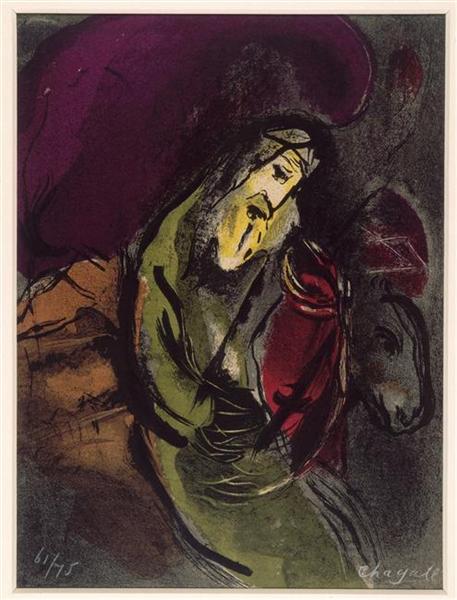
The Prophet Jeremiah, by Marc Chagall, 1956

O Lord, you misled me,
    and I allowed myself to be misled.
You are stronger than I am,
    and you overpowered me.
Now I am mocked every day;
    everyone laughs at me.
When I speak, the words burst out.
    “Violence and destruction!” I shout.
So these messages from the Lord
    have made me a household joke.
But if I say I’ll never mention the Lord
    or speak in his name,
his word burns in my heart like a fire.
    It’s like a fire in my bones!
I am worn out trying to hold it in!
    I can’t do it!
I have heard the many rumors about me.
    They call me “The Man Who Lives in Terror.”
They threaten, “If you say anything, we will report it.”
    Even my old friends are watching me,
    waiting for a fatal slip.
“He will trap himself,” they say,
    “and then we will get our revenge on him.”

But the Lord stands beside me like a great warrior.
    Before him my persecutors will stumble.
    They cannot defeat me.
They will fail and be thoroughly humiliated.
    Their dishonor will never be forgotten.
O Lord of Heaven’s Armies,
you test those who are righteous,
    and you examine the deepest thoughts and secrets.
Let me see your vengeance against them,
    for I have committed my cause to you.
Sing to the Lord!
    Praise the Lord!
For though I was poor and needy,
    he rescued me from my oppressors. (New Living Translation)

Jeremiah was a lonely man.

In reality, loneliness has little to do with geography. A person can be surrounded by people, and yet still be lonely. Loneliness is the personal sense that either no one cares, or that nobody is taking me seriously. To be alone means that a person doesn’t have another human being to share their thoughts, feelings, and beliefs with. Nobody wants to listen.

That’s how the prophet felt. Jeremiah was called by God to preach a message to the city of Jerusalem. He was faithful to do it. However, the message was very unpopular. Jeremiah was discounted, dismissed, and dissociated from others.

So, how would you feel in a similar situation?

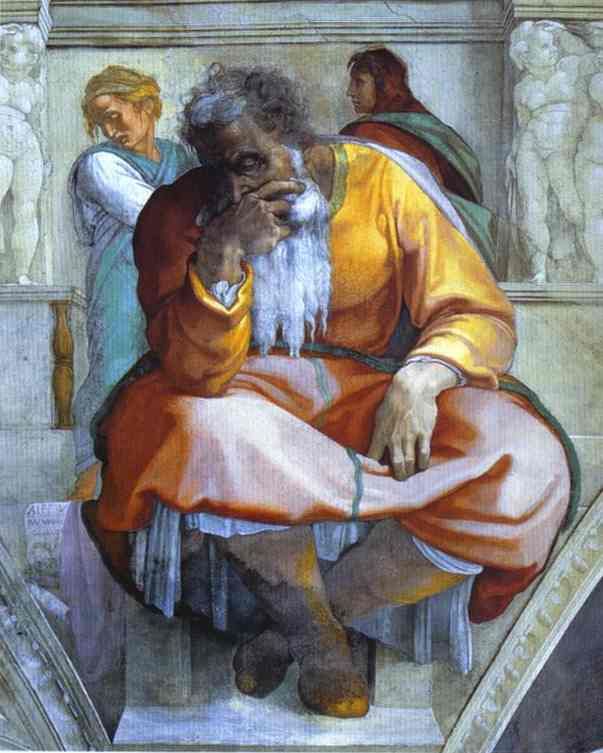
The Prophet Jeremiah by Michelangelo, c.1545

Jeremiah felt almost betrayed by the Lord. He understood that the message would be tough to swallow by the people. What’s more, God even promised Jeremiah that no one would respond, nobody was going to repent, and not one person would listen and take the prophet seriously. In short, God let Jeremiah know up front that he was embarking on a very lonely ministry. (Jeremiah 1:4-19)

And it was this loneliness that began to gnaw at the prophet Jeremiah. Yet, what was he really going to do about it? After all, Jeremiah was compelled to speak. He just could not simply hold it in. The message was like fire in his belly; he had to let it out!

The prophet’s calling and life’s work bubbled up and out of him, no matter what he did to try and keep a lid on it. Whenever Jeremiah would try and walk away and say, “Forget it! No more God-Messages to the people from me!” then the words from God burned inside of him.

The hot furnace within had to find the outlet of preaching because Jeremiah was worn out trying to keep God’s words domesticated within him.

Maybe you can relate in some small way. It isn’t always easy talking about God to others, let alone talking about some subject other people really don’t want to hear. Yet, as the people of God, we discover it’s more painful to keep it inside than it is letting it out and taking the consequences as they may come.

Or it could be that you resonate with Jeremiah’s trying to distance himself from God. You were hurt, wounded in some way, and no matter how hard you run from God, your inner sacred space will not leave you alone – it relentlessly tracks you down and hounds you, barking to be heard and expressed.

What then should we do? How, then, shall we live? Don’t keep silent. Speak! Let your voice out. Say what is important to you. Because ignoring it, wishing that it would go away, or believing God will give-up on you isn’t going to happen.

At some point, there must be an acceptance of the way things are, and not what we want them to be. If others are not taking me seriously, nor listening at all to what I am saying, then this doesn’t mean that I remain silent. There are plenty of folks around who want that; they just want you to keep your mouth shut. But you have a voice – and your voice needs to be heard.

When the blind man, Bartimaeus, voiced his need out loud in the crowd, nobody took him seriously. People told him to shut up and leave Jesus alone. But Bartimaeus wasn’t having it. He simply lifted his voice louder. He wanted to be heard by Jesus, and he didn’t care if it upset the folks around him. (Mark 10:46-52)

Perhaps you will have to go it alone, or speak without anyone’s help. Well, then, that’s what you do. If your gut is crying out inside of you to speak, then speak! Not all silence is golden. Sometimes silence is a sign that someone is being oppressed and not allowed to talk – or, at least, isn’t being listened to.

God called Jeremiah to proclaim some very inconvenient interruptions to the people’s delusional thoughts. It left the prophet alone and hurt. But there was a message that needed proclaiming.

There are times when silence only ends up protecting the privileged over the underprivileged. The Old Testament prophets speak into this environment of unjust actions and unloving words.

Unspoken words that need to be heard by others will only fester inside your gut, that is, until you speak out. Then, when we do let the words out, let’s make sure it is precisely the message that has been locked up and kept silent. It doesn’t matter whether it is unpopular, or not; what matters is that the voice God gave you has a chance to be heard.

God Almighty, you have your ways in this world, and they don’t always make sense to me. Sticking my fingers in my ears trying to pretend you are not there isn’t working – my heart burns within me. So, help me to speak with all the confidence of the message I have, through Jesus Christ my Lord, in the power of the Holy Spirit. Amen.

Against Injustice (Jeremiah 19:1-15)

This is what the Lord says: “Go and buy a clay jar from a potter. Take along some of the elders of the people and of the priests and go out to the Valley of Ben Hinnom, near the entrance of the Potsherd Gate. There proclaim the words I tell you, and say, ‘Hear the word of the Lord, you kings of Judah and people of Jerusalem. This is what the Lord Almighty, the God of Israel, says:

Listen! I am going to bring a disaster on this place that will make the ears of everyone who hears of it tingle. For they have forsaken me and made this a place of foreign gods; they have burned incense in it to gods that neither they nor their ancestors nor the kings of Judah ever knew, and they have filled this place with the blood of the innocent. 

They have built the high places of Baal to burn their children in the fire as offerings to Baal—something I did not command or mention, nor did it enter my mind. So beware, the days are coming, declares the Lord, when people will no longer call this place Topheth or the Valley of Ben Hinnom, but the Valley of Slaughter.

“‘In this place I will ruin the plans of Judah and Jerusalem. I will make them fall by the sword before their enemies, at the hands of those who want to kill them, and I will give their carcasses as food to the birds and the wild animals. I will devastate this city and make it an object of horror and scorn; all who pass by will be appalled and will scoff because of all its wounds. I will make them eat the flesh of their sons and daughters, and they will eat one another’s flesh because their enemies will press the siege so hard against them to destroy them.’

“Then break the jar while those who go with you are watching, and say to them, ‘This is what the Lord Almighty says: I will smash this nation and this city just as this potter’s jar is smashed and cannot be repaired. They will bury the dead in Topheth until there is no more room. This is what I will do to this place and to those who live here, declares the Lord. I will make this city like Topheth. The houses in Jerusalem and those of the kings of Judah will be defiled like this place, Topheth—all the houses where they burned incense on the roofs to all the starry hosts and poured out drink offerings to other gods.’”

Jeremiah then returned from Topheth, where the Lord had sent him to prophesy, and stood in the court of the Lord’s temple and said to all the people, “This is what the Lord Almighty, the God of Israel, says: ‘Listen! I am going to bring on this city and all the villages around it every disaster I pronounced against them, because they were stiff-necked and would not listen to my words.’” (New International Version)

When God wants to get someone’s full attention, the Lord engages the people’s full senses in order to communicate an important message. Through the prophet Jeremiah, we get symbolic action that does just that.

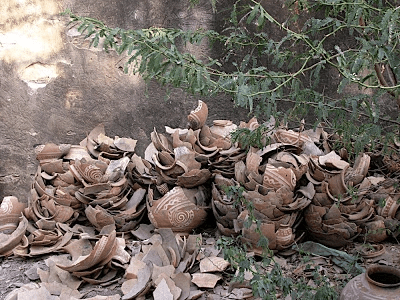
The symbolism, in this case, is a judgment speech, visually and viscerally depicted through the breaking of a pottery jug. The point of the action, and the words, was meant to convey a singular message: God will bring disaster and destruction against Jerusalem and its surrounding towns.

The act of breaking the pottery took place at the entrance to the Potsherd Gate – which was also known as the Dung Gate because that is where the garbage and refuse came out of the city to a dump located in the Valley of Ben Hinnom. It just so happened that this valley was also the location of altars to false gods other than Yahweh. Idolatrous practices – including child sacrifice – were carried on there.

In the ancient Near East, smashing pottery was a ritual act that depicted the destruction of enemies.

I will proclaim the Lord’s decree:

He said to me, “You are my son;
    today I have become your father.
Ask me,
    and I will make the nations your inheritance,
    the ends of the earth your possession.
You will break them with a rod of iron;
    you will dash them to pieces like pottery.” (Psalm 2:7-9, NIV)

The prophet Jeremiah was going to make his oracle against the people both unforgettable and irreversible. He wanted to be clear about what God truly thinks about harming children in religious rituals. But more than that, that it’s absolutely unacceptable for people who worship Yahweh to let it happen, just outside their own city gates, and to even participate in it.

The pottery jar represented Jerusalem. And when a piece of pottery is broken and smashed, there is no opportunity of remaking it from all that destruction. That’s what it would be like for the city who turned their backs on the Lord’s holiness.

Sometimes contemporary people may struggle with the reality that God gets angry – even angry to the point of pouring out wrath on a city. Yet, perhaps we fail to notice the gross and terrible injustice that has been done in the name of religion. The anger of God is always a reflection of God’s love. For love cannot contend with evil perpetrated on innocent people, especially children.

Love is purely subversive. It declares that harming others and hurting people by means of religious violence is not to be accepted nor tolerated. Love is an absolute refusal to settle for the injustice that exists in the world.

Today, and every day, is our opportunity, purpose, and privilege to put love where love is not – to upset the status quo of injustice and establish love as the supreme ethic of God’s commands.

Grant us, Lord God, a vision of your world as your love would have it:
a world where the weak are protected, and none go hungry or poor;
a world where the riches of creation are shared, and everyone can enjoy them;
a world where different races and cultures live in harmony and mutual respect;
a world where peace is built with justice, and justice is guided by love.
Give us the inspiration and courage to build it, through Jesus Christ our Lord. Amen.