How Much Is Too Much? (1 Kings 4:20-28)

King Solomon’s court, by Claude Vignon (1593-1670)

The people of Judah and Israel were as numerous as the sand on the seashore; they ate, they drank and they were happy. And Solomon ruled over all the kingdoms from the Euphrates River to the land of the Philistines, as far as the border of Egypt. These countries brought tribute and were Solomon’s subjects all his life.

Solomon’s daily provisions were thirty cors of the finest flour and sixty cors of meal, ten head of stall-fed cattle, twenty of pasture-fed cattle and a hundred sheep and goats, as well as deer, gazelles, roebucks and choice fowl. For he ruled over all the kingdoms west of the Euphrates River, from Tiphsah to Gaza, and had peace on all sides. During Solomon’s lifetime Judah and Israel, from Dan to Beersheba, lived in safety, everyone under their own vine and under their own fig tree.

Solomon had four thousand stalls for chariot horses, and twelve thousand horses.

The district governors, each in his month, supplied provisions for King Solomon and all who came to the king’s table. They saw to it that nothing was lacking. They also brought to the proper place their quotas of barley and straw for the chariot horses and the other horses. (New International Version)

Wealth, in and of itself, is neither good nor bad – it just is. The real issue is why any particular person wants to be wealthy, how we view wealth, and what we do with it when we have it.

In ancient Israel, under King Solomon, the Israelites enjoyed a time of prosperity, safety, and abundance. To flourish and thrive in life is good. The ability to meet basic needs, and to enjoy life is good.

King Solomon on his throne, by Frans Francken the Younger (1581-1642)

But what about beyond that? Is there such a thing as too much? And what about others who may not be able to make ends meet?

Solomon certainly had a lot. Yet, we do have warnings in Holy Scripture about exorbitant wealth. Here is what the Deuteronomic law says concerning any future king:

The king, moreover, must not acquire great numbers of horses for himself or make the people return to Egypt to get more of them, for the Lord has told you, “You are not to go back that way again.” He must not take many wives, or his heart will be led astray. He must not accumulate large amounts of silver and gold. (Deuteronomy 17:16-17, NIV)

Whatever standard one may use, I would say 12,000 horses falls into the great-numbers-of-horses category. And likewise, having 1,000 wives is most likely 999 too many for just about every man on the planet.

Indeed, Solomon’s heart was eventually led astray. It’s quite sad. Even the wisest and wealthiest person who ever lived was not able to sustain complete faithfulness to God. The remainder of Deuteronomy’s instruction about a future king is this:

When he takes the throne of his kingdom, he is to write for himself on a scroll a copy of this law, taken from that of the Levitical priests. It is to be with him, and he is to read it all the days of his life so that he may learn to revere the Lord his God and follow carefully all the words of this law and these decrees and not consider himself better than his fellow Israelites and turn from the law to the right or to the left. Then he and his descendants will reign a long time over his kingdom in Israel. (Deuteronomy 17:18-20, NIV)

In all fairness, King Solomon started out paying attention to God’s law. In his wisdom, he sought to learn and obey – but it ended up being only a partial obedience.

A dimension of any rule or government is to realize that – with any sort of success, security, and wealth – there is always a dark underbelly to it. That is, there are people within that government who are not enjoying its largess and wealth.

Under the new expanded governmental system, Solomon had his kingdom, and its subject peoples, divided into districts in order to give provisions, as well as laborers for his ambitious building projects. Not everyone was enjoying leisure time under a fig tree.

King Solomon set up an economic system that transferred wealth from nations subservient to Israel, and from subsistence farmers within Israel, to support the massive needs of Jerusalem.

The city, under Solomon, was living off the surplus grain to feed all of the horses, as well as the tribute exacted from surrounding nations. In other words, the wealth was being centralized by Solomon for his many projects and interests.

All of the opulence was meant to impress people with wealth, exhibiting Israel’s and Solomon’s great power and wisdom. Yet, if we are to follow the old adage, “follow the money,” we would discover a governmental system that extracted money from others; and produces a lot of oppression, grievances, and exploitation – hence, the dark underbelly of it all.

This sort of situation is precisely why we have prophetic literature in the Old Testament. The prophets are especially attuned to the cries of injustice amongst the people. Every society needs such persons who are within the system, yet are able to be a voice for those who are voiceless.

Had King Solomon moved beyond his partial obedience to complete and total obedience, I surmise that he likely would have considered the needs of everyone within his empire, before establishing a system of government that depended upon economic exploitation.

Specifically, perhaps Solomon ought to have engaged more vigorously and robustly with the covenant code between God and Israel that he was supposed to know so well.

And perhaps, Christianity and the Church have been too lax on the subject of handling Holy Scripture. Because, for all of our talk of being faithful to scripture, that talk has not translated into a solid social and economic understanding of human need and justice.

It simply will not do to label anything we don’t like as communist or socialist. And it will not do to say King Solomon was wealthy and successful, as if that, in and of itself, is the evidence of God’s favor. In reality, it means little, apart from a complete fidelity to God’s law.

In my judgment, Jesus did better than all of this. He pointed us to an alternative system which considers the common good of all persons, and not just some people. The ethics and morality of his Sermon on the Mount lays out the foundational means upon which any sort of governmental system ought to build upon. (Matthew 5-7)

But seek first his kingdom and his righteousness, and all these things will be given to you as well.

Jesus (Matthew 6:33, NIV)

If we are looking for the same sort of wealth and success as Solomon, that means we’ll need to ignore Jesus. Yet, if faithfulness, obedience, humility, righteousness, mercy, purity, and peacemaking matter more than our economic bottom line, then I believe we will discover that the pursuit of these virtues leads to having all of our needs met, as well.

Lord of our lives, teach us how to use our money and our possessions. Deliver us from stinginess and wasteful extravagance; inspire our giving with the spirit of true generosity. Help us always to remember your generous love for us, that we may be wise and faithful stewards of the good gifts you have given us. Amen.


Dealing with Injustice (1 Kings 1:28-48)

Bathsheba appeals to David, by Arent de Gelder, c.1685

Then King David said, “Call in Bathsheba.” So she came into the king’s presence and stood before him.

The king then took an oath: “As surely as the Lord lives, who has delivered me out of every trouble, I will surely carry out this very day what I swore to you by the Lord, the God of Israel: Solomon your son shall be king after me, and he will sit on my throne in my place.”

Then Bathsheba bowed down with her face to the ground, prostrating herself before the king, and said, “May my lord King David live forever!”

King David said, “Call in Zadok the priest, Nathan the prophet and Benaiah son of Jehoiada.” When they came before the king, he said to them: “Take your lord’s servants with you and have Solomon my son mount my own mule and take him down to Gihon. There have Zadok the priest and Nathan the prophet anoint him king over Israel. Blow the trumpet and shout, ‘Long live King Solomon!’ Then you are to go up with him, and he is to come and sit on my throne and reign in my place. I have appointed him ruler over Israel and Judah.”

Benaiah son of Jehoiada answered the king, “Amen! May the Lord, the God of my lord the king, so declare it. As the Lord was with my lord the king, so may he be with Solomon to make his throne even greater than the throne of my lord King David!”

So Zadok the priest, Nathan the prophet, Benaiah son of Jehoiada, the Kerethites and the Pelethites went down and had Solomon mount King David’s mule, and they escorted him to Gihon. Zadok the priest took the horn of oil from the sacred tent and anointed Solomon. Then they sounded the trumpet and all the people shouted, “Long live King Solomon!” And all the people went up after him, playing pipes and rejoicing greatly, so that the ground shook with the sound.

Adonijah and all the guests who were with him heard it as they were finishing their feast. On hearing the sound of the trumpet, Joab asked, “What’s the meaning of all the noise in the city?”

Even as he was speaking, Jonathan son of Abiathar the priest arrived. Adonijah said, “Come in. A worthy man like you must be bringing good news.”

“Not at all!” Jonathan answered. “Our lord King David has made Solomon king. The king has sent with him Zadok the priest, Nathan the prophet, Benaiah son of Jehoiada, the Kerethites and the Pelethites, and they have put him on the king’s mule, and Zadok the priest and Nathan the prophet have anointed him king at Gihon. From there they have gone up cheering, and the city resounds with it. That’s the noise you hear. Moreover, Solomon has taken his seat on the royal throne. Also, the royal officials have come to congratulate our lord King David, saying, ‘May your God make Solomon’s name more famous than yours and his throne greater than yours!’ And the king bowed in worship on his bed and said, ‘Praise be to the Lord, the God of Israel, who has allowed my eyes to see a successor on my throne today.’” (New International Version)

Solomon at the deathbed of King David, by Giulio Romano (1499-1546)

One of King David’s sons, Adonijah, was a stinker. He tried to pull a fast one on his aging father, in order to try and take the throne. But some of the people caught wind of what was afoot.

Even Nathan the prophet got involved and gave some sage instructions to Bathsheba, Solomon’s mother, so that the king’s wishes could come to fruition – namely, that Solomon would succeed David.

As a result, despite King David’s struggles toward the end of life, he had enough wherewithal to attempt some decisive leadership. He confirmed Solomon as his royal successor.

Despite Adonijah’s attempt to take advantage of his father’s failing capacity and execute a coup d’état, the king immediately took action by anointing and enthroning Solomon without any delay.

The installation of Solomon as king was accomplished so quickly that it caught the conniving Adonijah and his cohorts off guard. King David may have lost several steps in his old age, but he was still someone to be reckoned with. That underestimation would cost the connivers dearly.

To be honest, I don’t like Adonijah. And that’s what the storyteller wants us to feel. We are meant to read the narrative and walk away saying to ourselves that we don’t want to be like Adonijah; we don’t want injustice to have the day; instead, we want King David’s wishes honored, and to see a just and right Ruler ensconced as king.

The Lord is a just God. And since we are people created in God’s image and likeness, we have an inherent sense of justice down deep inside us. So, it drives people nuts whenever there are things happening which are not right nor good.

Everyone faces injustice, and things that are not right, in this life. The trick is to deal with it, without becoming unjust ourselves. It’s not an easy thing to do. It’s tough. So, how do we maintain being just while handling injustice?

The feeling of helplessness is rather uncomfortable, even painful. It doesn’t feel good to think that your efforts at doing right and being just don’t accomplish much of anything, and are only a drop in the bucket of what’s needed. It also doesn’t feel right whenever we see others going through injustice, and we have little to no way in helping the situation.

The first step in dealing with the world’s injustice is to acknowledge it. Don’t purposely ignore it, avoid it, or pretend that it isn’t there. Everything in life must be acknowledged before anything can be done about it – whether it’s dealing with an event, or your own emotions.

So, it is imperative that your care for yourself. And it’s the most important thing in being of service and help to others. Attend to the whole self – body, mind, emotions, and spirit – because it is necessary in order to move through unjust circumstances with health, confidence, and sobriety.

When facing injustice and dealing with it, no matter whether it concerns yourself or another, it’s good to keep in mind that our brains tend to gravitate toward the negative, to the detriment of seeing good and positive things.

Therefore, we must work at keeping our “compassion quotient” high, and not let our compassion turn to fatigue, then burn-out.

It seems that King David continually worked on maintaining a robust spirit and healthy self, so that, even when he was old, his compassionate and wise instincts kicked in – the ones he had spent a lifetime developing.

In contrast, Adonijah appears to have nurtured a self-centered and bitter spirit. He did not attend well to his spiritual and emotional health. His mind turned to the dark thoughts of intrigue and rebellion. Arrogance clouded his right mind. This would not end well for him.

Dealing with injustice is never easy. And it very much requires us to be healthy and just ourselves, so that when we are faced with issues of justice, we can deal with them in a good and right manner.

Almighty God, you have given all peoples one common origin.
It is your will that they be gathered together
as one family in yourself.
Fill the hearts of humanity with the fire of your love
and with the desire to ensure justice for all.
By sharing the good things you give us,
may we secure an equality for all
our brothers and sisters throughout the world.
May there be an end to division, strife and war.
May there be a dawning of a truly human society
built on love and peace. Amen.

Absalom’s Conspiracy (2 Samuel 15:1-13)

Absalom propitiating friends, painted 1595, in the National Museum, Warsaw, Poland

In the course of time, Absalom provided himself with a chariot and horses and with fifty men to run ahead of him. He would get up early and stand by the side of the road leading to the city gate. Whenever anyone came with a complaint to be placed before the king for a decision, Absalom would call out to him, “What town are you from?” He would answer, “Your servant is from one of the tribes of Israel.” Then Absalom would say to him, “Look, your claims are valid and proper, but there is no representative of the king to hear you.” And Absalom would add, “If only I were appointed judge in the land! Then everyone who has a complaint or case could come to me and I would see that they receive justice.”

Also, whenever anyone approached him to bow down before him, Absalom would reach out his hand, take hold of him and kiss him. Absalom behaved in this way toward all the Israelites who came to the king asking for justice, and so he stole the hearts of the people of Israel.

At the end of four years, Absalom said to the king, “Let me go to Hebron and fulfill a vow I made to the Lord. While your servant was living at Geshur in Aram, I made this vow: ‘If the Lord takes me back to Jerusalem, I will worship the Lord in Hebron.’”

The king said to him, “Go in peace.” So he went to Hebron.

Then Absalom sent secret messengers throughout the tribes of Israel to say, “As soon as you hear the sound of the trumpets, then say, ‘Absalom is king in Hebron.’” Two hundred men from Jerusalem had accompanied Absalom. They had been invited as guests and went quite innocently, knowing nothing about the matter. While Absalom was offering sacrifices, he also sent for Ahithophel the Gilonite, David’s counselor, to come from Giloh, his hometown. And so the conspiracy gained strength, and Absalom’s following kept on increasing.

A messenger came and told David, “The hearts of the people of Israel are with Absalom.” (New International Version)

Although Absalom, a son of David, began to despise his father, he learned some things from him, namely, the ability to wait and plan. He spent two years preparing to kill his half-brother Amnon, and four years getting ready to kill his father and take his throne.

I’m sure Absalom did not feel like a murderer. He likely looked at the situations and felt justified in doing away with Amnon, then going after David. To be sure, Amnon had committed a heinous crime – one in which Tamar, Absalom’s sister, was left bereft, only to be cared for by her brother. Absalom seems to have believed he was merely dispensing justice, not murder.

David, typically astute and proactive, was anything but that when it came to his family; he did not initiate very much of anything. The king’s inaction was so profound that Absalom began plotting a takeover. As in the case of Amnon, it’s likely that Absalom saw forming a conspiracy as bringing some needed justice.

After all, it appears that King David had become lax in his royal responsibilities. Seemingly, David was no longer himself – deciding cases in favor of the weak, needy, and vulnerable. Absalom was more than happy to fill the void.

Absalom evidenced an oversized ego in believing that if he were the judge in the land, everything would be okay. Whenever a person who feels the smack of injustice begins interacting with others who have not been receiving justice, rarely does that person rely upon the Divine Judge for righteousness. Absalom took matters into his own hands.

Whenever we hear the cry “It’s not fair!” there is often, not far behind, an angry person seeking to become judge, jury, and executioner.

So, Absalom worked the crowd. He spent years refining his image, and presenting the sort of reputation he sought from the people. Absalom was handsome and charming. The country became putty in his hands.

What nobody knew was that Absalom had an axe to grind, that underneath the silver tongue and the careful marketing opportunities was a person who was downright hurt, and mad enough to destroy and kill.

Finally, he began implementing his plot for taking over the kingdom. And he would need all the appearances of royal approval from some people in high positions. A religious banquet with a few hundred people, including David’s trusted counselor, would do the trick. The plan was to gain enough endorsements to gain momentum for others to join the conspiracy.

And it worked. The hearts of the people were with Absalom. They loved the guy.

Yet, the thing about it is, it wasn’t so much that Absalom loved the people, near as much as he hated his father, King David.

For the truly right, just, and good people of the land, they could observe the distinction. They knew better. The good people of the kingdom could discern that Absalom may look good, but something didn’t smell right about him.

No matter how flawed David was, or how much he had slipped in his duties, he was still nevertheless the king, the anointed one whom God had chosen. And the wise people could keep their wits about them, and begin to see what was really going on.

Anyone who comes along and tells us that they can make everything better, and do it quickly, is probably a hack preacher who, like Absalom, has a grievance against someone.

We can do better than leaders like that. And we can do better than to incessantly criticize existing leadership – no matter where it’s found – until we have done our due diligence in spending years in prayer for our leaders, and done what we could do to help them be successful in their positions.

Nurturing bitterness and hate is a one way trip to the grave. The evidence is seen in the constant vitriol we hear on a daily basis. But cultivating wisdom and discernment, along with a healthy spiritual and religious life, brings sanity and compassion where it needs to be.

Which way do you want to go?

Blessed heavenly Father: Forgive me for the things in my life which continue to keep me from the path you have chosen for me. Remove the sins from my life that block me from becoming the person you want me to be. Fill my life with your Holy Spirit that I may be a light unto others, so that they may come to know you. Amen.

Addressing the Divisions Amongst Us (1 Corinthians 4:8-13)

Are you already satisfied? Are you now rich? Have you become kings while we are still nobodies? I wish you were kings. Then we could have a share in your kingdom.

It seems to me that God has put us apostles in the worst possible place. We are like prisoners on their way to death. Angels and the people of this world just laugh at us. Because of Christ we are thought of as fools, but Christ has made you wise. We are weak and hated, but you are powerful and respected. 

Even today we go hungry and thirsty and don’t have anything to wear except rags. We are mistreated and don’t have a place to live. We work hard with our own hands, and when people abuse us, we wish them well. When we suffer, we are patient. When someone curses us, we answer with kind words. Until now we are thought of as nothing more than the trash and garbage of this world. (Contemporary English Version)

On this particular July 4 in the USA, there is perhaps no more pertinent biblical passage than today’s in addressing the current American political and emotional climate. Yet, before this is specifically addressed, let’s understand what was going on with the Apostle Paul and the Corinthian Church…

The Corinthian Divisions

Special interest groups had formed within the church. Each was following a specific person – some Paul, some Apollos, and some other leaders and teachers. The groups began to harden into political church factions. And Paul wanted nothing to do with this way of being Christian, because it is antithetical to the gospel itself.

Christ died to bring unity, not division. Paul established egalitarian churches that showed no favoritism. The Corinthians were called to a way of being that breaks down barriers between rich and poor, Jew and Greek. This business of groups and factions only fostered the division which Christ died to do away with.

By the time the Apostle wrote his letter to the Corinthian Christians, they had devolved a way of being with each other that was judgmental. They were pointing out unhealthy and demeaning comparisons, and boasting about how their group was more spiritual and wise than the others.

The Apostle Tackles the Divisions

So Paul, never one to shy away from initiative and justice, went on the offensive. Admittedly, in today’s New Testament lesson, Paul is quite sarcastic. He was actually mocking the Corinthians for their sinful arrogance and pride; and he used their own ways of being together against them to demonstrate how utterly foolish and ridiculous they were being.

The Apostle Paul countered with some comparisons of his own, using the example of the apostles themselves. Through his sarcastic comparison, he essentially argued that God used the very real oppression and suffering of the apostles toward good and positive ends.

Paul contrasted the apostles and the Corinthians to show the injustice that was happening in their factional wars with each other. By drawing attention away from the Corinthians and putting it on the apostles, Paul upheld a Christian ministry of weakness, not strength.

The apostles endured much suffering and opposition in their ministry. Paul viewed himself as a sort of dishrag that was used to clean the dirty dishes of the world. And he was okay with that, because it had a redemptive purpose. But he was not at all okay with the dirty business of factions and divisions within the church.

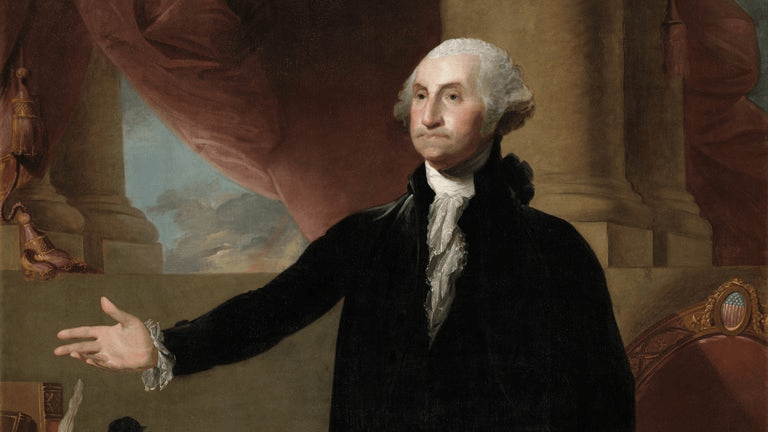
George Washington Addresses the Divisions

In our own day, it’s as if we have not learned the lessons of the past. And that is most likely because we have such little historical knowledge and awareness. I know of few people who realize George Washington was very much against a party system of government – and argued against it for similar reasons to the Apostle Paul.

Washington considered parties to be the bane of republican government. Parties were factions that threatened to divide the electorate into competing groups who might use violence to advance their interests.

He argued that political parties might also disrupt the separation of powers, especially in the case of unified government where loyalty to a party could interfere with the system of checks and balances.

What’s more, Washington said that parties threatened to stand in the way of effective representation, with elected officials tempted to represent only fellow party members and to leave opposition groups without a voice in government.

George Washington was mostly unique among the founders in never reconciling himself with political parties and never acknowledging the positive things that parties can bring to republican government.

Although it’s likely that Washington understood that parties were inevitable, he argued for keeping them under restraint and limiting their interference in the political process as much as possible.

Obviously, the party system won out, and rather quickly. In a healthy state of being, political parties can mobilize voters and encourage voter participation. They help build support for officeholders and serve as conduits of communication to the people. Political parties allow minorities to form coalitions to create majority rule.

Stick with the Evidence

Yet, what we seem to continually experience nowadays is the unhealthy aspect of the party system. People are hardened and reified into established positions and refuse to listen to the other. In such a position, evidence-based practices take a back seat.

For example, although there is not a shred of evidence that the former U.S. President experienced a hung jury and a corrupt judge in being convicted on 34 felony counts, a sizable chunk of Americans believe the corruption to be true – seemingly only because the former President said so, and without any objective, reasonable, and serviceable evidence to offer in backing up that claim.

And that prideful hardened spirit is the very thing that was happening in the ancient Corinthian Church. They wanted what they wanted, and they didn’t care what the other group thought. Each group believed (without evidence) they were wise and right. Yet, all of them were, in reality, foolish and unjust.

If we want a better public political climate; the freedom to be who we are; and confidence for the future; then, we had better begin with examining ourselves and listening well to the other first, before we assume that our own group is in the right and should be in control.

The privileges of freedom can only be enjoyed by embracing the responsibilities of freedom. And those responsibilities include a unified concern for the common good of all citizens, and not just the ones I like and who agree with me.

O God, the Father of our Lord Jesus Christ, our Savior, and the Prince of Peace; Give us grace to lay aside our unhappy divisions. Take away all hatred and prejudice, and whatsoever else may hinder us from godly union and concord. Help us to build bridges, not walls, and live into the unity you provided for us in Christ, through the Spirit. Amen.