


When Mordecai learned of all that had been done, he tore his clothes, put on sackcloth and ashes, and went out into the city, wailing loudly and bitterly. But he went only as far as the king’s gate, because no one clothed in sackcloth was allowed to enter it. In every province to which the edict and order of the king came, there was great mourning among the Jews, with fasting, weeping and wailing. Many lay in sackcloth and ashes.
When Esther’s eunuchs and female attendants came and told her about Mordecai, she was in great distress. She sent clothes for him to put on instead of his sackcloth, but he would not accept them. Then Esther summoned Hathak, one of the king’s eunuchs assigned to attend her, and ordered him to find out what was troubling Mordecai and why.
So Hathak went out to Mordecai in the open square of the city in front of the king’s gate. Mordecai told him everything that had happened to him, including the exact amount of money Haman had promised to pay into the royal treasury for the destruction of the Jews. He also gave him a copy of the text of the edict for their annihilation, which had been published in Susa, to show to Esther and explain it to her, and he told him to instruct her to go into the king’s presence to beg for mercy and plead with him for her people.
Hathak went back and reported to Esther what Mordecai had said. Then she instructed him to say to Mordecai,“All the king’s officials and the people of the royal provinces know that for any man or woman who approaches the king in the inner court without being summoned the king has but one law: that they be put to death unless the king extends the gold scepter to them and spares their lives. But thirty days have passed since I was called to go to the king.”
When Esther’s words were reported to Mordecai, he sent back this answer: “Do not think that because you are in the king’s house you alone of all the Jews will escape. For if you remain silent at this time, relief and deliverance for the Jews will arise from another place, but you and your father’s family will perish. And who knows but that you have come to your royal position for such a time as this?”
Then Esther sent this reply to Mordecai: “Go, gather together all the Jews who are in Susa, and fast for me. Do not eat or drink for three days, night or day. I and my attendants will fast as you do. When this is done, I will go to the king, even though it is against the law. And if I perish, I perish.”
So Mordecai went away and carried out all of Esther’s instructions. (New International Version)
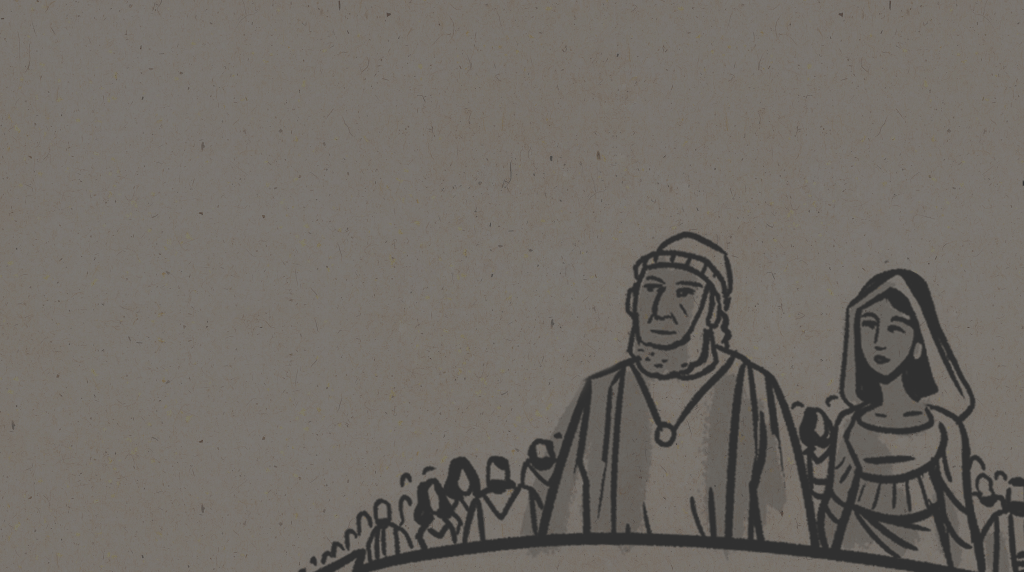
King Xerxes was the royal sovereign over the greatest empire up to that time in history. Haman was the king’s right hand man who arranged a sinister plot to destroy the Jewish people. Queen Esther was a Jew, for which neither Haman nor Xerxes knew; she rose from obscurity to become the queen. And Mordecai was Esther’s cousin, having taken her in and raised her.
The Jewish people were exiles, due to the Babylonians capturing Jerusalem and taking the people into captivity. Although the Persians, who overthrew the Babylonians, began allowing some of the Jews to return to Judah, there were still many diaspora Jews who made a life for themselves in Persia.
Esther was an unlikely candidate as both a queen and a heroine. She was an orphan and not well-known, even within her own community. Yet, Esther was taken from her foster home with Mordecai, and was thrown into all the perturbations of Persian life in the empire’s court and the nation’s culture.
She was the ultimate outsider, thrust into insider status. Esther was a minority in a majority culture; a resident alien; and a foreigner to Persian society and royalty. It was a lot for her.
Try and put yourself in her shoes. Do you hide your Jewishness, or make it known, and how much? How do you navigate being raised in a culture very different than the one you are being immersed and assimilated in? Who am I? What am I really supposed to be about? Why am I here?
Expressing one’s spiritual identity requires some significant consideration and careful application. And it will be dynamic, with ongoing considerations of how to grow and sustain a healthy sense of self so that it will be impactful and lasting.
We may reflexively think that since Esther was queen, she could freely exercise power and leverage her position to achieve anything she wanted. However, Esther was in a totally new reality. She didn’t enter it with political savvy or understanding about how things work or get done. Esther was very much subject to the whims and plans of King Xerxes.
Queen Esther must have thought she was in an impossible position. Haman had hatched a strategy to rid the empire of her own people, the Jews. And they were beside themselves. Mordecai entreated Esther to do something. But Esther was green and scared and way out of her element.
And yet, the heroine was inside her all along; it just needed the proper experience to bring her out.
We might understand if Esther saw herself as a mere orphan Jew who was just trying to fake-it-till-you-make-it in a world and a situation that was way over her head. We could understand if she saw herself without any real agency to effect anything in a large overwhelming empire.
Yet, here we are, all these millennia later, talking about Queen Esther and her bravery. There is even a Jewish holiday, Purim, celebrated because of her extraordinary courage… But I am getting ahead of myself. Today’s piece of the story begins in tension, and ends with even more.
Mordecai arose and gave a coach’s speech to Esther. He told her that she must step up and step into this particular historical moment in time. Providence had led her to be in her unique position; and the Jewish people were in an awful position.
It was precisely the right time for Esther to dig deep and release the heroine within. Esther could save her own people. Nobody else could. Only her.
Like it or not for Esther, her Jewishness was part of the whole gnarly situation. She could deny it and hide it – which would mean suppressing and stuffing the heroine. Or she could put herself out there, speak truth to power in love, and let the consequences come what may.
What impresses me about Esther is that not only did she listen to Mordecai, but she took the further step of calling upon the support of her own Jewish community. Esther was straightforward in telling them exactly what she needed from them, and what she would do herself.
Esther staked out her identity and faith, and risked her life for an entire nation of people… but we are not to the end of the story yet.
For now, we need to sit with this painful and awkward tension between life and death. Three days of sorrowful and heartfelt prayer. Three days of darkness. Three days of seeming as if one is in a grave with a huge stone boulder in front of it.
Like Esther, it is important for us to struggle with our own identity, and to take risks in soliciting the help of the believing community. We all must grapple with the nature of faith, the challenges of living in this present culture, and the politics of it all.
We need to take a good hard look at ourselves and discern who we truly are – people created in the image and likeness of God, who have majesty stamped on our very souls; and who truly have it within ourselves to make a difference in this big world of ours.
If we are to truly become aware of our majesty as people, we shall be willing to take the risk of helping those who are vulnerable, powerless, and threatened. That’s because our identity shapes our choices and actions. We live into who we believe we are.
By realizing that we belong to God, we avoid becoming complicit in evil. Instead, we leverage our place and position in life to do what is right, just, and good. There is confidence, even if afraid, of doing what is right.
I am wondering if you can think the thought, and embrace the reality, that you were sovereignly placed here on this earth by God “for such a time as this.”
Just and right God, you sent your servant Esther into a life of privilege, so that those without would be taken care of. In our privilege, show us how to advocate for those who have less, so that your world might be peaceful and good. Amen.








 Rev. Tim Ehrhardt