2 Samuel 15:13-31 – Unflagging Trust

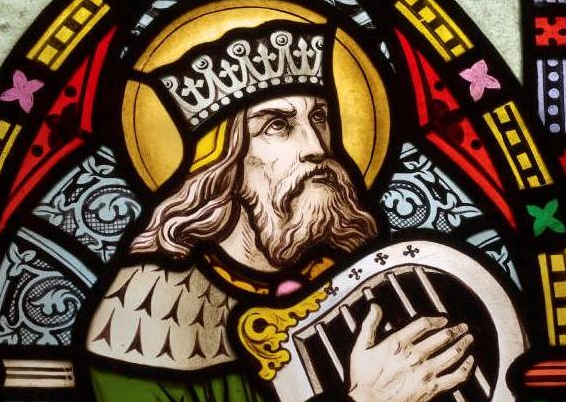
Stained glass of King David, Fringford, England church

A messenger came and told David, “The hearts of the people of Israel are with Absalom.”

Then David said to all his officials who were with him in Jerusalem, “Come! We must flee, or none of us will escape from Absalom. We must leave immediately, or he will move quickly to overtake us and bring ruin on us and put the city to the sword.”

The king’s officials answered him, “Your servants are ready to do whatever our lord the king chooses.”

The king set out, with his entire household following him; but he left ten concubines to take care of the palace. So, the king set out, with all the people following him, and they halted at the edge of the city. All his men marched past him, along with all the Kerethites and Pelethites; and all the six hundred Gittites who had accompanied him from Gath marched before the king.

The king said to Ittai the Gittite, “Why should you come along with us? Go back and stay with King Absalom. You are a foreigner, an exile from your homeland. You came only yesterday. And today shall I make you wander about with us when I do not know where I am going? Go back and take your people with you. May the Lord show you kindness and faithfulness.”

But Ittai replied to the king, “As surely as the Lord lives, and as my lord the king lives, wherever my lord the king may be, whether it means life or death, there will your servant be.”

David said to Ittai, “Go ahead, march on.” So Ittai the Gittite marched on with all his men and the families that were with him.

The whole countryside wept aloud as all the people passed by. The king also crossed the Kidron Valley, and all the people moved on toward the wilderness.

Zadok was there, too, and all the Levites who were with him were carrying the ark of the covenant of God. They set down the ark of God, and Abiathar offered sacrifices until all the people had finished leaving the city.

Then the king said to Zadok, “Take the ark of God back into the city. If I find favor in the Lord’s eyes, he will bring me back and let me see it and his dwelling place again. But if he says, ‘I am not pleased with you,’ then I am ready; let him do to me whatever seems good to him.”

The king also said to Zadok the priest, “Do you understand? Go back to the city with my blessing. Take your son Ahimaaz with you, and also Abiathar’s son Jonathan. You and Abiathar return with your two sons. I will wait at the fords in the wilderness until word comes from you to inform me.” So Zadok and Abiathar took the ark of God back to Jerusalem and stayed there.

But David continued up the Mount of Olives, weeping as he went; his head was covered, and he was barefoot. All the people with him covered their heads too and were weeping as they went up. Now David had been told, “Ahithophel is among the conspirators with Absalom.” So, David prayed, “Lord, turn Ahithophel’s counsel into foolishness.” (New International Version)

“Faith is taking the first step even when you don’t see the whole staircase.”

Martin Luther King, Jr.

It’s an understatement to say that King David had family drama.

Maybe that’s because he had a lot of wives and even more kids. Or it could be that being a king didn’t transfer well to being a father. And it just might be that his experience was mostly about simply living in a fallen world, full of icky relational dynamics and human conflict.

David seemed to be at his best when at his lowest. His son, Absalom, carefully designed a conspiracy to take over the kingdom. And it was looking as though he might just do it. David, and those loyal to him, fled Jerusalem to avoid being overthrown and killed. They were between a rock and a hard place, to put it mildly. David was literally running for his life.

If we put ourselves in David’s sandals, how would we respond? 

I suppose, at the least, we would likely complain. Who is Absalom that he should dishonor his father in such a way as this? Then, we may try and find ways to maintain power, and get back at Absalom for being a rebellious and destructive son. 

I am humbled by David’s unflagging trust in God. Like the suffering Job centuries before him, David was willing to receive anything from the hand of God, whether for good or evil. He wholesale accepted whatever seemed good to God, without attempting to force anything on the Lord. “Let God do to me what seems good to him,” was the faith affirmation of David.

Yet, at the same time, David was aware and in touch with his emotions as he left the city and ascended the Mount of Olives. He wept and lamented over the situation he and all those with him had to experience. 

A thousand years later, Jesus took the same trek out of the city in great sorrow because of people who conspired against him. Christ faced the agony of the cross through the machinations of sinful humanity who did not want him as Lord over their lives.

Our confidence must rest in the God who is never caught unaware of our situations and always knows how to respond. We must rely on our prayers to the Lord as we navigate the difficulties of this life. 

Humility goes a long way toward letting the will of God rule the day.

O Lord, please turn the plans and the counsel of evil persons into foolishness. Do not let the sinfulness of people have its way and run roughshod over my life.  I trust in you to bend a bad situation toward your own good purpose through Jesus Christ my Lord.  Amen.

Colossians 3:12-17 – Wear the Right Clothes

God loves you and has chosen you as his own special people. So be gentle, kind, humble, meek, and patient. Put up with each other, and forgive anyone who does you wrong, just as Christ has forgiven you. Love is more important than anything else. It is what ties everything completely together.

Each one of you is part of the body of Christ, and you were chosen to live together in peace. So let the peace that comes from Christ control your thoughts. And be grateful. Let the message about Christ completely fill your lives, while you use all your wisdom to teach and instruct each other. With thankful hearts, sing psalms, hymns, and spiritual songs to God. Whatever you say or do should be done in the name of the Lord Jesus, as you give thanks to God the Father because of him. (Contemporary English Version)

New life is fantastic!… Until it isn’t.

Like a new car eventually losing its new car smell, so it is quite easy for the Christian to experience the mountaintop of transformation, only to lug back down and walk through the boring old valley.

And it’s fun to have a new set of clothes… until they wear out, go out of style, or fall apart in the washing machine. the thing about those new clothes we were so excited about when we got them is that they are wearing out.

When I was eight-years-old (a long time ago!) I still remember my favorite pair of jeans. I wore them every day. My Mom had to order me to take them off so she could wash them. Finally, after having several patches sewn on them, having grown too much, and with the material so thin you could see through them in places, that old ratty pair of jeans actually just fell off my body in a heap, as if to say, “Enough is enough, boy!”

Our nice white spiritual clothes, given to us through Christ’s resurrection, are to be our favorites. We need to clothe ourselves in them every day.

Because of Christ’s redemptive events of crucifixion and resurrection, believers can experience new life, free from sin, death, and hell.  Oh, it isn’t that we never need to deal with evil; we very much do. The difference is that we now have a new awareness of our spirituality.  And with awareness comes choices. 

If we aren’t aware of our feelings, our spirit, and/or old nature, well, then, it’s as if we operate on auto-pilot – losing altitude in an immanent descent into tragedy. When we are aware of our inner selves, then we mindfully ascend through the clouds to join Christ.

You were taught, with regard to your former way of life, to put off your old self, which is being corrupted by its deceitful desires; to be made new in the attitude of your minds; and to put on the new self, created to be like God in true righteousness and holiness.

Ephesians 4:22-24, NIV

We can make choices about what to wear. With awareness, we look in the mirror and see that the grave clothes need to come off. The old raggedy garments of pride and hubris, greed and immorality, selfish lust, jealous envy, spiritual gluttony, unholy anger, and complacency get taken off and tossed in the garbage. 

We then go to God’s expansive walk-in closet and choose the bright raiment of compassion, kindness, humility, gentleness, patience, forgiveness, and grab the beautiful coat of love which covers it all with such dignity and honor.

It would be super weird to try and put the new clothes over the old raggedy grave clothes. That’s not only gross, but it’s also downright wrongheaded. Practical Christianity always involves two actions: taking-off and putting-on. 

“No one cuts up a fine silk scarf to patch old work clothes; you want fabrics that match. And you don’t put your wine in cracked bottles.”

Matthew 9:16-17, MSG

Human willpower and/or ingenuity tries to live a virtuous life while ignoring the vices. This will not do for the Christian. The endearing qualities we so desire to possess cannot be obtained without first dealing with the crud of sin which clings to us like so many stinky dirty clothes. To put this in theological terms: the cross and resurrection go together. Sin must be put to death before a victorious life is put on.

Once we have acknowledged sin, let Christ take it all off, and put on the new clothes. Then we’re ready to hit the town in style!  We walk out the door with a tremendous sense of peace, knowing God in Christ has cleaned us up.  We stroll into the world with lips whistling and a song in our hearts – singing with gratitude for what the risen Christ has accomplished on our behalf. 

After all, we just put on expensive clothes and it didn’t cost us a dime.  In fact, we’re so darned thankful that we don’t just talk to others, we sing our words to them – even though we can’t carry a tune.  It doesn’t matter.  Our coat of love compels us.

Almighty and everlasting God, you willed that our Savior should take upon him our clothing of death upon the cross so that all humanity would have the privilege of wearing humility, gratitude, and love. Mercifully grant that we may both follow the example of Christ’s life, and also be made aware of our participation in his glorious resurrection, in the power of your Holy Spirit.  Amen.

2 Samuel 10:1-5 – Misunderstood

Sometime later, King Nahash of Ammon died, and his son Hanun became king. David said, “Nahash was kind to me, and I will be kind to his son.” So, he sent some officials to the country of Ammon to tell Hanun how sorry he was that his father had died.

But Hanun’s officials told him, “Do you really believe David is honoring your father by sending these people to comfort you? He probably sent them to spy on our city, so he can destroy it.” Hanun arrested David’s officials and had their beards shaved off on one side of their faces. He had their robes cut off just below the waist, and then he sent them away. They were terribly ashamed.

When David found out what had happened to his officials, he sent a message and told them, “Stay in Jericho until your beards grow back. Then you can come home.” (Contemporary English Version)

Showing mercy, grace, and good faith doesn’t always have a happy ending.

Sometimes people get burned for their genuine gracious overtures. Not only do some folks not return or reciprocate with grace. There are times when someone refuses it and even responds with criticism and judgment.

King David was at the pinnacle of his rule. All Israel and Judah were under his gracious authority. David acted as a godly sovereign when he sought to use his power to show kindness and grace to those in his kingdom, even to those who were related to his former enemy, Saul. (2 Samuel 9:1-12)

Yet when David kept up his gracious ways and sent a delegation to the Ammonites in order to bring compassion to a grieving nation, they not only spurned the kindness but attributed evil intent to it.

Why in the world would they do such a thing? Why did Hanun, the new ruler of Ammon, reject David’s kindness? Because he severely misinterpreted David’s motives, and completely misjudged David’s intentions.

It is important to make wise assessments of others, and not quick judgments about people or their situations.

Being misunderstood is downright difficult to swallow. Yet we can avoid sinful reactions and respond with grace, even if grace isn’t being shown to us:

  • We can be gracious by not always needing to have the last word. Any fool can get easily get sucked into an argument. Know when to stop talking.

Too much talk leads to sin. Be sensible and keep your mouth shut. (Proverbs 10:19, NLT)

Even fools may be thought wise and intelligent if they stay quiet and keep their mouths shut. (Proverbs 17:28, GNT)

  • We can be gracious through cultivating a humble spirit. Pride assumes that another can be silenced with the power of words. What’s more, wounded pride typically manifests itself by gossiping to others about our hurt.

Destructive people produce conflict; gossips alienate close friends. (Proverbs 16:28, CEB)

Pride leads to destruction; humility leads to honor. (Proverbs 18:12, CEV)

God opposes arrogant people, but he is kind to humble people. (James 4:6, GW)

  • We can be gracious by developing our capacity for civility and empathy. Often when someone spews their off-base judgments and criticisms upon us, they have a world of their own past personal hurt behind the angry diatribe. We can choose to be gently curious about this, discovering why there is such a visceral reaction to our kindness.

“I tell you, love your enemies and pray for those who persecute you, that you may be children of your Father in heaven. He causes his sun to rise on the evil and the good and sends rain on the righteous and the unrighteous.” (Matthew 5:44-45, NIV)

Show respect for all people. Love your brothers and sisters in God’s family. Respect God and honor the king. (1 Peter 2:17, ERV)

  • We can be gracious through tapping into an inner storehouse of wisdom. Knowledge puffs up. Love builds up. Wisdom is insight into reality. For the believer, it is the ability to take God’s Word and lovingly apply it to the lived experience we are enduring.

Hold on to wisdom, and it will take care of you. Love it, and it will keep you safe. Wisdom is the most important thing; so, get wisdom. If it costs everything you have, get understanding. (Proverbs 4:6-7, NCV)

It is true, of course, that “all of us have knowledge,” as they say. Such knowledge, however, puffs a person up with pride; but love builds up. (1 Corinthians, 8:1, GNT)

One of life’s hard lessons is that bestowing grace and mercy to others does not necessarily mean they will receive it and respond in kind. 

In fact, there are some individuals who refuse grace and give back only scorn and derision. Even the Lord Jesus experienced this like no other before or after him. Christ endured all the foulness and degradation of a cruel cross because there were people who refused to see that he was extending God’s grace to them. He turned scorn on its head by despising shame and enduring pain so that we would be spared of such ignominy. (Hebrews 12:2-3)

In those times when we, at best, scratch our heads, and, at worst, weep uncontrollably over having our genuine love paid back with harsh misunderstanding, it is a good reminder that we are imitating the life of our precious Lord Jesus who knows exactly what shame is and what a profound lack of mercy can do. 

It is in the seasons and events of life which produce frustration that we understand this: Perfect peace will not be found in this life. So, we more fully attach ourselves to Jesus and find genuine grace and the solidarity of faith and love.

Consider what Christ went through; how he put up with so much hatred from those misinterpreting and misjudging him. Do not let yourselves become discouraged and give up from gross misunderstanding.

Loving God, I give you thanks for sending your Son, the Lord Jesus. Christ is the pioneer of my faith. Just as he endured the cross, scorning its shame, and sat down at your right hand, so help me to live into the grace you offer through Christ’s redemptive events so that I might persevere with grace through all the unmerciful acts of this world. Amen.

Matthew 5:5 – Blessed Are the Meek

Blessed are the meek,
    for they will inherit the earth. (NIV)

To give us a flavor of Christ’s counter-cultural Beatitudes, when was the last time, or has anyone ever, described themselves to you as meek?

Whenever I have interviewed people for positions, both paid and voluntary, and asked them to tell me their strengths, I have never had anyone say to me, “I’m a meek person.”

Why would I want to be meek?

Far too often, we equate meek with weak. If someone is meek, we may wrongly reason they must be a washrag, or overly introverted, and maybe not taking proper initiative in life. Of all the character qualities we might aspire to, I doubt that meekness is on anyone’s top ten list of desired qualities.

Yet, of the few words in the Gospels which Jesus uses to describe himself, one of those words is meek. And even then, many English translations steer clear of the word. For example, the New International Version of the Bible says in translating the words of Jesus, “Come to me all you who are weary and burdened, and I will give you rest. Take my yoke upon you and learn from me, for I am gentle and humble in heart, and you will find rest for your souls. For my yoke is easy and my burden is light.” (Only the King James Version translates the word as “meek,” instead of “gentle.”)

What does it mean to be meek?

Meek and gentle are the same words. The original Greek word is πραεῖς (pronounced “prah-ace”). “Meek” is the word used in other ancient Greek literature for breaking a horse. It is to be changed from being a wild stallion who wants to go his own way, to a broken horse who is gentle before the Master and allows others on his back without bucking.

Consider, for example, the scene around Christ’s crucifixion. Jesus was naked, exposed, and vulnerable to the idle curiosity of the crowd and the vulgar frivolity of the soldiers who were having a party around his suffering. “If you are the king of the Jews,” they taunted, “save yourself.”

And yet the extraordinary thing is there was no spirit of revenge with our Lord. Jesus did not curse his tormentors. Instead, he prayed, “Father forgive them, for they don’t know what they’re doing.” (Luke 23:24)

It is important to notice the meekness that Jesus is speaking about in this Beatitude is not being a pushover. Meekness is not to be confused with being nice and easy-going. Meek and lowly as he was, Jesus could also take a whip to greedy money-changers in the Temple. We must not confuse meekness with weakness.

What characterizes a meek person?

Whereas poverty of spirit is more a humility before God, meekness is a humility toward other people. It is to be flat on our backs with only one way to look: up to God; and because we are in that position, there is no opportunity to look down on others. 

Meekness is a foundational Beatitude. Jesus considers it a necessary part of righteousness. I believe the word “meek” needs a renaissance. Even if we use the word “gentle” this will be a great advancement in how people interact with one another. So, what characterizes a meek person?

  • The meek have a desire to put other’s interests ahead of their own, because they know it is not all about them. They practice healthy rhythms of giving and receiving with others, without prejudice or favoritism.
  • The meek are more concerned with edifying and building up their brothers and sisters than justifying themselves. They don’t care who gets the credit. And they receive criticism well.
  • The meek are truly egalitarian and do all things with equity and inclusion. They make no distinctions between rich and poor, beautiful and ugly, intelligent and cognitive deficits, black and white, gay and straight, Democrat and Republican, or insider and outsider. In the meek person’s mind, every person is created in the image of God and therefore deserves respect, attention, and justice.

It is the meek who will inherit the earth – not aggressive people who believe in survival of the fittest, stepping on people to get where they want to go, or badgering others in order to get their way. 

Someone might protest, “But if I live this way, I’ll be pushed around.”  Meekness is not living without boundaries but is power under control. Maybe you will get stepped on – but you will inherit the earth.

How do I live as a meek person?

The three Beatitudes of being poor in spirit, mourning over sin, and meekness toward others are foundational to all that Jesus says and does. They are central to being Christ’s follower. Without them, there is only a contrived legalistic righteousness of our own without any real need of God. That is the way of pride, which is the straight and broad road to hell. 

Perhaps repentance is in order. It could be that too many people have made much more of themselves than what they truly are. Maybe we have adopted a soft attitude toward shame and shaming others, believing that some people need a bit of guilt from us to change their obnoxious ways. Perhaps we have paid scant attention to those who are in physical or spiritual poverty. And just maybe we have ignored and gossiped about others simply because we believe we are better than them.

A genuine follower of Christ lives a repentant lifestyle. The Apostle James said, “Confess your sins to one another, and pray for one another so that you may be healed” (James 5:16).  The way of Christ is the way of community. We are not to live ingenuine lives, hiding behind a mask of outward conformity. Now is the time for authenticity, living life as God intended it to be lived, as a disciple of Jesus in the way of spiritual poverty, mourning, and meekness – the narrow path that leads to salvation.

Non-retaliation happens when we realize our poverty of spirit and practice grief and lament. When we are flat on our backs before God, there is no place to look but up. And it means there is no ability to look down on others. It is to be broken and moldable before God. 

If you and I were part of the original crowd that listened to Jesus, there is hope. I have no ability to practice retaliation, even if I wanted to, because I have no earthly power. But that’s okay because, in this spirit of meekness, I take personal responsibility for my attitudes and my actions. I am neither worse nor better than any other person. I do not need to retaliate, even when egregiously wronged, because I can fully entrust myself to God alone who judges the living and the dead. 

Conclusion

It turns out that brokenness is the path to genuine righteousness. Jesus promised that the meek will inherit the earth. Christ didn’t just make that up. He was quoting Holy Scripture:

Do not fret because of those who are evil
    or be envious of those who do wrong;
for like the grass they will soon wither,
    like green plants they will soon die away.

Trust in the Lord and do good;
    dwell in the land and enjoy safe pasture.
Take delight in the Lord,
    and he will give you the desires of your heart.

Commit your way to the Lord;
    trust in him and he will do this:
He will make your righteous reward shine like the dawn,
    your vindication like the noonday sun.

Be still before the Lord
    and wait patiently for him;
do not fret when people succeed in their ways,
    when they carry out their wicked schemes.

Refrain from anger and turn from wrath;
    do not fret—it leads only to evil.
For those who are evil will be destroyed,
    but those who hope in the Lord will inherit the land.

A little while, and the wicked will be no more;
    though you look for them, they will not be found.
But the meek will inherit the land
    and enjoy peace and prosperity. (Psalm 37:1-11, NIV)

Jesus was saying that only the truly meek will learn contentment, joy, and satisfaction. Their ego is not so inflated that they insist they deserve more. Indeed, because as God’s people they are learning from him, the meek understand they are co-heirs with Christ in an inheritance of God’s kingdom.

May your meekness and gentleness be known to all.

*Above painting by Hyatt Moore