Anti-Intellectualism

Everyone with good sense
    wants to learn. (Proverbs 18:15, CEV)

Anti-intellectualism:

  1. opposition to or hostility toward intellectuals and the modern academic, artistic, social, religious, and other theories associated with them
  2. the belief or doctrine that intellect and reason are less important than actions and emotions in solving practical problems and understanding reality

Holy Scripture encourages knowledge, understanding, and wisdom. In order to be a truly wise and understanding person, there must be a combination of knowledge and experience. When these two elements come together, and are practiced over a long period of time, then spiritual maturity is realized.

In every church I’ve ever served across the decades there have been individuals and groups of people in my congregations who are anti-intellectual. They were not big fans of seminaries. They often mistrusted highly educated persons with multiple degrees. And they had a hard time submitting to any authority structure that smacked to them of being elitist.

Unfortunately, the majority of those persons, in my experience, refused to learn in any other way other than their own personal experience. I don’t think I need to tell you the many pitfalls such a stance creates: constant misinterpretation of situations; prejudice toward others whom they don’t understand; and chronic disobedience to every authority in their life.

It likely wouldn’t surprise you to know that these sorts of parishioners rarely, if ever, read their Bibles, or even seek to learn other than hearing Sunday sermons. They reek of spiritual immaturity and pride, being puffed-up with themselves that they aren’t like the elites in power.

Now imagine what a group of people like this would be like if they were in the highest levels of government… But we need not imagine; the reality is in front of us every day.

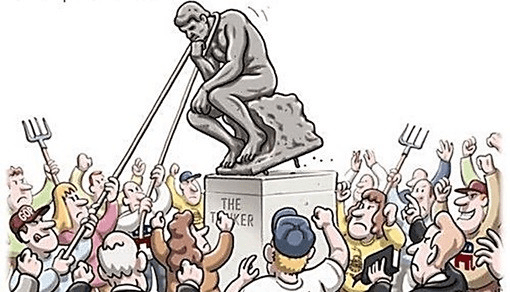
To understand the current political climate in the United States, it seems to me we need to see that the present governmental administration, at its heart, is an anti-intellectual movement.

Now please know that I am not saying that everyone in the administration is stupid. What I am saying is that many if not most Republicans have a deep seated problem with educational elites – hence the sustained attention on American universities, especially Harvard.

They believe themselves to be practical, no nonsense people who can get things done without umpteen committees and eggheaded reports. The problem, however, is that in their belief of experiential superiority, they’ve refused to listen. They end up making snap judgments of situations and other people. In other words, they can quickly make a disaster of things whenever they’re in charge.

Furthermore, what the anti-intellectuals end up doing most is grasping for as much worldly power as they can gain.

For Protestant Evangelicals, their desire for power stems from their perceived loss of a golden age of Christendom. Back then they were in power – prayer in schools, no abortion, the Ten Commandments in every court house, riding your bike in the neighborhood with safety, etc.

Yet, because there is such a paucity of listening and seeking to understand, the anti-intellectuals fail to understand that their own golden age was a bronze age of Jim Crow laws, failed reservation promises, and the need to operate in the shadows for all sorts of other persons.

Holy Scripture’s Book of Proverbs – which is a combination of accumulated knowledge and lived experience – has something to say about those who refuse to listen and learn from others:

With wisdom you will learn
what is right
    and honest and fair.
    with knowledge. (Proverbs 2:9-10, CEV)

Fools think they know
    what is best,
but a sensible person
    listens to advice. (Proverbs 12:15-16, CEV)


Stupidity leads to foolishness;
    be smart and learn. (Proverbs 14:18, CEV)

Fools have no desire to learn,
instead they would rather
    give their own opinion. (Proverbs 18:2, CEV)

Pride leads to destruction;
    humility leads to honor.
It’s stupid and embarrassing
to give an answer
    before you listen. (Proverbs 18:12-14, CEV)

An ignorant fool learns
    by seeing others punished;
a sensible person learns
    by being instructed. (Proverbs 21:11, CEV)

If we apply our hearts to wisdom, we will learn:

  • the pursuit of power at all costs creates stupidity
  • the disdain and/or ignorance of others has adverse consequences for all
  • there has always been an anti-intellectual strain throughout the history of the world (including U.S. history)
  • the act of placing blame on others (such as the so-called “elites”) will come back to bite us

It does no good to reason with an anti-intellectual, namely because they will not avail themselves of logic nor learning.

Instead, it is wise to treat an anti-intellectual like we ourselves would want to be treated: to have another listen to us and be curious about why we hold to what we hold, without judgment; and to have another respect our ability to choose for ourselves.

Can you imagine a world where we would all commit ourselves to listening and learning, acquiring knowledge, understanding, and wisdom? We would likely live in a very different world than the one we are in today.

May the course of this world be peaceably governed by divine providence. And may the church everywhere joyfully serve God in confidence and serenity. Amen.

A Time of Woe (Isaiah 5:15-24)

The Prophet Isaiah, by Raphael, 1512

So people will be brought low
    and everyone humbled,
    the eyes of the arrogant humbled.
But the Lord Almighty will be exalted by his justice,
    and the holy God will be proved holy by his righteous acts.
Then sheep will graze as in their own pasture;
    lambs will feed among the ruins of the rich.

Woe to those who draw sin along with cords of deceit,
    and wickedness as with cart ropes,
to those who say, “Let God hurry;
    let him hasten his work
    so we may see it.
The plan of the Holy One of Israel—
    let it approach, let it come into view,
    so we may know it.”

Woe to those who call evil good
    and good evil,
who put darkness for light
    and light for darkness,
who put bitter for sweet
    and sweet for bitter.

Woe to those who are wise in their own eyes
    and clever in their own sight.

Woe to those who are heroes at drinking wine
    and champions at mixing drinks,
who acquit the guilty for a bribe,
    but deny justice to the innocent.
Therefore, as tongues of fire lick up straw
    and as dry grass sinks down in the flames,
so their roots will decay
    and their flowers blow away like dust;
for they have rejected the law of the Lord Almighty
    and spurned the word of the Holy One of Israel. (New International Version)

I’m willing to bet that you, like me, have had to contend with some rather annoying and obnoxious people from time to time in your life.

It’s the person whose head is so big, they can barely walk in and out of a room. And when they talk, it’s usually about themselves, the great things they’ve done, and what they think – not framed as opinions but as the truth.

Since this sort of person rarely listens to anyone, they have no clue about the real needs of people in front of them. Their self-inflated importance is to the degree that they don’t ask and are not curious; yet they demand of others. They see no problem with double-standards. It’s okay for them to bribe, even steal from another. But if you cross the self-important person, look out, because they’ll hunt you down like an animal.

Yes, such people exist. And there are typically some deep psychological reasons why they are so arrogant and difficult to be around. Yet the best thing to know about them is that the true Sovereign of the universe, God, is the rightful judge who will handle them.

If you see a path of destruction on the ground, you know a tornado has touched down and done its damage. And if you observe a bunch of people devastated and demoralized, you know that the haughty and self-important person has been through and laid waste to people’s lives.

The Lord almighty is not okay with such people moving about and hurting others with impunity; the wicked will have to contend with the One who knows what’s going on.

God looks and sees – and pronounces appropriate woes (curses) upon those who feign righteousness and holiness, yet in reality do anything but.

You can easily tell what God abhors by what sorts of behavior receives a disapproving woe upon it. God condemns self-indulgence and self-absorption. This shows itself in how one drinks and does business. The sheer accumulation of land, resources, and strong drink – without any sort of regard to one’s neighbor – is a foolish use of wealth.

The self-absorbed and self-important person becomes desensitized to the needs of others. They also become insensitive to God’s concerns and workings in the world. To disregard the poor and needy is to disregard God. Such injustice, resulting from only caring about oneself, is why the Lord levels divine woes upon them.

Actions and inactions both have consequences. Acting selfishly through wanton accumulation is an equal inaction against the community. As a result of so much economic disparity and carelessness in society, God displaces and deports the ones who arrogantly and smugly believed they are secure.

There is accountability in this world, even though it may not sometimes seem like it. There are ethical requirements and moral imperatives. The social laws contained in the covenant code between God and Israel were expected to be honored. So, when they were continually and habitually ignored, the Lord held the people accountable.

The selfishly proud and arrogant, who acquire all they can and become masters of small worlds, will eventually face ruin by means of divine judgment. It’s as if persons had so loaded their backpacks with sin, that it became heavy to the point of self-crushing.

Divine intervention is either a very good thing, or a very bad thing, depending upon who you are. People are expected to be self-aware enough to know the difference between right and wrong, bad and good, just and unjust. To not know this is to be self-addicted and unable to make proper discernments and decisions.

If you are reading or listening to this, you are likely a person who is concerned enough to care for others and is not lost in yourself. Yet, you likely have to contend with a few persons who are only in this life for themselves. So, watch out and do your best to avoid people who do the following:

  • Manipulate through deceptive language. There are some people in positions of authority or power who intentionally obscure, cover up, and confuse things. If you never know how things stand and are doing, then beware.
  • Independent without accountability. There is no interdependent relationships, and only obedience when it suits them. The constant caginess, and lack of vulnerability, is a warning. If you feel like you’re being micro-managed without much ability to ask specific questions and get straight answers, then look out.
  • Distort how things really are. I’m talking about gaslighting. Gaslighting is the attempt by another to accept the gaslighter’s view of reality as your own. And in the gaslighter’s quest, it seems to you as if there is continually chaos and you are off kilter. If you question it to them, then you will most likely be accused of having a problem. It’s not you. So, skedaddle the first chance you get.

The bottom line of it all is that God is rejected and there are people reneging on their commitments to the Lord. You need not be such a person, and you don’t need to live in such a way that another is in complete control of your life – other than God.

Take note of what the Lord dislikes and despises, and keep away from persons who set up themselves as being akin to God.

Grant us, Lord God, a vision of your world as your love would have it:
a world where the weak are protected, and none go hungry or poor;
a world where the riches of creation are shared, and everyone can enjoy them;
a world where different races and cultures live in harmony and mutual respect;
a world where peace is built with justice, and justice is guided by love.
Give us the inspiration and courage to build it, through Jesus Christ our Lord. Amen.

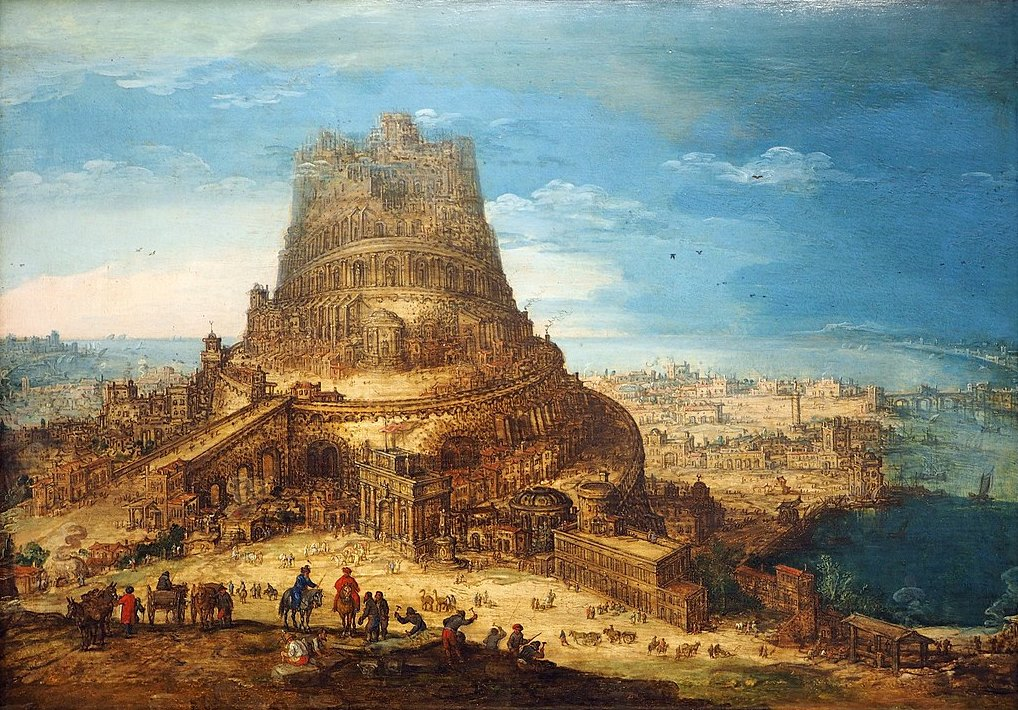
The Tower of Babel (Genesis 11:1-9)

The Tower of Babel, by Hendrick van Cleve III (1525–1589)

At one time, the whole Earth spoke the same language. It so happened that as they moved out of the east, they came upon a plain in the land of Shinar and settled down.

They said to one another, “Come, let’s make bricks and fire them well.” They used brick for stone and tar for mortar.

Then they said, “Come, let’s build ourselves a city and a tower that reaches Heaven. Let’s make ourselves famous so we won’t be scattered here and there across the Earth.”

God came down to look over the city and the tower those people had built.

God took one look and said, “One people, one language; why, this is only a first step. No telling what they’ll come up with next—they’ll stop at nothing! Come, we’ll go down and garble their speech so they won’t understand each other.” Then God scattered them from there all over the world. And they had to quit building the city. That’s how it came to be called Babel, because there God turned their language into “babble.” From there God scattered them all over the world. (The Message)

At first glance, the Bible reader may wonder what the big deal is about people coming together to build a tower.

A mere cursory look at the text might seem as if God is having some sort of divine anal-retentive moment of control. After all, the people are just trying to get some work done; it’s not like they’re going to somehow invade God’s privacy with a very tall tower.

But that’s not what was going on, way back there several millennia ago. Something more subversive was afoot, and the Lord was completely savvy to what was happening.

The previous chapter (Genesis 10) presents a rather orderly spread of the burgeoning humanity across the earth – which is consistent with God’s original blessing and mandate at the creation of people:

“Prosper! Reproduce! Fill Earth! Take charge!
Be responsible for fish in the sea and birds in the air,
    for every living thing that moves on the face of Earth.” (Genesis 1:28, MSG)

Yet, here in Genesis 11, people have intentionally stopped discovering the earth. It appears they are more curious about heaven. So, they amassed themselves together and decided to move vertically rather than horizontally across the world.

There seems to have been a great deal of human ambition that was eyeing an assault and takeover of the divine realm, instead of busying themselves with their God-given human realm. Another way of putting it is that they were irresponsible – not caring for creation – but more concerned about having some leverage on God.

Ambition, in and of itself, is neither good nor bad; it’s where that ambition is aimed. And the early people were directing their sights up rather than out – trusting in their human ingenuity and technological abilities to achieve autonomy for themselves.

Because God created humans in the divine image and likeness, people were (and still are!) amazing creatures who can accomplish incredible feats of achievement in whatever they set their minds and hearts to do. Yet, in the case of constructing a tower (or ziggurat) humanity was ignoring their mandate to care about the earth and its inhabitants. Instead, they were working their own will to build a name for themselves, apart from God.

So, the Lord stepped in by confusing their common language so that they would have difficulty communicating with one another. On the surface, it might seem that God was being capricious. But examining just a bit deeper, we can observe what would happen if people threw off their responsibility to the planet and all of its creatures.

The entire world could be subject to terrible inattention. Much like a backyard garden that becomes overrun with weeds due to neglect, the whole earth was in jeopardy of falling into a system of evil that would care nothing for its abundant life and intricate ecosystems. In short, the earth could be ruined.

If this sounds eerily like what we humans are doing today, its probably because that is precisely what we are doing – putting a collective stiff-arm to God and doing whatever the heck we want in exploiting the earth for our own human purposes.

Never mind that entire species of fish and animals, along with flora and fauna and forests and wetlands and grasslands are being harmed and destroyed by so called human ingenuity and technological advance.

It is our own arrogant pride and hubris of abject selfishness, in setting up ourselves as masters of the universe, that brings us to the edge of an environmental holocaust – not to mention fighting amongst ourselves about who will be in charge and in control of it all. We’ll engage in wars and atrocities if that’s what it will take.

Therefore, the Tower of Babel is a symbol of all that is wrong – not right – with humanity. Until we can unlearn our ancient ways of arrogance and injustice, ignorance and lack of awareness, and recover even older ways of caring for one another and the earth, then we will find ourselves being broken by the divine gravity of judgment which exists whenever people choose to defy the order of the world.

In many ways, primeval history remains alive in our daily current events. Yet, it can change. But it will take a heavy dose of humility and confession of guilt to begin undoing the harm we have imposed on others and on our world. And it will take a return to Eden, to the responsibility of creation care, and of healthy relational connections with both other people and God.

Every one of us is culpable – whether we have been directly involved in systemic evil, or not. We all have participated in and benefited from our privilege as human beings living on this planet – sometimes to the extent of turning a blind eye to the great needs of the earth and its inhabitants.

So, what will you do about it? Who will you turn to? Where does your ultimate trust rest? Are you willing to work for good, to be merciful, just, kind, and loving in a pursuit of right relationships with God, others, and the earth?

Sovereign Lord and Creator, renew our spirits and cleanse our hearts. Renew our minds and transform our lives. Renew our cities and rebuild our ruins. Renew our world, in your name we pray, Amen.

There Is No Other God (Daniel 3:1-30)

Shadrach, Meshach, and Abednego are thrown into a fiery furnace, by Chris Torre

King Nebuchadnezzar made a gold statue. It was ninety feet high and nine feet wide. He set it up in the Dura Valley in the province of Babylon. King Nebuchadnezzar then ordered the chief administrators, ministers, governors, counselors, treasurers, judges, magistrates, and all the provincial officials to assemble and come for the dedication of the statue that he had set up.

So the chief administrators, ministers, governors, counselors, treasurers, judges, magistrates, and all the provincial officials assembled for the dedication of the statue that King Nebuchadnezzar had set up. They stood in front of the statue the king had set up.

The herald proclaimed loudly: “Peoples, nations, and languages! This is what you must do: When you hear the sound of the horn, pipe, zither, lyre, harp, flute, and every kind of instrument, you must bow down and worship the gold statue that King Nebuchadnezzar has set up. Anyone who will not bow down and worship will be immediately thrown into a furnace of flaming fire.”

So because of this order as soon as they heard the sound of the horn, pipe, zither, lyre, harp, flute, and every kind of instrument, all the peoples, nations, and languages bowed down and worshipped the gold statue that King Nebuchadnezzar had set up.

At that moment some Chaldeans came forward, seizing a chance to attack the Jews. They said to King Nebuchadnezzar:

“Long live the king! Your Majesty, you gave a command that everyone who hears the sound of the horn, pipe, zither, lyre, harp, flute, and every kind of instrument should bow down and worship the gold statue. Anyone who wouldn’t bow and worship would be thrown into a furnace of flaming fire. Now there are some Jews, ones you appointed to administer the province of Babylon—specifically, Shadrach, Meshach, and Abednego—who have ignored your command. They don’t serve your gods, and they don’t worship the gold statue you’ve set up.”

In a violent rage Nebuchadnezzar ordered them to bring Shadrach, Meshach, and Abednego. They were brought before the king.

Nebuchadnezzar said to them: “Shadrach, Meshach, and Abednego: Is it true that you don’t serve my gods or worship the gold statue I’ve set up? If you are now ready to do so, bow down and worship the gold statue I’ve made when you hear the sound of horn, pipe, zither, lyre, harp, flute, and every kind of instrument. But if you won’t worship it, you will be thrown straight into the furnace of flaming fire. Then what god will rescue you from my power?”

Shadrach, Meshach, and Abednego answered King Nebuchadnezzar: “We don’t need to answer your question. If our God—the one we serve—is able to rescue us from the furnace of flaming fire and from your power, Your Majesty, then let him rescue us. But if he doesn’t, know this for certain, Your Majesty: we will never serve your gods or worship the gold statue you’ve set up.”

Nebuchadnezzar was filled with rage, and his face twisted beyond recognition because of Shadrach, Meshach, and Abednego. In response he commanded that the furnace be heated to seven times its normal heat. He told some of the strongest men in his army to bind Shadrach, Meshach, and Abednego and throw them into the furnace of flaming fire. 

So Shadrach, Meshach, and Abednego were bound, still dressed in all their clothes, and thrown into the furnace of flaming fire. (Now the king’s command had been rash, and the furnace was heated to such an extreme that the fire’s flame killed the very men who carried Shadrach, Meshach, and Abednego to it.) So these three men, Shadrach, Meshach, and Abednego, fell, bound, into the furnace of flaming fire.

Then King Nebuchadnezzar jumped up in shock and said to his associates, “Didn’t we throw three men, bound, into the fire?”

They answered the king, “Certainly, Your Majesty.”

He replied, “Look! I see four men, unbound, walking around inside the fire, and they aren’t hurt! And the fourth one looks like one of the gods.” Nebuchadnezzar went near the opening of the furnace of flaming fire and said, “Shadrach, Meshach, and Abednego, servants of the Most High God, come out! Come here!”

Then Shadrach, Meshach, and Abednego came out of the fire. The chief administrators, ministers, governors, and the king’s associates crowded around to look at them. The fire hadn’t done anything to them: their hair wasn’t singed; their garments looked the same as before; they didn’t even smell like fire!

Nebuchadnezzar declared: “May the God of Shadrach, Meshach, and Abednego be praised! He sent his messenger to rescue his servants who trusted him. They ignored the king’s order, sacrificing their bodies, because they wouldn’t serve or worship any god but their God. I now issue a decree to every people, nation, and language: whoever speaks disrespectfully about Shadrach, Meshach, and Abednego’s God will be torn limb from limb and their house made a trash heap, because there is no other god who can rescue like this.”

Then the king made Shadrach, Meshach, and Abednego prosperous in the province of Babylon. (Common English Bible)

Daniel’s three companions in the fiery furnace, by Adrianoupolitis Konstantinos, 1725

At the core of today’s story, and of the entire book of Daniel, is the assertion and demonstration that there is no other God but Yahweh.

King Nebuchadnezzar believed that he himself was big stuff. It turns out, not so much. Even the great king ended up confessing that there is no other god who is able to deliver like the God of Shadrach, Meshach, and Abednego. When the mighty king looked into the fire, all of his pomp and control and wrath and power proved to be nothing before the One God of all.

The earthly king threw all of his weight into showing how powerful and great he could be; and all of that unleashing of kingly destructive force did absolutely nothing to even singe the hair of the three worshipers of God.

Nebuchadnezzar did a lot of talking, a lot of posturing, and showed a lot of anger. Conversely, God said nothing, and was supremely successful over him. Turns out that Nebuchadnezzar was only a little yippee puppy barking in front of the large Mastiff dog who could squish him with but a movement of his paw if he wanted.

The experience of King Nebuchadnezzar is a telling lesson on all earthly rulers who presume to be supreme and all-powerful in their position.

And even in the great king’s confession of God’s true might and power, it’s almost tongue-in-cheek, as if Nebuchadnezzar himself is delusional enough to think that he’s the one who is setting up God as God. For those who are familiar with the prophecy of Daniel, they know what’s coming up in Nebuchadnezzar’s future that will purge him of that idea once and for all.

In truth, whatever strength Nebuchadnezzar had, it was God-given. In reality, you and I are recipients of God’s grace and strength; not a one of us conjured up our own success.

Things like a pompous attitude, a spirit of self-centeredness, and a position of hubris are totally out of sync with the values of God’s rule and reign on this earth. We fret and strut upon the stage of this planet in vain; the Lord is really the One who holds it all. Carrying the world on our shoulders is to be way out of touch with our job description as humans. Such a thing will only make us look as foolish as old King Nebuchadnezzar.

In between a rock and a hard place, within the throes of trouble, there is no step by step formula in dealing with it. Even in searching for clear instructions betrays that we desire to have situations within our own control. Shadrach, Meshach, and Abednego did not presume upon God, but fully trusted God and knew that they had no control over the circumstance other than choosing their own attitude in it.

All of the officials had gathered before Nebuchadnezzar’s statue; but by the end of the story they stood as witnesses to the work of the true God. Their worship of the statue had gained them nothing; they ended up under a new threat from Nebuchadnezzar. The king commended Shadrach, Meshach, and Abednego’s defiance of his decree, but followed it with a new decree commanding the worship of their God.

King Nebuchadnezzar commanded others, but he himself did not worship. His death-threat is hardly a fitting way to bring people to worship the true God. That sort of behavior ought to highly instruct us in this American  election year cycle.

The oppressor does not have the last word. God creates a future beyond oppressive human systems.

Sovereign Lord, I pray that You will right all wrongs taking place in our world; and vindicate those being treated unjustly. Keep us from taking matters into our own hands, for vengeance is Yours, not mine. In Your grace and mercy, give justice and peace to all who have been cruelly and unfairly treated by their fellow humanity. May injustice and carelessness end, and may all people be drawn into Your saving arms of grace. Amen.