Faith, Hope, and Love

            God is real.  The Christian life works.  Those are the bedrock presuppositions and assumptions I work from each and every day of my life and ministry.  If I did not believe those statements I would be knee-deep in the muck of church work with little to offer people.  Because I believe that Christianity works for people, I also confidently hold that the correct response to the reality of God is faith, hope, and love.  Any response to God less than this will result in an inability to function well in the Christian life. 
 
The path to maturity for any local church is to bring all thinking, desires, attitudes, aspirations, and actions in harmony with trusting God, loving God, and making Him the object of our hope.
 
            At first glance this might sound difficult.  But this is really not rocket science.  It is only confusing if we have not been taught correctly according to the Word of God.  If we have lived in error when it comes to how the Christian life works, then there are established patterns of thinking and behavior which are neither easy to identify and evaluate, nor to defeat.
 
            Therefore, the very first step in solving this kind of problem is to get back to the bedrock belief of God.  We cannot effectively respond in faith, hope, and love to a God we do not know much of. 
 
Knowing God, then, is an absolute necessity to the Christian life in order to experience spiritual freedom and be fruitful in ministry.
 
            God is a Person.  He is the infinite God, the Creator of all things and is thus worthy of all our trust and affection (e.g. 1 Samuel 17:20-51; Daniel 6:1-28; 2 Chronicles 14-16).  God is absolute truth, love, and holiness.  God will always remain true to himself in all of his relationships and actions with us.  He does not act out of harmony with his basic character.  Therefore, God can be trusted.
 
            God has revealed himself through the Christian Scriptures of the Old and New Testaments.  The Bible is God’s Word to us.  The Word of God cannot fail because God cannot fail.  God is always true to himself and to his Word (e.g. Psalm 119:49-50; 146:5-6; Jeremiah 32:1-44; Romans 4:21; Hebrews 2:1-3).  The Word of God is living and is therefore powerful. 
 
To the degree that we know and practice the Word of God, we have the experience of the grace of God and therefore have the power of God.
 
            It is a wonderful and tremendous privilege to possess the Word of God with all of its potential to effect change in our lives; its certainty concerning who God is; and, its assurance of pardon through faith.  So, then, each and every believer has a sacred responsibility:
 
We must be aggressive in knowing the Word of God; we must be confident in believing God; we must be active in claiming the promises of God; and, we must be intentional about living according to what God has revealed about himself and his creatures.


            Church ministry, then, has a sacred trust to help people know God better.  No matter what the ministries, programs, or activities, our greatest aim is to connect people with the God who is real and who has given us guidance by means of his powerful Word.  Faith, hope, and love are the logical and heartfelt responses to knowing God.  The promise we have is that when we seek God will all our heart, we will find him.  Amen and amen.

Thoughts on the Successful Christian Life


            The entire Christian life can be summed up in three important words:  faith, hope, and love.  Both new believers in Jesus and veterans in the faith know from experience how difficult it can be to practice these in our daily life.  One reason for this difficulty, even when we want to please the Lord, is due to the confusion that occurs between our inner feelings and our outer actions.  Once we have an understanding of this confusion and how to evaluate our inner experience, then it is a whole lot easier to make daily decisions of faith, hope, and love – decisions that are vitally essential to the successful Christian life.
 
            The confusion starts with the creation and fall of humanity.  In the beginning God created humans as persons with our relationship to Him as central to daily life (Genesis 1:26; 2:16-25).  What is more, God created us with the capacity to receive His revelation through our ability to think and reason (Ephesians 4:24; Colossians 3:10).  Before disobedience entered the world, in the original state before the fall, all human functions were under complete control with an inner experience of unity and harmony with one another and God (Genesis 1:31; 2:7, 16-25).  It is critical for us to recognize the distinction between our being persons and the functions that we do (Romans 1:21-32; 6:16-22; 1 Corinthians 9:27; Ephesians 4:21-32).
 
            If we do not grasp how cataclysmic the fall of humanity was, we are going to have big struggles with living the Christian life.  With Adam and Eve’s original disobedience to God, the authority for life was transferred from God to ourselves so that our sinful bent is to call our own shots without God.  The source of authority was also transferred from our ability to think and reason to our emotions so that our feelings rule how we think and act.  As church leaders, if we do not understand this dynamic we will be forever frustrated with people because they do irrational things.  We are flabbergasted that parishioners do not simply take what we teach them and go and do it.  If it were that simple there would be no place for the Holy Spirit!
 
            There is more.  In the fall, we lost control of our capacity to function well.  We are all now vulnerable to manipulation from our inherited sinful natures, from the surrounding culture, from sinful people, and, of course, from Satan (Ephesians 2:2-3; Galatians 5:16-21).  As a result, our inner consciences have become confused.  We are not always certain of right and wrong.  We misunderstand what life is really supposed to be all about.  We become obsessed with feeling comfortable and secure and pursue false gods.  And those false gods disappoint us and leave us with a lack of fulfillment in life.
 
            But the good news is that through the redeeming work of Jesus Christ, and a new birth, the bondage of sin was broken in our lives are we were legally reinstated in a relationship with God where He is central in our daily life and the final authority.  In this new relationship we can again receive truth through the Holy Spirit and the Scriptures.  We regain control of our functions.  However, unless we learn the Scriptures and growin a daily walk with Jesus, the practical experience of this relationship with all its freedom, joy, assurance,  power, and fruitfulness may be greatly limited (Romans 7:14-25; 1 Corinthians 3:1-4).
 
            Even though we may have been redeemed by Jesus Christ and have believed in Him, it is still possible to regress to giving our functions and our emotions a place of authority in our daily life.  This is why Christians can experience conflict, doubt, fear, anxiety, frustration, disappointment, and confusion.
 
            To live correctly means to grow in the experience and application of what it means to have Jesus Christ at the center of our lives.  We must, therefore, make daily decisions of faith, hope, and love based in who we are in Christ and recognizes His authority over us.  The following seven suggestions may be helpful:
 
1.      Recognize that you are a person with the ability to function in faith, hope, and love as God’s beloved child in Christ (2 Corinthians 7:1; Romans 8:14-17).
 
2.      Recognize the difference between yourself and your functions.  Evil thoughts and emotions do not make you evil.  What you do with your feelings is what is vital.  (Check out how Jesus handled this in Matthew 4:1-11).
 
3.      Recognize that you can take charge of your functions and your life (Galatians 5:22-23).
 
4.      Recognize that the key in all of this is your use of the will in living in harmony with revealed biblical truth.  In other words, you really can make choices of faith, hope, and love that seem to contradict your feelings (Romans 4:17-21; Psalm 56:3; Psalm 43:5-11).
 
5.      Recognize the absolute necessity of rejecting whatever is contradictory to the Bible – in your thinking, emotions, and bodily desires.  All non-biblical patterns of action must be broken in Jesus’ name (Ephesians 4:22; Colossians 3:5-9; Titus 2:11-12).
 
6.      Recognize the absolute necessity of choosing to respond to God and His Word by daily obedience.  Learn to think and act on the basis of truth and in spite of how you think, feel, or desire (Acts 27:25).
 
7.      Recognize that practicing the truth will result in freedom, a re-patterning of thinking and functions, as well as the fruit of the Spirit (John 8:32; Titus 2:11-14; Philippians 2:12-16).


Part of the reason the church exists is to provide a supportive community of fellow redeemed people who worship and love Jesus together.  Just showing up at a church building without sharing our collective learning of the Scriptures and daily struggles of faith, hope, and love will inevitably result in a spiritual immaturity over the long haul.  Rather, seek to become part of a small group or bible study which will help to reinforce godly decisions and spiritual growth.  Talk about your shared experience of worship and the preaching of the Word.  In doing so, God is glorified and the church is strengthened.  

Difficult Funerals


I do my fair share of funerals.  Many of them are a ministry to families who truly celebrate an aged parent or grandparent, having lived a full and blessed life.  But then there are those occasions when a death is nothing less than a sad and tragic event.  Last week I had one of those funerals.  I officiated a service of a young woman who left three small children and lots of questions from friends, parents, and siblings.  Addiction was at the center of her passing from this life into the next.  The following is the biblical substance of what I said at that funeral, based in a Scripture passage from Isaiah 65:17-25.
 
This Scripture passage from the prophet Isaiah portrays a vision of hope – a hope for better days when the brokenness of this world will be mended, when that which is lost will be found, and a time when what is incomplete will be made whole.  There is a confident expectation for the believer that our troubles, our sufferings, and our failings are not the last word; instead, the promises of God will have the final say, and those promises will all be realized.
 
            If it were left up to us, to fallen and fallible humanity, there would be no hope because it is our sin that has made such a mess of things.  But, thanks be to God, that hope is built on what Godsays and his promises to his people.  And every promise finds its fulfillment in Jesus Christ.  In the beginning God created the heavens and the earth, and formed man and woman as his greatest creation.  To human beings alone God created them in his own image and likeness.  But tragedy happened when the people God formed for himself and for his glory decided to rebel and go their own way.  That act of disobedience plunged the entire world into darkness.  To this day we feel and experience the effects of that original Fall into sin and separation from God.  Yet, the story of the Holy Bible does not end there because God, in his grace, did not abandon his creatures but promised to redeem them.  The ultimate act of this grace was God the Father sending God the Son to this earth.  It is the life and teaching of Jesus, his death on a cross, his resurrection from the dead, and his ascension to heaven that has taken care of the sin issue and the brokenness of the world once for all.  God’s Holy Spirit is at work, even now, bringing the effects of Christ’s finished work to the lives of people so that they may live new lives.  And this is where hope is kindled – that there is coming a time when all things will be made new and the world will be made right because of Jesus Christ.
 
            Sin, death, and hell do not have the last word.  Everything in this world that is unfair, unjust, twisted, and broken will be healed.  The prophet Isaiah speaks of a vision that is ahead, which is coming.  This is a vision of the future that helps give us some sense and a bit of meaning to our present questions and grief.
 
            The ancient Israelites, for whom this prophecy was directed, did not always live as they ought to have lived.  The history of the Israelites is a complicated picture of sincere worship of God punctuated with sad times of rebellion and disobedience.  It is true of us all that we are at many times a convoluted mix of both good and bad, capable of both wise decisions and foolish actions.  The reality is that we all bear the marks of being in the image of God, but also of a sinful nature that resembles the Fall of our original ancestors. 


There are times in life when we exemplify the image of God within us – times when we have sincere spiritual excitement and a desire for prayer – times when we can freely share Scripture with family or friends to help them in their hour of need.  Our giftedness and abilities can go far when used for good.  Yet, tragically, we also carry within us the burden of our fallen natures and we are, at times, carried away by that which enslaves.  We are by no means alone in that struggle.  The Apostle Paul, by whom much of the New Testament was written, captured this tension and difficulty.  He said to the Church at Rome:  I do not understand what I do.  For what I want to do I do not do, but what I hate I do.  Paul went on to say:  For I have the desire to do what is good, but I cannot carry it out.  For what I do is not the good I want to do; no, the evil I do not want to do – this I keep on doing.  He concluded his thought with this:  What a wretched man I am!  Who will rescue me from this body of death?  Thanks be to God – through Jesus Christ our Lord!  Men and women, but for the grace of God, but for the cross of Jesus Christ, we would all be given completely over to trouble!
 
The prophet Isaiah has given us a glimpse that God’s plans and purposes move toward a climax – that life as we know it right now is not how it will be forever.  Death sometimes cuts off life before it has had a chance to begin well.  Sometimes when that happens, we ponder our own failings and wonder if things could have been different if we had acted a certain way or said a certain thing.  But what transcends all of our human words and earthly actions is the promise of God to make all things new, restore all things, and bring a new era of righteousness into the world.  The hope the Christian has because of the resurrection of Jesus Christ is that the power of death itself has been destroyed.  A whole new order of things is coming, and it will be so new that the past will be forgiven and forgotten in Jesus’ name.


So, today we have a choice:  to place our faith and hope in Christ, or to go our own way.  God gives us everything we need.  Yet, being human, we, at times, fail to use that which God has given.  But God always has the last word, and his last word to us is salvation and deliverance from the power of sin and death in Jesus’ name.

Healing at the Table

            We live in a broken world.  Broken families, broken relationships, and broken human systems all create fundamentally broken people.  Broken people bring all of their brokenness into the church.  Instead of wishing that people wouldn’t do that, I insist that it is a good thing.  It is a good thing because the church ought to be the one place where broken people can begin to make sense of their lives within the grace of Christian community.  That means that community is not always pretty and shiny but, well, messy.  And it isn’t just the “outsiders” who bring in their problems.  There are plenty of problems to go around in the folks who are “lifers” at your church.  Chronically neurotic parents raise kids full of false guilt; people who are never pleased seem to make everyone around them unhappy; unpredictable neighbors, bosses, and co-workers foster environments where others constantly walk on eggshells not quite knowing if they will get hugged or slugged.  In short, we all have some degree of damaged lives and emotions as both victims and perpetrators.


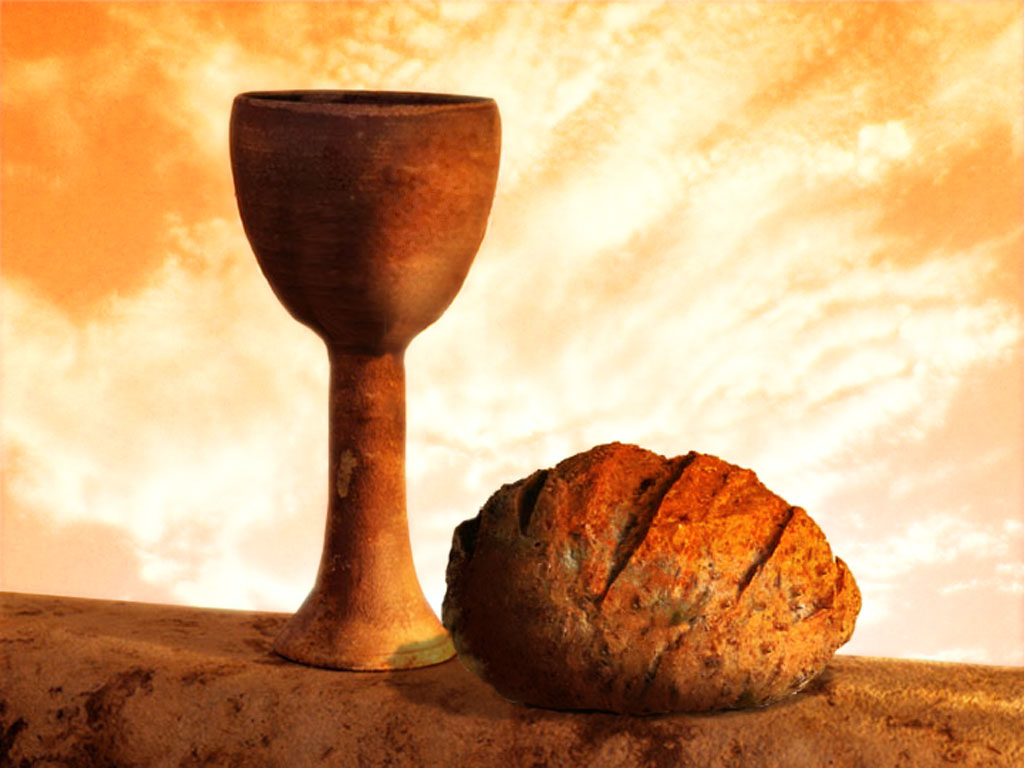
            The best place of healing for every person is at the Lord’s Table.  That’s right.  Communion is a sacrament, a sacred event, in which the worshiper can find more than just a reminder of Christ’s death – he or she can find the grace of healing from all the damage.  The Table brings one face to face with the cross of Jesus.  The past act of Christ’s crucifixion has settled the sin issue once for all.  To put it another way:  there is healing in Jesus Christ.
 
            In the cross God demonstrated his total identification with us in our own suffering.  Our healing is found in the spiritual reality that just as we may have been victims of another, so Christ was the ultimate victim who did not deserve the punishment he got from all the people with all their broken ways.  It was unjust.  But the good news is that God has justified the believer by sheer grace.  Jesus is our Wounded Healer.  On the cross God in Christ has absorbed the world’s brokenness and our painful feelings into his love.
 
            Therefore, we ought to come to the Table with joy and find both hope and healing.  The Lord’s Supper is not just some ritual to go about doing every so often in order to be obedient – Communion is a powerful means of grace that God uses to heal and nurture.  As we take and eat of the bread, and drink of the cup, from Christ’s broken body and shed blood we receive healing and wholeness for our own brokenness.  By faith we eat and drink to receive God’s forgiveness and love into both body and soul.
 
            If this chance at spiritual and emotional healing sounds too good to be true, you have grasped the meaning of grace.  If Communion can play such an important and significant place in the lives of people, maybe we all need to re-think the practice of only doing it occasionally or once a month.  I don’t know of any church board that would be okay with a pastor only preaching and praying once a month in a worship service, so why are we okay with Communion once a month?  We are okay with it because we don’t typically think of the Table as the place of healing and spiritual health.


            It is, I believe, high time we allow the sharing of the Table to not only inform us, but form us into the people that God wants us to be.  The Lord’s Supper brings us back to the centrality of God’s redemption through Jesus Christ, and to the means to which true healing comes:  the cross.  So, may the Table of Christ not only remind you of the cross, but change you, transform you, and reform you as you participate with God’s people in a ritual that brings life.