All I Want for Christmas Is Hope

The Presentation by John August Swanson

On the eighth day, when it was time to circumcise the child, he was named Jesus, the name the angel had given him before he was conceived.

When the time came for the purification rites required by the Law of Moses, Joseph and Mary took him to Jerusalem to present him to the Lord (as it is written in the Law of the Lord, “Every firstborn male is to be consecrated to the Lord”), and to offer a sacrifice in keeping with what is said in the Law of the Lord: “a pair of doves or two young pigeons.”

Now there was a man in Jerusalem called Simeon, who was righteous and devout. He was waiting for the consolation of Israel, and the Holy Spirit was on him. It had been revealed to him by the Holy Spirit that he would not die before he had seen the Lord’s Messiah. Moved by the Spirit, he went into the temple courts. When the parents brought in the child Jesus to do for him what the custom of the Law required, Simeon took him in his arms and praised God, saying:

“Sovereign Lord, as you have promised,
    you may now dismiss your servant in peace.
For my eyes have seen your salvation,
  which you have prepared in the sight of all nations:
a light for revelation to the Gentiles,
    and the glory of your people Israel.”

The child’s father and mother marveled at what was said about him. Then Simeon blessed them and said to Mary, his mother: “This child is destined to cause the falling and rising of many in Israel, and to be a sign that will be spoken against, so that the thoughts of many hearts will be revealed. And a sword will pierce your own soul too.”

There was also a prophet, Anna, the daughter of Penuel, of the tribe of Asher. She was incredibly old; she had lived with her husband seven years after her marriage, and then was a widow until she was eighty-four. She never left the temple but worshiped night and day, fasting and praying. Coming up to them at that very moment, she gave thanks to God and spoke about the child to all who were looking forward to the redemption of Jerusalem.

When Joseph and Mary had done everything required by the Law of the Lord, they returned to Galilee to their own town of Nazareth. And the child grew and became strong; he was filled with wisdom, and the grace of God was on him. (Luke 2:21-40, NIV)

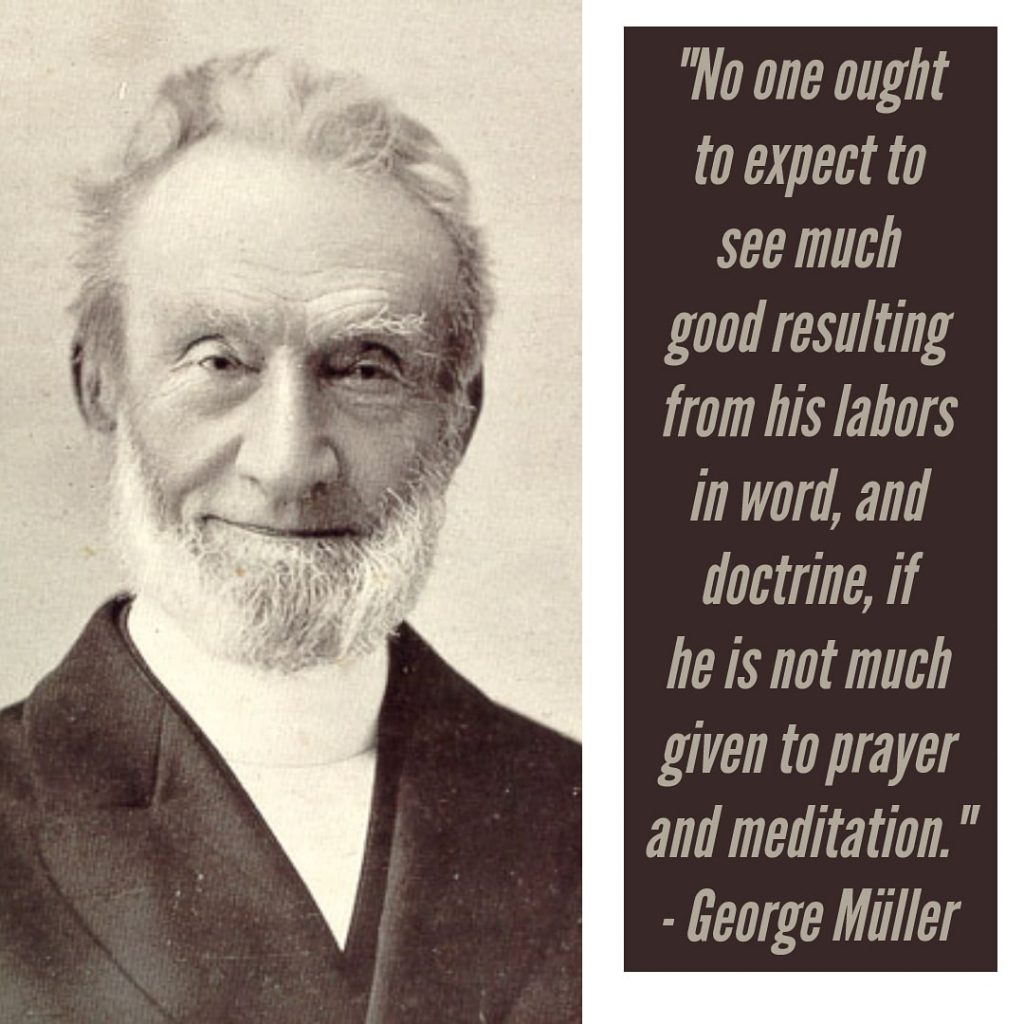
George Mueller (1805-1898) was a man full of hope in God.  For sixty-six years he preached in a small chapel in Bristol, England, yet what he is best known for is his orphanage. 

After being in ministry for a few years, Mueller became deeply concerned for the street children of the city and decided to start an orphanage.  The problem was he had no money.  So, with nothing but his hope in Christ he prayed God would provide. For the next sixty-four years, that was how George Mueller operated.

In that course of time, he built an orphanage, where he cared for and educated over eighteen-thousand children; educated over one-hundred-thousand more children in other schools at the Orphanage’s expense; distributed hundreds of thousands of Bibles and tens of millions of religious tracts; supported one-hundred-fifty missionaries; travelled over two-hundred-thousand miles as a missionary himself; and proclaimed the Gospel to over three million people around the world.

In all that time, Mueller never asked for one penny from anyone, his children never missed a meal, and he never had a debt.

We are not all called to be like George Mueller, or even like Simeon and Anna in our Gospel story.  However, all of us are called to grab hold of God’s promises with such faith and hope that, even though we may not yet see it realized, we live as though it has already happened.  This is what it means to participate with God. 

When George Mueller had a need, he pleaded to God and banked on the promise of God. Mueller prayed for more than money; he prayed for individuals, as well. Sometimes he prayed for someone for as long as fifty years. He never stopped praying for anyone or anything until he got his request. That is how convinced George Mueller was that God would answer his prayers.
All the promises of Holy Scripture revolve around Jesus Christ.  Jesus is the fulfillment of hope for persons of every nation and ethnicity. Christ is our Redeemer, and his salvation is limitless and includes all kinds of people.  Simeon and Anna, despite their age, despite the fact they lived their entire lives without seeing the Deliverer, never lost hope in the promise of God and never gave up praying and looking for the Savior.

Hope in the Bible is not wishful thinking but confident expectation which is grounded in the promises of God. Since all those promises have not yet been fully realized, we must have a quiet confidence and a patient spirit to anticipate the light at the end of the tunnel. Listen to what the Roman church needed to hear about this: 

We groan inside as we wait to be adopted and for our bodies to be set free. We were saved in hope. If we see what we hope for, that is not hope. Who hopes for what they already see? But if we hope for what we do not see, we wait for it with patience. (Romans 8:23-25, CEB)

Simeon and Anna gave testimony about the hope of all the earth.  We have a moving scene of the old man, Simeon, being led by the Spirit of God to enter the temple and take hold of the baby Jesus and cradle him in his arms.  Simeon’s hope is being realized as he declared that this little baby will be the means of salvation for all people.

This salvation comes at a great cost – and all of history hinges on this little child in Simeon’s arms.  Will people move toward or away from God?  Anna came along and, as the George Mueller of the ancient world, devoted herself constantly to prayer and anticipated the coming of the Messiah.  Anna confirmed the testimony of Simeon that this baby is the hope of Israel, the Redeemer of both Jew and Gentile.

Presentation in the Temple by British artist Sylvia Lauder

Today you decided to be here and join me; yet it was more than your own consideration.  The Holy Spirit of God, like Simeon of old, led you and I to this place of virtual meeting, perhaps because we long to see our hope realized – to find in the Christ child all we have longed for and have been waiting to see happen in our lives. 

God wants us to see Jesus. So, close your eyes, because the hope of all life cannot be seen with human eyes…

See him as a little baby…

See him as he grows with wisdom and favor with both God and others…

See him as he teaches, ministers, and heals the outcast and loves the common person…

See him as he is arrested, beaten, and taken outside of the city…

See them take the hammer and nail his hands and feet to a cross…

See him as you kneel before a terrible cross and watch him die, not for himself, not because he deserved it, but because of the world’s great sin and because humanity has lost their way…

See him as he is placed in the grave…

See him rise from death…

See him ascend to heaven…

See the Lord Jesus Christ in all his glory…

See that he has done all of this for you!  Do not lose hope!  Do not give up!  Search the Scriptures for the promises of God. Grab hold of them and rely on them as if your life depended on it – and it does!

Why did Simeon and Anna not lose hope?  How could they remain so devout?  Why, over the years and the decades when all seemed dark and despondent, did they not give up searching for the Christ of God? 

Because we become just like who we worship. 

If we spend all our time, thoughts, and energy on money, we will live and die with whatever the markets are doing… 

If we spend all our time, thoughts, energy on our job and our work, we will live and die with our ability to produce and get things done… 

If we spend all our time, thoughts, and energy on watching out for ourselves because we believe no one cares, then we will live and die lonely and dejected… 

But if we spend our time, use our thoughts, and expend our energy in the hope of all the earth, Jesus, the Savior of the world, then we will experience the deepest needs of our lives being met – we will become like Jesus, showing love, giving grace, and enjoying unhindered relationship with God.

No tragedy can dim the hope that comes from knowing God will walk with you through the valley. Hope is neither cheap, nor easy. Genuine hope typically arises from the ash heap of unfulfilled dreams, messed-up plans, and broken hearts. We often need to experience hopelessness before we can realize hope itself. It is the absence of hope that holds the invitation to forsake old ways and strike out on a new path to find our heart’s truest desire. Author Joan Chittester has wisely said:

“The challenge of hopelessness is the challenge to re-enter humanity, to take our part in it knowing that the lack of hope has much within it to shape our life. Losing hope leads us to understand that misfortune is not failure. It is at most simply a digression through life intended to make us reassess our course, our goals, and our aspirations.”

Indeed, hopelessness need not lead to despair. The profound lack of hope is ironically what reawakens and rekindles hope within us. It is the process of reassessment that is the opportunity to hope again with a sharper and a greater assurance of hope – to create space in becoming fully alive to the hope that has always been there – maybe just underneath all of life’s accumulated stuff.
For me, hope rekindles when I withdraw to a quiet place, either sitting down in my favorite chair or walking along a secluded wooded path. I allow and encourage the sixth sense of faith and imagination to inform my other five senses. This helps my heart to enlarge, the empty places of my soul to be filled with the hope of Christ. It is in this inner place, where our hearts join the heart of God, that we find an alternative way to the true hope for which we have been striving for so long to realize.

For the grace of God has appeared that offers salvation to all people. It teaches us to say “No” to ungodliness and worldly passions, and to live self-controlled, upright and godly lives in this present age, while we wait for the blessed hope—the appearing of the glory of our great God and Savior, Jesus Christ, who gave himself for us to redeem us from all wickedness and to purify for himself a people that are his very own, eager to do what is good. (Titus 2:11-14, NIV)

We have a sure and certain hope which presently now shapes our lives as we wait patiently. Just as we await a coming vaccine and deliverance from COVID-19 which presently now forms our living with masking, social distancing, and sheltering in place – so we look forward to the coming of our glorious Savior and the realization of our salvation in its fullness. Meanwhile, much like Simeon and Anna, we presently now devote our lives to prayer and wait….


Ezekiel 36:24-28 – I Will Give You A New Heart

New Heart by Ginnie Johansen Johnson

I will take you from the nations, I will gather you from all the countries, and I will bring you to your own fertile land. I will sprinkle clean water on you, and you will be cleansed of all your pollution. I will cleanse you of all your idols. I will give you a new heart and put a new spirit in you. I will remove your stony heart from your body and replace it with a living one, and I will give you my spirit so that you may walk according to my regulations and carefully observe my case laws. Then you will live in the land that I gave to your ancestors, you will be my people, and I will be your God. (CEB)

Every time I read these Old Testament verses from the prophet Ezekiel I am reminded of my time as chaplain on two cardiac intensive care units. I had several occasions to follow patients through the process of a heart transplant. I sat with them as they wondered if they would ever get a new one, as their own heart could no longer sustain the rest of their life. Would they die before receiving one? What would happen to their families?

Then, finally the day came for many (unfortunately, not all) there is a heart for them. After the incredible transplant surgery, joy abounds, knowing there is a new lease on life, a fresh experience. Through weeks or months of waiting and flirting with the Grim Reaper of death, hope is realized. Their old useless heart now replaced with a vibrant one, full of life!

However, the process is not yet over. Typically, about two or three days into possessing this new heart, a new realization comes along with it: Someone else had to die so that I could live….

He personally carried our sins
    in his body on the cross
so that we can be dead to sin
    and live for what is right.
By his wounds
    you are healed. (1 Peter 2:24, NLT)

Life comes from death. Resurrection can only happen when there is a crucifixion. Gaining a new spiritual heart has been achieved at the greatest of costs. “I will” is uttered nine times by God in five verses of Ezekiel’s prophecy. In gracious acts of determination to restore fallen people, God makes promises and has the authority and power to back them up. Our new heart is waiting to be animated by God’s Spirit so that our observance of God’s law is infused with divine might. Our consent to surgery is all that is needed.

Consider just a few of the great “I will” statements of Holy Scripture:

“I will instruct you and teach you in the way you should go; I will counsel you with my loving eye on you.” (Psalm 32:8, NIV)

“If someone trusts me, I will save them.
    I will protect my followers who call to me for help.
When my followers call to me, I will answer them.
    I will be with them when they are in trouble.
    I will rescue them and honor them.
I will give my followers a long life
    and show them my power to save.” (Psalm 91:14-16, ERV)

“I will strengthen you; I will help you; I will uphold you with my victorious right hand.” (Isaiah 41:10, NRSV)

“Call to me and I will answer you and tell you great and unsearchable things you do not know.” (Jeremiah 33:3, NIV)

“I will never leave you nor forsake you.” (Hebrews 13:5, NKJV)

May Christ make his home in your heart as you trust in him.

May your spiritual roots grow down deep into God’s love and keep you strong.

May you have the power to grasp, along with all God’s people, how wide, how long, how high, and how deep is the love of God.

May you experience the love of Christ, though it is too great to understand fully.

May you be made complete with all the fullness of life and power that comes from God.

May your new heart pump with the grace of Jesus Christ, the love of God, and the encouragement of the Spirit. Amen.

Micah 5:1-5a – The Shepherd Leader

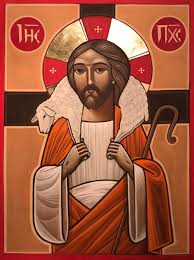
Coptic Church icon of Jesus the Good Shepherd

Jerusalem, enemy troops
    have surrounded you;
they have struck Israel’s ruler
    in the face with a stick.

Bethlehem Ephrath,
you are one of the smallest towns
    in the nation of Judah.
But the Lord will choose
one of your people
    to rule the nation—
someone whose family
    goes back to ancient times.
The Lord will abandon Israel
    only until this ruler is born,
and the rest of his family
    returns to Israel.
Like a shepherd
    taking care of his sheep,
this ruler will lead
    and care for his people
by the power and glorious name
    of the Lord his God.
His people will live securely,
and the whole earth will know
    his true greatness,
because he will bring peace. (CEV)

In Micah’s day there was no peace on earth, goodwill to all. In the eighth century B.C.E. the powerful Assyrian Empire came and conquered the northern kingdom of Israel, deporting many of the people and re-populating the cities with their own.

The Assyrian takeover of Israel not only left the northern kingdom in shambles but had a large impact on the southern kingdom of Judah.  All of Judah and Jerusalem were in extreme duress.  Even though Judah had not been conquered and was intact, they were still forced to pay tribute to the Assyrians to keep them at bay. 

The problem became even more exacerbated because the leadership of Judah sought to maintain their power and lifestyle.  The leaders neither looked to God for help nor looked out for the interests of the people.  Instead, they expected the already burdened poor to shoulder the burden of the tribute to the Assyrians.

What is more, thousands of refugees from Israel flooded into Judah and Jerusalem.  So, the already scant resources in Judah were pushed to the brink. Those in authority, the ones with resources who could make something of a difference, ended up taking advantage of the situation by buying fields and land at a fraction of its worth.  In some cases, they leveraged their power by simply pushing people of their land and taking it over. It was anything but a time of security, peace, and actions of goodwill.

Into this terrible situation of hardship and survival, Micah prophesied judgment upon the leaders who were oppressing the poor and displaced.  Micah’s message of hope was that a new kind of leader will come from humble origins, just like the common oppressed people of Judah.  The refugees, the displaced farmers, and the poor will have a champion.  He will feed and shepherd them, leading them to green pastures.  This leader will serve the people instead of the people serving the leader.

Christians see Jesus in Micah’s prophecy. Just as the ancient Jews needed hope and the promise of a different ruler, so today we, too, need hope and the anticipation of the leader who will come again using his power for security, peace, and goodwill.

Christ’s authority is different than earthly politicians and officials.  Israel and Judah had been so filled with bad kings and self-serving leadership over the centuries that Christ’s disciples could barely conceive of a different kind of rule. So, Jesus called his disciples together and said:

“You know that those who are regarded as rulers of the Gentiles lord it over them, and their high officials exercise authority over them.  Not so with you.  Instead, whoever wants to become great among you must be your servant, and whoever wants to be first must be slave of all.  For even the Son of Man did not come to be served, but to serve, and to give his life as a ransom for many” (Mark 10:42-43, NIV).

The people of Micah’s day needed to see beyond their terrible circumstances to hope of better days with food, peace, and protection.  We, too, feel insecure and anxious. We want leaders to be wise and just toward the vulnerable, the poor, and the displaced.  But while we look to our politicians and election cycles for our hope, the prophet Micah is jumping up and down, pointing us to a different leader – a shepherd leader.

Micah said the shepherd leader will come from Bethlehem.  When Micah proclaimed this, King David, the original shepherd king, had been dead for nearly three-hundred years. The people immediately made the connection between the coming leader and David.  There would be restoration and renewal!  A benevolent kingly reign is coming! 

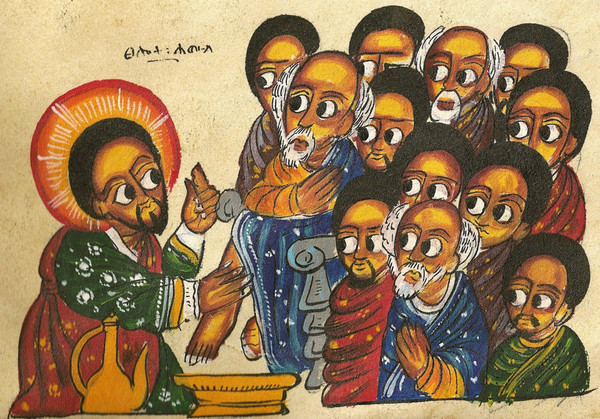
Ethiopian Orthodox Church depiction of Jesus the Bread of Life

“Bethlehem” is two Hebrew words put together: beth (“house”) and lechem (“bread”) thus being “House of Bread.” God was communicating that the coming shepherd leader would provide abundant food and care for them. God wanted, and still wants, a society that does not feed on itself, but is a house of bread for others. Jesus is the Bread of Life. Christ feeds us so that we will become a people who offer bread to others – both physical and spiritual bread.

Jesus is the bread for all the hungers we have in this life. We hunger for security in our world; satisfaction in our daily work; loved ones to be healthy and happy. In short, we hunger for peace. Our spiritual stomachs growl with hunger for spiritual food.  Many are spiritually starving because they are searching for peace and goodwill in places without food.

Satisfaction, contentment, and peace have come from the most unlikely places of Bethlehem and Nazareth. Can anything good come from villages in Judea that do not even show up on most maps of the ancient world?  Peace, hope, and goodwill can and do come from the least expected places and people. 

Christ was not born in the halls of power. Yet, through him there is peace, in the complete sense of the word. Jesus is the One who brings a full-orbed wholeness and wellness to life, no matter the situations around us. Jesus is our peace:

Like a shepherd, God will tend the flock; he will gather lambs in his arms and lift them onto his lap. He will gently guide the nursing ewes. (Isaiah 40:11, CEB)

“Yes, I will feed my flock, and I will lead them to a place of rest. I will search for the lost sheep. I will bring back the sheep that were scattered and put bandages on the sheep that were hurt. I will make the weak sheep strong, but I will destroy the fat and powerful shepherds. I will feed them the punishment they deserve.” (Ezekiel 34:15-16, ERV)

 “I am the Good Shepherd. I know my own sheep and my own sheep know me. In the same way, the Father knows me, and I know the Father. I put the sheep before myself, sacrificing myself if necessary. You need to know that I have other sheep in addition to those in this pen. I need to gather and bring them, too. They’ll also recognize my voice. Then it will be one flock, one Shepherd.” (John 10:14-16, MSG)

“I am the bread of life. He who comes to Me shall never hunger.” (John 6:35, NKJV)

When Jesus originally said those words, it was scandalous, unheard of rhetoric. So, Jesus, the stinker he could be, pressed it even more:

“I am the bread of life. Your ancestors ate the manna in the wilderness, yet they died. But here is the bread that comes down from heaven, which anyone may eat and not die. I am the living bread that came down from heaven. Whoever eats this bread will live forever. This bread is my flesh, which I will give for the life of the world… Very truly I tell you, unless you eat the flesh of the Son of Man… you have no life in you. (John 6:48-51, 53, NIV)

We are to ingest Jesus – to be filled with him. We need Jesus because he is our house of bread, our peace, our shepherd, and our king. Believing in him is to give our lives to him. The greatest Christmas gift we can give this season is the gift of our lives to Jesus Christ, the promised Messiah.

Lord Jesus, I have strayed far from your flock and taken matters into my own hands. I have chosen to feed in pastures that will never take care of my real hunger.  I need Your forgiveness. I believe You died on the cross for all the things I have done and left undone.  You rose from the grave to give me life. So, I want to stop going my own way and start going yours. Amen.

Psalm 79 – Unbearable Pain

The nations have come into your inheritance, God!
    They’ve defiled your holy temple.
    They’ve made Jerusalem a bunch of ruins.
They’ve left your servants’ bodies
    as food for the birds;
    they’ve left the flesh of your faithful
    to the wild animals of the earth.
They’ve poured out the blood of the faithful
    like water all around Jerusalem,
    and there’s no one left to bury them.
We’ve become a joke to our neighbors,
    nothing but objects of ridicule
    and disapproval to those around us.

How long will you rage, Lord? Forever?
    How long will your anger burn like fire?
Pour out your wrath on the nations
        who don’t know you,
    on the kingdoms
        that haven’t called on your name.
They’ve devoured Jacob
    and demolished his pasture.
Don’t remember the iniquities of past generations;
    let your compassion hurry to meet us
    because we’ve been brought so low.
God of our salvation, help us
    for the glory of your name!
Deliver us and cover our sins
    for the sake of your name!
Why should the nations say,
    “Where’s their God now?”
Let vengeance for the spilled blood of your servants
    be known among the nations before our very eyes!
    Let the prisoners’ groaning reach you.
With your powerful arm
    spare those who are destined to die.
Pay back our neighbors seven times over,
    right where it hurts,
    for the insults they used on you, Lord.
We are, after all, your people
    and the sheep of your very own pasture.
We will give you thanks forever;
    we will proclaim your praises
    from one generation to the next. (CEB)

The setting behind today’s Psalm is the destruction of the temple and a conquering army who proudly gloats over their victory. This is a prayer, an angry cry for God to step in and act on behalf of the humiliated people. The psalm is more than a simple plea for help; it is a deeply passionate appeal. As a child of the 1960’s, my phrase for the psalmist’s entreaty is, “God, stick it to the man!”

There is no polite knock at the side door of God’s house in the face of such evil. This is a pounding on the front door with the demand for God to do something about this terrible trouble. For the psalmist, the incongruence between who God is and what has happened to God’s people is inconceivable and unacceptable. To profane God’s temple is to profane God; and to kill and maim God’s people is to flip the middle finger at God. The psalmist is beside himself and overwhelmed with emotion.

There is something very instructive here that we ought not miss. When we have been brutalized, victimized, and/or demoralized, we just want someone, especially the Lord we serve, to take notice and feel what we are feeling. Never underestimate the power of empathy and solidarity. To feel alone and bereft of help is an awful feeling.

Perhaps the psalmist’s prayer offends some sensibilities. I wonder, for those who find the language difficult, have ever had a daughter raped or a house destroyed by fire or seen a person killed without mercy in front of their own eyes. Methinks they have not. The feelings of helpless despair and sheer anger defy human words. These are not casual affronts but malicious destructions of property and people.

We need someone to affirm the raw ruthlessness of it all, to have some understanding of the impossible place we are in with such wanton cruelty. When our very support is ripped from our lives, the madness within is too much to bear. Who will rescue us from this body of death?

God is big enough to handle our rage and our hurt. The Lord is available and hears our desperate voice of prayer. Yet, God is not always going to directly and immediately answer on the terms we stipulate. God acts out of God’s own providence and justice, and not from our expectations. And that is a good thing, not a bad thing.

God sees, knows, and feels with us. The realization of this enables us to recenter and reorient ourselves around faith, hope, and love. New life is never a gift in a vacuum; it comes out of agonizing struggle in reckoning with the existing evil.

So, when someone goes through a hellish experience, we are to exercise our capacity to listen and witness the horrible spiritual pain of the person. Healing hurts: it is not a pleasant affair. We are to hang in there and walk alongside another in their hour of need, even when their vitriol seems over the top to us. For only in telling our story to another will any of us find relief and renewed hope.

The psalms permit us to use language appropriate to what has happened to us. They also allow us to move beyond the venom to the God who restores broken lives.

Lord Jesus Christ, by your patience in suffering you hallowed earthly pain and gave us the example of obedience to your Father’ will: Be near me in my time of weakness and pain; sustain me by your grace, that my strength and courage may not fail; heal me according to you will; and help me always to believe that what happens to me here is of little account if you hold me in eternal life, my Lord and my God. As the Lord Jesus cried out on the cross, I cry out to you in pain, O God my Creator. Do not forsake me. Grant me relief from this suffering and preserve me in peace, through Jesus Christ my Savior, in the power of the Holy Spirit. Amen.