1 Timothy 4:6-16 – Build Your Faith Muscle

If you point these things out to the brothers and sisters, you will be a good minister of Christ Jesus, nourished on the truths of the faith and of the good teaching that you have followed. Have nothing to do with godless myths and old wives’ tales; rather, train yourself to be godly. For physical training is of some value, but godliness has value for all things, holding promise for both the present life and the life to come. This is a trustworthy saying that deserves full acceptance. That is why we labor and strive, because we have put our hope in the living God, who is the Savior of all people, and especially of those who believe.

Command and teach these things. Don’t let anyone look down on you because you are young, but set an example for the believers in speech, in conduct, in love, in faith and in purity. Until I come, devote yourself to the public reading of Scripture, to preaching and to teaching. Do not neglect your gift, which was given you through prophecy when the body of elders laid their hands on you.

Be diligent in these matters; give yourself wholly to them, so that everyone may see your progress. Watch your life and doctrine closely. Persevere in them, because if you do, you will save both yourself and your hearers. (New International Version)

There are several metaphors throughout the New Testament illustrating the nature of the Christian life and Christian community.

God’s people are the temple of the Holy Spirit, the house where the Lord dwells; the Body of Christ, a group working together and strengthening one another in faith; the army of the Lord, advancing with the shared purpose of proclaiming good news and extending God’s benevolent rule – just to name a few.

All the metaphors are embedded with the need for training, for spiritual disciplines and practices which strengthen faith and promote spiritual health.

Just as an army of recruits needs intense basic training and ongoing discipline; and just as the body needs hourly movement and daily exercise of its muscles; so, Christian communities require spiritual development with a variety of forms and functions to elicit and establish a solid godly life.

The curriculum in the school of faith, the liturgy within the spiritual temple, the boot camp for the Lord’s soldier, and the sets and repetitions for Christ’s Body are reading and listening to Scripture with a life rhythm of personal and corporate integrity, confident faith, steadfast love, encouraging words, and virtuous behavior.

If we dedicate ourselves to these things, there will be no room for entertaining wacky stories which have no basis in truth. Instead, there will be lush spiritual growth, teachable spirits, humble service, supportive beliefs, compassionate ministry, and open fellowship.

The high values of our faith need to be both used and guarded. Our treasured possessions, whatever they may be, are handled appropriately and carefully – being kept in a secure place when not used – and being used with care when out.

Our faith, our life and doctrine, is both a precious possession, as well as a necessary muscle to do the will of God. Like our own physical muscles, faith needs to be stretched, exercised, rested, and supplied with plenty of protein and necessary nutrients. Overtaxed muscles will fatigue and can be damaged through too much exertion. And underused muscles will wither and atrophy, unable to handle even the smallest of strain when we need them.

So, it is best to have proper spiritual hygiene and exercise through a regimen of tried and true practices designed to improve and maintain healthy faith. If you want to build your faith, consider the following 10 ways:

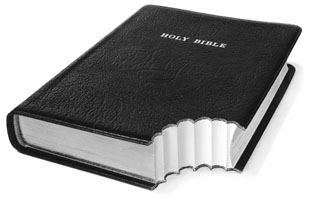
  1. Increase your amount of reading. There is no substitute for daily repetitions of reading the Bible. Supporting a growing faith will require more voluminous reading.
  2. Focus on listening to the biblical text. Reading is only as good as our listening skills. For the Christian, paying attention to the Holy Spirit’s gentle whispers is a must.
  3. Decrease your media time. For all the good stuff out there, a lot of media information is based in myth, half-truths, and opinions masked as facts – not to mention all the hack and huckster preachers.
  4. Pray more. In fact, pray continually.
  5. Practice gratitude – not complaining. Need I say more?
  6. Snack on good spiritual reading. Consuming a good book before bed keeps the faith muscle fed longer.
  7. Rest! When God created and instituted seven days, the first day was a day of rest; the workdays came after. Don’t flip-flop the divine order.
  8. Supplement with good spiritual conversation. Half-baked theological ideas come from remaining in one’s own cave-like head. Consultation, collaboration, and fellowship help create a rich and full faith.
  9. Don’t overtrain. Good idea: Read the Bible in a year. Bad idea: Read the Bible in a month. Good idea: Digest the contents of ecumenical Creeds and church Confessions. Bad idea: Stuff a bunch of knowledge down your gullet without any love to wash it down. Savor the meal. Don’t be a pig.
  10. Don’t lift too heavy for your faith muscle. The ancient desert fathers spent years developing their faith and could do incredible feats of spiritual strength. Christianity isn’t a competition of keeping up with the Francis of Assisi’s and Martin Luther’s of history. Use the measure of faith given to you and focus on those small daily decisions of trust.

Christianity is a marathon, not a 100-meter sprint. We persevere to the end, not flame out after taxing ourselves with expectations and responsibilities God never gave us.

Be safe. Be strong. Be smart. Be spiritual. We are all in this together.

Gracious God, fill your Church with truth, the truth with peace, and the peace with love. Where our faith is weak, make it strong; where it is misguided and in error, correct and direct it; where it is amiss, reform it; where it is in want, provide for it; where it is divided, reunite it, for the sake of Jesus Christ your Son our Savior. Amen.

James 1:17-27 – Be Good because God Is Good

Every good and perfect gift is from above, coming down from the Father of the heavenly lights, who does not change like shifting shadows. He chose to give us birth through the word of truth, that we might be a kind of first-fruits of all he created.

My dear brothers and sisters, take note of this: Everyone should be quick to listen, slow to speak and slow to become angry, because human anger does not produce the righteousness that God desires. Therefore, get rid of all moral filth and the evil that is so prevalent and humbly accept the word planted in you, which can save you.

Do not merely listen to the word, and so deceive yourselves. Do what it says. Anyone who listens to the word but does not do what it says is like someone who looks at his face in a mirror and, after looking at himself, goes away and immediately forgets what he looks like. But whoever looks intently into the perfect law that gives freedom and continues in it—not forgetting what they have heard but doing it—they will be blessed in what they do.

Those who consider themselves religious and yet do not keep a tight rein on their tongues deceive themselves, and their religion is worthless. Religion that God our Father accepts as pure and faultless is this: to look after orphans and widows in their distress and to keep oneself from being polluted by the world. (New International Version)

God is Good – All the Time

And all the time – God is good. That statement is a bedrock foundation for Christian faith. Without a basic affirmation and belief of God’s goodness, our faith will experience cracks and not stand the test of hardship and difficulty in life. Without the steadfast conviction that God is good, the alternative is that God is somehow fickle or even mean – that God does not care about my problems.

The trials and tribulations of life are intended by God to be watershed experiences that prove the genuineness, or lack thereof, of our faith. When life is good, it is easy to say God is good. However, when it isn’t, we may slide into a belief system that thinks God is the source of our trouble. And if we have not been working on a relationship with God, we will have scant resources to draw from to help us.

God is good, and not mean. Every single good gift there is in this world comes from God. Nothing evil comes from God. God’s grace is constantly around us. If his grace were not here, it would be like living inside a dystopian novel, or a zombie apocalypse, where everyone is constantly looking over their shoulders for the next evil thing to happen. Although evil exists, it could be a whole lot worse if it were not for divine grace and goodness.

“This is true faith, a living confidence in the goodness of God.”

Martin Luther

God is immutable, that is, God’s goodness is ever-present. On this earth we are constantly subjected to changing light as the sun rises and sets, and as the clouds come and go. Yet, God does not change like shifting shadows. God is not fickle or capricious. God’s goodness is always at high noon, standing like an eternal sun in a bright blue sky radiating unbroken grace to us.

God’s goodness has delivered people from sin, death, and hell. God’s grace has given us new life. God created the world and pronounced it “good.” God formed you and called you “good.” And God has forgiven you, in Christ, and says it is “good.”

God gave us a good word for us to accept and live by.

Hurry Up and Listen

There is a great need for listeners today. Precious little productive communication takes place because there are so many people in a hyper-vigilant state airing their opinions. They talk over and on top of each other because they’ve already made-up their minds about how things really are and what should be done. Nobody is listening.

Bible reading is a primary source for listening to God. Yet, although many people own multiple Bibles, and Scripture is freely available through digital sources, far too many persons simply don’t read and listen to it.

Slow Down and Speak

God has given us two ears and one mouth so that we will listen twice as much as we talk.   

Too much talk leads to sin. Be sensible and keep your mouth shut. (Proverbs 10:19, NLT)

A loose tongue and constant opining happens because of faulty listening.  An inability to listen leads to a lack of understanding because we do not take the time to get the whole story. It’s easy to pronounce verdicts with little information, and offer bad advice, when there is little listening.

Have a Long Fuse

Be slow to anger. A fool speaks without thinking, which stirs up strife. Slow to listen and quick to speak leads to anger flares. An angry spirit is an unteachable spirit, unwilling to listen to both God and others. 

Rash words said in anger produce an ugly unrighteous life. Selfish opinionated anger produces harsh bitter words and kills God’s plan for a good life.

We are to accept the Word of God. Throwing labels at people only de-humanizes them. They become objects of anger and scorn, and not people made in God’s image. Nothing good comes from ignoring God’s Word and giving-in to bitterness. It destroys good people.

Get Rid of Evil

Get rid of all moral filth, and the evil that is so prevalent. The unwillingness to listen, a loose tongue, and unrighteous anger are moral evils. Evil is not only perpetuated by serial killers, terrorists, and other people different from us. In fact, the face of evil rarely comes to us in the form of red horns and a pitchfork.

Evil also resides as soft-core wickedness – common ordinary evil. The demonic can work in an almost ho-hum manner, subtly questioning whether anyone can really live up to the precepts of God’s Word, and generally undermining all that takes place to the glory of God.

The face of evil is neither hot nor cold, but “meh.” It is the bitter slow-cooked seething anger bubbling just underneath the surface which comes out in a plastic smile while offering up a morsel of slander based on a lack of listening well. It comes out in fake gestures of niceness while being quick to make judgments with little to no information.

Put away the “meh.” Receive God’s Word. Take a teachable posture. Stop and listen to what God’s Word has to say.

Be a Doer of God’s Word, Not Just a Hearer

The Word of God is not truly received until it is put into practice. 

It is not the hearers of the law who are righteous in God’s sight, but the doers of the law who will be justified. (Romans 2:13, NRSV) 

Blessed are those who hear the word of God and obey it (Luke 11:28, NIV). 

The person who only hears is like a Mr. Potato Head that is only ears. He cannot stand because he has no feet.  He cannot do anything because he has no hands. Mr. Potato Head needs some feet so that he can follow Jesus wherever he goes. And he needs hands so he can do God’s will.

Listening to the Word without obedience is just that – it is mere hearing.  Profession of faith means nothing without a practice of that faith; learning the Bible is useless without living it; and acceptance of the Word is nothing more than a mental exercise without action to back it up.  Profession, knowledge, and acceptance alone does not satisfy God’s plan for our lives. 

Pay Attention to the Person in the Mirror

A person looks at himself in the mirror. He clearly sees all his flaws. Yet he does not respond, likely because he doesn’t like what he sees. It’s silly to look into a mirror, see a major bedhead, and just do nothing about it and go to work as if everything were fine. We look. We examine. We hear. We see exactly who we are. And we can’t even identify ourselves in a police lineup.

The person forgets what he looks like because he does not really want to face himself. This isn’t a clueless guy. It is one who sees himself as he really is and chooses not to do anything about it.

Forgetfulness happens because of inaction. Remembrance, communion, and hope all occur through active participation. God blesses the one who looks hard into the mirror of God’s Word, then intentionally makes changes based on what he finds.

Obedience to God’s Word brings freedom, not bondage. Listening, seeing, adjusting, and changing is a freeing activity. That’s because it’s how we are designed to live.

Holy and good God, give me grace to see you, others, and myself clearly so that I will be conformed to the image of Jesus Christ. Amen.

Psalm 119:113-128 – How to Change Our Spiritual Taste Buds

I hate anyone
whose loyalty is divided,
    but I love your Law.
You are my place of safety
and my shield.
    Your word is my only hope.

All of you worthless people,
    get away from me!
    I am determined to obey
    the commands of my God.

Be true to your word, Lord.
    Keep me alive and strong;
    don’t let me be ashamed
    because of my hope.
Keep me safe and secure,
    so that I will always
    respect your laws.
You reject all deceitful liars
    because they refuse
    your teachings.
As far as you are concerned,
all evil people are garbage,
    and so I follow your rules.
I tremble all over
when I think of you

    and the way you judge.

I did what was fair and right!
    Don’t hand me over to those
    who want to mistreat me.
Take good care of me,
    your servant,
    and don’t let me be harmed
    by those conceited people.
My eyes are weary from waiting
    to see you keep your promise
    to come and save me.
Show your love for me,
your servant,
    and teach me your laws.
I serve you,
so let me understand
    your teachings.
    Do something, Lord!
    They have broken your Law.
Your laws mean more to me
    than the finest gold.
I follow all of your commands,
    but I hate anyone
    who leads me astray.
(Contemporary English Version)

Some people try to avoid doing wrong and always try to do right. Others either bulldoze or sleepwalk through life, doing what they will, with impunity. Yet others try to steer clear of egregious sin, while indulging in so-called minor sins. 

Sin is messy business. No matter the form or the attempt at dealing with or without sin, the bottom line is that we all sin because we like it. We might not like the consequences of sin, but it tastes good while doing it.

That’s why we need a complete re-orienting of our hearts to hate every way contrary to God’s good commands. The psalmist proclaims and affirms that all God’s precepts are right, hating every false path which deviates from the true and good. 

If we sin because we like it, the way to avoid sin is learning to hate it – to loathe it so badly that it’s like a nasty stench in our nostrils. Hating sin comes from the acquired taste of loving God’s commandments. When we come around to cherish and desire God’s Word, then sin gradually becomes so odious that we want nothing to do with it.

The reason the psalmist could proclaim such an extended love song to the commands of God, is that he tasted how good they were. And it caused him to forsake every dubious way to human enjoyment. 

The reason I constantly encourage myself and others to read Scripture every single day, with a solid plan of spiritual rhythms, is that it really does have the power to change our taste buds. Sustained, consistent, daily eating of the psalms will teach us to want God and God’s ways – while forsaking the dark path of insolence and oppression.

The psalmist committed himself to avoiding worthless situations, as well as steering clear of harmful people with the propensity to doing wrong. These are fickle, double-minded people, divided in their loyalties. On one side of their mouth, they talk a good line about faith; and then talk out the other side of their mouth, spewing a bunch of worthless gobbledygook which, at the least, adds no value to anything, and, at worst, wrecks good plans and harms others.

If there are people in authority over us who don’t give a wit about our most cherished values, we will likely find ourselves tasked with doing things which rub against our understanding of God’s Word. In this state of moral distress, we are pushed, pulled, and tested in our single-minded devotion by the double-minded person to do what we are uncomfortable with.

In the stress and crucible of trouble, we need the courage to speak up, despite the fear of repercussions. And that strength will only be possible if we have a resilient spirit with the capacity to sustain our personal integrity in the face of our distress. That is, we need God and God’s Holy Word.

Scripture and fellow believers provide support because we need to care for one another as a community of redeemed persons who seek to live into the words of ways of almighty God.

It can be tricky business, wisely trying to discern between what we must accept and what we need to pushback against. Yet, with God, God’s Word, and God’s people, we possess all the resources required in living the spiritual life and navigating the sinful world we inhabit.

God Almighty, I pray that you will deal with me according to your steadfast love and teach me your statutes.  I am your servant; give me understanding so that I might know and live by your commands and forsake the evil of the world, through Jesus Christ my Lord, in the power of your Holy Spirit. Amen.

Titus 1:1-9 – Effective Spiritual Leaders

From Paul, a slave of God and an apostle of Jesus Christ. I’m sent to bring about the faith of God’s chosen people and a knowledge of the truth that agrees with godliness.

Their faith and this knowledge are based on the hope of eternal life that God, who doesn’t lie, promised before time began. God revealed his message at the appropriate time through preaching, and I was trusted with preaching this message by the command of God our savior.

To Titus, my true child in a common faith.

Grace and peace from God the Father and Christ Jesus our savior.

The reason I left you behind in Crete was to organize whatever needs to be done and to appoint elders in each city, as I told you. Elders should be without fault. They should be faithful to their spouse and have faithful children who can’t be accused of self-indulgence or rebelliousness. This is because supervisors should be without fault as God’s managers: they shouldn’t be stubborn, irritable, addicted to alcohol, a bully, or greedy. Instead, they should show hospitality, love what is good, and be reasonable, ethical, godly, and self-controlled. They must pay attention to the reliable message as it has been taught to them so that they can encourage people with healthy instruction and refute those who speak against it. (Common English Bible)

Paul wrote his letter to Titus so that spiritually solid competent virtuous leaders might be appointed to guide the church on the island of Crete (located in the Mediterranean Sea, south of Greece). 

There was no ambiguity with Paul about the importance of leadership. The Apostle clearly laid out his expectations that church officials must have a good reputation – not bossy, quick-tempered, heavy drinkers, bullies, or dishonest in business. Instead, they must be friendly to strangers and enjoy doing good things. They must also be sensible, fair, pure, and self-controlled.  They must stick to the true message they were taught, so that their good teaching can help others and correct everyone who opposes it.

I find it interesting that very few biblical scholars view this teaching as an ideal to aspire – while many churches and believers think this is the case. There is neither any indication nor reason within the biblical text to think that Paul presented his expectations for the ideal leader, as if no one could really be this way. 

Furthermore, Paul did not provide his instruction as a strategy for getting apathetic people off their butts and into some form of service. No, it’s best to understand that Paul meant what he said. He knew that compromising on the character of leadership would erode and destroy the church.

“True leadership is found in giving yourself in service to others, not in coaxing or inducing others to serve you.”

J. Oswald Sanders

The selection of church leaders is important because just one bad belly-aching non-virtuous apple can upset the entire apple cart. Good people provide good teaching and good wisdom. Selfish people with a self-centered agenda find ways to subvert or manipulate sound instruction to get what they want. 

Everyone in the Body of Christ is to grow in the wisdom and knowledge of God. They are to be wise to all the shenanigans of myopic persons through understanding the commands and instruction of Holy Scripture. This is yet another reason to immerse ourselves in the Bible so that we will lead with confidence.

If a church or faith community feels the need to overlook character defects to fill empty leadership seats, then Houston, we have a problem. Any short order cook worth his salt would never crack open a rotten egg and mix it in with the rest to make an omelet. And any group of people who throw a bad egg into their leadership team had better be ready to get sick and vomit when meetings are called to order.

It is imperative that spiritual leaders possess the following:

  • A good reputation
  • Faithfulness and fidelity to their families.
  • A clear-mind and consistent good behavior.
  • Self-control
  • The moral courage to speak truth with grace.
  • A spirit and practice of hospitality.
  • An ability to communicate well so that people are built up in their faith.
  • Sobriety
  • Humility
  • Respectability
  • Gentleness
  • Patience
  • Generosity
  • Compassion
  • Maturity
  • Sincerity
  • Honesty
  • Empathy
  • Purity

All these traits are needed for effective and godly spiritual leadership. Compromising on virtue will never end well. Upholding moral character brings blessing.

“The authority by which the Christian leader leads is not power but love, not force but example, not coercion but reasoned persuasion. Leaders have power, but power is safe only in the hands of those who humble themselves to serve.” 

John R.W. Stott

God calls and sets apart individuals for service. The Lord desires to reveal and manifest the divine presence among people through leaders who reflect God’s good attributes. Jesus Christ wants his church to be built up through faithful service. The Spirit seeks to sanctify and empower for effective ministry.

Nowhere do we find in Scripture that a leader’s main job is listening to complaints. That’s because God has a zero tolerance policy toward murmuring, grumbling, and ingratitude. In fact, the New Testament clearly says to do everything without complaining or arguing. (Philippians 2:14)

Neither will you find the church is supposed to operate just like an American form of democracy. Spiritual leaders are not representatives of the people to do their will. Instead, they are representatives of God to the people so that God’s will is done in all things. 

That all means prayer to God and outreach to the world is the major work for spiritual leaders. And it takes virtuous and ethical persons leading to realize love to all kinds of people. So, feel free to exercise leadership. Just make sure that leadership is grounded in the God of integrity and the Word of grace and truth.

Almighty God, the One who gives good gifts to people, may every grace of ministry rest on divinely appointed leaders. Keep them strong and faithful so that your church may prosper in peace. Grant leaders wisdom, courage, discretion, and benevolence so that they may fulfill their charge to the glory of Jesus Christ and in the power of your Holy Spirit. Amen.