The Idea of Spiritual Separation (2 Corinthians 6:14-7:1)

Do not be yoked together with unbelievers. For what do righteousness and wickedness have in common? Or what fellowship can light have with darkness? What harmony is there between Christ and Belial? Or what does a believer have in common with an unbeliever? What agreement is there between the temple of God and idols? For we are the temple of the living God. As God has said:

“I will live with them
    and walk among them,
and I will be their God,
    and they will be my people.”

Therefore,

“Come out from them
    and be separate,
says the Lord.
Touch no unclean thing,
    and I will receive you.”

And,

“I will be a Father to you,
    and you will be my sons and daughters,
says the Lord Almighty.”

Therefore, since we have these promises, dear friends, let us purify ourselves from everything that contaminates body and spirit, perfecting holiness out of reverence for God. (New International Version)

There are entire Protestant denominations built upon verses such as today’s. They take the admonition to be separate as a cornerstone value. Ever since the Reformation, various Christian groups have struggled to maintain their witness in the world through, essentially, having nothing to do with the world whatsoever.

The dogma of separation inevitably leads to defining precisely what is “worldly” and what isn’t. This is where the idea of creating lists of what’s not acceptable come from. Each group or denomination has it’s own teaching about how to identify oneself as a Christian, and what sorts of behaviors communicate one isn’t a Christian. And the lists often vary quite a bit.

The Puritans had detailed lists and laws of what must be done and not done in order to remain in the community and be pure without spiritually contaminating oneself. For example, here are just a few of the many puritanical laws in Massachusetts in the 1600’s:

Sunday was a holy day. Trade and business were not allowed. No other public meetings could be held (except church services). No travel, except for walking to and from church and for emergencies. No entertainment. Church attendance was required. If a person missed church, they had to go to court (on Monday) and pay a fine.

All the other days were holy, too. Immodest and ostentatious clothes was illegal. Long hair for men was illegal. Smoking was illegal in the street. Courting a girl without her parents’ consent was illegal. Kissing in public was illegal. The following behaviors were illegal: using bad words, drinking too much alcohol, laziness, gluttony, fighting, poorly made products, having a bad attitude, and gossip.

Any violation, in Puritan thought, put the entire community at risk of raising the ire of God – who may punish them with various natural disasters. With all of these laws and lists, there was no opportunity for anyone to ever marry an unbeliever or be in business with a non-Christian, simply because it was illegal to be anything but a Christian!

None of this is meant to pick on the Puritans. It’s commendable that a group of people would want to be holy in all that they do and say. Yet, attempting to legislate every facet of another’s life isn’t so admirable – especially against their own Christian convictions.

Because, the reality of it all is that, in such systems, the few (usually old white guys) make the laws and decisions for everyone else – whether everyone likes it, or not. And worse, the old guys would couch their laws in the pious language of maintaining the common good of all persons (that is, themselves).

That sort of practice is still done today, in every system and every institution; the few call the shots for everyone else. And yes, even in a stated democracy like the United States of America.

So, if that isn’t what the Apostle Paul was getting at with the Corinthian Church, what then did he mean when he talked of separating from unbelievers, not being contaminated, and maintaining purity amongst the community?

Paul was speaking about the reality that the Corinthians – who had been ardent pagan worshipers before their conversion to Christianity – were still making significant accommodations to their surrounding pagan environment. Like a pair of ox yoked together, it just did not work. The two were greatly mismatched; they would not be able to go anywhere or get anything done.

In a series of rhetorical questions, Paul sought to illustrate the incompatibility of being a spiritual square peg trying to fit into a round hole. To be holy means to be set apart for the specific purpose of and devotion to God.

Rather than making holiness be the avoidance of dancing, drinking, playing cards, and dressing up, holiness and purity is to be characterized by righteous humility and gentleness; warm and compelling light; peace and peacemaking, like Christ did; love for fellow believers; and commitment to Christian community.

Put another way, avoiding spiritual contamination means to work on separating from sinful pride; giving into the shadows and the darkness of one’s heart; fostering arguments and division; and being unmerciful.

If the Apostle were to write to us today, on this topic of separation, what would he say to us? Maybe his rhetorical questions would be something like this:

What are you doing, failing to make a distinction between good and bad, right and wrong? How can you partner up with people who have ethics which are opposed to Christ? Can the light of justice ever be best friends with unjust darkness? Do Jesus and Satan ever have a midnight stroll holding hands with each other? Would anyone ever set up a worship altar to the wealthy or powerful in a church building?

Paul may argue, even today, that we contaminate ourselves in rather creative ways by employing illegitimate means to try and accomplish a legitimate need.

The truth is that anything that hinders us from doing God’s will; anyone who draws us away from a good relationship with Jesus; and whatever causes us to put the Christian life on the back burner of life, needs to be jettisoned. It will make us impure, ineffective, and eventually bite us in the backside.

We can always look at other groups of people whom we believe didn’t get things quite right. Yet, we really must deal with ourselves in this moment and for this time. Comparative holiness will get us nowhere (except maybe hell). Instead, let us contend with God and God’s people in ways that are redemptive, life-giving, and helpful for us and for our salvation.

Almighty God,
to whom all hearts are open,
all desires known,
and from whom no secrets are hidden:
cleanse the thoughts of our hearts
by the inspiration of your Holy Spirit,
that we may love you completely,
and rightly magnify your holy name;
through Christ our Lord. Amen.

Set Apart for a Purpose (Exodus 30:22-38)

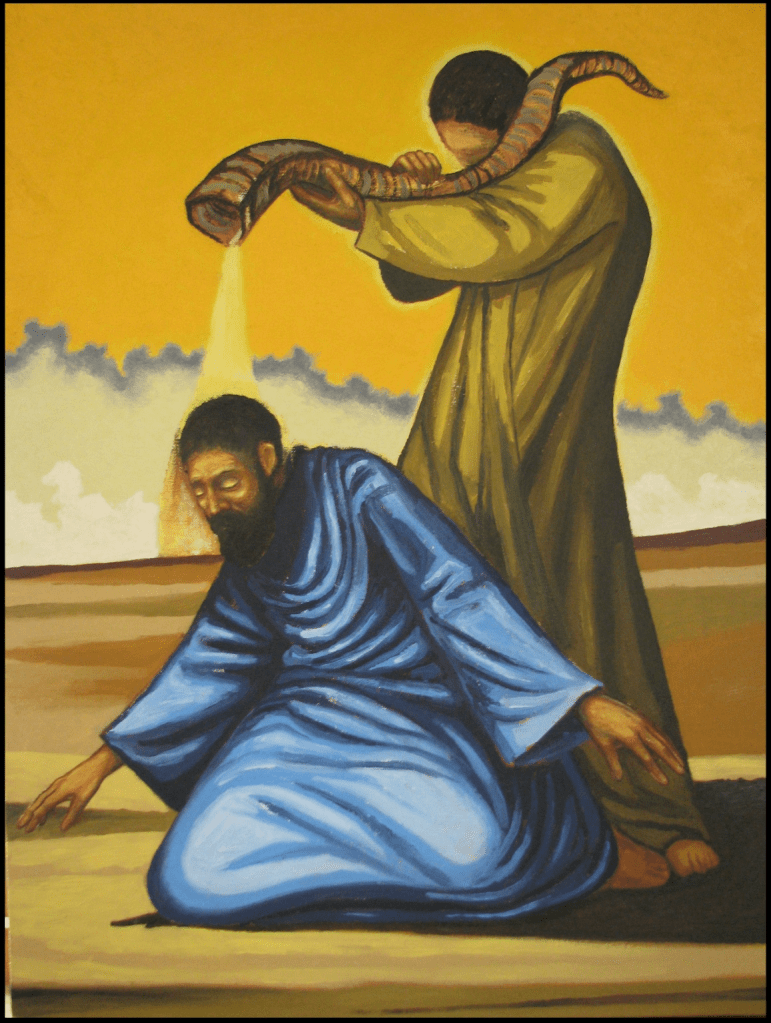
Aaron is anointed by Moses, by Jack Baumgartner

Then the Lord said to Moses, “Collect choice spices—12 1⁄2 pounds of pure myrrh, 6 1⁄4 pounds of fragrant cinnamon, 6 1⁄4 pounds of fragrant calamus, and 12 1⁄2 pounds of cassia—as measured by the weight of the sanctuary shekel. Also get one gallon of olive oil.

Like a skilled incense maker, blend these ingredients to make a holy anointing oil. Use this sacred oil to anoint the Tabernacle, the Ark of the Covenant, the table and all its utensils, the lampstand and all its accessories, the incense altar, the altar of burnt offering and all its utensils, and the washbasin with its stand. Consecrate them to make them absolutely holy. After this, whatever touches them will also become holy.

“Anoint Aaron and his sons also, consecrating them to serve me as priests. And say to the people of Israel, ‘This holy anointing oil is reserved for me from generation to generation. It must never be used to anoint anyone else, and you must never make any blend like it for yourselves. It is holy, and you must treat it as holy. Anyone who makes a blend like it or anoints someone other than a priest will be cut off from the community.’”

Then the Lord said to Moses, “Gather fragrant spices—resin droplets, mollusk shell, and galbanum—and mix these fragrant spices with pure frankincense, weighed out in equal amounts. Using the usual techniques of the incense maker, blend the spices together and sprinkle them with salt to produce a pure and holy incense. Grind some of the mixture into a very fine powder and put it in front of the Ark of the Covenant, where I will meet with you in the Tabernacle.

You must treat this incense as most holy. Never use this formula to make this incense for yourselves. It is reserved for the Lord, and you must treat it as holy. Anyone who makes incense like this for personal use will be cut off from the community.” (New Living Translation)

It’s not everyday that you get a scripture text like this one to reflect upon. Yet, since all of Holy Scripture is given to us and for us, it’s good to occasionally have to work through the place and purpose of seemingly mundane passages within the Bible.

The ancient world of the Israelites had a relationship with their God in which everything and every part of their lives were to be holy – both worship and daily life were infused with reminders that they were set apart entirely to God and for God.

Therefore, what the people wore, what they ate, and how they went about daily tasks of living and worshiping was dictated to them from the Lord. The purpose of all the detailed instructions was to reinforce the importance of being a holy people, a kingdom of priests, who could show the world how a community of persons devoted to Yahweh lived, talked, and acted.

Concerning the people’s worship of God, chapters 25-31 of Exodus provide detailed plans for the sacred space and symbols which were to be used in that worship. Elaborate specifications were given for their construction and placement.

Today’s Old Testament lesson deals with the special formula for anointing oil. In keeping with the holiness which is to be pervasive throughout all of Israelite life, this particular oil has a specific use, and is never to be used outside of that ordained purpose.

The sanctity of the oil is communicated in the strongest of terms; profane use of it is strictly forbidden. And all of the work is to be done during six days of the week, because the Sabbath is a day set apart as different, with an abundant rest from labor.

The anointing oil is used for symbolic marking in the service of God. The priests (the Levites Aaron and his sons) were to use the oil, since they were the only ones set apart to do the priestly work. The articles used for worship were also marked with the anointing oil. (Exodus 29:4-7)

None of this liturgical action was in any sort of way magical; it communicated the important theological concept that God is holy, and therefore, holiness is to be woven into every facet of Israelite life. The anointing oil was a sign of God’s acknowledgement and approval that the objects and the people being anointed were to be exclusively used for worship.

Holiness and being set apart aren’t only ancient ideas and practices; it’s also an important part of the New Testament and the way we are to live today. That’s because holiness isn’t merely something God does; it is inherent to God’s very nature. Therefore, as people created in God’s image and likeness, we too, are to live sanctified lives, set apart to live as humans are designed to live.

“You must be holy because I, the Lord your God, am holy.” (Leviticus 19:2, NLT)

“You must be holy because I, the Lord, am holy. I have set you apart from all other people to be my very own.” (Leviticus 20:26, NLT)

But now you must be holy in everything you do, just as God who chose you is holy. For the Scriptures say, “You must be holy because I am holy.”

1 Peter 1:15-16, NLT

Followers of Christ are set apart for a purpose – to be holy and sanctified in all they say and do. And, much like the ancient followers of God, Christians are to worship the Lord alone, living differently than the rest of the world.

It is God’s will that you should be sanctified. (1 Thessalonians 4:3a, NIV)

You are a chosen people, a royal priesthood, a holy nation, God’s special possession, that you may declare the praises of him who called you out of darkness into his wonderful light. Once you were not a people, but now you are the people of God; once you had not received mercy, but now you have received mercy. (1 Peter 2:9-10, NIV)

We have an opportunity, as people anointed and set apart for God’s good purposes, to bring mercy as we have received mercy, love as we ourselves have received love; and to maintain the integrity of holiness everywhere we go.

In today’s mass produced factory products, consumers only see the end results; they are ignorant of the person and process that made the product. Most things we buy and use come to us without any history of how they were made and who made them.

Yet, the people and the processes used in making anything is significant because holiness cannot be factory-made. There is always a connection between the person, the process, and what is being produced for the end product.

In God’s economy, it isn’t enough just to have anointing oil composed of the right ingredients; the individual and the craft employed are what make it truly an oil for anointing the holy.

People, in truth, are neither interchangeable on a factory floor assembly line, nor with the worship of God. The individual person offering their process will always have a particular outcome unique to that mix of person, process, and product. The belief that singing, praying, serving, and whatever else happens in worship is to be done with consistency – no matter who does it – is both impossible and not expected by God.

Though the ingredients of a particular spiritual experience always remain the same, Holy Scripture suggests that the subtle differences each individual brings to the craft of worship is good and necessary; without that uniqueness, there cannot be holiness.

Sanctify your church by the truth, O Lord; your word is truth.

Sanctify us by the truth, O Lord; your word is truth.

Sanctify me by the truth, O Lord; your word is truth. Amen.

Becoming Holy (Isaiah 4:2-6)

And that’s when God’s Branch will sprout green and lush. The produce of the country will give Israel’s survivors something to be proud of again. Oh, they’ll hold their heads high! Everyone left behind in Zion, all the discards and rejects in Jerusalem, will be reclassified as “holy”—alive and therefore precious. God will give Zion’s women a good bath. He’ll scrub the bloodstained city of its violence and brutality, purge the place with a firestorm of judgment.

Then God will bring back the ancient pillar of cloud by day and the pillar of fire by night and mark Mount Zion and everyone in it with his glorious presence, his immense, protective presence, shade from the burning sun and shelter from the driving rain. (The Message)

One of the characteristics of Holy Scripture I deeply appreciate are the wonderful prose sections letting us, the readers and listeners, know that our longings for better days will come. There is a day coming when all of our good imaginings of the future shall be realized; and our present circumstances of hatred, discord, jealousy, and envy of one another shall be a thing of the past.

Unfortunately, we will likely (and biblically!) have to see some devastating and violent loss, and experience some terrible and awful destruction of both body and soul. All of the Old Testament prophets spoke messages of both judgment and grace, suffering and glory. Although hammered with ruin, biblical readers are given glimpses of hope to see the possibility of life beyond all of the carnage.

In other words, there will indeed be restoration and renewal. All shall not be lost forever. Death does not have the last word; resurrection does. It will happen because God has a determined resolve to find resilient ways of restoring the divine/human relationship back to its original and intended peaceful good.

It takes faith to have hope, and hope to have faith, and love to win the day forever. If God can create ex nihilo, out of nothing, then the Lord can reform and renew that which already exists, even though it may be in an awfully deformed state.

The ones who remain, the survivors, are the remnant of true believers, the people who hold onto faith and patience in the face of adversity, hardship, and difficulty. These are the dreamers, the seers, the prophets who foresaw both the need for divine judgment, and equally understood the promise of divine restoration.

The earth will once again be blessed. A rainbow of promise shall rise to remind us all that the storms which ravaged us have passed, never to return again.

But let us also clearly understand that it is because of human stubbornness, of hard-hearted people failing to love mercy and show steadfast love, that got us in this pickle of judgment to begin with. There comes a point when the repeated refusal to change, and use the gifts God has given us, leads to our shelf life on this earth coming to a moldy ruin. To be thrown into the divine incinerator is something brought on by us, not God.

Evil is like a cancer which must be purged from our existence so that we can be clean and healthy. The commands of God are not meant to keep people under a heavy divine thumb, but rather to help people live well in this world in a good healthy way. Living a holy life means that we participate in productive spiritual practices that strengthen faith and support the spirit.

People become “unclean” when they take a different path which is inconsistent with how we were designed by our Creator to live. It would be a bit like believing we can ignore all traffic laws and drive how we want, and then are surprised when we are nearly killed in an accident. Sadly, the unclean perish in their self-preoccupations, with God’s generosity completely off of their spiritual radar.

Yet, no matter where we’ve come from or what we have done, there is always the possibility of rehabilitation, of renewing our relationship to God, experiencing the divine presence, and receiving divine grace.

Getting in sync with the healthy spiritual forces of this universe is like having the ancient provision and protection of God’s pillar of cloud by day and fire by night – reassuring us that we are not alone and belong securely in the merciful arms of a loving Lord.

In Christianity, a holy life and a clean heart results from the person and work of Jesus Christ. God got down to it, taking the judgment we deserved and giving us grace. All of the temporary ritual cleanings merely pointed forward to the once for all scrubbing of the cross.

The blood of goats and bulls and the ashes of a heifer sprinkled on those who are ceremonially unclean sanctify them so that they are outwardly clean. How much more, then, will the blood of Christ, who through the eternal Spirit offered himself unblemished to God, cleanse our consciences from acts that lead to death, so that we may serve the living God!…

 and since we have a great priest over the house of God, let us draw near to God with a sincere heart and with the full assurance that faith brings, having our hearts sprinkled to cleanse us from a guilty conscience and having our bodies washed with pure water. Let us hold unswervingly to the hope we profess, for he who promised is faithful. (Hebrews 9:12-14, 10:21-23, NIV)

May you experience the blessing of becoming clean, and know the blessing of being holy and pure in all your relationships and activities. Amen.

Advent Is Coming (Zechariah 13:1-9)

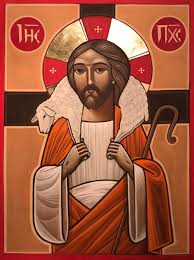
Coptic Church icon of Jesus the Good Shepherd

“On that day a fountain will be opened to the house of David and the inhabitants of Jerusalem, to cleanse them from sin and impurity.

“On that day, I will banish the names of the idols from the land, and they will be remembered no more,” declares the Lord Almighty. “I will remove both the prophets and the spirit of impurity from the land. And if anyone still prophesies, their father and mother, to whom they were born, will say to them, ‘You must die, because you have told lies in the Lord’s name.’ Then their own parents will stab the one who prophesies.

“On that day every prophet will be ashamed of their prophetic vision. They will not put on a prophet’s garment of hair in order to deceive. Each will say, ‘I am not a prophet. I am a farmer; the land has been my livelihood since my youth.’ If someone asks, ‘What are these wounds on your body?’ they will answer, ‘The wounds I was given at the house of my friends.’

“Awake, sword, against my shepherd,
    against the man who is close to me!”
    declares the Lord Almighty.
“Strike the shepherd,
    and the sheep will be scattered,
    and I will turn my hand against the little ones.
In the whole land,” declares the Lord,
    “two-thirds will be struck down and perish;
    yet one-third will be left in it.
This third I will put into the fire;
    I will refine them like silver
    and test them like gold.
They will call on my name
    and I will answer them;
I will say, ‘They are my people,’
    and they will say, ‘The Lord is our God.’” (New International Version)

There’s likely a reason why so many Bible-readers have barely considered, or just never read, the minor prophets of the Old Testament: It’s difficult reading, on several levels.

Yet, the twelve books of the minor prophets, along with the four books of the major prophets, account for a lot of material within Holy Scripture. If we are to understand the whole of the Bible, as well as know God better, we need to contend with what the prophets have to say.

Impurity and cleansing, grace and judgment, idolatry and stabbing, prophets and visions, sheep and shepherds, faith and apostasy, are all part of what seems, on the surface, to be a confusing hodge-podge of verbiage from the prophet Zechariah. Yet, we can still observe the things God cares about.

The Lord promised to rid the land of idols (false gods), (false) prophets, and the spirit of impurity (false righteousness). If God takes out the false prophets, then the people can say good riddance to a false message of leading others toward idolatry and impurity.

The spirit and the message behind false prophets, unholy leaders, and unrighteous teachers, has to do with propagating lies and suppressing truth, so that they can deceive people and manipulate others for their own benefit – leading groups of people away from reality, and into commitments that go nowhere.

This insidious stuff is meant to be taken quite seriously – because it leads to a breakdown in community, a proliferation of injustice, and oppressive spiritual bondage. That’s why we have a rather dramatic picture of parents stabbing a child – not because God likes violence – but to demonstrate that false prophets and their message will damage and destroy a nation, if indulged.

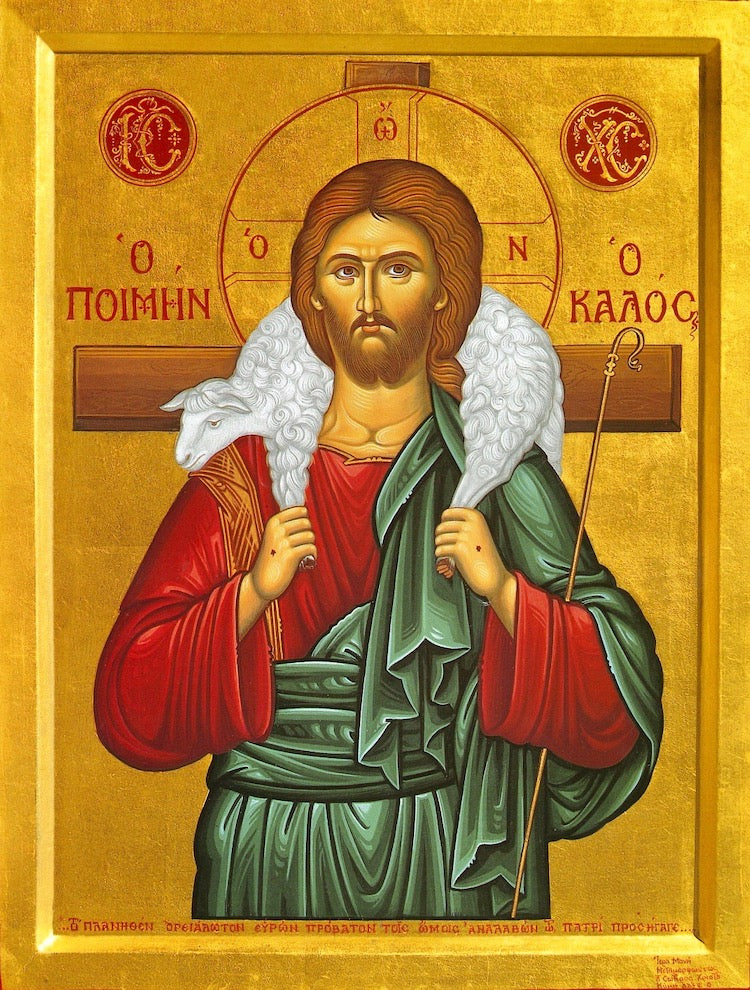
Orthodox icon of Jesus the Good Shepherd

We must always keep in mind and remember that injustice and unrighteousness must always be nipped in the bud (Deuteronomy 13:6-11). Sin, that is, those things which deceive and make false promises that result in a downward spiral toward death, is to be confronted. In the New Testament, Jesus put the matter this way:

If your right eye causes you to stumble, gouge it out and throw it away. It is better for you to lose one part of your body than for your whole body to be thrown into hell. And if your right hand causes you to stumble, cut it off and throw it away. It is better for you to lose one part of your body than for your whole body to go into hell. (Matthew 5:29-30, NIV)

Christ was not advocating a physical maiming of oneself, but rather for us to separate ourself from sin by whatever means necessary. In other words, Jesus was saying that sin isn’t something to be managed, but instead something to eradicate altogether.

Truth matters. Truth brings reality and beauty to light. Falsehood is terrible. To promote that which is false, and perhaps even worse, tolerate it, gives hate and injustice a platform from which to crawl out of the darkness and make the world blind. It would take an awful lot to undo error’s presence.

This is why the shepherd, or maybe, from the Christian perspective, the Christ, is stricken. The Good Shepherd, the one who is truth incarnate, would have to suffer. The injustice and unrighteousness is so foul and degrading that only the pure can undo the impure. And it is all set in motion, not by the forces of darkness, but by God.

God strikes the shepherd, and the sheep scatter. He is not struck because he deserves it – far from it – but because he assumes responsibility for the wrongdoing of others. Father God is the parent who stabs a spear in the side of God the Son.

The ultimate good shepherd of the sheep will die as a heinous offender; and God is the executioner.

In Christ, God put the wrong on him who never did anything wrong, so we could be put right with God.

2 Corinthians 5:21, MSG

This same great shepherd of the sheep, who became the Lamb of God that takes away the sin of the world, is coming again. And he will bring the refining and purifying fire of divine judgment upon the earth.

In this upcoming Advent season, we remember not only that Jesus has come to save the world. We also are reminded that there is yet a second Advent, in which Jesus will come to judge the living and the dead.

Behold, He is coming with clouds, and every eye will see Him, even they who pierced Him. And all the tribes of the earth will mourn because of Him. Even so, Amen.

“I am the Alpha and the Omega, the Beginning and the End,” says the Lord, “who is and who was and who is to come, the Almighty.” (Revelation 1:7-8, NKJV)

Blessed God and Father of our Lord Jesus Christ, preserve us from our own madness. Direct us away from dealing destruction to others; help us to steer clear of paths which lead to the ruin of ourselves and our world.

Protect us. Enable us to hear you. Beloved Jesus, show us your precious face in all others – you in us, and we in each other, from all places. Amen.