Matthew 20:29-34 – The Irony of the Gospel

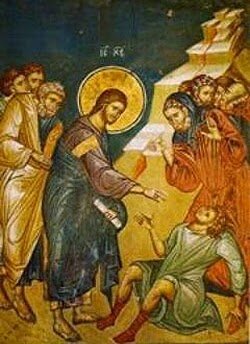
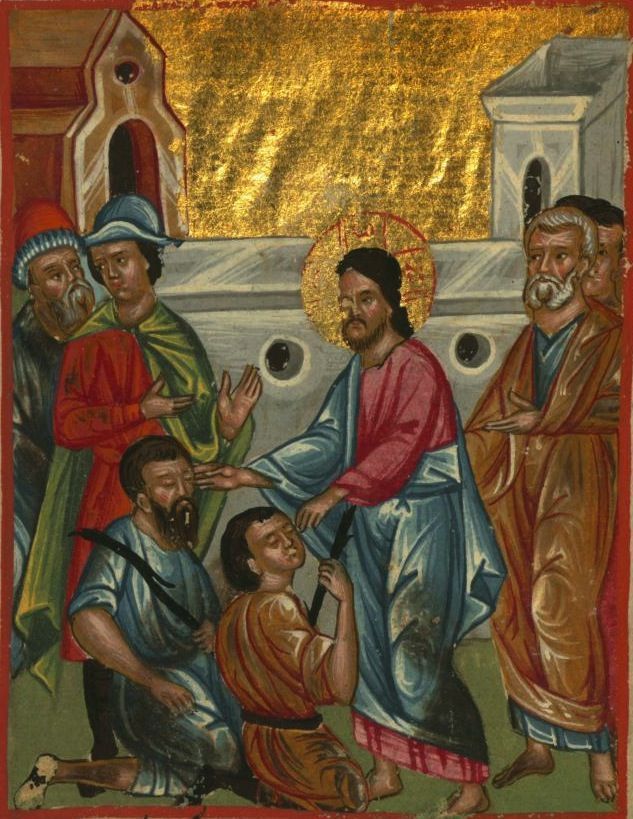
As Jesus and his disciples were leaving Jericho, a large crowd followed him. Two blind men were sitting by the roadside, and when they heard that Jesus was going by, they shouted, “Lord, Son of David, have mercy on us!”

The crowd rebuked them and told them to be quiet, but they shouted all the louder, “Lord, Son of David, have mercy on us!”

Jesus stopped and called them. “What do you want me to do for you?” he asked.

“Lord,” they answered, “we want our sight.”

Jesus had compassion on them and touched their eyes. Immediately they received their sight and followed him. (New International Version)

“Irony” is a term used to describe when an outcome of an event is contrary or different from what is expected.  Here are a few examples: The firehouse burnt down. The police officer got arrested. When I was a little kid, my family doctor’s name was (and I’m not kidding) Dr. Fail. And he smoked like a chimney in his doctor office.

There is an ironic lesson in today’s Gospel lesson: A crowd of people with 20/20 vision are spiritually blind. 

The great need of the crowd is the same need of the two physically blind men: They both needed their eyes opened to Jesus and to what God was doing around them.

Just so you know, Matthew tends not to use the term “crowd” in a favorable way. He views the crowd as a mass of people who are mostly lost, but the crowd themselves tend to think they are just fine. 

Jesus was on his way to Jerusalem, anticipating his passion and death. And we know that it is the crowd that will be the ones who eventually cry to have him crucified. 

Two blind men are marvelously and miraculously healed by Jesus. Ironically, the crowd remained unchanged and in the dark.

First Irony: A large crowd follows Jesus to Jerusalem, but only a few (2, in fact) are actually his followers. 

Throughout Christ’s earthly ministry, all kinds of people followed Jesus for all kinds of reasons. Some wanted to bask in the latest celebrity buzz that Jesus generated. Others wanted to see all the cool stuff he does, like healing people. Some were just plain curious. And a few were interested in being like Jesus by showing selfless compassion. 

Jesus wants genuine, authentic, real disciples who will follow his teaching, and not follow the crowd.

Many people desire to conform, to not stand out, and go with the flow. That’s great if the crowd is godly. Yet many, if not most, crowds of people are not godly. In the Old Testament, a few unruly complainers got the Israelites all stirred up and the result was the making of a golden calf with a complete turning away from the God of Israel. (Exodus 32:1-35)

Second Irony: Out of the massive crowd, it is two blind men that actually see Jesus for who he is, the Son of David.

Spiritual blindness afflicted the crowd. The blind men, however, discern it is Messiah Jesus coming near them. That’s why they go against the crowd by shouting out to him. They don’t care how they look. It doesn’t matter to them that they stick out like a sore thumb. 

Jesus often avoided big crowds. Most of his earthly life occurred away from the centers of power and influence.  Christ constantly swam upstream of the prevailing notions of righteousness. Jesus didn’t cow-tow to the crowd, but paid attention to the powerless and those without influence. 

The Lord Jesus didn’t “work the crowd” as the means of establishing God’s kingdom. He didn’t cozy-up to the rich and powerful. He wanted to avoid celebrity status. Jesus showed extraordinary love to two lowly overlooked people. He used his immense power for the powerless.

Third Irony 3: The ones following Jesus were the ones trying to keep the two needy blind men from Jesus.

One of the most ironic things about church is that sometimes Christ’s own followers are the greatest obstacle to others following Jesus. 

I can just picture a group of ladies shushing the two blind men: “Don’t bother Jesus, he is such a busy man. He has important work to do.” And I can imagine some men standing next to the two blind men and nudging them for shouting at Jesus saying, “Just stop, man, you’re embarrassing yourselves.” 

But the two men won’t stop. They shout all the louder. True and genuine faith is two blind men crying out in desperation for Jesus to help them. 

And Jesus asks a beautiful question: “What do you want me to do for you?” They answered, “We want our sight.” So, Jesus showed compassion and gave them their sight. It’s all rather simple and straightforward. Not only do the two men not listen to the crowd – Jesus doesn’t either. Christ mercifully heals despite what the crowd is saying.

I wonder: Why is it so hard for us to simply ask for what we want?… 

Maybe because we don’t want to buck the crowd, don’t want to look different, or don’t want to admit our need in front of others, we just stick to superficial conversations and insist everything is okey-dokey when it isn’t. 

A crowd of people may not be able to see others because they don’t even see themselves and their place in this world. Perhaps there is a plank in our own eye hindering us from seeing a speck in another’s eye. (Matthew 7:3-5)

It is the pure in heart who will see God (Matthew 5:8). As for the crowd, though seeing, they do not see (Matthew 13:13). If we are concerned about how we will be seen by others, it is likely we will not be seen by God. And we will miss Jesus when he walks by, right in front of us.

Jesus was attentive to the two blind men out of all the people in the crowd because he was listening for them.

Once Jesus listened, he took the time to heal the two men. Jesus could have simply healed them without even stopping. He could have started a healing factory where everyone with a need just got healed, as if they were on some divine conveyor belt to be fixed.

However, Jesus was doing more than giving sight; he was giving the blessing of time and personal response. The gospel is never impersonal, which is why we ought to resist being non-relational in ministry to others. It isn’t about simply meeting a need; it is about blessing other people. And that takes the time of relating to a person.

Jesus, furthermore, touched the men’s eyes. He didn’t have to do that. Christ could have healed without touching. In fact, it may have been gross. Many people had eye diseases with runny pussy eyes in the ancient world. 

Listening, taking time to be personal, and physically touching is how Jesus blessed people. So, we have the dual privilege and opportunity of receiving blessing from Jesus and giving that same blessing to others.

May the God of hope fill you with joy as you seek to bless others in the name of Jesus. Amen.

James 5:13-20 – Pray In Times of Trouble

Is anyone among you in trouble? Let them pray. Is anyone happy? Let them sing songs of praise. Is anyone among you sick? Let them call the elders of the church to pray over them and anoint them with oil in the name of the Lord. And the prayer offered in faith will make the sick person well; the Lord will raise them up. If they have sinned, they will be forgiven. Therefore, confess your sins to each other and pray for each other so that you may be healed. The prayer of a righteous person is powerful and effective.

Elijah was a human being, even as we are. He prayed earnestly that it would not rain, and it did not rain on the land for three and a half years. Again, he prayed, and the heavens gave rain, and the earth produced its crops.

My brothers and sisters, if one of you should wander from the truth and someone should bring that person back, remember this: Whoever turns a sinner from the error of their way will save them from death and cover over a multitude of sins. (New International Version)

This entire letter of the Apostle James to a suffering church is grounded in two important theological truths:  God is good; and God acts powerfully in the world for good. 

The foundation of Christian prayer is the conviction that God cares – that the Lord hears us and responds. Prayers can be lifted at any time. Yet, the God-focused and God-honoring prayer has a price. It will cost us time, effort, vulnerability, and follow-through with appropriate action. Biblical prayer is more than private requests; it requires something of us as a community of believers in Jesus.

When To Pray?

We are to pray whenever there is trouble in our lives which causes us to suffer. Whether physical trouble, emotional suffering, or relational difficulty, we are to pray about it all. We are to pray even when we do not feel like it. In short, we are to be pray continually because there is always a need for prayer.

The Apostle James practiced what he taught. The Roman historian, Eusebius, wrote concerning James that “his knees grew hard like a camel’s because of his constant worship of God, kneeling and asking forgiveness for the people.” James was in constant intercession to God for people. 

“His knees grew hard like a camel’s because of his constant worship of God, kneeling and asking forgiveness for the people.”

The fourth-century historian Eusebius, describing the Apostle James

Like James, we all need prayer is to be our default response in trouble and suffering. When in trying circumstances, a temptation is to lash out at the person who enabled the adversity. We may even become mad at God for allowing trouble in our lives.

Yet, when afflicted, suffering, or in trouble, we need to pray. Sometimes God will always take away our afflictions, suffering, or troubles. Sometimes not. However, by bringing our circumstances before the Lord and acknowledging our need for divine help, we can see God intervene in the situation we are presently facing. What’s more, prayer can give us the grace we need to endure and come closer to God.

So, when the bottom drops out; when you feel you are hanging by a thread; when circumstances are overwhelming or grow worse by the minute, we should pray. We should pray, whether afflicted, sick, or overcome by guilt and shame.

The cost of prayer is time. For many people, time is as precious as money. So, we try to fit prayer into our lives without ever altering our schedules. That will not do. Prayer takes time because it is a conversation with God, and it requires extended focused attention.

Who Should Pray?

Everyone is to pray – including everyone in the church who are happy, suffering, healthy, or ill. Specifically, James tells us the elders of the church are to pray for those who are sick – including physical suffering, mental illness, emotional hurt, and spiritual sickness. Prayer is for all those who are weak, weary, and worn down by life circumstances.

Notice the chain of responsibility here in today’s New Testament lesson. The onus is on the sick person to contact the elders of the church. Scripture clearly puts the need for communicating an adverse situation on the person who is undergoing the trouble. For many people, this is humbling and difficult, so they simply don’t do it. Prayer has a price: openness and vulnerability.

When the needy person communicates the trouble, then the elders are to anoint the person in the name of the Lord and offer a prayer of faith for the afflicted person. It is the leadership’s job to pray. In the ancient biblical world, anointing with oil was a deeply symbolic act of encouragement. It was a tangible way of lifting the person out of trouble.

And all kinds of sickness are in view: physical ailments of bodily sickness; heart problems of anger or bitterness; spiritual struggles of doubt; emotional challenges of depression or anxiety; along with anything and everything that causes ill health. It all should be prayed over, with people being anointed and encouraged.

Prayer is not a strictly private affair; it is a communal activity. Consider the thought that if you are not experiencing healing, wholeness, and health – whether physical, relational, or spiritual – then perhaps God is calling you and I to more than private prayer but to corporate prayer offered by the elders of the church. 

It is not just the prayer offered by one solitary individual that makes the sick person well – it is the collective faith prayer of the church’s leadership on the troubled person.

How To Pray?

Pray in faith. Pray earnestly. Trust God for healing and wholeness with prayers that are persistent, passionate, and prolonged. Again, this will cost the troubled person a profound willingness to be vulnerable, real, and honest. No vulnerability, no healing. No gut-level honesty with the true condition, no power to raise the person up. No willingness to stop fighting and let go of the pride and perceived ability to handle it ourselves, no end to the trouble.

Today, many people throughout the world are trying to independently get out of their trouble and do not want others to help them through the ministry of prayer. The cost of letting others see their terrible situation is too high for them. So, they suffer in silence, failing to confess and receive healing prayer.

Why Pray?

The goal of prayer is total and complete healing from physical, mental, emotional, relational, and spiritual ills. In addition, it is through prayer that prodigals return from their wandering in the muck of the world.

The prayer of a righteous person is powerful and effective. The Old Testament prophet Elijah simply believed God’s Word and prayed accordingly. Elijah knew from reading the book of Deuteronomy that God said whenever God’s people wander from the truth, there will be drought, no rain. 

So, Elijah prayed the words of God. He prayed that it would not rain, and it didn’t. Then, when there was a great revival of the people back to God, Elijah prayed it would rain with passionate, sincere, believing, and persevering prayer. And it rained a gulley-washer.

So, let’s pray…

Good and gracious God, we believe you are compassionate, willing, and able to heal people in the name of Christ. Today we pray for those requiring surgery; needing confidence and courage; trying to understand their suffering; having a sense of guilt or failure; experiencing great anxiety; lacking patience; feeling disappointed; tiring of limitations; wearying of old age; lacking sleep; and wandering from the truth. For all these people and their situations of trouble, we pray to you, Lord, for healing, health, and wholeness. 

Eternal God, send your Holy Spirit upon each person we are praying for right now. Drive away all sickness of body and spirit. Make whole that which is broken. Give deliverance from the power of evil. Provide strengthening of faith in Jesus Christ, our Lord, who suffered on our behalf, yet also rose from death so that we, too, could live a new life.

Most gracious God, you are the source of healing. We give you thanks for all your gifts to us, but most of all, for the gift of your Son, the Lord Jesus, through whom you gave and still give strength and deliverance to all who believe. As we wait in eager expectation for the coming of that day when suffering and pain shall be no more, help us by your Holy Spirit to be assured of your power in our lives and to trust in your eternal love, through Jesus Christ our Lord.  Amen.

Matthew 17:14-21 – Use Your Faith

At the foot of the mountain, a large crowd was waiting for them. A man came and knelt before Jesus and said, “Lord, have mercy on my son. He has seizures and suffers terribly. He often falls into the fire or into the water. So, I brought him to your disciples, but they couldn’t heal him.”

Jesus said, “You faithless and corrupt people! How long must I be with you? How long must I put up with you? Bring the boy here to me.” Then Jesus rebuked the demon in the boy, and it left him. From that moment the boy was well.

Afterward the disciples asked Jesus privately, “Why couldn’t we cast out that demon?”

“You don’t have enough faith,” Jesus told them. “I tell you the truth, if you had faith even as small as a mustard seed, you could say to this mountain, ‘Move from here to there,’ and it would move. Nothing would be impossible.” (New Living Translation)

As we reflect on today’s Gospel lesson, let’s keep in mind that any time we see Jesus exorcising demons, we need to resist the idea that anyone having similar symptoms today is demonic in origin. Any chronic health condition a person experiences, without seeing any healing take place, does not necessarily mean the condition is due to the person’s lack of faith.

Conversely, it is also possible to relegate such healing accounts to a different time and place. My own view of Scripture, along with personal experience, informs me that demonization is real. We may underestimate how influential and widespread demonization occurs in this modern time and place.

The nature of faith is not located in its amount or intensity but in its object. All of life requires some faith. Even sitting in a chair. When I sit, the amount or intensity of my faith isn’t the issue – the object, the chair, is the issue. If a leg on the chair breaks and I flop to the floor, its not reasonable for me to conclude that it happened because of my lack of faith.

The disciples’ inability to heal the boy.

I’m not sure what is more difficult: to be the person suffering, or to observe a loved one suffering. The father is desperate and hurting, watching his son suffer with seizures. The man is utterly discouraged because Christ’s disciples were not able to help.

So, the desperate father approached Jesus and knelt, begging him to have mercy and help his son.

Our Lord’s response, I admit, is not likely what my response would be. I would be more like, “I’m so sorry this is happening to you. This is terrible. Let’s take care of this.” Jesus did honor the father’s request and healed the boy, but not before he had some words.

Jesus was exasperated, and he let everyone know about it. Why was he so disappointed?

Because his disciples knew better. The disciples were not ignorant or unable. They had what they needed to deal with the boy and his father. Jesus already equipped them to do this kind of ministry: 

Jesus called his twelve disciples together and gave them authority to cast out evil spirits and to heal every kind of disease and illness… “Heal the sick, raise the dead, cure those with leprosy, and cast out demons. Give as freely as you have received!” (Matthew 10:1, 8, NLT)

The reason for the disciples’ inability to heal was their lack of faith.

Jesus was perturbed with his disciples because they were not utilizing faith.

Jesus is bothered when believers don’t believe.

Up until this encounter, the disciples were healing people and doing the work Jesus gave them to do. Yet now they cannot. What changed? They relied on their own power, abilities, and experience, instead of relying on the power of God to heal. 

The Gospel of Mark includes Jesus saying that this kind of demon can only be dislodged through prayer (Mark 9:14-29). In short, the disciples didn’t pray. They didn’t tap into God’s power. They didn’t use the authority Jesus gave them. Rather, the disciples rested on their own laurels.

Their lack of prayer translated into a lack of power. 

If we are unable to do the work God has called us to do, it isn’t because we lack the authority or ability. It is a lack of faith.

Effective ministry happens because of faith.

The power of faith is in the person to whom it is directed. If we trust solely in ourselves, we will fail. However, if we trust in Jesus, then even the tiniest of faith will be able to do the impossible.

The power is not in particular words, or in a certain formula – the power is in faith rightly directed toward Jesus. Most demonic manifestations are much more subtle – such as thoughts of how I am not enough, how I have no right to try and help another, and how unable I am to do the will of God.

Conclusion

Here is a simple observation of Christ’s words: We are not told that if we have faith as big as a mountain that we can move one. Instead, Jesus tells us that if we have any faith at all, even as small as a tiny seed, directed toward God and not ourselves, the sky is the limit – we will have all the ability we need to do the will of God.

So, what is that impossible thing that could be done in your life with properly directed faith? 

What miracle, healing, or resistance to a bad spirit needs to take place around us? 

Discouragement is the most common tool of the devil in keeping us from realizing genuine manifestations of faith. Jesus has already accomplished victory over sin, death, and Satan. We must, then, claim all the will of God for today.

Resist the devil and he will flee from you (James 4:7). Step out in faith and do the will of God. The first step is always one of prayer….

High and Holy One, because your mercy is everlasting and your truth endures from generation to generation, show mercy to the sick and infirmed of either body or soul. Grant them deliverance from mental, emotional, spiritual, and physical illness. Blessed Lord, keep them under your care, for only in you can we live in safety and wellbeing. Visit them with your saving health. Do not let their hope be taken away, through Jesus Christ, our Lord. Amen.

Luke 18:35-43 – Lord, Have Mercy

Coptic Church icon of Christ healing the blind man

As Jesus was coming near Jericho, there was a blind man sitting by the road, begging. When he heard the crowd passing by, he asked, “What is this?”

“Jesus of Nazareth is passing by,” they told him.

He cried out, “Jesus! Son of David! Have mercy on me!”

The people in front scolded him and told him to be quiet. But he shouted even more loudly, “Son of David! Have mercy on me!”

So, Jesus stopped and ordered the blind man to be brought to him. When he came near, Jesus asked him, “What do you want me to do for you?”

“Sir,” he answered, “I want to see again.”

Jesus said to him, “Then see! Your faith has made you well.”

At once he was able to see, and he followed Jesus, giving thanks to God. When the crowd saw it, they all praised God. (Good News Translation)

This is one of my very favorite stories in the entirety of Holy Scripture. And I will tell you why….

Because Jesus listens with ears of mercy.

Jesus was headed to Jerusalem and had a lot on his mind and his heart. He knew what was coming, that his passion and death awaited him. No one would fault Jesus for not hearing a blind man shouting. But Jesus was listening so that he might hear someone just like the needy blind man. Rather than being distracted and lost in his head, Jesus was just the opposite – being attentive and aware of the humble folk right in front of him.

Because Jesus speaks with words of mercy.

Once Jesus listened, he responded by asking a question. I am impressed with Jesus throughout the Gospels. Christ gave people the gift of choice. He acknowledged people and respected them by not simply and indiscriminately healing, as if he were some fix-it guy. Jesus Christ bestowed on the lowliest of people the human dignity of choice by empowering them to answer a question.

Because Jesus pays attention with divine appointments of mercy.

Our Lord took the time to heal the blind man. Jesus could have simply healed him without even stopping his journey. He could have just waved his hand and the man would be healed. What’s more, Jesus could have even started a healing factory where everyone with a need got healed: bring ‘em in, move ‘em out, and keep the line moving. Jesus was doing more than giving sight; he was giving a man the blessing of time and personal attention. The Gospel is never impersonal, which is why we ought to resist being non-relational in ministry to others.  It isn’t simply about meeting a need but about blessing other people with the gift of relationship.

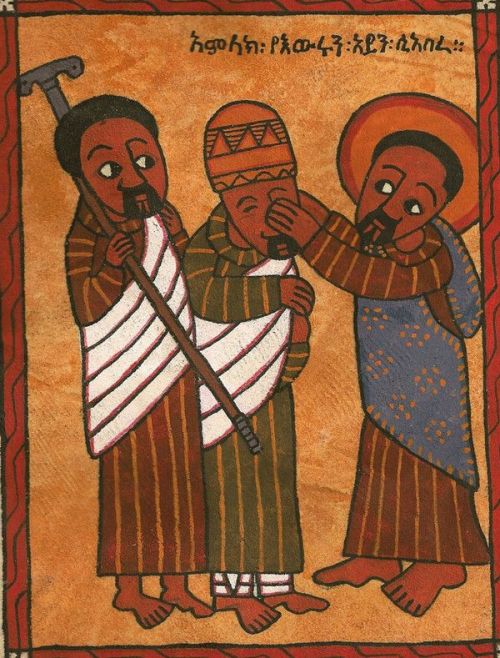
Ethiopian Orthodox Church depiction of Jesus healing the blind man

Because Jesus reaches out with the touch of mercy.

Jesus touched the man’s eyes (Matthew 20:29-34; Mark 10:46-54). He didn’t have to do that. The Lord of all most certainly could have healed without touching. In fact, it most likely may have been downright gross. A lot of people had eye diseases with runny pussy eyes in the ancient world.

Because the blind man didn’t listen to the crowd.

I really love that! Maybe it’s the rebel in me. I just believe it is such a beautiful thing whenever someone refuses to be shamed by another and embraces their need. That is exactly what the blind man did. He not only refused to give-in to peer pressure, but he also responded to them by shouting all the louder. May his tribe increase!

Because the blind man could actually see.

The man already had sight – not physical sight but spiritual eyes which could see better than anyone else in the crowd. One of the great ironies throughout the Gospels is that the sighted crowd seems to never see who Jesus really is, while blind folk see Christ clearly for who he is: the Son of David, the rightful king, the Savior of all. It matters not how much faith one possesses but in whom that faith is placed. A thimble-full of faith is enough to move mountains, while a water tower full of faith misplaced in someone else cannot even provide a single glass of refreshment.

Because the blind man followed Jesus.

Once healed by Jesus, there were plenty of persons who simply walked away and went about their lives. Yet, this man, who was given the gift of physical sight, started following Jesus and giving thanks to him. It feels a lot like my own testimony of experiencing the love of God in Christ and not ever wanting to leave it, so I’ve been following Jesus for over forty years, still having gratitude in my heart.

Because one lowly non-descript blind man made a difference.

I don’t think the man ever set out to change the world. Yet, he did. Here we are reading his testimony all these millennia later. At the time, please take note that one man becoming a disciple of Jesus and living a life of gratitude changed the entire crowd from being a group of shushing church ladies to a robust throng of worshipers. One individual makes a difference. Don’t let anyone tell you otherwise.

Lord Jesus Christ, Son of God, have mercy on me, a sinner.

Lord Jesus Christ, Son of David, heal me, a broken person.

Lord Jesus Christ, Son of Man, help me, a lost and lonely individual.

Lord have mercy, Christ have mercy, Lord have mercy on my love-starved soul. Amen.