Acts 4:1-4 – The Message of Resurrection

La Resurrezione by Italian sculptor Pericle Fazzini (1913-1987)

The priests and the captain of the temple guard and the Sadducees came up to Peter and John while they were speaking to the people.They were greatly disturbed because the apostles were teaching the people, proclaiming in Jesus the resurrection of the dead. They seized Peter and John and, because it was evening, they put them in jail until the next day. But many who heard the message believed; so, the number of men who believed grew to about five thousand. (NIV)

There’s nothing quite like upsetting the status quo. And that’s exactly what the apostles Peter and John were doing. Creating trouble, causing a stink, disturbing the peace, and making waves. At least, that’s how the ruling authorities saw the upstart Christians’ activity.

At the heart of the disturbance was the authorities’ deep concern of potential social disorder. After all, the Roman Empire with all its great strength was firmly ensconced in Judea. It was already hard enough trying to maintain Jewish customs and religious practices. Now, these rabblerousers come along with their unorthodox teaching and threaten the very social fabric of Jewish life. No! Get them out of here!

So, off to jail Peter and John went. That’s how the politics of fear typically works. Being afraid of change leads to removing the object of fear. Stuff the apostles in the gulag. Shut and lock the door. Maybe if they are out of sight they will be out of mind to the people.

The rulers were too late. So many people heard the message of Christ’s resurrection that the number of believers in Jesus swelled into the thousands. Well, now, everyone’s really in a pickle! Except the church. Each time the Christians get squelched and silenced, more of them show up. Oh, my, goodness. They’re multiplying like roaches!

It doesn’t help the ruling authorities that these religious bugs continue to interpret their own whippings and jailtime as a positive thing – enjoying the solidarity of suffering with their Lord. Ugh. What’s a decent Sadducee to do?

Turns out nothing can stop resurrection. It cannot be chained, bound, or imprisoned. Once life gets into the hearts of people, there’s no getting it out. The message just takes over and consumes the whole person. Then it spreads to another, like some infectious disease.

Before you know it, the entire social order is off kilter. What a bunch of weirdos. Following a dead guy who they say isn’t dead. Walked right out of the grave, they say. Sheesh. Pull yourselves together. So many unhinged delusional people believing in resurrection!

“Here’s to the crazy ones. The misfits. The rebels. The troublemakers. The round pegs in the square holes. The ones who see things differently. They’re not fond of rules. And they have no respect for the status quo. You can quote them, disagree with them, glorify or vilify them. About the only thing you can’t do is ignore them. Because they change things. They push the human race forward. And while some may see them as the crazy ones, we see genius. Because the people who are crazy enough to think they can change the world, are the ones who do.”

Rob Siltanen

It’s easy for some Christians to be hard on non-Christians, just as it was easy for the ancient Jewish rulers to be hard on others leaving their fold. Sometimes we followers of Jesus forget whence we have come. We can get so upset and worked up in fear. Could be our underwear is too tight. More likely, we take the prideful stance of believing our status quo is best for everyone. So, there’s no listening, paying attention, or teachable spirits.

Peter, John, and the other apostles just went about proclaiming good news with joy. And the gospel spread. Jesus became known first to thousands, then tens of thousands, hundreds of thousands, and millions. Today, according to the Pew Research Center, there are 2.5 billion Christians in the world. That’s a lot of people. Christianity has had two thousand years to create their own status quo, some of it good, some of it not so much.

Yet, at the heart of it all, is the resurrection of Jesus Christ from death. It’s a message that still speaks to billions. And it’s a message Christians need to come back to whenever they are fearful of others challenging their hegemony.

All the hopes and expectations of Christians everywhere are realized not in maintaining some Constantinian sort of Christendom but in the resurrection of Jesus Christ the dead. The former does a lot of handwringing over social and cultural issues. The latter has a lot of joy, celebration, and renewal which works itself out in both personal and systemic redemption.

Because the good news of Easter can hardly be contained in a single day’s celebration, it’s message of new life in Christ is like a bright sun of inexhaustible grace to people everywhere – still warming the earth all these centuries later.

The Apostle Peter went on to pen a letter to struggling Christians facing hard circumstances in a world not yet dominated by Christianity, reminding them of the heart of Christian faith:

Praise be to the God and Father of our Lord Jesus Christ! In his great mercy he has given us new birth into a living hope through the resurrection of Jesus Christ from the dead, and into an inheritance that can never perish, spoil or fade. This inheritance is kept in heaven for you, who through faith are shielded by God’s power until the coming of the salvation that is ready to be revealed in the last time. In all this you greatly rejoice, though now for a little while you may have had to suffer grief in all kinds of trials. These have come so that the proven genuineness of your faith—of greater worth than gold, which perishes even though refined by fire—may result in praise, glory and honor when Jesus Christ is revealed. Though you have not seen him, you love him; and even though you do not see him now, you believe in him and are filled with an inexpressible and glorious joy, for you are receiving the result of your faith, the salvation of your souls.

1 Peter 1:3-9, NIV

May we come back repeatedly to Christianity’s message so that our faith is strengthened, the church is edified, and the world is blessed. Amen.


Hebrews 3:1-6 – Jesus Is Better

Photo by Skitterphoto on Pexels.com

Therefore, brothers and sisters who are partners in the heavenly calling, think about Jesus, the apostle and high priest of our confession. Jesus was faithful to the one who appointed him just like Moses was faithful in God’s house. But he deserves greater glory than Moses in the same way that the builder of the house deserves more honor than the house itself. Every house is built by someone, but God is the builder of everything. Moses was faithful in all God’s house as a servant to affirm the things that would be spoken later. But Jesus was faithful over God’s house as a Son. We are his house if we hold on to the confidence and the pride that our hope gives us. (CEB)

It’s hard to be patient. Perseverance can be difficult. If the Christian life were a piece of cake or bowl of cherries, then there would be no need for the strengthening of faith and the development of spiritual perseverance. But the Christian life is not those things. Every good thing in life typically requires a great deal of blood, sweat, and tears.

So, when it comes to Christianity, the believer’s faith muscles need vigorous work to grow, strengthen, and support the believer for a lifetime of service. If the muscles of faith go unused, they atrophy. Faith requires exercise. Christian belief must be tried in the fire with the struggle of adversity to grow and mature.

The reason the author of Hebrews wrote his letter to Jewish Christians is because they were losing their grip and faltering in their faith. The hard circumstances of those Christians were leading them to entertain the notion of returning to old ways of life, apart from Christ. 

It can be tempting to think of the past as “the good old days.” But if you think about it for any length of time, you know better. Because of struggles in the present, our minds can easily turn to filter out all the crud from the past to make it look like things were better back then.

“Better” is what the book of Hebrews is all about.

The writer consistently and persistently insists that Jesus is better than anything from the Hebrew Christians’ past. Moses was one of the most respected and revered figures of Old Testament history. The letter to the Hebrews acknowledges proper regard for Moses but goes further to point-out and remind the people that whereas Moses was faithful within God’s house, it is Jesus who is Master over the house. Jesus is better than Moses.

What’s more, believers and followers of Jesus are the house. Jesus Christ is Lord – not Moses, or anybody else.  Jesus cares for and protects his house. It might be tempting to believe that a previous house we occupied in another city or town was better. But the reality is that we live today in God’s house.

Therefore, we must hold on and not let go of the confidence we have in Jesus and the privilege we have in living in our present abode. We are to bloom where God has planted us without continually looking how much greener the grass is on the other side of the fence.

When life is tough, reminiscing about the past is easy. For sure, there are plenty of things to miss from previous days in another place. Yet, trolling your personal history, much like a time-wasting galivant on the computer, doesn’t do anything for your need of faith and perseverance. It just isn’t helpful.

Today, however, in this present time and moment, Jesus has a hold of you.

Today Christ wants to walk with you through your trouble, and not just transport you to the past. Sometimes it is necessary to remember how God helped and delivered in the past to aid us in the present with contemporary problems. Yet if the nostalgic trips only end with wishing things were different, it is simply a fool’s errand. It merely detaches us from the support we need rather than connects us with resources to buoy our discouraged spirits in the here and now.

As God’s co-workers we urge you not to receive God’s grace in vain. For he says, “In the time of my favor I heard you, and in the day of salvation I helped you.” I tell you, now is the time of God’s favor, now is the day of salvation. (2 Corinthians 6:1-2, NIV)

“The Spirit of the Lord is upon me,
    because he has anointed me
        to bring good news to the poor.
He has sent me to proclaim release to the captives
    and recovery of sight to the blind,
        to let the oppressed go free,
to proclaim the year of the Lord’s favor.” (Luke 4:18-19, NRSV)

It’s crucial that we keep a firm grip on what we’ve heard so that we don’t drift off. (Hebrews 2:1, MSG)

Wake up, for our salvation is nearer now than when we first believed. (Romans 13:11, NLT)

Now is the time to follow Jesus into all the situations which we face. You are not alone. You can do this. Other people and other stuff may certainly help. Yet Jesus is better. He is our best hope through any trouble.

Lord Jesus, you are sovereign over my past, present, and future. Today has its worries and problems. Help me walk into and through them with your gracious protection so that perseverance is developed within me and my faith in you is strengthened for tomorrow. Amen.

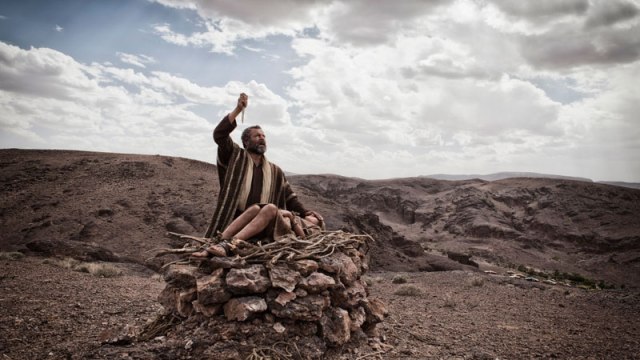
Genesis 22:1-19 – The Lord Will Provide

God decided to test Abraham, so he spoke to him.

Abraham answered, “Here I am, Lord.”

The Lord said, “Go get Isaac, your only son, the one you dearly love! Take him to the land of Moriah, and I will show you a mountain where you must sacrifice him to me on the fires of an altar.” So, Abraham got up early the next morning and chopped wood for the fire. He put a saddle on his donkey and left with Isaac and two servants for the place where God had told him to go.

Three days later Abraham looked off in the distance and saw the place. He told his servants, “Stay here with the donkey, while my son and I go over there to worship. We will come back.”

Abraham put the wood on Isaac’s shoulder, but he carried the hot coals and the knife. As the two of them walked along, Isaac said, “Father, we have the coals and the wood, but where is the lamb for the sacrifice?”

“My son,” Abraham answered, “God will provide the lamb.”

The two of them walked on, and when they reached the place that God had told him about, Abraham built an altar and placed the wood on it. Next, he tied up his son and put him on the wood. He then took the knife and got ready to kill his son. But the Lord’s angel shouted from heaven, “Abraham! Abraham!”

“Here I am!” he answered.

“Don’t hurt the boy or harm him in any way!” the angel said. “Now I know that you truly obey God, because you were willing to offer him your only son.”

Abraham looked up and saw a ram caught by its horns in the bushes. So, he took the ram and sacrificed it in place of his son.

Abraham named that place “The Lord Will Provide.” And even now people say, “On the mountain of the Lord it will be provided.”

The Lord’s angel called out from heaven a second time:

You were willing to offer the Lord your only son, and so he makes you this solemn promise, “I will bless you and give you such a large family, that someday your descendants will be more numerous than the stars in the sky or the grains of sand along the beach. They will defeat their enemies and take over the cities where their enemies live. You have obeyed me, and so you and your descendants will be a blessing to all nations on earth.”

Abraham and Isaac went back to the servants who had come with him, and they returned to Abraham’s home in Beersheba. (CEV)

The biblical character of Abraham is synonymous with faith. And for good reason. God had told Abraham he would have a son with his wife Sarah. This would not be unusual except for the fact the couple were well advanced in age, and Sarah was incapable of having children. Infertility is not just a modern problem; it has always existed. Yet, despite the overwhelming odds, Abraham believed God. Years later and with a mix of patience and impatience from the would-be parents, the promise from God was realized. Abraham and Sarah had a son, Isaac.

“Child of the promise.” That was Isaac’s moniker – which makes the command coming from God so incredibly perplexing: Take your son, the child of the promise, and go to the mountain and sacrifice him there. Huh? What the…!  But it only seems strange and super-weird to us. We get no reaction from Abraham, no questioning, no talk back. He simply went about the business of saddling up the donkey, chopping some wood for the sacrifice, and took his only son with him on the journey to the mountain.

We might wonder what was going through Abraham’s mind through all of this. While you and I might try and figure out if we really heard God or not, Abraham had a history of talking with God. He knew God’s voice as well as he knew his own. Abraham was well down the road of relationship with the God he served. We get an insight from the author of Hebrews into Abraham’s thought process, a line of thinking consistent with a person who has a regular habit of talking with God:

“Abraham had been promised that Isaac, his only son, would continue his family. But when Abraham was tested, he had faith and was willing to sacrifice Isaac, because he was sure that God could raise people to life. This was just like getting Isaac back from death.” (Hebrews 11:17-18, CEV)

Abraham did not try and figure out God’s mind. He didn’t get into a debate with God about the contradiction of ethics he was being asked to do. He just obeyed. Abraham reasoned that it didn’t matter if Isaac were killed because God could raise him from death. This, of course, is not what happened. It was all a test of faith. Abraham knew beyond a shadow of a doubt that God is the Lord who provides.

You and I rarely know why we are facing the unwanted and unasked for circumstances we are enduring. We don’t always know what in the world God is thinking. Yet, like Abraham, if we have a spiritual history of walking with God and hearing the Lord’s voice, we don’t hesitate to respond. We are convinced God will provide. Obedience for the follower of Christ is not a burden but a privilege, even when we are being tested beyond our seeming emotional ability to do it.

Sovereign Lord, your ways are sometimes strange and confusing. Yet, I know that everything you do is always right, just, and good. It is to your gracious and merciful character that I know you will provide. My allegiance is to you, in the Name of Jesus Christ, through the power of the Holy Spirit. Amen.

Psalm 22:23-31 – Full of Suffering

Psalm 22 by Mike Moyers, 2016

All of you who revere the Lord—praise him!
    All of you who are Jacob’s descendants—honor him!
    All of you who are all Israel’s offspring—
        stand in awe of him!
Because he didn’t despise or detest
    the suffering of the one who suffered—
    he didn’t hide his face from me.
    No, he listened when I cried out to him for help.

I offer praise in the great congregation
    because of you;
    I will fulfill my promises
    in the presence of those who honor God.
Let all those who are suffering eat and be full!
    Let all who seek the Lord praise him!
        I pray your hearts live forever!
Every part of the earth
    will remember and come back to the Lord;
    every family among all the nations will worship you.
Because the right to rule belongs to the Lord,
    he rules all nations.
Indeed, all the earth’s powerful
    will worship him;
    all who are descending to the dust
    will kneel before him;
    my being also lives for him.
Future descendants will serve him;
    generations to come will be told about my Lord.
They will proclaim God’s righteousness
        to those not yet born,
        telling them what God has done. (CEB)

“Faith must be tested, because it can only become your intimate possession through conflict.”

oswald chambers

“Suffering” is a word we would like to avoid. Simply saying or reading the word might make us cringe. Suffering? No thanks. I think I’ll pass on that. Yet, something inside of us instinctively knows we cannot get around it. Everyone suffers in some way. It is endemic to the human condition that at times we will suffer physically, financially, mentally, emotionally, and spiritually. 

That’s why I believe there is so much talk within some Christian circles about miracles. It’s more than understandable. A chronic pain sufferer wants relief; she prays for a miracle of health. A small business owner is bleeding financially; he looks to God for an immediate miracle of wealthy clients. A beloved senior saint knows she is afflicted with Alzheimer’s; she prays for the miracle of deliverance, even to be taken home to be with the Lord. A young adult finds himself in the throes of depression and has tried everything to cope and get out of it; he petitions God for a miracle out of the deep black hole. The believer in Jesus keeps experiencing a besetting sin and cannot get over it; she looks to God for the miracle of not struggling any more with it.

These scenarios and a thousand other maladies afflict people everywhere. There are a multitude of stories out there. Folks who have experienced a miracle tell of their wonderful deliverance. But what about the rest? Those without the miracle? Do they have a lack of faith? Has God forgotten them?

Oh, my, no! God sees, and God knows. God is acquainted with suffering. Jesus knows it first-hand. Remember, it was Jesus who said, “My God, my God, why have you forsaken me?”  Even Jesus cried out in his suffering.  But there was no deliverance coming for him.  There was, instead, deliverance coming for us.

Sometimes the greatest miracle and deliverance of all is to be freed from the need for a miracle. The reason God doesn’t just offer immediate relief from everyone’s suffering and bring a miracle is that he is doing something else: Walking with us through our suffering. God oftentimes has plans and purposes for us well beyond our understanding.  We simply are not privy to everything in God’s mind.

We may not get the miracle we desire. However, what we will get without fail is God’s provision and steadfast love all the way through the suffering. Where is God in your suffering? Jesus is suffering with you. You are not crying alone; Christ weeps with you.

Let, then, those who suffer, eat and be full. Let them be satisfied with the portion God has given them. What’s more, let them offer praise to the God who is squarely beside them in every affliction and each trouble.

God Almighty, you are the One who knows suffering and affliction better than anyone. I admit I don’t often understand what in the world you are doing or not doing in my life and in the lives of those I love. Yet, I admit that I have found in you the comfort, encouragement, and strength to live another day in my trouble. For this, I praise you, in the Name of Jesus Christ, in the power of the Holy Spirit. Amen.