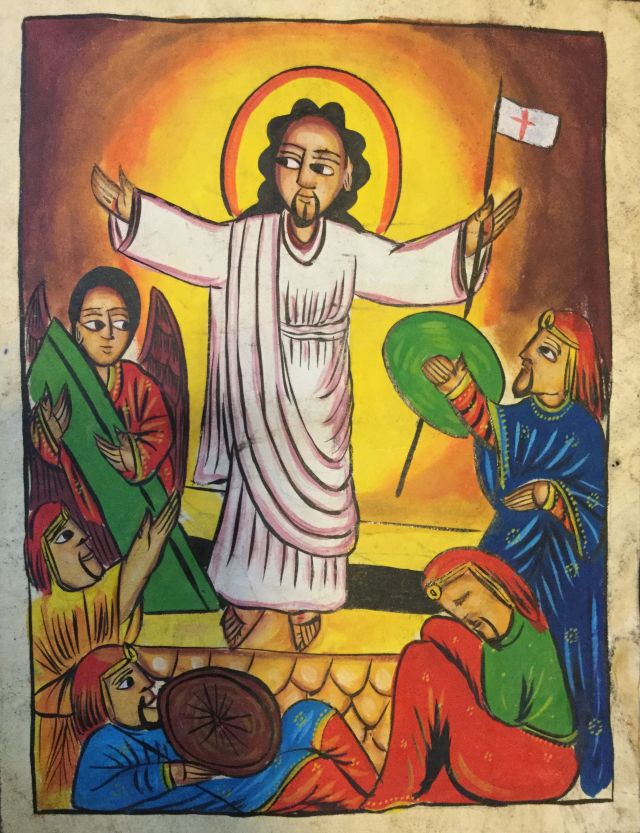
Ministry to the Poor and Needy (2 Corinthians 9:1-5)

If I wrote any more on this relief offering for the poor Christians, I’d be repeating myself. I know you’re on board and ready to go. I’ve been bragging about you all through Macedonia province, telling them, “Achaia province has been ready to go on this since last year.” Your enthusiasm by now has spread to most of them.

Now I’m sending the brothers to make sure you’re ready, as I said you would be, so my bragging won’t turn out to be just so much hot air. If some Macedonians and I happened to drop in on you and found you weren’t prepared, we’d all be pretty red-faced—you and us—for acting so sure of ourselves.

So to make sure there will be no slipup, I’ve recruited these brothers as an advance team to get you and your promised offering all ready before I get there. I want you to have all the time you need to make this offering in your own way. I don’t want anything forced or hurried at the last minute. (The Message)

Organizing relief efforts, and giving to relief organizations, is nothing new. Poverty and need has existed as long as humans have been on this earth. The constant rub is this: Some people aren’t in poverty, and some are.

So how do we get resources from the people who have them to the people who are really in need? Just as important, and perhaps more basic, how will folks care enough about the poor to give money and basic relief?

The Apostle Paul informed the Corinthian Church that he boasted about them to the Macedonians – about their eagerness to participate in ministry toward their fellow believers in need. The Macedonian believers had been ready to participate for quite some time.

In stating this, Paul intended to stir up the Corinthians about the offering for believers in Jerusalem. He had organized a delegation of Macedonians, along with persons from Paul’s own ministry team, to go to Corinth together. The last thing Paul wanted was to have the Corinthians unprepared to give.

Paul was a person who intended to do good, and then followed through with it. He held people accountable for their actions and inactions. He organized the benevolent offering for Jerusalem’s believers, and then made sure that all of the churches good intentions became reality.

Although Paul’s concern in organization and accountability may strike some as coercion for funding, it seems to me that a more plausible reason is that Paul simply wanted to try and ensure that everyone’s giving was done from a place of love, not coaxing or guilting.

The Apostle wanted believers and churches working together for good purposes. He wanted everyone to have a positive experience of helping and being united in spirit and purpose. The churches were young, and Paul was doing everything he could to encourage their growth in grace.

A good way of fostering unity and mission would be to have the churches participate in helping needy believers in Jerusalem. It was a very worthy and needed cause – and also served the cause of Christ.

What’s more, ministry to the poor has always been a hallmark of pure religion. A concern, dedication, plan, and accountable action on behalf of the poor helps everyone, and demonstrates authentic ministry.

My dear friends, pay attention. God has given a lot of faith to the poor people in this world. God has also promised them a share in his kingdom that he will give to everyone who loves him. (James 2:5, CEV)

We are to care about the needy because God cares about persons trapped in poverty. The poor are people; and all people are important. Jesus came to this earth to have a ministry to them; and he lifted a text from Scripture (Isaiah 61:1) to give his reason for doing so:

“The Spirit of the Lord is upon me because he has chosen me to bring good news to the poor.”(Luke 4:18, GNT) 

God has a lot to say about the poor and needy because they are dear to the divine heart. The Old Testament law was quite clear about how to treat the poor: 

Poor persons will never disappear from the earth. That’s why I’m giving you this command: you must open your hand generously to your fellow Israelites, to the needy among you, and to the poor who live with you in your land.(Deuteronomy 15:11, CEB)  

Let’s keep in mind that only the poor in spirit will enter the kingdom of heaven. Our trust is to be in God, and not in our money or our stuff. 

The genuine believer has a real humility that demonstrates grace to people who cannot offer them something in return. It’s easy to be merciful to those who will turn around later and scratch our backs. But it is altogether a different thing to give without any strings attached. 

God cares about the condition of our souls, and not the balance on our bank statements. Since God does not judge people on face value, nor on the state of their finances, then neither should we.

The Apostle Paul, in his ministry, sought to teach others in the way of Jesus by:

  • Turning people from only associating with those they are comfortable with, to lovingly reaching out to people very different from themselves
  • Changing people’s thinking from what they can obtain and consume, to becoming people of love and generosity with their words and their physical resources
  • Putting to death: a proud spirit that looks to get ahead; all personal petty agendas; accumulation of more power; and exertion of control – but instead, provide humble repentance and forgiveness

Ministry to the poor is a non-negotiable for the Christian church. Beyond only dispensing benevolent funds, the poor need relationships, connections, resources, and a chance to give back in ways they can contribute.

Lord God, you came to honor the least, the forgotten, the overlooked, and the misjudged. You came to make the last, the left behind, the misunderstood, and the undervalued, first. You came to give a warm welcome to the lost, the orphaned, the abandoned and the destitute.

Help us to be your ears to listen to their cries; and your voice speaking out love and acceptance. Help us to be your feet walking beside those in need; and your hands to clothe, feed and shelter them. You came for the least, the lost and last of this world. Lord, hear our prayer. Amen.

Return to the Lord (1 Samuel 7:3-15)

Samuel prays to the Lord on behalf of the people, by Bible Art

So Samuel said to all the Israelites, “If you are returning to the Lord with all your hearts, then rid yourselves of the foreign gods and the Ashtoreths and commit yourselves to the Lord and serve him only, and he will deliver you out of the hand of the Philistines.” So the Israelites put away their Baals and Ashtoreths, and served the Lord only.

Then Samuel said, “Assemble all Israel at Mizpah, and I will intercede with the Lord for you.” When they had assembled at Mizpah, they drew water and poured it out before the Lord. On that day they fasted and there they confessed, “We have sinned against the Lord.” Now Samuel was serving as leader of Israel at Mizpah.

When the Philistines heard that Israel had assembled at Mizpah, the rulers of the Philistines came up to attack them. When the Israelites heard of it, they were afraid, because of the Philistines. They said to Samuel, “Do not stop crying out to the Lord our God for us, that he may rescue us from the hand of the Philistines.” Then Samuel took a suckling lamb and sacrificed it as a whole burnt offering to the Lord. He cried out to the Lord on Israel’s behalf, and the Lord answered him.

While Samuel was sacrificing the burnt offering, the Philistines drew near to engage Israel in battle. But that day the Lord thundered with loud thunder against the Philistines and threw them into such a panic that they were routed before the Israelites. The men of Israel rushed out of Mizpah and pursued the Philistines, slaughtering them along the way to a point below Beth Kar.

Then Samuel took a stone and set it up between Mizpah and Shen. He named it Ebenezer, saying, “Thus far the Lord has helped us.”

So the Philistines were subdued and they stopped invading Israel’s territory. Throughout Samuel’s lifetime, the hand of the Lord was against the Philistines. The towns from Ekron to Gath that the Philistines had captured from Israel were restored to Israel, and Israel delivered the neighboring territory from the hands of the Philistines. And there was peace between Israel and the Amorites.

Samuel continued as Israel’s leader all the days of his life. (New International Version)

Faithfulness to God matters. One cannot worship the Lord by day, then have a moonlighting job with other gods.

The priest and prophet Samuel helped lead Israel to repentance, and thus, a restoration of right relationship with their God. His leadership made all the difference. Samuel was not like the previous priests of Eli and his sons; nor was he like anyone else who didn’t really know what they were doing.

Samuel performed the appropriate sacrifices correctly; interceded with God on behalf of the people; enabled them to achieve victory; and continually and carefully watched over everything. Samuel was a needed stabilizing force in Israel. He identified sin in the nation and dealt with it wisely. Samuel led them to do right.

I confess my iniquity; I am troubled by my sin.

Psalm 38:18, NIV

Godly sorrow brings repentance that leads to salvation and leaves no regret, but worldly sorrow brings death. (2 Corinthians 7:10, NIV)

Come near to God and he will come near to you. Wash your hands, you sinners, and purify your hearts, you double-minded. Grieve, mourn and wail. Change your laughter to mourning and your joy to gloom. Humble yourselves before the Lord, and he will lift you up. (James 4:8-10, NIV)

Today’s Old Testament lesson brings up important questions of acknowledging disobedience, ignorance, and guilt; and how we are to respond to it.

Whenever we say or do something that we ought not to, it’s like squeezing a big tube of toothpaste out; there’s no way you can get it back in.

I actually did that once when I was a little kid. I saw new tube of toothpaste in the bathroom and wondered what it would be like to squeeze out a big amount. So, I did. It was fun. I did it again, then again and again, until it was all gone.

Knowing that perhaps this toothpaste thing might be a problem, I made an artwork out of it. After I was done, I turned off the light, shut the door, and in my little four-year-old brain, hoped nobody would see it. But oh my, they did!

As we get older, and into adulthood, we discover that we have a capacity to do a lot worse than toothpaste escapades. When we sin, there’s no way to put everything back the way it was before. Everything has changed because of our actions (or inactions). And we cannot make it look better, or put a positive spin on it.

There needs to be repentance – a confession of sin, a coming to God, and letting grace and forgiveness have its way. This is the path to restoration in returning to God, in bringing relational connections together again.

Repentance means that we tell God what we did; and that we’re sad about it. Instead of running away, we run to God and admit our guilt. This, by no means, is easy; but it’s the only way to take care of the problem and to feel better about it. And the Lord won’t make us feel worse, but will help us, no matter what.

Everybody is sad when they are caught doing something bad. But there is a good kind of sad, and a bad kind of sad. The bad kind of sad thinks to self, “I’m so stupid; I can’t do anything right,” and punishes myself for the wrong. On the other hand, the good kind of sad helps us realize that we never want to do that thing ever again; and we look to Jesus to forgive us and be our example of what to do right.

Good leaders, like Samuel, assist us in this process with grace, sensitivity, humility, respect, and a forthright spirit.

Most merciful God, we confess that we have sinned against you in thought, word, and deed, by what we have done, and by what we have left undone. We have not loved you with our whole heart; we have not loved our neighbors as ourselves. We are truly sorry and we humbly repent. For the sake of your Son Jesus Christ, have mercy on us and forgive us; that we may delight in your will, and walk in your ways, to the glory of your Name. Amen.

What Will You Do with Jesus? (John 5:1-18)

Healing the Paralytic, by Bartolomé Esteban Murillo, 1670

Sometime later, Jesus went up to Jerusalem for one of the Jewish festivals. Now there is in Jerusalem near the Sheep Gate a pool, which in Aramaic is called Bethesda and which is surrounded by five covered colonnades. Here a great number of disabled people used to lie—the blind, the lame, the paralyzed. One who was there had been an invalid for thirty-eight years. When Jesus saw him lying there and learned that he had been in this condition for a long time, he asked him, “Do you want to get well?”

“Sir,” the invalid replied, “I have no one to help me into the pool when the water is stirred. While I am trying to get in, someone else goes down ahead of me.”

Then Jesus said to him, “Get up! Pick up your mat and walk.” At once the man was cured; he picked up his mat and walked.

The day on which this took place was a Sabbath, and so the Jewish leaders said to the man who had been healed, “It is the Sabbath; the law forbids you to carry your mat.”

But he replied, “The man who made me well said to me, ‘Pick up your mat and walk.’ ”

So they asked him, “Who is this fellow who told you to pick it up and walk?”

The man who was healed had no idea who it was, for Jesus had slipped away into the crowd that was there.

Later Jesus found him at the temple and said to him, “See, you are well again. Stop sinning or something worse may happen to you.” The man went away and told the Jewish leaders that it was Jesus who had made him well.

So, because Jesus was doing these things on the Sabbath, the Jewish leaders began to persecute him. In his defense Jesus said to them, “My Father is always at his work to this very day, and I too am working.” For this reason they tried all the more to kill him; not only was he breaking the Sabbath, but he was even calling God his own Father, making himself equal with God. (New International Version)

Christ at the Pool of Bethesda, by Artus Wolffort, c. 1625

During one of the yearly Jewish festivals, on a Sabbath day, a miracle happened. Miracles of healing are typically accompanied by celebration and joy. But not so much with this one.

It’s one of those things about living in a messed up world of broken systems, that an invalid can start walking and there are people who have frowns and furrowed brows about it.

Granted, the man who was healed by Jesus may seem a bit hard to like in some ways. We don’t really know what he was into, but when Christ bestows healing on you, then says to stop sinning, it’s probably a significant sin to warrant the Lord’s exhortation.

Regardless of any sort of sin, the man appears to be paraplegic. Especially in the ancient world, this meant all sorts of problems had to be navigated – such as needing others to literally carry you around (no wheelchair or handicapped accessible anything), long periods of social isolation, lack of bodily control over your bowels and bladder, and the continual needs for cleanliness.

This made the man hard to like by many people just because he likely had strong body odors and had to crawl to get around if no one would help. He would not have been pleasant to look at. But he would have to make sure you did because, in the absence of any charity, the guy’s only option was to beg.

I’m glad there are greater forces in the world than indifference and dislike. There is grace – which is an act of bestowing honor and/or forgiveness to another person. It is not dependent upon whether one deserves it. Grace chooses not to hold something over or against another. It is a deep concern for others that comes from within and not from without.

“I do not understand at all the mystery of grace – only that it meets us where we are but does not leave us where it found us.”

Anne Lamott

Another gracious act that Jesus did was to honor the man’s dignity by respecting him with a question. By asking a question, we don’t assume we know what’s best for another. Sincere questions acknowledge another’s basic humanity. “Do you want to get well?” Jesus asked.

In the life of being an invalid and having little control over much of anything, including one’s own body, being asked a question is to receive the gift of autonomy.

There are many times in my work as a hospital chaplain that I speak with patients who don’t have a lot of control in their lives. I go out of my way to ask questions such as, “May I come in?” “Is it alright with you if I pull up a chair and sit down?” “Would you be okay telling me about what is going on?” “May I pray with you?”

This is important, because there are too many other people in this world who would just barge into a room, act like they own the place, and talk at them, and not with them – hence reinforcing to the person that they’re nothing compared to others, that they don’t have any real say.

The man’s response to Jesus was to essentially say that he is alone. He has no one to help him. Even though the man is in a city, surrounded by hundreds and thousands of others, he is lonely.

Not anymore. Jesus saw him, even inquired about him and learned about the man. Jesus Christ, the Lord of all, cared about a non-descript invalid and was sincerely curious about him. In a world of everyone for himself, Jesus championed the lonely and the lost.

A simple command to obey was all. Christ told the man to pick up his mat and walk. That’s it. Just as words created the world, so a few words created a whole new life for the man. So, he got up, and he walked.

It’s interesting that the religious leaders never seemed to notice the man when he was lame, but now that he’s up and walking around, they pay attention to his apparent work on a Sabbath.

The invalid was validated by Jesus, but Jesus, the one validated by the Father, was invalidated by the religious leaders, who are the spiritual invalids.

It was against the (their) rules to carry something around. Apparently, it was okay for people to be lonely, not contribute to society in meaningful and dignifying ways, and to suffer; but it’s not okay to walk and carry a mat.

Even worse, is anyone who would heal on the Sabbath and tell the healed person to walk and carry a mat. It was so bad, apparently, that it warranted persecuting such a person. But that’s what happens when people are forced to serve rules, instead of the rules serving people.

On top of it all, Jesus was working; and he justified it by stating that his Father keeps working. This was dangerously close to blasphemy by likening himself to God. For the religious leaders, not only was Jesus unethical in breaking the law, but he was also theologically immoral; he claimed a special relation with God.

The more that laypeople get to know Jesus, the more compelling he becomes; they want to follow him. But the more that clergy discover Jesus, the more angry they become and want to do away with him.

Ultimately, it is Jesus we must contend with, and not the law and our interpretations of scripture. We need to decide what we are going to do with Jesus… what will you do?…

Don’t Get Too Comfortable (Amos 9:7-15)

“Are not you Israelites
    the same to me as the Cushites?”
declares the Lord.
“Did I not bring Israel up from Egypt,
    the Philistines from Caphtor
    and the Arameans from Kir?

“Surely the eyes of the Sovereign Lord
    are on the sinful kingdom.
I will destroy it
    from the face of the earth.
Yet I will not totally destroy
    the descendants of Jacob,”
declares the Lord.
“For I will give the command,
    and I will shake the people of Israel
    among all the nations
as grain is shaken in a sieve,
    and not a pebble will reach the ground.
All the sinners among my people
    will die by the sword,
all those who say,
    ‘Disaster will not overtake or meet us.’

“In that day

“I will restore David’s fallen shelter—
    I will repair its broken walls
    and restore its ruins—
    and will rebuild it as it used to be,
so that they may possess the remnant of Edom
    and all the nations that bear my name,”
declares the Lord, who will do these things.

“The days are coming,” declares the Lord,

“when the reaper will be overtaken by the plowman
    and the planter by the one treading grapes.
New wine will drip from the mountains
    and flow from all the hills,
    and I will bring my people Israel back from exile.

“They will rebuild the ruined cities and live in them.
    They will plant vineyards and drink their wine;
    they will make gardens and eat their fruit.
I will plant Israel in their own land,
    never again to be uprooted
    from the land I have given them,”

says the Lord your God. (New International Version)

No one is immune from judgment, nor from the watchful eye of the God who knows both the actions of humanity and what is truly within their hearts.

Every one of us has the capacity and the potential for evil – even, and perhaps especially, those who claim to believe and follow God. To be arrogant and cocky is to set up oneself for a fall. To think that you could never fall or do evil is to operate in the realm of pride and hubris – which are the very traits of the Evil One.

Don’t get too comfortable with your life. Don’t simply believe you’re okay and anyone who disagrees with you is not okay.

Evil is not always (and usually isn’t) an in-your-face sort of thing. The sinister and unjust amongst us is much more like someone putting the text of the United States Constitution, the Bill of Rights, the Declaration of Independence, and the Pledge of Allegiance inside of a Bible, making it a convenient collection for those who are tired of having to separate their church from their state.

The Lord, however, will do some separating – the wheat from the chaff, and the sheep from the goats. (Matthew 3:12; 25:31-33)

God does not punish simply for the sake of punishment; rather, judgment is a means to restore and renew. Curses will give way to blessings. What has been lost shall be found.

“They will rebuild the ruined cities and live in them...”

Doom and hope, judgment and grace, suffering and glory. These are the movements and rhythms of the Old Testament prophets. The great sin of Israel which warranted divine wrath was not only that they trampled on the poor and needy. On top of it all, they saw nothing wrong with their way of life. 

This profound lack of awareness, rooted in the spiritual blindness of greed, is what led to judgment. It would take the form of having the Assyrian Empire come, seize the land, and take the people away to a place where they would have no chance to oppress others. Sadly, death would come to many.

The sin of oppressing others and believing there’s nothing wrong with it comes with severe consequences. The people relied too much on their ethnicity and spiritual pedigree. The ancient Israelites wrongly assumed that because they were the people of the covenant, this somehow inoculated them from disaster. Their belief in Jewish exceptionalism was their downfall.

Yet, all would not be endless gloom. The Lord will not destroy completely. God’s anger lasts for a moment. However, God’s grace lasts forever. Restoration, renewal, and fruitful times will come because of God’s mercy. 

Yes, God pronounces judgment when it is warranted. But God also makes and keeps promises to people. In our lesson for today, the Lord promises to restore the fortunes of the people through rebuilding ruined cities and letting them inhabit them once again.

God steps in and graciously acts on behalf of all people because that is what God does. We might get the notion in our heads that God executes judgment to teach people a lesson or to make a point. In my line of work, it is common to hear people express the idea they are under divine punishment because of personal illness or hard circumstances. 

God, however, acts independently out of a vast storehouse of righteousness and mercy. The Lord maintains holy decrees while showing grace to the undeserving. The nation of Israel, in the days of the prophet Amos, deserved only judgment, not grace. 

It seems to me God would have been completely justified to never restore or renew a recalcitrant people. Yet, God’s grace overwhelms and swallows human sin. Try as you might to understand grace, you will end up befuddled. That’s because grace is wildly illogical, nonsensical, and unconditionally free. Grace shows radical acceptance where there ought to be only the punishing fire of hell.

The height of grace and the pinnacle of restoring the fortunes of Israel (from a Christian perspective) came through a baby and a humble birth in the small village of Bethlehem. Jesus came to save the people from their sins. God acted by entering humanity with divine love so that there could be new life and fresh hope. 

So, let grace wash you clean. Allow mercy to renew your life. Receive the gift of gracious forgiveness, merciful love, and divine peace. Look ahead and see there is hope on the horizon.

For the afflicted, there is comfort. But for the comfortable, affliction is coming.

Merciful God, although you are careful to uphold your great holiness, your mercy extends from everlasting to everlasting. May the gospel of grace form all my words and actions so that true righteousness reigns in my life through Jesus, my Lord, in the power of the Holy Spirit. Amen.