Acts 15:36-41 – Imperfect Relations

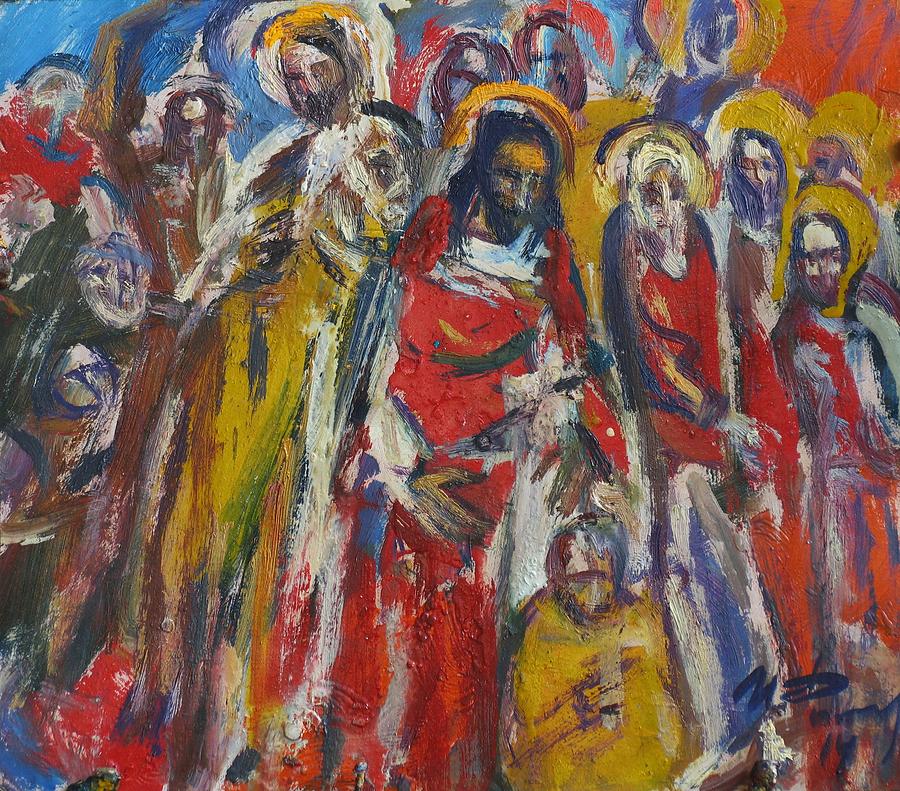
Paul said to Barnabas, “Let’s go back and visit all the brothers and sisters in every city where we preached the Lord’s word. Let’s see how they are doing.” Barnabas wanted to take John Mark with them. Paul insisted that they should not take him along, since he had deserted them in Pamphylia and had not continued with them in their work. Their argument became so intense that they went their separate ways. Barnabas took Mark and sailed to Cyprus. Paul chose Silas and left, entrusted by the brothers and sisters to the Lord’s grace. He traveled through Syria and Cilicia, strengthening the churches. (CEB)

Perfect consensus, complete harmony, and perpetual peace are ideals, not reality, this side of heaven. Oh, it is not as though we ought to give up striving for such things – we just need to understand we will only experience them partially, and not fully, until Christ returns. 

Imagine if Paul and Barnabas, along with their entire coterie of people who traveled with them, decided that they would not go anywhere until there was 100% consensus on every decision to be made. It could be that they would never get anything done at all. It is sad when people cannot come together and be of one mind, but it happens, and will happen again. Sometimes we simply need to go and do what we think is best, whether others agree with us, or not.

“Honest disagreement is often a good sign of progress.”

Mahatma Gandhi

I am a bit adverse to taking sides on most things, but I admit to having a bent toward going with Barnabas. His name means “Son of Encouragement.” He understands taking someone under his wing and giving them a second chance when they screw up.  Barnabas had a soft spot for John Mark.  Barnabas seems like the kind of guy who knows about grace. This is a guy I could hang out with.

Paul, on the other hand, had much more of a Type A personality. I can just imagine Paul saying, “There are things to do, goals to reach, areas to conquer. I don’t have time for this whining and cry baby stuff.”  Paul did not want someone in the group slowing them down with fear or lack of courage. For all that I appreciate about the great Apostle Paul in the New Testament, sometimes he strikes me as being too driven and difficult to work with.

Yet, in the end, taking sides is not really the issue. It is about God working a divine, sovereign, and good will through stubborn and stupid people like me, and maybe like you, who sometimes get lost in winning an argument. 

When all is said and done, nothing is going to thwart God’s providential plans and purposes in this world.  So, rather than taking sides, I think I will rely solely on God’s grace and mercy in my life to work through me, despite my oft short-sightedness.

Holy God, you work your good purposes in and through your people, no matter what.  I want my life and work to be a joy to you and with others, and not a burden.  Create in me a clean heart.  See if there is any offensive way in me and lead me in the way everlasting, through Jesus Christ, my Lord, in the power of the Holy Spirit.  Amen.

Galatians 5:2-15 – Faith Expressing Itself Through Love

Mark my words! I, Paul, tell you that if you let yourselves be circumcised, Christ will be of no value to you at all. Again, I declare to every man who lets himself be circumcised that he is obligated to obey the whole law. You who are trying to be justified by the law have been alienated from Christ; you have fallen away from grace. For through the Spirit, we eagerly await by faith the righteousness for which we hope. For in Christ Jesus neither circumcision nor uncircumcision has any value. The only thing that counts is faith expressing itself through love.

You were running a good race. Who cut in on you to keep you from obeying the truth? That kind of persuasion does not come from the one who calls you. “A little yeast works through the whole batch of dough.” I am confident in the Lord that you will take no other view. The one who is throwing you into confusion, whoever that may be, will have to pay the penalty. Brothers and sisters, if I am still preaching circumcision, why am I still being persecuted? In that case the offense of the cross has been abolished. As for those agitators, I wish they would go the whole way and emasculate themselves!

You, my brothers, and sisters, were called to be free. But do not use your freedom to indulge the flesh; rather, serve one another humbly in love. For the entire law is fulfilled in keeping this one command: “Love your neighbor as yourself.” If you bite and devour each other, watch out or you will be destroyed by each other. (NIV)

Faith, expressing itself through love, is the grace others need from us. I did not grow up committed to learning the Bible or following Christ. I pretty much went my own way throughout childhood, and especially my teenage years. I still remember what it feels like to not be a Christian. 

I have found throughout my Christian life that folks with a past in which they did not live by grace, but only looked out for themselves, have a temptation to embrace strict rules when they become Christians. They know what it feels like to not have Jesus in their lives, so they sometimes go beyond Scripture and impose standards on themselves, and then others, to keep on the straight and narrow.

If, and when, that happens, the Apostle Paul has something to say about it. Embracing certain practices to obtain or maintain righteousness mean nothing in God’s kingdom. For the Galatian church who went down the path of strict outward rule-keeping, Paul had strict words. Here is how one version of the New Testament puts it:

“You people who are trying to be made righteous by the Law have been estranged from Christ. You have fallen away from grace! We eagerly wait for the hope of righteousness through the Spirit by faith. Being circumcised or not being circumcised doesn’t matter in Christ Jesus, but faith working through love does matter.” (Galatians 5:4-6, CEB)

Any Christian tradition or individual believer which ignores God’s grace in favor of controlling one’s own faith through certain rules is no Christianity, at all. Paul would have nothing to do with it. His position was clear and pointed. We are called to freedom, and we are to use that freedom to serve others through love. Freedom is not something where we do whatever we want without regard to others. That is selfishness, not freedom.

“Grace must find expression in life, otherwise it is not grace.”

karl barth

Freedom is a gift of grace. It is given to us so that we will live freely into who we are meant to be as humanity. In other words, there are to be no obstacles of extra-biblical or unbiblical rules impeding us to realize our full potential as Christians saved by grace through faith. Our possibilities include full unhindered expressions of love, joy, peace, patience, kindness, goodness, faithfulness, gentleness, and self-control for the benefit of ourselves and the entire community of the redeemed.

Grace is the currency of God’s kingdom, flowing freely through love. God has your back. Grace forgives, and never runs out. Love endures and never withdraws. When we grab hold of this essential and beautiful truth about God with spiritual gusto, then the only rule we want to keep is the continuing debt to love one another.

Are there any practices, rules, beliefs, or doctrines you impose on yourself which are burdensome to you, or others?  Why do you do them?  Do you expect others to keep them?  What would change if you threw grace and love into the mix?

Gracious God, your love has extended so far as to give your one and only Son on our behalf.  Through Jesus, I embrace the faith and love gifted to me through his redeeming work.  Help me to daily die to myself and my propensity for outward rule-keeping, and to live the gracious life you died to procure for me.

1 Samuel 2:21-26 – Sin and Sinners

God was most especially kind to Hannah. She had three more sons and two daughters! The boy Samuel stayed at the sanctuary and grew up with God.

By this time Eli was very old. He kept getting reports on how his sons were ripping off the people and sleeping with the women who helped-out at the sanctuary. Eli took them to task: “What’s going on here? Why are you doing these things? I hear story after story of your corrupt and evil carrying on. Oh, my sons, this is not right! These are terrible reports I’m getting, stories spreading right and left among God’s people! If you sin against another person, there’s help—God’s help. But if you sin against God, who is around to help?”

But they were far gone in disobedience and refused to listen to a thing their father said. So, God, who was fed up with them, decreed their death. But the boy Samuel was very much alive, growing up, blessed by God and popular with the people. (MSG)

God is not okay with sin. And that is a good thing. In a world full of systemic violence, oppression, injustice, as well as personal cruelty and callousness toward others, we depend upon the Lord’s inherent character of justice and righteousness.

“Sin” is quickly becoming an antiquated word in our culture. That is likely because far too many persons and groups have created extrabiblical lists of sins to avoid – and so many understandably do not want anything to do with it. Biblically, sin is described as wrong and unjust actions (1 John 3:4), as well as failing to do right and just actions (James 4:17). 

Sin is both the breaking of God’s commands, and the lack of conforming to the teachings of Jesus. Christians throughout the ages have generally understood that the Ten Commandments (Exodus 20:1-17) and Christ’s law of love (Luke 10:27) constitute a summary of God’s holy and moral instruction for humanity. This is all based in the character of God, as a holy and loving Being. Sin, then, may be defined as anything in a person which does not express, or is contrary to, the basic character of God.

All sin, whether through overt actions of injustice or a failure to get involved in righteous causes, is rooted in attitudes and activities of self-centeredness. Such sinful attitudes bring about an obsession with lust (1 John 8:34; Galatians 5:16); a broken relationship with God (Romans 3:23; Galatians 5:17); bondage to Satan (1 Timothy 3:6-7; 2 Timothy 2:26); death (Romans 6:23; 8:6); hardening of the heart (Hebrews 3:13); and deception (1 Corinthians 3:18; James 1:22, 26) just to a name a few. There is no upside to sin.

What all this means is that we are guilty of transgressing basic morality as well as failing to live up to being ethically virtuous people on any on-going consistent basis. “Well,” you might say, “that sounds like a total Debbie-Downer.” No, it is total depravity. Being depraved does not mean we are never capable of doing good; it just means that sin has profoundly touched everything in our lives, without exception.

The ironic paradox is that experiencing true joy and comfort comes through knowing how great our sin is. We can only live above sin if we are set free from it by the grace of God in Jesus Christ. If a person is to be redeemed from sin, then a provision must be made. In Christianity, sin has been dealt with once for all through the person and work of Jesus. Christ is our representative, taking our place with the punishment we deserved (Galatians 4:4-5; Ephesians 2:5-6; Colossians 2:9-15; Hebrews 2:17-18; 1 John 2:1).

Jesus Christ is our ultimate substitute (Romans 5:8); which resulted in our redemption (Galatians 5:13); which resulted in his sacrifice for sin satisfying all justice (Romans 3:25); which resulted in our reconciliation to God (Romans 5:10). So, the person who believes in Jesus is forgiven of sin because Christ’s sacrifice is sufficient to deal with all the effects of sin. The Christian is complete in Christ (Colossians 2:10).

The sin issue has been dealt with decisively and definitively in Christ. Thus, gratitude is the order of the day.  Christians ought to be the last people on earth who walk around looking like a bunch of sourpusses who were baptized in pickle juice. Instead, Christians ought to be the most thankful and gracious people around because they are forgiven people. A lack of joy and celebration betrays a lack of Christianity (Luke 15:25-32).

Sin certainly is awful. It destroys everything it touches and can leave terrible consequences in its wake. Sin, however, does not have the last word. Christ’s crucifixion and resurrection are the decisive blows to sin’s power. The skinny on sin is that it is terribly bad. But Jesus is extremely good and overcomes the worst that sin can dish out.

If only Eli’s sons would have listened to their father and embraced grace, yet their sin was so egregiously intolerant to the point that God had had enough of their shenanigans. The contrast between the Eli’s biological sons and his spiritual son, Samuel, were quite pronounced. Old Eli blessed Samuel and his parents but had to rebuke his own sons. Indeed, unchecked sin led to death, but the gift of favor is given to the penitent.

“Work hard for sin your whole life and your pension is death. But God’s gift is real life, eternal life, delivered by Jesus, our Master.”

romans 6:23, msg

Just as Samuel grew in stature and in favor with God and others, so a thousand-years later Luke the Evangelist uses this language to describe the growth of Jesus (Luke 2:40). We, too, can enjoy the grace of God whenever we forsake the heinous nature of sin and live into the way, the truth, and the life that the Lord has waiting for us.

Almighty God, Sovereign Lord of the universe, and Creator of humanity, we, your unfaithful children, are terribly sorry for our sins and the lives we have lived apart from your grace. We sincerely believe that only through the precious blood of our Lord Jesus Christ can we obtain your forgiveness. We confess we have committed serious offences against you in thought, word, and deed against our neighbors. In laziness, despair, and lust for power, we have provoked hatred, division and hurt within our communities. In greed, deceit, and indifference, we have caused serious damage and unnecessary conflict to our brothers and sisters. In selfishness, insensitivity, and bias we have encouraged and emboldened those who inflict hurt, pain, and sorrow
on our loved ones and families. In the name of religion, doctrine, and even of Christ himself we have wounded fellow believers. In stubbornness, pride, and arrogance, we have caused division and strife within your church.

Mercifully send your Holy Spirit and cleanse us from all unrighteousness, restore in us true faith in Christ, and help us to live in peace with our ourselves and our fellow humanity, through our Lord Jesus Christ, to the glory of your holy name. Amen.

Matthew 2:1-12 – Epiphany of the Lord

Star of Bethlehem by German painter Waldemar Flaig (1892-1932)

Jesus was born in Bethlehem in Judea, during the reign of King Herod. About that time some wise men from eastern lands arrived in Jerusalem, asking, “Where is the newborn king of the Jews? We saw his star as it rose, and we have come to worship him.”

King Herod was deeply disturbed when he heard this, as was everyone in Jerusalem. He called a meeting of the leading priests and teachers of religious law and asked, “Where is the Messiah supposed to be born?”

“In Bethlehem in Judea,” they said, “for this is what the prophet wrote:

‘And you, O Bethlehem in the land of Judah,
    are not least among the ruling cities of Judah,
for a ruler will come from you
    who will be the shepherd for my people Israel.’”

Then Herod called for a private meeting with the wise men, and he learned from them the time when the star first appeared. Then he told them, “Go to Bethlehem and search carefully for the child. And when you find him, come back, and tell me so that I can go and worship him, too!”

After this interview the wise men went their way. And the star they had seen in the east guided them to Bethlehem. It went ahead of them and stopped over the place where the child was. When they saw the star, they were filled with joy! They entered the house and saw the child with his mother, Mary, and they bowed down and worshiped him. Then they opened their treasure chests and gave him gifts of gold, frankincense, and myrrh.

When it was time to leave, they returned to their own country by another route, for God had warned them in a dream not to return to Herod. (NLT)

The Three Kings, Ethiopian Orthodox Church

Each year on January 6 in the Church Calendar, after the twelve days of Christmas, is the celebration of Epiphany. Christ’s coming to this earth as a child and becoming like us is much more than a baby in a manger.  Epiphany helps to bring a vision and understanding of God’s glory to all kinds of people in the world.

Epiphany means “manifestation” or “appearance.” The event which is associated with this season is the visit of the Magi to Jesus. Included in this time of the year between the seasons of Christmas and Lent is a special emphasis on the teaching and healing ministry of Jesus. The great celebration and focus of these weeks is that salvation is not limited to Israel but extends to the Gentiles, as well.

Every season in the Christian Year has its unique angle of grace. With Epiphany, we see that one of the most scandalous truths of Christianity is that God graces common ordinary people who seem far from God with the gift of Jesus. God grants repentance that leads to life for all kinds of people no matter their race, ethnicity, class, or background. It is a wondrous and astounding spiritual truth that God’s gracious concern is not limited to a certain type of person or a particular group of people.

Grace is and ought to be the guiding factor in how we interact with people. Losing sight of grace leads to being critical and defensive. Like King Herod of old, a graceless person becomes enamored with earthly power and control. But embracing grace leads to the humility of seeing the image of God in people quite different from ourselves. Like the Apostle Peter, who learned in a vision to bring the gospel to non-Jews, old legalisms begin to be worn away so that people from all walks of life can have access to Jesus and his gracious saving and healing ministry. (Acts 10-11:18)

Grace brings down barriers and does away with unnecessary distinctions between others. The appropriate response to mercy is to glorify God for such marvelous light and amazing work.

It is a merciful reality that the Magi, or Wise Men, pagan astrologers, were directed to the Messiah. A light was provided to lead them to Jesus. Apart from God’s care and intervention they would have remained in darkness.  And it is no less true for people today. This old broken world is wrapped in darkness. All kinds of people have no light at the end of the tunnel of their lives for hope and new life. The gospel of Jesus Christ brings that light to those walking around with no ability to see. Jesus, in his teaching ministry, exhorted his followers not to hide their light but to let it shine for all to see. (Matthew 5:14-16)

Sometimes, maybe oftentimes, the best way to bring resolution to our own troubles and problems is through helping others make sense of their lives through the gracious light of Christ so that they can see an appearance, an epiphany, of what their lives can be in the gracious rule of the kingdom of God. 

As we celebrate Epiphany and journey with Jesus through his earthly upbringing and into his gracious ministry to people, let us keep vigilance to not let our light grow dim. Instead, let us hunger and thirst after Christ’s righteousness so that our joy is full, and our light is bright.

God of mercy, Lord of all, you have gifted the Church through the goodness of your grace to be your hands and do your work, to be your voice and share your words, to bring healing to broken lives. You have graciously gifted your people with the blessings of your Spirit, the power to transform lives and make all things new. Now may our hearts receive, our mouths proclaim, our hands prepare for service so that the love that we have may overflow into the hearts of others, and receive your grace, your renewing Spirit, and your love, through Jesus Christ our Savior. Amen.