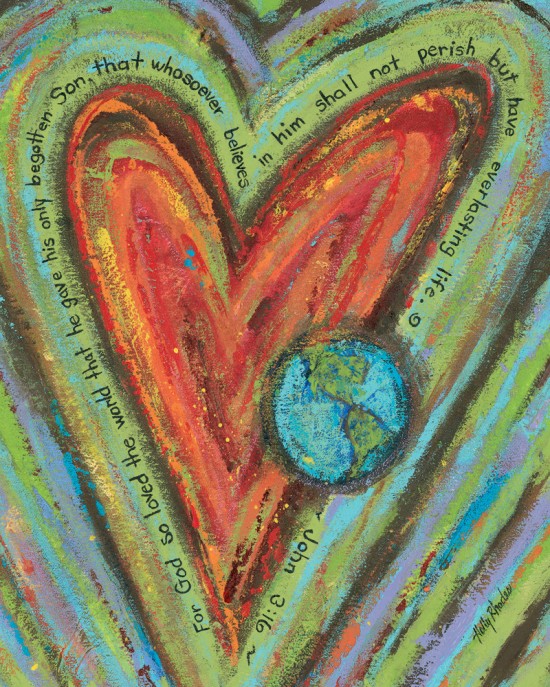
The Greatest Ever

John 3:16 by Holly Rhodes

For God so loved the world that he gave his one and only Son, that whoever believes in him shall not perish but have eternal life. (John 3:16, NIV)

John 3:16 is a Bible verse so familiar as to be cliché. But when Jesus originally said these words, they were both tremendously freeing and incredibly scandalous. When something is familiar, we tend not to explore it any further. We need a closer look at the message of John 3:16 so we can not only see why some people embrace its light, but why others remain in darkness.

Perhaps another examination the gospel will dispel dullness and impel us toward praise, as well as to share its life-giving message not because we must, but because we want to. John 3:16 contains nine of the greatest spiritual realities we could ever experience.

1.“God” is the greatest subject ever.

The Bible contains lots of messages, promises, and commands. However, those are not the primary purpose for having the Holy Scriptures. The Bible has been given to us as a revelation of God to us so that we might know God. Every time the Scriptures are used, read, quoted, prayed, taught, learned, and heard – we know God a bit better. Anything short of knowing God falls short of the Bible’s intended purpose.

I constantly encourage a regular daily regimen of Bible-reading because it is the primary means of knowing God. Yes, we get to know God in creation and through experience, yet one of the best ways of experiencing God is through taking time for reading, meditating, memorizing, and praying of the Scriptures. Some of my most encouraging times are when I hear what people are learning about the Lord in God’s Word. With the Holy Spirit being our teacher, we discover more and more that God is the greatest subject we could ever learn about, talk about, and give our lives to.

2. “So” is the greatest extent ever.

There is a great wideness to God. God is a huge Being! Nothing is outside of God’s reach. So, when God decides to do something, nothing can stop it. We might be limited in our strength and abilities to accomplish things. But God’s extent is limitless. Knowing God means becoming familiar with an all-knowing and all-powerful Being. Prayer, then, becomes a response to God. God speaks to us through the Word, and we speak back with prayer so that the Word and prayer go like a hand in a glove. Our extent is temporary and small. Yet God takes our human prayers and uses them to accomplish divine purposes on this earth.

3. “Loved” is the greatest demonstration ever.

There is no greater demonstration of love than our triune God loving us with a sacrificial self-emptying love that saw our great need for deliverance and went to the greatest lengths possible to accomplish it. Our own love for God, each other, and the world is a direct result of God’s love for us.

This is how we know what love is: Jesus Christ laid down his life for us. And we ought to lay down our lives for our brothers and sisters…. This is how God showed his love among us: He sent his one and only Son into the world that we might live through him. This is love: not that we loved God, but that he loved us and sent his Son as an atoning sacrifice for our sins. Dear friends, since God so loved us, we also ought to love one another. (1 John 3:16; 4:9-11, NIV)

Where there is a lack of love there is an absence of God. Every human on planet earth needs the love of God in Christ. Without it we are lost. You are loved with sacrificial love. The greatest thing that can be said of you is that you are “loved.” Whatever has happened, is happening, and will happen that breaks you down, belittles you, hurts you, or causes you to feel like the north end of a southbound cow, is not what defines you. All may be going to hell around you, but nothing will change the unalterable reality that in Christ you are “loved!”

4. “The world” is the greatest object ever.

Up to this point you might not have sensed anything scandalous about this message of God’s grace and love. But this was the game-changing term for the original hearers of Christ’s words: God so loved the world. Many of Christ’s listeners could easily understand God loved the nation of Israel. But to say that God loved the world was going too far. It meant God loved Gentiles, specifically, Romans who occupied their land and oppressed them.

To capture the punch of this, it would be like Jesus showing up in our world today and saying that God so loved whomever we despise or hate. We often tend to assume that God hates who we hate. Right? Wrong. Yes, God hates evil and is opposed to all that destroys. Yet, God loves people for whom is placed the divine image within. For God to love the world is an incredible because there are so many unlovely people in the world.

Since God loves the world and demonstrated it in through Jesus, Christ’s Church is to reflect and embody this same love for the world. This has enormous implications for followers of Jesus. The Church is must embrace the same pejorative title as given its leader, Jesus: “Friend of Sinners.”  People come to know Jesus through the love given us in Christ. Since this is our title, Christian ministry then becomes not about my personal preferences but about what will most effectively love the world to Jesus.

5. “That he gave his one and only Son” is the greatest gift ever.

 

John 3:16 by an 11 year old

For God did not send his Son into the world to condemn the world, but to save the world through him. (John 3:17, NIV)

We do not get God’s leftovers or second-hand items. God gave the dearest, best, and most beloved gift he could ever give: his Son. Therefore, the greatest and dearest gift we can give to another person is Jesus. Sharing such a gift Jesus must come freely from the depths of divine love. Apart from love we are only a resounding gong or a clanging cymbal. If it takes cajoling and exhortation for us to give the gift of the gospel, then the problem lies in our hearts. It takes coming back to God’s Word and knowing the love of God in Christ through the Scriptures.

6. “That whoever” is the greatest opportunity ever.

If the greatest gift a person can receive is Jesus, then the best opportunity one could take advantage of is Jesus. We are all at differing places in our relationship with Jesus. Yet no matter the person, the opportunity for grace and love is more than anything you could hope or ask for. 

We are fortunate to have such a grace to know Jesus as Lord, Savior, teacher, healer, and friend. Those familiar with the name of Jesus all their lives but it has not gone much further than that, then the next point is vitally important….

7. “Believes in him” is the greatest commitment ever.

Jesus wants more than our acknowledgment of him; he wants us. Whenever I go home, my dog, Max Power, gets extremely excited. Honestly, I don’t really get excited about him. My typical response to him is, “Yes, Max, I acknowledge your existence.” I say it in hopes he will just kind of leave me alone and let me go about my business. But Max wants more. He wants my affection, my love, and my commitment. He wants a pet, a walk, food, and water.

God does not want to be treated like an annoying puppy. God wants our commitment. The Lord desires more than the tepid response, “I acknowledge your existence.”  The most common response I get from people when sharing the gift of Jesus is “Yes, I believe in Jesus.”  It is their way of saying they acknowledge his existence but are not much interested in giving their lives to him because they want to go about their business without God pestering them about anything. But God does demand something from us – our very souls. If we gain a view of God as gracious and loving, then we willingly desire an intimate commitment.

8. “Shall not perish” is the greatest rescue ever.

People perish not because God is unloving but because their theology is twisted – not to mention that we like our sin, and we don’t want to accommodate a holy God. The Titanic lost hundreds of people not for a lack of lifeboats. In fact, most of the lifeboats went into the water about three-fourths capacity. Many people simply did not believe they were perishing. They trusted in the ship’s reputation as being “unsinkable.” Jesus is our lifeboat.

9. “But have eternal life” is the greatest promise ever.

The promise begins now, not someday. Everlasting life means experiencing a life-saving and life-giving relationship with Jesus today.

Conclusion

If you ever had the feeling there is something more to life than what you are experiencing; if you ever wished you could start over; if you ever felt you cannot do this on your own; then, I have the greatest news ever. God has made a way to handle all your guilt, shame, and darkness. God loves you deeply in the person of Jesus Christ. There is new life in Jesus.

John 12:36-43 – The Shadow Self

“Believe in the light while you have the light, so that you may become children of light.” When he had finished speaking, Jesus left and hid himself from them.

Even after Jesus had performed so many signs in their presence, they still would not believe in him. This was to fulfill the word of Isaiah the prophet:

“Lord, who has believed our message
    and to whom has the arm of the Lord been revealed?”

For this reason, they could not believe, because, as Isaiah says elsewhere:

“He has blinded their eyes
    and hardened their hearts,
so they can neither see with their eyes,
    nor understand with their hearts,
    nor turn—and I would heal them.”

Isaiah said this because he saw Jesus’ glory and spoke about him.

Yet at the same time many even among the leaders believed in him. But because of the Pharisees they would not openly acknowledge their faith for fear they would be put out of the synagogue; for they loved human praise more than praise from God. (NIV)

The season of Lent is a time of preparation for Easter, and of repentance from sin. It is a time to consider our ways and the state of our hearts. In doing so, we find that the grace of God in Christ can heal all wounds. 

Today’s Gospel lesson gives perhaps the most succinct and convicting statement about the shadow places of our lives. Many of the religious authorities believed in Jesus, but they did not speak of it because they were afraid of being put out of the synagogue by the Pharisees. When push came to shove, they cared more for human approval than for God’s glory.

The word “glory” has its roots in the Old Testament and has the meaning of being heavy or having weight. In other words, we might picture God descending to earth among humankind with divine gravity and heft. If we were back in the ‘70s we could say, “heavy, man, heavy!” Glory is really a reference to God’s presence among us. So, if we plug this thought into the religious authority’s attitude, we see that they preferred the presence and accolades of their peers to God. To put the matter even more succinctly, the leaders wanted the limelight and would push their weight around to get it.

Carl Jung (1875-1961) described this hidden shadow self as an unconscious aspect of the human personality. In other words, the shadow results from the conscious self being unaware or unconscious concerning areas of its own personality. Without the light of conscious awareness, the shadow self runs amok within the psyche of a person and far too often calls the shots in speaking and behavior.

“Everyone carries a shadow,” Jung wrote, “and the less it is embodied in the individual’s conscious life, the blacker and denser it is.” (Psychology and Religion, 1938). According to Jung, the shadow side of a person is prone to psychological projection, in which a perceived personal inferiority is recognized as a perceived moral deficiency in someone else. If those projections remain hidden, they eventually come out sideways by harming others because there is a dark illusion, even delusion, that others are stealing what is rightfully mine. Hence, the sinless Jesus is tortured and killed by those who think they are doing a good thing.

It is easy to be hard on the religious rulers in the New Testament, but this is Lent, and, so, we must shine the light of Scripture upon ourselves. This is the time to deliberately gain awareness of our own shadow selves. Perhaps the burning question for all believers at this time of year is: Do I seek the presence of God more than the presence of anything or anyone else?  

Over the decades, I have preached in many churches. Many of them have empty pews or seats in the first several rows during worship. I admit that has always bugged me. I don’t like it. There are times when I am more concerned about the presence of people than the presence of God in a worship service. Maybe you live in fear at work and are more concerned about the presence of people around you than the presence of God, so you keep quiet when you ought to speak up or turn a blind eye to the shadows of an organization.

Lent is not just about identifying sin; it is also about receiving grace. So, let us find that the cleansing work of the Spirit through the work of Jesus is active through our confession of sin. And let us pursue the glory and praise of God in all we do and say as grace permeates deep in our souls. Let the shadows dispel, and the light shine, for the benefit of self and others.

Glorious God lighten our darkness—be our true light. Keep us from the powers of darknessthe perils and dangers of the night. Shine as a kindly light in our spiritual darkness—in our mental turmoil and anxious confusion. We pray this for the love of your Son, our Savior, Jesus Christ who with you and the Holy Spirit lives and reigns as one God, now and forever. Amen.

John 1:1-18 – God in the Flesh

Welcome, friends! The astounding love of God is seen most clearly in the face of Jesus Christ. Click the videos below and let us enjoy worshiping our incarnate Lord…

John 1:1-18
O Word of God Incarnate by Jeff Pardo
He Came Down by the Gaither Vocal Band, 1999

May your hearts be filled with grace through the incarnation of Christ.

May your minds be filled with truth through the knowledge of Jesus.

May your soul be filled with love through love incarnate, the Lord Jesus Christ our Savior. Amen.

God in the Flesh

The Word Became Flesh by Guatemalan painter Hyatt Moore

In the biggest cities of the world, like Mexico City, and Manilla, there are huge garbage dumps that cover several square miles. On top of these heaps of waste there live thousands of families who have made this their home. Each day they send their kids out to forage for scraps so they can have something to eat and survive.  Few others tread where these families are.  Yet, there are believers who make the journey and try to bring the gospel of grace and mercy to such a place.

As incredible and sad a situation that this is, it is incomparable to the journey from heaven to earth that Jesus made. Christ came to the sin-soaked dump of this world, to us who were living on a heap of garbage and entered our lives to save us from our wretched condition. Eugene Peterson’s paraphrase of the Bible, The Message, frames the Gospel of John 1:14 this way:

The Word became flesh and blood and moved into the neighborhood. We saw the glory with our own eyes, the one-of-a-kind glory, like Father, like Son, generous inside and out, true from start to finish.

Jesus did not merely appear to be human; he is human. The Christ of God, enjoying unhindered fellowship within the Godhead of Father, Son, and Spirit, became like us and lived with all the same things we face from day to day.  He “tabernacled” with us, using the imagery of God’s presence with the ancient Israelites (Exodus 25-31, 35-40). Jesus is our Immanuel, God with us.

We must remember that the Apostle John and the other gospel writers were evangelists; they wrote so that people might believe in Jesus and come to see what God has done through joining them in this broken world. Another John, John the Baptist, had a sole purpose in life to be a witness of Jesus to others, to testify to the truth that Christ came to rescue us from our terrible condition.

The Apostle John saw Jesus interact with families in the dump. He knew what was happening, that God was coming to save the people. The way to reach people, who are so concerned for scurrying about their business and trying to survive apart from God, is through the incarnation – in testifying to what God has done in Christ and being sent as little incarnations entering people’s lives. 

In this way, believers are like the moon, not producing light ourselves, but in the middle of darkness, reflecting the light of the sun so that the earth may know that Jesus is coming. The mystery of the incarnation is that Jesus became human and descended to live among us.

Any birth is an incredible miracle. I was present at the births of all three of my daughters, and one of my grandsons. There is nothing quite like it. Life coming into the world for the very first time is an unparalleled mystery with an unmatched sense of majesty. Although childbirth involves pain, agony, and mess, it is all quickly forgotten amidst the joy of this little baby becoming alive to all that is around them.

What a crazy contradiction of a virgin having a child gestate in her womb and then giving birth! That is something more than a miracle. It is Divine accommodation or condescension in which God does the unimaginable and unthinkable in not only coming to earth but entering as a vulnerable human baby. The great and mighty Sovereign of the universe got down on all fours and descended far beneath such loftiness. God got off the throne and sat on the garbage heap with us.

God is so far above and beyond us that to be revealed and communicate to us, the Holy Trinity conspired to enter the earth by means of a baby. God came to us. The sixteenth century Reformer, John Calvin, framed the incarnation of Christ in these terms:

“God lisps with us as nurses are wont to do with little children. Such modes of expression… accommodate the knowledge of the divine to our feebleness. In doing so, God must, of course, stoop far below his proper height… Because our weakness cannot reach his height, any description which we receive of God must be lowered to our capacity to be intelligible… God voluntarily lowers himself not as he really is but as we conceive of him.”

Indeed, God coos at us and babbles baby-talk not because that is his language but so that we can understand. What is more, God became flesh and blood for us, so we can climb up into his lap or lean into him, just as John did with Jesus. (John 13:23-25)

The incarnation of Christ means God loves us so deeply and completely that Jesus became one of us to bring that love with skin on, in ways that truly communicate empathy, compassion, kindness, and goodness to people. This is grace, that God first conformed to us before we are conformed to Christ. God went to the greatest lengths possible to reach us, save us, and bring us into the life of the Trinity.

Jesus climbed into our skin to assure us that God understands and cares. Jesus also gets into our hearts and invites us to know God. Even though Christ said a lot of things that can be difficult to understand, the love of coming alongside another person communicates well in any language and culture. Jesus, full of both grace and truth, bent over backwards to speak and act in ways that say, “I love you.”

God got down and dirty with us. The Lord jumped into the fray of broken humanity. God connected Jesus to an umbilical cord, covered him in the muck of fetal afterbirth, and caused him to cry alongside the sorrows of humanity. None of this was illusion or appearance. It was real, just like us. The author of the New Testament book of Hebrews said this:

Since the children are made of flesh and blood, it is logical that the Savior took on flesh and blood to rescue them by his death. By embracing death, taking it into himself, he destroyed the Devil’s hold on death and freed all who cower through life, scared to death of death.

It is obvious, of course, that he did not go to all this trouble for angels. It was for people like us, children of Abraham. That is why he had to enter every detail of human life. Then, when he came before God as high priest to get rid of the people’s sins, he would have already experienced it all himself—all the pain, all the testing—and would be able to help where help was needed. (Hebrews 2:14-18, MSG)

God’s grace stretches out on the wide horizontal beam of the Cross with compassionate arms for the world. God’s truth goes down deep with the vertical beam of the cross to give stability for the world. The truth of Jesus Christ, the One who reveals God, is strong enough to support the wide beam of grace which stretches round the earth to bring deliverance from the garbage dump of sin, death, and hell.

May we rejoice and be glad in this reality, and may it move us to be used of God to save those on the sin heap of this world.