Amos 8:11-13 – Not Just Some

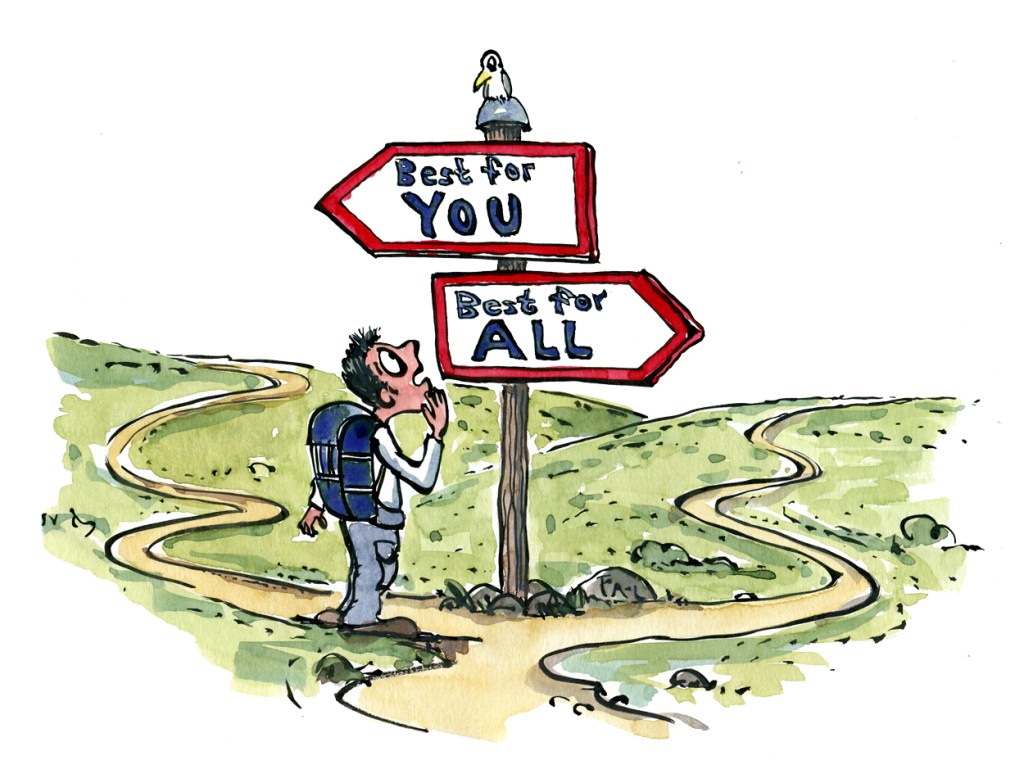
We all do better when we all do better.

“The days are coming,” declares the Sovereign Lord,
    “when I will send a famine through the land—
not a famine of food or a thirst for water,
    but a famine of hearing the words of the Lord.
People will stagger from sea to sea
    and wander from north to east,
searching for the word of the Lord,
    but they will not find it.

“In that day the lovely young women and strong young men
    will faint because of thirst.
(New International Version)

Global Ears

Christians are presently in the season of Eastertide. It is a time of celebrating resurrection and new life… for all, not just some.

A Christian vision of the world is concerned with the common good of all persons, not just some. God is concerned for the entire planet, not just some of it. The Lord calls people from everywhere, all nations, every ethnicity and race of humanity, not just some.

Somewhere along the line, the people of God began hearing God’s voice, as if it were Charlie Brown’s teacher just saying, “Blah, blah… blah, blah.” Smug in their positions of power, and ever-expanding in their desire for more money and possessions, they stopped up their ears to the cries of the poor, needy, and indigent surrounding them.

Self-Centered Ears

Whenever we cease listening to others, we then construct stories in our heads about why they’re the way they are. “The poor? I’ll tell you why they are poor,” says the person with no significant interaction with anyone struggling in poverty. “Those people are lazy. They don’t like to work. They’re only looking for a free handout. Well, believe you me, they aren’t getting a thing from me! I work hard for what I have,” the satisfied person insists.

Then, with a callous disregard for who and what is right under their noses, the privileged person turns to his wife and says, “What’s for supper?” Food aplenty. Clothing galore. Fresh water with no worries. And no thought to helping fellow humanity with even the dignity of listening to the poor person’s plight.

And God will have none of it from the smug self-justifying person. There won’t be a famine of food. It will be a famine of God’s voice, God’s Word. Those who do not listen will not be listened to.

Individualist Ears

For four-hundred years there was a famine of God’s Word, the time between the Old Testament and the New Testament in Holy Scripture. No voice from God. No divine words for anybody, not just some.

As a human community, what one person or one group of people do, effects everyone else. Our individualism doesn’t like that. We chafe at the thought that other people’s actions influence us.

As a young couple, my wife and I rented an apartment. When I contacted the utility company, they informed me I needed to put an exorbitant amount of money down to begin electrical service in our apartment. It turns out, an older gentleman lived alone in the apartment before us. The neighbors said he always kept all the lights on, and that he had high watt bulbs in everything.

So, when the electric company gave me a figure for a down payment, it was based on the apartment’s average usage over the past year. One man’s single solitary decision about lighting impacted a struggling young couple trying to get through school with a new baby in tow.

Just because we don’t see the impact of our decisions, doesn’t mean there aren’t any.

God sees them all. And he hears the cries of the poor who must fork out the precious little cash they have on things not of their own doing.

Whenever people refuse listening to the poor, the entire human community is at risk of experiencing a famine of God’s speech. That’s for all people, not just some.

Biblical Ears

Scripture says people don’t live on food alone but by every word that comes from the mouth of God (Deuteronomy 8:3; Matthew 4:4). God’s Word is necessary sustenance, just as much as the need for three square meals a day. Withholding both physical and spiritual resources from others, either through sheer inattention or blatant disregard, damns a society to experiencing famine in the total sense of the word – for all, not just some.

Worshiping at the altar of capitalism or any other economic system is idolatry. Although I do not believe capitalism is inherently bad, it does have a shadow side to it which we need to see and acknowledge. Private ownership is a good thing. Yet, capitalism benefits only some, not all. We have class divisions and unequal access to goods and resources. A few control a lot. However, in the kingdom of God, all benefit, not just some.

Capitalist Ears

Capitalism is a good motivator to work. It is also the best motivator there is for greed. What’s more, people are viewed and treated more as commodities than human beings. We are not “giving units” to be exploited for our labor or our resources. We are persons. So, we need to be treated as such. Operating a sweat shop, failing to pay workers a living wage, and turning a blind eye to safety, just to make an extra buck, comes under the condemnation of Amos’ prophecy.

A capitalist approach really ends up bringing needless complexity and an exorbitant amount of goods and services, rather than a simple lifestyle which can care for people – instead of maintaining a bunch of stuff. The insatiable desire for more only causes deafness to both neighbor and God.

Common Good Ears

Our way of being together as one human family is vital. Even lovely young women and strong young men – people who have everything going for them – will be resource-less without any word from God. That is, unless we take the biblical prophets seriously. Then, perhaps we will squarely face our collective shadow side and seek the words of God so that we can love all our neighbors as ourselves, and not just some of them.

Do we have ears to hear?

Creator God of all living things: We are all hungry in a world full of abundance. We ask for the grace to see the abundant resources of our world, to have enough awareness of the dark places of our hearts to acknowledge our sins of greed and fear. Give us openness of soul and courageous, willing hearts to be with our sisters and brothers who are hungry and in pain. We intercede on behalf of every person who is hungry for earthly food and hungry for the Word of God. We pray in the name of our compassionate Savior who hears every cry, and not just some. Amen.


Psalm 119:9-16 – How Can a Young Person Live a Pure Life?

How can a young person live a pure life?
    By obeying your word.
I try with all my heart to serve you.
    Help me obey your commands.
I study your teachings very carefully
    so that I will not sin against you.
Lord, you are worthy of praise!
    Teach me your laws.
I will repeat the laws we have heard from you.
I enjoy following your rules
    as much as others enjoy great riches.
I will study your instructions.
    I will give thought to your way of life.
I enjoy your laws.
    I will not forget your word. (ERV)

Pornography is a multi-billion-dollar a year industry and is steadily growing. The younger generation is particularly susceptible in this internet age of easy access and multiple porn websites.

  • 35% of all internet downloads worldwide are related to pornography.
  • Teen-aged boys are the largest consumers of pornographic internet sites. 

The following percentages of children report having seen pornography in some way:

  • 50% of 11-13-year-olds
  • 65% of 14-15-year-olds
  • 78% of 16-17-year-olds
  • 75% of parents believe their children have not seen pornography online.
  • 53% of the children said that they had seen pornography online.

Into this terrible muck of impurity an impropriety enters the biblical psalmist with his ancient, yet truly relevant question for us today: How can a young person live a pure life? 

The answer the psalmist gives is this: By guarding the heart through obedience to God’s Holy Word. The psalmist himself stored up the commands and teachings of Scripture in his heart so that he might not sin against God.

A solid tried-and-true activity parents can do for themselves (the statistics for adult use of porn are staggering) and for their kids in this area of purity is for the entire family to do some old school Bible memorization. Yes, I mean getting down to rote memory work. 

This is to be neither a legalistic practice nor some fetish that will keep evil away. Instead, memorizing verses and large sections of the Bible provides a solid foundation from which to construct of base of operations for the work of meditation. When temptation occurs, there will be something to stand upon in the heat of the moment.

Today’s lesson from Psalm 119 is a great place to begin. Expand to memorize the entire psalm, all 176 verses of it. When faced with the decision of viewing pornography or not, it would be wise to dedicate the time to memorizing Scripture so that there will be a delight in God’s statutes rather than a depressed guilt over another fall into impure thoughts and/or actions.

Now, I can feel the pushback from some folks. You might not have memorized anything your entire life, or so you think. One of the reasons many people can freely quote lines from movies is that they have watched their favorites repeatedly. Ah, so we are on to something, right!?

I have been reading the Holy Bible for over forty years, every day. I have large chunks of Scripture memorized – mostly because of all that reading. So far in my life I’ve read the entire Old Testament around 100 times and the New Testament about 300 times – not because I ever had the goal of doing all that reading but because I need God’s Word.

What’s more, I take the further step of spending some time in reflection and ongoing meditation on Scripture, especially at night before retiring. This might seem over the top to some. However, the reading and reflection of Scripture is about a 30-minute venture for me on most days. The goal is engrafting the message of the Bible into the heart and life. Memorization is simply the means of helping that to happen.

There are some memorization tips I use and have picked up along the way to aid in pressing Scripture firmly into my soul:

  • Sleep on it. Studies show that our brains process and store information while we sleep. Try to review some Scripture just before you go to sleep—even if it’s only for a few minutes—and see if it helps embed the information in your memory.
  • Repeat it. There is no substitute for consistent and repetitive reading or listening to Scripture being read to you. This one practice alone has been key to my own ability to memorize. 
  • Write it out. Writing helps deeply encode biblical truth we’re trying to learn because there is a direct connection between our hand and our brain. To increase recall, speak the Scripture out loud and visualize the concepts as well.
  • Sing it. Singing is what got my middle daughter through school. Songs or jingles use your brain’s right hemisphere, helping us to remember. There are already plenty of songs out there for all kinds of biblical passages. And, of course, you can always try making your own music.
  • Sense it. Use as many of the five senses as possible. Our senses enable us to use more parts of our brains and retain information better. For example, when I read Scripture, I use a physical Bible to hold and often use a pointer when reading (touch); have a cross in front of me (sight); read out loud, sometimes with worship music in the background (hearing); light a candle (smell); and, I always have a cup of coffee to sip while reading! (taste)

The biblical psalms are meant to be prayed. So, using them for that purpose has the effect of shaping our prayers and desires in a good direction, as well as helping us to live into the commands of God to “repeat the laws I have heard from you.” In a world of spiritual impurity, emotional assault, and mental adultery, we need the purifying work of God’s Word to wash our souls clean.

May it be so, to the glory of God.

Merciful God, thank you for providing your Word to me so that I might read it, use it, memorize it, meditate upon it, and engraft it into my soul.  Fortify my spirit against the demons of impurity by the power of your Holy Spirit, to the glory of Jesus Christ.  Amen.

Exodus 20:1-17 – Perspective Changes Everything

Welcome, friends! Sometimes in our lives we can get lost in our thinking – only seeing things from one perspective. God’s Word invites us to see differently – to view ourselves, others, and the world in ways that can change our lives. Click the videos below and let us explore that perspective…

Pastor Tim Ehrhardt
Words written and sung by Michael W. Smith

The instructions of the Lord are perfect,
    reviving the soul.
The decrees of the Lord are trustworthy,
    making wise the simple.
The commandments of the Lord are right,
    bringing joy to the heart.
The commands of the Lord are clear,
    giving insight for living.
Reverence for the Lord is pure,
    lasting forever.
The laws of the Lord are true;
    each one is fair.
They are more desirable than gold,
    even the finest gold.
They are sweeter than honey,
    even honey dripping from the comb.
They are a warning to your servant,
    a great reward for those who obey them.

How can I know all the sins lurking in my heart?
    Cleanse me from these hidden faults.
Keep your servant from deliberate sins!
    Don’t let them control me.
Then I will be free of guilt

    and innocent of great sin.

May the words of my mouth
    and the meditation of my heart
be pleasing to you,
    O Lord, my rock and my redeemer.

Amen. (Psalm 19:7-14, NLT)

Perspective Changes Everything

Perspective is everything. Nearly sixteen years-ago, me and my family were in a car accident. I was traveling on a highway in rural Iowa and a small car on a gravel road blew right through the stop sign without even slowing down. There was nothing I could do. I slammed into the rear quarter panel of his car, and he literally spun like a top off the highway and came to a stop. Both the driver and his girlfriend passenger were not injured. 

Two of my daughters were in the very back seat of our minivan, with my wife and dog as front seat passengers.  The girls were not harmed. However, my wife tore her shoulder’s rotator cuff trying to protect the dog and had to have surgery to repair it. My lower back was injured, but not in a way which surgery could repair. To this day I live with low-level chronic pain. Most days it’s not bad, maybe a one or two on the pain scale. But on a bad day I can barely walk across the room and need a cane to get around.

I have played the scene of the accident in my mind hundreds of times. I have thought over-and-over again about what I could have done to prevent the accident. Yet there was no way to avoid it. I thought about the fact that if we just would have left a minute earlier or a minute later from my parents’ house from where we were visiting, all would be fine. But I know that kind of thinking is a fool’s errand. I have pondered every possible scenario in my head and have gotten nowhere. 

It also took me awhile to forgive the young man who was driving the other car. He changed my life, and not in a good way. Although his insurance took care of everything and he was very repentant about the whole thing, I was understandably mad for a long time. I eventually did come to the point of forgiving him.

Over the years I have learned to live with my limitations. I have now accepted the sometimes-irritating pain as part of my life. Still, on occasion, I cannot help but think of what my life would be like today if I hadn’t been in that stupid senseless accident. 

“Everything that irritates us about others can lead us to an understanding of ourselves.”

carl jung

About six years ago I was praying alone in the church for which I was a pastor, at the time. God brought the accident to my mind. I said to God, “Lord, we’ve been through this accident hundreds of times together. I don’t want to think about it anymore. Why are you bringing this up now?”

Even though I wasn’t really looking for an answer to my question, God brought it up because the Lord knew I was finally ready to get a divine perspective on the accident. Out of the hundreds of times I went over that accident, the one perspective I never took was that of the young man – the other driver. God invited me to take the young driver’s view of what happened that day. So, I did.  I know that intersection like the back of my hand, so it wasn’t a hard exercise. 

I put myself in the driver’s seat of his car. I’m driving down the gravel road not paying attention to the fact that a stop sign is coming up. I blow through the sign onto the highway and right in front of a minivan who slams on the brakes just enough to plow into the rear quarter panel. I spin out like a top and come to rest only a few feet from a huge Iowa grain elevator.

For the first time in my life, I finally understood. God had a divine appointment for me that day. You see, if I had not come along just when I did, that young man and his girlfriend would have blown through the stop sign and struck that grain elevator. It would have killed them both instantly.

“Life is 10 percent what you make it and 90 percent how you take it.”

Irving Berlin

Suddenly, my perspective changed 180 degrees. I always thought about me and my family. I always considered my hardship and my change of life. But now I saw that God sent his servant to save two lives that day. Had I not struck his car, causing him to spin and come to a rest unharmed, two people would have died. 

Now, every time my back acts up and it effects how my life is lived, I’m reminded that it is a small price to pay for the lives of two human beings. Perspective changes everything.

The Bible invites us to view our lives from a different perspective. Our hurts and our pains, our sorrows and our sufferings, our changes, and our limitations, are all part of something much bigger God is doing in the world.  We are not always privy to God’s plans and purposes. Yet God’s Word challenges us to take a perspective of the world, of humanity, and of ourselves which is counter to how we often think.

In this season of Lent, we are invited to read God’s Word and practice repentance – literally, a change of mind.  We are invited to see the Ten Words (Commandments) as the glasses through which we are to view our relationship with God and our relationships with others (Exodus 20:1-17). Jesus, summarizing those Ten Words, put it this way: All the Law hangs on loving God and loving our neighbor. (Matthew 22:36-40)

The thread of those moral words, those ethical commands, runs through the entirety of God’s Word, the Bible. The psalmist reminds us that this Word is good, sweet, and more precious than gold (Psalm 19:7-14). The Apostle Paul reminds us that this Word is our wisdom to live by (1 Corinthians 1:18-25).  And Jesus, as the Word made flesh among us, lived that loving and gracious Word with perfect moral and ethical goodness.

The temple, as the place where God’s Word was read and observed, was not to be adulterated with making a profit – which was why Jesus drove out the moneychangers.  And he did it with flavor! (John 2:13-22) Later, after Jesus died and rose from death, the disciples remembered their master’s words and affirmed them as being the Word of God. They believed. Their faith and repentance changed the world.

God is inviting us to take up the Divine Word and see our lives, the lives of others, and every event and situation through that lens. We are to see Jesus, not only as a great teacher, a moral and good person, and a loving healer – but also as Lord and Savior. In a small way, I suffered so that someone else could live. Yet Jesus suffered sin, death, and hell in our place so that you and I could live – so that we might have the eternal life of enjoyment with God forever.

Allow the Word of God to shape your lives and form your thinking today and every day. You might not always know what God is doing, but you can be assured that everything God does is just, right, and good. 

May you know God’s peace today. May you know Christ better in this season as you reflect upon our Lord’s great sacrifice on our behalf.