There Is No Other God (Daniel 3:1-30)

Shadrach, Meshach, and Abednego are thrown into a fiery furnace, by Chris Torre

King Nebuchadnezzar made a gold statue. It was ninety feet high and nine feet wide. He set it up in the Dura Valley in the province of Babylon. King Nebuchadnezzar then ordered the chief administrators, ministers, governors, counselors, treasurers, judges, magistrates, and all the provincial officials to assemble and come for the dedication of the statue that he had set up.

So the chief administrators, ministers, governors, counselors, treasurers, judges, magistrates, and all the provincial officials assembled for the dedication of the statue that King Nebuchadnezzar had set up. They stood in front of the statue the king had set up.

The herald proclaimed loudly: “Peoples, nations, and languages! This is what you must do: When you hear the sound of the horn, pipe, zither, lyre, harp, flute, and every kind of instrument, you must bow down and worship the gold statue that King Nebuchadnezzar has set up. Anyone who will not bow down and worship will be immediately thrown into a furnace of flaming fire.”

So because of this order as soon as they heard the sound of the horn, pipe, zither, lyre, harp, flute, and every kind of instrument, all the peoples, nations, and languages bowed down and worshipped the gold statue that King Nebuchadnezzar had set up.

At that moment some Chaldeans came forward, seizing a chance to attack the Jews. They said to King Nebuchadnezzar:

“Long live the king! Your Majesty, you gave a command that everyone who hears the sound of the horn, pipe, zither, lyre, harp, flute, and every kind of instrument should bow down and worship the gold statue. Anyone who wouldn’t bow and worship would be thrown into a furnace of flaming fire. Now there are some Jews, ones you appointed to administer the province of Babylon—specifically, Shadrach, Meshach, and Abednego—who have ignored your command. They don’t serve your gods, and they don’t worship the gold statue you’ve set up.”

In a violent rage Nebuchadnezzar ordered them to bring Shadrach, Meshach, and Abednego. They were brought before the king.

Nebuchadnezzar said to them: “Shadrach, Meshach, and Abednego: Is it true that you don’t serve my gods or worship the gold statue I’ve set up? If you are now ready to do so, bow down and worship the gold statue I’ve made when you hear the sound of horn, pipe, zither, lyre, harp, flute, and every kind of instrument. But if you won’t worship it, you will be thrown straight into the furnace of flaming fire. Then what god will rescue you from my power?”

Shadrach, Meshach, and Abednego answered King Nebuchadnezzar: “We don’t need to answer your question. If our God—the one we serve—is able to rescue us from the furnace of flaming fire and from your power, Your Majesty, then let him rescue us. But if he doesn’t, know this for certain, Your Majesty: we will never serve your gods or worship the gold statue you’ve set up.”

Nebuchadnezzar was filled with rage, and his face twisted beyond recognition because of Shadrach, Meshach, and Abednego. In response he commanded that the furnace be heated to seven times its normal heat. He told some of the strongest men in his army to bind Shadrach, Meshach, and Abednego and throw them into the furnace of flaming fire. 

So Shadrach, Meshach, and Abednego were bound, still dressed in all their clothes, and thrown into the furnace of flaming fire. (Now the king’s command had been rash, and the furnace was heated to such an extreme that the fire’s flame killed the very men who carried Shadrach, Meshach, and Abednego to it.) So these three men, Shadrach, Meshach, and Abednego, fell, bound, into the furnace of flaming fire.

Then King Nebuchadnezzar jumped up in shock and said to his associates, “Didn’t we throw three men, bound, into the fire?”

They answered the king, “Certainly, Your Majesty.”

He replied, “Look! I see four men, unbound, walking around inside the fire, and they aren’t hurt! And the fourth one looks like one of the gods.” Nebuchadnezzar went near the opening of the furnace of flaming fire and said, “Shadrach, Meshach, and Abednego, servants of the Most High God, come out! Come here!”

Then Shadrach, Meshach, and Abednego came out of the fire. The chief administrators, ministers, governors, and the king’s associates crowded around to look at them. The fire hadn’t done anything to them: their hair wasn’t singed; their garments looked the same as before; they didn’t even smell like fire!

Nebuchadnezzar declared: “May the God of Shadrach, Meshach, and Abednego be praised! He sent his messenger to rescue his servants who trusted him. They ignored the king’s order, sacrificing their bodies, because they wouldn’t serve or worship any god but their God. I now issue a decree to every people, nation, and language: whoever speaks disrespectfully about Shadrach, Meshach, and Abednego’s God will be torn limb from limb and their house made a trash heap, because there is no other god who can rescue like this.”

Then the king made Shadrach, Meshach, and Abednego prosperous in the province of Babylon. (Common English Bible)

Daniel’s three companions in the fiery furnace, by Adrianoupolitis Konstantinos, 1725

At the core of today’s story, and of the entire book of Daniel, is the assertion and demonstration that there is no other God but Yahweh.

King Nebuchadnezzar believed that he himself was big stuff. It turns out, not so much. Even the great king ended up confessing that there is no other god who is able to deliver like the God of Shadrach, Meshach, and Abednego. When the mighty king looked into the fire, all of his pomp and control and wrath and power proved to be nothing before the One God of all.

The earthly king threw all of his weight into showing how powerful and great he could be; and all of that unleashing of kingly destructive force did absolutely nothing to even singe the hair of the three worshipers of God.

Nebuchadnezzar did a lot of talking, a lot of posturing, and showed a lot of anger. Conversely, God said nothing, and was supremely successful over him. Turns out that Nebuchadnezzar was only a little yippee puppy barking in front of the large Mastiff dog who could squish him with but a movement of his paw if he wanted.

The experience of King Nebuchadnezzar is a telling lesson on all earthly rulers who presume to be supreme and all-powerful in their position.

And even in the great king’s confession of God’s true might and power, it’s almost tongue-in-cheek, as if Nebuchadnezzar himself is delusional enough to think that he’s the one who is setting up God as God. For those who are familiar with the prophecy of Daniel, they know what’s coming up in Nebuchadnezzar’s future that will purge him of that idea once and for all.

In truth, whatever strength Nebuchadnezzar had, it was God-given. In reality, you and I are recipients of God’s grace and strength; not a one of us conjured up our own success.

Things like a pompous attitude, a spirit of self-centeredness, and a position of hubris are totally out of sync with the values of God’s rule and reign on this earth. We fret and strut upon the stage of this planet in vain; the Lord is really the One who holds it all. Carrying the world on our shoulders is to be way out of touch with our job description as humans. Such a thing will only make us look as foolish as old King Nebuchadnezzar.

In between a rock and a hard place, within the throes of trouble, there is no step by step formula in dealing with it. Even in searching for clear instructions betrays that we desire to have situations within our own control. Shadrach, Meshach, and Abednego did not presume upon God, but fully trusted God and knew that they had no control over the circumstance other than choosing their own attitude in it.

All of the officials had gathered before Nebuchadnezzar’s statue; but by the end of the story they stood as witnesses to the work of the true God. Their worship of the statue had gained them nothing; they ended up under a new threat from Nebuchadnezzar. The king commended Shadrach, Meshach, and Abednego’s defiance of his decree, but followed it with a new decree commanding the worship of their God.

King Nebuchadnezzar commanded others, but he himself did not worship. His death-threat is hardly a fitting way to bring people to worship the true God. That sort of behavior ought to highly instruct us in this American  election year cycle.

The oppressor does not have the last word. God creates a future beyond oppressive human systems.

Sovereign Lord, I pray that You will right all wrongs taking place in our world; and vindicate those being treated unjustly. Keep us from taking matters into our own hands, for vengeance is Yours, not mine. In Your grace and mercy, give justice and peace to all who have been cruelly and unfairly treated by their fellow humanity. May injustice and carelessness end, and may all people be drawn into Your saving arms of grace. Amen.

Rebuilding (Ezra 6:1-16)

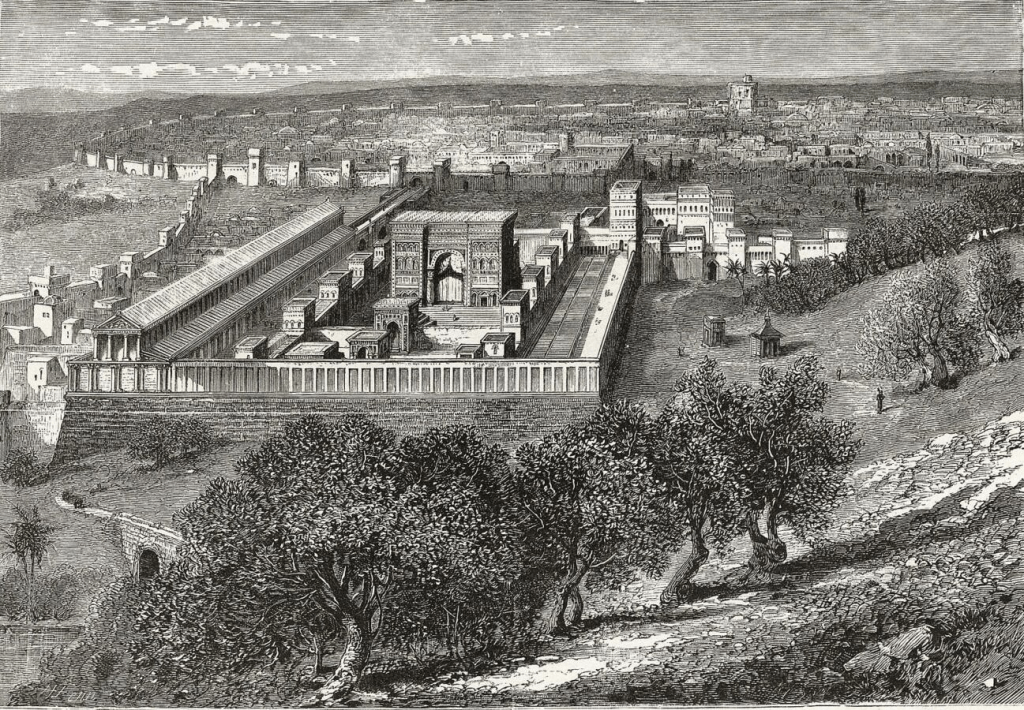
Rebuilding of the Temple, by Gustave Doré, 1866

Then King Darius made a decree, and they searched the archives where the documents were stored in Babylon. But a scroll was found in Ecbatana, the capital of the province of Media, on which was written the following:

A memorandum— In the first year of his rule, King Cyrus made a decree: Concerning God’s house in Jerusalem: Let the house at the place where they offered sacrifices be rebuilt and let its foundations be retained. Its height will be ninety feet and its width ninety feet, with three layers of dressed stones and one layer of timber. The cost will be paid from the royal treasury. In addition, the gold and silver equipment from God’s house, which Nebuchadnezzar took out of the temple in Jerusalem and brought to Babylon, is to be restored, that is, brought back to Jerusalem and put in their proper place in God’s house.

Now you, Tattenai, governor of the province Beyond the River, Shethar-bozenai, and you, their colleagues, the officials in the province Beyond the River, keep away! Leave the work on this house of God alone. Let the governor of the Jews and the elders of the Jews rebuild this house of God on its original site.

I also issue a decree about what you should do to help these elders of the Jews as they rebuild this house of God: The total cost is to be paid to these people, and without delay, from the royal revenue that is made up of the tribute of the province Beyond the River. And whatever is needed—young bulls, rams, or sheep for entirely burned offerings to the God of heaven, wheat, salt, wine, or oil, as requested by the priests in Jerusalem—let that be given to them day by day without fail so that they may offer pleasing sacrifices to the God of heaven and pray for the lives of the king and his sons.

I also decree that if anyone disobeys this edict, a beam is to be pulled out of the house of the guilty party, and the guilty party will then be impaled upon it. The house will be turned into a trash heap.

May the God who has established his name there overthrow any king or people who try to change this order or to destroy God’s house in Jerusalem. I, Darius, have decreed it; let it be done with all diligence.

Then Tattenai, the governor of the province Beyond the River, Shethar-bozenai, and their colleagues carried out the order of King Darius with all diligence. So the elders of the Jews built and prospered because of the prophesying of the prophet Haggai and Zechariah, Iddo’s son. They finished building by the command of Israel’s God and of Cyrus, Darius, and King Artaxerxes of Persia. This house was completed on the third day of the month of Adar, in the sixth year of the rule of King Darius.

Then the Israelites, the priests and the Levites, and the rest of the returned exiles joyfully celebrated the dedication of this house of God. (Common English Bible)

Throughout the time period of the Babylonian exile, the Jews waited impatiently for the day that Babylonian or Persian kings would allow them to return to their land and rebuild the Temple. When Cyrus was appointed king, their efforts were finally rewarded. Cyrus ordered that they be allowed to return to Israel and rebuild the Temple. He even promised to provide supplies for the project.

Under Persian rule, each subject people was allowed to live by its ancestral laws, which were enforced by the imperial government. Violations of the laws of the group to which one belonged constituted an offense against the state precisely because they led to instability. The maintenance of order in Judea, for example, would ensure the security of traveling to and from Egypt, and therefore the king required, in his own interest, that Jewish law be observed.

But down the road, when rebuilding efforts were questioned by the Persian governor of Judea, Tattenai, he and his associates wrote to King Darius about the legitimacy of the work. A search of the Persian records verified the Jewish claim and authority to rebuild the Temple.

What’s more, King Darius strongly affirmed support of restoration, including the use of tax revenues to help with funding the work. It was important enough for Darius to communicate that severe punishment would happen if anyone hindered rebuilding of the Temple.

The Temple was thus completed (in 516 B.C.E.) and it happened over a long period of time, under consistently adverse circumstances. The success of such a huge endeavor came through a combination of two different Persian kings who authorized the work and supported it fully; the prophets Haggai and Zechariah who encouraged it and provided spiritual support; and the Jewish leaders and workers who did the actual reconstruction and supported the effort with their blood, sweat, and tears.

In other words, a lot of stars in the universe needed to align for the Temple to actually be rebuilt. And it happened. Celebration of God’s sovereignty and divine help was then in order.

Awe and wonder are the basis of any good spirituality. Experiences that defy our imagination stick with us and bolster our faith for future mysteries and conundrums. I’m sure the Jews involved in rebuilding the Temple seriously wondered if it ever would materialize. Yet, it did.

While moments of awe come upon us, and cannot really be planned, there are yet some ways in which we can attune ourselves to experience awe in the everyday, such as:

  • Reading Holy Scripture, or inspiring biographies and novels
  • Attending church worship services and special events
  • Walking out in creation and spending time outside
  • Listening to music and going to live music performances
  • Visiting museums and community events
  • Engaging in spiritual disciplines and practicing them with others

We all go through times of rebuilding and needing to restore something which has been damaged or devastated. In your efforts, may you see the wonder of God’s movements in your life today, as you work and labor for a better tomorrow. Amen.

Where Is God in My Suffering? (Psalm 22:23-31)

“Praise him, you servants of the Lord!
    Honor him, you descendants of Jacob!
    Worship him, you people of Israel!
He does not neglect the poor or ignore their suffering;
    he does not turn away from them,
    but answers when they call for help.”

In the full assembly I will praise you for what you have done;
    in the presence of those who worship you
    I will offer the sacrifices I promised.
The poor will eat as much as they want;
    those who come to the Lord will praise him.
May they prosper forever!

All nations will remember the Lord.
    From every part of the world they will turn to him;
    all races will worship him.
The Lord is king,
    and he rules the nations.

All proud people will bow down to him;
    all mortals will bow down before him.
Future generations will serve him;
    they will speak of the Lord to the coming generation.
People not yet born will be told:
    “The Lord saved his people.” (Good News Translation)

I find that a great deal of truth and reality in this world is something of a mystery and a paradox. Christianity, especially, is a religion of paradox, in my opinion. For example, God is Three – Father, Son, and Spirit – but God is One. Jesus Christ is fully human and fully divine, at the same time, all the time. And when it comes to the spiritual life, suffering exists, and God is sovereign and in control of all things.

This then, is what prompts many people to question if there is really a God – since so much suffering exists throughout the world. Yet, it’s necessary to maintain the tension that hard circumstances, adversity, and difficulty in the form of awful suffering, and the preeminence of the Lord God almighty, both exist without taking anything away from either of them.

The severity of suffering, nor the supreme majesty of God, need to be watered down in any way in order to try and make sense of our existential situations.

“Suffering” is a word we would like to avoid. Even saying or reading the word might make some folks cringe. Suffering? No thanks. I think I’ll pass on that. Yet, something inside of us instinctively knows we cannot get around it. Everyone suffers in some way. It is endemic to the human condition that at times we will suffer physically, financially, mentally, emotionally, and spiritually. 

That’s why I believe there is so much talk within some Christian circles about miracles. It’s more than understandable:

  • a chronic pain sufferer wants relief, so she prays for a miracle of health
  • a small business owner is bleeding financially, and looks to God for an immediate miracle of wealthy clients
  • a beloved senior saint knows she is afflicted with Alzheimer’s, so she prays for the miracle of deliverance, even to be taken home to be with the Lord
  • a young adult finds himself in the throes of depression and has tried everything to cope and get out of it, so he petitions God for a miracle out of the deep black hole
  • a believer in Jesus keeps experiencing a besetting sin and cannot get over it, so she looks to God for the miracle of not struggling any more with it

These scenarios and a thousand other maladies afflict people everywhere. There are a multitude of stories out there. Folks who have experienced a miracle tell of their wonderful deliverance. But what about the rest? Those without the miracle? Do they have a lack of faith? Has God forgotten them?

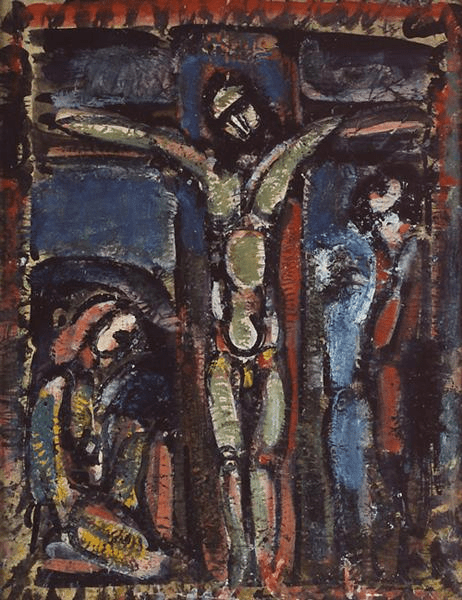
Oh, my, no! God sees, and God knows. God is acquainted with suffering. Jesus knows it first-hand. Remember that it was Jesus who said, “My God, my God, why have you forsaken me?” (Psalm 22:1; Mark 15:34; Matthew 27:46)

Even Jesus cried out in his suffering. But there was no deliverance coming for him.  There was, however, deliverance coming for us.

Sometimes the greatest miracle and deliverance of all is to be freed from the need for a miracle. The reason God doesn’t just offer immediate relief from everyone’s suffering and bring a divine miracle is that the Lord is doing something else: Walking with us through our suffering. God oftentimes has plans and purposes for us that are well beyond our understanding. 

We simply are not privy to everything in God’s mind.

We may not get the miracle we desire. Yet, what we will get without fail, is God’s provision and steadfast love all the way through the suffering.

Where is God in your suffering? Right beside you. Jesus is suffering with you. You are not crying alone; Christ weeps with you.

Let, then, those who suffer, eat and be full. Let them be satisfied with the portion God has given them. And, what’s more, let them offer praise to the God who is squarely beside them in every affliction and each trouble.

God Almighty, you are the One who knows suffering and affliction better than anyone. I admit I don’t often understand what in the world you are doing or not doing in my life and in the lives of those I love. Yet, I admit that I have found in you the comfort, encouragement, and strength to live another day in my trouble. For this, I praise you, in the Name of Jesus Christ, in the power of the Holy Spirit. Amen.

Jesus Is Greater (Hebrews 1:5-14)

Christ the Redeemer, in Rio de Janeiro, Brazil

For to which of the angels did God ever say,

“You are my Son;
    today I have become your Father”?

Or again,

“I will be his Father,
    and he will be my Son”?

And again when God brings his firstborn into the world, he says,

“Let all God’s angels worship him.”

In speaking of the angels he says,

“He makes his angels spirits,
    and his servants flames of fire.”

But about the Son he says,

“Your throne, O God, will last for ever and ever;
    a scepter of justice will be the scepter of your kingdom.
You have loved righteousness and hated wickedness;
    therefore God, your God, has set you above your companions
    by anointing you with the oil of joy.”

He also says,

“In the beginning, Lord, you laid the foundations of the earth,
    and the heavens are the work of your hands.
They will perish, but you remain;
    they will all wear out like a garment.
You will roll them up like a robe;
    like a garment they will be changed.
But you remain the same,
    and your years will never end.”

To which of the angels did God ever say,

“Sit at my right hand
    until I make your enemies
    a footstool for your feet”?

Are not all angels ministering spirits sent to serve those who will inherit salvation? (New International Version)

The people were weary. They were good and faithful Jews in Jerusalem, just trying to worship God and live their lives in faith, patience, and righteousness. And then, through incredible events, they came to believe that Jesus is the promised Messiah. They placed all their hopes and their very lives upon him.

And then, persecution broke out against the believers in Jesus. They were scattered. They fled Jerusalem. The people found themselves as Christian refugees in strange Gentile countries. In those places, they faced hardship and disrespect, not only for being Jews, but for being Christians. In many cases, their families disowned them; and the laws of the land were not good to them.

The believers started off well. But over time, the difficulty began to get to them. The people started wondering if all this commitment to Jesus Christ was worth it, or not. Their spiritual resolve was slowly ebbing away.

The author of Hebrews insists, biblically, that Jesus is superior over everything and everyone. The author stepped into the flagging believers’ situation, and went about answering that question of whether Jesus is truly all he’s cracked up to be. And he began the comparisons of superiority with Jesus over the angels.

Jesus Christ is greater than the angels

Jesus is the Son – the Son of God – which is a way of saying that Jesus is God. And he proved it through his life and ministry, his death and resurrection, his ascension and glorification.

When Jesus began his earthly ministry, he was sent into the desert for 40 days and nights. That experience demonstrated his true muster. Christ fully identified with the people, accomplished what no other human did, and became the pioneer of our salvation.

In bringing many sons and daughters to glory, it was fitting that God, for whom and through whom everything exists, should make the pioneer of their salvation perfect through what he suffered. Both the one who makes people holy and those who are made holy are of the same family. So Jesus is not ashamed to call them brothers and sisters. (Hebrews 2:10-11, NIV)

Jesus Christ has greater dignity than the angels

Unlike angels, Jesus, the Son, is worthy of worship. Angels may be exalted and immortal beings, but they are creatures, just like us humans. Jesus, however, as God, was there at creation. What’s more, Jesus presently holds all things together.

The Son is the image of the invisible God, the firstborn over all creation. For in him all things were created: things in heaven and on earth, visible and invisible, whether thrones or powers or rulers or authorities; all things have been created through him and for him. He is before all things, and in him all things hold together. (Colossians 1:15-17, NIV)

Jesus Christ has a greater status than the angels

Times change. Circumstances change. People are fickle. What is celebrated today is condemned tomorrow, and vice versa. But God never changes in the basic divine character. And God is eternal. Therefore, the Lord Jesus is a solid rock from which to construct a firm spiritual life.

Jesus Christ is the same yesterday and today and forever.

Hebrews 13:8, NIV

Jesus Christ has a greater function than the angels

As the Son of God, Jesus is the sovereign ruler over all things. We do not simply make him the Lord of our lives; he already is that. We just need to acknowledge this reality, submit to Christ’s authority, and persevere in faith. We must continually remember this, or we will become spiritually weary.

So do not throw away your confidence; it will be richly rewarded.

You need to persevere so that when you have done the will of God, you will receive what he has promised. For,

“In just a little while,
    he who is coming will come
    and will not delay.” And,

“But my righteous one will live by faith.
    And I take no pleasure
    in the one who shrinks back.”

But we do not belong to those who shrink back and are destroyed, but to those who have faith and are saved. (Hebrews 10:35-39, NIV)

Christians are never defenseless in this world. God has not only provided salvation through the Son, but has also given the angels to help us sustain our commitment to Christ. God cares so much about us that he has enlisted millions of angels for our benefit, so that we can continue to live out the words and ways of Jesus till the very end of our earthly lives.

God of wonder and of joy: grace comes from you, and you alone are the source of life and love. Without you, we cannot please you; without your love, our deeds are worth nothing. Send your Holy Spirit, and pour into our hearts that most excellent gift of love, that we may worship you now with thankful hearts and serve you always with willing minds; through Jesus Christ our Lord. Amen.