Statue of George Washington, outside the National Gallery, Washington D.C.
Godless fools say in their hearts, “There is no God.” They are corrupt. They do disgusting things. There is no one who does good things. The Lord looks down from heaven on Adam’s descendants to see if there is anyone who acts wisely, if there is anyone who seeks help from God. Everyone has turned away. Together they have become rotten to the core. No one, not even one person, does good things. Are all those troublemakers, those who devour my people as if they were devouring food, so ignorant that they do not call on the Lord? There they are—panic-stricken because God is with the person who is righteous. They put the advice of oppressed people to shame because the Lord is their refuge.
If only salvation for Israel would come from Zion! When the Lord restores the fortunes of his people, Jacob will rejoice. Israel will be glad. (God’s Word Translation)
George Washington, first President of the United States, in his farewell address to the nation in 1796, constructed his encouragements to the American people on the basis of virtue.
Only a virtuous people, Washington believed, could cause the American experiment to succeed among the family of nations. Virtue, for Washington, could only occur through the twin pillars of religion and morality. He stated:
“Observe good faith and justice towards all nations; cultivate peace and harmony with all. Religion and morality enjoin this conduct; and can it be, that good policy does not equally enjoin it – It will be worthy of a free, enlightened, and at no distant period, a great nation, to give to mankind the magnanimous and too novel example of a people always guided by an exalted justice and benevolence. Who can doubt that, in the course of time and things, the fruits of such a plan would richly repay any temporary advantages which might be lost by a steady adherence to it? Can it be that Providence has not connected the permanent felicity of a nation with its virtue? The experiment, at least, is recommended by every sentiment which ennobles human nature. Alas! is it rendered impossible by its vices?”
George Washington, Farewell Address, 1796
Washington was no fool. He understood that the guiding hand of Providence [God] was necessary to the flourishing of a free and happy people.
Indeed, the ancient psalmist would agree. When humanity is untethered from their own deep spirituality, they become worthless, heartless, cruel and can rarely do right by others.
Whatever Washington’s true personal sensibilities were about theology, he most certainly was convinced that belief in God along with the Scripture’s moral guidance were needed for a fledgling nation. The people’s ability to recognize and engraft religion into their lives would be a must for America.
Unmooring ourselves from the moral compass within us and forsaking the Creator leads to vice – whereas enjoining God and paying attention to the divine leads to virtue.
It is not wise to ignore the God of all creation. From the psalmist’s perspective, through daily attentiveness and devotion to the Lord, moral and ethical ways can take root and produce justice, reconciliation, and peace.
Sovereign God, you rule the nations through your wise and benevolent reign. Help me to participate with you in your grand kingdom enterprise so that I can make decisions consistent with true morality, for the sake of Jesus, in the power of your Holy Spirit. Amen.
O God, your march of triumph is seen by all, the procession of God, my king, into his sanctuary. The singers are in front, the musicians are behind, in between are the young women beating the tambourines. “Praise God in the meeting of his people; praise the Lord, all you descendants of Jacob!” First comes Benjamin, the smallest tribe, then the leaders of Judah with their group, followed by the leaders of Zebulun and Naphtali.
Show your power, O God, the power you have used on our behalf from your Temple in Jerusalem, where kings bring gifts to you. Rebuke Egypt, that wild animal in the reeds; rebuke the nations, that herd of bulls with their calves, until they all bow down and offer you their silver. Scatter those people who love to make war! Ambassadors will come from Egypt; the Ethiopians will raise their hands in prayer to God.
Sing to God, kingdoms of the world, sing praise to the Lord, to him who rides in the sky, the ancient sky. Listen to him shout with a mighty roar. Proclaim God’s power; his majesty is over Israel, his might is in the skies. How awesome is God as he comes from his sanctuary— the God of Israel! He gives strength and power to his people.
Praise God! (Good News Translation)
The biblical psalms are uniform in praising God for God’s inherent character and for how that character acts in the world.
Since God is an infinitely immense Being, our human language cannot begin to adequately contain or describe such divinity. Yet, words are what we have for trying to communicate the attributes of such an incredible and awesome God.
This is why the use of metaphors is significant. Whenever we can picture something we are familiar with, then imaginatively place God alongside it, it helps give us at least a rudimentary idea and feeling of who this God is, what this God is all about.
To gain a glimpse of God’s majesty and sovereignty over the universe, we are invited to see with our spiritual eyes, God riding the sky; to hear with our spiritual ears the thunderous shout which roars and reverberates throughout the cosmos.
We are also invited to respond to what we see and hear by using our power of words and speech to proclaim God’s power. And that power is well beyond our ability to describe. With all of the powerful forces in this world, they are but a mere puff of breath to the God who reigns supreme over all powers, both in heaven and on earth. God’s power is a thunderous beauty. God’s splendor and strength rise larger than thunderheads.
Having grown up in Midwest America, I’ve seen my share of large thunderheads (massive cumulus clouds which form just before a storm), thunderstorms replete with bright lightning and noise so awesome it shakes the farmhouse, and tornados with such force that they rip the roof off a barn as if it were a Lego building.
And God is bigger than that – stronger, louder, and brighter.
The appropriate response to such a God is to make music for the one who strides the ancient skies in a heavenly chariot yet stoops to listen and care about puny humans.
The reasonable response to such a God is to listen to the divine voice thundering in the world and submit to the sound which seems like it might split the heavens open.
To gain a mere glimpse of God’s strength and power will inevitably result in a response of giving up our all to the Lord of the universe, everything we have, and all that we are.
To know, even a tiny smidgeon, of such a God will bring our own loud shouts of proclaiming God’s goodness, grace, and generosity to anyone who will listen to us.
To glimpse what the psalmist sees will consume us with awe, as we intuitively connect with the glory which is constantly streaming from heaven.
God shares divine strength with people. God doesn’t have to do that. The Lord has no obligation to do so. Yet, it happens, despite our fickle praise and inconsistent devotion.
So, let’s give our highest praise to the God of the psalms. Let’s imbibe of God’s thunderous presence among us.
Then, we will likely be happier than a gopher in soft dirt; or a butcher’s dog; or a unicorn eating cake on a rainbow.
Eternal Trinity – blessed Father, Son, and Spirit – the awesome God whom I serve: The more I enter you, the more I discover, and the more I discover, the more I seek you. A massive thunderhead is but a small cloud next to you, the Godhead, the incredible Three-in-One.
Through you, almighty Lord, I shall come to know myself and my world. And that knowledge is a mighty love for humanity which spans longer and higher than the universe itself. May the love, unity, harmony, community, goodness, and power which is always present within yourself, mighty God, be present with me, your servant.
For just a molecule of You is enough to power me for eternity. Amen.
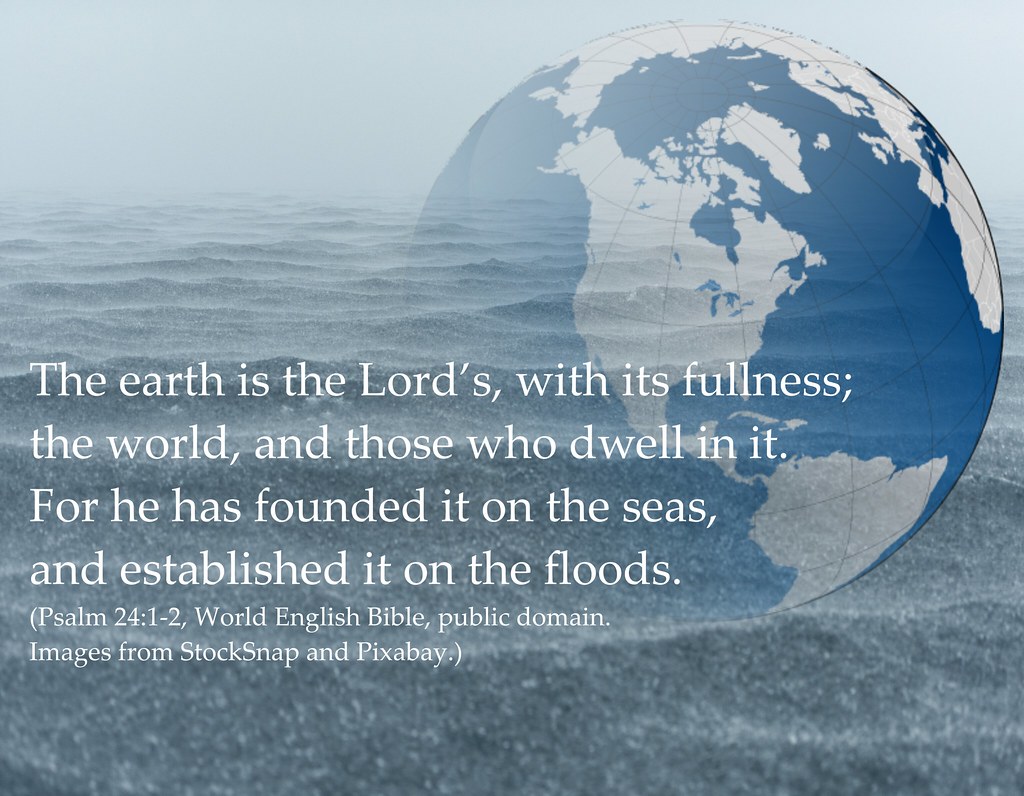
The earth and everything on it belong to the Lord. The world and its people belong to him. The Lord placed it all on the oceans and rivers.
Who may climb the Lord’s hill or stand in his holy temple? Only those who do right for the right reasons, and don’t worship idols or tell lies under oath. The Lord God, who saves them, will bless and reward them, because they worship and serve the God of Jacob. Open the ancient gates, so that the glorious king may come in.
Who is this glorious king? He is our Lord, a strong and mighty warrior.
Open the ancient gates, so that the glorious king may come in.
Who is this glorious king? He is our Lord, the All-Powerful! (Contemporary English Version)
Abraham Kuyper (1837-1920) was born in the Netherlands. He was a church minister, university professor, and politician – having established a Christian university, as well as served in the Dutch parliament and as Prime Minister of the Netherlands.
Kuyper labored throughout his life to flesh-out the theological implications of a sovereign God. He consistently insisted all we do as humans is to be integrated and brought under the lordship of Jesus Christ. He believed firmly that all things belong to God in Christ and all the fragments of our lives are to be oriented and integrated around our Creator’s great claim upon us as creatures. Whether a pastor, teacher, or politician, every vocation, each activity, and all thoughts and intents rightly belong to God.
In other words, religion and spirituality cannot be kept within superimposed limits. There is no separation of any one domain of human thought from the rest, no isolation of any one domain of human life from another or from Christ.
The spiritual life is not limited to merely the ethereal. It is both celestial and terrestrial – heavenly and earthly – concerned for the immaterial and the material. God cares about it all because it all belongs to God.
God owns the world. So, the implications of this for us is huge. It means we don’t really own anything. We are simply stewarding all that God has given us – including our very lives. The chaos of this world, from a biblical perspective, comes from creatures attempting to assert their own sovereignty and control things. Since we were not created to be little gods roaming about doing our own thing, the inevitable result is a topsy-turvy world.
God’s divine claim and ownership of the world means that absolute authority does not rest with nations, states, or leaders. Everything we see, as well as what we don’t see, belongs to the Lord. Part of the task of believers is to confess and bear witness to God’s rightful and benevolent rule in this world. In fact, Christians everywhere pray toward this end every week: Your kingdom come, your will be done, on earth, as it is in heaven.
The circle of life, within Holy Scripture, is the Creator God bestowing life and relationship to created humans, who then respond by practicing just and righteous living – thereby receiving renewal from the Lord and life anew. Theoretically, this movement can go unbroken. It is a regular celebration, for the believer, in consistent rhythms of worship and adoration of God.
When we are able to get in the intended divine groove of faith, life, and worship, we will discover our meaning and purpose in the world. By rightly ordering our lives, centering and grounding them in the gracious and loving relationship of Creator and creature, then we find true blessing because it enjoys an intuited stamp of approval by the God who makes life possible.
In the Christian tradition, Jesus is the Victor, the King of Glory. All the promises and hopes of people are found and focused, in Christ. We enter through Jesus, the door of life, to deliverance from death and all that separates us from God, others, and self.
Jesus comes to bring blessing, justice, righteousness, mercy, purity, and peace. For this is how the world was meant to operate from the beginning. We are to open the ancient door of faith, especially when the Lord comes knocking:
Listen! I am standing and knocking at your door. If you hear my voice and open the door, I will come in and we will eat together. Everyone who wins the victory will sit with me on my throne, just as I won the victory and sat with my Father on his throne. If you have ears, listen to what the Spirit says to the churches. (Revelation 3:20-22, CEV)
Old Abraham Kuyper might be long dead, yet he got it right, if we are able to hear him:
“Whatever people may do, to whatever they may apply their hands – in agriculture, in commerce, and in industry, or in mind, in the world of art, and science – they are, in whatsoever it may be, constantly standing before the face of God. They are employed in the service of God. They have strictly to obey God. And above all, they must aim at the glory of his God.”
Abraham Kuyper
Blessed Lord, Creator of heaven and earth, though I am quite capable of fretting, complaining, and lamenting about how out of control things seem, the truth is that nothing is outside your grip. I may not always see your hand, discern your heart, or like your ways, but you are God and there is no other. So, continue to renew my thinking, gentle my heart, and deepen my worship. I humbly and gladly affirm that you are God, and I am not, through Jesus Christ, my Lord, who with you and the Holy Spirit reign sovereign as one God, now and forever. Amen.
Now the Lord’s spirit had departed from Saul, and an evil spirit from the Lord tormented him. Saul’s servants said to him, “Look, an evil spirit from God is tormenting you. If our master just says the word, your servants will search for someone who knows how to play the lyre. The musician can play whenever the evil spirit from God is affecting you, and then you’ll feel better.”
Saul said to his servants, “Find me a good musician and bring him to me.”
One of the servants responded, “I know that one of Jesse’s sons from Bethlehem is a good musician. He’s a strong man and heroic, a warrior who speaks well and is good-looking too. The Lord is with him.”
So, Saul sent messengers to Jesse to say, “Send me your son David, the one who keeps the sheep.”
Jesse then took a donkey and loaded it with a homer of bread, a jar of wine, and a young goat, and he sent it along with his son David to Saul. That is how David came to Saul and entered his service. Saul liked David very much, and David became his armor-bearer. Saul sent a message to Jesse: “Please allow David to remain in my service because I am pleased with him.” Whenever the evil spirit from God affected Saul, David would take the lyre and play it. Then Saul would relax and feel better, and the evil spirit would leave him alone. (Common English Bible)
In the realm of God, everything seems upside-down. Those who are first are last, and the last are first. The rich are really poor, and the poor are actually rich. People of low position are the highest in God’s realm, while those at the top are really at the bottom. The religious insiders, appearing close to God, are on the outside; and the outsiders, seemingly far from God, are really the insiders and close to the Lord.
If we judge circumstances according to human standards of fair-play and what seems right to us, God’s ethics might not make much sense. There are two extreme responses to this reality of God’s odd working in the world.
One response is to try and nail down everything we don’t understand, to create a black and white world where every question has an answer, and all things are certain so that we know exactly how God works, all the time.
The opposite response is to never try answering anything about the mysterious working of God, saying, “whatever will be, will be.” Somewhere in the middle of the extremes is probably a good place to be – working to know God better and how divinity operates in the world, while being comfortable with mystery and discerning we will never completely understand everything in this life.
There are times we feel confident of what God is doing. Other times, maybe most of the time, we are clueless as to how God is working. We do not have all the answers to God’s activity. Yet, there is still a lot we know about God. The Lord worked in quite different ways with Saul than with David.
The difference in the two characters, Saul and David, hinges upon the presence and absence of God. God withdrew divine presence from Saul. King Saul’s deliberate and consistent disobedience of God’s direct commands led to the divine absence. Not only did God leave Saul, but an evil or bad spirit from the Lord tormented him. That reality might be something way off your understanding of how God works with people. God departed from Saul and put him in a situation of inflicting pain.
Bear in mind, in a biblical worldview, there are not two equally opposing forces of God and Satan. Rather, Lucifer is a created being who aspired to be like God and fell from heaven. God stands alone as the one sovereign Being who controls all things in heaven and earth.
Saul is not an isolated occurrence of experiencing a bad spirit. For example, God hardened the heart of Pharaoh so that he acted harshly against the people of Israel (Exodus 9:12; 10:20, 27; 11:10). From a strictly human perspective, it seemed God was kicking the can down the road, pushing off the people’s deliverance. Yet, the Lord was orchestrating deliverance from bondage, and a redemption far beyond what the Israelites could have ever imagined.
Sometimes, we are privy to God’s working. For example, in the days of the Judges:
Abimelech ruled over Israel three years. But God sent an evil spirit between Abimelech and the lords of Shechem; and the lords of Shechem dealt treacherously with Abimelech. This happened so that the violence done to the seventy sons of Jerubbaal might be avenged and their blood be laid on their brother Abimelech, who killed them, and on the lords of Shechem, who strengthened his hands to kill his brothers. (Judges 9:22-24, NRSV)
In whatever way we understand an evil spirit from God in the life of Saul, the point to grasp is that God is aware and in control – whereas Saul is a disturbed man due to his own bad choices. Some ancient interpreters of the story view this as an act of mercy on God’s part, by not just eradicating Saul altogether, but, instead, giving Saul an opportunity to turn his life around and again experience the presence of God.
Keep in mind, just because someone experiences mental or emotional pain in the form of depression or anxiety or other disorder, does not necessarily mean there is a bad decision behind it. To go down that route is to take the extreme position of living in the black and white world of trying to be certain of everything. We only need consider the life of Job to know that pain, even extreme pain and horrible circumstances, does not necessarily mean sin is at the root of it all. (Job 2:7-10)
“People with absolute certainty are usually the misguided souls who confidently tell other people in terrible circumstances how God is either punishing them or that this will all work out in some fairy tale ending of the miraculous (which it rarely does).”
Mit Tdrahrhe
On the other extreme, those embracing only mystery simply say to people in pain to trust God and accept your situation because God has a plan (not helpful, even hurtful). So, what is helpful?
The servants of Saul knew what was helpful. They asked the king to put out an ad for a music therapist. And the best one they could find was David. The problem of Saul’s anguish needed the answer of a good harpist.
Saul got some relief from pain, got a chance to perhaps come back to God, and David (already the next anointed king) got to learn the job of leading first-hand from the bottom-up by being in Saul’s service.
David needed to learn lowly service before becoming an exalted king. God could have simply knocked Saul off the throne and did away with him (which would make sense to a lot of people). Instead, God graciously gave young David time to observe the duties of a king.
God isn’t off his rocker. God knows what he is doing. God knew both Saul and David, inside and out. And, the Lord intimately knows each person, family, faith community, nation, and people group. If anyone claims to know precisely what God is doing and should do, they are a spiritual huckster speaking from ignorant pride. Conversely, if anyone throws up their arms in exasperation, mumbling how nobody can know God’s working, they are spiritually immature and irresponsible.
How we act or not act, what we say and do not say, is all a function of our theology – our real view of God. So, what might we take away from this story?
The mystery of God and the certainty of people do not mix well. Claiming to always know what God is doing is delusional and just doesn’t help anyone.
The clarity of God through divine commands, and the apathy of people to them, is a bad situation. Claiming to never know what God is doing is a cop-out (because God has spoken clearly about a lot of things, like the Ten Commandments).
Unlike Saul, do the best you can in the circumstances before you. Many situations we cannot avoid. However, in every situation we can control our response.
Like David, be an agent of comfort, healing, and blessing to others. Most of the psalms were written in times of doubt, distress, and disturbance. We can take those psalms and pray them directly to God in the midst of our own discomfort.
We are in God’s hands, all of time. There is never a time when we are outside of God’s sight or ability to work. The Lord’s arm is not too short to accomplish good purposes. God is our strong tower and mighty fortress for every life circumstance.
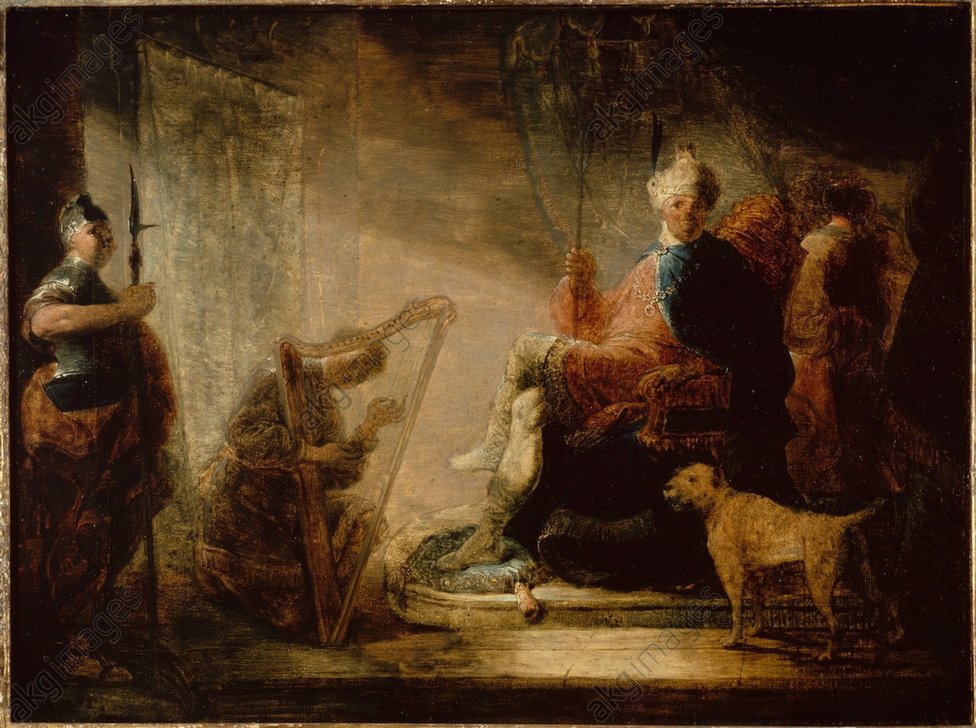
**Above painting: David playing the harp for King Saul, by German painter, Januarius Zick, 1750










 Rev. Tim Ehrhardt