Romans 4:13-25 – Christianity 101

promise to abraham

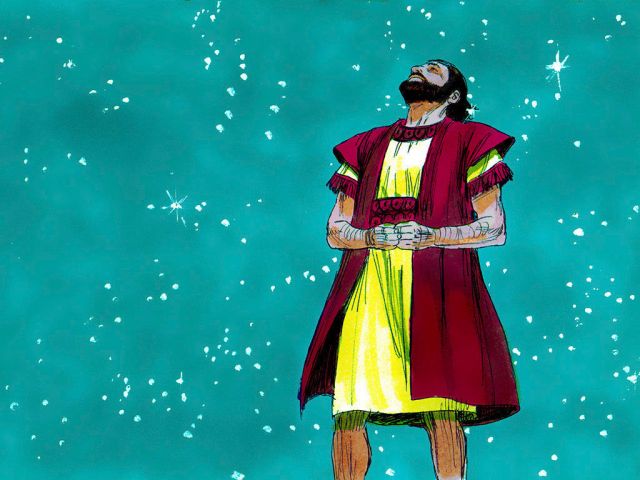
“Against all hope, Abraham in hope believed and so became the father of many nations, just as it had been said to him, “So shall your offspring be.” Without weakening in his faith, he faced the fact that his body was as good as dead—since he was about a hundred years old—and that Sarah’s womb was also dead. Yet he did not waver through unbelief regarding the promise of God, but was strengthened in his faith and gave glory to God, being fully persuaded that God had power to do what he had promised. This is why “it was credited to him as righteousness.” The words “it was credited to him” were written not for him alone, but also for us, to whom God will credit righteousness—for us who believe in him who raised Jesus our Lord from the dead.  He was delivered over to death for our sins and was raised to life for our justification.” (New International Version)

Sometimes it’s easy to lose sight of why we are here and what we are really supposed to be doing.  There’s just so much stuff going on around us all the time that it seems like we have spiritual ADD and can’t focus on what’s most important.  Certain people irritate us, we scramble to making a decent living, there never seems to be enough time to accomplish everything, and there is adversity and obstacles all along life’s way.

There’s a lot going on in the book of Romans.  At first glance, like our lives, it seems complicated.  The Apostle Paul had all kinds of words for the Christians: hope; faith; righteousness; and, justification, just to name a few.  But all those ideas funneled to and pointed toward a singular focus: the Lord Jesus.  Everything in church and life comes down to Christ.

The church was losing sight of why they existed.  Within the church at Rome were both Jews and Gentiles together as one people of God.  They didn’t always see eye-to-eye on everything.  The Gentiles thought the Jews were stuck in tradition and needed to move on.  The Jews had centuries of history behind them of God working through them; they thought the Gentiles needed some solid Old Testament law to bolster their primitive spirituality.  Would the church take their cues on life from the Gentiles, or the Jews?

Paul essentially told the church that they were focused in the wrong direction.  The issues and problems of living the Christian life were to take a back seat to faith in God.  To prove his point, Paul went back to Abraham as Exhibit A of what it means to live with and for God.

It went down like this: God made a promise to Abraham of progeny in his old age; Abraham believed what God said; Abraham demonstrated his faith by having the confident expectation (hope) that God is good for his promise; and, God declared (justified) Abraham to have a right relationship with himself (righteousness).

In other words, the heart of Christian faith and practice is: God makes promises; people respond in faith, hope, and love.  Law and the willpower to keep it doesn’t even come into the equation.

Christians are the spiritual children of Abraham.  All God’s promises are fulfilled in Christ.  We respond to God by believing in Jesus. The redemptive events of Jesus make us just and right.  So, what does this mean for you and me?

We are not to get sidetracked with trying to make others like be like us.  Instead, we are to proclaim the promises of God in Christ so that others might respond by believing and embracing those promises.  Furthermore, we have no need to try and get God to like us, notice us, and/or listen to us.  God has already made and kept promises to us, demonstrating his love, mercy, and grace through his Son, the Lord Jesus.

Our lives are not to center in our abilities, or lack thereof, to live a godly life.  Rather, our lives are to revolve around the person and work of Jesus Christ through faith, with the hope that God will always hold to his promise to be with us, which frees us to love others.  This is Christianity 101.  This is the faith we embrace.

Righteous God, you have made and kept promises to me.  My ultimate deliverance from sin, death, and hell isn’t through my ability to keep the law, but in your Son’s life, death, and resurrection.  Help me to live by faith in Jesus who loved me and gave himself for me; in the strength of your Holy Spirit.  Amen.

We Belong to God


We belong to God.  Let that statement sink in and saturate your soul with grace.  The Bible is a “covenant” document giving us the stipulations of how we can have a belonging with God.  Covenant is how God has chosen to communicate to us, to redeem us, and to guarantee us eternal life in Jesus.  These truths, revealed in the Bible, are the basis of Christianity.   The Old and New Testaments are really Old and New Covenants.  The word “testament” is Latin for “covenant”.  When God makes a covenant with his people, it means that he gives them promises of what he will do, and, in turn, has moral expectations or ethical responsibilities for the people to follow. 
 
The ancient world operated on a covenant system.  A nation or empire would conquer a city or territory and set up a covenant in which the conqueror would promise protection, certain provisions, and leave a military presence among them.  In turn, the conquered people would be required to offer things like allegiance and tribute.  In the Bible, God made a covenant with Abraham and promised that all the nations of the earth would be blessed through him.  The only stipulation that God gave to Abraham was to leave his home and begin a new life in the land he would show him.  God continued to work through Abraham’s descendants, the Israelites, and made them a people for his own Name who would be a kingdom of priests, testifying to the nations through a lifestyle of having God the center of all they do in embodying the Ten Commandments – being a holy people, reflecting the holiness of God.
 
The difference between earthly covenants and God’s covenant is that God steeps his covenant in love and grace.  God cares about his covenant because in his dealings with his people, he is concerned to reveal who he is to them so that they can relate to him and flourish as human beings.
 
            God never forgets nor reneges on his covenant promises.  For example, God clarified his covenant by giving King David a dynasty, a never-ending kingdom, a temple, and a father/son relationship with his progeny.  Furthermore, he promised that his love (Hebrew “chesed”) would never be taken away (2 Samuel 7:1-17).  This is my favorite word in the entire Bible.  It is translated in various ways as love, grace, kindness, and compassion.  It refers to God’s steadfast covenant loyalty to his people – that he will not fail to show continuous love to his people, even when they might go astray.  Unlike the nations of the earth, unlike the fickle nature of people, unlike the inconsistent commitment of others, God stands alone as a Being who in his very nature is love and continues to be gracious.
 
            All the good promises given to Abraham, to the Israelites through Moses, and to David are all fulfilled in the person of Jesus Christ.  In the New Testament, the New Covenant, the Gospels of Matthew, Mark, Luke, and John are soaked in the language and explanation that Jesus is the Son of David.  He is the Promised One, the Savior, Lord, Teacher, and Healer that will save the people from their sins and bring them to a spacious kingdom full of the grace and love that characterizes God.  Through the cross and resurrection of Jesus Christ we are brought into union with God and participate fully in all the promises of the New Covenant – a Covenant that has its main stipulation of love.  Love the Lord your God with all your heart, soul, mind, and strength.  And love your neighbor as yourself.  All this talk of love is because God himself is a God that is love personified in Christ.
 
            The way the world is going to know that there is a God in heaven is through chesed,grace.  God has not called us to yell louder than the culture; he has not told that we are to work to get our way in everything within society.  Instead, he calls us to be gracious.  Devote yourselves to prayer, being watchful and thankful….  Be wise in the way you act toward outsiders; make the most of every opportunity.  Let your conversation be always full of grace, seasoned with salt, so that you may know how to answer everyone (Colossians 4:2-6).


            The most gracious truth we can ever know and bank our lives upon is that we belong to God.  Our primary identity is not in a club, church membership, or even our biological family; our most fundamental identity is as a child of God, created in his image and belonging to him in Christ.  God’s covenant with us has become the mechanism that assures us of that belonging.  One can never be reminded too often of God’s covenant loyalty that is by sheer grace.

Covenant vs. Contract


            It is a beautiful thing when someone makes a promise to you and follows through.  Whether it is someone promising to give free child-care, or to help out with a project that needs to be completed, promises kept are a kind of human glue that bonds us together as people.  When two people get married, they have a ceremony in order to publically make promises to one another – vows to remain faithful and to do everything within their power for the betterment of each other and the relationship, no matter the circumstances.
 
            God is a promise-making and promise-keeping God.  When humanity fell, God set in motion a plan to redeem his creation back to himself.  A healthy way to look at the whole of Holy Scripture is to understand that God has entered into covenant with his people.  That simply means that God has graciously made promises to certain persons – vows that he will fulfill.  The fulfillment of God’s promises is found in the person and work of Jesus, through his life, death, resurrection, ascension and glorification.  In Christ, we are redeemed and made holy.  Our proper response to God is to place our faith in those promises. 
 
            However, there are those who view a relationship with God not based on covenant promises, but more like a contract.  In a contract, promises are not made, but a deal is brokered.  On the practical level it operates something like this:  if I do good works, have clean living, and do what is right, God will bless me; and, if I don’t, God will punish me.  In a covenant understanding, when we fail or are disobedient, we confess our sins and God is faithful to forgive us and cleanse us.  But in a contract, when we fail we lose.  Relating to God according to a contract is like believing that life is like a math equation; if I do my part, God must do his.  And if God tells me to do something, I’d better do it or else.
 
            Too many Christians live by a contractual understanding of relating to God.  I knew a woman who was a very nice sweet person.  She grew up in a Christian home, never got into trouble, and did everything expected of her.  But when she became ill with a rare disease, her faith began to unravel.  She simply could not understand or make sense of the reality that she had been good all of her life and was dying a slow death.  Since 2+2=4, she thought that God was not holding up his end of the deal; the equation was not working the way it was supposed to work.
 
            On the outside, two people may be doing all the same things – serving in the church and doing a range of good deeds.  But on the inside, the motivation between the two may be very different.  One serves out of obligation to a contract; the other serves out of heart response to a covenant God who has made and fulfilled promises of salvation.  The litmus test of discerning between the two typically occurs when life does not turn out the way we expect, that is, when suffering and hard circumstances knock us hard on our rear ends.
 
            A legalistic view of the Christian life will always discern our relationship with God as a contract; we must do certain things in order to hold up the bargain.  But a grace-filled view of the Christian life has behind it a proper view of God as the One who has given us his very great and precious promises, despite the fact that we have done nothing to deserve them.


            Which view do you hold?  Can you accept a God who relates to you based on love and grace, and not on your performance, or lack thereof?  The Christian life does not work on the idea that if I do my part, and God does his, that everything will be hunky-dory.  Instead, the wonder and beauty of Christianity is that there is a God who steps in and saves when we have done nothing to earn or deserve it.  The proper life response to this is living obediently out of gratitude for such a grace.  May our churches be filled with thankful believers.

Spiritual Dementia


            Last week I spent a few days in my native Iowa visiting my elderly Mom.  She has dementia.  Dementia is a general term for a decline in mental ability severe enough to interfere with daily life.  I have watched her faculties slowly erode and decline over the past few years.  My Mom is now at a point where she rarely remembers my name, only knows me once in a while, and never recalls the conversation we just had thirty seconds ago.  It is difficult to watch and to experience, this woman who once cared for me.  Now my siblings and I care for her in ways that were unthinkable to us five years ago.
 
            As I made the drive home from my visit I spent the hours reflecting on how much church ministry needs to be a memory unit experience because Christians are continually forgetting their identity and what they are supposed to be doing.  This is not a new issue that is endemic to the contemporary church; this is a problem as old as sin itself.  There is even a book of the Bible, Deuteronomy, completely given to memory issues.  The constant refrain of the author of Deuteronomy is to “remember.”  Since the ancient Israelites were in danger of forgetting and having a kind of spiritual dementia, Moses reiterated the covenant and the law for the people before they entered the land.  It was a fresh re-hashing, nothing really new, of what God had already communicated to them.  God’s people were to continually remember that they were once slaves in Egypt and that God had delivered them and brought them out to be a people for his name.  They were to remember that they had provoked the Lord in the desert and that an entire generation of people had been wiped out because they had, well, forgotten what God told them.
 
            The New Testament is no different.  Jesus miraculously fed a great crowd of people not once, but twice.  The second time he called his disciples to remember what had happened the first time in order to understand the second.  In the Epistles, Paul kept reminding the Jews in the churches that they should remember the ancient covenant, and called the Gentiles to remember that they were once estranged from that very same covenant.  Both Jews and Gentiles together needed to collectively remember the death of Christ that united them into a new covenant community.  Like them, we are to “Remember Jesus Christ, raised from the dead, descended from David” (2 Timothy 2:8).
 
            We, as the church of Jesus, are to remember who we are and what we are to be about:  we are blood-bought people of God, belonging to Christ, and given a mission to make disciples and participate with God in the redemption of all creation through remembering the poor, seeking justice, and being peacemakers in the church and the world.  Maybe the ancient words in the book of Revelation to the church at Ephesus ring true for us today:  “Remember the height from which you have fallen!  Repent and do the things you did at first” (Revelation 2:5).

            There is a difference between my Mom and the church – my Mom will never recover but will only worsen, yet the church can recover its collective memory by listening again to the ancient Word of God and being constantly refreshed with the promises and covenant of God.  We must neither rely on pragmatism nor simply by doing things the way we always have done them without any understanding of why we do it. 

            Why does your church exist?  How does the Word of God inform and influence your identity as a church?  Does the mission and practice of your church intentionally remember the risen and ascended Christ?  Are disciples being formed around collective remembering of God’s covenant and promises?  Are ministries and policies being established based on Christ and his commission, or on something else?  Let’s reverse the trend of spiritual dementia and give our memories to Christ.  Amen.