It’s a Bad Idea to Try and Handle God (1 Samuel 6:1-18)

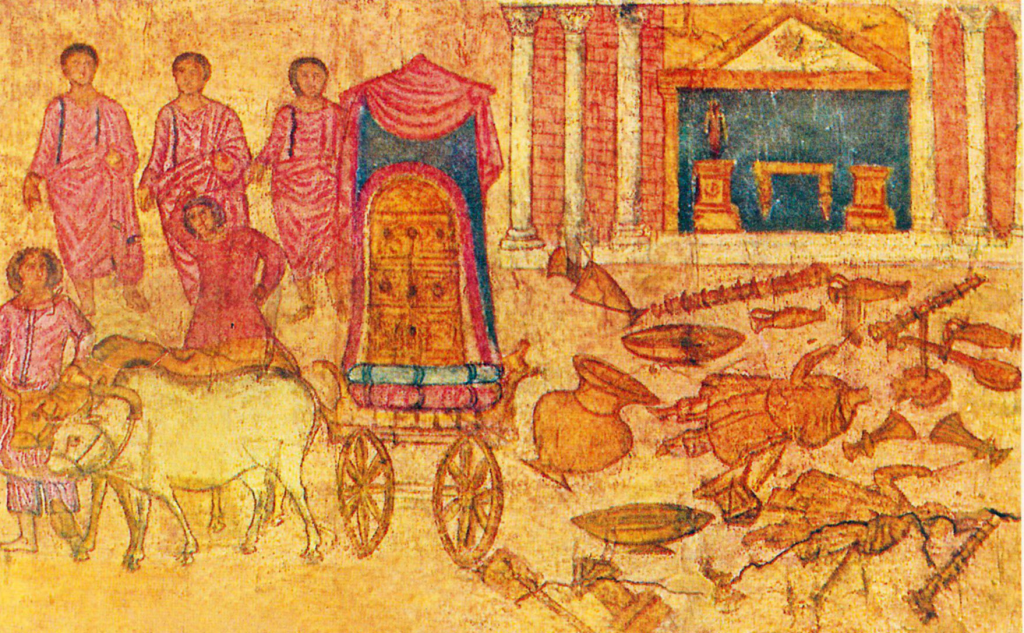
A fresco of the Philistine captivity of the Ark of God, from the ancient Dura-Europos Synagogue, excavated in 1932

The Ark of the Lord remained in Philistine territory seven months in all. Then the Philistines called in their priests and diviners and asked them, “What should we do about the Ark of the Lord? Tell us how to return it to its own country.”

“Send the Ark of the God of Israel back with a gift,” they were told. “Send a guilt offering so the plague will stop. Then, if you are healed, you will know it was his hand that caused the plague.”

“What sort of guilt offering should we send?” they asked.

And they were told, “Since the plague has struck both you and your five rulers, make five gold tumors and five gold rats, just like those that have ravaged your land. Make these things to show honor to the God of Israel. Perhaps then he will stop afflicting you, your gods, and your land. Don’t be stubborn and rebellious as Pharaoh and the Egyptians were. By the time God was finished with them, they were eager to let Israel go.

“Now build a new cart, and find two cows that have just given birth to calves. Make sure the cows have never been yoked to a cart. Hitch the cows to the cart, but shut their calves away from them in a pen. Put the Ark of the Lord on the cart, and beside it place a chest containing the gold rats and gold tumors you are sending as a guilt offering. Then let the cows go wherever they want. If they cross the border of our land and go to Beth-shemesh, we will know it was the Lord who brought this great disaster upon us. If they don’t, we will know it was not his hand that caused the plague. It came simply by chance.”

So these instructions were carried out. Two cows were hitched to the cart, and their newborn calves were shut up in a pen. Then the Ark of the Lord and the chest containing the gold rats and gold tumors were placed on the cart. And sure enough, without veering off in other directions, the cows went straight along the road toward Beth-shemesh, lowing as they went. The Philistine rulers followed them as far as the border of Beth-shemesh.

The people of Beth-shemesh were harvesting wheat in the valley, and when they saw the Ark, they were overjoyed! The cart came into the field of a man named Joshua and stopped beside a large rock. So the people broke up the wood of the cart for a fire and killed the cows and sacrificed them to the Lord as a burnt offering. 

Several men of the tribe of Levi lifted the Ark of the Lord and the chest containing the gold rats and gold tumors from the cart and placed them on the large rock. Many sacrifices and burnt offerings were offered to the Lord that day by the people of Beth-shemesh. The five Philistine rulers watched all this and then returned to Ekron that same day.

The five gold tumors sent by the Philistines as a guilt offering to the Lord were gifts from the rulers of Ashdod, Gaza, Ashkelon, Gath, and Ekron. The five gold rats represented the five Philistine towns and their surrounding villages, which were controlled by the five rulers. The large rock at Beth-shemesh, where they set the Ark of the Lord, still stands in the field of Joshua as a witness to what happened there. (New Living Translation)
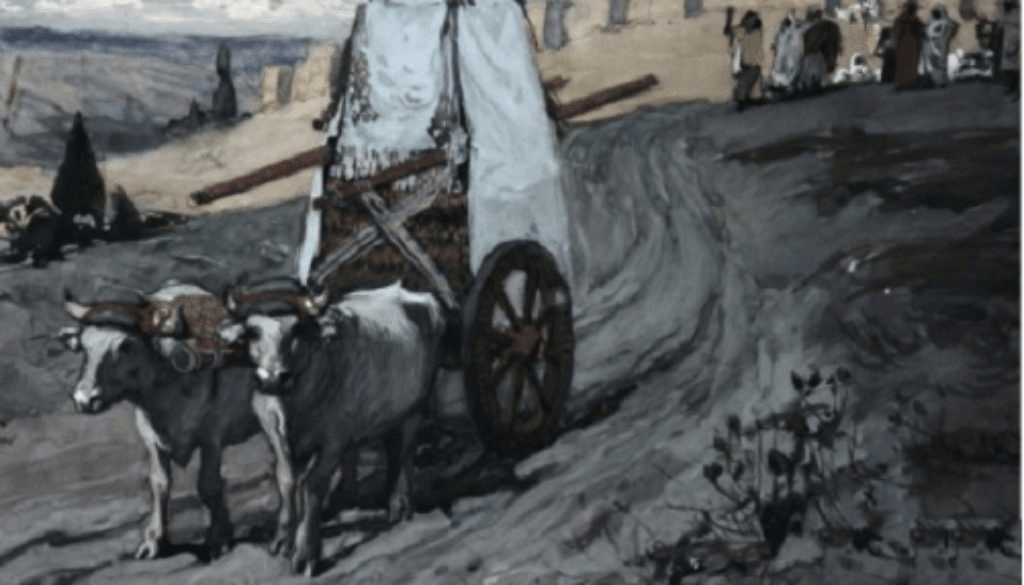
The Ark Sent Away from the Philistines, by James Tissot, 1902

Out of all the stories in the Bible, this is one of them. The Philistines and the Israelites were fighting military battles. The Israelites did not do so well. Therefore, they decided to bring up the Ark of the Covenant of God (the symbol of God’s presence) to the front lines in order to win the battle.

The plan backfired. Israel lost, and the Ark of God (think Raiders of the Lost Ark, and not Noah’s ark) was taken by the Philistines. However, the five cities of Philistia likely regretted ever doing this. Wherever the Ark was, the people were plagued with nasty tumors, so that they suffered grievously. And that’s when the Philistines decided to hatch their own plan for ridding themselves of the Ark, while preserving their cities.

For three chapters (1 Samuel 4-6) we get various humans who made plans for the Ark of the Covenant. Since the Ark is a symbol of God’s presence, engaging in these plans is akin to deciding how things are going to go with God.

Humanity doesn’t get to flip-flop who is in control, God as sovereign over humanity to humanity manipulating God for their own purposes. Trying to leverage the Lord into what we want is a bit like believing we can make the sun spin around the earth. In other words, it’s not going to happen, no matter how much effort and ingenuity you put into it.

It’s a bad idea to try and handle God, instead of letting God handle us.

At least the Philistines quickly figured out it was a fool’s errand in possessing God’s Ark. And they had enough sense to consult somebody before they acted in getting the Ark away. Eventually, we’re all going to either humble ourselves, or just get humiliated; it’s our choice.

Yes, it seems like a weird plan – making gold objects in the shape of tumors – and yet the Lord often cares much more about the humility behind a plan than the actual plan itself. Despite being worshipers of pagan gods, God was picking up what the Philistines were putting down, and graciously received the Ark back into Israel.

Turn anywhere in Holy Scripture, begin reading, and you will quickly find that God will not tolerate any person or group of people trying to use, leverage, or manipulate heaven for it’s own purposes. The Lord has made it clear what is important; it’s up to us to live into it.

Holy and almighty God, help us to walk humbly with You and one another. Let your holy Spirit guide us on the right path to truth and reconciliation with humility. Help us to hear each other, for we do not want to walk by pride or self-sufficiency. Amen.


When to Stay, When to Move (Numbers 9:15-23)

Pillar of Fire, Pillar of Cloud in the Desert, stained glass at the Congregation Beth Emeth, Herndon, Virginia

On the day the Tent of the Lord’s presence was set up, a cloud came and covered it. At night the cloud looked like fire. Whenever the cloud lifted, the people of Israel broke camp, and they set up camp again in the place where the cloud came down. The people broke camp at the command of the Lord, and at his command they set up camp.

As long as the cloud stayed over the Tent, they stayed in the same camp. When the cloud stayed over the Tent for a long time, they obeyed the Lord and did not move on. Sometimes the cloud remained over the Tent for only a few days; in any case, they remained in camp or moved, according to the command of the Lord. Sometimes the cloud remained only from evening until morning, and they moved on as soon as the cloud lifted.

Whenever the cloud lifted, they moved on. Whether it was two days, a month, a year, or longer, as long as the cloud remained over the Tent, they did not move on; but when it lifted, they moved. They set up camp and broke camp in obedience to the commands which the Lord gave through Moses. (Good News Translation)

I know a few believers who would really like to have their spiritual lives governed by a cloud lifting and moving and settling. Then, there wouldn’t be any doubt about what to do and when to do it.

But keep in mind that this arrangement of a cloud was temporary; it was only meant to get the Israelites from one place to another until they entered the Promised Land. Anytime we try and make something permanent which is designed to be temporary, we become stuck, not to mention missing out on the good things intended for us.

Clouds of Glory, by Yoram Raanan, 2014

In a time of transition for the nation of Israel, the gracious presence of God provided both guidance and assurance. The Lord was with them; and the divine presence reminded the people that God’s promise would be fulfilled.

The book of Numbers begins at the point where the book of Exodus leaves off. Leviticus is in between, interrupting the narrative flow with detailed legislation, especially of the sacrificial worship system. Exodus ends with the construction of the tabernacle (the sacred tent with the ark of the covenant and worship utensils).

Numbers then begins a year after Israel came out of Egypt. It covers the years of wandering in the desert wilderness in which an entire generation dies off and their children are poised to enter the Promised Land. The bulk of the book is given to the beginning and ending of the 40 years of wandering.

The Sinai Peninsula, where the Israelites walked, is a rather harsh environment. This is on purpose; it’s part of the nation’s spiritual development. The desert is the place where failures are acknowledged and purged. It’s a unique place and time which required a special system to safeguard the people. They needed to be guided toward holiness so that they could be a holy nation, set apart for God.

In many ways, Numbers is a depressing book. It tells us the painful shortcomings of Israel to their divinely appointed calling. There are plenty of murmurings, rebellions, and outright transgressions of all kinds. I can just imagine God shaking his head in disappointment.

Yet, even though many individuals were punished and an entire generation died, God’s covenant with the people held firm – namely because the Lord tenaciously held to it and did not abandon Israel altogether. The tabernacle remained, despite the fickle people.

The point is strongly made that God was with the people and governed their comings and goings. And this teaches us something about our own spiritual pilgrimage on this earth; and the decisions and discernments which must be made in that sojourn.

There are times we need to pack up and get moving; and there are other times when we need to stay put, pause, and wait on the Lord’s timing. Our entire earthly life is one big sojourn from birth to death. How we go about this pilgrimage is of upmost importance.

We are meant to connect with transcendent things, to discover the Divine. The Lord wants us to discern what to do, when to do it, and where. So we keep moving, learning both the value of putting down roots and blessing a particular place, as well as the importance of walking, traveling, and spreading out across the earth. In engaging these dynamics of movement and stillness, we learn about realities greater than ourselves.

There is a lot of work to do with discernment and decision-making. We may long for a pillar of cloud, but the Lord seems to want us leaping into the unknown with faith when it’s time; or to stop talking, sit down, and listen for the still small voice of God. And we’ll need to work together for this discernment to happen.

A change in direction requires right motives and proper attitudes. It’s got to have some solid knowledge, understanding, and wisdom behind it. And our movements must be purposeful in a way which blesses the world and doesn’t curse it.

In short, faith and trust are to be developed. Faith is not a static word, but dynamic. Believing is always moving, either in redemptive and helpful ways, or in the unbelieving ways of self-centeredness and ignorance. And since the believer serves a good God who has our best interests at mind, we can trust that we’re headed toward the place of promise and abundance.

Course corrections will always be needed, and that’s okay. But what’s not okay is the refusal to change, move, and discern next steps. One of the wonderful gifts of taking time for silence, solitude, and prayer is that we learn the subtle movements of God’s spiritual rhythms. We discern who we are, how we are, where we are, and where we need to be.

May it please the supreme and divine Goodness to give us all abundant grace ever to know his most holy will and perfectly to fulfill it. Amen.  —St. Ignatius of Loyola

It’s In the Details (Exodus 28:29-38)

Aaron the High Priest

“Whenever Aaron enters the Holy Place, he will bear the names of the sons of Israel over his heart on the breast-piece of decision as a continuing memorial before the Lord. Also put the Urim and the Thummim in the breast-piece, so they may be over Aaron’s heart whenever he enters the presence of the Lord. Thus Aaron will always bear the means of making decisions for the Israelites over his heart before the Lord.

“Make the robe of the ephod entirely of blue cloth, with an opening for the head in its center. There shall be a woven edge like a collar around this opening, so that it will not tear. Make pomegranates of blue, purple and scarlet yarn around the hem of the robe, with gold bells between them. The gold bells and the pomegranates are to alternate around the hem of the robe. Aaron must wear it when he ministers. The sound of the bells will be heard when he enters the Holy Place before the Lord and when he comes out, so that he will not die.

“Make a plate of pure gold and engrave on it as on a seal: holy to the Lord. Fasten a blue cord to it to attach it to the turban; it is to be on the front of the turban. It will be on Aaron’s forehead, and he will bear the guilt involved in the sacred gifts the Israelites consecrate, whatever their gifts may be. It will be on Aaron’s forehead continually so that they will be acceptable to the Lord. (New International Version)

This area of Holy Scripture is likely not one of the more popular places to read. Frankly, it’s boring and pedantic. Yet, contained within the Bible it is, for us to examine.

After giving Moses the Ten Commandments in Exodus 20, the next several chapters, from Exodus 20-31 contain detailed instructions from God concerning the covenant code stipulations with the Israelites. Plans for liturgical and sacrificial worship are covered with a fine tooth comb. Instructions for building implements for worship are precise.

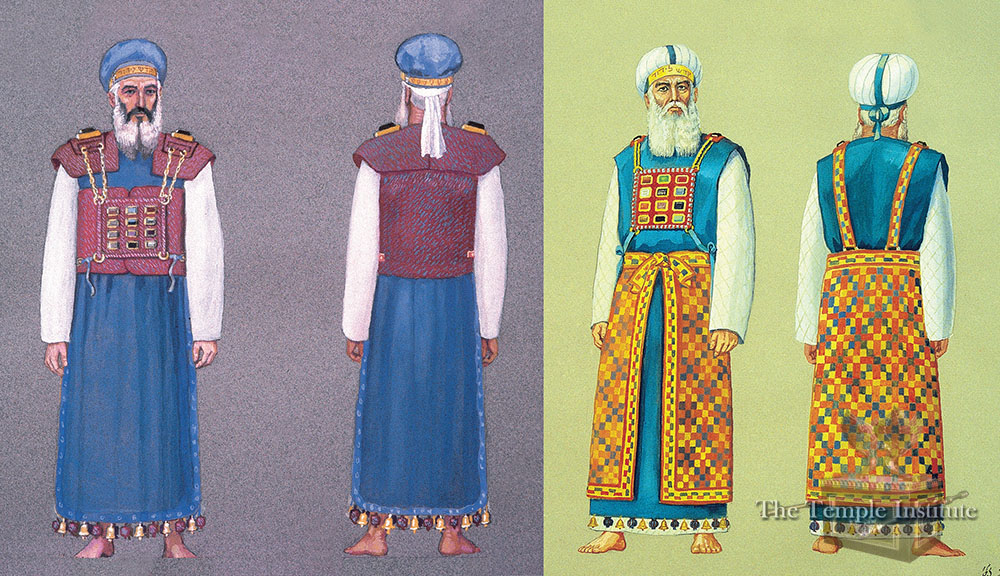
And the special garments of the priests’ clothing are described in detail, both as to their design and the material to be used. It’s as if we’re all sitting in a virtual meeting just trying to stay awake, let alone pay attention. Yet, the fact of the details lets us know that the plan is important.

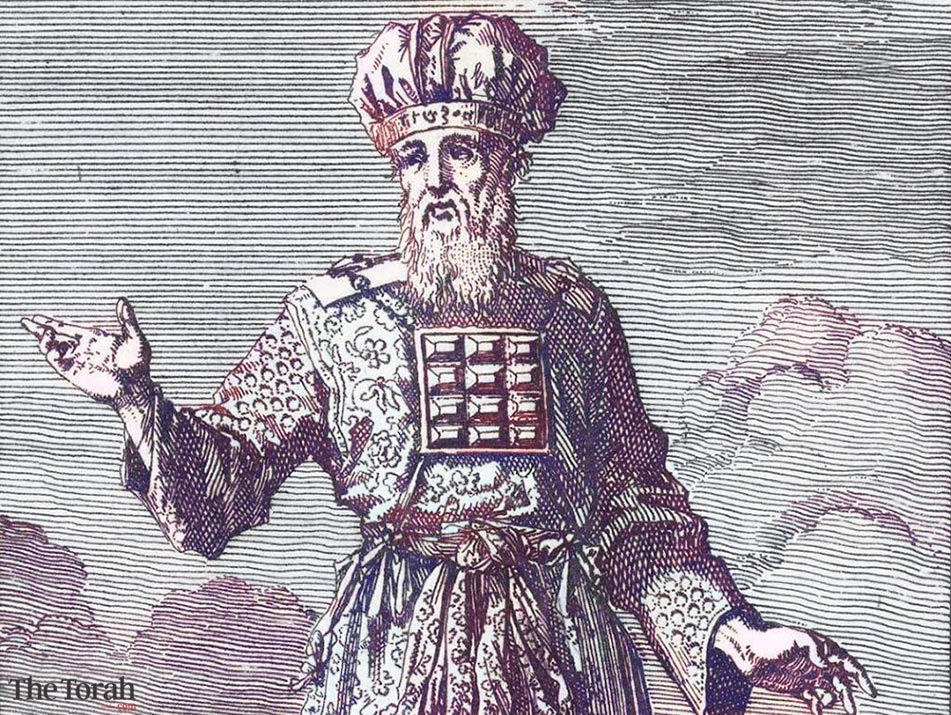
Aaron the High Priest, by Jan Luyken (1669-1712)

Today’s Old Testament lesson deals specifically with the vestments of Aaron, the first high priest of the covenant. An ephod was made – which is a richly embroidered, apron-like vestment having two shoulder straps and ornamental attachments for securing the breastplate, worn with a waistband. (Exodus 28:1-30)

The garment which Aaron was to wear, when he entered the sacred space, symbolically kept the nation of Israel in front of Yahweh, and also over the high priest’s heart.

There was a robe which covered the ephod, equipped with bells. As Aaron moved, the bells rang, signaling that he was coming into and out of the presence of God. Only the high priest was consecrated to enter the most holy place; and the high priest alone wore the special clothing for the unique service which was done.

The entire ritual of the high priest’s service was a visual display of God’s glory and of the reality that no one may enter God’s presence flippantly or carelessly. God is gracious and merciful; and God also has no tolerance for impurity, unrighteousness, and pride.

God expects divine laws, stipulations, and commands to be obeyed without prejudice. The Israelites could not pick and choose what directives from God they would do, or not do. And that is the core of what holiness before the Lord really is.

An interesting observation about this text of Scripture is that Aaron the high priest is given no instructions or commands about what to say when he entered and then left God’s presence. No mantras. No incantations or formulaic words. The inference is that Aaron was silent.

Instead, the garments spoke. “Holy to the Lord” on the plate affixed to the turban said a lot – along with the ephod and the robe, affirming that holiness is needed in order to make any sort of decisions before God.

We never get an explanation in Scripture about what the Urim and Thummim are – which is why, when translating the words from Hebrew, we merely have English transliterations of them. We only know that they were used when making decisions. Evidently, the high priest was an earthly source of God’s wisdom and direction.

Whatever we think about these verses in the book of Exodus, it seems that we are meant to understand that details matter; and how we go about our obedience, down to the last jot and tittle, matters.

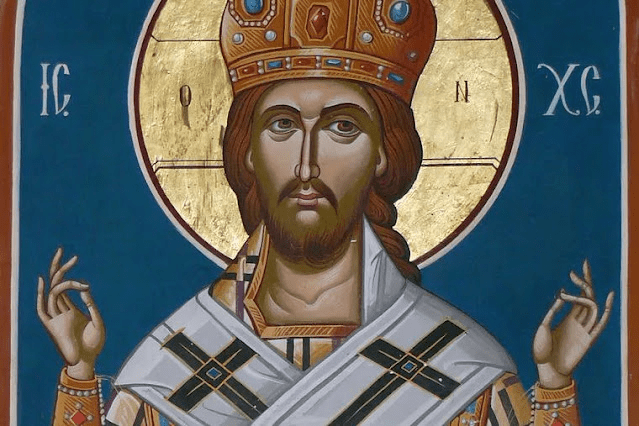
Orthodox icon of Jesus Christ, the High Priest of a New Covenant

In the ministry of Christ, there were people wondering if all of his talk was upending or replacing those detailed imperatives of God. Jesus responded:

“Do not think that I have come to abolish the Law or the Prophets; I have not come to abolish them but to fulfill them. For truly I tell you, until heaven and earth disappear, not the smallest letter, not the least stroke of a pen, will by any means disappear from the Law until everything is accomplished.” (Matthew 5:17-18, NIV)

Jesus furthermore upheld God’s expectation that divine commands be obeyed:

“Therefore anyone who sets aside one of the least of these commands and teaches others accordingly will be called least in the kingdom of heaven, but whoever practices and teaches these commands will be called great in the kingdom of heaven.” (Matthew 5:19, NIV)

At issue was the nature of righteousness – right relations with both God and others. Justice is imperative. Being humble, pure, merciful, and a peacemaker matters. The laws and directives of God are never to be used for walking around like a peacock to display what a wonderfully important and religious person you are.

In other words, the ornate garments of the high priest are not the person; they are special clothing used for a special purpose. Clothes may be important, yet it’s the heart that truly matters. And a heart devoted to God will seek to humbly obey God’s words down to the most minute detail.

O God, by whom the humble are guided, and light rises up in darkness for the godly: Grant us, in all our doubts and uncertainties about obedience, the grace to ask what you would have us to do, that the Spirit of wisdom may save us from all false choices, and that in your light we may see light, and in your straight path may not stumble; through Jesus Christ our Lord. Amen.

The Lord Was With Him (1 Chronicles 11:1-9)

All Israel came together to David at Hebron and said, “We are your own flesh and blood. In the past, even while Saul was king, you were the one who led Israel on their military campaigns. And the Lord your God said to you, ‘You will shepherd my people Israel, and you will become their ruler.’”

When all the elders of Israel had come to King David at Hebron, he made a covenant with them at Hebron before the Lord, and they anointed David king over Israel, as the Lord had promised through Samuel.

David and all the Israelites marched to Jerusalem (that is, Jebus). The Jebusites who lived there said to David, “You will not get in here.” Nevertheless, David captured the fortress of Zion—which is the City of David.

David had said, “Whoever leads the attack on the Jebusites will become commander in chief.” Joab son of Zeruiah went up first, and so he received the command.

David then took up residence in the fortress, and so it was called the City of David. He built up the city around it, from the terraces to the surrounding wall, while Joab restored the rest of the city. And David became more and more powerful because the Lord Almighty was with him. (New International Version)

Originally, in the Hebrew Bible, 1 and 2 Chronicles were one book, not two; and the Chronicles are the final book of Hebrew Scripture. The Greek translation of the Hebrews Bible – the Septuagint – was accomplished around the turn of the second century B.C.E. and made Chronicles two books because of its length.

Compilers of Christian Scripture moved the location of Chronicles from the end of the Old Testament and put it alongside the other historical books of 1 and 2 Samuel, and 1 and 2 Kings – mostly because Chronicles is generally a restatement of those books for a different generation of Jews living in the post-exilic period along with Ezra and Nehemiah.

Chronicles largely retells the story of the ancient Israelites, and then summarizes their history before focusing primarily on the reigns of King David and King Solomon. Yet, it is more than a retelling.

Chronicles is a restatement that emphasizes the importance of faithfulness to God and highlights the necessity of taking God’s Law seriously.

Religious reforms play an important part of Chronicles. Removing idols, obeying God’s Torah and God’s prophets, and honoring the proper worship of God are central to ensuring that a Babylonian exile never happens again – that the people will see the consequences of infidelity to the Lord, and live in the right and just ways handed down to them.

King David is pictured as a politically unifying figure of all Israel and Judah because he sought to conscientiously and faithfully live according to God’s commands. Later generations of kings did not do so, which led to the people losing their land and their temple.

David had proved himself as the right person for the job of leading the people. After becoming king, he used his position and authority to do God’s will. And it was a long time in coming; David patiently waited for the Lord’s timing and purpose to be accomplished.

Although anointed by the prophet Samuel as king while Saul was still in his reign, it took years for David to be enthroned as the actual king. David had several opportunities to make himself king by killing Saul (who was trying to kill David) but he allowed God to enthrone him in God’s own good time.

Rarely does anything the Lord promise come to fruition immediately. We must wait patiently for deliverance from painful trials of faith and the return of Christ. God makes promises. Then we persevere until those promises are fulfilled.

All of David’s waiting finally dissipated into kingly action. Before there were kings, judges ruled in Israel. And before that, Joshua led the people into the Promised Land. They had a mandate to expel the Canaanites. Those instructions from God only partially happened. There were still remnants and pockets of resistance. The Jebusites, ensconced in the city of Jebus (Jerusalem) were the most stubborn.

Part of the reason there were Canaanites still living in the land was the former King Saul’s failure to follow through on God’s plan. One of the first acts of King David was to finish and fulfill the complete takeover of the land.

David was willing to attempt something nobody else could do, and that no one believed could be done. If we were a fly on the wall during discussions about this, I can imagine a coterie of people saying to the king, “We tried that before. It won’t work. You cannot get rid of the Jebusites. This is a fool’s errand.”

Pessimism and passivity certainly do not dislodge anything, and the people had fallen into a cynicism that believed they needed to put up with the current situation.

Whenever a group of people fall into passive defeatism, criticism is rife because folks are not working together toward shared goals and solutions. Instead of addressing problems, there is merely complaining about whatever they don’t like.

On the other side of it, the Jebusites were smug in their self-confidence, showing their bravado through being blowhards. However, they had not yet faced David. If they thought another king like Saul was coming along, they were in for a big wake up call.

The Lord almighty was with David. And that is what made all the difference.

King David did not accept the status quo. He worked toward accomplishing the Lord’s will, as he understood it. And his faith always led to effective action.

Almighty and eternal God, so draw our hearts to you, so guide our minds, so fill our imaginations, so control our wills, that we may be wholly yours, utterly dedicated unto you; and then use us, we pray you, as you will, and always to your glory and the welfare of your people; through our Lord and Savior Jesus Christ. Amen.