Abide In Love (John 15:9-17)

As the Father has loved me, so I have loved you; abide in my love. If you keep my commandments, you will abide in my love, just as I have kept my Father’s commandments and abide in his love. I have said these things to you so that my joy may be in you and that your joy may be complete.

“This is my commandment, that you love one another as I have loved you. No one has greater love than this, to lay down one’s life for one’s friends. You are my friends if you do what I command. I do not call you servants any longer, because the servant does not know what the master is doing, but I have called you friends, because I have made known to you everything that I have heard from my Father. You did not choose me, but I chose you. And I appointed you to go and bear fruit, fruit that will last, so that the Father will give you whatever you ask him in my name. I am giving you these commands so that you may love one another. (New Revised Standard Version)

We Need Love

The world, in truth, spins on the axis of love. Without love, there is no beauty. Apart from love, we would all be living in a dystopian world of mere survival. But with love, there is life, hope, purpose, and meaning; there is fulfillment, satisfaction, and security. With love, our most basic needs as people are met.

So, love is a word that must be intentionally pursued and valued; because we cannot live without it.

The very word “love” gets used in various and different ways in our world. Jesus used the word in a sacrificial sense – that love willingly gives up one’s life for the benefit of another.

Love is large. It involves the whole person – body, mind, emotions, and spirit. Love in today’s Gospel lesson is used by Jesus as an action. And it’s even more than that. Christ defined love in the Upper Room to his disciples as a willingness to die – not necessarily for a spouse or a child – but for a friend, a fellow follower of Jesus.

It seems that for most Christians, giving up one’s life for another is not at the forefront of our idea of loving another. Yet, to love our neighbor as ourselves does involve the willingness to die so that another may live. To know precisely what this is like, we need look no further than the love which exists within God.

God is Love

Love is seen above all in the love of God the Father shown forth in God the Son. Because God so loves the people of this world, the Father sent the Son, Jesus, to give his life for us. And Jesus, embodying the very love of God, willingly gave himself on our behalf. It hearkens us to Christ’s earlier words about this:

“For God so loved the world that he gave his only Son, so that everyone who believes in him may not perish but may have eternal life.”

Jesus (John 3:16, NRSV)

Just as the Father loved the Son, and the Son loved us, so we are to love others with the same sort of sacrificial love which was graciously shown to us. The Apostle John made this plain in his first epistle:

God’s love was revealed among us in this way: God sent his only Son into the world so that we might live through him. In this is love, not that we loved God but that he loved us and sent his Son to be the atoning sacrifice for our sins. Beloved, since God loved us so much, we also ought to love one another. (1 John 4:9-11, NRSV)

Therefore, it is our privilege and responsibility to abide in this divine love and let it fill us to the full, so that God’s love moves powerfully in us and through us, for the life of the world.

Remain in Love
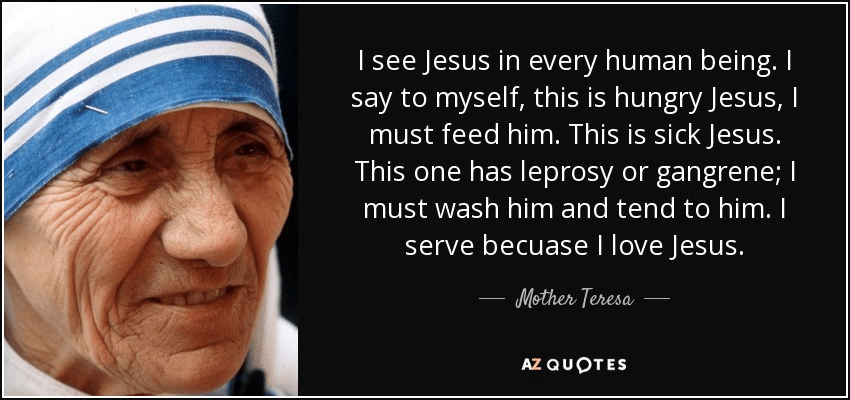
Love is the end result of an abiding relationship and close connection between Christ and his followers. We are to remain in the love of Christ, just as Christ remains in the love of God. Jesus asks nothing of us that he has not already modeled for us in his sacrificial service to the world. Living in union with Christ, loving Jesus, and keeping God’s commands are all a single package, bound up together in a mutual relationship.

We don’t need to wonder what God wants for us and from us: Love. The commands of Jesus are not general; they are focused and specific. Christ commands that we love one another. Our continuing work on this earth is to keep on loving people as Christ has loved us and gave himself for us.

No Greater Love

There is no greater love than that shown in the giving of one’s life for one’s friends. The power of God’s love is focused in Christ. It is confirmed in Christ’s resurrection from death. And it flows from Christ giving his life on the cross for us.

Yes, Christians are servants who are committed to serving others with sacrificial love. Yet, the disciples and all those who follow Christ are much more than servants; they are considered primarily as friends of Jesus.

Through the cross and resurrection of Christ, believers have discovered the divine power of love. There is no greater love than this. And it is this sort of love that binds Christians together as united in their mission to love as Jesus loved them.

We have been called, chosen, and appointed by Jesus to embody love’s mission and purpose. What’s more, we are equipped for the active work of love.

Whatever You Ask in Love

The very name of Jesus is love itself. So, whatever you ask, “in my name,” said Jesus, “the Father will give you.”

Because Christians are united to Christ, they are to remain in and abide with Christ. This relational connection opens up the power of prayer. And the content of those prayers – if we are truly in Christ – will always come from a place of love, be directed to love, and go to great lengths to accomplish love.

Prayer is an activity which is grounded in the abiding relationship of Father, Son, Spirit, and the Christian community. Love directs our prayers. And prayers are directed toward the action of love.

A confidence in the power of prayer is an abiding trust in the power of Love. With love animating our prayers and infusing our service, we are bold to ask God for what is right, just, and good in this world. Indeed, we pray that we will give love to each other with the love we have received from God.

Love and Joy

Being called and appointed by God to love is a privilege and a joy. There isn’t any begrudging service when love is involved. Perhaps one of the greatest prayers we can pray is to pray that our hearts be filled with love. If you don’t feel love for others, then pray for it. And be assured that you will receive it.

Love and joy go together like mashed potatoes and gravy, peanut butter and jelly, grits and honey. We know we are loving others if our joy is complete in doing so.

Jesus came to this earth so that we might experience an overflowing life of abundant love and joy. Christ longs for his joy to be in us, and for us to abide in his love. Our joy comes from knowing that we have been loved by God – chosen, called, and sent out into the world with love and for the purpose of love.

And it is this divine love that has the power to renew and transform everything – even the most troubling and stubborn of people and problems that you are presently facing. Indeed, if love is not the answer, then you are not asking the right question.

Creator God, by the mercies of your son, our Lord, Jesus, compel us to turn our hearts to his way of Love, so that we might follow Christ together as your faithful people. Dear Jesus, guide us in your way. Amen.

I Am Coming to You (John 14:18-31)

Upper Room, by Gail Meyer

“I will not leave you orphaned; I am coming to you. In a little while the world will no longer see me, but you will see me; because I live, you also will live. On that day you will know that I am in my Father, and you in me, and I in you. They who have my commandments and keep them are those who love me, and those who love me will be loved by my Father, and I will love them and reveal myself to them.” 

Judas (not Iscariot) said to him, “Lord, how is it that you will reveal yourself to us and not to the world?” Jesus answered him, “Those who love me will keep my word, and my Father will love them, and we will come to them and make our home with them. Whoever does not love me does not keep my words, and the word that you hear is not mine but is from the Father who sent me.

“I have said these things to you while I am still with you. But the Advocate, the Holy Spirit, whom the Father will send in my name, will teach you everything and remind you of all that I have said to you. Peace I leave with you; my peace I give to you. I do not give to you as the world gives. Do not let your hearts be troubled, and do not let them be afraid. You heard me say to you, ‘I am going away, and I am coming to you.’

“If you loved me, you would rejoice that I am going to the Father, because the Father is greater than I. And now I have told you this before it occurs, so that when it does occur you may believe. I will no longer talk much with you, for the ruler of this world is coming. He has no power over me, but I do as the Father has commanded me, so that the world may know that I love the Father. Rise, let us be on our way.” (New Revised Standard Version)

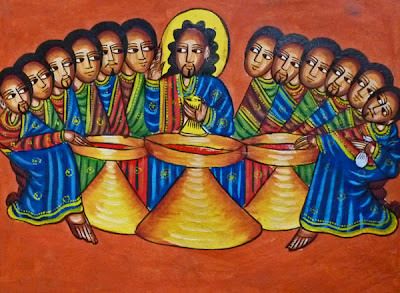
Ethiopian Orthodox Church depiction of the Last Supper in the Upper Room

“He’s leaving!? What!? Huh!?” Although Jesus had tried to prepare the disciples for his impending cross and resurrection, they didn’t quite catch on. It was in the Upper Room, in their final meal together, that Jesus made it plain he was leaving and going back to the Father. (John 14:1-17)

There was both confusion and distress amongst the men. Anticipatory grief had suddenly smacked them like a golf club upside the head. Dizzied and dazed with thoughts that their Lord would no longer be with them, Jesus sought to assure them that this would be temporary.

Christ is coming, again. In fact, three comings are to be realized:

  • Rising from death and appearing to the disciples
  • Sending the Spirit as the continuing presence of Christ on earth
  • Returning at the end of the age to judge the living and the dead

Jesus was caring for his followers, including us, by providing future hope.

That is just what happened with the first two comings. Christians everywhere celebrate the rising of Christ from death, his ascension into heaven, and the giving of the Holy Spirit at Pentecost. The Christian tradition holds that the Spirit – the Paraclete, Advocate, Comforter, and Counselor – is now presently with us.

Although the world no longer sees Jesus, believers see him with eyes of faith, hope, and love. Christians intuitively perceive another spiritual dimension in which Christ is beside them in the person of God’s Spirit. Some things can’t be intellectually explained. They just are.

Meanwhile, while Christians everywhere await the return of Christ to this earth, they are busy loving their Lord through obedience to his commands. And his command is to love one another as he demonstrated his love for them. Love and obedience go hand in hand. To know the love of God in Christ is to willingly give oneself to obey the merciful Lord.

We are not left alone to fumble around on this earth, trying to love in our own strength or ability. The Spirit is present, helping us to do loving work. There is real spiritual assistance in applying Christ’s teaching to the practical aspects of life in the here-and-now. Such constructive down-to-earth support gives Christians a sense of peace and integrity of living.

Worldly peace, which typically uses war to try and end war, has merely the absence of conflict as its goal. However, the peace of Christ is intensely personal and has the goal of unity, harmony, and love. It is his very own peace. Through Christ’s suffering and death, he absorbed in himself the malice and hatred of others and introduced a true and settled peace.

The profound absence of love, the rebellion of humanity against concern for the common good of all, and the shame of selfishness that damns the world, is overthrown by the obedience and self-sacrifice of Jesus. The world will learn this – either by discovering the love of Christ now or, at the end of the age, with the return of Christ.

Jesus came in the past through the incarnation and resurrection. Jesus is presently here in the person of the Holy Spirit. Jesus will come again in the future to judge the living and the dead.

These comings are for us and for our deliverance from all that is unjust and broken in this world. We are not alone. There is ever-present help. This is the basis of the Christian’s confidence.

Come, Holy Spirit, and fill the hearts of your faithful with divine love. Come as the wind that blows, come as the fire that refines, come as the dew that refreshes. Convict, convert and consecrate us until we are wholly yours, through Jesus Christ, our Lord. Amen.

Mercy Is Coming (Micah 7:8-20)

“Justice Tempered with Mercy,” an oil painting by Emil Bisttram, 1936

Do not rejoice over me, my enemy,
        because when I fall, I will rise;
            if I sit in darkness, the Lord is my light.
I must bear the raging of the Lord,
    for I have sinned against him,
        until he decides my case and provides justice for me.
    He will bring me out into the light;
        I will see by means of his righteousness.
    Then my enemy will see;
        shame will cover her who said to me:
            “Where is the Lord your God?”
    My eyes will see her ruin;
        now she will become something to be trampled,
            like mud in the streets.

A day for the building of your walls!
        On that day, the boundary will be distant.
        On that day, they will come to you from Assyria and the cities of Egypt,
            from Egypt to the River,
            from sea to sea,
            and from mountain to mountain.
And the earth will become desolate because of her inhabitants,
        because of the fruit of their actions.

Shepherd your people with your staff,
        the sheep of your inheritance,
        those dwelling alone in a forest in the midst of Carmel.
    Let them graze in Bashan and Gilead, as a long time ago.

As in the days when you came out of the land of Egypt,
        I will show Israel wonderful things.

Nations will see and be ashamed of all their strength;
        they will cover their mouths;
        their ears will be deaf.

They will lick dust like the snake,
        like things that crawl on the ground.
They will come trembling from their strongholds to the Lord our God;
        they will dread and fear you!
Who is a God like you, pardoning iniquity,
        overlooking the sin of the few remaining for his inheritance?
    He doesn’t hold on to his anger forever;
        he delights in faithful love.
He will once again have compassion on us;
        he will tread down our iniquities.
You will hurl all our sins into the depths of the sea.
You will provide faithfulness to Jacob, faithful love to Abraham,
        as you swore to our ancestors a long time ago. (Common English Bible)

The prophecy of Micah was directed to the people because of the nation’s messed up social and political relations. Unrighteousness had thoroughly drenched the land. In this situation, the nation groaned; Micah responded to them and interceded for the people; God agreed with it all; and Micah concluded with a theological reminder of who God is and what God is like.

The nation of Israel was in a bad way during the eighth century B.C.E. because of their injustice toward one another. The leaders only thought of themselves, and not the people as a whole. Unfaithfulness ran so deep that not even one’s closest friends or relatives could be trusted.

To be a faithful and righteous person during that time required a resolve to wait for God’s deliverance – because there was no way any one person or group of people could fix any of it.

And this is the nature of hope – it can only be understood and realized by knowing, sensing, and feeling hopelessness in all of its despair. We do not hope for something we already possess.

The prophet Micah recognized the situation of the nation for what it was, as well as the consequences to having injustice throughout the land. Yet, he also looked forward to a time when God’s wrath will move from God’s people to the people’s enemies.

It may seem as if the Lord is either slow, not paying attention, or doesn’t care; but God’s timing is not the same as ours. Divine deliverance will come when divine deliverance will come.

The circumstances of Israel’s national sins were ripe not only for God’s judgment, but also for Micah’s prayers on behalf of the people. He called on the Lord to shepherd Israel, while at the same time, to put Israel’s enemies in their place.

And God, out of the storehouse of divine mercy, granted an assurance of pardon.

But if we confess our sins, he is faithful and just to forgive us our sins and cleanse us from everything we’ve done wrong. (1 John 1:9, CEB)

Micah affirmed the grace and mercy of God. He had the confident expectation that the Lord would cast all of Israel’s sins into the depths of the sea. Guilt, shame, and despair will not have the last word; the final word belongs to mercy.

Into a world full of cynicism and sarcasm, hopelessness and despair, it is vitally important that we have faithful and godly individuals who have a settled hope. This is what it means to be a remnant, a small minority of people who hold onto that which is just, right, and good.

We are to quietly go about our business of bringing justice, mercy, and love to this world with a quiet and confident expectation that God’s grace will overcome and overwhelm everything in its path.

Most merciful God, we confess that we have sinned against you in thought, word, and deed, by what we have done, and by what we have left undone. We have not loved you with our whole heart; we have not loved our neighbors as ourselves. We are truly sorry and we humbly repent. For the sake of your Son Jesus Christ, have mercy on us and forgive us; that we may delight in your will, and walk in your ways, to the glory of your Name. Amen.

The Good Shepherd (John 10:11-18)

Jesus the Good Shepherd, by Solomon Raj (1921-2019)

“I am the good shepherd. The good shepherd lays down his life for the sheep. When the hired hand sees the wolf coming, he leaves the sheep and runs away. That’s because he isn’t the shepherd; the sheep aren’t really his. So the wolf attacks the sheep and scatters them. He’s only a hired hand and the sheep don’t matter to him.

“I am the good shepherd. I know my own sheep and they know me, just as the Father knows me and I know the Father. I give up my life for the sheep. I have other sheep that don’t belong to this sheep pen. I must lead them too. They will listen to my voice and there will be one flock, with one shepherd.

“This is why the Father loves me: I give up my life so that I can take it up again. No one takes it from me, but I give it up because I want to. I have the right to give it up, and I have the right to take it up again. I received this commandment from my Father.” (Common English Bible)

This is a beautiful passage of Scripture, as we look at it now, two-thousand years removed from its original context. Yet, at the time, Jesus spoke these words after a smack down conflict with the religious authorities, complete with plans to stone him.

In healing a man born blind, Jesus not only restored his physical sight, but he also gave him clear spiritual vision. In contrast, Christ’s opponents remained in their spiritual darkness, unable to see the light of life. And in their spiritual blindness, they couldn’t lead anybody anywhere without falling into a pit and making things worse.

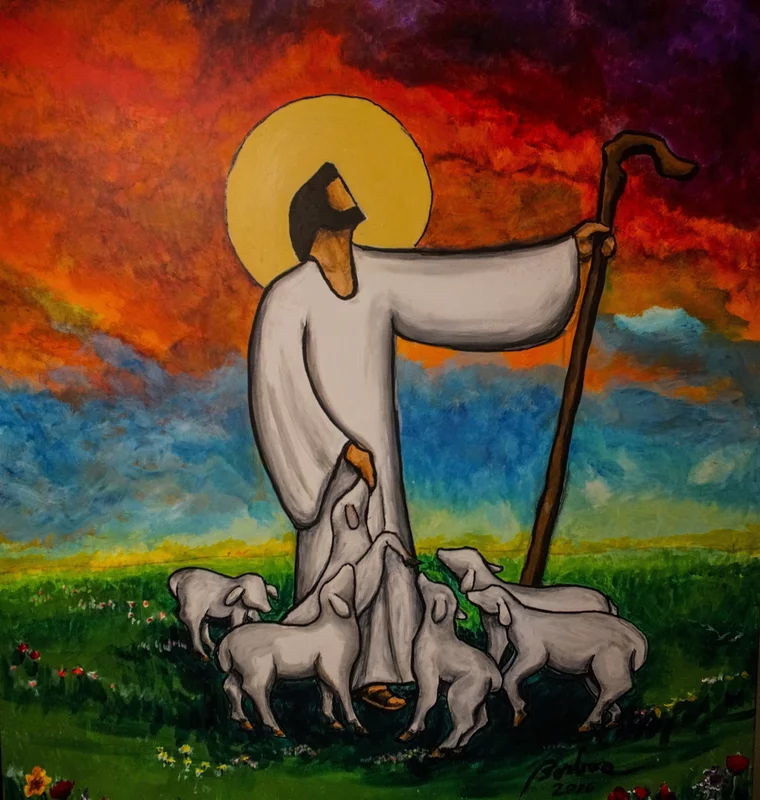
Jesus is the good shepherd, the caring leader who is aware, and has the sheep’s best interests in mind, and at heart. The religious authorities proved to be bad shepherds who only wanted to fleece the sheep of their wool; such persons steal, harm, and kill. Jesus, however, offers abundant life.

The good shepherd provides altruistic care at a great cost. Whereas the hired hand runs away when the wolves come and threaten the flock, Jesus as the Good Shepherd puts his life on the line to protect the sheep. Three times we are told that Christ lays his life down for the benefit of others.

Bad shepherds have no such concern. And, unfortunately, such leaders have been around ever since the fall of humanity into sin. They cut and run when things get risky and dangerous.

This is what the Sovereign Lord says: “Woe to you shepherds of Israel who only take care of yourselves! Should not shepherds take care of the flock? You eat the curds, clothe yourselves with the wool and slaughter the choice animals, but you do not take care of the flock. You have not strengthened the weak or healed the sick or bound up the injured. You have not brought back the strays or searched for the lost. You have ruled them harshly and brutally. 

So they were scattered because there was no shepherd, and when they were scattered they became food for all the wild animals. My sheep wandered over all the mountains and on every high hill. They were scattered over the whole earth, and no one searched or looked for them.” (Ezekiel 34:2-6, NIV)

Jesus, in his incarnation, embodies the love and concern of God for the people of this world. Christ takes the initiative to do what needs to be done for the benefit of the at-risk sheep.

Jesus the Good Shepherd, by Francisco Borboa

For this is what the Sovereign Lord says: “I myself will search for my sheep and look after them. As a shepherd looks after his scattered flock when he is with them, so will I look after my sheep. I will rescue them from all the places where they were scattered on a day of clouds and darkness. I will bring them out from the nations and gather them from the countries, and I will bring them into their own land. I will pasture them on the mountains of Israel, in the ravines and in all the settlements in the land. I will tend them in a good pasture, and the mountain heights of Israel will be their grazing land.

There they will lie down in good grazing land, and there they will feed in a rich pasture on the mountains of Israel. I myself will tend my sheep and have them lie down, declares the Sovereign Lord. I will search for the lost and bring back the strays. I will bind up the injured and strengthen the weak, but the sleek and the strong I will destroy. I will shepherd the flock with justice.” (Ezekiel 34:11-16, NIV)

Since Jesus is the Good Shepherd, he has the unique ability and authority to decide who is in the sheep fold, and who is out. Nobody else gets to make those sorts of decisions. This way, ultimate issues of eternal life and abundant life are handled with perfect justice and righteousness.

It’s okay that this is all a mystery to us. We sheep need only to keep the Shepherd in our line of sight, and let him do his job of caring for us – without whining or complaining. After all, we could easily have a bad shepherd herding us around like a bunch of stupid cows, and treating us with indifference, even meanness.

The Holy Trinity of God – Father, Son, and Spirit – work as One. The Father loves the Son and the Spirit, and also loves those whom the Son and Spirit have touched. The Son loves the Father and the Spirit, and obeys all things from the Father, while listening to the Spirit. And the Spirit loves the Father and the Son, knowing them intimately and always operating in love for the benefit of the sheep’s deliverance from wolves.

In particular, the Son, Jesus, lays down his own life, but takes it up again. He does so because of love. The perfect unity and love of the blessed Holy Trinity spills out in Christ’s care for us.

The laying down and taking up of life on the part of the Good Shepherd is not only an expression of great love and faithfulness toward us sheep, but it is also a deep abiding love and commitment toward the Father from whom all blessings flow.

To put it another way, this motley flock of sheep are purposely drawn into the unity, harmony, and love between the Father and the Son. And when we glimpse and experience such overwhelming love, we choose to remain connected to this incredible loving dance.

Our world is much too characterized by selfish concerns and shortsighted actions. In the loving embrace of the Good Shepherd, we have an opportunity to experience peace and rest, grace and abundance, light and life. To know such love is to never turn back to old self-centered ways of living.

Shepherd of all, by laying down your life for the flock, you reveal your love for all. Lead us from the place of death to the place of abundant life, so that guided by your care for us, we may rightly offer our lives in love for you and our neighbors. Amen.