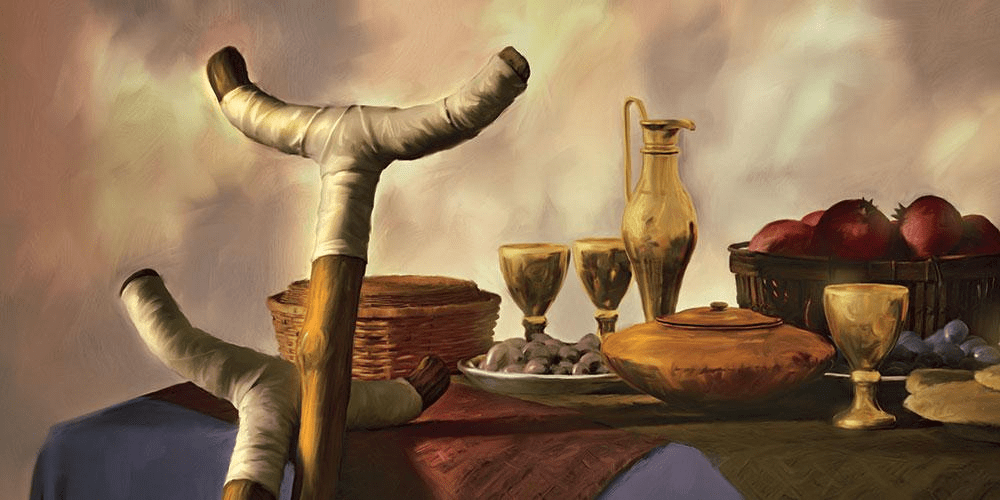
Learn a Lesson from Conflict (2 Samuel 10:13-19)

David Attacks the Ammonites, by Gustave Doré, 1866

Then Joab and the troops with him advanced to fight the Arameans, and they fled before him. When the Ammonites realized that the Arameans were fleeing, they fled before Abishai and went inside the city. So Joab returned from fighting the Ammonites and came to Jerusalem.

After the Arameans saw that they had been routed by Israel, they regrouped. Hadadezer had Arameans brought from beyond the Euphrates River; they went to Helam, with Shobak the commander of Hadadezer’s army leading them.

When David was told of this, he gathered all Israel, crossed the Jordan and went to Helam. The Arameans formed their battle lines to meet David and fought against him. But they fled before Israel, and David killed seven hundred of their charioteers and forty thousand of their foot soldiers. He also struck down Shobak the commander of their army, and he died there. When all the kings who were vassals of Hadadezer saw that they had been routed by Israel, they made peace with the Israelites and became subject to them.

So the Arameans were afraid to help the Ammonites anymore. (New International Version)

Outward Conflict with Ammon

You would think that showing basic human kindness to another would always end well… Yet, not always. And King David found that out, the hard way.

David, having become king of Judah and Israel, demonstrated that his reign would be characterized by extending the sort of mercy and kindness that is characteristic of God.

Whereas David’s kindness was most often accepted, when it came to King Hanun and the Ammonites, it was misunderstood and rejected. The Ammonites humiliated King David’s sent ambassadors.

The delegation wanted to express David’s condolences to Hanun in the event of his father’s death. Then, after the Ammonites saw that King David was upset about how his ambassadors were treated, they mobilized a mercenary force of Arameans with Hadadezer leading the charge.

Both the Ammonites and the Arameans underestimated the experience and skill of the Israelite army under their commander Joab. Even though Joab was outnumbered, he conceived of a strategy that evened the odds.

All of this conflict, with preparations for battle and an escalating war, came about because a king wanted to show kindness to another. Indeed, this can be a very messed-up world that we inhabit!

The result of it all is that the Ammonites and the Arameans were soundly defeated by a smaller, yet much stronger, army with King David at the head. The Arameans became subject to Israel, and the Ammonites were left slack-jawed, not knowing what hit them.

Inner Conflict with Oneself

So, here we have David, who like all of us, is a bundle of contradictions. On the one hand, King David had his heart set on showing kindness and reflecting the heart of God in his rule and reign. And on the other hand, David is a soldier and a man of blood, who does an awful lot of killing people in his lifetime.

King David is both a paragon of moral behavior, and an example of immoral living.

He did not lift a finger against his former king who was trying to kill him; and evidenced a tender spirit through musical skill and an ability to write the psalms and songs of Israel.
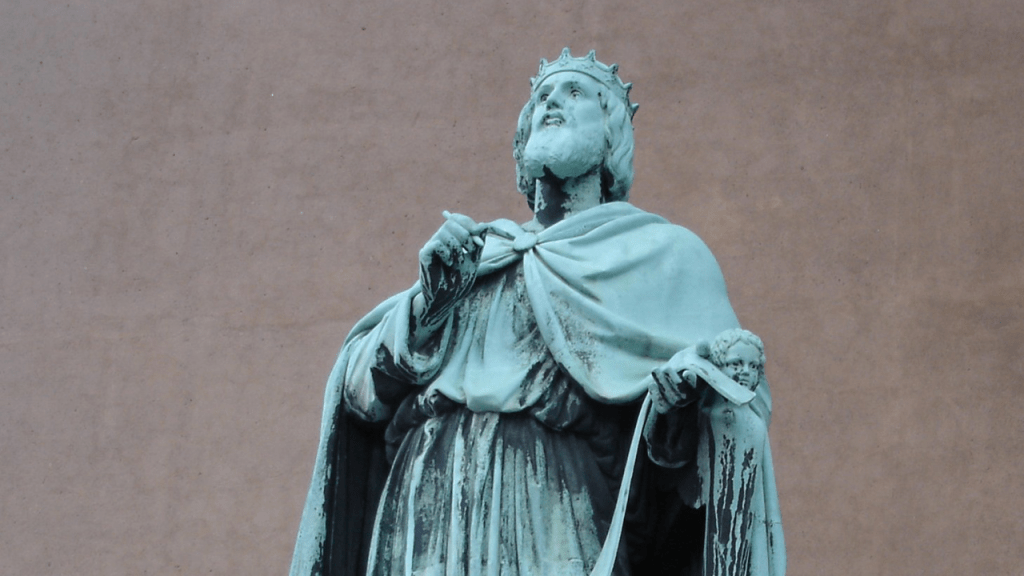
Statue of King David, Copenhagen, Denmark

Yet also, King David demonstrated for us some of the worst immorality, of which is clearly seen in the next few chapters of his story in the book of 2 Samuel. Throughout David’s adult life, he took thousands of human lives in battle.

He came to fame by beheading Goliath; made his mark in Israel by killing Philistines for King Saul; survived in the wilderness while Saul was trying to kill him by killing Amalekites; and secured Israel’s borders through an enormous amount of killing.

I won’t do to simply say that the people David killed had it coming to them, or that he did all the things he did for the sake of the nation. That sort of reductionism smacks of mental laziness and purposeful ignorance.

Coming to Grips with Conflict

At the least, it seems to me that we must accept the biblical narratives as they are, and not as we want them to be, whenever there is difficulty in understanding a story.

We have the human condition in front of us every time we read a scriptural story. Either making it all good, or all bad, just won’t do – because all of us, like David, are a bundle of contradictions and paradoxes that often don’t make sense.

It turns out that, throughout Holy Scripture, we find stories of people who are no better and no worse than we ourselves. The ancient persons, like David, are those for whom a gracious God chose to use and work through – despite either their sinning or their saintliness.

We get a glimpse of how things were and how the Lord operated through the people of the time in their own political, social, economic, and religious contexts.

God comes to us, not merely from the outside by simply mandating commands and imposing control, but enters our lives on the inside, taking us as we are and graciously working with and within us to accomplish good and just purposes on this earth.

And, as it turns out, God uses whomever God wants to use, without doing some sort of divine screening interviews to find out who the most moral candidate is available for the job.

If you are looking for a bottom line in all of this mayhem, then I believe it is this: God loves us. God is with us. And God holds us – all of us, with our maddening combinations of kindness and kookiness – to establish a truly right and benevolent world characterized by humility, gentleness, mercy, purity, and peace.

It’s a rather long and messy process of bringing in such a way of life, but God is patient and will take the centuries and even the millennia needed to accomplish it.

It’s Not All About Human Conflict

Although we are a flawed and fallible people, we are nevertheless God’s people. At the end of it all, we discover that none of this was really a story about Ammonites or Israelites or David or Joab or anyone else; it is actually a story about God – because God is both the object and subject of every biblical narrative.

And what we discover about God is that there are divine initiatives happening all the time which are meant to help us and save us from ourselves. The Lord is sovereign over all creation, and brings salvation despite what we do or don’t do.

God’s kindness – shown and expressed through our own human kindness – will eventually and always win the day.

Almighty and everlasting God, whose will it is to restore all things in your well beloved Son, the King of kings and Lord of lords: Mercifully grant that the peoples of the earth, divided and enslaved by sin, may be freed and brought together under his most gracious rule; who lives and reigns with you and the Holy Spirit, one God, now and forever. Amen.

Showing God’s Kindness (2 Samuel 9:1-13)

King David reaching out and receiving Mephibosheth, 13th century Bible illustration

David asked, “Is there anyone from Saul’s family still alive that I could show faithful love for Jonathan’s sake?” There was a servant from Saul’s household named Ziba, and he was summoned before David.

“Are you Ziba?” the king asked him.

“At your service!” he answered.

The king asked, “Is there anyone left from Saul’s family that I could show God’s kindness to?”

“Yes,” Ziba said to the king, “one of Jonathan’s sons, whose feet are crippled.”

“Where is he?” the king asked.

“He is at the house of Ammiel’s son Machir at Lo-debar,” Ziba told the king.

So King David had him brought from the house of Ammiel’s son Machir at Lo-debar. Mephibosheth, Jonathan’s son and Saul’s grandson, came to David, and he fell to the ground, bowing low out of respect.

“Mephibosheth?” David said.

“Yes,” he replied. “I am at your service!”

“Don’t be afraid,” David told him, “because I will certainly show you faithful love for the sake of your father Jonathan. I will restore to you all the fields of your grandfather Saul, and you will eat at my table always.”

Mephibosheth bowed low out of respect and said, “Who am I, your servant, that you should care about a dead dog like me?”

Then David summoned Saul’s servant Ziba and said to him, “I have given your master’s grandson everything belonging to Saul and his family. You will work the land for him—you, your sons, and your servants—and you will bring food into your master’s house for them to eat. But Mephibosheth, your master’s grandson, will always be at my table.” (Now Ziba had fifteen sons and twenty servants.)

Then Ziba said to the king, “Your servant will do whatever my master the king commands.”

So Mephibosheth ate at David’s table, like one of the king’s own sons. Mephibosheth had a young son named Mica. All who lived in Ziba’s household became Mephibosheth’s servants. Mephibosheth lived in Jerusalem, because he always ate at the king’s table. He was crippled in both feet. (Common English Bible)

This is actually one of my favorite stories in all of Holy Scripture. It clearly demonstrates why David is a king and a person who reflects God’s own heart. I believe that King David is at his best here, ruling and living exactly as the Lord wanted him to.

In much of the ancient world, whenever a king came to power and replaced the previous king of whom he was not related, it was a common practice to either exile or outright kill the sons and grandsons who would have become heirs to the throne. It was a literal cutthroat way of securing the new throne, by wiping out any potential rivals.

It’s quite possible that no one would have faulted David or batted an eye if he had made sure there was nobody around related to King Saul – who died in a battle with the Philistines. Not only did David avoid that practice, but he did just the opposite of it.

Finally on the throne of both Israel and Judah, one of the first acts of King David was to wield his power and authority by finding out if there were any relatives of Saul that he could show faithful love toward.

I can just imagine the servant of Saul, Ziba, being brought into David’s presence, thinking for sure that this is the end. Instead, David wanted to know if there’s anyone in Saul’s family to which he could show kindness.

The word King David used to communicate his benevolent intentions was “chesed” (חסד – pronounced “KES-ed”). This is rich Hebrew word which refers to God’s steadfast covenant loyalty and love toward Israel.

Because of its richness, chesed is translated various ways in the English translations, including: “mercy,” “kindness,” “loving-kindness,” “steadfast love,” “compassion,” and even “goodness.”

The big idea in today’s story is that David had the power to destroy, but instead used his authority in order to extend loving loyalty and mercy to Mephibosheth, son of Jonathan, and grandson of Saul – David’s old enemy and nemesis.

What’s more, David could have found out about Mephibosheth, learned that the man was crippled, in no position to ever do anything for or against him, and simply left him alone. And again, nobody likely would have thought anything about ignoring the man.

But not David. He was determined to embody chesed in the life of Mephibosheth. So, he brought him to Jerusalem and provided for him by having him sit at the king’s table for the rest of his life.

David didn’t have to do that. Yet, God’s steadfast love compelled him. You know grace has a hold of someone’s life, whenever they go out of their way to extend human kindness to another person who has absolutely no means of paying them back or reciprocating at all.

Jesus, the Son of David, clearly understood the idea of chesed and lifted it, taught it, and embodied it for his own followers:

“If you love those who love you, why should you be commended? Even sinners love those who love them. If you do good to those who do good to you, why should you be commended? Even sinners do that. If you lend to those from whom you expect repayment, why should you be commended? Even sinners lend to sinners expecting to be paid back in full. 

“Instead, love your enemies, do good, and lend expecting nothing in return. If you do, you will have a great reward. You will be acting the way children of the Most High act, for he is kind to ungrateful and wicked people. Be compassionate just as your Father is compassionate. (Luke 6:32-36, CEB)

I wonder who it is that God wants you to show grace, mercy, and love toward?

Lord Jesus, as you commanded us to love one another, just as you love us, help us to demonstrate that love toward others. We acknowledge that it is impossible on our own, so we ask for the enabling of your Holy Spirit to produce that love in us.

We believe that you love and care for those who are suffering from illness, violence and persecution. We pray for protection, comfort and healing for those in need or who are forgotten.

Enliven us with your Holy Spirit, so that we may be instruments of your peace and love in a troubled world. Use us and all believers as your ambassadors to our families, colleagues and neighbors.

Holy God, you demonstrated your love for us through the Resurrection of your Son and our Savior Jesus Christ. We commit to making decisions as who trust in your ever-present love and grace. Guide us in becoming a people who welcomes all, and values mutuality and partnerships.

Provide us courage and insight as we seek to be a community who provides respite, and a place to sooth souls. Grant us all the things necessary for our common life, and bring us to be of one heart and mind within your Church; through Jesus Christ our Lord. Amen.

Mercy, Not Sacrifice (Hosea 6:1-6)

“Come, let us return to the Lord,
    for it is he who has torn, and he will heal us;
    he has struck down, and he will bind us up.
After two days he will revive us;
    on the third day he will raise us up,
    that we may live before him.
Let us know, let us press on to know the Lord;
    his appearing is as sure as the dawn;
he will come to us like the showers,
    like the spring rains that water the earth.”

What shall I do with you, O Ephraim?
    What shall I do with you, O Judah?
Your love is like a morning cloud,
    like the dew that goes away early.
Therefore I have hewn them by the prophets;
    I have killed them by the words of my mouth,
    and my judgment goes forth as the light.
For I desire steadfast love and not sacrifice,
    the knowledge of God rather than burnt offerings. (New Revised Standard Version)

My favorite word in all of Holy Scripture is the Hebrew word chesed (חֶסֶד pronounced “hes-ed” with a guttural sound on the “h”). It’s such a rich word that no single English word can capture its depth. 

So, chesed is translated in various ways across the English translations of the Bible as “mercy,” “grace,” “steadfast love,” “covenant loyalty,” “kindness,” “compassion,” and more. It’s no wonder, then, that since chesed marks the character and activity of God, the Lord very much desires people to reflect this same stance toward others. 

In today’s Old Testament lesson, God was calling and wooing wayward people to return to a divine life of closeness with the Lord. God demonstrated chesed by not putting the people away, like a spouse outright divorcing an unfaithful partner. But instead, God committed to loving the Israelites even when they were unlovely.

At all times, the response God wants is not simply going through the motions of outward worship. Ritual practices mean little if there is no heart behind them. The Lord longs for people to demonstrate both fidelity and fealty through mercy and a steadfast love to God and neighbor. Both our work and our worship are to be infused with divine mercy. 

God deeply desires a close relationship with humanity and is profoundly pained when people seek after other gods to meet their needs and to love them. Hosea’s prophecy is an impassioned plea for all persons to find their true fulfillment and enjoyment in a committed loving divine/human union, just like a marriage.

In Christian readings of Hosea’s prophecy, repentance means accepting God’s chesed through Jesus Christ. The believer is to allow the character of God to rule and reign in their heart so that commitment comes flowing out in loving words, actions, thoughts, and dispositions. Mercy finds its highest expression in the person and work of Jesus. Thus, Advent is a season of anticipating the great love and mercy of God through the incarnation of Christ.

It, therefore, ought to be no surprise that Jesus lifted Hosea’s prophecy as a treasured principle of operation when asked why he deliberately made connections with “questionable” people:

While Jesus was having dinner at Matthew’s house, many tax collectors and sinners came and ate with him and his disciples. When the Pharisees saw this, they asked his disciples, “Why does your teacher eat with tax collectors and sinners?” On hearing this, Jesus said, “It is not the healthy who need a doctor, but the sick. But go and learn what this means: ‘I desire mercy, not sacrifice.’ For I have not come to call the righteous, but sinners.” (Matthew 9:10-12, NIV)

And when confronted about “questionable” activities Jesus appealed to the same source of Hosea’s prophecy:

“Look! Your disciples are doing what is unlawful on the Sabbath.” Jesus answered, “Haven’t you read what David did when he and his companions were hungry? He entered the house of God, and he and his companions ate the consecrated bread—which was not lawful for them to do, but only for the priests. Or haven’t you read in the Law that the priests on Sabbath duty in the temple desecrate the Sabbath and yet are innocent? I tell you that something greater than the temple is here. If you had known what these words mean, ‘I desire mercy, not sacrifice,’ you would not have condemned the innocent.” (Matthew 12:2-7, NIV)

One can never go wrong with mercy and grace. If in doubt between whether to judge another or show mercy, the Christian’s choice is clear. Grace and love create connections – reconnecting the disconnected. The heart of true Christian spirituality is a deep kinship with the divine. Whenever that relation is broken or severed, it is vital to restore it. The means of doing so is not judgment but mercy.

Chesed is more than a word; it is a way of life. God wants mercy. Grace is the Lord’s divine will.

So, let us today receive the forgiveness of Jesus and devote ourselves to prayer and works of love which come from a heart profoundly touched by grace. May the result be healing of that which has been broken, and reconciled relationships with others.

Merciful and loving God, the One who shows amazing grace, forgive us for our wanderings away from the divine life. Return us, again, to the grace of Jesus Christ our Savior so that our hearts will be renewed and aflame with love for others. In the Name of the Father, Son, and Spirit, the Great Three in One. Amen.

Psalm 62:5-12 – Our Place of Safety

Psalm 62 by Christa Rosier (1960-2011)

Only God gives inward peace,
    and I depend on him.
God alone is the mighty rock
    that keeps me safe,
    and he is the fortress
    where I feel secure.
God saves me and honors me.
    He is that mighty rock
    where I find safety.

Trust God, my friends,
    and always tell him
each one of your concerns.
    God is our place of safety.

We humans are only a breath;
    none of us are truly great.
All of us together weigh less
    than a puff of air.
Don’t trust in violence
or depend on dishonesty
    or rely on great wealth.

I heard God say two things:
   “I am powerful,
    and I am very kind.”
The Lord rewards each of us
    according to what we do. (CEV)

My girls, now grown with families of their own, are wonderful mothers. Recently, I got to hold my newest grandson, which is wonderful! A close second to that experience is watching Mom hold her baby. The little guy has not a worry in the world when he is in her arms. For there is no doubt of perfect love and security.

God is our place of safety. For the believer, it is as if we are a baby having finished nursing, lying peacefully and contentedly in God’s loving and secure arms. There is complete trust because God is the one holding us. Our enemies are nothing but a puff of smoke – toothless lions who can make all the noise they want but will never get a bite on us with God around.

I was reminded of yet another truth as I watched my daughter and grandson. Although tired, both are genuinely happy. Neither riches nor fame can ever buy security and happiness. God, as the source of steadfast love and perfect safety, is our Rock. The Lord’s power and kindness meld together in a wondrous and active care for us.

God’s kingdom is constructed on solid rock, not sinking sand. Trusting in violent vengeance, deceitful scheming, or great wealth might build an impressive looking edifice, but will only be destroyed in the first big wind that comes along. Depending upon God as our refuge and strength is building a relationship which will last and stand the test of time and tribulation.

Jesus, aware of the Psalm’s theology, drew upon the image of the rock to impress on his listeners the need for making wise choices (Matthew 7:24-29). The foundation is the key element. The house built on the rock will withstand the storm; the foundation built on sand will not. The cornerstone of faith’s foundation for the Christian is Jesus. The way of Jesus is the entrance into the kingdom of heaven, and the stabilizing presence of peace our lives need. Christ is our place of safety.

May the risen and ascended Christ, mightier than the hordes of hell, more glorious than the heavenly hosts, be with you in all your ways.

May the cross of the Son of God protect you by day and by night, at morning and at evening, at all times and in all places.

May Christ Jesus guard and deliver you from the snares of the devil, from the assaults of evil spirits, from the wrath of the wicked, from all base passions and from the fear of the known and unknown.

And the blessing of God almighty, the Father, the Son, and the Holy Spirit, be upon you and remain with you always. Amen.