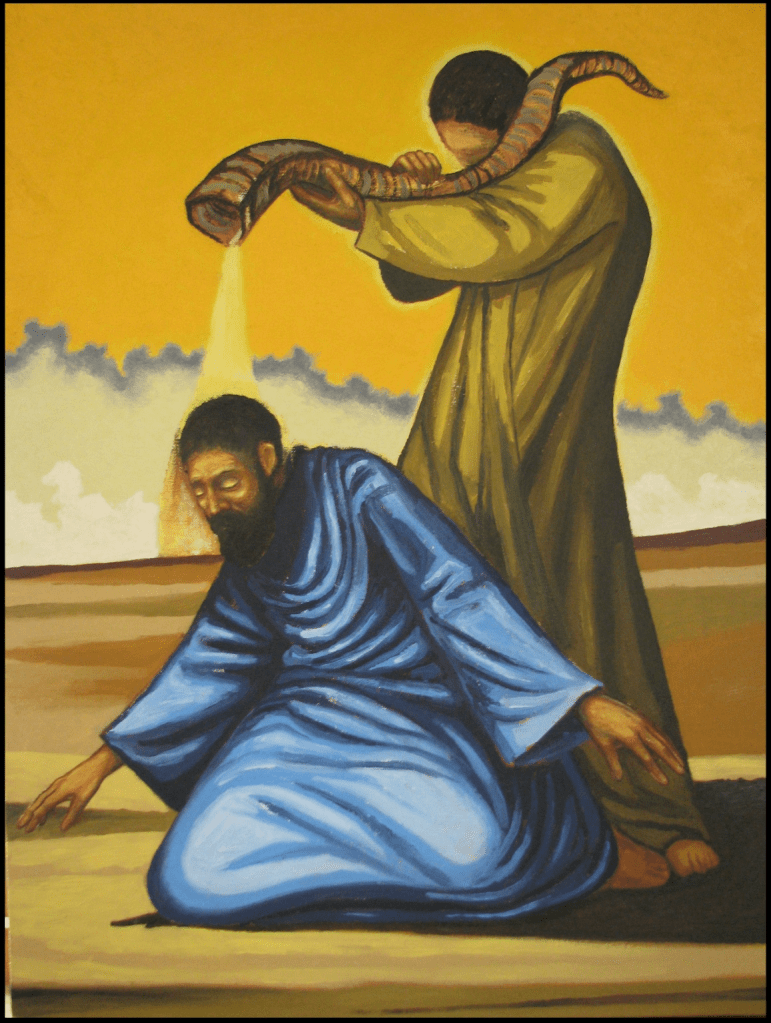
Have a Healthy Spiritual Heart (Matthew 12:9-14)

Going on from that place, he went into their synagogue, and a man with a shriveled hand was there. Looking for a reason to bring charges against Jesus, they asked him, “Is it lawful to heal on the Sabbath?”

He said to them, “If any of you has a sheep and it falls into a pit on the Sabbath, will you not take hold of it and lift it out? How much more valuable is a person than a sheep! Therefore it is lawful to do good on the Sabbath.”

Then he said to the man, “Stretch out your hand.” So he stretched it out and it was completely restored, just as sound as the other. But the Pharisees went out and plotted how they might kill Jesus. (New International Version)

The juxtaposition of this story is pronounced: A man with a shriveled hand stretched it out and is healed by Jesus in full view of everyone in the synagogue; and the synagogue leaders with shriveled hearts withhold their hearts from Jesus, and are not healed of their paralyzed beliefs.

Asking questions out of a desire to make a point, instead of asking out of sincere curiosity, is a telltale sign of the small and shriveled heart. And the surefire signal that the heart is wadded-up like a crumpled piece of paper, is the concern for policy and procedure over people.

There was, of course, an allowance for life-threatening medical situations to be attended to on the Sabbath. The man’s shriveled hand, however, didn’t fall into this category. Jesus could have handled the question of healing by stating that he would do it the next day. That certainly would have protected him and quelled any concerns of his orthodoxy.

But Jesus didn’t go there.

Jesus heals the man with a withered hand, from a 17th century Arabic copy of the Gospels

Instead, he deliberately made a stink in front of everyone. Why? Because the whole situation already stunk to high heaven. The ensconced handling of the law by the religious authorities was calloused to real human need. In other words, such a view of the law was ungodly.

Somewhere along the line, the command of a Sabbath day’s rest had turned from a devoted time for community renewal to an opportunity for showing off one’s religiosity and personal piety.

And the height of offense for Jesus was that God was used as the justification for the peacocking to happen. It is to place the supreme spirituality of a holy person above the hard reality of human need and pain. Jesus wanted nothing to do with such a charade of law.

The divine purpose of the Sabbath command was the health of the entire community – even including animals. It’s meant to be a day of mercy, and not a day of restrictions to the point of perpetuating or even causing ill health.

In truth, to not heal on the Sabbath is a travesty of God’s law.

This isn’t only an ancient problem, but also a contemporary issue, as well. One reason so many modern people today believe that Christianity (and, in some cases, all religion) is nothing but a bunch of goofiness, is that there are far too many Christians and churches who espouse a reading of Scripture that is unhealthy instead of healthy.

Whenever Holy Scripture is used a weapon to keep women in check, existing power structures in place, and people different from one’s religious tradition out of congregational life, then such a practice will eventually be challenged by Jesus. And, ironically, all the nice religious folk will turn on Christ and plot how to be rid of him altogether.

And who, pray tell, wants to be a part of that sort of goofiness?

The bottom line, for many people, is their wealth, money, property, and resources. And if someone happens to get in the way of those economic resources, well then, we’ll simply reinterpret existing biblical commands to protect and maintain our stuff.

For Jesus, the whole point of the banter in the synagogue was to actually help the man right in front of him – to do the right thing on the Sabbath day, and not the hard-hearted thing of nothing.

Sabbath is intended to give everyone, without exception, an opportunity to “be” instead of “do.” The Sabbath is designed for the interests and betterment of all creation, all humanity, and not the other way around. The very fact that the upstanding religious folk even have to be told this, signals that they have drifted very far from the actual commands of God.

“If Jesus had been more diplomatic, he may have reformed Judaism, but he would not have won the world. He would not have give us a gospel that serves the depth intention of the law by freeing us from a slavish service to its surfaces.”

Frederick Dale Bruner

In short, Jesus healed the man’s shriveled hand. But the pious religious persons were not healed of their shriveled hearts. Instead, they were mad as hell. They held an after-church meeting in the parking lot about how to do away Jesus, once and for all.

They did this because the entire movement of maintaining religious power and authority was being threatened to the core.

There are those who hate the one who upholds justice in court and detest the one who tells the truth. (Amos 5:10, NIV)

Therefore, I strongly urge every believer in Jesus Christ to be completely devoted to the Scriptures of the Old and New Testaments, by actually reading them every day; instead of relying upon slick preachers who tell you what you like to hear.

Be discerning and wise in the reading, hearing, and study of God’s Holy Word. It’s a matter of health and illness, hope and despair, life and death. Don’t have a shriveled heart; have a healthy heart, my friend.

Almighty God, to you all hearts are open, all desires known, and from you no secrets are hid: Cleanse the thoughts of our hearts by the inspiration of your Holy Spirit, that we may perfectly love you, and worthily magnify your holy Name; through Christ our Lord. Amen.

The Seven Deadly Sins (Proverbs 12:10-21)

A 14th century personification of the Seven Deadly Sins, by Unknown artist

The righteous care for the needs of their animals,
    but the kindest acts of the wicked are cruel.

Those who work their land will have abundant food,
    but those who chase fantasies have no sense.

The wicked desire the stronghold of evildoers,
    but the root of the righteous endures.

Evildoers are trapped by their sinful talk,
    and so the innocent escape trouble.

From the fruit of their lips people are filled with good things,
    and the work of their hands brings them reward.

The way of fools seems right to them,
    but the wise listen to advice.

Fools show their annoyance at once,
    but the prudent overlook an insult.

An honest witness tells the truth,
    but a false witness tells lies.

The words of the reckless pierce like swords,
    but the tongue of the wise brings healing.

Truthful lips endure forever,
    but a lying tongue lasts only a moment.

Deceit is in the hearts of those who plot evil,
    but those who promote peace have joy.

No harm overtakes the righteous,
    but the wicked have their fill of trouble. (New International Version)

Many of the biblical proverbs are set as contrasts between the way of righteousness and the way of wickedness.

Being aware of both vice and virtue in our personal lives, the workplace, neighborhood, family, and faith communities can create an environment of trust, love, fellowship, and enjoyment. Intentionally pursuing the good, while identifying and forsaking the bad, contributes to a thriving community who intentionally cultivates righteousness.

It’s likely that you have heard of “the seven deadly sins.” In medieval Christianity, these were vices to avoid at all costs, because they eroded personal integrity and poisoned the social community. A “vice” is a bad habit which corrupts character and debases society.

The early church eventually formed a short list of the most corrosive vices, the seven deadly sins, which were considered the most heinous desires/actions of all. We find them in our proverbs for today.

The wicked covet the proceeds of wickedness. Desiring evil is a trap for them. They chase after sinister fantasies.

Lust is an intense desire, coupled with a lack of mental self-control, which is manifested in pursuing that desire in the heart. It is to have a passion for someone (or something) that is neither yours, nor meant for you. Lust leers at and indulges in selfish daydreams, without any concern for another person.

Do not desire to possess anything that belongs to another person—not a house, a wife, a husband, a slave, an ox, a donkey, or anything else. (Exodus 20:17, CEV)

The wicked have their fill of trouble. They’ve gobbled up evil as if dining at an all-you-can-eat buffet.

Whereas lust and covetousness is mostly a lack of mental self-control, gluttony is the lack of bodily self-control.

So, whether you eat or drink or whatever you do, you should do it all for God’s glory. (1 Corinthians 10:31, CEB)

Gluttony doesn’t stop eating, buying, talking, drinking, or binging. It only excessively indulges to the point of physical and/or relational sickness. Addictions and workaholism are some modern-day forms of gluttony – it consumes to the point where it cannot control the consumption any more. The thing desired and indulged becomes the master.

Observe the Sabbath and keep it holy. You have six days in which to do your work, but the seventh day is a day of rest dedicated to me. On that day no one is to work—neither you, your children, your slaves, your animals, nor the foreigners who live in your country. (Exodus 20:8-10, GNT)

The tools of greed are deceit and lies; the greedy person goes to just about any lengths to obtain more wealth. They will misrepresent another and spread gossip and slander to get what they want.

Do not tell lies about others.

The Ninth Commandment (Exodus 20:16, CEV)

Money. More money – is the mantra of the greedy person. It is to have an inordinate desire and pursuit of wealth. Just as sex and food are good, but have their proper boundaries, so money is both good and necessary. 

But money is powerful in more ways than one. It can take over a person’s life in such a way that charging exorbitant interest, rent, or price gouging is justified by satisfying the greed. The greedy person lives every waking moment for leveraging wealth to get more wealth.

People who want to be rich fall into all sorts of temptations and traps. They are caught by foolish and harmful desires that drag them down and destroy them. The love of money causes all kinds of trouble. Some people want money so much that they have given up their faith and caused themselves a lot of pain. (1 Timothy 6:9-10, CEV)

The sloth much prefers get-rich-quick schemes to actual hard work. They spend their time in worthless projects, and are easily annoyed at others.

Sloth is more than laziness. It is also failing to do good when it is in your power and ability to do so. To be slothful is to be indifferent to the great need of the world. 

Whereas the previous sins have a more active pursuit of some desire, the sloth is passive, not wanting to get involved in making a difference. The slothful person always has an excuse why they can’t participate; they expect everyone else to do the work. 

Do your work willingly, as though you were serving the Lord himself, and not just your earthly master.

Colossians 3:23, CEV

The irony is that for all of Ebenezer Scrooge’s hard work and thrift, he was really a sloth who had no intention of improving the condition of humanity; he depended on poor houses and work farms to do all the work. It took supernatural means to get him to think differently. It typically takes a lot for the sloth to go out of their way to honor, respect, and bless another.

You must honor and respect your father and your mother. Do this so that you will have a full life in the land that the Lord your God gives you. (Exodus 20:12, ERV)

A wicked person is often an angry person – so full of anger that they abuse their pets and animals who have done nothing against them. And they let their tongues wag and fly off the handle anytime they are perturbed.

Stop being angry!  Turn from your rage!  Do not lose your temper— it only leads to harm. (Psalm 37:8, NLT)

That doesn’t mean that anger itself is a bad thing. As with most things in life, anger has its proper place. For example, we ought to be angry in the face of evil perpetrators. Anger motivates us to not be slothful, but helpful. 

But excessive selfish anger is a vice. Whereas righteous anger seeks to help a victimized person or group, sinful anger is fueled by hatred. Whether it’s a violent verbal decapitation of another, or a deep seated bitterness, such anger destroys relationships – and even life itself.

No murder.

The Sixth Commandment (Exodus 20:13, MSG)

Envy and lust are kissing cousins. They both traffic in excessive desire for what they don’t possess. 

Envy rots the bones.

Proverbs 14:30, NIV

The subtle difference has more to do with the object of the affection. Lust leers at, longs for, a person who belongs to someone else. Envy fixes its gaze on a material possession or a respected position which someone else has. It is to have a passionate pursuit of taking over someone else’s job or keeping up with Jones’s.

For where there is envy and selfish ambition, there will also be disorder and wickedness of every kind. (James 3:16, NRSV)

The wicked and the proud share a table together for lunch every day. They don’t listen to anybody else, because they believe they already have the answers and know what is best.

Pride is an over-inflated view of one’s opinions, thoughts, and self. Proud persons have an overestimation of themselves. They seem to actually believe that if only others followed their thinking and advice, the world would be a better place.  

Every antagonist in the movies, comics, and classic literature are full of themselves. They justify stepping on others to achieve what they think is the greater good of imposing their agenda in the situation. It’s no wonder that in the Bible, Satan is the ultimate antagonist.

The proud must eventually contend with God. And the Lord has no allowance for the foolishness and idolatry of any human believing they know better.

“No other gods, only me.”

First Commandment (Exodus 20:3, MSG)

Consider the following questions:

How will you respond to the seven deadly sins?

In what ways and/or behaviors do you see these vices being manifested in both the church and the world?

What can the book of Proverbs bring to such a discussion?

Have Some Spiritual Discernment (Deuteronomy 13:1-5)

Prophet, by Théophile Alexandre Steinlen, 1902

Prophets or interpreters of dreams may promise a miracle or a wonder, in order to lead you to worship and serve gods that you have not worshiped before. Even if what they promise comes true, do not pay any attention to them. The Lord your God is using them to test you, to see if you love the Lord with all your heart. Follow the Lord and honor him; obey him and keep his commands; worship him and be faithful to him. 

But put to death any interpreters of dreams or prophets that tell you to rebel against the Lord, who rescued you from Egypt, where you were slaves. Such people are evil and are trying to lead you away from the life that the Lord has commanded you to live. They must be put to death, in order to rid yourselves of this evil. (Good News Translation)

It’s a foolish notion that a servant of God can have a moonlighting gig with another god. A shortsighted philosophy believes that worshiping God on the Sabbath allows one to then do whatever they want on the other six days. And a downright deadly act is to become enamored with a miracle and then follow the miracle worker who did it, even though they want nothing to do with devotion to the Lord.

It only takes one bad apple to spoil the whole bushel basket of them. Just one rotten egg in a six egg omelet will ruin the entire thing. And one bad prophet amongst the people will end up destroying the congregation. Evil isn’t something to dabble with; instead, wickedness is something to rid yourself of altogether.

“If your right eye causes you to stumble, gouge it out and throw it away. It is better for you to lose one part of your body than for your whole body to be thrown into hell. And if your right hand causes you to stumble, cut it off and throw it away. It is better for you to lose one part of your body than for your whole body to go into hell.” Jesus (Matthew 5:29-30, NIV)

Jesus declared that believers must take decisive, drastic, and radical action against idolatry. Serving other gods, along with the one true God, requires an amputation. The biblical text of both Testaments leaves us no room to believe that it’s okay to dabble in things that the Lord condemns. And if we think we are not hurting anybody to hold onto such a thought, we very much need to think again.

True prophets and preachers don’t lead people into idolatry, no matter how spectacular their omens, wonders, or miraculous signs. False prophets and preachers exist only to test the sincerity of a believer’s love for the Lord. Israel was to take decisive and radical measures to rid themselves of false gods. Failing to do so would certainly lead to idolatry.

These are the regulations and the case laws that you must carefully keep in the fertile land the Lord, your ancestors’ God, has given to you to possess for as long as you live on that land:

You must completely destroy every place where the nations that you are displacing worshipped their gods—whether on high mountains or hills or under leafy green trees. Rip down their altars and shatter their sacred stones. Burn their sacred poles with fire. Hack their gods’ idols into pieces. Wipe out their names from that place.

Don’t act like they did toward the Lord your God! (Deuteronomy 12:1-4, CEB)

Believers of every era need to learn that the occurrence of supernatural manifestations, and/or wild success in ministry, does not automatically authenticate the prophet or preacher.

Theology always takes precedence over miraculous signs and wonders. A growing church doesn’t necessarily mean that God’s favor rests upon it, anymore than a declining church signals God’s displeasure. This is why we are to never add to or take away from God’s Word to people. (Deuteronomy 12:32)

“It is the nature of false prophets to create a conscience where there is none, and to cause conscience to disappear where it does exist.”

Martin Luther

If Christians are ever invited to disobey and rebel against the words and ways of Jesus, they are to refuse the offer. This, of course, requires actually knowing God’s Word and handling the worship of God and the interpretation of God’s Word with great care, humility, and wisdom.

There are many times that false preachers are quite sincere, believing that they are proclaimers of truth, when they are really leading others astray. We are always to be students of Holy Scripture, consistently discerning the difference between truth and error, right and wrong. Let us be careful to avoid the situation of the believers in the New Testament book of Hebrews:

In fact, though by this time you ought to be teachers, you need someone to teach you the elementary truths of God’s word all over again. You need milk, not solid food! Anyone who lives on milk, being still an infant, is not acquainted with the teaching about righteousness. But solid food is for the mature, who by constant use have trained themselves to distinguish good from evil. (Hebrews 5:12-14, NIV)

Let’s be people who take the time and effort to grow in the grace and knowledge of the Lord Jesus; and be patient and humble enough to learn over time what truly pleases the Lord.

Blessed God, give your servant a discerning heart to govern, lead, and teach your people, so that we may all be able to distinguish between right and wrong, doing your divine will and obeying your divine commands, to the glory of Jesus Christ, in the power of the Holy Spirit. Amen.

Set Apart for a Purpose (Exodus 30:22-38)

Aaron is anointed by Moses, by Jack Baumgartner

Then the Lord said to Moses, “Collect choice spices—12 1⁄2 pounds of pure myrrh, 6 1⁄4 pounds of fragrant cinnamon, 6 1⁄4 pounds of fragrant calamus, and 12 1⁄2 pounds of cassia—as measured by the weight of the sanctuary shekel. Also get one gallon of olive oil.

Like a skilled incense maker, blend these ingredients to make a holy anointing oil. Use this sacred oil to anoint the Tabernacle, the Ark of the Covenant, the table and all its utensils, the lampstand and all its accessories, the incense altar, the altar of burnt offering and all its utensils, and the washbasin with its stand. Consecrate them to make them absolutely holy. After this, whatever touches them will also become holy.

“Anoint Aaron and his sons also, consecrating them to serve me as priests. And say to the people of Israel, ‘This holy anointing oil is reserved for me from generation to generation. It must never be used to anoint anyone else, and you must never make any blend like it for yourselves. It is holy, and you must treat it as holy. Anyone who makes a blend like it or anoints someone other than a priest will be cut off from the community.’”

Then the Lord said to Moses, “Gather fragrant spices—resin droplets, mollusk shell, and galbanum—and mix these fragrant spices with pure frankincense, weighed out in equal amounts. Using the usual techniques of the incense maker, blend the spices together and sprinkle them with salt to produce a pure and holy incense. Grind some of the mixture into a very fine powder and put it in front of the Ark of the Covenant, where I will meet with you in the Tabernacle.

You must treat this incense as most holy. Never use this formula to make this incense for yourselves. It is reserved for the Lord, and you must treat it as holy. Anyone who makes incense like this for personal use will be cut off from the community.” (New Living Translation)

It’s not everyday that you get a scripture text like this one to reflect upon. Yet, since all of Holy Scripture is given to us and for us, it’s good to occasionally have to work through the place and purpose of seemingly mundane passages within the Bible.

The ancient world of the Israelites had a relationship with their God in which everything and every part of their lives were to be holy – both worship and daily life were infused with reminders that they were set apart entirely to God and for God.

Therefore, what the people wore, what they ate, and how they went about daily tasks of living and worshiping was dictated to them from the Lord. The purpose of all the detailed instructions was to reinforce the importance of being a holy people, a kingdom of priests, who could show the world how a community of persons devoted to Yahweh lived, talked, and acted.

Concerning the people’s worship of God, chapters 25-31 of Exodus provide detailed plans for the sacred space and symbols which were to be used in that worship. Elaborate specifications were given for their construction and placement.

Today’s Old Testament lesson deals with the special formula for anointing oil. In keeping with the holiness which is to be pervasive throughout all of Israelite life, this particular oil has a specific use, and is never to be used outside of that ordained purpose.

The sanctity of the oil is communicated in the strongest of terms; profane use of it is strictly forbidden. And all of the work is to be done during six days of the week, because the Sabbath is a day set apart as different, with an abundant rest from labor.

The anointing oil is used for symbolic marking in the service of God. The priests (the Levites Aaron and his sons) were to use the oil, since they were the only ones set apart to do the priestly work. The articles used for worship were also marked with the anointing oil. (Exodus 29:4-7)

None of this liturgical action was in any sort of way magical; it communicated the important theological concept that God is holy, and therefore, holiness is to be woven into every facet of Israelite life. The anointing oil was a sign of God’s acknowledgement and approval that the objects and the people being anointed were to be exclusively used for worship.

Holiness and being set apart aren’t only ancient ideas and practices; it’s also an important part of the New Testament and the way we are to live today. That’s because holiness isn’t merely something God does; it is inherent to God’s very nature. Therefore, as people created in God’s image and likeness, we too, are to live sanctified lives, set apart to live as humans are designed to live.

“You must be holy because I, the Lord your God, am holy.” (Leviticus 19:2, NLT)

“You must be holy because I, the Lord, am holy. I have set you apart from all other people to be my very own.” (Leviticus 20:26, NLT)

But now you must be holy in everything you do, just as God who chose you is holy. For the Scriptures say, “You must be holy because I am holy.”

1 Peter 1:15-16, NLT

Followers of Christ are set apart for a purpose – to be holy and sanctified in all they say and do. And, much like the ancient followers of God, Christians are to worship the Lord alone, living differently than the rest of the world.

It is God’s will that you should be sanctified. (1 Thessalonians 4:3a, NIV)

You are a chosen people, a royal priesthood, a holy nation, God’s special possession, that you may declare the praises of him who called you out of darkness into his wonderful light. Once you were not a people, but now you are the people of God; once you had not received mercy, but now you have received mercy. (1 Peter 2:9-10, NIV)

We have an opportunity, as people anointed and set apart for God’s good purposes, to bring mercy as we have received mercy, love as we ourselves have received love; and to maintain the integrity of holiness everywhere we go.

In today’s mass produced factory products, consumers only see the end results; they are ignorant of the person and process that made the product. Most things we buy and use come to us without any history of how they were made and who made them.

Yet, the people and the processes used in making anything is significant because holiness cannot be factory-made. There is always a connection between the person, the process, and what is being produced for the end product.

In God’s economy, it isn’t enough just to have anointing oil composed of the right ingredients; the individual and the craft employed are what make it truly an oil for anointing the holy.

People, in truth, are neither interchangeable on a factory floor assembly line, nor with the worship of God. The individual person offering their process will always have a particular outcome unique to that mix of person, process, and product. The belief that singing, praying, serving, and whatever else happens in worship is to be done with consistency – no matter who does it – is both impossible and not expected by God.

Though the ingredients of a particular spiritual experience always remain the same, Holy Scripture suggests that the subtle differences each individual brings to the craft of worship is good and necessary; without that uniqueness, there cannot be holiness.

Sanctify your church by the truth, O Lord; your word is truth.

Sanctify us by the truth, O Lord; your word is truth.

Sanctify me by the truth, O Lord; your word is truth. Amen.