Return to the Lord (1 Samuel 7:3-15)

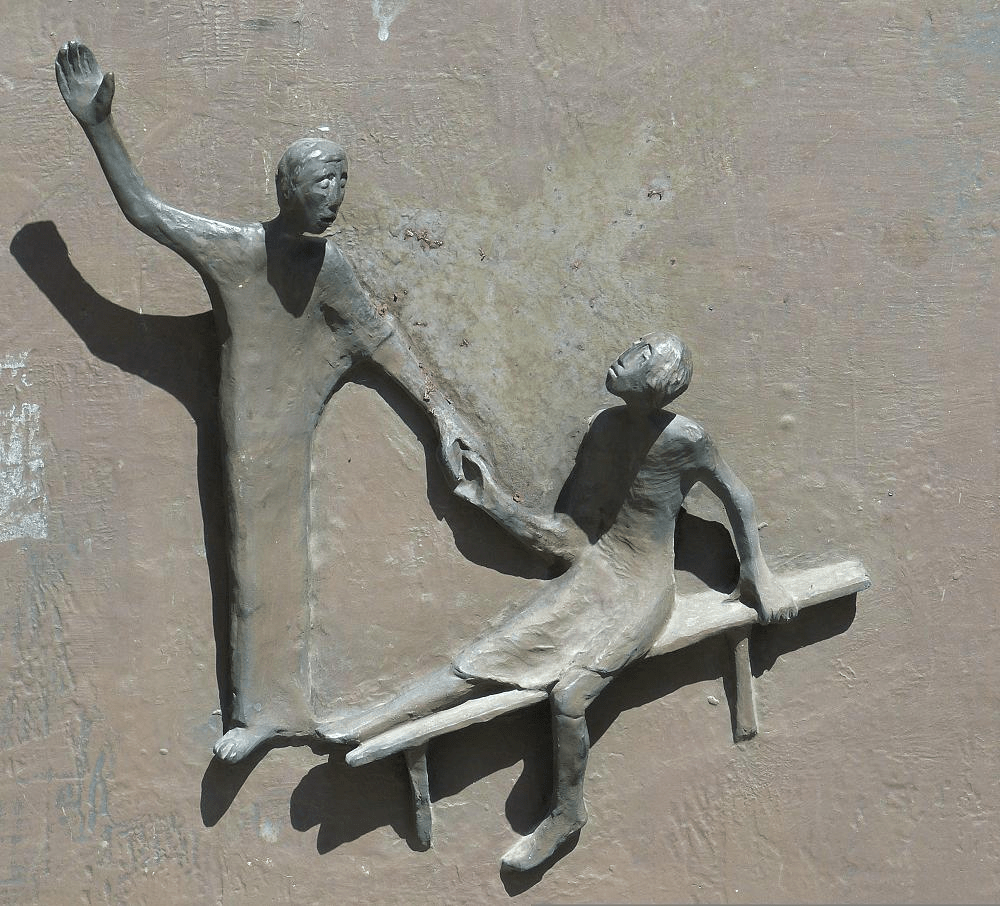
Samuel prays to the Lord on behalf of the people, by Bible Art

So Samuel said to all the Israelites, “If you are returning to the Lord with all your hearts, then rid yourselves of the foreign gods and the Ashtoreths and commit yourselves to the Lord and serve him only, and he will deliver you out of the hand of the Philistines.” So the Israelites put away their Baals and Ashtoreths, and served the Lord only.

Then Samuel said, “Assemble all Israel at Mizpah, and I will intercede with the Lord for you.” When they had assembled at Mizpah, they drew water and poured it out before the Lord. On that day they fasted and there they confessed, “We have sinned against the Lord.” Now Samuel was serving as leader of Israel at Mizpah.

When the Philistines heard that Israel had assembled at Mizpah, the rulers of the Philistines came up to attack them. When the Israelites heard of it, they were afraid, because of the Philistines. They said to Samuel, “Do not stop crying out to the Lord our God for us, that he may rescue us from the hand of the Philistines.” Then Samuel took a suckling lamb and sacrificed it as a whole burnt offering to the Lord. He cried out to the Lord on Israel’s behalf, and the Lord answered him.

While Samuel was sacrificing the burnt offering, the Philistines drew near to engage Israel in battle. But that day the Lord thundered with loud thunder against the Philistines and threw them into such a panic that they were routed before the Israelites. The men of Israel rushed out of Mizpah and pursued the Philistines, slaughtering them along the way to a point below Beth Kar.

Then Samuel took a stone and set it up between Mizpah and Shen. He named it Ebenezer, saying, “Thus far the Lord has helped us.”

So the Philistines were subdued and they stopped invading Israel’s territory. Throughout Samuel’s lifetime, the hand of the Lord was against the Philistines. The towns from Ekron to Gath that the Philistines had captured from Israel were restored to Israel, and Israel delivered the neighboring territory from the hands of the Philistines. And there was peace between Israel and the Amorites.

Samuel continued as Israel’s leader all the days of his life. (New International Version)

Faithfulness to God matters. One cannot worship the Lord by day, then have a moonlighting job with other gods.

The priest and prophet Samuel helped lead Israel to repentance, and thus, a restoration of right relationship with their God. His leadership made all the difference. Samuel was not like the previous priests of Eli and his sons; nor was he like anyone else who didn’t really know what they were doing.

Samuel performed the appropriate sacrifices correctly; interceded with God on behalf of the people; enabled them to achieve victory; and continually and carefully watched over everything. Samuel was a needed stabilizing force in Israel. He identified sin in the nation and dealt with it wisely. Samuel led them to do right.

I confess my iniquity; I am troubled by my sin.

Psalm 38:18, NIV

Godly sorrow brings repentance that leads to salvation and leaves no regret, but worldly sorrow brings death. (2 Corinthians 7:10, NIV)

Come near to God and he will come near to you. Wash your hands, you sinners, and purify your hearts, you double-minded. Grieve, mourn and wail. Change your laughter to mourning and your joy to gloom. Humble yourselves before the Lord, and he will lift you up. (James 4:8-10, NIV)

Today’s Old Testament lesson brings up important questions of acknowledging disobedience, ignorance, and guilt; and how we are to respond to it.

Whenever we say or do something that we ought not to, it’s like squeezing a big tube of toothpaste out; there’s no way you can get it back in.

I actually did that once when I was a little kid. I saw new tube of toothpaste in the bathroom and wondered what it would be like to squeeze out a big amount. So, I did. It was fun. I did it again, then again and again, until it was all gone.

Knowing that perhaps this toothpaste thing might be a problem, I made an artwork out of it. After I was done, I turned off the light, shut the door, and in my little four-year-old brain, hoped nobody would see it. But oh my, they did!

As we get older, and into adulthood, we discover that we have a capacity to do a lot worse than toothpaste escapades. When we sin, there’s no way to put everything back the way it was before. Everything has changed because of our actions (or inactions). And we cannot make it look better, or put a positive spin on it.

There needs to be repentance – a confession of sin, a coming to God, and letting grace and forgiveness have its way. This is the path to restoration in returning to God, in bringing relational connections together again.

Repentance means that we tell God what we did; and that we’re sad about it. Instead of running away, we run to God and admit our guilt. This, by no means, is easy; but it’s the only way to take care of the problem and to feel better about it. And the Lord won’t make us feel worse, but will help us, no matter what.

Everybody is sad when they are caught doing something bad. But there is a good kind of sad, and a bad kind of sad. The bad kind of sad thinks to self, “I’m so stupid; I can’t do anything right,” and punishes myself for the wrong. On the other hand, the good kind of sad helps us realize that we never want to do that thing ever again; and we look to Jesus to forgive us and be our example of what to do right.

Good leaders, like Samuel, assist us in this process with grace, sensitivity, humility, respect, and a forthright spirit.

Most merciful God, we confess that we have sinned against you in thought, word, and deed, by what we have done, and by what we have left undone. We have not loved you with our whole heart; we have not loved our neighbors as ourselves. We are truly sorry and we humbly repent. For the sake of your Son Jesus Christ, have mercy on us and forgive us; that we may delight in your will, and walk in your ways, to the glory of your Name. Amen.

The Servant of the Lord (Isaiah 42:5-9)

This is what God the Lord says—
the Creator of the heavens, who stretches them out,
    who spreads out the earth with all that springs from it,
    who gives breath to its people,
    and life to those who walk on it:
“I, the Lord, have called you in righteousness;
    I will take hold of your hand.
I will keep you and will make you
    to be a covenant for the people
    and a light for the Gentiles,
to open eyes that are blind,
    to free captives from prison
    and to release from the dungeon those who sit in darkness.

“I am the Lord; that is my name!
    I will not yield my glory to another
    or my praise to idols.
See, the former things have taken place,
    and new things I declare;
before they spring into being
    I announce them to you.” (New International Version)

For those who serve the God of Scripture, there is work to be done.

According to Scripture, people are created in the image and likeness of God (Genesis 1:26-27). As the only creatures on earth with the divine stamp of God’s image, humanity’s purpose is to reflect and work toward that which characterizes God:

  • Be holy because God is holy. That is, set apart your life for good and right purposes, and not for ill. Devote yourself to being above board in everything, and work for the common good of all persons.
  • Love one another as God has loved you. Since the Lord demonstrated a sacrificial and unconditional love toward you, so do the same for others. Love God. Love your neighbor.
  • Do justice because God is just. God is concerned that everyone on planet earth has what they need – both physically and spiritually – to live and thrive in this world. Ensure that people’s needs are met, without any prejudice or favoritism.

The servant of God has a mandate to be a covenant and light for people. Since God makes and keeps promises to people; and since the Lord is light without any darkness, so God’s servant is to embrace and embody a steadfast commitment to continually doing good.

We are meant to be a blessing to people on this earth – and not a curse. (Galatians 3:8)

I don’t have much stomach for fellow believers who think they are responsible to let people know how sinful they really are. Such supposed messengers end up puking the “good news” on others, often leaving people in such a bad state that they want nothing to do with religion.

Any sort of forceful verbiage, or manipulative gaslighting of others, does not in any way reflect the God whom I serve; I view such underhanded methods as inconsistent with Scripture. Besides, the Lord certainly doesn’t need any of us, as if God is dependent on people’s gospel witness.

Instead, the Lord graciously cuts us in on the benevolent and gracious divine action that is being accomplished in the world. That God allows me to be a mouthpiece is a privilege and a responsibility. So, I will steward that trust well by using words that build up and encourage, without verbally accosting another in the name of serving God.

In the ancient world, the poor often found themselves in prison through the inability to pay off a debt. Part of the servant’s work is to cancel debt, thus providing freedom and a further means to work and support family. For the Christian, this is an elementary part of our prayers:

And forgive us our debts, as we also have forgiven our debtors. (Matthew 6:12, NIV)

Those words of Jesus are meant to uphold the ethical teachings of the Law:

At the end of every seven years you must cancel debts… There need be no poor people among you, for in the land the Lord your God is giving you to possess as your inheritance, he will richly bless you, if only you fully obey the Lord your God and are careful to follow all these commands I am giving you today. For the Lord your God will bless you as he has promised, and you will lend to many nations but will borrow from none. You will rule over many nations but none will rule over you.

If anyone is poor among your fellow Israelites in any of the towns of the land the Lord your God is giving you, do not be hardhearted or tightfisted toward them. Rather, be openhanded and freely lend them whatever they need. (Deuteronomy 15:1, 4-8, NIV)

Holiness, love, and justice are done by paying attention to the neediest of persons around us. The Lord’s servant can bring light because God is against the darkness. And the reason debts are cancelled (both real economic and spiritual forgiveness) is so that the monetary poor, and the poor in spirit, are liberated.

God is attentive to the vulnerable and needy; it is the Lord’s will that no one lives under the oppression of debilitating debt.

The work of the humble servant brings dignity, honor, and respect to human beings, thus honoring God and showing to the world what sort of God the Lord is – a gracious and merciful God who has a zeal for justice and for right relations in society. The Servant of the Lord, the ultimate Servant, is described in this way by the prophet:

Of the greatness of his government and peace there will be no end. He will reign on David’s throne and over his kingdom, establishing and upholding it with justice and righteousness from that time on and forever. The zeal of the Lord Almighty will accomplish this. (Isaiah 9:7, NIV)

Our Father in heaven,
hallowed be your name.
Your kingdom come,
your will be done,
    on earth as it is in heaven.
Give us this day our daily bread,
and forgive us our debts,
    as we also have forgiven our debtors.
And lead us not into temptation,
    but deliver us from evil. Amen.

Why Are We Here? (Matthew 9:2-13)

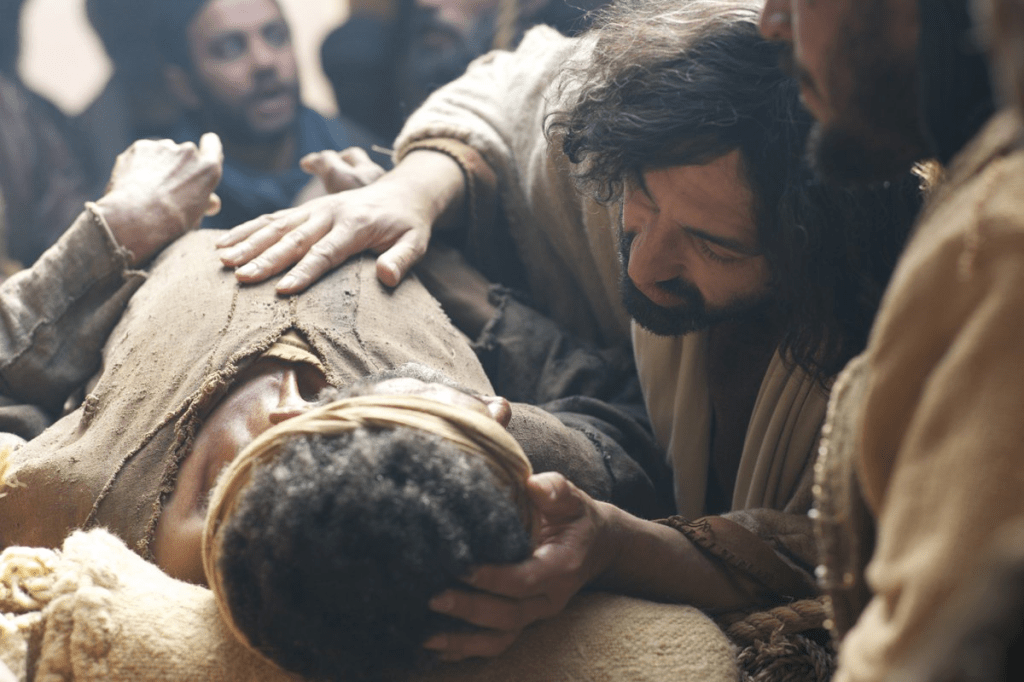
Jesus heals and forgives a paralyzed man

Some men brought to him a paralyzed man, lying on a mat. When Jesus saw their faith, he said to the man, “Take heart, son; your sins are forgiven.”

At this, some of the teachers of the law said to themselves, “This fellow is blaspheming!”

Knowing their thoughts, Jesus said, “Why do you entertain evil thoughts in your hearts? Which is easier: to say, ‘Your sins are forgiven,’ or to say, ‘Get up and walk’? But I want you to know that the Son of Man has authority on earth to forgive sins.” So he said to the paralyzed man, “Get up, take your mat and go home.” Then the man got up and went home. When the crowd saw this, they were filled with awe; and they praised God, who had given such authority to man.

As Jesus went on from there, he saw a man named Matthew sitting at the tax collector’s booth. “Follow me,” he told him, and Matthew got up and followed him.

While Jesus was having dinner at Matthew’s house, many tax collectors and sinners came and ate with him and his disciples. When the Pharisees saw this, they asked his disciples, “Why does your teacher eat with tax collectors and sinners?”

On hearing this, Jesus said, “It is not the healthy who need a doctor, but the sick. But go and learn what this means: ‘I desire mercy, not sacrifice.’ For I have not come to call the righteous, but sinners.” (New International Version)

“The church is a hospital for sinners, not a museum of saints.”

Abigail Van Buren (“Dear Abby”)

Why does the Church exist? Why did Jesus come to this earth? What are we supposed to be doing? Does Christianity make any difference in this world? Why are we here?

The Church is not on this earth solely for the benefit of Christians, any more than a hospital exists for the benefit of the doctors or insurance companies.

Rather, the Church is designed to extend the mission of Jesus through proclamation of good news with the restorative touch of grace. The Church is the community of the redeemed, gathered together for worship and encouragement, and then sent into the world to be the continuing presence of Jesus on this earth.

This mean that the Church’s calling is not to find others who can help them with their tithing and budget, or to keep the pews warm with fresh bottoms.

Some folks are not healthy. Some are sick physically, and others spiritually. Even more are emotionally brokenhearted. And then there are those who are sick-and-tired of being sick-and-tired.

Please know that Jesus came neither to condemn nor heap a pile of unrealistic expectations on us. Christ points us to the source of healing and transformation, and invites us to come to him. 

Conversely, there are many other people today who are healthy, spiritually alive, and have a good well-being. And they possess the opportunity to participate in ways that bring holistic healing to the world as Christians. The mission of Jesus is our mission, as well.

Jesus came to bring forgiveness and transformation. In today’s Gospel healing, it was a case where the person’s paralysis was both physical and spiritual. The paralytic found in Jesus healing of both body and soul.

The religious insiders observed the healing of the paralytic. Yet, they didn’t rejoice over it. Instead, they were hung up on Jesus claiming to be God. Although this may have been a hard truth to accept, Jesus labeled their response as evil – because of an inability to perceive the situation as a divine intervention. Since the religious insiders wrongly discerned who Jesus is, they wrongly interpreted the situation. 

It’s important to see Jesus as the Human One who extends compassion and forgiveness. If we fail to see this about Christ, we will get caught up in all kinds of silly matters concerning personal preferences and power plays, based in how we think things should go, rather than how God is shaking out things.

Jesus came to forgive our guilt and shame. Healing the body is good, but it’s not enough. Christ came to heal both the body and the spirit. At the heart of the human condition is spiritual brokenness, and Jesus wants to remove the obstacle of sin and create a new healthy society. This is a radical vision which seeks to encompass all persons – which means Jesus touched many people overlooked by others.

Jesus came to call the despised people of society, the “sinners.” He called Matthew, a tax collector. Tax collectors were hated. They were corrupt characters who extorted money from innocent people. And furthermore, Jesus had dinner with Matthew, along with all of his unsavory buddies. This kind of behavior by Jesus was deeply offensive to upstanding citizens.

However, Jesus did not back down, saying that it’s not the healthy who need a doctor, but the sick. And he backed up his social actions with Scripture by encouraging offended folks to meditate on what the biblical phrase, “I desire mercy, not sacrifice.” (Hosea 6:6)

It is possible to engage in outward rituals of worship, do all the right things, fulfill duty, yet still miss the heart of what God wants for humanity. Mercy is what God wants. Jesus knew this. So, Christ entangled himself with sinners to bring spiritual healing and restoration.

If we want to see God deliver people from their unhealthy situations, we must entangle ourselves with them, into complicated lives that are not pretty, with persons who have been tainted by sin. 

Lots of people are in awful predicaments. Christians, like their Lord, will need to get their hands dirty and their feet wet to extend Christ’s ministry of mercy and forgiveness.

The gospel was never intended to be proclaimed from afar, but up close and personal. The merciful mission of Jesus requires the following three activities:

  1. Intimacy with Jesus. Engaging in the spiritual disciplines of prayer, giving, fasting, reading, and meditating on Scripture. These practices help us to know Christ better and how to respond with mercy.
  2. Intimacy with fellow believers. We are hard-wired by God for community. Superficial relationships only provide superficial community. Christians need to help one another with spiritual growth, and to hold one another accountable for the mission of Christ.
  3. Intimacy with “sinners.” This world is filled with sick, needy, hurting, and lonely people who are locked in unhealthy patterns of living. They need a merciful change of life that comes from the merciful Jesus acting through merciful Christians. 

Mercy, not judgment, is at the heart of all change. For things to be different, we must be acquainted with mercy.

Most merciful God, we confess we have sinned against you in thought, word, deed, and neglect. We have not held fast to your commandments and have strayed from your teachings. We turn away from self-centered actions and pride. For the sake of your Son, Jesus, have mercy on us and forgive us so that we are released from all sinful obstacles. Empower us with your wisdom, revelation, and discernment so that we might be your merciful hands, feet, and words to one another and those who do not yet know you. Amen.

Selective Memory (Psalm 25:1-10)

To you, O Lord, I lift up my soul.
O my God, in you I trust;
    do not let me be put to shame;
    do not let my enemies exult over me.
Do not let those who wait for you be put to shame;
    let them be ashamed who are wantonly treacherous.

Make me to know your ways, O Lord;
    teach me your paths.
Lead me in your truth and teach me,
    for you are the God of my salvation;
    for you I wait all day long.

Be mindful of your mercy, O Lord, and of your steadfast love,
    for they have been from of old.
Do not remember the sins of my youth or my transgressions;
    according to your steadfast love remember me,
    for the sake of your goodness, O Lord!

Good and upright is the Lord;
    therefore he instructs sinners in the way.
He leads the humble in what is right
    and teaches the humble his way.
All the paths of the Lord are steadfast love and faithfulness,
    for those who keep his covenant and his decrees. (New Revised Standard Version)

I admit there are things from my past I am neither proud of nor happy about. Yet, I give praise and thanksgiving to the Lord God Almighty because of divine selective memory. 

“I will forgive their iniquity and remember their sin no more.”

God (Jeremiah 31:34, NRSV)

God remembers according to the divine nature and God’s character of merciful grace and steadfast love. I’m glad the Lord doesn’t act based upon the stupid sins of my younger yesteryear. God freely chooses to forgive and has made the means available for us to experience daily cleansing and victory through the Lord Jesus Christ.

Memory is a major theme in the Old Testament. The importance of remembering pops up again and again throughout Holy Scripture. The way in which our minds and hearts remember past events is of great spiritual significance. 

Remember that you were a slave in the land of Egypt, and the Lord your God brought you out from there with a mighty hand and an outstretched arm; therefore the Lord your God commanded you to keep the Sabbath day. (Deuteronomy 5:15, NRSV)

“And remember, I am with you always, to the end of the age.”

Jesus (Matthew 28:20b, NRSV)

Remember Jesus Christ, raised from the dead, a descendant of David—that is my gospel, for which I suffer hardship, even to the point of being chained like a criminal. But the word of God is not chained. (2 Timothy 2:8-9, NRSV)

We are not to keep dwelling upon and remembering the former indiscretions of ourselves or others. To continue ruminating on a foolish decision or a poor choice only erodes our ability for resilience and perseverance.

The fact of the matter is that God does not hold those past regrets over our heads, and so, neither are we to do it. Forgiveness isn’t only for others; it’s meant to be directed to ourselves, as well. The ability to forgive enables us to leave the past in the past, without belching it up every day and chewing on it, like a cow with her cud.

Sometimes we are prone to remember the things we ought to forget, and forget those things we really should remember. Before us and in our minds continually is to remember the great works of God, especially in redemption. 

Forgetting what lies behind and straining forward to what lies ahead, I press on toward the goal, toward the prize of the heavenly call of God in Christ Jesus. (Philippians 3:13b-14, NRSV)

What we have done or failed to do, and what has happened to us in the past, is not the real problem; the most prescient issue right now is how you and I interpret those past events.

Today we can choose to remember the way God remembers. The health of all our relationships is dependent on this ability. Everyone on planet earth encounters difficult people, challenging relationships, obnoxious neighbors, and hurtful family members. Paying attention to our memory and how we choose to remember can be a significant part of interacting with others. 

I do not cease to give thanks for you as I remember you in my prayers, that the God of our Lord Jesus Christ, the Father of glory, may give you a spirit of wisdom and revelation as you come to know him. (Ephesians 1:16-17, NRSV)

If we like it that God has shown grace to us, then the least we can do is let that same grace flow from us to others – and to ourselves – we who neither deserve it, nor expect it. 

Let’s give thanks to the Lord, for God is good in forgiving sin and showing infinite mercy. And let’s express our gratitude through selfless words and acts of grace which reflect the nature of God.

Gracious God, you do not hold grudges; you always act according to your own loving character. Even though you could have condemned me, you saved me. Despite the fact that I have fallen short of your glory, you delivered me. I today remember your mighty redemptive deeds accomplished in your Son, my Lord, Jesus Christ, who with you and the Holy Spirit are one God, now and forever. To you, blessed Holy Trinity, I give my abiding praise and thanksgiving. Amen.