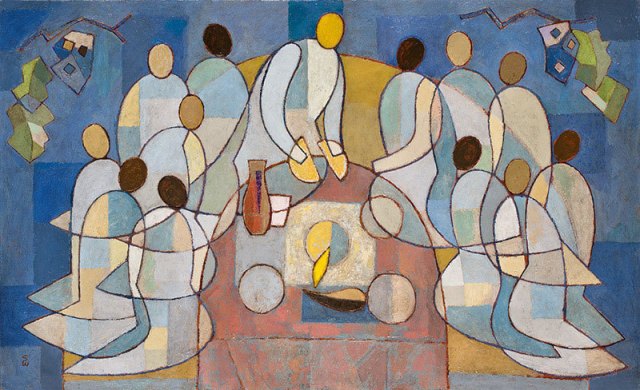
The Community of the Redeemed

Devoted to Fellowship

It seems everyone has their own ideas about church – what it is and what it should be – whether one needs to be part of a local congregation, or not. No matter the view, we all intuitively know that:

We are created and hardwired for community.

The book of Acts in the New Testament of the Bible presents Christian community as the primary means of becoming spiritually formed (Acts 2:42-47). And that community dynamic revolves around Jesus Christ. From a biblical perspective, Christians are not just any old community and not just some random benevolent organization. Christians together are the Church. They are the Community of the Redeemed, purchased from the slave market of sin with the blood of Christ, and devoted to knowing Jesus and making him known.

The early church possessed a group dynamic second to none. To be sure, they had their issues (e.g. antagonisms between Jews and Greeks, and bogus converts attracted by the power). Yet, problems are to be expected because the Light is always going to attract some bugs.

The early church consisted of new converts, having responded to the Apostle Peter’s preaching about Jesus. The transformation of these early followers of Jesus is nothing less than amazing. Many of these very same people had applauded the murder of Jesus. However, after Christ’s ascension, the people realized they were complicit in the death of Jesus and were cut to the heart and changed their minds. In a mass conversion, thousands embraced the grace of God in Christ. They quickly became a group of Christians:

Committed to learning more and more about Jesus; sharing their burdens and blessings together; enjoying communion and eating together; praying with and for each other, confessing sin and seeing new life and fresh spiritual health come in amazing ways.

Two major commitments of the new believers were the basis of the church: They devoted themselves to the apostles’ teaching and to the fellowship. Within that close fellowship were firm undertakings to eat and pray together. It is no wonder this curious bunch of people became noticed. After all, sharing food and providing prayer are compassionate activities. In a world starved for basic human kindness, the believers’ attention to the feelings and needs of others must have been a respite to the people around them.
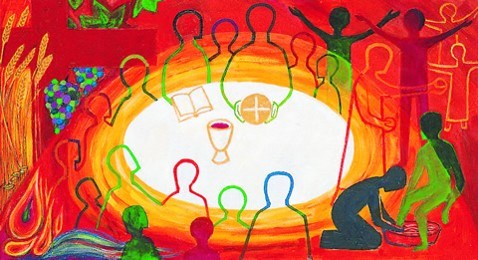
Devoted to One Another

The Christians were hungry for instruction. They craved teaching and fellowship so much that they met every day. They gathered in the Jewish temple, and in homes. That reality of the church so long ago is a clue for the modern church that both large group meetings and small group gatherings are paramount for healthy spiritual growth and development. The gatherings of the early Christians were characterized by a deep engagement of Scripture with one another and of heartfelt participation in fellowship.

Mutual learning and sharing are for everyone – not just for a select few, or for extroverts.

That is why throughout the New Testament the metaphors used to describe the Church emphasize its communal nature. Church as the Body of Christ (biological metaphor), the Temple of God (building metaphor), and as the army of the Lord (battle metaphor) are all images that emphasize the redeemed community’s vital need to work, worship, and have a wide reach together. Indeed, true discipleship happens because of life together.

Metaphors are important; they pack meaning to ideas. So, it is important to be aware of church metaphors which emphasize only the individual and ignore the community. For example, imagining the church as a gas station where you fill up your spiritual gas tank when you’re running low neglects the community. Get a good sermon and some energizing worship and hopefully you will make it through the week to another service without running out of gas. For other folks, the church is imagined as a movie theatre – which disregards our contribution to community. The emphasis is on a place that offers an hour of escape, and leaving your problems at the door, with the goal of coming out of church feeling better than when you came in. Or some might imagine the church as a pharmacy – a place where you can fill a prescription which will deal with your pain in a slip-in and slip-out sort of way. Others might opt for imagining the church as a big box retailer – a place that “offers the best products in a clean and safe environment for you and your family,” along with a marketing model of evangelism: “Come to our church; we offer great service and great programs at a great low price.”

Please, don’t hear what I’m not saying. The church, without question, ought to serve and meet individual needs. And there are times and seasons of life when all an individual can do is consider their own spiritual and emotional health. The problem arises when we only ever function as independent persons who have no intention of being interdependent with others through living the Christian life together. The early church was faithful to learning the Word of God together. They committed themselves to fellowship with one another. They practiced hospitality. The new Christians prayed with each other every day.

The early church’s teachable spirit along with an emphasis on fellowship brought amazing results. Everyone was filled with awe of God. Everyone saw and experienced miraculous events. Everyone looked out for the common good of all. Everyone was glad and content with their simplicity of life. Everyone praised God. Everyone enjoyed the favor of the non-Christians around them. And, all this behavior brought numerous people to faith. This was a group who demonstrated deliverance from empty lives and presented an alternative way to live – a life filled with receiving grace and giving grace to others.

Stained Glass Window

To have that kind of group dynamic, the path the church took was a dedication to Holy Scripture and Christian community every day! Indeed, for healthy churches everywhere, and in all times, congregations continually exhibited courage and vulnerability. The word “fellowship” in Scripture (κοινωνία – pronounced “coin-o-nee-a”) literally means to be “yoked together.” Just as two oxen in a yoke must work together and plod forward being mindful of each other’s steps, so Christians have the invitation to yoke with Jesus and learn from him. Gentleness and humility are sorely needed in this polarized and often petty world we live in. So, the loving participation of fellowship is more than important and influential – it is vital and urgent.

The earliest Christians are portrayed as a group of people who intensely desired the apostles’ teaching and could not get enough of sharing life together as followers of Jesus. They were such curious learners and had such a depth of love and concern for one another that the poor among them knew no shame, and the rich knew no pride. It was a community where the uneducated felt open and free to discover more about Jesus, and the leadership graciously and humbly gave instruction that they had gained from being with Christ.

The type of community life which the early church had might seem to be an ideal which is not possible today. I wholeheartedly disagree. Because I myself have experienced such a group dynamic in my own life. In my college days there were dozens of us who became Christians in a short period of time, much like in the book of Acts. We were a rag-tag group of new believers who deeply hungered for spiritual food and craved the fellowship of one another. We met every day in dorm rooms and cafeterias, at the student union and in the library, and even sometimes in off-campus bars.

Everything we had we shared with each other – both our possessions as well as our hearts and lives.

And there was a solid two year stretch in which the Lord added to our numbers daily those who were being saved. We were attached to our Bibles as if they were a fifth appendage on our bodies. There was no separating us from each other. We needed one another’s Christian fellowship and spiritual support every day. In fact, we needed one another so much that we all ended up marrying each other so that the fellowship did not end.

Oh, my friends, how much we need one another! How much this old fallen world needs a yoke that is gentle, kind, gracious, and loving! Christian disciples are formed and shaped in the context of community. The collective conversations of our experiences and insights; the use of our hands and feet to work together; and, the sharing of our resources and of our time are all necessary for becoming spiritually mature in Christ and blessing the world. Confidence is gained through practice, and the spiritual practice of community is what’s needed.

May the group dynamic and the results of those earliest believers so long ago be our communal experience, as well, as we devote ourselves to the teaching and to the fellowship.

A Conversation with Jesus

JesusEmmausFriends

If we want to know what worship truly looks like, the story of the two men talking with Jesus along the Emmaus road shows us (Luke 24:13-35). Worship is not just us talking, praying, and singing to God. Worship is meant to be a conversation between us and God – a dialogue in which we hear from God and reply to him. Worship, then, is both God’s revelation and the people of God’s response. 

The term “liturgy” describes what we do in worship.  Liturgy is a Greek term that means “the work of the people.”  Every church has a liturgy.  All gatherings of believers have some sort of prescribed ways of moving through their worship. Liturgy is not only a reference to more traditional forms of worship.  Contemporary styled worship may have less liturgical elements to it, but it still has a liturgy of several praise and worship choruses (in which the people know when to stand and sit), and an extended time of preaching. 

After Christ’s resurrection, it was Jesus who approached the men.  In this divine movement of liturgy, God is always the initiator of salvation and worship.  If it were not for God approaching us, most fully expressed in Christ’s incarnation of coming to this earth, then we have no hope.  Humanity in the vice grip of sin needs someone to help. So, when we begin worship, it is God himself who starts the conversation.  

Liturgy bumper sticker

As the two men continued with their conversation, Jesus engaged them in the Scriptures. He went to the Old Testament and explained to them what it had to say about the Christ. They heard from God. To understand Holy Scripture, we too, need to walk with Jesus and converse with him. Liturgy exists to encourage a relationship between us and God. It is designed to create space whereby God and God’s people can be in a meaningful dialogue with each other. 

Maybe it goes without saying, this means we must listen well. We cannot listen well if we our minds are wandering, and our hearts are somewhere else. Sometimes we intentionally make our lives overwhelmingly busy so that we either cannot or do not have time to listen to God. We might create noise and keep moving because we are much too uncomfortable with silence. We may not want to hear what is in our hearts. Getting to the place of relaxing enough to listen can seem, for some, like a daunting task. This is not a plea for you to do more (i.e. “hear more, listen better!”). It is really giving you permission to do less so that you can enjoy a conversation with Jesus.  A good place to begin is to practice the Sabbath, and use the day, not just the morning, to connect with God. 

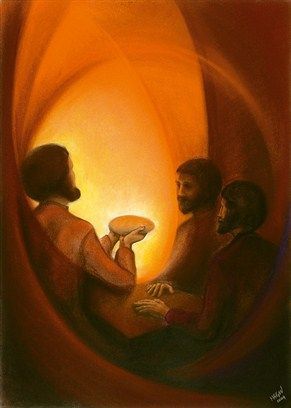
Jesus became known to the two Emmaus friends through table fellowship.  It was at the table that the two men’s eyes were opened to who Jesus really was.  This would not have happened unless they were in meaningful conversation with Jesus.  Then, after Jesus left them, the two men were inspired in their going.  They went out as witnesses telling others of what they had seen and heard from their conversation with Jesus. 

Road to Emmaus by He Qi
“Road to Emmaus” by He Qi

In this liturgical rhythm, this conversation between us and God, the good news of Jesus is presented.  God first acts by seeking and desiring fellowship with us; God sent his Son, the living Word, to restore the fractured relationship – Jesus is the divine Word who has accomplished the restoration between us and God.  This revelation, this realization of what God has done for us in Christ begs a response from us. We praise him for wanting fellowship with us. Having glimpsed how holy God is, we realize how sinful we are, and, so we confess our sins to him. God, in his grace, forgives us our sin and assures us of our pardon. In our gratitude for that grace, we joyfully listen and live according to his Word. And, so, back-and-forth we go, with the liturgy proclaiming the gospel to us in a divine dialogue that blesses both us and God. 

Now, if you think about it, all of life is liturgical. We each have routines, habits, and life patterns that shape how we get things done. For example, in the first year of marriage, my wife and I experienced a clash of liturgies.  Her family had their ways of doing things, and my family had theirs.  I quickly learned what a proper liturgy was for folding towels. 

A worship liturgy is neither only for Sunday morning nor to be always within a church building. We can deliberately build spiritual rhythms and spiritual conversation throughout each day in our homes, at our jobs, and throughout our daily lives. For example, our daily call to worship is when we wake up, realizing that we have been called into wakefulness to enter praise for a new day. My own personal daily prayer when I get out of bed is:  

“Almighty God, thank you for bringing me in safety to this new day. Preserve me with your mighty power that I may not fall into sin, nor be overcome by adversity. In all I do today direct me to the fulfilling of your purposes through Jesus Christ my Lord.”   

Morning Bible

As we go through our day, we can recognize sin when it happens, and be quick to confess it and accept God’s forgiveness. We can be intentional about hearing from God, by creating space and setting aside time for reading Scripture. When our heads hit the pillow at night, we receive the blessing of God in sleep, until a new day begins. 

Whatever way we go about it, we have the privilege of developing spiritual rhythms and habits of approaching God, listening to God, and responding to God. And, we need to acknowledge that something can trip us up in this attempt to live a godly life. There are other secular liturgies that vie for our attention and our hearts. We just might be influenced as much or more by a different competing liturgy. For example, the shopping mall’s version of liturgy is to gather shoppers and develop practices of buying in us.  If we shop because we feel that we would have a better life with new clothes, or more stuff, we might have a competing liturgy working in our lives. If we feel we need to shop because there is something we lack in our personhood, as if we are not enough, then we just might have another liturgy that wants our loyalty over God. 

The point is not to avoid shopping malls (you have to anyway!); the point is to realize that there are competing loyalties to God’s kingdom, and that we are to be shaped as followers of Jesus as our primary commitment in life.  Our lives are to revolve around the person and work of Jesus, and so we must intentionally cultivate liturgical practices in our daily lives and train ourselves to be godly. 

Christianity is not merely a system of beliefs; it is a way of life.  The kind of habits that we develop in that life will determine what kind of disciples we will be.  So, we must choose well the kinds of routines that we need in order to walk well with Jesus and carry on a delightful conversation with him. 

Philippians 4:10-20

            In the English language, the words “you” and “your” can either be singular or plural.  One must determine by the context which it is.  But in the language of the New Testament, Greek, this is not the case.  We clearly know which words are singular and which are plural.  It is important to know that in the book of Philippians, all the “you” pronouns used are plural.  This is significant because the theme of unity and solidarity runs powerfully and affectionately through this letter of Paul.
 
            The entire Philippian church, not just an individual or two, shared in Paul’s troubles with him.  They partnered with him through financial resources, prayer, and ministry.  Paul was quite confident that every need the Philippians encountered would be supplied by the riches of God because they had learned a valuable lesson from Paul, and discovered a vital lesson about their church.  From Paul, the Philippians were taught that the practice of contentment in all circumstances would bring unity, not division, since it would ease normal anxieties.  What the Philippians uncovered about themselves is the seeming paradox that through the practice of giving they become rich. 
 
            We are not to be islands only operating at the level of individuation.  We are meant to know the blessing of partnering and working together in the unity of the gospel.  Learning contentment and generosity go hand-in-hand.  Hoarding actually creates anxiety, whereas a collective generous spirit leads inexorably toward satisfaction and joy.  If we want to be free of division and being constantly uptight, then we must be wildly generous.  Go ahead, try it; you’ll like it.  Be generous with your money, generous with your words of encouragement toward others, and generous with your gratitude to God.  Find out whether or not this changes your level of contentment with life.
            Generous God, your storehouse of grace and mercy is infinite and unending.  Help me to partner with you in a manner that my generosity flows in the same way that yours does so that Jesus Christ is glorified, and his church is edified.  Amen.

The Necessity of Community


What stands out to me about the very earliest believers in Jesus was their amazing transformation (Acts 2:38-47).  Only 53 days earlier these same people had applauded the murder of the Son of God.  But they realized their terrible error, changed their mind, and turned from their sin and embraced the grace of God in Christ.  They became a group of Christians committed to learning more and more about Jesus; sharing their burdens and blessings together; enjoying communion and eating together; praying with and for each other, confessing sin and seeing new life and fresh spiritual health come right in front of their faces.
 
            They devoted themselves to the apostles’ teaching and to the fellowship.  This is a picture of a group of Christian disciples who were hungry for instruction.  They were so hungry for teaching and fellowship that they met every day.  They met in the temple (large group), and in homes (small groups).  Both large group meetings and small group gatherings are necessary for healthy spiritual growth and development.  In other words, this is no superficial once-in-a-while get together; this is a deep devotion and commitment to learning Scripture together, and sharing life together in fellowship.

 
            A simple observation of the text of Acts chapter 2 is that all the pronouns are plural; those pronouns include everyone – not just a select few.  This is why throughout the New Testament the images used to describe the church emphasize its communal nature.  Church as the Body of Christ, the temple of God (building), and as the army of the Lord are all images that require the community of the redeemed working and worshiping and reaching out together in order to glorify God.  True Christian discipleship does not happen apart from life together.
 
            Therefore, we need to be aware of church images that emphasize only the individual and not the community.  For example, seeing the church as a gas station where you fill up your spiritual gas tank when you’re running low ignores the community. Get a good sermon and some energizing worship and hopefully you will make it through the week to another service without running out of gas.  For other people, the church may be more like a movie theatre, a place that offers an hour of escape, and leaving your problems at the door, with the goal of coming out of church feeling better than when you went in.  Or maybe some might view the church as a kind of drug store – a place where you can fill the prescription that will deal with your pain.  Yet others might opt for seeing the church as a big box retailer – a place that offers the best products in a clean and safe environment for you and your family. The church should offer great service and programs at a low price.
 
            Certainly, the church ought to serve and meet individual needs.  The problem arises when we only function as autonomous persons who don’t really need others in order to live the Christian life.  The early church was committed to learning the Word of God together; they committed themselves to fellowship, to practicing hospitality with each other and praying with each other every day.
 
            The results of those two primary communal commitments of learning and fellowshipping on a daily basis was that:  everyone was filled with awe (the fear of the Lord); everyone saw and experienced signs and wonders (miracles); everyone had everything in common (they met one another’s needs – the fact that they sold things implies personal property, not communism); everyone was glad and content with their simplicity of life (“sincere hearts” means they lived simply, and were not encumbered with a lot of stuff and their schedules and calendars overflowing); everyone praised God; everyone enjoyed the favor of the non-Christians around them; and, the result of all this behavior was that people were being saved left and right from their sinful, empty ways of life apart from God.
 
            If any of us today want to have that kind of community dynamic then we must be willing to devote ourselves to biblical teaching and Christian fellowship every day!  No church can become or remain healthy apart from Christian community; it requires doggedly embracing the commitments of learning Scripture, and eating and praying together through being yoked in fellowship.  Being part of a small group that meets once a week, for the purpose of learning more about the Bible and developing community is not really optional equipment for the follower of Jesus.  It is a small thing when you put it in the perspective of the early church meeting every day
 
            That early community had such a curiously learning and deeply loving dynamic that the poor among them knew no shame, and the rich knew no pride.  It was a community where the uneducated felt free to drink in knowing more about Jesus, and the leadership graciously gave instruction that they had gained from being with Christ.
 
            In her book Traveling Mercies, Anne Lamott shares a story she once heard from her minister that illustrates the necessary presence of others in our journey of faith:  “When my pastor was about seven, her best friend got lost one day. The little girl ran up and down the streets of the big town where they lived, but she couldn’t find a single landmark. She was very frightened. Finally a policeman stopped to help her. He put her in the passenger seat of his car, and they drove around until she finally saw her church. She pointed it out to the policeman, and then she told him firmly, ‘You could let me out now. This is my church, and I can always find my way home from here.’”  Lamott further writes:  “And that is why I have stayed so close to my church—because no matter how bad I am feeling, how lost or lonely or frightened, when I see the faces of the people at my church, and hear their voices, I can always find my way home.”


            The church, the Body of Christ, needs you.  The community of the redeemed needs your gifts and abilities, your presence and wisdom.  Disciples are made, formed, and forged in the context of community.  The sharing of your experiences and insights, as well as your hands and feet, are necessary for being spiritually developed in Christ.  Confidence is only gained through practice, and the spiritual practice of community is what is needed.  May the results of that early congregation be our collective experience, as well, as we devote ourselves to the teaching and to the fellowship.