Acts 4:23-31 – Why Not Us?

Hear My Plea by Rochelle Blumenfeld

The apostles Peter and John were arrested for preaching the good news about Jesus. After warning and threatening them to stop doing this, the ruling council of the Jews released them. This was the apostles’ response….

On their release, Peter and John went back to their own people and reported all that the chief priests and the elders had said to them. When they heard this, they raised their voices together in prayer to God. “Sovereign Lord,” they said, “you made the heavens and the earth and the sea, and everything in them. You spoke by the Holy Spirit through the mouth of your servant, our father David:

“‘Why do the nations rage
    and the peoples plot in vain?
The kings of the earth rise up
    and the rulers band together
against the Lord
    and against his anointed one.’

Indeed, Herod and Pontius Pilate met together with the Gentiles and the people of Israel in this city to conspire against your holy servant Jesus, whom you anointed. They did what your power and will had decided beforehand should happen. Now, Lord, consider their threats and enable your servants to speak your word with great boldness. Stretch out your hand to heal and perform signs and wonders through the name of your holy servant Jesus.”

After they prayed, the place where they were meeting was shaken. And they were all filled with the Holy Spirit and spoke the word of God boldly. (NIV)

The early believers in Jesus turned to God in a time of persecution. They found comfort in how God had worked in the past. The ancient church claimed the strength to carry on with speaking about Christ in their everyday lives. When they heard about threats against the apostles, the believers did not get angry or upset about how terrible things were. Instead:

The church decided to concentrate on corporate prayer together.

God is going to do what God is going to do. No government, nation, institution, group of people, or individual person can thwart God’s agenda for the church and world. God is sovereign over everything. We are not. Our place is to participate in God’s agenda through the ministry of prayer and speaking the word of God.

God acted in the past, on behalf of those first believers who came to Jesus and worshiped him with all their hearts. God is still transforming lives. It happened in ancient Jerusalem, throughout the history of the church, and in places today around the world. It can also happen with us.

Prayer is like breathing – inhaling more of God and exhaling less of me. Prayer takes the form of first remembering what God did in the past. Then, we pray specifically for our current situation which connects to the larger purposes of what God is doing. All the while we anticipate God will hear and act, just as has been done throughout history.

Remembrance is an important dimension to biblical prayer. Memory is necessary because we have a tendency toward forgetfulness. The older we get the more we tend to forget (probably because we have so much to remember!). So, continually rehearsing what God has done keeps us grounded in Scripture and tethered to what God can do now.

Remembering God’s saving actions and finding our own personal stories in the grand story of redemption helps us to pray in biblical ways.

The prayer of the early believers was a rehearsal of God’s mighty reputation, from creation to King David, to the redemptive events of Jesus. They reminded God of when, in the past, there was divine intervention. The church collectively quoted Psalm 2 about the Messiah. That psalm declares how the nations of the earth plot in vain because the Lord is the One who shall prevail over every hard circumstance. 

God bends each malevolent action toward the redemption and transformation of humanity. God will work out benevolent plans and purposes, even using people who have no acknowledgment of God. God is not surprised by our troubles and our tough situations.

God is never frustrated by people acting badly, because divine providence and guidance is in control, even if we cannot always perceive it or see it in the moment.

Remembering and rehearsing what God has done in the past helps us realize that, during any trouble, God is in control and will accomplish good plans on this earth. The prayer of the believers in Acts made the connection between what God has done and what they needed.

Photo by Pixabay on Pexels.com

Interestingly, the believers did not pray for relief from oppression or for God to judge their persecutors. Instead, they prayed for boldness to speak the word of God in the middle of their trouble. They rightly discerned that they needed to pray for courage to speak about Jesus. So, the church prayed for God to act in power, for God’s Word to go forth, and for Christ’s Name to be glorified.

God’s response to the prayer was immediate. The place where the church was praying shook. God did exactly what they asked for – filling them up with the Spirit, so that they spoke boldly about Jesus. Just as God empowered people for service in the past, so it was done in the present. What’s more, God will empower us with the same courage.

It is completely normal to simultaneously yearn for bravery while being afraid of getting a prayer for boldness answered. This is more than trying to overcome feelings of awkwardness or shyness. For the early believers, a very real and immediate danger to speaking up about Jesus was present.

It seems to me we need more people who know how to ask good questions and have the patience and attention to listen well and respond thoughtfully. It does no good to simply dispense answers to questions people aren’t asking. Speaking about Jesus does not mean making spiritual cold calls on strangers. And it certainly doesn’t involve being obnoxious or acting like a spiritual pester pup.

Discussing Jesus mostly means speaking casually, one-on-one, with a friend, co-worker, neighbor, or family member you already know. Too often we might try to fly under the radar and avoid people because we think talking about Jesus is going to be too hard, or out of our league.

Confidence and courage are not telling people what they ought to believe. It is rather like sharing a precious gift with someone. It begins in relationships with people we care about and extends to a relationship with God. It is about discovering God together, and not arm-twisting others to personal ethics or churchgoing.

Yet, it may still all sound too scary. So, maybe we start with this: “Tell me what’s going on.” Then listen. After listening, say, “I’ll pray for you.”  The next time you encounter the person, ask how that situation went.  Express that you’ll pray again. Keep doing it and watch what God will do through you.

When we pray for boldness, and courageously make ourselves available to God, then we are living sacrifices. This is our spiritual act of worship. (Romans 12:1-2) Who knows? Why not here? Why not now? Why not us? After praying, we might find our meeting places shaken, lives transformed, and everyone filled with God’s Holy Spirit.

God almighty, as you sent the Son, send us into the world with your compelling love. Help us by means of your Spirit, to share your good news of love, forgiveness, justice, peace, compassion, and care. Revive your Church, o Christ. Gracious God, work everywhere reconciling, loving, and healing your people and your creation. Open our eyes to your mission in the world. Send us to serve with Christ, taking risks to give life and hope to all people and all your creation. Amen.

Acts 2:14-24 – From Flaky to Faithful

Preaching of the Apostles (crayon on paper) by Peter Gorban, 1990

Peter stood up with the Eleven, raised his voice and addressed the crowd: “Fellow Jews and all of you who live in Jerusalem, let me explain this to you; listen carefully to what I say. These people are not drunk, as you suppose. It’s only nine in the morning! No, this is what was spoken by the prophet Joel:

“‘In the last days, God says,
    I will pour out my Spirit on all people.
Your sons and daughters will prophesy,
    your young men will see visions,
    your old men will dream dreams.
Even on my servants, both men and women,
    I will pour out my Spirit in those days,
    and they will prophesy.
I will show wonders in the heavens above
    and signs on the earth below,
    blood and fire and billows of smoke.
The sun will be turned to darkness
    and the moon to blood
    before the coming of the great and glorious day of the Lord.
And everyone who calls
    on the name of the Lord will be saved.’

“Fellow Israelites listen to this: Jesus of Nazareth was a man accredited by God to you by miracles, wonders and signs, which God did among you through him, as you yourselves know. This man was handed over to you by God’s deliberate plan and foreknowledge; and you, with the help of wicked men, put him to death by nailing him to the cross. But God raised him from the dead, freeing him from the agony of death, because it was impossible for death to keep its hold on him. (NIV)

In the New Testament Gospels of the Holy Bible, the Apostle Peter was a flake. He sometimes got it, and sometimes didn’t. Peter could discern Jesus was Messiah, but then would turn around and refuse that Christ had to die on a cross. He would get bold and walk on water, then, end up falling short and needing help from drowning. Peter stood tall for Jesus, and then denied him three times.

However, following the Gospels in the Acts of the Apostles, Peter is a completely changed man. He now gets it. He is brave. He confesses Christ with confidence and boldness. And, while the reader might be waiting for the other shoe to drop yet again, all the while Peter does not falter, flinch, or back down. Alright, Peter, way to go!

So, what is the difference between the Gospels and Acts with Peter? Why is there such a turnaround from flaky to faithful? The Scriptures make it plain: The Holy Spirit comes upon Peter. And he is never the same again. Everything falls into place for Peter. He proclaimed the life and death of Jesus in such a way that thousands changed their way of thinking, as well as their way of life, and placed their faith and hope in Christ as Savior and Lord. Not a bad day’s work for a former fisherman.

Peter’s message was pointed and straightforward: God raised Jesus up, forever changing the nature of death. Peter was dogmatic about stating that it wasn’t even possible for death to get a grip on Jesus. Oh, death thought it had him, the Grim Reaper believed he had Christ nailed to death for certain. Not so. The grave could not contain the immense and incredible power of divine love for humanity.

Inherit the Mirth

If it was impossible for death to keep its grip on Jesus, then there is absolutely nothing that can deter Jesus or hold him back from accomplishing what he wants to accomplish. Flaky believers are not going to frustrate Jesus or upset his plans; he’ll just send the Holy Spirit. 

We too often imprison ourselves in self-made spiritual jail cells, flaking-out in the Christian life, sometimes getting it right and once-in-a-while hitting upon some right combination we can’t explain, like a golfer who hits an amazing shot but can’t reproduce it no matter how hard he tries. The truth is: Jesus has conquered sin, death, and hell. By faith, we have forgiveness of sins in Christ and have the way opened to a new life in the Spirit. It isn’t a secret; it is a new reality.

The season of Lent is a time of remembering those things which hinder us in our walk with Jesus and repenting of our sins so that we can live anew. As we quickly approach Holy Week, the golf clubs of vulnerability, confession and prayer will keep us in God’s fairway and allow us to shoot par.

Gracious God, who raised Jesus from the dead, may the same power reside in me so that I can do your will in every situation through the power and presence of your Holy Spirit.  Amen.

1 Corinthians 7:32-40 – Relational Worries

 I would like you to be free from concern. An unmarried man is concerned about the Lord’s affairs—how he can please the Lord. But a married man is concerned about the affairs of this world—how he can please his wife— and his interests are divided. An unmarried woman or virgin is concerned about the Lord’s affairs: Her aim is to be devoted to the Lord in both body and spirit. But a married woman is concerned about the affairs of this world—how she can please her husband. I am saying this for your own good, not to restrict you, but that you may live in a right way in undivided devotion to the Lord.

If anyone is worried that he might not be acting honorably toward the virgin he is engaged to, and if his passions are too strong and he feels he ought to marry, he should do as he wants. He is not sinning. They should get married. But the man who has settled the matter in his own mind, who is under no compulsion but has control over his own will, and who has made up his mind not to marry the virgin—this man also does the right thing. So then, he who marries the virgin does right, but he who does not marry her does better. A woman is bound to her husband as long as he lives. But if her husband dies, she is free to marry anyone she wishes, but he must belong to the Lord. In my judgment, she is happier if she stays as she is—and I think that I too have the Spirit of God. (NIV)

Everyone experiences worry and anxiety. It is part of our human condition in this broken world. You may have even woken up this morning with deep furrows of anxiety about the state of your life – and maybe God was lost somewhere in your worry. The Bible addresses worry many times, and the Apostle Paul brings it out here in our New Testament lesson for today.

Throughout the letter to the Corinthians, the Apostle Paul dealt with several issues effecting the life and health of the church. One of the topics of discussion was the prospect of marriage for unmarried persons (sounds like Paul spoke at a lot of college campuses). Paul went back and forth with the people as if he had a daisy in his hand giving a pre-marital counseling illustration of “she loves me, she loves me not” as he pulled petals off the flower.

“We must make the choices that enable us to fulfill the deepest capacities of our real selves.”

thomas merton

Paul vacillated between whether to get married or not because of his larger concern about individual and congregational anxiety. The Apostle wanted everyone in the church to be free from worry. This, then, becomes a sage grid from which to make an important life decision: Does being unmarried create worry and anxiety within you, to the point that you cannot think about pleasing God? 

If that is the case, then drop the long engagement and get married, or put yourself out there to connect in a relationship. If being unmarried does not cause one to worry, then Paul would say to stay in your current state and be unconcerned for pursuing a marriage relationship. Instead, use your station in life to serve God freely, liberated from the worry of caring for a spouse.

Pleasing and serving the Lord is Paul’s highest good. If we are in life circumstances which make it difficult for us to serve God, then we ought to work to change the situation so that we can focus better on Christ. This is one of the most simple and wise ways of making decisions for the Christian devoted to Jesus, and discerning God’s will.

Having said that, it is important not to overthink this – because it only adds to the anxiety and really goes nowhere in making sound decisions. When it comes to issues about marriage and relationships, some folks get paralyzed wanting to make the “right” decision, and so, get too scared to even talk about their worry with others. Throw into the mix a possible underlying anxiety about being rejected, and decision-making can get quickly stymied. If we are too nervous to voice our concerns, we will likely miss out on the opportunity to potentially get reassurance and help.

Whenever we experience decision-making anxiety, there are some ways to address it…

  • Breathe. Take some deep breaths and feel your feet on the ground. When you have an internal conflict, it creates inner drama, and we easily get stuck. Take a deep breath to take the edge off.
  • Be curious. When we are conflicted on the inside, be curious about what you want or need. Explore your true intentions without judgment. It is when our inner-critic chimes in with the harsh rhetoric of judgment that we often become anxious and worried. It is okay to identify and express what we really need and want.
  • Write it out. The act of writing not only helps clarify our thought process; it also calms our brains and our spirits – which allows us to calmly ask ourselves: “What is the best move at this point?”

May you blessed because you care. Although relational anxiety can vex our spirits, it is a sign that we want what is best for ourselves and others.

Gracious God, you in every way want me to be healthy and content. Help me not to be overcome by anxiety, and in all I do direct me to fulfilling of your purposes; through Jesus Christ, my Lord, along with you and the Holy Spirit.  Amen.

1 Samuel 15:10-31 – Rationalizing Disobedience

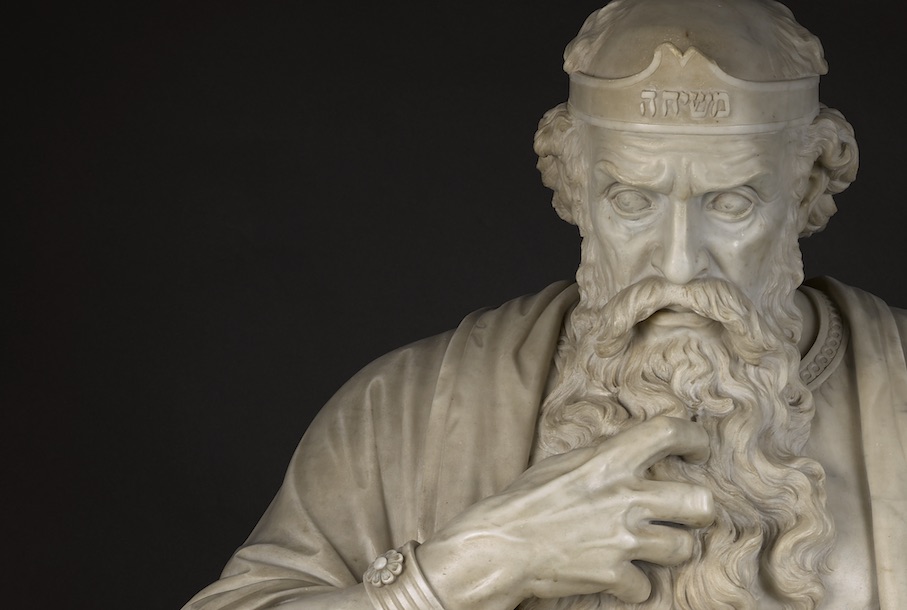
King Saul by William Wetmore Story (1819-1895) at the North Carolina Museum of Art

Then the word of the Lord came to Samuel: “I regret that I have made Saul king, because he has turned away from me and has not carried out my instructions.” Samuel was angry, and he cried out to the Lord all that night.

Early in the morning Samuel got up and went to meet Saul, but he was told, “Saul has gone to Carmel. There he has set up a monument in his own honor and has turned and gone on down to Gilgal.”

When Samuel reached him, Saul said, “The Lord bless you! I have carried out the Lord’s instructions.”

But Samuel said, “What then is this bleating of sheep in my ears? What is this lowing of cattle that I hear?”

Saul answered, “The soldiers brought them from the Amalekites; they spared the best of the sheep and cattle to sacrifice to the Lord your God, but we totally destroyed the rest. “Enough!” Samuel said to Saul. “Let me tell you what the Lord said to me last night.”

“Tell me,” Saul replied.

Samuel said, “Although you were once small in your own eyes, did you not become the head of the tribes of Israel? The Lord anointed you king over Israel. And he sent you on a mission, saying, ‘Go and completely destroy those wicked people, the Amalekites; wage war against them until you have wiped them out.’ Why did you not obey the Lord? Why did you pounce on the plunder and do evil in the eyes of the Lord?”

“But I did obey the Lord,” Saul said. “I went on the mission the Lord assigned me. I destroyed the Amalekites and brought back Agag their king. The soldiers took sheep and cattle from the plunder, the best of what was devoted to God, to sacrifice them to the Lord your God at Gilgal.”

But Samuel replied:

“Does the Lord delight in burnt offerings and sacrifices
    as much as in obeying the Lord?
To obey is better than sacrifice,
    and to heed is better than the fat of rams.
For rebellion is like the sin of divination,
    and arrogance like the evil of idolatry.
Because you have rejected the word of the Lord,
    he has rejected you as king.”

Then Saul said to Samuel, “I have sinned. I violated the Lord’s command and your instructions. I was afraid of the men and so I gave in to them. Now I beg you, forgive my sin and come back with me, so that I may worship the Lord.”

But Samuel said to him, “I will not go back with you. You have rejected the word of the Lord, and the Lord has rejected you as king over Israel!”

As Samuel turned to leave, Saul caught hold of the hem of his robe, and it tore. Samuel said to him, “The Lord has torn the kingdom of Israel from you today and has given it to one of your neighbors—to one better than you. He who is the Glory of Israel does not lie or change his mind; for he is not a human being, that he should change his mind.”

Saul replied, “I have sinned. But please honor me before the elders of my people and before Israel; come back with me, so that I may worship the Lord your God.” So, Samuel went back with Saul, and Saul worshiped the Lord. (NIV)

“You cannot compensate by sacrifice what you lose through disobedience.”

edwin louis cole

God had given Saul explicit instructions on how to handle a group of people called the Amalekites (the first nation to attack the Jewish people after the Exodus from Egypt, and viewed as the archetypal enemy of the Jews). Saul obeyed only some of the instructions, but not all of them. King Saul rationalized his behavior as worship. But God would have none of it. The Lord rejected Saul as king. God wants no monkey business when it comes to obedience.

Whenever I come across biblical characters like Saul, I find myself trying to distance from them. Yet, oftentimes, when I take the time to sit a bit with the Scriptures, I realize I can have some of the same propensities as their behavior. In today’s Old Testament lesson, I am like Saul whenever:

  • I say I will do something and then get busy and not do it. I sometimes rationalize my lack of follow through by explaining what good things I was doing with my time instead.
  • I justify a purchase of something I do not really need but want with the excuse that I put a lot of money in the offering plate for God.
  • I slander another person, even though it is forbidden by God, with the knucklehead notion that I am protecting and helping others from that person’s evil ways.
  • I keep quiet in the face of a bad situation when I should be speaking up. I dismiss the lack of engagement and involvement with needing to save my energy for people who want it….

I could have kept going with this little exercise, but I got too convicted to keep thinking about it anymore. So, before we get too uppity about saying we are not like Saul and would never be like him, perhaps we ought to sit with the story for a while, being mindful and aware of any unacknowledged disobedience.

Rationalization is the way of sinners.  Repentance is the path of saints.  Which road will you choose today?

Holy God, you expect obedience to clear instructions.  I am sorry for all those times I found creative ways to circumvent your teaching.  Help me not to avoid your good commands, but to own them with vigor and vitality through Jesus Christ my Lord in the power of your Holy Spirit.  Amen.