
Showing God’s Kindness (2 Samuel 9:1-13)

King David reaching out and receiving Mephibosheth, 13th century Bible illustration

David asked, “Is there anyone from Saul’s family still alive that I could show faithful love for Jonathan’s sake?” There was a servant from Saul’s household named Ziba, and he was summoned before David.

“Are you Ziba?” the king asked him.

“At your service!” he answered.

The king asked, “Is there anyone left from Saul’s family that I could show God’s kindness to?”

“Yes,” Ziba said to the king, “one of Jonathan’s sons, whose feet are crippled.”

“Where is he?” the king asked.

“He is at the house of Ammiel’s son Machir at Lo-debar,” Ziba told the king.

So King David had him brought from the house of Ammiel’s son Machir at Lo-debar. Mephibosheth, Jonathan’s son and Saul’s grandson, came to David, and he fell to the ground, bowing low out of respect.

“Mephibosheth?” David said.

“Yes,” he replied. “I am at your service!”

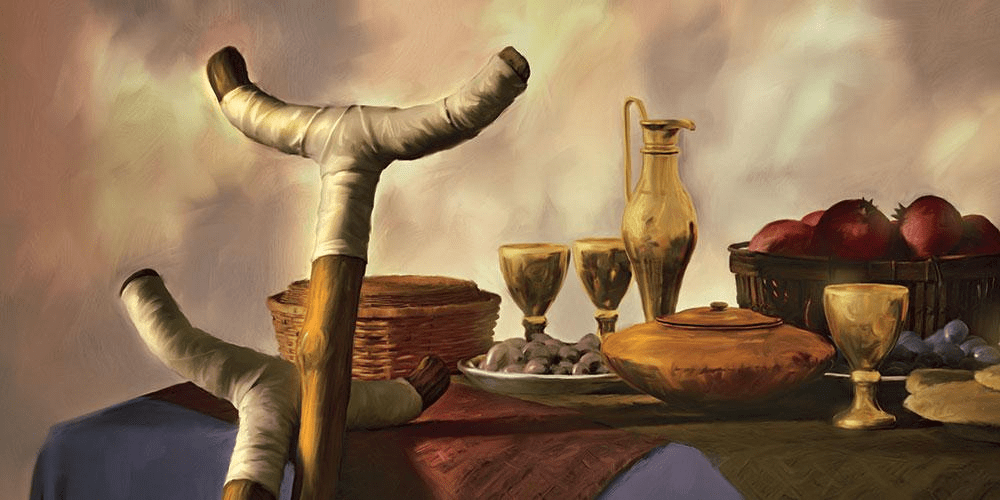
“Don’t be afraid,” David told him, “because I will certainly show you faithful love for the sake of your father Jonathan. I will restore to you all the fields of your grandfather Saul, and you will eat at my table always.”

Mephibosheth bowed low out of respect and said, “Who am I, your servant, that you should care about a dead dog like me?”

Then David summoned Saul’s servant Ziba and said to him, “I have given your master’s grandson everything belonging to Saul and his family. You will work the land for him—you, your sons, and your servants—and you will bring food into your master’s house for them to eat. But Mephibosheth, your master’s grandson, will always be at my table.” (Now Ziba had fifteen sons and twenty servants.)

Then Ziba said to the king, “Your servant will do whatever my master the king commands.”

So Mephibosheth ate at David’s table, like one of the king’s own sons. Mephibosheth had a young son named Mica. All who lived in Ziba’s household became Mephibosheth’s servants. Mephibosheth lived in Jerusalem, because he always ate at the king’s table. He was crippled in both feet. (Common English Bible)
This is actually one of my favorite stories in all of Holy Scripture. It clearly demonstrates why David is a king and a person who reflects God’s own heart. I believe that King David is at his best here, ruling and living exactly as the Lord wanted him to.

In much of the ancient world, whenever a king came to power and replaced the previous king of whom he was not related, it was a common practice to either exile or outright kill the sons and grandsons who would have become heirs to the throne. It was a literal cutthroat way of securing the new throne, by wiping out any potential rivals.

It’s quite possible that no one would have faulted David or batted an eye if he had made sure there was nobody around related to King Saul – who died in a battle with the Philistines. Not only did David avoid that practice, but he did just the opposite of it.

Finally on the throne of both Israel and Judah, one of the first acts of King David was to wield his power and authority by finding out if there were any relatives of Saul that he could show faithful love toward.

I can just imagine the servant of Saul, Ziba, being brought into David’s presence, thinking for sure that this is the end. Instead, David wanted to know if there’s anyone in Saul’s family to which he could show kindness.

The word King David used to communicate his benevolent intentions was “chesed” (חסד – pronounced “KES-ed”). This is rich Hebrew word which refers to God’s steadfast covenant loyalty and love toward Israel.

Because of its richness, chesed is translated various ways in the English translations, including: “mercy,” “kindness,” “loving-kindness,” “steadfast love,” “compassion,” and even “goodness.”

The big idea in today’s story is that David had the power to destroy, but instead used his authority in order to extend loving loyalty and mercy to Mephibosheth, son of Jonathan, and grandson of Saul – David’s old enemy and nemesis.

What’s more, David could have found out about Mephibosheth, learned that the man was crippled, in no position to ever do anything for or against him, and simply left him alone. And again, nobody likely would have thought anything about ignoring the man.

But not David. He was determined to embody chesed in the life of Mephibosheth. So, he brought him to Jerusalem and provided for him by having him sit at the king’s table for the rest of his life.

David didn’t have to do that. Yet, God’s steadfast love compelled him. You know grace has a hold of someone’s life, whenever they go out of their way to extend human kindness to another person who has absolutely no means of paying them back or reciprocating at all.

Jesus, the Son of David, clearly understood the idea of chesed and lifted it, taught it, and embodied it for his own followers:

“If you love those who love you, why should you be commended? Even sinners love those who love them. If you do good to those who do good to you, why should you be commended? Even sinners do that. If you lend to those from whom you expect repayment, why should you be commended? Even sinners lend to sinners expecting to be paid back in full. 

“Instead, love your enemies, do good, and lend expecting nothing in return. If you do, you will have a great reward. You will be acting the way children of the Most High act, for he is kind to ungrateful and wicked people. Be compassionate just as your Father is compassionate. (Luke 6:32-36, CEB)

I wonder who it is that God wants you to show grace, mercy, and love toward?

Lord Jesus, as you commanded us to love one another, just as you love us, help us to demonstrate that love toward others. We acknowledge that it is impossible on our own, so we ask for the enabling of your Holy Spirit to produce that love in us.

We believe that you love and care for those who are suffering from illness, violence and persecution. We pray for protection, comfort and healing for those in need or who are forgotten.

Enliven us with your Holy Spirit, so that we may be instruments of your peace and love in a troubled world. Use us and all believers as your ambassadors to our families, colleagues and neighbors.

Holy God, you demonstrated your love for us through the Resurrection of your Son and our Savior Jesus Christ. We commit to making decisions as who trust in your ever-present love and grace. Guide us in becoming a people who welcomes all, and values mutuality and partnerships.

Provide us courage and insight as we seek to be a community who provides respite, and a place to sooth souls. Grant us all the things necessary for our common life, and bring us to be of one heart and mind within your Church; through Jesus Christ our Lord. Amen.

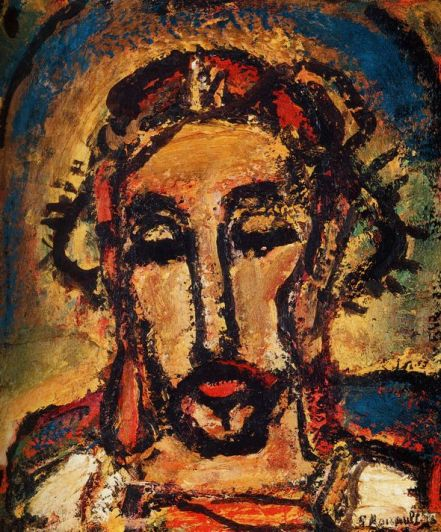
The Wounded Healer (Psalm 18:1-6, 43-50)

By French painter Georges Rouault (1871-1958)

I love you, Lord;
    you are my strength.
The Lord is my rock, my fortress, and my savior;
    my God is my rock, in whom I find protection.
He is my shield, the power that saves me,
    and my place of safety.
I called on the Lord, who is worthy of praise,
    and he saved me from my enemies.

The ropes of death entangled me;
    floods of destruction swept over me.
The grave wrapped its ropes around me;
    death laid a trap in my path.
But in my distress I cried out to the Lord;
    yes, I prayed to my God for help.
He heard me from his sanctuary;
    my cry to him reached his ears…

You gave me victory over my accusers.
    You appointed me ruler over nations;
    people I don’t even know now serve me.
As soon as they hear of me, they submit;
    foreign nations cringe before me.
They all lose their courage
    and come trembling from their strongholds.

The Lord lives! Praise to my Rock!
    May the God of my salvation be exalted!
He is the God who pays back those who harm me;
    he subdues the nations under me
    and rescues me from my enemies.
You hold me safe beyond the reach of my enemies;
    you save me from violent opponents.
For this, O Lord, I will praise you among the nations;
    I will sing praises to your name.
You give great victories to your king;
    you show unfailing love to your anointed,
    to David and all his descendants forever. (New Living Translation)

King David, the psalmist, had no problem with publicly expressing his great feeling of love for God. His desire was to be thoroughly devoted to the Lord; and he confidently discerned God as the source of his strength.

What’s more, David freely recognized God as the One who brought him deliverance. David cried out in distress. In his despair and desperation, he looked to the Lord, and God responded.

This is in contrast to those who complain about God and consider the Lord as distant and uncaring – if existing at all. David’s experience was that of being heard by God. And he wanted everyone to know, so that the faithful may be encouraged.

David didn’t want people becoming discouraged because of the bitterness of others who accuse God of being unconcerned.

The psalmist was not just talking about some mundane request, like asking for parking spot close to the building. David was in a life-and-death situation, stressful beyond imagination. Things were not looking good for him.

It seemed that the insolent, who think God isn’t watching, believed they could act unjustly and do whatever they wanted. Sadly, their lust for power and control blinds them to the larger reality of an invisible God who sees, and who responds at just the right time.

David wanted people to remember and not to forget about the saving actions of God. Because by keeping in mind who God truly is, then we can have confident trust, and will live in a way that is right, just, and good.

“Our service will not be perceived as authentic unless it comes from a heart wounded by the suffering about which we speak.”

Henri Nouwen

A good, right, and just life is always the appropriate response to divine mercy and deliverance. We are saved from evil, so that we might live in the spiritual freedom of purity and peace. And David gave God some due praise, adoration, and thanksgiving for rescuing him from his enemies.

Since David went through all of the adversity, hardship, stress, and suffering of dealing with unjust people, he was in a position to be a wounded healer for us.

A wounded healer is not someone who endorses a victim mentality. Rather, this is a person who has been profoundly hurt – physically, mentally, emotionally, or spiritually – and comes through the experience with an ability to be present with others and help facilitate healing in those who suffer.

Surely he took up our pain
    and bore our suffering,
yet we considered him punished by God,
    stricken by him, and afflicted.
But he was pierced for our transgressions,
    he was crushed for our iniquities;
the punishment that brought us peace was on him,
    and by his wounds we are healed. (Isaiah 53:4-5, NIV)

We all suffer and face various hard circumstances. And we are all changed by the hurtful encounters. But we don’t all respond the same way to that adversity. The difficult experiences of pain lead us to become either bitter or better.

If we have a wounded healer in our life, there is a good chance that we will be able to move through the hardship and come to a place of gratitude for what the Lord has done for us and how God brought us deliverance.

“As followers of Jesus we can also allow our wounds to bring healing to others.”

Henri Nouwen

Deliverance may not end up looking like anything we anticipate. If we are stuck on particular outcomes and have a singular expectation, then we may very well miss the Rescuer when the ship of salvation shows up.

Yet, if we can remain open to and aware of God – as well as of what’s going on inside us – then we shall likely experience healing for our deep wounds of pain. And we will embrace the scars it leaves as a reminder of the Lord’s deliverance.

It could be that things don’t change, at least like we want. In such times, perhaps the greatest healing that can take place is to be healed from the need for healing.

The Lord shows unfailing commitment and steadfast love to the faithful, to those who seek God. We shall find the divine in all circumstances, that is, if we seek God with all our heart.

“You will seek me and find me when you seek me with all your heart.” (Jeremiah 29:13, NIV)

Pain cannot be taken away unless we enter into it. So, it only makes sense to me, that we have a guide like the psalmist to lead us, and a Savior like Jesus to rescue us.

“Wholeness is not achieved by cutting off a portion of one’s being, but by integration of the contraries.”

Carl Jung

May you be patient in suffering, as Christ was in his earthly pain.

May the Lord be near you in your time of weakness and wondering.

May God sustain you by divine grace, and grant you courage not to have a failure of faith.

May you know healing of both body and soul.

And may you always believe that what happens to you in this present life is of little account if you hold Christ in eternal life. Amen.

The Lord Was With Him (1 Chronicles 11:1-9)

All Israel came together to David at Hebron and said, “We are your own flesh and blood. In the past, even while Saul was king, you were the one who led Israel on their military campaigns. And the Lord your God said to you, ‘You will shepherd my people Israel, and you will become their ruler.’”

When all the elders of Israel had come to King David at Hebron, he made a covenant with them at Hebron before the Lord, and they anointed David king over Israel, as the Lord had promised through Samuel.

David and all the Israelites marched to Jerusalem (that is, Jebus). The Jebusites who lived there said to David, “You will not get in here.” Nevertheless, David captured the fortress of Zion—which is the City of David.

David had said, “Whoever leads the attack on the Jebusites will become commander in chief.” Joab son of Zeruiah went up first, and so he received the command.

David then took up residence in the fortress, and so it was called the City of David. He built up the city around it, from the terraces to the surrounding wall, while Joab restored the rest of the city. And David became more and more powerful because the Lord Almighty was with him. (New International Version)

Originally, in the Hebrew Bible, 1 and 2 Chronicles were one book, not two; and the Chronicles are the final book of Hebrew Scripture. The Greek translation of the Hebrews Bible – the Septuagint – was accomplished around the turn of the second century B.C.E. and made Chronicles two books because of its length.

Compilers of Christian Scripture moved the location of Chronicles from the end of the Old Testament and put it alongside the other historical books of 1 and 2 Samuel, and 1 and 2 Kings – mostly because Chronicles is generally a restatement of those books for a different generation of Jews living in the post-exilic period along with Ezra and Nehemiah.

Chronicles largely retells the story of the ancient Israelites, and then summarizes their history before focusing primarily on the reigns of King David and King Solomon. Yet, it is more than a retelling.

Chronicles is a restatement that emphasizes the importance of faithfulness to God and highlights the necessity of taking God’s Law seriously.

Religious reforms play an important part of Chronicles. Removing idols, obeying God’s Torah and God’s prophets, and honoring the proper worship of God are central to ensuring that a Babylonian exile never happens again – that the people will see the consequences of infidelity to the Lord, and live in the right and just ways handed down to them.

King David is pictured as a politically unifying figure of all Israel and Judah because he sought to conscientiously and faithfully live according to God’s commands. Later generations of kings did not do so, which led to the people losing their land and their temple.

David had proved himself as the right person for the job of leading the people. After becoming king, he used his position and authority to do God’s will. And it was a long time in coming; David patiently waited for the Lord’s timing and purpose to be accomplished.

Although anointed by the prophet Samuel as king while Saul was still in his reign, it took years for David to be enthroned as the actual king. David had several opportunities to make himself king by killing Saul (who was trying to kill David) but he allowed God to enthrone him in God’s own good time.

Rarely does anything the Lord promise come to fruition immediately. We must wait patiently for deliverance from painful trials of faith and the return of Christ. God makes promises. Then we persevere until those promises are fulfilled.

All of David’s waiting finally dissipated into kingly action. Before there were kings, judges ruled in Israel. And before that, Joshua led the people into the Promised Land. They had a mandate to expel the Canaanites. Those instructions from God only partially happened. There were still remnants and pockets of resistance. The Jebusites, ensconced in the city of Jebus (Jerusalem) were the most stubborn.

Part of the reason there were Canaanites still living in the land was the former King Saul’s failure to follow through on God’s plan. One of the first acts of King David was to finish and fulfill the complete takeover of the land.

David was willing to attempt something nobody else could do, and that no one believed could be done. If we were a fly on the wall during discussions about this, I can imagine a coterie of people saying to the king, “We tried that before. It won’t work. You cannot get rid of the Jebusites. This is a fool’s errand.”

Pessimism and passivity certainly do not dislodge anything, and the people had fallen into a cynicism that believed they needed to put up with the current situation.

Whenever a group of people fall into passive defeatism, criticism is rife because folks are not working together toward shared goals and solutions. Instead of addressing problems, there is merely complaining about whatever they don’t like.

On the other side of it, the Jebusites were smug in their self-confidence, showing their bravado through being blowhards. However, they had not yet faced David. If they thought another king like Saul was coming along, they were in for a big wake up call.

The Lord almighty was with David. And that is what made all the difference.

King David did not accept the status quo. He worked toward accomplishing the Lord’s will, as he understood it. And his faith always led to effective action.

Almighty and eternal God, so draw our hearts to you, so guide our minds, so fill our imaginations, so control our wills, that we may be wholly yours, utterly dedicated unto you; and then use us, we pray you, as you will, and always to your glory and the welfare of your people; through our Lord and Savior Jesus Christ. Amen.

Spiritual Spring Cleaning (2 Chronicles 29:1-11, 16-19)

Hezekiah became king when he was twenty-five years old and was king in Jerusalem for twenty-nine years. His mother was Abijah daughter of Zechariah. In God’s opinion he was a good king; he kept to the standards of his ancestor David.

In the first month of the first year of his reign, Hezekiah, having first repaired the doors of The Temple of God, threw them open to the public. He assembled the priests and Levites in the court on the east side and said, “Levites, listen! Consecrate yourselves and consecrate The Temple of God—give this much-defiled place a good housecleaning.

Our ancestors went wrong and lived badly before God—they discarded him, turned away from this house where we meet with God, and walked off. They boarded up the doors, turned out the lights, and canceled all the acts of worship of the God of Israel in the holy Temple. And because of that, God’s anger flared up and he turned those people into a public exhibit of disaster, a moral history lesson—look and read! This is why our ancestors were killed, and this is why our wives and sons and daughters were taken prisoner and made slaves.

“I have decided to make a covenant with the God of Israel and turn history around so that God will no longer be angry with us. Children, don’t drag your feet in this! God has chosen you to take your place before him to serve in conducting and leading worship—this is your life work; make sure you do it and do it well….”

The priests started from the inside and worked out; they emptied the place of the accumulation of defiling junk—pagan rubbish that had no business in that holy place—and the Levites hauled it off to the Kidron Valley. They began the Temple cleaning on the first day of the first month and by the eighth day they had worked their way out to the porch—eight days it took them to clean and consecrate The Temple itself, and in eight more days they had finished with the entire Temple complex.

Then they reported to Hezekiah the king, “We have cleaned up the entire Temple of God, including the Altar of Whole-Burnt-Offering and the Table of the Bread of the Presence with their furnishings. We have also cleaned up and consecrated all the vessels which King Ahaz had gotten rid of during his misrule. Take a look; we have repaired them. They’re all there in front of the Altar of God.” (The Message)

Hezekiah Destroys the Idols, by Maerten de Vos, 1585

This is the time of year when many of us begin to plan for some Spring housecleaning. And it’s definitely needed! All the rooms of the house, along with the garage, are in need of going through all the contents contained in them, as well as a good old fashioned scrubbing down and thorough cleaning.

And that is really what the Christian season of Lent is intended for on the spiritual level of things. We seek to identify any and all hindrances to living the Christian life and get rid of them; spruce up the things we keep that are helpful to us; and do the hard work of scraping off all the encrusted barnacles on our hearts.

Hezekiah was a faithful king, having come from a long line of faithless ones. In the beginning of his reign, Hezekiah’s first act of royal business was to thoroughly cleanse the Temple. And did it ever need a serious cleaning!

The evil kings who reigned before him did not treat the Temple as a sacred space devoted specifically to the prayer and worship of the one true God, Yahweh. Instead, they defiled it by introducing all sorts of unhealthy practices from other gods. As a result, the holy implements used in the Temple, as well as the structure itself, fell into terrible neglect.

Therefore, Hezekiah assembled an impressive team of people, and tasked them with getting the Temple in shape again with a complete and thorough purification that would make any German house frau proud. Hezekiah sought to restore things so that the Temple could once again be used as it ought. 

The team of Levites meticulously took their time and worked diligently to consecrate the Temple and give it a good and sacred cleaning, tossing everything unholy into the Kidron Valley – the garbage dump.

Perhaps there is no better passage of Scripture than today’s Old Testament lesson, in order to embody what the season of Lent is really all about. We are to do the holy work of carefully consecrating our hearts, so that our lives are prepared and ready for the new life of Easter. 

This task of spiritual Spring cleaning and heart purification is hard and courageous work. Just as Hezekiah had the bravery to uphold the Temple’s true purpose through cleansing it, so we are to bravely enter the shadowy places of our hearts, bring out the sin within, and toss it in the metaphorical incinerator. It’s definitely not a pretty process, but a necessary one.

One of the greatest needs that many believers have today is the courage to be vulnerable, to expose and bring into the light our besetting sins, so that they can be carried away and tossed into the dump. 

Instead of spending inordinate amounts of energy and time trying to hide our true selves, it is much better to let the example of Hezekiah clear a path forward by confronting the darkness within.

Holy God, my life is a Temple of your Holy Spirit. I invite you to come in and do the sort of cleansing work that needs to be done so that my words and actions are thoroughly consecrated to you. Help me have the courage to go to the places within that frighten me, for the sake of Jesus, my Lord. Amen.