Romans 5:6-11 – Christ Died For Us

“Golgotha” by Edvard Munch, 1900

You see, at just the right time, when we were still powerless, Christ died for the ungodly. Very rarely will anyone die for a righteous person, though for a good person someone might possibly dare to die. But God demonstrates his own love for us in this: While we were still sinners, Christ died for us.

Since we have now been justified by his blood, how much more shall we be saved from God’s wrath through him! For if, while we were God’s enemies, we were reconciled to him through the death of his Son, how much more, having been reconciled, shall we be saved through his life! Not only is this so, but we also boast in God through our Lord Jesus Christ, through whom we have now received reconciliation. (New International Version)

In Christianity, there is only one way of approaching God: Through the death of Jesus Christ. That means we cannot approach God by our good works, doing things right, or by our spiritual pedigree. We are justified and declared righteous by grace alone through faith in the cross of Christ.

Back when my youngest daughter was still living at home, sometimes I needed to go into her room to get something. More often than not, it ended up becoming an archaeological dig. I had to wade through layers of stuff. I didn’t always find what I was looking for, and other times I discovered things I didn’t know I had even lost. 

When the magisterial Reformer, Martin Luther (1483-1546) went digging into the Bible, he found he was wading through layers of church tradition and came upon something that was lost. Luther rediscovered that God justifies sinners by grace through faith apart from any good works done by us. Luther found in the Scriptures that we are completely and totally at the mercy of God in Christ.

The cross of Jesus Christ is the means of salvation from what ails us because the cross is an attack on human sin. Luther discovered we all have layers of stuff that has grown around our hearts to the degree that we no longer see the sheer grace of God in Christ alone to meet the most pressing needs of our lives. 

The Reformation has taught believers that apart from Christ, we are addicted to ourselves. The cross is the intervention we need to help us confront our constant me-ism.

We might justify ourselves with the fact we do good works. However, one of the legacies of the Reformation, coming from the book of Romans, is that good works do not earn us deliverance from sin. In fact, Luther said that our good deeds are the greatest hindrance to our salvation because we have the tendency to trust in those good deeds instead of the death of Christ. 

So, Luther actually called our good works a mortal sin that sets off God’s wrath and leads straight to hell. In other words, good deeds can be deadly, if they are done as a means of approaching and appeasing God. 

It is through the suffering of Jesus on the cross, his death for us while we were still sinners, not when we were lovely and looking fine with all our pious actions, that we are saved. 

“He who does not know Christ does not know God hidden in suffering. Therefore, he prefers works to suffering, glory to the cross, strength to weakness, wisdom to folly, and, in general, good to evil. These are the people who are under God’s wrath! God can only be found in suffering and the cross. It is impossible for a person not to be puffed by his good works unless he has first been deflated and destroyed by suffering and evil until he knows that he is worthless and that his works are not his but God’s.”

Martin Luther’s Heidelberg Disputation

God does not come to us in our beauty and goodness but in our ugliness and sin.

While we were still sinners, ungodly, enemies of God, powerless to save ourselves, Christ died on the cross for us. We spend too much time and effort concerned about looking good and doing good things in order to present ourselves acceptable to each other and even to God. 

But that is the very sin that sends people to a hellish existence. The hottest places of damnation are actually reserved for outwardly pious persons who trusted all their lives in themselves and how they looked to others without a thought, at all, about justification, reconciliation, and being restored to God through Christ.

Like a gold ring in a pig’s snout, is a person who has good deeds but knows nothing of God’s grace.

It is a totally human tendency to decide which sinful actions are trivial and which are the biggie sins. The Apostle Paul was really hard on his fellow Jews in the book of Romans because they tended to place their trust in who they were and what they did – being the covenant people and practicing all the good things a good person does. And Paul says the wrath of God is reserved for them. 

The way of approaching God is by seeing our true ugliness, our rebellious hearts, and that the hope of salvation is through the cross of Christ. We are justified by and reconciled to God because of Jesus, and not for any other reason. A new relationship is established based solely in God’s grace.
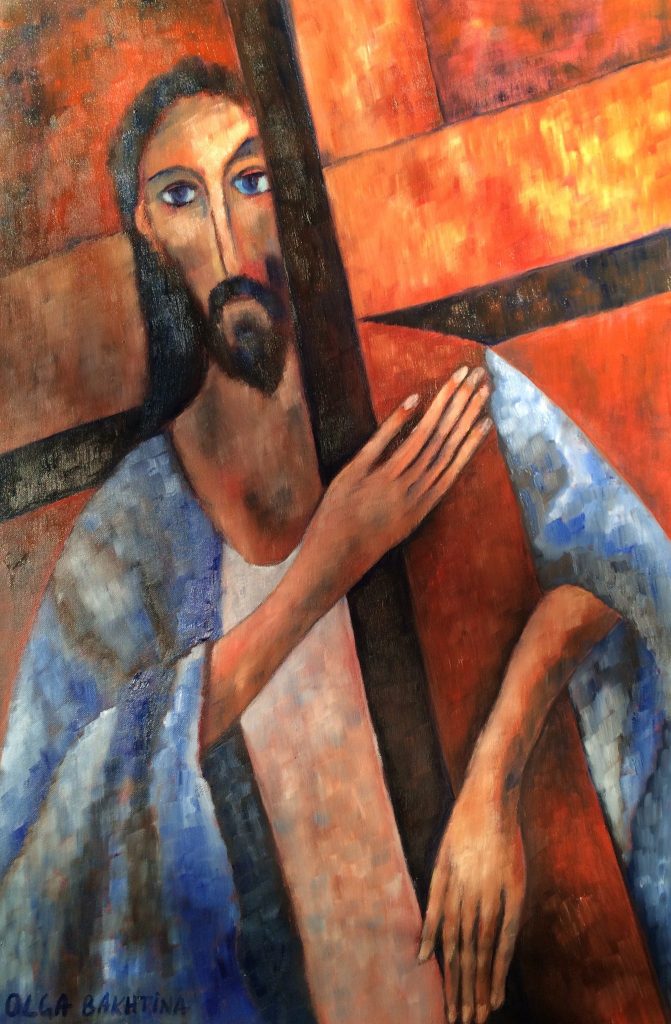
“Jesus Carrying The Cross” by Olga Bakhtina, 2017

When Christians grasp this truth, even a little bit, it should cause us to repent of our sinful good works (yes, sinful good works). Wherever there is humility that leads to a complete turning to Jesus, there is revival to new life in God, and a personal reformation around the doctrine of grace instead of the doctrine of my glorious works that I perform.

We, then, as Christians, saved and justified through the blood of Jesus, ought to be the most joyful and grateful people on the planet. We have deliverance from the deception of our hearts to life in Christ. Apathy and lethargy to the things of God are the twin evils that reign in the place of awe and appreciation for what God has done for us in Christ.

There is nothing more God can do to show us that he loves us than by actually dying for us, and by doing so, satisfying God’s own wrath against the sin which seeks to destroy us. The late Brennan Manning once told the story about how he got the name “Brennan.”

While growing up, his best friend was Ray. The two of them did everything together: bought a car together as teenagers, double-dated together, and went to school together. They even enlisted in the Army together, went to boot camp together and fought on the frontlines together.

One night while sitting in a foxhole, Brennan was reminiscing about the old days in Brooklyn while Ray listened and ate a chocolate bar. Suddenly, a live grenade came into the foxhole. Ray looked at Brennan, smiled, dropped his chocolate bar and threw himself on the live grenade. It exploded, killing Ray, but Brennan’s life was spared.

Later in life, when Brennan became a priest, he was instructed to take on the name of a saint. He thought of his friend, Ray Brennan. So, he took on the name “Brennan.”

Years later he went to visit Ray’s mother in Brooklyn. They sat up late one night having tea when Brennan asked her, “Do you think Ray loved me?” Mrs. Brennan got up off the couch, shook her finger in front of Brennan’s face and shouted, “What more could he have done for you?” Brennan said that at that moment he experienced an epiphany. He imagined himself standing before the cross of Jesus wondering, Does God really love me? And Jesus’ mother Mary pointing to her son, saying, “What more could he have done for you?”

The cross of Jesus is God’s way of doing all he could do for us. And yet we often wonder: Does God really love me? Am I important to God? Does God care about me? We tend to ask those questions when we are trusting in ourselves, because we never really know where we stand with God.

No matter how bad or how good you are, the path of suffering of our Lord Jesus has taken care of the sin issue once for all.

Week after week for the past two-thousand years, God’s people have gathered together to worship this same Lord Jesus who died on the cross. The only thing left for us to do, since Jesus has done it all for us, is to offer our lives to him.

While we were still sinners, enemies, estranged, hopeless, lost, despondent, proud, and stained by sin, Jesus died a cruel death on a cross to wash away your sins with his blood. It is my hope and prayer that today you are rediscovering the great Reformation truth that we are justified by grace alone through faith in Jesus alone, and the life of unbounded joy in knowing that we have now received reconciliation with God in Christ.

Lord God Almighty, the ground is level at the foot of the cross. We need you, Lord Jesus, and come to you on the basis of nothing else but your shed blood. I pray for all those who are wrestling with you right now. Oh, that you would revive those that need new life, that you would renew those who have become cold, and that you would reform all of our hearts so that our lives would completely be devoted around the person and work of Jesus Christ! 

Thank you, Lord Jesus, for dying for us while we were still powerless, sinful, and ungodly. Thank you for saving us from God’s wrath. Thank you, God Almighty, for reconciling us back to yourself through the cross. There are those needing you to break through their stubborn hearts; and those who need peace to their troubled hearts. O God, save us from ourselves, whether it is from our trust in our own perceived goodness, or our sense of shame and guilt. Thanks be to God, who gives us the victory through our Lord Jesus Christ. Amen.

Psalm 28 – Prayer, Praise, and Possibility

Psalm 28 by Dutch artist Wim van de Wege

I pray to you, O Lord, my rock.
    Do not turn a deaf ear to me.
For if you are silent,
    I might as well give up and die.
Listen to my prayer for mercy
    as I cry out to you for help,
    as I lift my hands toward your holy sanctuary.

Do not drag me away with the wicked—
    with those who do evil—
those who speak friendly words to their neighbors
    while planning evil in their hearts.
Give them the punishment they so richly deserve!
    Measure it out in proportion to their wickedness.
Pay them back for all their evil deeds!
    Give them a taste of what they have done to others.
They care nothing for what the Lord has done
    or for what his hands have made.
So he will tear them down,
    and they will never be rebuilt!

Praise the Lord!
    For he has heard my cry for mercy.
The Lord is my strength and shield.
    I trust him with all my heart.
He helps me, and my heart is filled with joy.
    I burst out in songs of thanksgiving.

The Lord gives his people strength.
    He is a safe fortress for his anointed king.
Save your people!
    Bless Israel, your special possession.
Lead them like a shepherd,
    and carry them in your arms forever. (New Living Translation)

The biblical character David, in frustration and agony, cried out for help, for God to hear his prayers. And, when his prayer was heard, David gave exuberant praise to the Lord for listening to him.

We are not told specifically of how that prayer was answered and what happened between the request and the response. It seems the juicy details are left out on purpose, so that maybe we would not get lost in the retribution but stick with the fact that there was a desperate need and the Lord stepped in and did something about it.

As I pondered this psalm and its lack of life-detail, I wondered about David’s situation:

Could it be that David gave God praise just for being heard by him? 

Was David cured in some way, or was he healed from the need to be healed? 

Was there even any actual deliverance that occurred? 

Did David come to praise God despite a lack of deliverance? 

Was David’s joy in his relationship with God conditional, or unconditional?

William Shakespeare’s Hamlet (c.1601 C.E.) put the question this way: “To be, or not to be, that is the question.” Hamlet’s soliloquy went on to say:

“Whether ’tis nobler in the mind to suffer
The slings and arrows of outrageous fortune,
Or to take arms against a sea of troubles,
And by opposing end them? To die: to sleep;
No more; and by a sleep to say we end
The heartache and the thousand natural shocks
That flesh is heir to, ’tis a consummation
Devoutly to be wish’d. To die, to sleep;
To sleep: perchance, to dream: ay, there’s the rub;
For in that sleep of death what dreams may come
When we have shuffled off this mortal coil,
Must give us pause: there’s the respect
That makes calamity of so long life;
For who would bear the whips and scorns of time,
The oppressor’s wrong, the proud man’s contumely,
The pangs of despised love, the law’s delay,
The insolence of office and the spurns
That patient merit of the unworthy takes,
When he himself might his quietus make
With a bare bodkin (knitting needle)?”

Hamlet, much like David of old, was miserable and burdened with a profound lack of power to change his circumstances. So, he reflects on life and death in a morbid and melancholy way. It’s not that Hamlet was contemplating suicide as much as he meditated on what life truly is and finding some meaning within it. Unlike David, Hamlet cannot find the courage to deal with his frustration and feels stymied with fear of the unknown.

If we are blatantly honest with ourselves, we must admit that far too often we have a particular outcome in mind that we want or expect God to do.  Our hopes become tethered to God doing something extremely specific so that, if it does not come to pass (or does not come quickly!) we become discouraged and disillusioned. Like Hamlet, we become lost in the shadows of our thinking and ponder some sort of escape.

So, here is another set of questions I am asking myself: 

If my adverse circumstances do not change, can I praise God anyway? 

Can I, like David, take joy in simply being heard? 

Can I find gratitude in all situations? 

Do I only express thanks and praise to God when things are going my way? 

Am I open to whatever God wants to do in my life, even if it is not what I would choose? 

Do I feel that I am above having to put up with the wickedness of this world? 

Am I expecting heaven on earth, or am I willing to suffer as Jesus did? 

I honestly believe the answers to those questions will determine the trajectory of our Christian experience. For the identity and meaning of all persons is found in the divine.

I praise you, O God, in the good and the bad, the easy and the difficult, the failures and the victories.  You are Lord over all things.  You are my strength and shield in every circumstance.  When I am weak, I am strong. I can do all things through Christ who strengthens me. Amen.

Hebrews 7:23-28 – Jesus Is Better

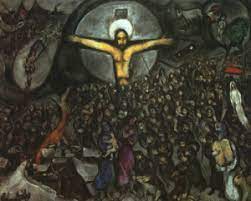
“Exodus” by Marc Chagall, 1952

Now there have been many of those priests, since death prevented them from continuing in office; but because Jesus lives forever, he has a permanent priesthood. Therefore, he is able to save completely those who come to God through him, because he always lives to intercede for them.

Such a high priest truly meets our need—one who is holy, blameless, pure, set apart from sinners, exalted above the heavens. Unlike the other high priests, he does not need to offer sacrifices day after day, first for his own sins, and then for the sins of the people. He sacrificed for their sins once for all when he offered himself. For the law appoints as high priests men in all their weakness; but the oath, which came after the law, appointed the Son, who has been made perfect forever. (New International Version)

Several years ago, I enjoyed serving communion with a retired minister in the church for which I was serving at the time. When we were in the middle of it, I leaned over to him and gave him a bit of instruction on what we were about to do. After I finished, he leaned over to me with a smile and said, “I didn’t hear a thing you just said, but I’ll figure it out!”

When it comes to the Christian life, I think we can learn something from the old Pastor. We are neither always going to hear well everything which is in the Bible, nor are we going to understand everything which is happening around us as Christians. 

The Jewish Christians, for which the book of Hebrews was originally preached, had a difficult transition from Judaism to Christianity. In Judaism, they knew what was happening. The sacrificial system was detailed and meticulously planned. The priesthood was clearly observed with men from the tribe of Levi. Worship was predictable.

However, becoming a Christian changed a lot of things. Being a Christian meant relying on the wild and unpredictable Spirit of God. There was no longer a tangible sacrificial system. Jesus is the high priest, but the believers never see him. 

There was so much living by faith, and so little understanding of what was going to happen, that the Hebrew Christians’ resolve began to break down. They became discouraged and started to lose patience with Christianity.

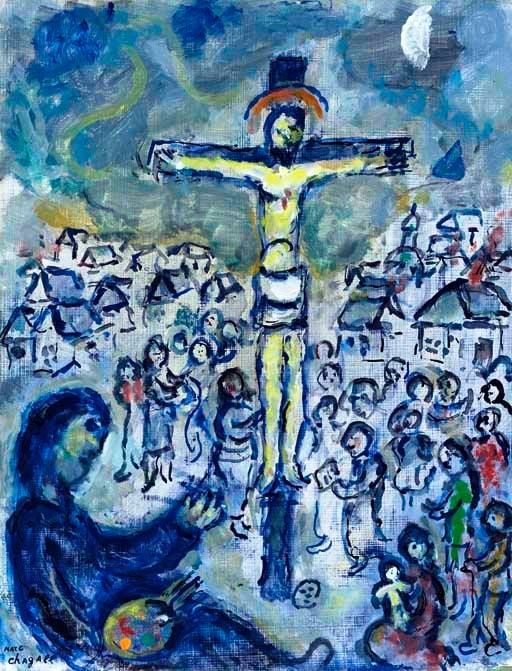
“The Painter and the Christ” by Marc Chagall, 1975

Today’s New Testament lesson is in the middle of an extended discussion by the author of Hebrews about the priesthood and sacrificial system. The Christian Jews were thinking about reneging on their commitment to Jesus and returning to their previous way of life in Judaism. 

So, central to the author’s exhortation is to demonstrate that Jesus is superior to everything in Judaism. Jesus is better than any Old Testament priest. Jesus is the once-for-all sacrifice for sins. Jesus is better because his priesthood is permanent, and his sacrifice is perfect.

In the ancient world, sacrifice was at the center of everyone’s belief system. Every pagan religion had some sort of sacrificial practice to satisfy the god(s) and ensure deliverance and/or prosperity. Jews, of course, had an elaborate sacrificial system of their own with detailed prescriptions of how to go about it.

We need to feel something of the original force of Christianity. It was a radical idea to have one sacrifice to end all sacrifices.

Everyone understood that sacrifices were temporary; you had to keep offering them over and over again. Christianity, however, asked the world to have a new understanding of sacrifice. No longer would there be any sacrifice – no grain sacrifice; no offerings of first-fruits; no animal sacrifices; no physical sacrifices whatsoever. 

In Christianity, Jesus as the once-for-all sacrifice to end all sacrifices was such a crazy notion for so many people that they mocked Christians for it. Both Jews and pagans could barely wrap their minds around such a progressive idea. It would be like saying to us today that there is no longer any need for money because some individual became the underwriter for everything everybody does.

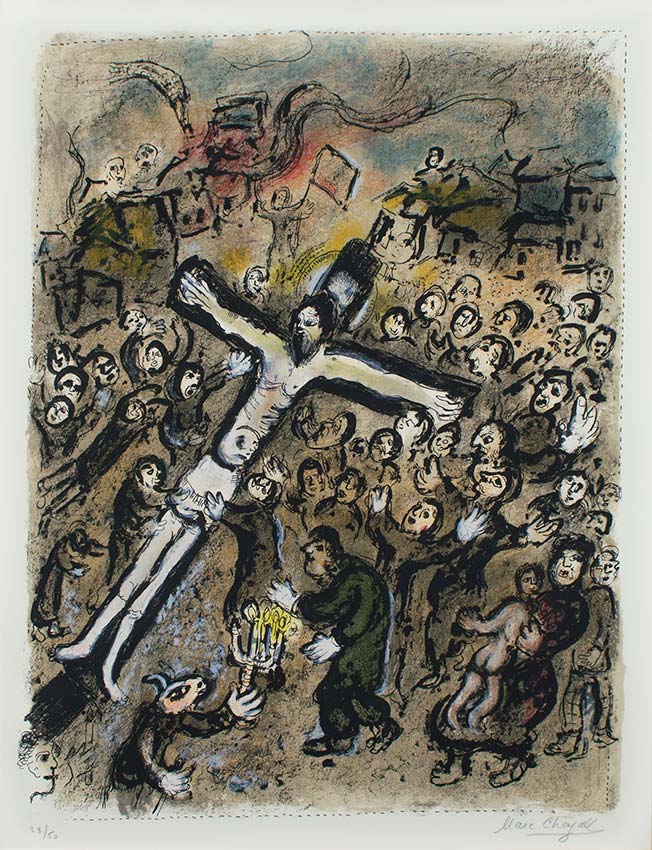
“The Martyr” by Marc Chagall, 1970

All the things the old sacrificial system did for worshipers are now completely fulfilled in the person of Jesus.  Condensed in just a few verses of Scripture, we have a very rich picture of Jesus:

  • Jesus is not a temporary priest, but a permanent priest, the one who is able to intercede continually on our behalf without us having to perform a ritual sacrifice.
  • Jesus lives forever, which enables him to never cease his intercessory work.
  • Jesus saves completely.
  • Jesus meets our need.
  • Jesus has been made perfect forever.

Yet, sometimes Christians go back to the old sacrificial system, not by physically offering animal sacrifices, but treating Christ’s once-for-all finished work as if it were just too good to be true. We reason that we need to do something to help save ourselves. Although Jesus has saved us fully, and therefore, there is no longer any need for sacrifice, yet we still try:

  • To appease God through church attendance or other works, as if the Lord needs to be soothed into not becoming angry at us.
  • To satisfy God through our giving so that the Lord will not have a furrowed brow against us.
  • To assuage our guilty conscience through Christian service, believing this will give us some leverage with God.

In all these kinds of instances, it is going back to an old sacrificial system that is obsolete.

The biblical and theological truth is that Jesus has thoroughly saved us from our sin, and, so, has cleansed us from all guilt, including a guilty conscience.

Jesus meets our need and has completely satisfied God’s wrath against sin. Jesus is our mediator and intercedes for us as we come to God’s throne of grace. That means we do not need to try and get God’s attention with some incredible sacrifice that will somehow obligate him to take notice. 

There is no longer ever a situation where we must run to some spiritual liquor store to pick up a Captain Morgan because the Captain of our souls, Jesus Christ, has already given us everything we need.

Since Jesus has been made perfect forever; is our great high priest; and is the once-for-all sacrifice to end all sacrifices, we have all the grace we need. 

We need not worry anymore about being good enough because Jesus is perfect. Christ’s work is made complete in us. The constant anxiety of feeling we don’t measure-up is not from God. The person and work of Jesus is sufficient to deliver us from guilt and shame.

“Well,” you might say, “if everybody believed that, then nobody would ever do anything.” No, it’s just the opposite. When we feel like we don’t measure up, we do less, not more. A low level discouragement sets in, and we do nothing because we intuitively know it will never be enough. We do just enough to squeak by, never quite knowing if it is doing anything. 

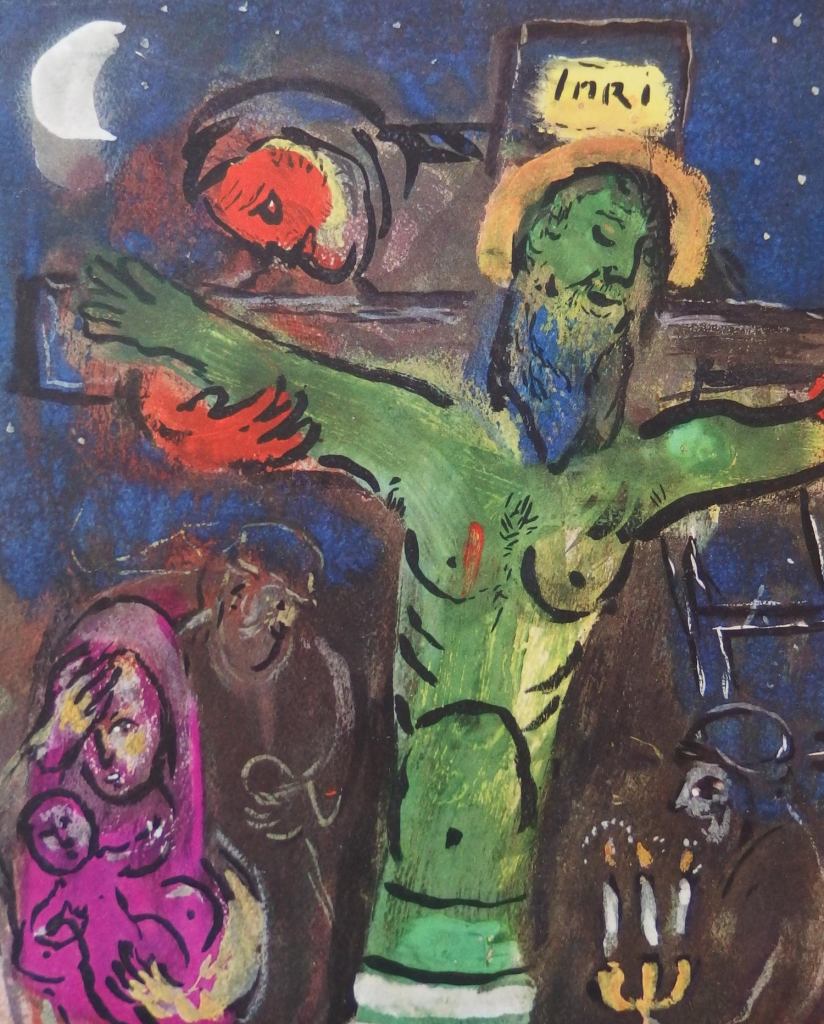
“Crucifixion” by Marc Chagall, 1961

Just like the Hebrew Christians of the first century, we consider giving up because Christianity doesn’t work for us. Yet, when we grasp Christ’s sacrifice to end all sacrifices, and are overwhelmed by grace, then everything we do in the Christian life is a simple desire to say “thank you” with our life and our lips. 

It is the grace, and not the wrath, of God that teaches us to say “no” to ungodliness and worldly passions and to live upright and godly lives (Titus 2:11-12).

The old system wasn’t bad. It served a purpose. Now, however, the old has given way to the new, and there is a better hope by which we draw near to God. The sacrificial system pointed forward to a perfect sacrifice by a permanent priest that would bring us to God forever.

Going back to the old system is like living permanently in a tent, and believing you are home.

Therefore, we must choose what is better. The options are not so much between what is bad and what is good, but between what is good and what is better than good. It is possible to do all kinds of good things and miss the better thing God is doing. 

So, how do we choose the better thing? How do we embrace the new, which is Christ, and not the old, which is the sacrificial system?

  1. Learn to say “no” to the treadmill going nowhere. Since we do not need to impress God, we have the freedom to say “no” to keeping up with the spiritual Jones’s; “no” to cajoling God’s favor, approval, or attention.
  2. Learn to say “yes” to engaging in spiritual practices which remind us of Christ. Say “yes” to the new way of the Spirit, which is by faith and not by sight. This present spiritual age is often intangible, ethereal, and unseen. It requires a new set of spiritual eyes to see.
  3. Let Christianity be about Jesus, and not about us. Resist the allure to rescue others, or have others rescue you. The work of rescue has already been done. Christ saves, we don’t.
  4. Know the better thing over the good thing. Pause before acting or re-acting. Are we expecting someone else to do what Christ has already done? Are we looking to do something we think will make God like us better? Remind yourself of Jesus and his redemption every day in small ways through Scripture reading and prayer, fellowship, and loving service.

Good people can love God, and yet, miss the opportunity to see they are already justified through Christ’s blood. We do not need to justify ourselves. We need to live into the justification we possess by grace through faith.

May it be so to the glory of God.

Psalm 34:1-8 – Deliverance from Trouble

I will praise the Lord at all times.
    I will constantly speak his praises.
I will boast only in the Lord;
    let all who are helpless take heart.
Come, let us tell of the Lord’s greatness;
    let us exalt his name together.

I prayed to the Lord, and he answered me.
    He freed me from all my fears.
Those who look to him for help will be radiant with joy;
    no shadow of shame will darken their faces.
In my desperation I prayed, and the Lord listened;
    he saved me from all my troubles.
For the angel of the Lord is a guard;
    he surrounds and defends all who fear him.

Taste and see that the Lord is good.
    Oh, the joys of those who take refuge in him! (New Living Translation)

Gratitude and praise are more than a nice thing. They have the power to spiritually form us, emotionally buoy us, and mentally change our brain chemistry for the better – not to mention connecting us with divine help.

Today’s psalm is a song of thanksgiving. The psalmist intentionally recalls being delivered by G-d from trouble and hardship. And he invites us to experience G-d’s salvation, as well.

Desperate people who are between a rock and a hard place need divine help. The Lord is able to intervene in both small and large ways. David, the psalmist, crafted this psalm in a time when he had no resources available to him. He was alone with nothing but the Lord. And that was plenty. Even a little bit of G-d is enough to thoroughly rescue.

Take note of the verbs used to describe G-d’s activity in helping David: “answered” “freed” “listened” “saved” “surrounds” and “defends.” These multiple actions of the Lord were all activated through David’s initiative with one single verb of his own: “prayed.”

It is one thing to pray because of expectation or routine. It is altogether a different thing to pray out of desperation from the depths of your gut.

So, when David encourages us to taste and see that the Lord is good and to take refuge in G-d, he is calling us to pray – to know something of God’s promises, presence, provision, and power and to actively ask, seek, and knock for help.

David, the psalmist, really wants us to experience prayer. He desires us to cry out on behalf of ourselves, as well as lifting up others to G-d. Yet, truth be told, helping those with afflictions and sickness through prayer is something we don’t always handle well.

We might too quickly and reflexively dispense our homespun opinions and ideas, as if we are experts on another’s situation, rather than hurrying to G-d in prayer. In our pride, we believe that if folks will just follow our recommendations that all will be well.

And then there are the silly and even hurtful things we say to others in their distress, rather than interceding for them before G-d. We may toss out a flippant and simplistic statement like, “God will heal — just pray.” Then, we leave them to do that alone. And sometimes, even after prayer, medicine, and doing the right thing, change doesn’t happen, and nobody knows quite what to do.

We can also be guilty of reducing trouble to only the physical when the trouble might be emotional, mental, relational, or any combination thereof. These are the hurts and troubles plaguing us all, because we live in a broken world where everyone needs redemption.

Many times, we have no problem believing G-d will work on behalf of others. We trust the Lord for deliverance and the miraculous for them. Yet, when it comes to us, we harbor serious doubts of whether G-d will rescue us, or even wants to.

There are a lot of things we just don’t know. However, what we do know is that the God of David promises help in Psalm 34, and to redeem lives from desperate situations. And this is why David could boldly invite us to tell of the Lord’s greatness, and call us to praise G-d’s name together.

May the risen and ascended Christ, mightier than the hordes of hell, more glorious than the heavenly hosts, be with you in all your ways. 

May the cross of the Son of God protect you by day and by night, at morning and at evening, at all times and in all places. 

May Christ Jesus guard and deliver you from the snares of the devil, from the assaults of evil spirits, from the wrath of the wicked, from all base passions and from the fear of the known and unknown.

May the blessing of God almighty – Father, Son, and Spirit – be upon you and remain with you always. Amen.