The Greatest Ever

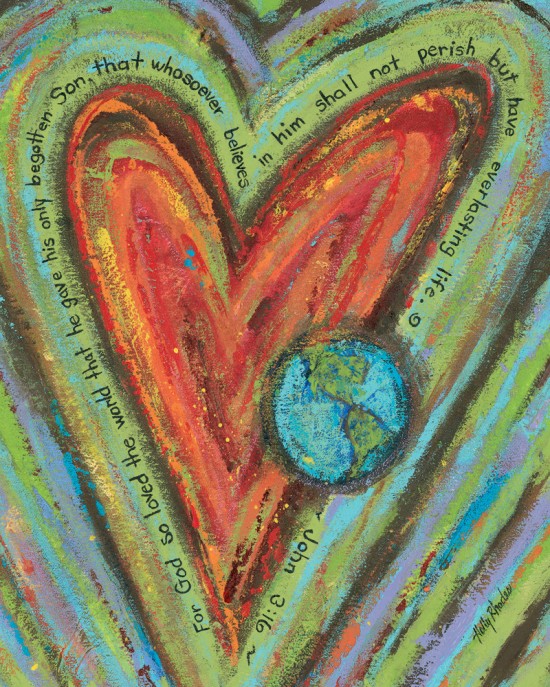
John 3:16 by Holly Rhodes

For God so loved the world that he gave his one and only Son, that whoever believes in him shall not perish but have eternal life. (John 3:16, NIV)

John 3:16 is a Bible verse so familiar as to be cliché. But when Jesus originally said these words, they were both tremendously freeing and incredibly scandalous. When something is familiar, we tend not to explore it any further. We need a closer look at the message of John 3:16 so we can not only see why some people embrace its light, but why others remain in darkness.

Perhaps another examination the gospel will dispel dullness and impel us toward praise, as well as to share its life-giving message not because we must, but because we want to. John 3:16 contains nine of the greatest spiritual realities we could ever experience.

1.“God” is the greatest subject ever.

The Bible contains lots of messages, promises, and commands. However, those are not the primary purpose for having the Holy Scriptures. The Bible has been given to us as a revelation of God to us so that we might know God. Every time the Scriptures are used, read, quoted, prayed, taught, learned, and heard – we know God a bit better. Anything short of knowing God falls short of the Bible’s intended purpose.

I constantly encourage a regular daily regimen of Bible-reading because it is the primary means of knowing God. Yes, we get to know God in creation and through experience, yet one of the best ways of experiencing God is through taking time for reading, meditating, memorizing, and praying of the Scriptures. Some of my most encouraging times are when I hear what people are learning about the Lord in God’s Word. With the Holy Spirit being our teacher, we discover more and more that God is the greatest subject we could ever learn about, talk about, and give our lives to.

2. “So” is the greatest extent ever.

There is a great wideness to God. God is a huge Being! Nothing is outside of God’s reach. So, when God decides to do something, nothing can stop it. We might be limited in our strength and abilities to accomplish things. But God’s extent is limitless. Knowing God means becoming familiar with an all-knowing and all-powerful Being. Prayer, then, becomes a response to God. God speaks to us through the Word, and we speak back with prayer so that the Word and prayer go like a hand in a glove. Our extent is temporary and small. Yet God takes our human prayers and uses them to accomplish divine purposes on this earth.

3. “Loved” is the greatest demonstration ever.

There is no greater demonstration of love than our triune God loving us with a sacrificial self-emptying love that saw our great need for deliverance and went to the greatest lengths possible to accomplish it. Our own love for God, each other, and the world is a direct result of God’s love for us.

This is how we know what love is: Jesus Christ laid down his life for us. And we ought to lay down our lives for our brothers and sisters…. This is how God showed his love among us: He sent his one and only Son into the world that we might live through him. This is love: not that we loved God, but that he loved us and sent his Son as an atoning sacrifice for our sins. Dear friends, since God so loved us, we also ought to love one another. (1 John 3:16; 4:9-11, NIV)

Where there is a lack of love there is an absence of God. Every human on planet earth needs the love of God in Christ. Without it we are lost. You are loved with sacrificial love. The greatest thing that can be said of you is that you are “loved.” Whatever has happened, is happening, and will happen that breaks you down, belittles you, hurts you, or causes you to feel like the north end of a southbound cow, is not what defines you. All may be going to hell around you, but nothing will change the unalterable reality that in Christ you are “loved!”

4. “The world” is the greatest object ever.

Up to this point you might not have sensed anything scandalous about this message of God’s grace and love. But this was the game-changing term for the original hearers of Christ’s words: God so loved the world. Many of Christ’s listeners could easily understand God loved the nation of Israel. But to say that God loved the world was going too far. It meant God loved Gentiles, specifically, Romans who occupied their land and oppressed them.

To capture the punch of this, it would be like Jesus showing up in our world today and saying that God so loved whomever we despise or hate. We often tend to assume that God hates who we hate. Right? Wrong. Yes, God hates evil and is opposed to all that destroys. Yet, God loves people for whom is placed the divine image within. For God to love the world is an incredible because there are so many unlovely people in the world.

Since God loves the world and demonstrated it in through Jesus, Christ’s Church is to reflect and embody this same love for the world. This has enormous implications for followers of Jesus. The Church is must embrace the same pejorative title as given its leader, Jesus: “Friend of Sinners.”  People come to know Jesus through the love given us in Christ. Since this is our title, Christian ministry then becomes not about my personal preferences but about what will most effectively love the world to Jesus.

5. “That he gave his one and only Son” is the greatest gift ever.
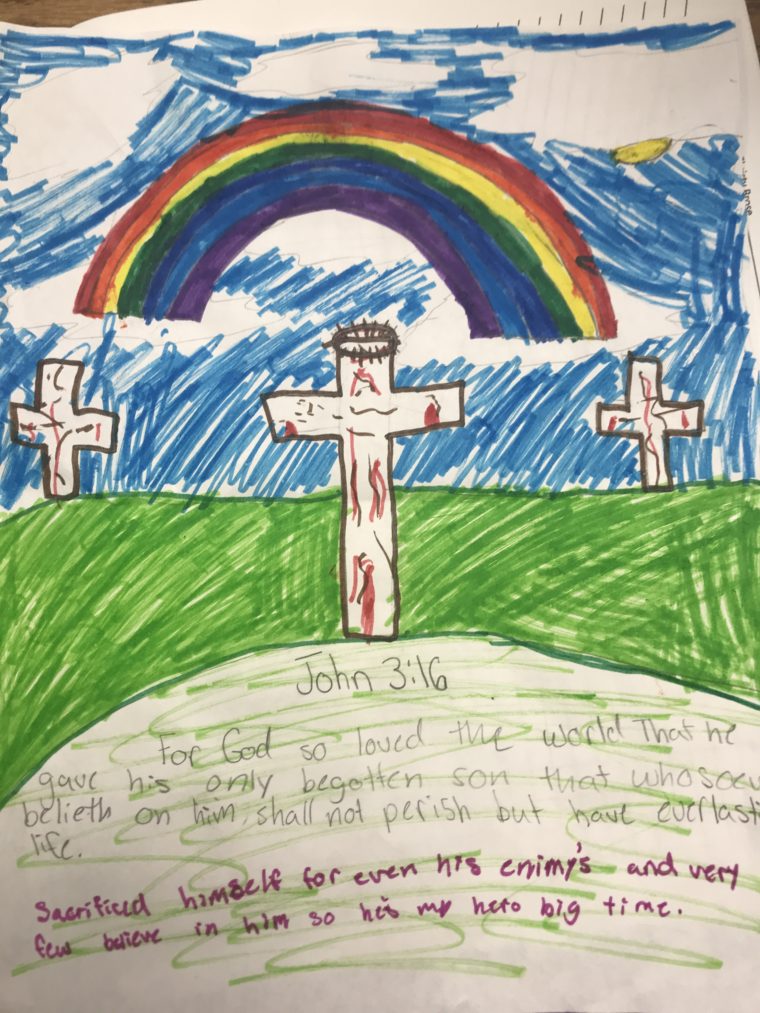
 

John 3:16 by an 11 year old

For God did not send his Son into the world to condemn the world, but to save the world through him. (John 3:17, NIV)

We do not get God’s leftovers or second-hand items. God gave the dearest, best, and most beloved gift he could ever give: his Son. Therefore, the greatest and dearest gift we can give to another person is Jesus. Sharing such a gift Jesus must come freely from the depths of divine love. Apart from love we are only a resounding gong or a clanging cymbal. If it takes cajoling and exhortation for us to give the gift of the gospel, then the problem lies in our hearts. It takes coming back to God’s Word and knowing the love of God in Christ through the Scriptures.

6. “That whoever” is the greatest opportunity ever.

If the greatest gift a person can receive is Jesus, then the best opportunity one could take advantage of is Jesus. We are all at differing places in our relationship with Jesus. Yet no matter the person, the opportunity for grace and love is more than anything you could hope or ask for. 

We are fortunate to have such a grace to know Jesus as Lord, Savior, teacher, healer, and friend. Those familiar with the name of Jesus all their lives but it has not gone much further than that, then the next point is vitally important….

7. “Believes in him” is the greatest commitment ever.

Jesus wants more than our acknowledgment of him; he wants us. Whenever I go home, my dog, Max Power, gets extremely excited. Honestly, I don’t really get excited about him. My typical response to him is, “Yes, Max, I acknowledge your existence.” I say it in hopes he will just kind of leave me alone and let me go about my business. But Max wants more. He wants my affection, my love, and my commitment. He wants a pet, a walk, food, and water.

God does not want to be treated like an annoying puppy. God wants our commitment. The Lord desires more than the tepid response, “I acknowledge your existence.”  The most common response I get from people when sharing the gift of Jesus is “Yes, I believe in Jesus.”  It is their way of saying they acknowledge his existence but are not much interested in giving their lives to him because they want to go about their business without God pestering them about anything. But God does demand something from us – our very souls. If we gain a view of God as gracious and loving, then we willingly desire an intimate commitment.

8. “Shall not perish” is the greatest rescue ever.

People perish not because God is unloving but because their theology is twisted – not to mention that we like our sin, and we don’t want to accommodate a holy God. The Titanic lost hundreds of people not for a lack of lifeboats. In fact, most of the lifeboats went into the water about three-fourths capacity. Many people simply did not believe they were perishing. They trusted in the ship’s reputation as being “unsinkable.” Jesus is our lifeboat.

9. “But have eternal life” is the greatest promise ever.

The promise begins now, not someday. Everlasting life means experiencing a life-saving and life-giving relationship with Jesus today.

Conclusion

If you ever had the feeling there is something more to life than what you are experiencing; if you ever wished you could start over; if you ever felt you cannot do this on your own; then, I have the greatest news ever. God has made a way to handle all your guilt, shame, and darkness. God loves you deeply in the person of Jesus Christ. There is new life in Jesus.

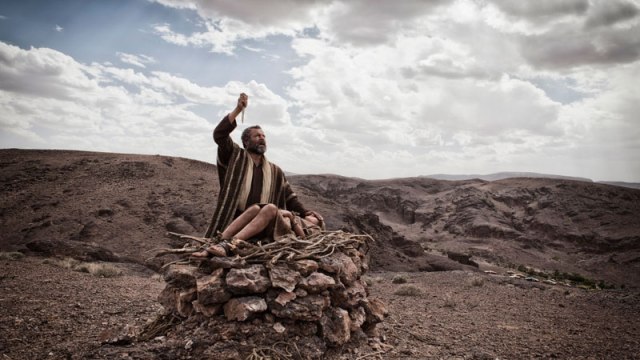
Genesis 22:1-19 – The Lord Will Provide

God decided to test Abraham, so he spoke to him.

Abraham answered, “Here I am, Lord.”

The Lord said, “Go get Isaac, your only son, the one you dearly love! Take him to the land of Moriah, and I will show you a mountain where you must sacrifice him to me on the fires of an altar.” So, Abraham got up early the next morning and chopped wood for the fire. He put a saddle on his donkey and left with Isaac and two servants for the place where God had told him to go.

Three days later Abraham looked off in the distance and saw the place. He told his servants, “Stay here with the donkey, while my son and I go over there to worship. We will come back.”

Abraham put the wood on Isaac’s shoulder, but he carried the hot coals and the knife. As the two of them walked along, Isaac said, “Father, we have the coals and the wood, but where is the lamb for the sacrifice?”

“My son,” Abraham answered, “God will provide the lamb.”

The two of them walked on, and when they reached the place that God had told him about, Abraham built an altar and placed the wood on it. Next, he tied up his son and put him on the wood. He then took the knife and got ready to kill his son. But the Lord’s angel shouted from heaven, “Abraham! Abraham!”

“Here I am!” he answered.

“Don’t hurt the boy or harm him in any way!” the angel said. “Now I know that you truly obey God, because you were willing to offer him your only son.”

Abraham looked up and saw a ram caught by its horns in the bushes. So, he took the ram and sacrificed it in place of his son.

Abraham named that place “The Lord Will Provide.” And even now people say, “On the mountain of the Lord it will be provided.”

The Lord’s angel called out from heaven a second time:

You were willing to offer the Lord your only son, and so he makes you this solemn promise, “I will bless you and give you such a large family, that someday your descendants will be more numerous than the stars in the sky or the grains of sand along the beach. They will defeat their enemies and take over the cities where their enemies live. You have obeyed me, and so you and your descendants will be a blessing to all nations on earth.”

Abraham and Isaac went back to the servants who had come with him, and they returned to Abraham’s home in Beersheba. (CEV)

The biblical character of Abraham is synonymous with faith. And for good reason. God had told Abraham he would have a son with his wife Sarah. This would not be unusual except for the fact the couple were well advanced in age, and Sarah was incapable of having children. Infertility is not just a modern problem; it has always existed. Yet, despite the overwhelming odds, Abraham believed God. Years later and with a mix of patience and impatience from the would-be parents, the promise from God was realized. Abraham and Sarah had a son, Isaac.

“Child of the promise.” That was Isaac’s moniker – which makes the command coming from God so incredibly perplexing: Take your son, the child of the promise, and go to the mountain and sacrifice him there. Huh? What the…!  But it only seems strange and super-weird to us. We get no reaction from Abraham, no questioning, no talk back. He simply went about the business of saddling up the donkey, chopping some wood for the sacrifice, and took his only son with him on the journey to the mountain.

We might wonder what was going through Abraham’s mind through all of this. While you and I might try and figure out if we really heard God or not, Abraham had a history of talking with God. He knew God’s voice as well as he knew his own. Abraham was well down the road of relationship with the God he served. We get an insight from the author of Hebrews into Abraham’s thought process, a line of thinking consistent with a person who has a regular habit of talking with God:

“Abraham had been promised that Isaac, his only son, would continue his family. But when Abraham was tested, he had faith and was willing to sacrifice Isaac, because he was sure that God could raise people to life. This was just like getting Isaac back from death.” (Hebrews 11:17-18, CEV)

Abraham did not try and figure out God’s mind. He didn’t get into a debate with God about the contradiction of ethics he was being asked to do. He just obeyed. Abraham reasoned that it didn’t matter if Isaac were killed because God could raise him from death. This, of course, is not what happened. It was all a test of faith. Abraham knew beyond a shadow of a doubt that God is the Lord who provides.

You and I rarely know why we are facing the unwanted and unasked for circumstances we are enduring. We don’t always know what in the world God is thinking. Yet, like Abraham, if we have a spiritual history of walking with God and hearing the Lord’s voice, we don’t hesitate to respond. We are convinced God will provide. Obedience for the follower of Christ is not a burden but a privilege, even when we are being tested beyond our seeming emotional ability to do it.

Sovereign Lord, your ways are sometimes strange and confusing. Yet, I know that everything you do is always right, just, and good. It is to your gracious and merciful character that I know you will provide. My allegiance is to you, in the Name of Jesus Christ, through the power of the Holy Spirit. Amen.

Romans 4:13-25 – Christianity 101

It was not through the law that Abraham and his offspring received the promise that he would be heir of the world, but through the righteousness that comes by faith. For if those who depend on the law are heirs, faith means nothing and the promise is worthless, because the law brings wrath. And where there is no law there is no transgression.

Therefore, the promise comes by faith, so that it may be by grace and may be guaranteed to all Abraham’s offspring—not only to those who are of the law but also to those who have the faith of Abraham. He is the father of us all. As it is written: “I have made you a father of many nations.” He is our father in the sight of God, in whom he believed—the God who gives life to the dead and calls into being things that were not.

Against all hope, Abraham in hope believed and so became the father of many nations, just as it had been said to him, “So shall your offspring be.” Without weakening in his faith, he faced the fact that his body was as good as dead—since he was about a hundred years old—and that Sarah’s womb was also dead. Yet he did not waver through unbelief regarding the promise of God but was strengthened in his faith and gave glory to God, being fully persuaded that God had power to do what he had promised. Therefore “it was credited to him as righteousness.” The words “it was credited to him” were written not for him alone, but also for us, to whom God will credit righteousness—for us who believe in him who raised Jesus our Lord from the dead. He was delivered over to death for our sins and was raised to life for our justification. (NIV)

Sometimes it’s easy to lose sight of why we are here on this earth and what we are really supposed to be doing.  There’s just so much stuff going on around us all the time that it seems like we have spiritual attention deficit disorder and cannot focus on what is most important. Certain people irritate us, we scramble to make a decent living, there never seems to be enough time to accomplish everything, and there is adversity and obstacles all along life’s way.

There’s a lot going on in the Apostle Paul’s Epistle to the Romans. At first glance, like our lives, it seems complicated. Paul had all kinds of words for the Christians such as hope, faith, righteousness, and justification, just to name a few. All those words and ideas funneled into and pointed toward a singular focus: The Lord Jesus. Everything in life comes down to Christ. 

The church was losing sight of why they existed. Within the church at Rome were both Jews and Gentiles, together as one people of God. They didn’t always see eye-to-eye on everything. The Gentiles thought the Jews were stuck in tradition and needed to move on. The Jews had centuries of history behind them of God working through them. They thought the Gentiles needed some solid Old Testament law to bolster their primitive spirituality. Would the church take their cues on life from the Gentiles, or the Jews?

“To one who has faith, no explanation is necessary. To one without faith, no explanation is possible.”

thomas aquinas

Paul essentially told the church they were headed in the wrong direction. The issues and problems of living the Christian life were to take a back seat to faith in God. To prove his point, Paul went back to Abraham as Exhibit A of what it means to live with and for God. 

It went down like this: God made a promise to Abraham of progeny in his old age; Abraham believed what God said, Abraham demonstrated his faith by having the confident expectation (hope) that God is good for his promise; and God declared (justified) Abraham to have a right relationship with himself (righteousness). 

In other words, the heart of Christian faith and practice is that God makes promises; people respond to God in faith, hope, and love. Law and the willpower to keep it doesn’t even come into the equation.

Christians are the spiritual children of Abraham. All God’s promises are fulfilled in Christ. We respond to God by believing in Jesus. The redemptive events of Jesus make us just and right.  So, what does this mean for you and me?

We are not to get sidetracked with trying to make others be like us. Instead, we are to proclaim the promises of God in Christ so that others might respond by believing and embracing those promises. Furthermore, we have no need to try and get God to like us, notice us, and/or listen to us. God has already made and kept promises to us, demonstrating his love, mercy, and grace through his Son, the Lord Jesus.

Our lives are not to center in our abilities, or lack thereof, to live a godly life. Rather, our lives are to revolve around the person and work of Jesus Christ through faith, with the hope that God will always hold to his promise to be with us, which frees us to love others. This is basic Christianity 101. This is the faith we embrace.

Righteous God, you have made and kept promises to us. Our ultimate deliverance from sin, death, and hell isn’t through our ability to keep the law, but in your Son’s life, death, and resurrection. Help us, your people, to live by faith in Jesus who loved us and gave himself for us, in the strength of your Holy Spirit. Amen.

Romans 3:21-31 – 8 Words That Can Change Your Life

Statue of Martin Luther in Dresden, Germany

But now, apart from law, the righteousness of God has been disclosed, and is attested by the law and the prophets, the righteousness of God through faith in Jesus Christ for all who believe. For there is no distinction, since all have sinned and fall short of the glory of God; they are now justified by his grace as a gift, through the redemption that is in Christ Jesus, whom God put forward as a sacrifice of atonement by his blood, effective through faith. He did this to show his righteousness, because in his divine forbearance he had passed over the sins previously committed; it was to prove at the present time that he himself is righteous and that he justifies the one who has faith in Jesus.

Then what becomes of boasting? It is excluded. By what law? By that of works? No, but by the law of faith. For we hold that a person is justified by faith apart from works prescribed by the law. Or is God the God of Jews only? Is he not the God of Gentiles also? Yes, of Gentiles also since God is one; and he will justify the circumcised on the ground of faith and the uncircumcised through that same faith. Do we then overthrow the law by this faith? By no means! On the contrary, we uphold the law. (NRSV)

Five-hundred years is a long time. It was that long ago when Martin Luther posted his 95 Theses on the Wittenberg Church door in Germany. It sparked the flame of Reformation, a legacy we still live with today.  Protestant Christians have a rich spiritual heritage in acknowledging and affirming the veracity of Holy Scripture and its central message of Christ’s good news of salvation.

Eight words changed Martin Luther’s life, changed the course of history and Christianity, and can change our lives, too.

Law

The role of the law is neither to save nor sanctify but to reveal the true state of our hearts. The law can only condemn; it cannot save. Obedience is important yet cannot be done by sheer willpower. Deliverance does not come by turning over a new leaf; that approach only gets one caught in cycle of regret, promising not to do it again, and then returning to it. Law makes us feel the great weight of our darkness. We need to feel and know what that darkness really is….

Sin

Sin means missing the mark, falling short. We must face what sin really is, without sugar-coating it.  We tend to think of sin as some terrible action like assault or murder, yet sin is primarily thought of in Scripture as attempting to de-throne God with a replacement. You and I need to be realistic about the bad news of sin before we can ever receive the good news of forgiveness. Forgiveness will be elusive until we admit what we have done, or not done, something that warrants needing to be forgiven. Moving forward in hope can only happen when we possess…

Righteousness

Righteousness means right relationships; unrighteousness means broken relationships. Blessed are those who hunger and thirst for right relationships. Like illegal aliens who cannot make themselves citizens, God grants us spiritual amnesty because we cannot make ourselves legal or righteous. Through righteousness God has made it possible for us to live in harmony. Holding onto bad relationships is like a dog returning to its vomit; there is no need for it because God has given us…

Justification

This term is a picture of the court of law. It is a metaphor communicating that righteousness comes because God justified us, that is, did for us what the law could not do – God sent his Son to be a substitute for us. We cannot justify ourselves by obeying the law or simply by being sorry. Without the next word, we will wallow in our guilt because we need this for our justification to really live…

Faith

Faith is a gift given by God. We are unable to generate faith within ourselves because sin estranges us from God. We need divine action. God’s righteousness can only become operative through faith. We must hold out our hands and receive a gift to possess it. We must come to the end of ourselves to exercise faith. We need to see that sin is bad enough to have made life unmanageable and that we have dug a hole too deep to get out of by ourselves. If one thinks they can handle it, then they are going back to the law, living in denial and not by faith.  We also need…

Grace

Faith must have an object, and that object is the cross of Christ. It is grace which gives faith and saves us. Our denial is so great about our sin that we cannot reach out to God unless God acts. Even while we were sinners, Christ died for us. Opening the gift given to us, we find that we are given…

Redemption

Redemption is a word referring to a slave market. We are slaves to sin. We need someone to purchase our freedom. The blood of Christ paid for my sin. Jesus bought me through his death. Jesus has taken care of the sin issue through…

Propitiation

“Sacrifice of atonement” is the meaning of propitiation. It is the satisfaction of God’s wrath against sin.  Because God loves, God has wrath – God is not okay with sin running amok in this world. We are forgiven through the blood of Christ. We are free to live into the gracious joyous life of God in Christ. Yet not all of us do so. For example:

If the institution that gave me my car loan came along and forgave or satisfied the debt I have on my car, it would be weird if I kept making loan payments. But that is what many people keep doing with their lives because they do not really believe they are forgiven and loved by God. We think God is constantly upset or, at least, agitated with us since we screw-up so often. So, we live by law hoping that God will applaud our sincerity and our effort, wishing that everything will be okay. But everything will not be okay with that approach because God wants our faith, not our promises to be better. The Lord asks us:

Do you trust me?  Do you trust me to deliver you from your sin?  Do you trust me to work out the situation that you have made a mess of on your own?  Do you trust me to provide for you everything you need? 

Live into your spiritual heritage. Do not return to the law. Bask in the gracious gift of your freedom in Christ.  Live and enjoy Jesus because you have been made righteous, justified, and redeemed through the precious blood of Jesus Christ.

Almighty God, to whom all hearts are open, all desires known, and from whom no secrets are hid: Cleanse the thoughts of our hearts by the inspiration of your Holy Spirit so that we may perfectly love you, and magnify your holy Name in a worthy manner, through Jesus Christ our Lord. Amen.