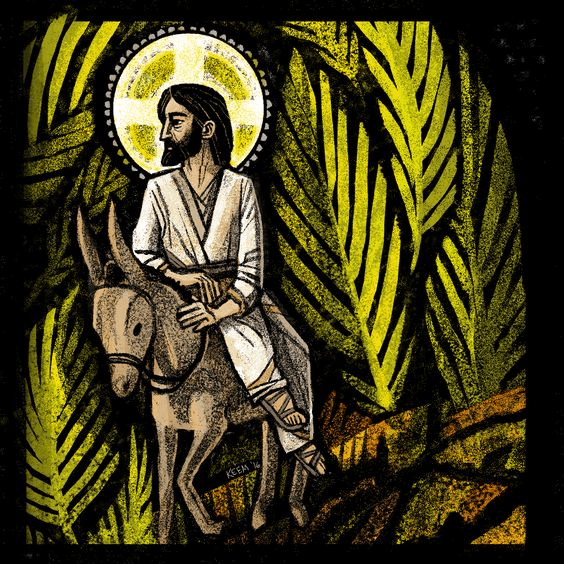
Get Low Enough To See (John 7:25-36)

At that point some of the people of Jerusalem began to ask, “Isn’t this the man they are trying to kill? Here he is, speaking publicly, and they are not saying a word to him. Have the authorities really concluded that he is the Messiah? But we know where this man is from; when the Messiah comes, no one will know where he is from.”

Then Jesus, still teaching in the temple courts, cried out, “Yes, you know me, and you know where I am from. I am not here on my own authority, but he who sent me is true. You do not know him, but I know him because I am from him and he sent me.”

At this they tried to seize him, but no one laid a hand on him, because his hour had not yet come. Still, many in the crowd believed in him. They said, “When the Messiah comes, will he perform more signs than this man?”

The Pharisees heard the crowd whispering such things about him. Then the chief priests and the Pharisees sent temple guards to arrest him.

Jesus said, “I am with you for only a short time, and then I am going to the one who sent me. You will look for me, but you will not find me; and where I am, you cannot come.”

The Jews said to one another, “Where does this man intend to go that we cannot find him? Will he go where our people live scattered among the Greeks, and teach the Greeks? What did he mean when he said, ‘You will look for me, but you will not find me,’ and ‘Where I am, you cannot come’?” (New International Version)

Once in a while, I pray something like this: “Lord, if I’m not seeing you when I ought to, or am not getting something you’re trying to show me, please use your divine baseball bat and whomp me upside the head!”

That’s because, far more often than I would like to admit, I miss seeing the Divine whenever God shows up. That’s true for all of us, as well. We tend to mistake experiencing God when the Lord comes and stands in front of us.

In the New Testament Gospels, some who followed Jesus ended up turning around and going back to their old life. Either the situations with Jesus got too dicey, or Christ’s teaching seemed too confusing. When that happens, it’s too easy to forget Jesus altogether, and never pay attention to him.

There are others who treated Jesus with contempt, simply because they didn’t recognize who he really is. One cannot have faith if they don’t know or acknowledge the object of faith. You cannot believe Jesus if you don’t believe he is from God.

And, of course, there are those who see Christ for who he is. Yet, some of them see Jesus as a threat and want to be rid of him. Others see him as a great healer and teacher, and follow Jesus in order to gain something from him.

However, there are others who see through spiritual eyes and gain the faith to believe and follow him.

All of us, in some way or another in our lives, have misread Jesus and mistaken him for the gardener or some other person.

Many of the Jews in Christ’s own lifetime rejected him because they believed him to be a common nondescript Jew. They knew his parents, and his family. Jesus was too familiar to be special, let alone the Son of God. Besides, everyone knows nothing good comes from the Hicksville that’s Nazareth, right?

The thing is: People miss seeing Jesus for who he is (sometimes including you and me) because we have particular expectations and requirements of our personal Jesus. In other words, it is awfully easy to make Jesus Christ into our own image of how he should be.

Having worked with college students for many years, I continually got a kick out of some of them who had precise requirements for a spouse, and certain expectations of how their potential kids were going to be someday.

It went well beyond having the same core cardinal values. Handsome and beautiful, smart but not too smart, assertive but not sassy, subservient but not a washrag, a 3-point Calvinist but not 5-point, willing to eat anything on the table except weird food that would embarrass, willing to live on a shoestring budget, funny but not quirky…. Actually, I could keep going; there’s a lot more. But you get the idea.

You may be curious as to my counsel to them. I typically said something along the lines of “I guess you’ll never get married, because marriage has nothing to do with any of that stuff. If you’re willing to have your eyes open and see a good person when they come along, and if you’re patient enough to develop a solid relationship built on grace, truth, and love, then you’ll likely find yourself a spouse you can be with for a lifetime.”

I remember one day on a college campus talking with a student after he asked me why he should ever be a Christian. I don’t think he expected my answer. I had already assessed that the guy was looking for a philosophical debate, so I went in a different direction. I said something like:

“I don’t think you should be a Christian. Jesus had people misunderstand him all the time. He was ridiculed and persecuted, tortured and killed. And he had the chutzpah to tell his followers that suffering would be a big part of being his disciple. Many of them followed him anyway. If you’re interested in why they did, we can talk. But if you just want to try and feel good by talking about Jesus, and avoid facing life’s pain and suffering, then I’m not wasting my time. So, what do you want to do?”

We will miss Jesus altogether if we are looking for a particular person. Whenever we get married to specific outcomes, then we’ll miss him for sure.

I wonder how many times Jesus showed up in your life this week, and you didn’t recognize him. In truth, Jesus is with us, by means of the Spirit, all the time. If you don’t see him, it’s not God’s fault, or anybody else’s.

Humility accesses spiritual sight. The religious leaders of Christ’s day were flummoxed and fuming all the time because of their arrogance, and their settled theological and biblical dogma. And so, they could not see who Jesus is, even though he was smack in front of them.

Yet, even though we may be spiritually blind and deaf, and finally see a glimpse and catch a sound of Jesus, that graciously means he is still there, beside you, never having given up on you.

Even a blurry and faint awareness realizes Jesus coming in the people we meet each day who encourage and bless us. Christ even comes and speaks through those we would not expect to hear a word from God.

Whenever we may wonder where Jesus is in our suffering and pain, he is there, sometimes even holding us and carrying us, despite our lack of awareness.

In reality, Jesus is in front of us, beside us, and holding us, all of the time. It’s just a matter of whether we know it, or not. Christ is in everything we experience. He is in both our sadness and joy, the noise and the silence, our work as well as worship, business and leisure, at night when we fall asleep and in the morning when we open our eyes.

So, if we are looking and longing for Christ, he has already come. Jesus came in the most humble forms possible. So, in order to see and experience him, we need to get low enough to see and hear him.

My Lord and my God, help me to see You in all of the ways You come to me today. Teach me not to despise any of the forms in which You come to me as being too common, humble, or ordinary. 

Wake me with Your presence in the morning and tuck me into bed when I sleep. Labor with me in my work today, and cause my leisure to lead to thanksgiving. 

Speak to me through the people You have ordained for me to meet today, and speak even through me, in spite of myself. 

For good and for ill, better and worse, in sickness and health, and in richness and poverty, reveal Yourself to me that I may receive whatever blessing You have chosen for me this day; through Jesus Christ Your Son, my Lord, who with You and the Holy Spirit are One God, now and forever. Amen.

Misunderstanding Jesus (Mark 3:20-35)

By Jorge Cocco Santángelo

Then he went home, and the crowd came together again, so that they could not even eat. When his family heard it, they went out to restrain him, for people were saying, “He has gone out of his mind.” And the scribes who came down from Jerusalem said, “He has Beelzebul, and by the ruler of the demons he casts out demons.” 

And he called them to him and spoke to them in parables, “How can Satan cast out Satan? If a kingdom is divided against itself, that kingdom cannot stand. And if a house is divided against itself, that house will not be able to stand. And if Satan has risen up against himself and is divided, he cannot stand, but his end has come. But no one can enter a strong man’s house and plunder his property without first tying up the strong man; then indeed the house can be plundered.

“Truly I tell you, people will be forgiven for their sins and whatever blasphemies they utter, but whoever blasphemes against the Holy Spirit can never have forgiveness but is guilty of an eternal sin”—for they had said, “He has an unclean spirit.”

Then his mother and his brothers came, and standing outside they sent to him and called him. A crowd was sitting around him, and they said to him, “Your mother and your brothers are outside asking for you.” And he replied, “Who are my mother and my brothers?” And looking at those who sat around him, he said, “Here are my mother and my brothers! Whoever does the will of God is my brother and sister and mother.” (New Revised Standard Version)

Who exactly is Jesus? That’s a question which has been bantered around by people for the past two millennia. I suppose that is to be expected, since people contemporary to Christ misunderstood him, including his own family.

There were a couple of related charges against Jesus by the religious authorities of his day: he has a demon; and by the prince of demons he casts out demons. There was also a charge against Jesus from members of his family: he is out of his mind. All the accusations and misinterpretations were in response to the crowds Jesus was attracting.

Sometimes one’s own relatives will think one is crazy, just for doing God’s will. Yet, the good news is that the misunderstood and the misinterpreted folks can find a family within Christian community. Jesus stated that his family are not those who are related by blood, but those who share his purpose of doing the will of God.

Jesus teaching, by James Tissot (1836-1902)

When it came to the religious leaders accusations, they were essentially saying that Jesus was using dark magic and not God’s power. They thought of Jesus as having gained control of certain spirits to do his bidding, as if he were casting spells on people and making them do what he wanted.

Yet, it is illogical, as Christ pointed out, that Satan would cast out his own demons, thus undermining his own sinister work. It’s much more logical to discern Christ’s work as the power of God and the work of the Holy Spirit. To miss this completely, and accuse otherwise, is to commit an unpardonable sin.

The controversy and charges in this story are about who is truly in and who is really out. Because, in reality, the insiders are out and the outsiders are in. And it isn’t so clear cut as everyone seems to think.

Jesus was drawing in the crowd of people, while family members were becoming outsiders. Those on the inside are given insight and understanding about God’s kingdom, whereas those on the outside are scratching their heads, not knowing what Jesus is doing or talking about.

Since the family was mystified by their own relative, they misinterpreted Jesus as being off his rocker. And since the religious leaders were clueless to the parables and actions of Jesus, they misunderstood the source of his power as demonic.

To mistake the work and power of the Holy Spirit as satanic is to be guilty of an unforgivable sin, simply because the ones mistaking, misunderstanding, and misinterpreting never see a need for repentance and forgiveness. They believe they’re okay, and that Jesus is not.

You cannot be forgiven if you always think you’re right.

The bottom line for both the family and the religious leaders is that Jesus didn’t meet their expectations and act as they all think he should; so they make completely misguided conclusions about him.

But, in truth, all they’re actually doing is projecting their own stuff onto Jesus. The family is out of their mind for not recognizing who is actually in front of their face. And the religious authorities blasphemed God by saying hard things about the Lord of life, of whom they were observing.

If that’s how others are going to treat Jesus, then they’re going to be on the outside of God’s kingdom. It’s their own fault, because of their own chosen lack of awareness, and their refusal to take a good hard look at who Jesus is.

For myself, I want to investigate Jesus so closely that I’m like the crowd pressing in to see him and touch the hem of his garment – believing that my desperate desire can be fully met in him. And I want the continued assurance that I am claimed by Christ as his brother.

I am grateful that I no longer have to be an outsider looking in; but instead have become a keeper of kingdom truth because I am drawn into the mystery of God’s love in Jesus Christ through the enablement of the Holy Spirit. To which I say with flavor, “amen” and “amen.”

The Message of Palm Sunday (John 12:12-16)

Christ enters Jerusalem, by Hanna-Cheriyan Varghese

The next day the great crowd that had come to the festival heard that Jesus was coming to Jerusalem. So they took branches of palm trees and went out to meet him, shouting,

“Hosanna!
Blessed is the one who comes in the name of the Lord—
    the King of Israel!”

Jesus found a young donkey and sat on it, as it is written:

“Do not be afraid, daughter of Zion.
Look, your king is coming,
    sitting on a donkey’s colt!”

His disciples did not understand these things at first, but when Jesus was glorified, then they remembered that these things had been written of him and had been done to him. (New Revised Standard Version)

Here are two questions to keep in mind as we consider Palm Sunday, the day we remember Jesus coming into Jerusalem during the Feast of Passover (Holy Week): 

  1. Is Jesus really enough for me, just the way he is? 
  2. Or, do I think he ought to be different than he is?

Many of the people who gathered to give Jesus praise at the beginning of the week, shouted to the Roman authorities to have him crucified at the end of the week. So, what changed? Why the big turn around? 

The change in attitude came because Jesus did not fit the crowd’s expectations of who the Messiah is, and what he should do. Jesus, just as he is, was not enough for them. They did not accept him for who he was. 

Let’s be aware and in touch with our own expectations for God, and for what we believe Jesus ought to be and to do. Because missed expectations create either hurt, anger, or both. 

How we view Jesus determines how we view the Christian life and the Christian Church. If we see Jesus like an earthly king or politician, and emphasize his war chest, while downplaying his meekness, we will then have a triumphalist view of Christianity. We’ll be disappointed when there is no practical victory taking place. 

The crowd wanted assurances that in Christ’s first 40 days in office, he would put the big hurt on the Roman authorities. The people had expectations of strong leadership, making things happen now, and accomplishing big hairy audacious goals of upending the establishment. 

But if we view Jesus as the Gentle King and the Humble Sovereign – viewing him as lowly royalty – giving due emphasis to both his authority and his humility, then we will likely worship Jesus as he truly is, and not as we want him to be. 

Most of the crowd was following Jesus with misguided expectations

Jesus did some incredible miracles, especially the one where he raised Lazarus from the dead. Over a million people came to Jerusalem every year during the week of Passover, and word had spread about a man who just might be the hope of Israel. They heard about his power and authority, and wanted to check him out.

And this is a good thing, not a bad thing. It’s important that people investigate Jesus and see for themselves who he is and what he’s all about. 

Just because there are people who do not respond immediately to Jesus, doesn’t mean they won’t in the future. After all, even the disciples who were closest to Jesus did not fully understand who he was or what he was doing. Only later, after the resurrection and ascension, did they put it all together and “get it.” So, cut others (and yourself) some slack.

Let’s give a lot of latitude to people who seek Jesus. They need the good news of forgiveness and new life in Christ. They don’t need immediate pressure to follow Jesus, or given a set of moral rules to follow, right now, as if clean living brings salvation from sin, death, and hell. 

People need room to investigate Jesus, and plenty of helpful guides along the way to point them in the right direction. So, let’s encourage honest questions and real conversations about Jesus.

However, some of the crowd checking out Jesus already had their minds made up about who they thought he should be. They had no room for a suffering servant and a humble savior, seeing only the sins of others, and not their own faults. 

Those with closed minds believed Jesus should be a political liberator from the Gentile Romans. The crowd was understandably weary of being dominated by non-Jews. But what many wanted was some serious payback and a new establishment with Messiah in charge.

This would be like, in our own day, getting completely jazzed-up about a particular presidential candidate who did some incredible things on the campaign trail and is now entering Washington D.C. to a ticker-tape parade and lots of flag-waving. 

Art by Kris Miller

Palm branches were the national symbol for Israel, like our flag displays. There was no question about what the crowd of people wanted: A strong leader-king who was going to change the establishment and inaugurate a new administration of peace and prosperity that put the Romans in their place and give prominence to the Jews, like King David of old.

But Jesus made it evident he was not going to submit to what the crowd wanted. Christ had a different idea about what needed to take place.

Jesus did not ride into Jerusalem on a war horse, but on a donkey

An enthused crowd. People anticipating Jesus… and then he shows up! “What in the heck is he riding on…?  Is that a donkey!?” It was an anti-climactic moment.

Jesus purposely chose a donkey to ride into Jerusalem – serving notice to everyone that he was not going to capitulate to the crowd’s agenda for him and become the political savior they were looking for. The establishment was not going to be overturned.

Christ was giving balance to the people about who he was. Yes, he actually is a king, and the sovereign Lord of all – but a gentle King, a humble Sovereign, a meek Messiah. Those adjectives were not in most people’s vocabulary for a king. But Jesus is a king on his terms, not anybody else’s.

Because Jesus is a gentle king, we need not be afraid

Sometimes, what we think we need, and what we actually need, are two different things. Jesus uses his royal authority and power to help, not hurt. Although he might not meet all the expectations of the crowd, that doesn’t mean he will avoid giving them what they really need. 

The crowd was too hung up on their hardships and expecting deliverance from a human government. But what they received was something better: salvation from the dark powers of sin, death, and hell. 

Jesus will certainly come and right every wrong, but he will do it in God’s timing, not ours. 

In the meantime, when evil seems to be winning the day, we can be assured that God’s judgment will deal with each and every sin committed against God’s people. Jesus is attentive to his followers; his grace and power combine to give us what we truly need.

Conclusion

Ironically, Jesus ended up not being enough for his own people; they wanted something different than what they got. Here is the timeless point today’s story emphasizes:

We must adjust to who Jesus is, and not the other way around. 

In truth, Jesus came to take on the establishment – just not the Roman one. Jesus came to overturn the ruling establishment of Satan and his wicked spirits; to upend the principalities and powers of this dark world.

Jesus came to take back the people of this earth for God, and he would not do it through a political revolution, but by a spiritual one. Jesus would seize power by becoming a sacrifice for sin, making it possible for people to live a new life without the world, the flesh, and the devil dogging them at every turn.

Jesus is the rightful Ruler of both the church and the world. And he rules in humility, meekness, gentleness, and love. Jesus calls his followers to serve him by living in that same way. Just a few days after the entrance into Jerusalem with palm branches waving, Jesus told his disciples exactly what he wanted from them: 

“Now that I, your Lord and Teacher, have washed your feet, you also should wash one another’s feet. I have set you an example that you should do as I have done for you. I tell you the truth, no servant is greater than the master, nor is a messenger greater than the one who sent him (this is Jesus’ way of saying that they all must adjust to him, and not the other way around). Now that you know these things, you will be blessed if you do them.” (John 13:13-17, NIV)

Jesus went on to give them a clear command:

“Love one another.  As I have loved you, so you must love one another (this is Jesus’ way of emphasizing what is to be the priority of his subjects in the kingdom of God). By this all men will know that you are my disciples if you love one another.” (John 13:34-35, NIV)

Jesus is engaging in a revolution, but not in a worldly sense. Christ sends his followers to spread the message of forgiveness and new life for individuals, families, workplaces, neighborhoods, and nations. It is a revolution that will be ushered in through love, not hate; through the violence of a singular sacrifice, and not through the violence of wars and political coups.

Is Jesus really enough for me, just the way he is? Or, do I believe he ought to be different than he is?  

I daily strive to say, no matter the circumstance, that the grace of Jesus Christ is enough for me. If all were stripped and taken from me, if all the world were against me, if nothing went right and all was upside-down, I would still have the love of God in Jesus Christ. Amen.

Struggling to Accept (Habakkuk 2:1-5)

The prophet Habakkuk cries out to God, by Unknown 19th century artist

I will stand at my guard post.
I will station myself on the wall.
I will watch to see what he will say to me
and what answer I will get to my complaint.

Then the Lord answered me,
“Write the vision.
Make it clear on tablets
so that anyone can read it quickly.
The vision will still happen at the appointed time.
It hurries toward its goal.
It won’t be a lie.
If it’s delayed, wait for it.
It will certainly happen.
It won’t be late.

“Look at the proud person. He is not right in himself.
But the righteous person will live because of his faithfulness.
Also because wine is treacherous
he is arrogant and never rests.
He has a large appetite like the grave.
He is like death—never satisfied.
He gathers all the nations to himself.
He collects all the people to himself. (God’s Word Translation)

The prophet Habakkuk is unique among the prophetic books of the Old Testament. It is more an account of the prophet’s own wonderings and questions before God, than it is bringing a specific word from God to the people.

The book of Habakkuk revolves around the prophet’s queries to the Lord; the Lord’s responses; and the prophet’s struggles to wrap both his head and his heart around those answers.

Habakkuk struggled with the rampant sins of injustice and unrighteousness amongst his own people. He contended with God about how long all this was going to go on. Today’s Old Testament lesson is something of a lament – grieving the loss of justice and righteousness, and longing for God’s salvation from the nation’s troubles. Habakkuk was determination to name the evil, bring it before God, and wait with a determined spirit for a divine response.

The prophet asked a question, and waited for an answer. His complaint is an age old one. He was weary of seeing injustice day after day, of observing the arrogant and the wicked exploit the poor and the needy. He wanted to hear from God; and when the awaited response finally came, it wasn’t what Habakkuk was expecting.

Habakkuk’s first question is one that many today can relate to:

How long, O Lord, am I to cry for help,
but you will not listen?
I cry out to you, “There’s violence!”
yet you will not come to the rescue.
Why do you make me see wrongdoing?
And why do you watch wickedness? (Habakkuk 1:2-3, GW)

God answered the prophet’s question. And Habakkuk didn’t like the answer, at all:

I am going to send the Babylonians,
that fierce and reckless nation.
They will march throughout the earth
to take possession of lands that don’t belong to them. (Habakkuk 1:6, GW)

The problem with this answer, is that, even though the prophet’s own people were unjust and violent, the Babylonians were an even worse lot of people. It was nonsense to Habakkuk that God would use an evil nation to judge God’s own people. So, the prophet asked yet another question of God:

Why do you keep watching treacherous people?
Why are you silent when wicked people swallow those
who are more righteous than they are? (Habakkuk 1:13, GW)

There are many persons who freely admit they are sinful. There is a problem, however, when a person points to others whom they believe are more sinful than they are. Habakkuk, like many contemporary believers, essentially says, “Well, I’m a sinner. I’m not perfect. But I’m not like the Babylonians! They don’t even worship God! And they do a lot worse things than I do!”

If one wants divine judgment, then one must be content with whom it comes from, and how it is done. Otherwise, the person seeks to be the judge, instead of letting the Lord handle the trouble.

We all struggle with navigating the injustice of this world. People of faith will discern that they must trust the Lord by viewing God’s deliverance and actions with a big picture perspective. They remember that God has acted with faithfulness and justice in the past; and the Lord can do it again.

Believers may have to endure some dark valleys, hard circumstances, and plenty of suffering; yet they trust that God will show up. They only need to wait patiently for divine deliverance. Eventually, we all need to conclude with the prophet, after waiting and wrestling over God’s divine plan for the situation we don’t like:

Though the fig tree does not bud
    and there are no grapes on the vines,
though the olive crop fails
    and the fields produce no food,
though there are no sheep in the pen
    and no cattle in the stalls,
yet I will rejoice in the Lord,
    I will be joyful in God my Savior.

The Sovereign Lord is my strength;
    he makes my feet like the feet of a deer,
    he enables me to tread on the heights. (Habakkuk 3:17-19, NIV)

The prophet finally accepted the words of God; and, despite the circumstances, this willingness to receive those words opened to him the possibility to take joy and confidence yet again in the Lord.

God grant me the serenity to accept the things I cannot change; courage to change the things I can; and wisdom to know the difference. Living one day at a time; enjoying one moment at a time; accepting hardships as the pathway to peace; taking, as He did, this sinful world as it is, not as I would have it; trusting that He will make all things right If I surrender to His will; so that I may be reasonably happy in this life, and supremely happy with Him forever in the next. Amen.