


These events happened in the days of King Xerxes, who reigned over 127 provinces stretching from India to Ethiopia. At that time Xerxes ruled his empire from his royal throne at the fortress of Susa. In the third year of his reign, he gave a banquet for all his nobles and officials. He invited all the military officers of Persia and Media as well as the princes and nobles of the provinces. The celebration lasted 180 days—a tremendous display of the opulent wealth of his empire and the pomp and splendor of his majesty.
When it was all over, the king gave a banquet for all the people, from the greatest to the least, who were in the fortress of Susa. It lasted for seven days and was held in the courtyard of the palace garden. The courtyard was beautifully decorated with white cotton curtains and blue hangings, which were fastened with white linen cords and purple ribbons to silver rings embedded in marble pillars. Gold and silver couches stood on a mosaic pavement of porphyry, marble, mother-of-pearl, and other costly stones.
Drinks were served in gold goblets of many designs, and there was an abundance of royal wine, reflecting the king’s generosity. By edict of the king, no limits were placed on the drinking, for the king had instructed all his palace officials to serve each man as much as he wanted.
At the same time, Queen Vashti gave a banquet for the women in the royal palace of King Xerxes.
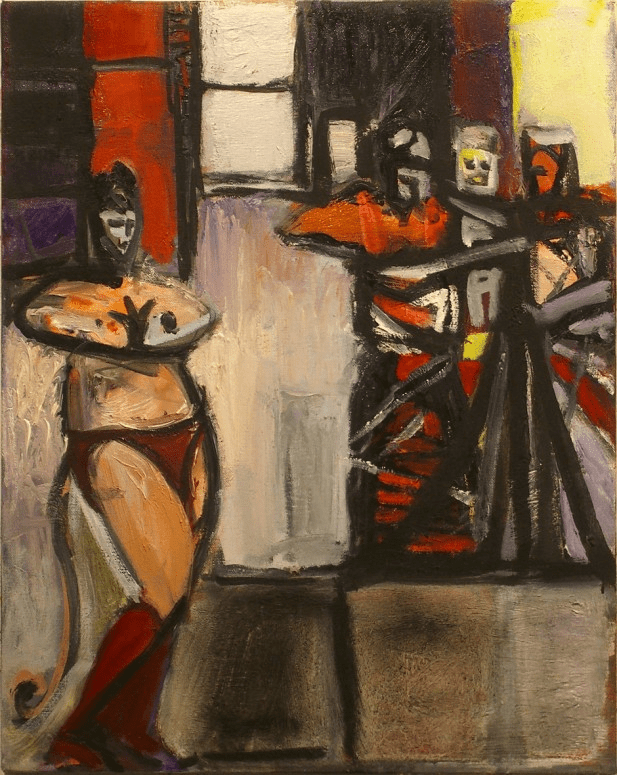
On the seventh day of the feast, when King Xerxes was in high spirits because of the wine, he told the seven eunuchs who attended him—Mehuman, Biztha, Harbona, Bigtha, Abagtha, Zethar, and Carcas—to bring Queen Vashti to him with the royal crown on her head. He wanted the nobles and all the other men to gaze on her beauty, for she was a very beautiful woman. But when they conveyed the king’s order to Queen Vashti, she refused to come. This made the king furious, and he burned with anger.
He immediately consulted with his wise advisers, who knew all the Persian laws and customs, for he always asked their advice. The names of these men were Carshena, Shethar, Admatha, Tarshish, Meres, Marsena, and Memucan—seven nobles of Persia and Media. They met with the king regularly and held the highest positions in the empire.
“What must be done to Queen Vashti?” the king demanded. “What penalty does the law provide for a queen who refuses to obey the king’s orders, properly sent through his eunuchs?”
Memucan answered the king and his nobles, “Queen Vashti has wronged not only the king but also every noble and citizen throughout your empire. Women everywhere will begin to despise their husbands when they learn that Queen Vashti has refused to appear before the king. Before this day is out, the wives of all the king’s nobles throughout Persia and Media will hear what the queen did and will start treating their husbands the same way. There will be no end to their contempt and anger.
“So if it please the king, we suggest that you issue a written decree, a law of the Persians and Medes that cannot be revoked. It should order that Queen Vashti be forever banished from the presence of King Xerxes, and that the king should choose another queen more worthy than she. When this decree is published throughout the king’s vast empire, husbands everywhere, whatever their rank, will receive proper respect from their wives!”
The king and his nobles thought this made good sense, so he followed Memucan’s counsel. (New Living Translation)
The Jews were living in exile. The Babylonian Empire had taken Jerusalem, destroyed the temple, and exiled many of the people to Babylon. Later, the Medes and Persians conquered Babylon and ruled over a vast area of many different peoples.
The story of Esther begins with the story of King Xerxes and Queen Vashti. They were the most powerful people in the world, at that time. This meant that Vashti had more power and authority than any woman on earth, at that time.
Although most women had few rights, Vashti was not one of them. However, when it came to the king, the queen was most definitely second fiddle.
Today, we can understand Vashti’s response to Xerxes. But back then, it was unthinkable. It wasn’t only Xerxes who ruled the land; misogyny did, as well.
Queen Vashti appears in the story as a strong-willed independent woman of power. While the king and queen were each having their respective parties, things started to go sideways.
No limits on the bar meant unlimited drinking. A drunk King Xerxes had one of those moments that seemed logical to the inebriated mind, but was actually nonsensical. He insisted that his queen stop her celebration, leave her guests, get all gussied up in her royal accoutrements, and parade around for a bunch of drunk guys to gawk at.
As readers of the story, we can tell this is not going to have a good ending for Vashti. She was in an impossible situation. She could submit and face humiliation, or worse. So, the queen chose not to abide by the king’s order.
Little did Vashti know that she was paving the way for a new queen to ascend to the side of King Xerxes. The extreme action of Xerxes attempting to use his queen then turned into another action of consulting his advisors and deposing the queen. Vashti was banned from the court, and the kingdom.
Hence, events were set in motion to find a new queen. As the story unfolds, Esther is a young Jewish woman living in this forced diaspora of the Persian Empire. Little did she know that Vashti’s fall was the beginning of her own rise.
“So the last will be first, and the first will be last.”
Jesus (Matthew 20:16)
Although the story of Esther never mentions the word “God,” we see an incredible Providence guiding events through the biblical book of Esther. Young Esther found favor with the king, became queen, and risked her life to save the Jewish people from destruction.
Esther’s story is the Jewish story – a tale of others pronouncing pogroms upon them and attempting to rid themselves of these others who live strangely and differently. But a champion arises; one who bring deliverance.
The Jewish story is one of resilience as a people throughout the millennia. Rather than ignoring, or worse, persecuting Jews, we can observe how they have had to deal with the enduring issues of perseverance through suffering; preserving their identity; and ensuring their survival in the middle of social and cultural pressures.
We also see that just because one is in the courts of power and is not one of the peoples who is persecuted, does not necessarily mean that there is an exemption from harm. Vashti was a powerful woman, but her power didn’t last.
In the end, Vashti was treated more like an oppressed Jew than a privileged Gentile; and Esther would move from powerless to powerful.
And from a Christian perspective, we can see Jesus as the Savior who puts himself at risk to save the world from sin, death, and hell.
And let us run with perseverance the race marked out for us, fixing our eyes on Jesus, the pioneer and perfecter of faith. (Hebrews 12:1b-2a, NIV)
We can, as well, observe that God is not fazed by any big earthly political power. The Lord sees all, knows all, and has the authority to do something about injustice and accomplishing just purposes on this earth.
O God, your never-failing providence sets in order all things both in heaven and earth: Put away from us, we entreat you, all hurtful things, and give us those things which are profitable for us; through Jesus Christ our Lord, who lives and reigns with you and the Holy Spirit, one God, for ever and ever. Amen.

 Rev. Tim Ehrhardt